














On Saturday, August 16, the Trump administration announced the suspension of visitor visas for individuals from the Gaza Strip, including children, the wounded, and the sick. In a statement on X, the U.S. State Department said the move was part of a “full and comprehensive review.”
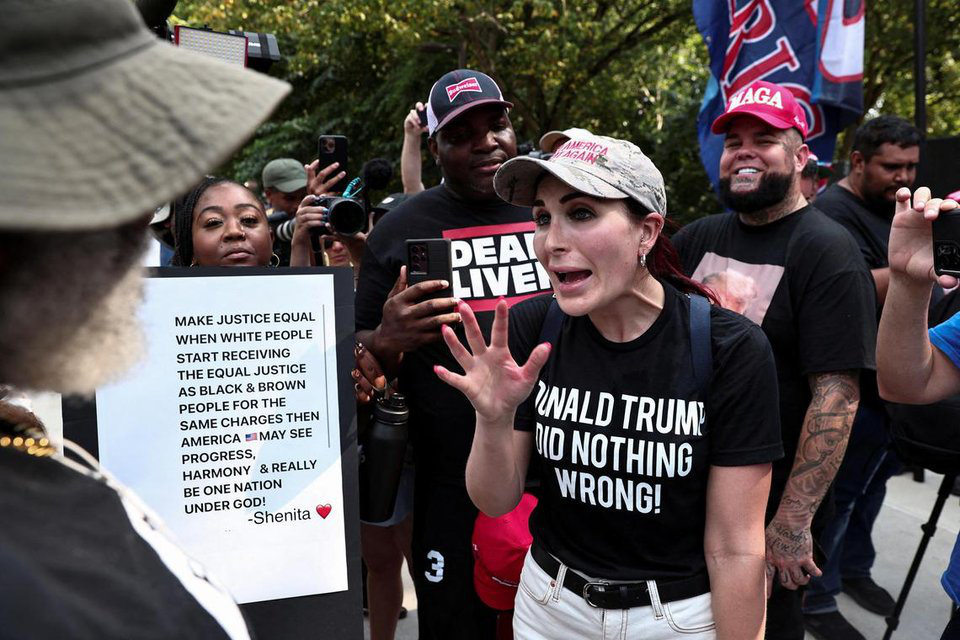
The decision appears to be a direct response to a campaign spearheaded by far-right activist Laura Loomer, known for her virulent anti-Islamic rhetoric. In a flurry of posts, Loomer labeled the medical evacuation trips from Gaza a “national security threat,” a claim echoed by Florida State Representative Randy Fine.
HEAL Palestine, a non-religious, U.S.-registered nonprofit founded in 2024 to provide urgent relief and long-term support for Palestinian children and families, had been facilitating these medical visas since the start of the ongoing war that has decimated Gaza’s healthcare infrastructure.
The policy shift dealt a devastating blow to Palestinian patients, especially children preparing to receive life-saving care through American charitable organizations. Human rights groups condemned the move as “lethal” not only for denying children access to treatment guaranteed by international law, but for weaponizing Palestinian lives in a cynical political game.
The suspension reduces humanitarian visas to mere bargaining chips in a populist electoral contest, laying bare America’s hypocrisy on migration and shattering its façade of democratic compassion.
Thousands of Lives at Stake
The war on Gaza has left over 56,000 civilians wounded—including some 12,000 children and an equal number of women—and killed nearly 62,000 people, including 19,000 children, 12,500 women, and 4,500 elderly, according to Gaza’s Ministry of Health.
With over 14,000 massacres reported, many children are now suffering from amputations, burns, and complications linked to malnutrition and contaminated water. Every 40 minutes, a child is killed. Every hour, a woman dies. Gaza’s crumbling medical system offers no lifeline: hospitals are out of service, medical supplies are blocked, and food is scarce. Evacuation abroad remains the only viable path to survival.
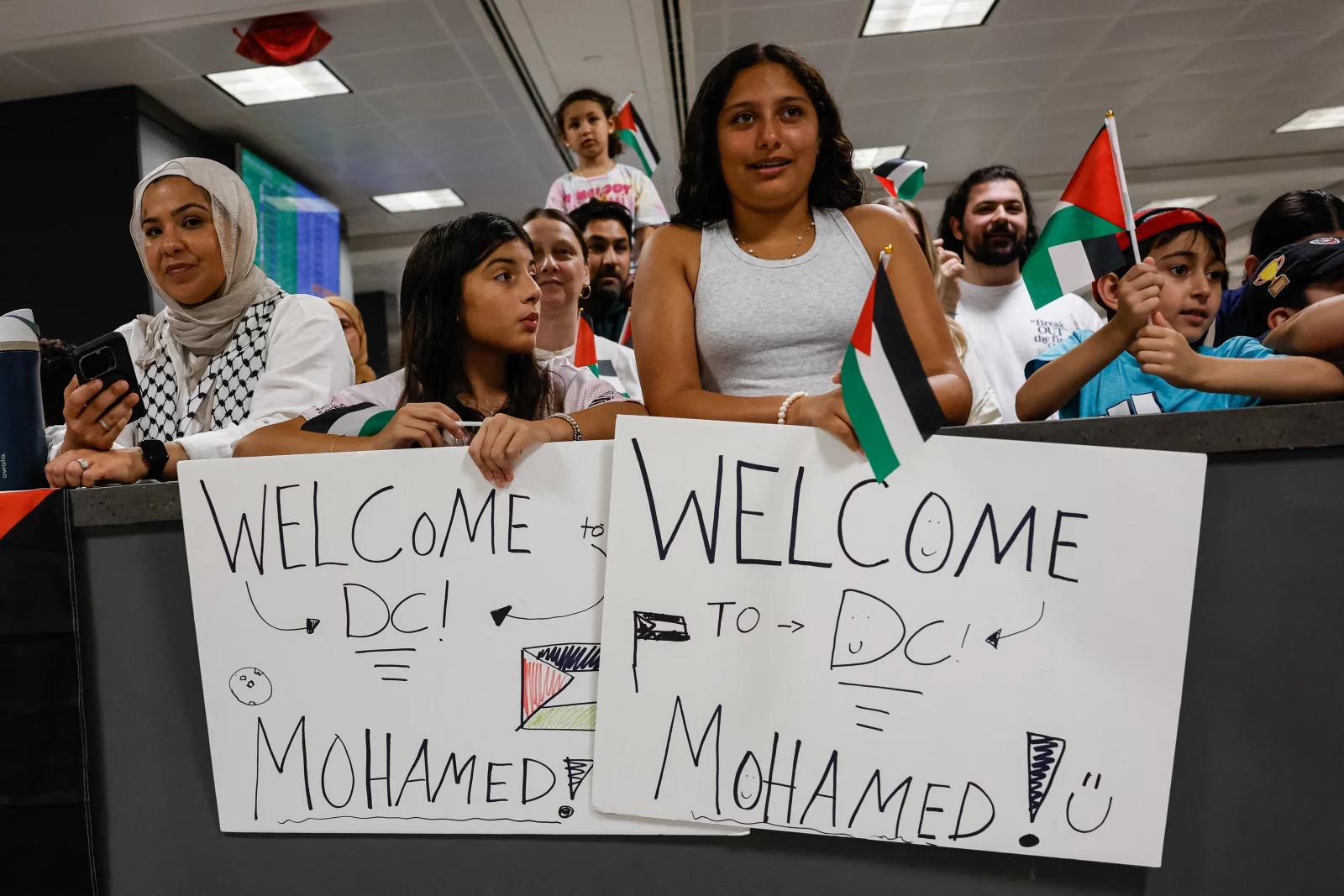
With growing restrictions on medical transfers to neighboring Egypt and Jordan, U.S.-based humanitarian organizations have stepped in to offer alternatives. HEAL Palestine led one of the largest child medical evacuation efforts from Gaza to the United States.
A Lifeline Called a ‘Threat’
In recent weeks, HEAL Palestine, headquartered in Ohio, organized what it described as “the largest single medical evacuation of injured children from Gaza to the U.S.” Sixty-three children were flown out, including 11 between the ages of 6 and 15—most suffering from amputations. They were admitted to hospitals in nine American cities, with plans to reunite them with their families in Egypt after treatment.
Dr. Zeina Salman, the organization’s co-founder, called the mission a matter of “life or death.” Volunteer emergency physician Dr. Mohamed Subha, who previously worked in Gaza, said many of the children suffered from traumatic bone injuries and severe burns made worse by starvation.
A Far-Right Campaign to Demonize Aid
Far-right influencers in the U.S. have launched a systematic campaign to vilify these medical evacuations. Loomer—though holding no official post—wields outsized influence in Trump’s orbit. She claimed to have discovered the evacuations earlier this month and publicly denounced them, stating: “This is not what Americans voted for.”
She pointed to a video posted by HEAL Palestine on August 6, showing Palestinian children arriving at San Francisco Airport. Loomer then escalated her campaign, spreading unsubstantiated allegations that the organization is linked to Hamas—claims she shared with U.S. lawmakers and federal officials.
Republican Congressman Chip Roy of Texas echoed her alarm, saying on X that he was “deeply concerned” and had launched investigations. Loomer claims she personally warned Senator Marco Rubio of the “Islamic invasion threat” on Friday, August 15. The next day, the administration halted all Gaza-related visa approvals.
Loomer’s attacks are not unprecedented. In 2017, she welcomed the deaths of 2,000 refugees fleeing violence in the Middle East. She has also pushed for the Muslim Brotherhood to be designated a terrorist organization and pressured Congress to act accordingly. Rubio recently confirmed that such a classification is “under consideration.”
The smear campaign has extended beyond Gaza evacuees. American educator and YouTube creator Miss Rachel—founder of the popular channel Songs for Littles—was targeted for raising over $50,000 via Cameo to support children in Gaza, Sudan, Ukraine, and the DRC. A heartfelt video she made with Rahaf, a Gaza child who lost her legs in an airstrike, drew fierce backlash.
STOP Anti-Semitism, a U.S.-based pro-Israel group, launched a campaign accusing her of promoting Hamas narratives—calls for official investigation followed, simply because she expressed support for war-affected children.
Weaponizing Compassion
In a nation that prides itself on liberty, compassion is now a political weapon. Humanitarian visas for maimed and ailing Gaza children have been politicized, reduced to talking points in a partisan tug-of-war.
Republicans frame Palestinian aid as a security risk, appealing to their far-right base, which views the issue as a litmus test for ideological allegiance. Democrats, wary of confrontation and mindful of the growing influence of far-right populism, often stay silent—hiding behind “procedural” or “security-based” justifications.
Thus, what should be a consular decision grounded in humanitarian principles is now dictated by electoral calculus. The life of a dying Palestinian child becomes a bargaining chip in America’s polarized political theater.
This aligns with Trump-era rhetoric that casts immigrants as national threats. But as Julia Gelatt from the Migration Policy Institute notes, it’s hard to fathom how a child seeking cancer treatment could be considered a danger. Over 9,000 people with Palestinian travel documents entered the U.S. in fiscal year 2024, all vetted and processed via embassies in Jerusalem, Cairo, or Amman—often requiring Israeli security clearance.
Andrew Miller, a former senior U.S. State Department official under Biden, stressed that such visa holders undergo rigorous screening, adding: “From my experience, any claim that these cases present exceptional security risks is baseless.”
Exposing the Double Standard
This visa freeze starkly illustrates America’s double standards. While Ukrainians fleeing war are welcomed with open arms, Palestinians are blocked at the gates—despite facing similarly dire humanitarian conditions.
Since Russia’s 2022 invasion of Ukraine, the U.S. has poured billions in aid, granted refugee protections, and mobilized global diplomatic support. Media coverage has spotlighted Ukrainian suffering, championing their right to self-defense and basic dignity. None of this courtesy has been extended to Palestinians.
Where Ukrainians are covered by emergency humanitarian laws, Palestinians are ensnared by “security assessments” and political maneuvering. Loomer’s unfounded claims of terrorism have been taken more seriously than international appeals for medical relief.
This is not just a gap in policy—it is a chasm in moral coherence.
A Long History of Visa Politicization
The August 16 decision is just the latest chapter in a decades-long pattern of politicizing Palestinian visas. After the 1972 Munich attack, President Nixon launched “Operation Boulder” to intensify screening of Middle Eastern visitors—especially Palestinians.
The “threat” label has clung to Palestinians ever since, reinforced in the 1990s and again after 9/11. Their statelessness further complicates matters, as they often lack “recognized” travel documents.
Even before the latest Gaza war, anti-Palestinian bills like the GAZA Act and SAFE Act were introduced in Congress to ban visas and cancel existing ones issued after October 2023. Though these proposals have not yet become law, they underscore how Palestinian presence in America is being turned into a campaign issue.
A Child Called Habiba
The story of Habiba, a young girl who lost both arms and a leg due to delayed treatment, encapsulates the devastating toll of bureaucratic indifference. Doctors said her limbs could have been saved had she been allowed to travel for treatment in time. She now receives care in Jordan—but thousands more like her may not be so lucky.
U.S.-based charities like the Palestine Children’s Relief Fund (PCRF) expressed outrage at the visa ban, calling it “a death sentence.” Every delayed visa adds names to a growing list of children doomed to slow death—while American politics plays tug-of-war over their lives.
Even America’s most principled voices recognize how such policies erode its moral standing. How can a nation that claims to champion human rights deny a visa to a child who needs heart surgery?
The truth is simple: these policies reveal an America that places Israeli preferences above humanitarian imperatives. The child with no say in war becomes a pawn in an election cycle.
In the end, the most harrowing part of politicizing Palestinian medical visas is how it hollows out the very meaning of humanity. When survival becomes a partisan calculation, America fails—not just these children, but its own ideals.


