














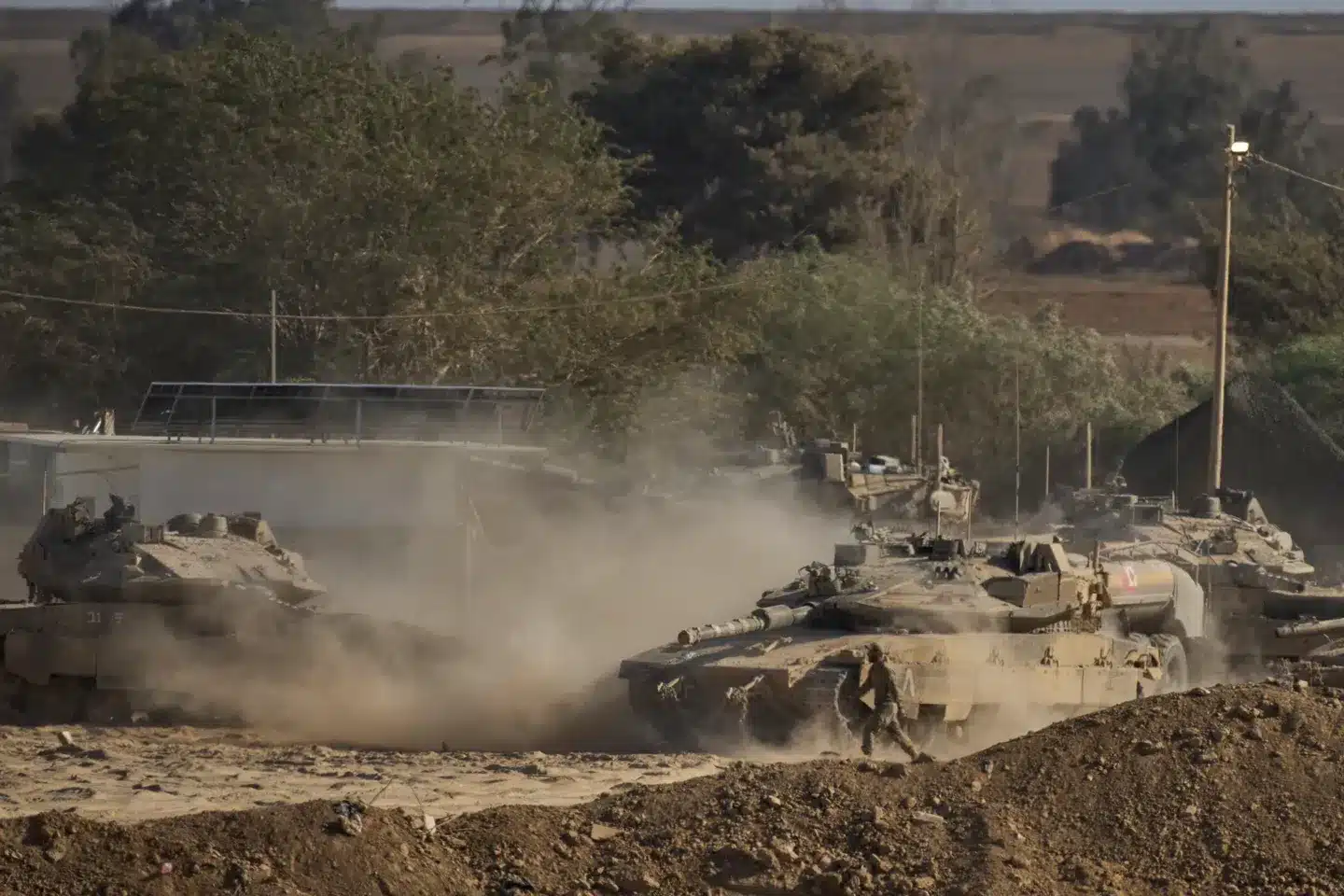
The Israeli cabinet’s decision to occupy Gaza City marks a major step toward completing the military stranglehold and seizing what remains of the Gaza Strip.
Over two million Palestinians have been squeezed into three small geographical areas, amid one of the most intense escalations yet described by Israel as “decisive and large-scale,” cloaked in all the terminology typically reserved for the most brutal declarations of war.
Though the Israeli government frames this aggressive, US-backed, yet widely rejected plan as a response to the collapse of negotiations and the failure of the latest round of talks, facts on the ground suggest otherwise.
The decision to abandon diplomacy appears to have been premeditated at the US-Israeli level, paving the way for a project of total destruction in Gaza, with no real objective beyond forced displacement.
Encirclement, Siege, and Assault
Israeli media have revealed that the military’s plan to seize Gaza City may last at least six months, beginning within two weeks with the gradual evacuation of residents to what Israeli authorities call “humanitarian zones” in the southern part of the Strip.
According to a report aired by Kan 11, the first phase includes relocating more than 800,000 Palestinians from Gaza City to the Al-Mawasi area southwest of Khan Younis—a process expected to take no less than 45 days.
This will be followed, within a month, by the call-up of reserves from Division 146 and the deployment of Division 98, raising the number of participating divisions to six: 162, 36, 98, Gaza Division, 99, and 146.
The army leadership plans to impose a full military cordon around Gaza City by October 25, in parallel with the population’s evacuation, paving the way for a full-scale ground incursion. Israeli estimates suggest the operation will proceed unless a breakthrough occurs in negotiations or a prisoner exchange deal is reached.
Yedioth Ahronoth reported that a ten-hour security meeting revealed reservations from the army chief of staff, the head of Mossad, the acting head of Shin Bet, and the national security advisor.
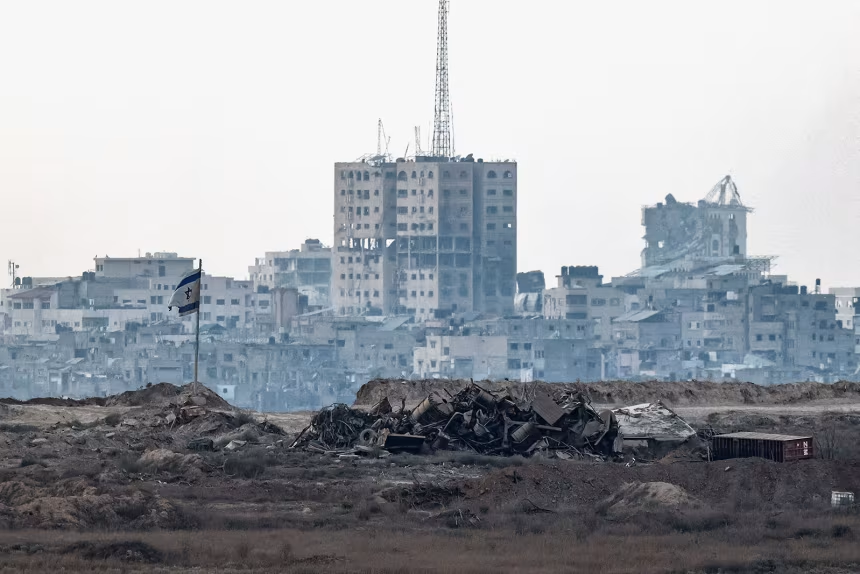
They warned Prime Minister Netanyahu that occupying Gaza would pose severe risks to both Israeli soldiers and the hostages held by Hamas. Though they did not oppose military action altogether, they argued for “more suitable alternatives.”
Despite those warnings, Chief of Staff Herzi Halevi (replaced by Eyal Zamir earlier this year) later approved the operational plan, which comprises three core phases:
-
Evacuation: Relocate around 800,000 people within two weeks to reduce density in combat zones.
-
Encirclement: Isolate Gaza City from the central areas and the humanitarian corridor in Al-Mawasi by reestablishing the Netzarim Axis.
-
Ground Maneuver: Launch a wide-scale ground assault supported by intensive aerial bombardment.
The operation may require between 80,000 and 100,000 reservists. Senior officers continue to refine the maneuver’s details before presenting the final plan to the cabinet as part of the “battle procedures” at the brigade and division level.
Multiple Obstacles—But Not Deal-Breakers
The adoption of the Gaza City occupation plan coincides with growing tensions between Defense Minister Yoav Gallant and Chief of Staff Eyal Zamir. On the surface, the dispute revolves around recent army appointments and promotions to brigadier general. But deeper issues are at play, with Gallant reportedly acting as a proxy for Netanyahu in opposing Zamir.
Gallant recently escalated his rhetoric, accusing Zamir of undermining army officers and pushing changes based on the advice of “anti-government consultants.” He criticized what he called “spontaneous meetings” aimed at forcing realities on the ground.
Haaretz revealed that Zamir had privately told senior figures, including former chief of staff Gabi Ashkenazi, that Netanyahu’s circle had made him a direct target due to his opposition to occupying Gaza City and the central refugee camps. He hinted that Netanyahu allies are seeking his dismissal.
On the ground, the plan faces sharp logistical challenges. Estimates suggest occupying Gaza would require around 200,000 troops, at a time when reservist response rates are declining.
According to Haaretz journalist Akiva Novick, rejection rates have reached 40%, and response rates in some divisions range from just 60 70%.
Many reservists reportedly view the call-ups as politically motivated, leading some to skip deployments without formally refusing.
A Channel 12 report by military analyst Nir Dvori highlighted a shortfall of 10,000 troops, including 7,000 combat soldiers and 3,000 in support roles, alongside gaps in equipment readiness.
Challenges go beyond the military dimension. Economic experts warn of the staggering cost of reoccupying Gaza. Journalist Gad Lior estimated the annual cost could range between 120 and 180 billion shekels (up to $53 billion), placing a massive burden on the Israeli budget, with spillover effects on citizens and businesses.
Israel’s Military Advocate General has also warned of serious legal and humanitarian consequences. Controlling more than 75% of Gaza’s territory would render Israel directly responsible for providing food, water, education, healthcare, and infrastructure to hundreds of thousands of Palestinians—raising legal and political pressure and undermining the already fragile international legitimacy for the military campaign.
Nevertheless, Netanyahu is pressing forward, backed by far-right ministers such as Itamar Ben-Gvir, who insists that “only the political leadership sets the strategy” and rejects military interference in political decision-making.
Ignoring both domestic and international warnings, Netanyahu has vowed to accelerate the Gaza occupation plan, promising that troops would move “relatively quickly” to capture what he called “Hamas’s last stronghold.”
Signs on the Ground
Beyond the political and military wrangling within Israel’s leadership, the Israeli army has already begun executing key operational steps that signal an impending expansion of its assault to what remains of Gaza City.
The military has initiated encirclement operations, coinciding with a massacre that struck a journalist encampment near the remnants of the Al-Shifa medical complex in western Gaza. Six journalists were killed, including Al Jazeera reporters Anas Al-Sharif and Mohammed Qreiqa.
Southeastern neighborhoods particularly Street 8 in Al-Zaytoun and eastern parts of Al-Sabra—witnessed heavy preparatory fire, including explosive-laden robots, airstrikes, and artillery barrages on hundreds of targets.
These attacks have triggered fresh waves of displacement toward the western part of the city, which is already overcrowded with hundreds of thousands from northern and eastern Gaza.
In the north, Israeli movements have focused on areas bordering Gaza City, including Falouja, Abu Shrekh, Al-Nazla, and Bir Al-Naja, reaching the so-called “Mefalsim Axis” a street separating the city from the northern Strip.
Preceding these movements were targeted strikes on high-rise buildings in Old Gaza and northern districts, aimed at creating a relatively secure zone for ground troops and reducing the threat of surveillance or sniper fire—clear signs of imminent expansion of ground operations.
Operational indicators suggest this is the next phase—or the “second stage”—of Operation Gideon’s Chariots, which has already resulted in Israeli control over nearly 70% of Gaza.
These areas now serve as launchpads for completing the occupation—starting with Gaza City, then the central camps, moving south to Al-Mawasi, and finally to Rafah, which Israel plans to transform into what it terms a “humanitarian city,” but which in reality resembles a vast prison designed to pave the way for mass forced displacement.
Total Destruction and Displacement
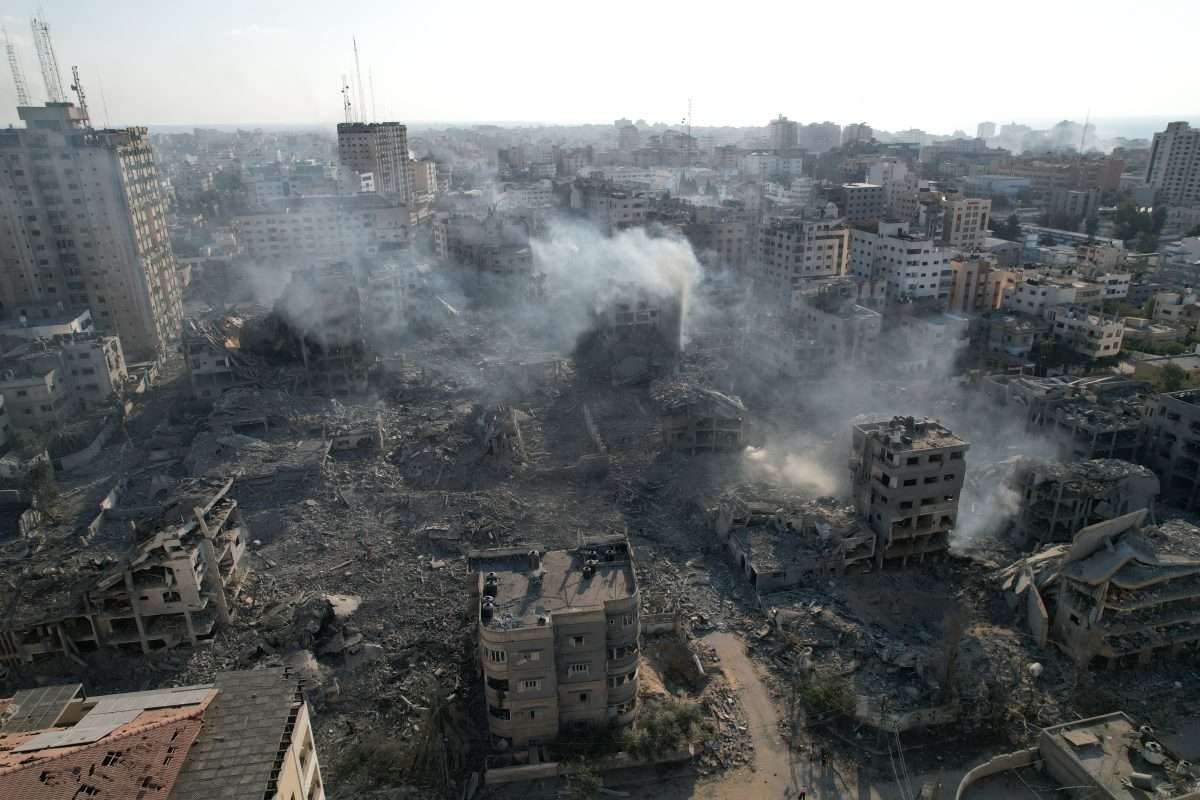
Setting aside Netanyahu’s rhetoric—surpassing even Nazi propaganda minister Joseph Goebbels in distortion and manipulation—the facts on the ground make it clear: Israel is pursuing a singular goal in Gaza—turning the entire Strip into rubble.
In a Haaretz article by Dalia Scheindlin, Netanyahu is said to be downplaying the scope of the plan, referring to a “limited control” of Gaza City rather than a full-scale occupation. He portrays it not as occupation but as “liberation,” promising an Israeli-defined end to the war, the return of hostages, and a handover of civil administration to another entity.
But the report makes clear that most of these claims are likely false. Historical precedent shows that Israel tends to maintain long-term military and security control, and what’s presented as temporary occupation is little more than a cover for a radically different reality.
That reality is already evident in northern Gaza and Rafah, and has only expanded since the ceasefire collapsed in March 2024. The essence of Gideon’s Chariots now rests on long-term military entrenchment and the systematic destruction of more than two-thirds of the Strip.
Haaretz also revealed that demolition work is being carried out by Israeli contractors under army supervision, who are paid around 5,000 shekels ($1,500) per building—creating perverse incentives to expand the scale of destruction.
Netanyahu’s own remarks underscore the true intent. Responding to criticism from reservists, he declared: “We are obliterating Gaza… They should have nowhere to return to. They must leave.”
In full alignment with this vision, Finance Minister Bezalel Smotrich said the army “won’t leave a single stone standing,” describing the current phase as a “historic transformation” meant to push Gaza’s population southward and from there, out of the Strip entirely.
He framed it as part of former President Donald Trump’s plan, offering only “minimal necessary aid” to avoid war crimes charges.
Taken together, these facts make one thing clear: this is not a reaction to failed diplomacy or a newly devised strategy. It is a calculated transition into the final stage of Israel’s war objective the annihilation of Gaza as a livable space, reducing it to rubble, and forcing its people into one of two fates: death in its many forms within the Strip, or exile to the “great prison” in Rafah, awaiting a forced displacement disguised as “voluntary resettlement.”


