












In a cramped corner of a modest apartment in one of Faisal’s alleyways in the Giza district of Al-Haram, Majd al-Din al-Masri was busy restructuring his militant group, Ajnad Misr. The organization, born in the aftermath of the July 3 coup, had carried out several high-profile attacks against security forces.
Security sources described Majd al-Din as a highly dangerous explosives expert, with exceptional evasion skills and an acute security sense that helped him escape 17 arrest attempts.
While finalizing plans for another operation targeting high-ranking security officials, Majd al-Din was ambushed by a security force on April 5, 2015. A firefight erupted in his rented apartment, ending with his death. His wife and nine children were arrested, and authorities seized weapons, explosives, and computers they claimed helped trace other members of the group.
Majd al-Din’s story ended in tragedy, far from the impact he had hoped to leave. Yet his tale is just one chapter in a longer, still unfolding narrative. Each time authorities believe they’ve stamped out the post-Rabaa jihadist surge, a new wave of militants reemerges—spawned by the trauma and fury left in the wake of the 2013 massacre.
This report explores the evolution of Egypt’s new jihadist landscape in the years following the brutal dispersal of the Rabaa and Nahda sit-ins. A new generation of armed groups, heavily influenced by Abu Musab al-Suri’s ideas, emerged with a conscious effort to avoid the takfiri rhetoric and civilian targeting common in earlier jihadist movements.
While many of these groups sought to brand themselves as resistance to tyranny, their limited resources, lack of public support, and relentless security pressure led to their rapid dismantling.
Nonetheless, this wave continues to pose a long-term threat to the regime, drawing on lessons from Syria and adapting to new realities, raising questions about their potential resurgence.
The First Wave: Popular Resistance
Between the 2011 revolution and the 2013 coup, Egypt’s jihadist activity remained relatively subdued. Egyptian jihadists generally followed four paths: operations in Sinai targeting Israeli interests; peaceful propagation of jihadist thought; political participation through newly formed parties; and travel to Syria and Libya—where some stockpiled weapons in anticipation of upheaval at home.
The latter group had already dismissed democratic processes as futile, embracing armed struggle as the only path.
The July 3 coup reinforced this conviction for many Islamist youth, especially those disillusioned by the overthrow of an elected government. Traditional jihadist factions sought to sway disaffected members of the Muslim Brotherhood, stressing ideological overlaps—reminding them that even Brotherhood founder Hassan al-Banna had called for armed resistance. They argued the group’s deviation began when it entered the democratic process.
Still, a competing vision gained ground: “creative nonviolence.” Inspired by global movements—especially Venezuela’s anti-coup protests—some young Islamists promoted inventive civil resistance. But the shock of the Rabaa and Nahda massacres deeply scarred this generation.
What followed was dubbed the “popular resistance” phase, operating under the slogan: “Anything short of bullets is peaceful.” Demonstrators used Molotov cocktails, fireworks, and minor sabotage, like burning police vehicles and damaging power lines. Warnings were even sent to police officers to refrain from targeting protestors.
Various groups—like the Popular Resistance Committees, the Retaliation Committees, Molotov, Execution, Unknowns, Helwan Brigades, and Rabaa Ultras—sprang up, mainly comprising university students. Yet these movements failed to make a significant impact and were swiftly suppressed.
On the first anniversary of the sit-in dispersals, the Popular Resistance Brigades announced themselves on Facebook, disrupting rail lines and roads in Damietta, Assiut, and 6th of October City. Their declaration warned: “Thugs who stay home are safe. Military dogs who stay put are safe. But aggressors should blame no one but themselves.”
Islamist scholars released texts to legitimize such resistance, including books like “Provision for the Revolutionary,” “The Wayfarer’s Guide,” and “Jurisprudence of Popular Resistance,” the latter authored by Brotherhood figures. These argued that even harmful protests were preferable to silence in the face of oppression.
Yet, as the Brotherhood’s leadership was decimated by arrests, and the peaceful protest strategy faltered, many youth grew disillusioned. A segment turned to more radical means, feeling that systematic injustice left them no alternative. Thus began a new jihadist wave, distinct from traditional groups in both ideology and structure.
Notably, the 2011 revolution had already started to splinter the Brotherhood’s youth base. The post-coup crackdown and terrorist designation deepened this rift. Some Brotherhood leaders later abandoned slogans like “Our peacefulness is stronger than bullets,” replacing them with “Our peacefulness is stronger with bullets.”
As the regime asserted dominance, Islamist youth endured waves of repression, killings, and detentions. Lacking leadership or organizational direction, many fell into what might be termed “emotional jihadism.”
These new militants didn’t align with al-Qaeda, ISIS, or even classic Brotherhood ideology. Though influenced by jihadist literature, they represented a homegrown current—born from a unique Egyptian moment where political defeat met perceived injustice.
Some joined established jihadist groups, while others formed their own, expressing distinct perspectives. The group Ajnad Misr epitomized this hybrid approach, merging traditional jihadism with revolutionary zeal. Though founded by an Iraqi war veteran, its ranks included youths from varied ideological backgrounds.
Unlike Sinai-based traditional jihadists aiming for territorial control, the new Egyptian militants didn’t seek an Islamic emirate. Their mission was punitive—targeting the army and police, portraying themselves as avengers of state violence.
Ultimately, even sophisticated groups like Ajnad Misr couldn’t withstand security crackdowns. Despite executing bold attacks, most new jihadist factions were dismantled undone not only by state power but by their own inexperience, limited funding, and fragile structures. Citizen cooperation and the vast informant network further eroded their capabilities.
In this volatile context, a singular influence rose: Abu Musab al-Suri. His ideas offered a lifeline for Egypt’s fragmented militants.
Abu Musab al-Suri’s Influence on Egypt’s New Jihadists
With popular resistance failing and traditional jihadist structures collapsing, many militants began exploring alternative models. Starting around 2015, al-Suri’s decentralized vision—emphasizing autonomous cells—gained traction. His book “The Global Islamic Resistance Call” and other works offered blueprints suited to Egypt’s oppressive climate.
Inspired by al-Suri, these militants rebuilt their organizations without rigid hierarchies. His work “The War of the Oppressed” became a tactical guide. New local theorists emerged, translating his ideas into action.
Interviews with Egyptian jihadists reveal this influence. Salah al-Din Youssef, spokesperson for the Revolutionary Brigade—one of the most advanced armed groups—named al-Banna, Sayyid Qutb, Abdullah Azzam, and Abu Musab al-Suri as key intellectual influences. Likewise, the Hasm Movement regularly quoted al-Suri’s writings.
His popularity was so pronounced that Egyptian publisher Dar Ishbiliya began printing his books. Arrested militants were frequently found in possession of his works. Alarmed, Egyptian security agencies urged al-Azhar to issue rebuttals. However, these often lacked scholarly rigor, misattributing quotes and misunderstanding al-Suri’s arguments—more a reactionary security effort than a genuine intellectual refutation.
Second Wave: Revolutionary Punishment
Al-Suri’s model shaped the second wave of Egyptian jihadists, especially in terms of decentralized structures and asymmetric tactics. Whereas groups like Ajnad Misr had hierarchical organization, the Revolutionary Punishment Movement marked a shift.
Launched on January 25, 2015—Egypt’s revolution anniversary—the group released a video featuring masked gunmen and declared: “We’re tired of peaceful slogans against a regime that only understands bullets. No successful revolution in history lacked armed protection.”
Their language echoed al-Suri’s ideas. Between January 2015 and early 2016, Revolutionary Punishment carried out 157 operations across 18 provinces, half in Fayoum. They used light firearms and crude explosives, maintaining an active media presence, including the release of a nasheed titled “When Reckoning Comes.”
Though they didn’t achieve a strategic breakthrough, the group’s operational model inspired others. No leader emerged as a founding emir, and their loose cell structure became the new norm.
Meanwhile, North Sinai remained a hub for traditional jihadists, especially ISIS’s local affiliate, Sinai Province. The 2015 downing of a Russian airliner was among their deadliest attacks. Regional dynamics also influenced Egypt’s scene—some Brotherhood youth, despite doctrinal tensions, joined ISIS.
One notable case was Omar al-Deeb, son of Brotherhood leader Ibrahim al-Deeb. He appeared in a Sinai Province video before being killed in a shootout in Giza in 2017.
Al-Qaeda-inspired groups also surfaced, including the Repression Deterrence Brigades, Ansar al-Islam, and the Furqan Brigades. Ansar al-Sharia in the Land of the Nile, led by Sayed Atta, carried out 24 operations before a failed prison break in 2020 ended in Atta’s death.
Third Wave: Hasm and Revolutionary Brigade
On July 16, 2016, Captain Mahmoud Abdel Hamid and two soldiers were ambushed en route to Fayoum police station. Hours later, Hasm (Egypt’s Arms) claimed responsibility, heralding a new phase of confrontation.
Hasm spokesperson Khaled Saif al-Din insisted the group was independent and youth-led, rejecting any link to the Brotherhood. A month later, the Revolutionary Brigade attacked a checkpoint in Monufia, tying the operation to the Rabaa anniversary.
These two movements marked a leap in operational sophistication. They assassinated top security officials in urban centers, including Brigadier General Adel Ragaei, involved in Gaza tunnel demolitions. Both groups adopted non-hierarchical structures, built units for surveillance, logistics, and execution, and modeled their operations on Ajnad Misr while incorporating al-Suri’s principles.
Beyond these major players, smaller formations operated on Cairo’s outskirts, reflecting the decentralized ethos al-Suri advocated. Media releases by these groups also showed improved training and production quality.
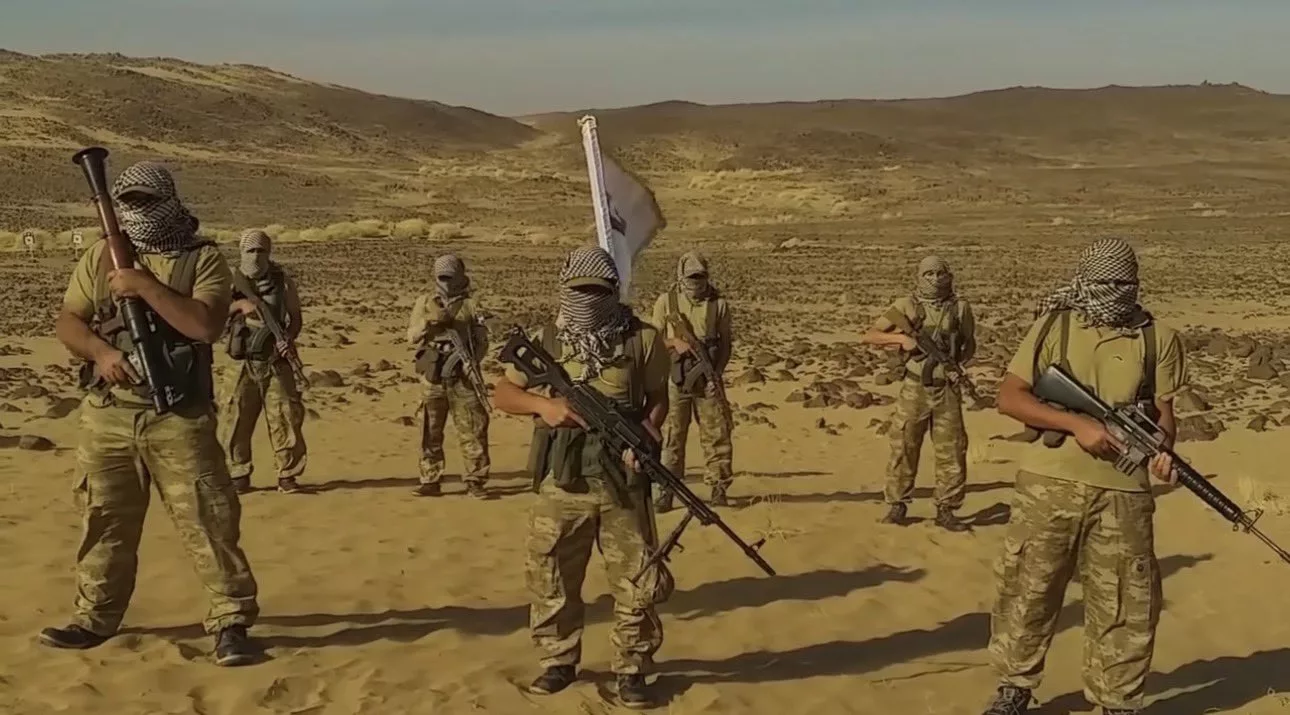
Hasm’s video “Fight Them” featured desert training camps, while the Revolutionary Brigade’s “Harbingers of Doom” and “Knights of Paradise” showed combat training, including footage of Ragaei’s assassination.
Characteristics of Egypt’s New Jihadists
Most new jihadist groups lacked clear strategic visions. Their operations were isolated, uncoordinated, and disproportionately matched against the state’s vast resources. Waning public support further weakened them.
Their narrative emphasized vengeance—avenging deaths, detentions, and injustice. The Revolutionary Punishment’s anthem and slogan, “We will not forget. We will not forgive. We swear to retaliate,” underscore this ethos.
Notably, these militants avoided targeting civilians or religious minorities. They condemned attacks on Christians and distanced themselves from takfiri discourse. In 2017, both Hasm and the Revolutionary Brigade denied involvement in the church bombings in Alexandria and Tanta, reaffirming their focus on security forces.
Some of their statements were released in English to influence international opinion, like Hasm’s “To Foreigners in Egypt” message. Yet despite efforts to frame their cause globally, both the US and UK designated them terrorist organizations.
They also rejected ISIS’s extremism. Salah al-Din Youssef called ISIS a cancer; Hasm’s spokesperson labeled its ideology deviant. They condemned the 2017 Rawda mosque massacre, attributed to Sinai Province, in which 310 worshippers were killed.
One exception was Hasm’s 2017 bombing attempt near Myanmar’s embassy in Cairo—framed as retaliation for the Rohingya genocide. The group followed up with threats against foreign governments, urging international pressure on Egypt.
They also voiced solidarity with Syrian rebels. In August 2016, Hasm issued a statement aligning itself with the jihad in Aleppo.
Deferred Violence: Decline or Resurgence?
“Don’t mistake our silence for fear… It’s the calm before the storm.”
— From Revolutionary Punishment’s anthem
Despite executing hundreds of operations, the new jihadist wave failed to shake the regime. Between 2017 and 2019, security forces dismantled many cells and captured top operatives, including Hesham Ashmawi, who was executed in 2020.
ISIS’s Egyptian presence also waned due to relentless military operations. Between 2013 and 2018, authorities claim to have dismantled 992 armed cells.
By 2020, new jihadist activity had significantly declined. Yet the underlying conditions remain unchanged—leaving the door open for resurgence. Even today, Egyptian authorities continue to dismantle Hasm-affiliated cells, suggesting the movement’s subterranean presence endures.
Each successive wave has adapted and evolved, demonstrating resilience despite lacking resources or training hubs. Their decentralized model, inspired by al-Suri, has enabled longevity in the face of sustained repression.
Though they may not pose an existential threat to the Sisi regime today, these jihadists remain a latent danger—capable of reemerging with greater coordination and lethal precision.
The recent assassination of Israeli businessman Ze’ev Kiper in Alexandria—described as a well-planned operation—rekindled fears of their return. Some speculate it signals the revival of smaller, symbolic strike cells.
Emulating the Syrian jihad’s tactical lessons, Egypt’s new militants may yet regroup. A generation forged in post-2013 trauma, skeptical of both Islamism and traditional jihadism, may redefine Egypt’s Islamic political future.
They are more critical, more realistic, and shaped by tragic transformations. As older leaders age out of relevance, this new cohort is poised to reshape Egypt’s Islamist currents in ways that remain to be seen.