NoonPost NoonPost

NoonPost

  • Home
  • Politics
  • Economy
  • Society
  • Culture
  • Files
  • Long Reads
  • Podcast
AR
Notification Show More
نون بوست
“There Are Nights I Can’t Close My Eyes”: How Gazans Are Living in Homes on the Brink of Collapse
نون بوست
From al-Jolani to Ahmad al-Shara: The Evolution of Syria’s New Leader
نون بوست
When Political Islam Receded in Egypt: Who Filled the Void?
نون بوست
An Extension of Genocide: Gaza’s Detainees Speak Out
نون بوست
A Tightrope Between Survival and Sovereignty: The Syrian Government Faces Normalization Pressures
نون بوست
American Aircraft Carriers: Has the Era of “100,000 Tons of Diplomacy” Ended?
نون بوست
U.S. Regime‑Change Policies: Why They Are Destined to Fail
نون بوست
Transformations of Israeli Judaism: Between the Victim Complex and the Colonizer’s Doctrine
نون بوست
The Gulf’s Balancing Act: Iran, Israel, and Hidden Links
نون بوست
Iraq–Turkey Oil Export Treaty: Why Did Ankara Cancel It After 52 Years?
نون بوست
Syria’s Northeast on Edge: QSD Between Ankara and Damascus
نون بوست
Has Europe Changed Its Stance on Israel… or Just Its Language?
NoonPost NoonPost
AR
Notification Show More
نون بوست
“There Are Nights I Can’t Close My Eyes”: How Gazans Are Living in Homes on the Brink of Collapse
نون بوست
From al-Jolani to Ahmad al-Shara: The Evolution of Syria’s New Leader
نون بوست
When Political Islam Receded in Egypt: Who Filled the Void?
نون بوست
An Extension of Genocide: Gaza’s Detainees Speak Out
نون بوست
A Tightrope Between Survival and Sovereignty: The Syrian Government Faces Normalization Pressures
نون بوست
American Aircraft Carriers: Has the Era of “100,000 Tons of Diplomacy” Ended?
نون بوست
U.S. Regime‑Change Policies: Why They Are Destined to Fail
نون بوست
Transformations of Israeli Judaism: Between the Victim Complex and the Colonizer’s Doctrine
نون بوست
The Gulf’s Balancing Act: Iran, Israel, and Hidden Links
نون بوست
Iraq–Turkey Oil Export Treaty: Why Did Ankara Cancel It After 52 Years?
نون بوست
Syria’s Northeast on Edge: QSD Between Ankara and Damascus
نون بوست
Has Europe Changed Its Stance on Israel… or Just Its Language?
Follow US

How Arab States Helped Fuel Israel’s Economy During Genocide

عماد عنان
Emad Anan Published 26 March ,2026
Share
نون بوست
نون بوست

As Gaza bleeds under one of the most brutal and devastating military campaigns in modern history—its people starved, displaced, and slaughtered under a suffocating blockade likened to Nazi-era concentration camps—several Arab capitals have taken a profoundly contradictory path.

While many around the world looked to Arab nations as potential defenders of the Palestinian cause, expecting them to wield significant leverage, such as economic isolation and political pressure, the reality veered sharply in the opposite direction.

Trade between key Arab states and Israel not only continued after the war broke out in October 2023, but surged to unprecedented levels, according to detailed data from Israel’s Central Bureau of Statistics.

This increase in trade, which included food, medical supplies, textiles, construction materials, agricultural products, and electronics, occurred while Gaza’s children died for lack of milk, and its elderly withered from hunger. Hospitals were bombed, medical staff detained, and essential medicines blocked, but Israeli markets remained stocked—thanks, in part, to Arab goods.

A Booming Trade with the Occupier

As Arab states failed the political and moral test of Gaza, hope turned to economic disengagement as a minimal response to Israel’s ongoing atrocities. While fiery speeches and declarations of solidarity were issued across the region, trade volumes told a different story.

Between October 2023 and August 2024, the five Arab states that normalized relations with Israel—Egypt, Jordan, the UAE, Bahrain, and Morocco—saw their total trade with Israel rise to $4 billion, up from $3.6 billion in the same period the previous year. This $400 million increase starkly contrasts with global efforts to reassess economic ties with Israel in light of its war crimes.

The UAE accounted for the lion’s share—two-thirds of total Arab-Israeli trade—reaching $4.3 billion. Egypt followed with $1.2 billion, a 290% increase in imports from Israel during the war. Jordan’s imports rose by over 35%, while Morocco doubled its imports, and Bahrain registered a staggering 590% rise in exports and a 1200% spike in imports from Israel.

Exports to Israel ranged from food and clothing to precious metals, industrial equipment, fertilizers, and building materials—commodities critical to sustaining life and industry during wartime.

Integration Despite Atrocities

Even as Israeli Prime Minister Benjamin Netanyahu openly mocks Arab governments and continues his brutal campaign against Gaza, Arab regimes persist in expanding economic ties with Tel Aviv. Beyond conventional trade, two major developments in 2024 highlighted this deepening relationship.

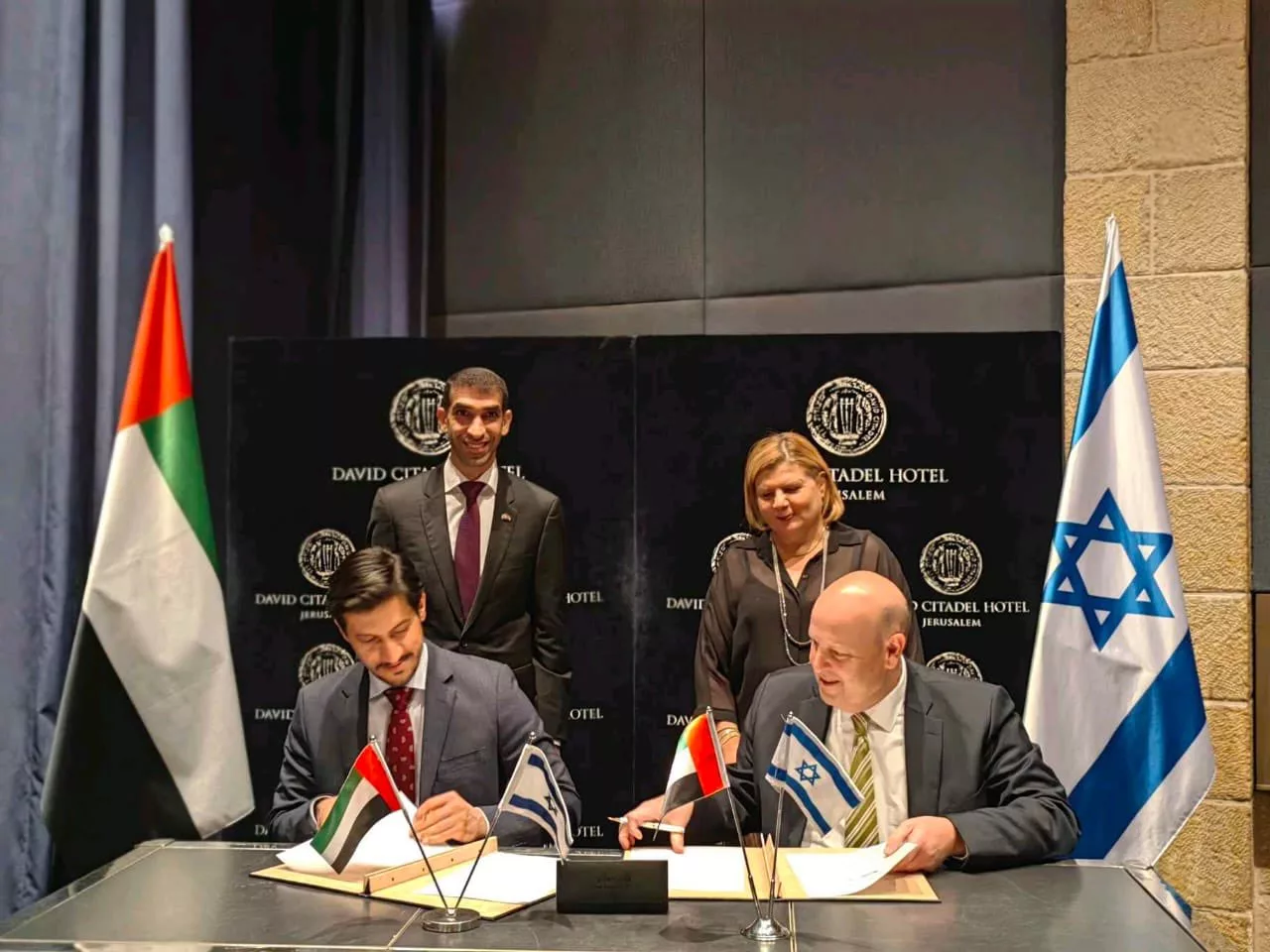
In April, the UAE-Israel Comprehensive Economic Partnership Agreement came into effect. It aims to boost non-oil trade between the two to $10 billion annually, eliminating tariffs on 96% of goods. In May alone, trade jumped by 130% compared to the same month a year earlier.

Meanwhile, Egypt revised its natural gas agreement with Israel, committing to purchase 130 billion cubic meters of Israeli gas through 2040 in a $35 billion deal—labeled the largest in Israel’s history. Israeli officials praised the agreement for cementing Israel’s role as a regional energy power.

Jordan, Morocco, and Bahrain also showed growing economic cooperation: Jordan’s trade with Israel reached $55 million (a 54% rise), Morocco’s hit $3.1 million (up 94%), and Bahrain’s jumped 879% in early 2024 alone, despite public claims of cutting ties.

Wider Muslim World Also Boosts Trade

The surge wasn’t limited to Arab states. Trade between Israel and 14 other members of the Organization of Islamic Cooperation rose 11%, bringing total commerce with 19 Muslim-majority nations to $7 billion—10% of Israel’s global trade—helping ease the economic strain caused by the war.

Western Condemnation vs. Arab Complicity

While Arab states courted Israel economically, Europe moved in the opposite direction. Germany suspended arms exports, and Slovenia became the first EU state to impose a total arms embargo. The EU is now considering suspending Israeli access to innovation funds worth €200 million.

Ireland, Belgium, and Spain have called for trade agreement freezes. Irish lawmakers are set to debate banning imports from illegal Israeli settlements. Meanwhile, political parties across Europe are demanding stronger economic sanctions.

Covering for Israel’s Red Sea Isolation

Arab normalization states have also stepped in to help Israel circumvent the Red Sea blockade imposed by Yemen’s Houthis, who shut off Israeli-bound shipping through the Bab al-Mandab strait and the Suez Canal.

While ports like Eilat and Haifa ground to a halt, Egypt kept its Mediterranean ports open for Israeli-bound vessels. The UAE, through Saudi Arabia and Jordan, established a land corridor to supply Israel with essential goods.

These logistics efforts, alongside booming trade, paint a picture of systematic support—intentional or not—for Israel’s war machine. These figures, corroborated by both Israeli and Arab government data, reflect a calculated betrayal of the Palestinian people and a refusal to confront Israeli impunity.

A Price Yet to Be Paid

Arab regimes clinging to normalization may believe economic ties will secure their strategic positions. But the price of trading over Palestinian graves will not be limited to Gaza. It will erode their credibility, their moral legitimacy, and—eventually—their own security.

Netanyahu, in a televised interview with Israel’s i24 channel, left no ambiguity about his expansionist dreams: “I am on a historic and spiritual mission. I am emotionally committed to the vision of Greater Israel,” he said, referencing territorial ambitions that extend into Egypt, Jordan, Syria, and Lebanon.

In the face of such ambitions, Arab states remain vulnerable regardless of their trade agreements or normalization pacts. Betting on appeasement in the face of open colonial designs is not strategy—it is delusion. And while Gaza may be the immediate battlefield, the entire region lies within the scope of Netanyahu’s dream.

Those who betray Palestine today may find themselves the targets of tomorrow.

Download this article as PDF
Share this Article
Facebook Twitter Whatsapp Whatsapp Telegram Email Copy Link
عماد عنان
By عماد عنان كاتب صحفي وباحث في الإعلام الدولي
Follow:
Previous Article نون بوست How the Rabaa Massacre Paved the Way for a New Generation of Egyptian Jihadists
Next Article نون بوست Anas Habib: From Locking the Embassy to Unlocking the Movement for Gaza

Read More

  • Militias and Iran Fuel Iraq’s Oil Crisis Militias and Iran Fuel Iraq’s Oil Crisis
  • Basra’s Water Crisis: Thirst Amid Oil and Salt
  • Chinese Investments in Egypt: Acceptable Privileges, Legitimate Concerns
  • Who Bears the Cost of Egypt's Generosity?
  • Money Laundering in Egypt: The Shadow Economy Devours the State
part of the design
NoonPost Weekly Newsletter

You May Also Like

Militias and Iran Fuel Iraq’s Oil Crisis

Militias and Iran Fuel Iraq’s Oil Crisis

فريق التحرير Noon Post 26 March ,2026
Basra’s Water Crisis: Thirst Amid Oil and Salt

Basra’s Water Crisis: Thirst Amid Oil and Salt

طه العاني Taha Alane 26 March ,2026
Chinese Investments in Egypt: Acceptable Privileges, Legitimate Concerns

Chinese Investments in Egypt: Acceptable Privileges, Legitimate Concerns

عماد عنان Emad Anan 26 March ,2026

مادة تمتص الأوكسجين ستمكنك من التنفس تحت الماء

فريق التحرير
Noon Post Published 19 January ,2016
Share
oxygen-thieving-material-could-help-us-breathe-underwater

الغوص تحت الماء ممتع بالطبع، لكن أنابيب الأوكسجين التي نضطر لحملها فوق ظهورنا والخراطيم وكل ما يلتحق بهما، ليست ممتعة بالتأكيد، لكن ماذا لو عرفت أن هناك مادة جديدة يمكن لبضع حبات منها فقط أن تسمح لنا بالتنفس تحت الماء دون خزانات أوكسجين لفترة طويلة؟

هذا ما فعله العلماء من جامعة جنوب الدنمارك، عندما تمكنوا من صناعة مادة بلورية تستطيع امتصاص وتخزين الأوكسجين بتركيزات عالية، لدرجة أن دلو واحد منها قادر على أن يفرغ غرفة كاملة من محتواها من الأوكسجين!

هذه المادة قادرة على إطلاق الأوكسجين المختزن فيها، عند الحاجة بشكل منظم، وبالتالي، فإن امتلاك بضع حبات منها فقط يغنيك عن حمل أثقال كثيرة.

المكون الرئيسي لهذه المادة، هو عنصر الكوبالت، والذي يوجد مرتبطًا في جزئ عضوي تم تصميمه بشكل خاص، ويستغرق امتصاص هذا الجزئ للأوكسجين الخارجي وقتًا يتراوح من الثواني إلى بضعة أيام، تختلف باختلاف محتوى الأوكسجين في المكان، ودرجة الحرارة المحيطة، والضغط الجوي.

وقد قالت الأستاذة كريستين مكينزي من جامعة جنوب الدنمارك، إن ميزة هذه المادة هي في كونها لا تتعامل مع الأوكسجين بشكل لا رجعة فيه، أي أنها تستطيع الامتصاص والإطلاق، ثم معاودة الكرّة، فهي مستشعرة للأوكسجين، وقادرة على اختزانه في ذات الوقت، مثل الهيموجلوبين الصلب الاصطناعي، الذي يتحد مع الأوكسجين، ويخزنه وينقله.

تفاوت الهيكل التكويني لهذه المادة يؤهلها للدخول في استخدامات مختلفة، حيث تتحد مع الأوكسجين وتطلقه بمعدلات مختلفة، ما يعني أننا نستطيع استخدامها في تنظيم إمداد الأوكسجين في خلايا الوقود، أو صنع أدوات مثل أقنعة وجه فيها عدة طبقات من هذه المادة، لكي توفر للشخص الأوكسجين النقي مباشرة من الهواء، بدون الحاجة إلى أدوات أخرى.

الشيء الأكثر إثارة للاهتمام، هو أن هذه المادة يمكنها أن تدخل في تكوين المواد في جهاز يستطيع أن يمتص الأوكسجين مباشرة من الماء، بحيث تسمح للغواص بالبقاء تحت سطح الماء لفترات طويلة من الوقت، دون الحاجة لخزانات الهواء الثقيلة، بل وبما أنها قادرة على امتصاص الأوكسجين من الماء، يستطيع الغواص أن يكتفي بالحبات القليلة في قناعه، وينعم برحلة خفيفة وسهلة تحت الماء، وأكثر من ذلك، هناك فائدة حيوية لهذا الابتكار، إذ يستطيع مرضى الرئة المضطرون لحمل خزانات الأوكسجين الثقيلة دائمًا في كل مكان يذهبون إليه، حمل بضعة حبات تحتوي على الأوكسجين اللازم لنَفَسْ واحد.

العلماء قاموا باستخدام تقنية حيود الأشعة السينية، لكي يعرفوا الترتيب الذري لهذه المادة في وضع تخزين الأوكسجين بداخلها، وأدركوا أنه بمجرد أن تمتص المادة الأوكسجين، يمكنها أن تختزنه حتى يتم إطلاقه بالتسخين الهادئ أو تعريضها للفراغ.

وقد قالت الأستاذة مكينزي، إنهم استطاعوا رؤية انطلاق الأوكسجين عندما قاموا بتسخين المادة، وكذلك عندما عرضوها للفراغ، والفريق يتساءل الآن ما إن كانت هناك إمكانية لاستخدام الضوء كمؤثر يطلق الأوكسجين المختزن أيضًا أم لا.

تم نشر هذا البحث في دورية الجمعية الملكية للكيمياء، وحتى الآن، لا يوجد موعد تم تحديده لنزول هذه المادة إلى الأسواق والاستهلاك التجاري.

TAGGED: الأوكسجين ، الغوص تحت الماء ، عنصر الكوبالت
TAGGED: علوم وتكنولوجيا
Download this article as PDF
Share this Article
Facebook Twitter Whatsapp Whatsapp Telegram Email Copy Link
فريق التحرير
By فريق التحرير تقارير يعدها فريق تحرير نون بوست.
Follow:
Next Article نون بوست The Stigma of “ISIS”: A Heavy Legacy Haunting Women and Children of Former Members

Read More

  • U.S. Regime‑Change Policies: Why They Are Destined to Fail U.S. Regime‑Change Policies: Why They Are Destined to Fail
  • The Gulf’s Balancing Act: Iran, Israel, and Hidden Links
  • Iraq–Turkey Oil Export Treaty: Why Did Ankara Cancel It After 52 Years?
  • Syria’s Northeast on Edge: QSD Between Ankara and Damascus
  • Has Europe Changed Its Stance on Israel… or Just Its Language?
part of the design
NoonPost Weekly Newsletter
dark

An independent media platform founded in 2013, rooted in slow journalism, producing in-depth reports, analysis, and multimedia content to offer deeper perspectives on the news, led by a diverse young team from several Arab countries.

  • Politics
  • Society
  • Rights & Liberties
  • Opinions
  • History
  • Sports
  • Education
  • Technology
  • Economy
  • Media
  • Arts & Literature
  • Entrepreneurship
  • Travel
  • Cinema & Drama
  • Food
  • Health
  • Culture
  • Latest Reports
  • Files
  • Long Reads
  • Interviews
  • Podcast
  • Interactive
  • Encyclopedia
  • In Pictures
  • About Us
  • Our Writers
  • Write for Us
  • Editorial Policy
  • Advanced Search
Some rights reserved under a Creative Commons license

Removed from favorites

Undo
Go to mobile version