










Israel’s recently announced $35 billion deal to export natural gas to Egypt—described by Israeli Energy Minister Eli Cohen as “the largest in its history”—continues to dominate public discussion in Egypt.
Beyond the fact that it effectively places the future of Egypt’s energy sector in Israeli hands, the deal comes at an exceptionally sensitive moment: as the people of Gaza endure a full-scale campaign of annihilation at the hands of Israeli forces.
The agreement stipulates the sale of around 130 billion cubic meters of natural gas to Egypt until 2040, or until the contracted quantities are fully delivered. According to Cohen, it is a significant event from both a political-security and economic standpoint, and it will cement Tel Aviv’s status as a leading regional energy power on which its neighbors depend.
These remarks have provoked widespread anger among Egyptians, prompting many to revisit the country’s energy sector records and put them back on the table for public debate. Only a few years ago, Egypt had a production surplus that pushed it to export gas.
This raises pressing questions: why turn to Israeli gas now, and at such a critical time? And the most contentious of all—how did Egypt shift from being a gas exporter to Israel to becoming a principal importer from it?
What are the main features of Egypt’s gas map?
Natural gas is a strategic commodity for Egyptians, essential to both the public and the state. Egypt’s gas production is concentrated in three main regions: the Mediterranean Sea, which accounts for 62% of output; the Nile Delta with 19%; and the Western Desert with 18%.
Around twenty companies operate in gas exploration in Egypt, including local firms such as Petrobel, Khalda, Pharaonic, Badr El Din, and Burullus, as well as major foreign companies, most notably Italy’s Eni, the American firm Apache, the UK’s BP, and the Netherlands’ Shell.
The country has dozens of gas fields, chief among them the Zohr field, located in the Shorouk concession in deep waters of the Mediterranean. It is the largest, with reserves estimated at around 30 trillion cubic feet, operated by Italy’s Eni. Also notable are the North Alexandria fields, Taurus, Libra, Fayoum, Giza, and Raven with reserves exceeding 5 trillion cubic feet, operated by BP; and the Nargis field, with announced preliminary reserves of 3.5 trillion cubic feet, operated by the US-based Chevron.
In the Nile Delta lies the Nooros field, discovered in 2015, with reserves of around 2 trillion cubic feet, operated by IEOC, a subsidiary of Eni. That same year saw the discovery of the Atoll field in the North Damietta marine concession east of the Delta, with reserves of 1.5 trillion cubic feet, operated by BP.
The gap between Egypt’s gas production and consumption stands at about 2.8 billion cubic feet per day, with total output near 4 billion cubic feet, while consumption has jumped to 6.8 billion cubic feet. This has placed heavy pressure on the government to bridge the shortfall, either by curbing domestic consumption or increasing imports.
Exporting Gas to Israel
In the late 1990s, Egypt witnessed significant gas discoveries in the Mediterranean and the Delta, such as the Burullus field, creating a large production surplus. This prompted the government to consider exporting part of this surplus to bring in hard currency, while monitoring domestic consumption needs.
Few expected that one export destination under consideration would be Israel. In 2005, Egyptians were surprised when Cairo signed a deal to export about 1.7 billion cubic meters annually for 20 years, via a 100-kilometer pipeline from El-Arish in Sinai to a point on the coast of Ashkelon in southern Israel.
The agreement was signed between the Egyptian government and the East Mediterranean Gas Company (EMG)—a partnership involving Egyptian businessman Hussein Salem, who owned most of the shares, Israel’s Merhav Group, the US-Israeli Ampal company, Thailand’s PTT, and US businessman Sam Zell.
The scandal lay in the pricing: Egypt sold gas to Israel at between $0.70 and $1.50 per million British thermal units, while the cost price was $2.65—effectively half the global market price. In addition, the Israeli gas company was granted a three-year tax exemption from 2005 to 2008.
The deal sparked widespread protests, prompting many members of the Egyptian Parliament to lodge objections and submit urgent motions. An administrative court ruled to halt the agreement on constitutional grounds, but the government appealed, and the higher court overturned the ruling.
From 2005 to 2011, Egypt continued to export gas to Israel and other countries, including Jordan, to generate export revenues for domestic development projects. However, the low contractual prices fueled public anger and accusations of corruption, especially as global gas prices soared.
The Export Agreement with Tel Aviv
In early 2012, amid the upheaval of the January Revolution, Egypt’s security situation in North Sinai deteriorated. The El-Arish–Ashkelon pipeline was attacked more than 15 times by armed groups, disrupting and eventually freezing gas supplies.
This security turmoil coincided with a steep drop in domestic gas production, due to depleting fields, delays in bringing new fields online, and failure to upgrade many existing fields. Foreign companies’ operations also suffered.
Amid rising public outrage against Israel over its violations against Palestinians, the Egyptian government—bowing to popular will—canceled the export deal in April 2012, citing unpaid dues and security problems.
By then, Egypt faced a domestic energy crisis: falling production and growing consumption caused frequent blackouts and factory shutdowns. The government began exploring alternative sources, including imports.
In 2015, the discovery of the giant Zohr field in the eastern Mediterranean, about 200 kilometers north of Port Said, by Italy’s Eni revived hopes of offsetting the deficit and achieving self-sufficiency.
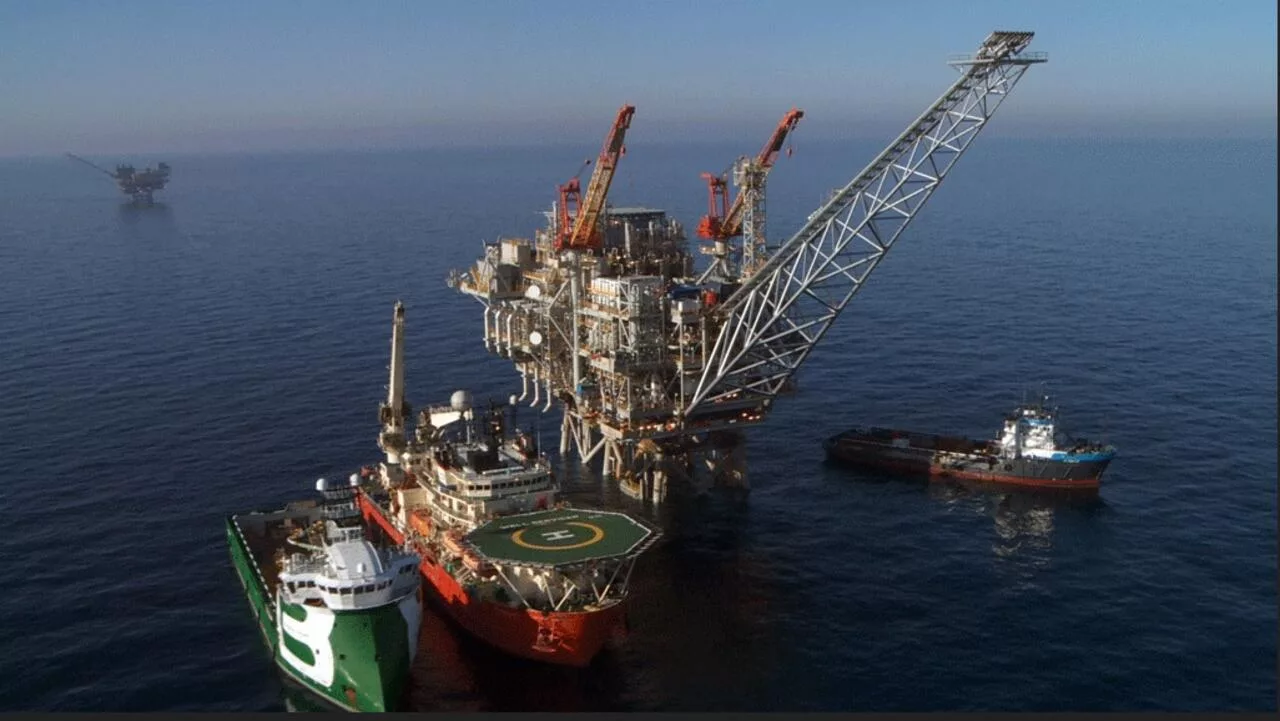
Zohr was one of the largest fields discovered in the Mediterranean, surpassing Israel’s Leviathan field, with proven reserves of around 30 trillion cubic feet. It boosted Egypt’s gas output to 3 billion cubic feet per day by 2018.
The Egyptian media hailed the find as a national treasure, with talk of large surpluses and new export opportunities.
Back into Tel Aviv’s Arms
Even as Zohr’s output raised hopes, in 2018 Egypt struck a new deal to import Israeli gas. The Egyptian company Dolphinus signed with Israel’s Delek and US-based Noble Energy to import 64 billion cubic meters from the Leviathan and Tamar fields over 10 years. Flows began in January 2020.
The government argued the move was part of a strategy to position Egypt as a regional hub, importing Israeli gas for liquefaction at its Damietta and Idku plants before exporting it to Europe.
The Ukraine War Crisis
The outbreak of the war in Ukraine in 2022 disrupted European gas supplies from Russia, which Moscow used as leverage against European support for Kyiv. Egypt seized the opportunity to boost exports to Europe, earning up to $600 million a month.
Estimates suggest Cairo exported around 5 million tons of liquefied natural gas to Europe since the war began, generating some $8.4 billion.
Given its urgent need for foreign currency amid a historic collapse of the Egyptian pound, the government continued importing Israeli gas—about 15% of Israel’s total production—for liquefaction and re-export.
Dipping into Domestic Needs
Egypt had signed long-term supply contracts with European countries, obliging it to meet export volumes on schedule. But production problems, especially at Zohr, where daily output fell to 1.9 billion cubic feet in 2023, forced the government to divert gas from domestic allocation.
The result: worsening power cuts, skyrocketing electricity prices, factory stoppages, and austerity measures such as load-shedding.
With rising domestic consumption and European commitments to meet, the government sought quick fixes. But the Gaza war in October 2023 halted Israeli gas exports to Egypt for five weeks when the Tamar field was shut down for maintenance. Even after resuming, supply remained reduced.
Despite this, Cairo amended its agreement with Israel in a new $35 billion deal, tying Egypt’s energy future to Israeli supply until 2040.
Cementing Dependency on Israel
This deal came while Israel was waging a brutal war in Gaza that has killed more than 200,000 Palestinians, injured countless others, and displaced around two million. Calls for economic boycotts of Israel have been growing, yet Egypt has chosen to amend its import agreement effectively injecting $35 billion into Israel’s coffers, bolstering its military and offsetting its wartime losses.
The government frames the decision as pragmatic, securing gas supplies for at least 15 years to fulfill European contracts. But critics warn it deepens Egypt’s reliance on an unstable supplier, one that has already wielded gas as a political weapon.
Coupled with Israel’s influence over Nile waters via the Grand Ethiopian Renaissance Dam, Tel Aviv now holds two strategic levers gas and water—both with grave potential consequences for Egypt.