
Since the launch of the so‑called Gaza Humanitarian Foundation in May, the bloody outlines of its project have gradually come into focus. The New York Times revealed that the foundation was not a spontaneous initiative but had been in development since the onset of Israel’s assault on Gaza in October 2023, driven by Israeli military officials.
Subsequent investigations uncovered that its leadership is deeply loyal to Israel and entirely lacking in experience in delivering humanitarian aid.
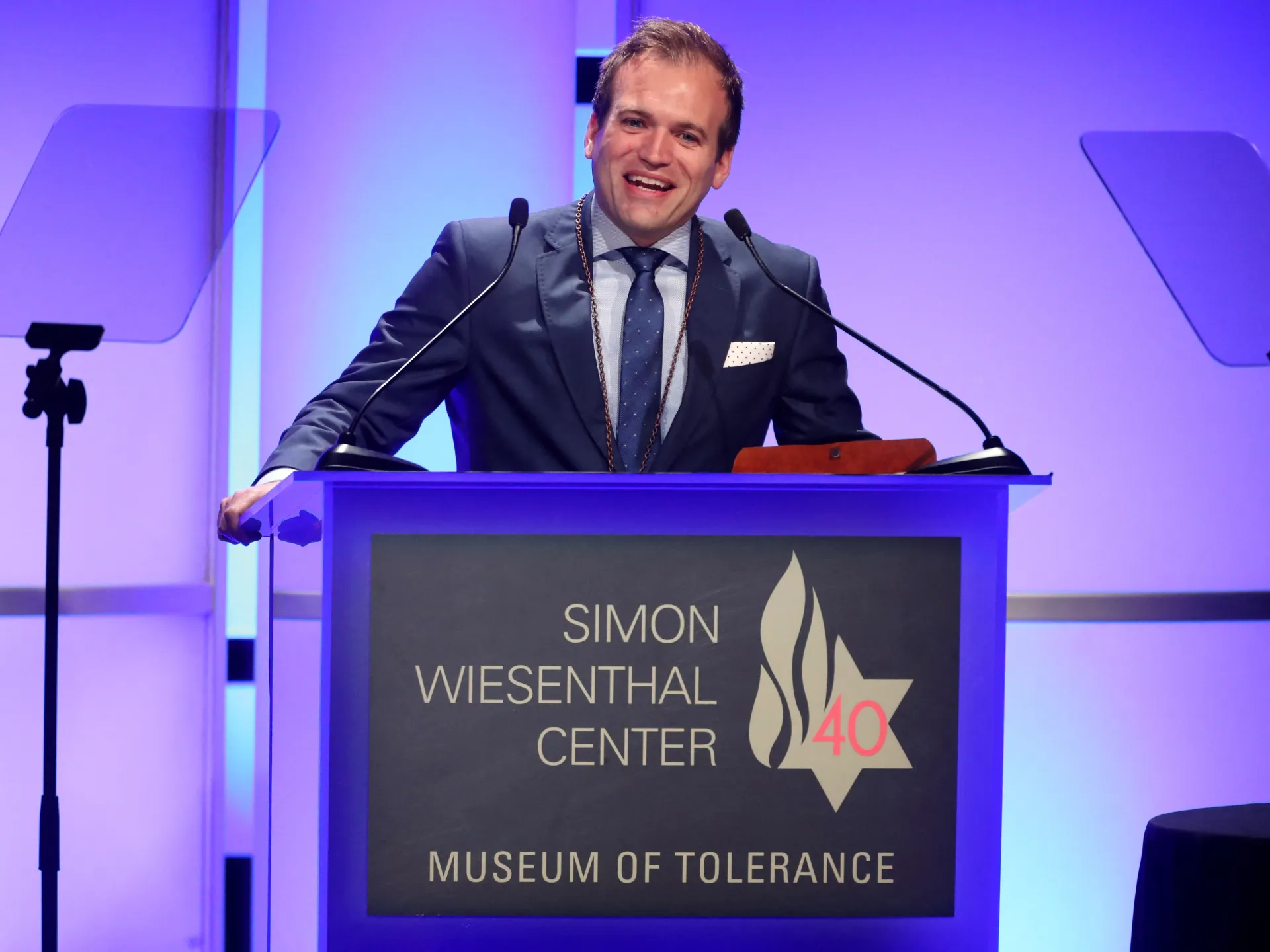
Every aspect of this project was meticulously crafted to appear humanitarian, while in reality revealing a brutal face. To complete the façade, a chief executive was needed to manage the foundation’s public image and promote its falsehoods. This role was entrusted to Reverend Johnny Moore, a well‑known public relations figure whose task extends beyond overseeing the supposed aid effort — to rebranding the occupation and the United States as benevolent supporters improving life for Gazans.
Professional Background
Johnny Moore’s appointment as head of the Gaza Humanitarian Foundation was no coincidence but a calculated tactic by the US administration. Washington fully understands that any project aimed at enabling genocide and starving Palestinians requires someone who is staunchly pro‑Israel and aligned with the Zionist worldview — and Moore’s career makes him a perfect fit.
Born in 1983, Moore earned his bachelor’s and master’s degrees in religious studies from Liberty University in Virginia, a leading evangelical institution. He held several positions there, including vice president for communications and evangelical lecturer, and served as assistant to the university’s president, Jerry Falwell — a prominent Christian Zionist known for inflammatory remarks against Islam and the Prophet Muhammad (peace be upon him).
Moore also sat on the board of the International Fellowship of Christians and Jews, which claims to build bridges between Christians and Jews, facilitates Jewish immigration to Israel, and raises funds for that purpose. He also served on the board of the Anti‑Defamation League, one of the most powerful pro‑Israel lobbying groups in the United States.
His appointment is unsurprising given his close ties to former US President Donald Trump. Moore served as Trump’s evangelical adviser during the 2016 campaign, praising his commitment to religious freedom. After Trump’s victory, he appointed Moore to the US Commission on International Religious Freedom, where he remained throughout both the Trump and Biden administrations.
In addition to his religious work, Moore built a career in public relations. In 2017, he served as spokesperson for the Museum of the Bible in Washington, D.C., and founded KAIROS Company, a California‑based PR and communications firm later acquired by a larger company. He also led JDA Worldwide, a marketing and communications agency in Indiana.
A First‑Class Advocate of Genocide
Moore’s record brims with staunchly pro‑Israel positions. He played a pivotal role in the 2017 Abraham Accords and, in particular, in the controversial relocation of the US embassy from Tel Aviv to occupied Jerusalem — a move widely condemned as illegal under international law.
Speaking to Reuters at the time, Moore credited evangelicals with making the decision possible, saying it would not have happened without them.
In a 2017 New York Times interview, he revealed that he and other evangelicals had lobbied Trump for years to recognize Jerusalem as Israel’s capital, calling it a “priority.” In 2018, he told The Washington Post he had advised White House officials that “those who bless Israel will be blessed.”
Moore later visited Jerusalem as leader of an “Interfaith Peace Delegation,” describing the trip as a “pilgrimage to the Holy City” — a move that underscored his role in whitewashing the occupation under a religious veneer.
When Israel’s war on Gaza began in October 2023, Moore wasted no time expressing unconditional support for Tel Aviv. Three months into the assault, he visited Israel and wrote on X: “I have never seen such horror,” expressing sympathy for Israeli forces rather than condemning their atrocities against Palestinians. He actively amplified Israel’s “victim” narrative in its war on Gaza.
In February 2025, Moore endorsed Trump’s controversial proposal for the US to take control of Gaza. He praised Trump as a “peacemaker” and claimed Washington would take full responsibility for Gaza’s future, “giving everyone hope and a future” — a claim widely derided as disingenuous.
Managing a Blood‑Soaked Reputation
Moore’s pro‑occupation rhetoric and attacks on those condemning Israel’s massacres made him an obvious candidate to replace Jake Ward, who resigned from the Gaza Humanitarian Foundation over its “failure to uphold humanitarian principles.” The organization needed a figure capable of salvaging its rapidly crumbling image, even just weeks after its launch.
Upon his appointment, Moore immediately set about building a defensive narrative. In his first interview, he crudely justified Israel’s killings of civilians waiting for aid, claiming victims had “strayed from the safe corridor,” and asserting the foundation bore “no responsibility for what happens outside its centers.” He ignored the fact that its aid distribution system poses a direct threat to Palestinian lives.
His narrative quickly collapsed under the weight of documented evidence. The Arab Organization for Human Rights in the UK filed a formal complaint with the International Criminal Court, presenting aerial imagery showing that aid centers were built like military choke points — long, narrow passages ending in bottlenecks where civilians could be lured and then fired upon.
As criticism mounted, Moore launched a counter‑media campaign, alleging a UN‑led conspiracy to monopolize aid distribution and politicize it. He accused UN agencies of letting food shipments rot at crossings while Palestinians starved — a claim flatly contradicted by Gaza’s Ministry of Health, which documented 1,568 Palestinian deaths and over 11,230 injuries in aid‑queue massacres at such centers.
Moore even claimed more people had died trying to access UN aid than from incidents at his own centers — a statement wholly at odds with the official data.
As famine deepens, Moore has intensified his attacks, accusing Hamas of running a “disinformation campaign” and dismissing the term “starvation” as part of a political agenda — an effort to downplay the humanitarian catastrophe and portray it as a media hoax.
A Sanad fact‑check investigation by Al Jazeera shed light on the foundation’s propaganda playbook. It found the organization repeatedly touts exaggerated figures such as “tens of millions of meals a day” and “the largest humanitarian operation in the world” without providing any transparency, even as hunger indicators in Gaza remain unchanged.
Sanad also revealed the foundation’s use of selective images of smiling Palestinians receiving aid, designed to obscure images of massacres and project a false sense of success and satisfaction — all while independent media and rights groups document repeated killings of civilians seeking food.
Moore’s role extends beyond defending the foundation; he is tasked with delivering carefully tailored messages to a specific US audience — pro‑Israel Americans largely unaware of Gaza’s reality. Investigative journalist Arno Rosenfeld reports that Moore’s central mission is to persuade this demographic that neither Israel nor the US bears responsibility for Gaza’s famine, and that both are pursuing a humanitarian solution.
This narrative aligns neatly with the Trump administration’s strategy of casting itself as Gaza’s savior while actively deepening the crisis. Just days ago, US Middle East envoy Steve Witkoff visited the foundation’s distribution centers — a PR move in the ongoing joint US‑Israeli effort to present starvation as the backdrop for American “humanitarian” heroics.
Washington is also investing heavily in this narrative. In June, the US State Department announced $30 million in direct support to the Gaza Humanitarian Foundation and urged other countries to follow suit.
Reuters reported that the administration is considering an additional $500 million to bolster the foundation’s operations — a sign of the financial and political complicity fueling one of the worst humanitarian disasters of our time.
Thus, Gaza’s tragedy is transformed from a documented crime into a PR spectacle in which Washington and Tel Aviv deftly divide the roles: while Palestinians are gunned down in queues outside aid centers, Moore works to cloak the massacre in humanitarian garb, recasting the executioner as the rescuer.
Yet amid all this deception, one truth remains: aid delivered under the bombs of occupation is nothing more than another weapon in a war of extermination, carried out in full view of the world.