NoonPost NoonPost

NoonPost

  • Home
  • Politics
  • Economy
  • Society
  • Culture
  • Files
  • Long Reads
  • Podcast
AR
Notification Show More
نون بوست
“There Are Nights I Can’t Close My Eyes”: How Gazans Are Living in Homes on the Brink of Collapse
نون بوست
From al-Jolani to Ahmad al-Shara: The Evolution of Syria’s New Leader
نون بوست
When Political Islam Receded in Egypt: Who Filled the Void?
نون بوست
An Extension of Genocide: Gaza’s Detainees Speak Out
نون بوست
A Tightrope Between Survival and Sovereignty: The Syrian Government Faces Normalization Pressures
نون بوست
American Aircraft Carriers: Has the Era of “100,000 Tons of Diplomacy” Ended?
نون بوست
U.S. Regime‑Change Policies: Why They Are Destined to Fail
نون بوست
Transformations of Israeli Judaism: Between the Victim Complex and the Colonizer’s Doctrine
نون بوست
The Gulf’s Balancing Act: Iran, Israel, and Hidden Links
نون بوست
Iraq–Turkey Oil Export Treaty: Why Did Ankara Cancel It After 52 Years?
نون بوست
Syria’s Northeast on Edge: QSD Between Ankara and Damascus
نون بوست
Has Europe Changed Its Stance on Israel… or Just Its Language?
NoonPost NoonPost
AR
Notification Show More
نون بوست
“There Are Nights I Can’t Close My Eyes”: How Gazans Are Living in Homes on the Brink of Collapse
نون بوست
From al-Jolani to Ahmad al-Shara: The Evolution of Syria’s New Leader
نون بوست
When Political Islam Receded in Egypt: Who Filled the Void?
نون بوست
An Extension of Genocide: Gaza’s Detainees Speak Out
نون بوست
A Tightrope Between Survival and Sovereignty: The Syrian Government Faces Normalization Pressures
نون بوست
American Aircraft Carriers: Has the Era of “100,000 Tons of Diplomacy” Ended?
نون بوست
U.S. Regime‑Change Policies: Why They Are Destined to Fail
نون بوست
Transformations of Israeli Judaism: Between the Victim Complex and the Colonizer’s Doctrine
نون بوست
The Gulf’s Balancing Act: Iran, Israel, and Hidden Links
نون بوست
Iraq–Turkey Oil Export Treaty: Why Did Ankara Cancel It After 52 Years?
نون بوست
Syria’s Northeast on Edge: QSD Between Ankara and Damascus
نون بوست
Has Europe Changed Its Stance on Israel… or Just Its Language?
Follow US

From “Palestinians” to “Gaza Residents”: The Terminology War in Genocidal Discourse

سجود عوايص
Sujoud Awais Published 26 March ,2026
Share
نون بوست
نون بوست
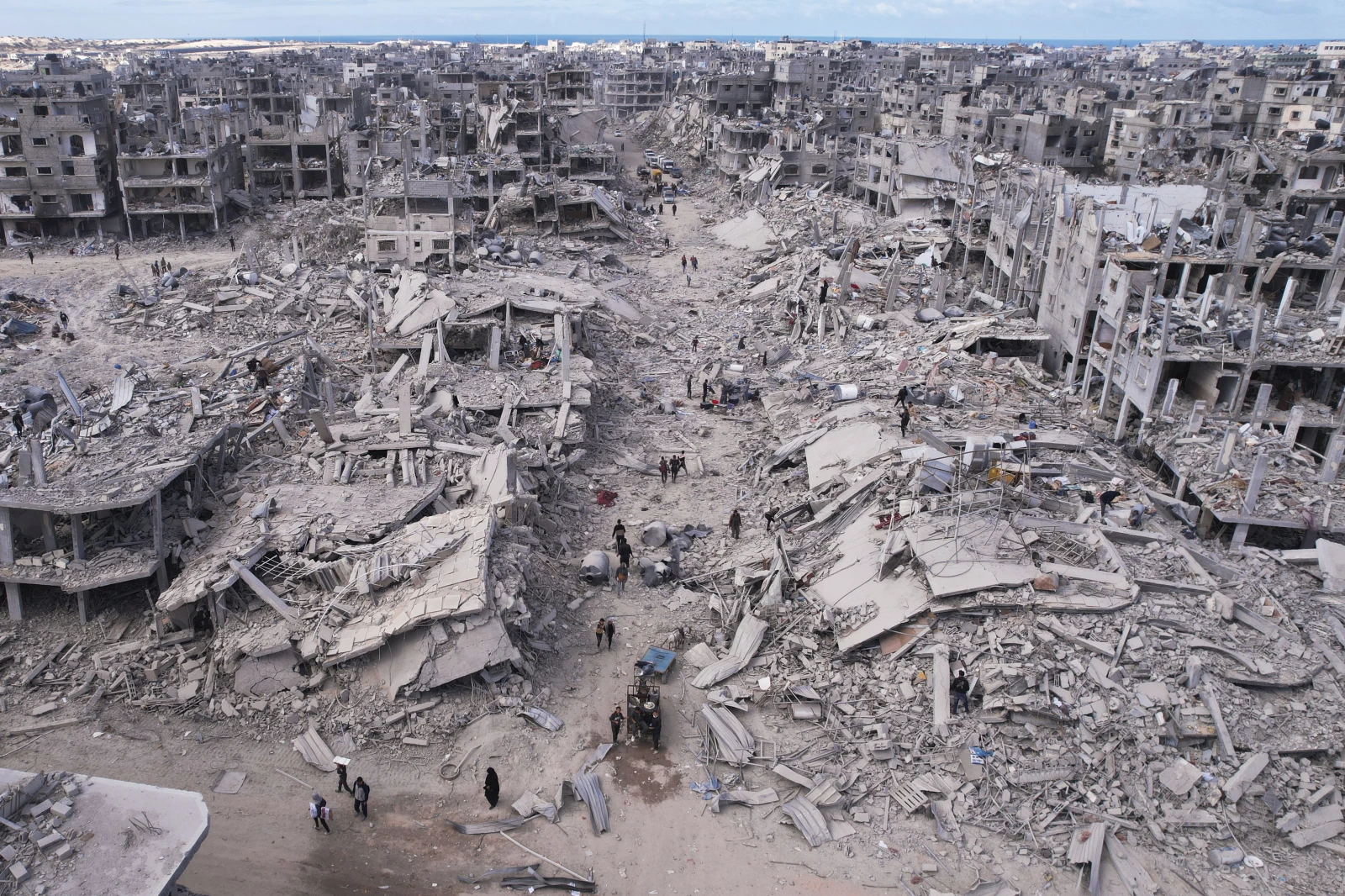
Gaza Strip, Monday, January 20, 2025. (Photo by Mohammed Abu Samra, Associated Press).

In moments of seismic change, a people hidden from global consciousness suddenly emerges, only to be deliberately obscured again—so that mere acknowledgment of their existence becomes a crime: synonymous with antisemitism, terrorism, self‑hating Jews, Western guilt, and a threat to an armored regime that controls an entire region’s systems, populations, and resources.

This erasure and marginalization are neither recent nor sporadic, but as old as the Israeli state itself—entrenched in academic, political, legal, and populist levels. It is intentional and engineered to guarantee its continuity.

It began with first waves of dispossession, where Zionism adopted a language of cancellation and deletion as synonymous with purity, aiming to erase everyone—not leaving a single village, clan, or person—to affirm the success of the Zionist project, as Joseph Weitz, head of settlement at the Jewish National Fund, articulated.

From this womb of erasure come practices that strip people of their names, nationalist identifiers, and humanity. Israeli political and media discourse now prefers terms like “Arabs,” “Gazans,” or “Gaza residents” instead of the true name “Palestinians,” as occurred with Johnny Maur, head of Gaza Humanitarian Foundation, in his Washington speech.

Through this structure of cancellation, this article shines a light on the colonial adaptation of language into a tool of repression and marginalization, systematically aiming to remove national and identity attributes when speaking of the other—one whose existence is either forbidden or denied recognition at the national or physical level.

From Nakba to Statehood

Language was never a neutral medium for the Zionist project—but a deliberate erasure of the Palestinian other through control over terminology, names, and official narratives. Even before the declaration of the state of “Israel,” Zionism had built a colonial and settlement system capable of managing a state from inception, organizing people, resources, and policies without disruption.

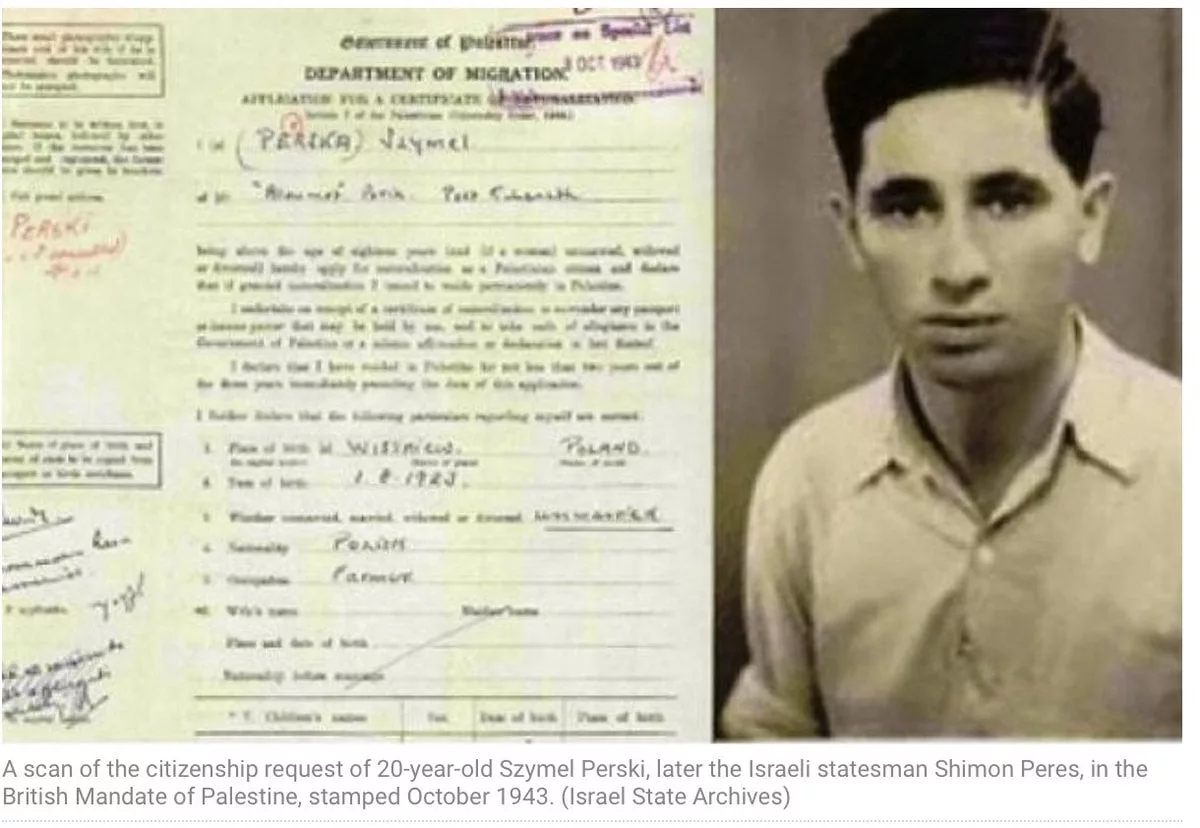
Components of this system included the Jewish National Fund of Palestine, Palestine Jewish Airways (today El Al), Bank Leumi (formerly Anglo-Palestine Bank), the Israeli pound (originally the Palestinian pound post‑Nakba), the Palestine Police (later Jewish auxiliary police), and the Jerusalem Post (once Palestine Post)—all institutional labels suffixed with “Palestine” before being stripped by Zionist control.
نون بوست
Shimon Peres (originally named Szymel Perski) applied for Palestinian citizenship at the age of twenty, during the British Mandate over Palestine.

The problem wasn’t merely renaming Jewish institutions—it was turning that renaming into a systematic policy to purge everything Palestinian from history. Palestinian citizens of Israel became labeled legally and institutionally as “Arab community” or “Israeli Arabs,” defined by their Arabic language secondary to Hebrew.

Researcher Nadeem Rouhana describes the situation of Palestinians inside the state as “living in a constitutionally exclusive ethnic state, reinforced by structural and legal settings enabling exclusion, and dynamics confirming that the state manipulates its security fears to control its Arab citizens.”

This “Israeli-ization” separates them from other Palestinians, especially those from the West Bank and Gaza Strip, undermining emotional, social, and familial ties and thereby reducing any perceived internal threat.

Such linguistic manipulation enables Israeli epistemic denial of the Nakba, shifting blame onto fleeing Palestinians or Arab armies from 1948. It dismisses the right of return, restitution for property and losses, accountability for crimes, or demands for historical justice, even as “new historians” emerged to challenge state narratives and validate Palestinian oral histories.

Importantly, Israeli erasure is two‑fold: geographic Palestine is recognized in administrative terms inherited from the British mandate, but Palestinian national identity is entirely undermined. Jewish leaders once referred to themselves as “Palestinian Jews” or part of a “Palestinian body,” while Golda Meir famously declared in 1938, “I’m Palestinian, but a Zionist Jew,” only to later assert in 1969, “There is no such thing as a Palestinian people—it never existed.”

This ongoing erasure transforms into legal and cultural structures—from Palestinian citizens to those in occupied territories and the diaspora: enshrined through laws like the Jewish Nation-State Law and the Law of Return, histories omitted in curricula, and place names Hebraized, turning erasure into a full colonial edifice.

Murder and Its Justification

Once again, colonial language is brought to the blade to depict the other as barbaric, demonized, and unworthy of existence. This blade is genocide, which since day one equated “Palestinian” with “human animals,” “monsters,” “terrorists,” “barbarians,” “Amalekites,” stripping them—even children—of any humanity.

In October 2023, Netanyahu described Palestinians purely as “Hamas members” and “terrorists,” never using the term “Palestinians,” saying: “We are fighting savage terrorists, not civilians. Gaza is not a civilian entity—it is a haven for terror.”

Across speeches by Netanyahu, his ministers, military leaders, and Israeli representatives abroad, “Palestinian” vanishes, replaced by “terrorist,” “Hamas,” “Gazans,” or “residents of Gaza.” Even UN evacuation briefings describe them as a “transient population” to be removed.

Erasing the name erases recognition of a people as a legal, historical, cultural entity with a right to self-determination, accountability, and redress. This isn’t novel, but characteristic of colonial patterns seen under British, French, and Italian rule—where colonized peoples were reduced to “locally resident inhabitants” instead of citizens.

Israel replicates this dichotomy with “citizens of Israel,” “people of Israel,” versus “local residents,” “Gaza residents,” or “Gazans.” In language, we hear what politics dare not confess: the settlement project aims not just at land occupation, but the erasure of the names and identities of its people—turning occupation into denial of existence.

Western—and even some Arab—media play this linguistic role: we read “war on Gaza,” not “war on Palestine,” “Israel vs. Hamas,” not “Israel’s war on Palestinians,” though Hamas is neither a state nor a conventional army, and its defeat won’t end the underlying aggression.

Johnny Maur recently reflected this: the U.S. administration’s rhetoric removed “West Bank” from discourse, symbolically folding it into “Judea and Samaria.” Daniela Weiss, architect of annexation, shamefully refused to utter “Palestinian,” insisting the concept was a historical fiction.

This speech is not unexpected—it aligns with a settler-colonial belief in “a land without a people.” Changing its name over time is arrogance incarnate. As Weiss said to journalist Piers Morgan, she denied the existence of the Palestinian people entirely.

Indeed, there are thousands of living documents and millions of living testimonies of Israeli erasure. Yet we often drain ourselves deconstructing one discourse at a time instead of confronting a stark, raw truth: amid decaying corpses, starving people, endless rubble, and violence as spectacle, a regime exists that sees only itself—and relegates all else to the margins.

Download this article as PDF
Share this Article
Facebook Twitter Whatsapp Whatsapp Telegram Email Copy Link
سجود عوايص
By سجود عوايص باحثة في قضايا الإعلام الفلسطيني والقانون الدولي الإنساني.
Follow:
Previous Article نون بوست Head of “Gaza Humanitarian” on a Mission to Polish the Image of Israel
Next Article نون بوست What Does Microsoft Have to Do With Starving Gaza?

Read More

  • U.S. Regime‑Change Policies: Why They Are Destined to Fail U.S. Regime‑Change Policies: Why They Are Destined to Fail
  • The Gulf’s Balancing Act: Iran, Israel, and Hidden Links
  • Iraq–Turkey Oil Export Treaty: Why Did Ankara Cancel It After 52 Years?
  • Syria’s Northeast on Edge: QSD Between Ankara and Damascus
  • Has Europe Changed Its Stance on Israel… or Just Its Language?
part of the design
NoonPost Weekly Newsletter

You May Also Like

U.S. Regime‑Change Policies: Why They Are Destined to Fail

U.S. Regime‑Change Policies: Why They Are Destined to Fail

إسراء سيد Esraa sayed 8 April ,2026
The Gulf’s Balancing Act: Iran, Israel, and Hidden Links

The Gulf’s Balancing Act: Iran, Israel, and Hidden Links

فريق التحرير Noon Post 8 April ,2026
Iraq–Turkey Oil Export Treaty: Why Did Ankara Cancel It After 52 Years?

Iraq–Turkey Oil Export Treaty: Why Did Ankara Cancel It After 52 Years?

فريق التحرير Noon Post 8 April ,2026

موسكو.. مهمة ليست أخيرة في اليمن

عمار زعبل
عمار زعبل Published 26 January ,2016
Share
coqq7-_ucaeebwn

في أواخر العام الماضي غادرت البعثات الدبلوماسية صنعاء، أغلقت السفارات والقنصليات وبقيت بعضها، منها السفارة الروسية، التي ظلت داعمة للانقلاب على الشرعية على الرغم من تصريحات لبعض موظفي بعثة موسكو، تفصح بأنها تقف مع الحكومة اليمنية، وأفعالها عكس ذلك كما يرى مراقبون.

فاجأت عاصفة الحزم العالم، التي تمخضت عن تحالف عربي، ومنها روسيا التي لم تهمل شيئًا حيال حلفائها في اليمن أو الإقليم، أي إيران، الداعم الرسمي لتحالف مليشيا الحوثي والرئيس السابق علي عبدالله صالح، وهي التي ظلت تعارض أي قرار أممي من شأنه إدانة المعرقلين للتسوية السياسية في اليمن، ومن ثم الانقلابيون من مليشيا أحالت الأرض اليمنية إلى ساحة حرب كبيرة.

في يوليو الماضي استطاعت الحكومة اليمنية ودول التحالف العربي انتزاع قرار أممي من بين براثن الدب الروسي، الذي لم تعجبه العمليات العسكرية في اليمن، وإن لم يصرح بذلك، بعد اتفاقات عسكرية واقتصادية عقدتها روسيا والسعودية، فأرادت تغليب مصالحها مع المملكة، على حساب مناطق أخرى تكمن أهميتها أكثر وبالإمكان إدارة ملفاتها بسهولة أكثر من الملف اليمني، الذي غدا شائكًا بالنسبة لها.

القرار 2216 مثل حجر الزاوية في الأزمة اليمنية، والقفز عليه ضياع للقضية برمتها كما يقول متابعون، ظلت الحكومة اليمنية تفاوض من أجل تنفيذه قبل بدء أي حوار حقيقي مع المسيطرين على مؤسسات الدولة في العاصمة صنعاء وسائر المحافظات اليمنية، وهو القرار الذي يمكن من عودة الشرعية وانسحاب الانقلابيين من المدن وتسليم الأسلحة إلى الدولة.

وهو الأمر الذي رأه الانقلابيون ثقيلاً عليهم ولا يمكن لهم تنفيذه، بل عملوا على الهروب والتنصل من بنوده وسعوا إلى عرقلة أي جهود في سبيل تحقيقه وبدء خارطة طريق تسعى إلى إنهاء الاقتتال والقضاء على شبح الحرب التي أتت على الأخضر واليابس في محافظات الجنوب والوسط.

“جنيفان” اثنان والثالث في طريقه للانعقاد ولا شيء في الأفق ينبئ عن موافقة طرفي الانقلاب لتنفيذه، بل وتهيئة الظروف للحوار والتفاوض في سبيل إبداء حسن النوايا كإطلاق المختطفين العسكريين والسياسيين وغيرها من الأمور، التي سعى إلى تحقيقها مبعوث الأمم المتحدة إسماعيل ولد الشيخ أحمد، بل رجع من صنعاء مؤخرًا ويحمل هدية ووسامًا كما سخر ناشطون ولا يحمل أي تطمينات من قبيل حسن النوايا وبدء التفاوض لتنفيذ القرار الأممي.

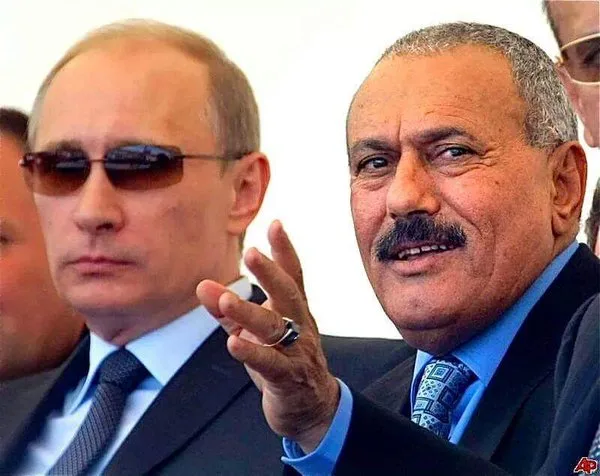
وقبل كل ذلك كانت روسيا حاضرة في المشهد اليمني، لم تغب لحظة عن العاصمة صنعاء، فسفارتها أصبحت مزارًا شبه يومي كما يقول مراقبون للرئيس السابق، الذي لا يترك مناسبة للقاء ممثلي السفارة إشباعًا لرغباته في الظهور، ولاستعراض قوته وأنه يتكئ على قوة عالمية كروسيا بإمكانها إنقاذه من ورطته ضد شعبه ودول الجوار.

تسريبات عدة تتحدث عن ترتيبات لخروج آمن لصالح، وأن روسيا لا يمكن أن تتركه وحيدًا وهو حليفها الإستراتيجي، لكن وكما يقول خبراء بأن روسيا لا يمكن أن تغامر بمصالحها من أجل مغامر ومهووس بالسلطة وقد فقدها تمامًا، لذا لا بد أن تتركه عاجلاً أم في الزمن القريب.

لتأتي مبادرة موسكو يوم أمس والتي وصفتها لحل الأزمة اليمنية، ووصفها ناشطون يمنيون بأنها مبادرة لوأد القرار الأممي والمحاولة لثني الحكومة اليمنية عن تنفيذ القرار، والبدء بمفاوضات أخرى تكون بعيدة عن كل البنود في القرارات السابقة, التي تطالب المليشيا بإخلاء المدن ووقف إطلاق النار.

مباردة لم تؤكد إلى اللحظة إلا أن موسكو حاضرة بقوة في الملف اليمني، يُظهر ذلك ثناء الرئيس السابق لروسيا ودورها، إضافة إلى فعاليات أقيمت في العاصمة المحتلة بما أسميت بالتضامن مع روسيا وغيرها، والتي توضح أن روسيا تعمل في مهمتها وليست الأخيرة من أجل إنقاذ حلفائها في اليمن أو لعب دور آخر غير ذلك الذي تلعبه في سوريا.

TAGGED: أزمة الحوثيين في اليمن ، التدخل الإيراني في اليمن ، التدخل الروسي في الشرق الأوسط
Download this article as PDF
Share this Article
Facebook Twitter Whatsapp Whatsapp Telegram Email Copy Link
عمار زعبل
By عمار زعبل كاتب يمني
Follow:
Next Article نون بوست The Stigma of “ISIS”: A Heavy Legacy Haunting Women and Children of Former Members
part of the design
NoonPost Weekly Newsletter
dark

An independent media platform founded in 2013, rooted in slow journalism, producing in-depth reports, analysis, and multimedia content to offer deeper perspectives on the news, led by a diverse young team from several Arab countries.

  • Politics
  • Society
  • Rights & Liberties
  • Opinions
  • History
  • Sports
  • Education
  • Technology
  • Economy
  • Media
  • Arts & Literature
  • Entrepreneurship
  • Travel
  • Cinema & Drama
  • Food
  • Health
  • Culture
  • Latest Reports
  • Files
  • Long Reads
  • Interviews
  • Podcast
  • Interactive
  • Encyclopedia
  • In Pictures
  • About Us
  • Our Writers
  • Write for Us
  • Editorial Policy
  • Advanced Search
Some rights reserved under a Creative Commons license

Removed from favorites

Undo
Go to mobile version