NoonPost NoonPost

NoonPost

  • Home
  • Politics
  • Economy
  • Society
  • Culture
  • Files
  • Long Reads
  • Podcast
AR
Notification Show More
نون بوست
“There Are Nights I Can’t Close My Eyes”: How Gazans Are Living in Homes on the Brink of Collapse
نون بوست
From al-Jolani to Ahmad al-Shara: The Evolution of Syria’s New Leader
نون بوست
When Political Islam Receded in Egypt: Who Filled the Void?
نون بوست
An Extension of Genocide: Gaza’s Detainees Speak Out
نون بوست
A Tightrope Between Survival and Sovereignty: The Syrian Government Faces Normalization Pressures
نون بوست
American Aircraft Carriers: Has the Era of “100,000 Tons of Diplomacy” Ended?
نون بوست
U.S. Regime‑Change Policies: Why They Are Destined to Fail
نون بوست
Transformations of Israeli Judaism: Between the Victim Complex and the Colonizer’s Doctrine
نون بوست
The Gulf’s Balancing Act: Iran, Israel, and Hidden Links
نون بوست
Iraq–Turkey Oil Export Treaty: Why Did Ankara Cancel It After 52 Years?
نون بوست
Syria’s Northeast on Edge: QSD Between Ankara and Damascus
نون بوست
Has Europe Changed Its Stance on Israel… or Just Its Language?
NoonPost NoonPost
AR
Notification Show More
نون بوست
“There Are Nights I Can’t Close My Eyes”: How Gazans Are Living in Homes on the Brink of Collapse
نون بوست
From al-Jolani to Ahmad al-Shara: The Evolution of Syria’s New Leader
نون بوست
When Political Islam Receded in Egypt: Who Filled the Void?
نون بوست
An Extension of Genocide: Gaza’s Detainees Speak Out
نون بوست
A Tightrope Between Survival and Sovereignty: The Syrian Government Faces Normalization Pressures
نون بوست
American Aircraft Carriers: Has the Era of “100,000 Tons of Diplomacy” Ended?
نون بوست
U.S. Regime‑Change Policies: Why They Are Destined to Fail
نون بوست
Transformations of Israeli Judaism: Between the Victim Complex and the Colonizer’s Doctrine
نون بوست
The Gulf’s Balancing Act: Iran, Israel, and Hidden Links
نون بوست
Iraq–Turkey Oil Export Treaty: Why Did Ankara Cancel It After 52 Years?
نون بوست
Syria’s Northeast on Edge: QSD Between Ankara and Damascus
نون بوست
Has Europe Changed Its Stance on Israel… or Just Its Language?
Follow US

What Does Microsoft Have to Do With Starving Gaza?

مرام موسى
Maram Musa Published 26 March ,2026
Share
نون بوست
نون بوست

Although Israel is the direct perpetrator of the ongoing massacre in the Gaza Strip—through relentless bombardment, systematic killing, and starvation—the culpability does not end there.

Beyond the generous U.S. and Western support that shields these crimes, major corporations are either silently complicit or actively involved in the execution of genocide, turning into civilian arms cloaked in the veneer of technology, all while their hands are soaked in the blood of innocents.

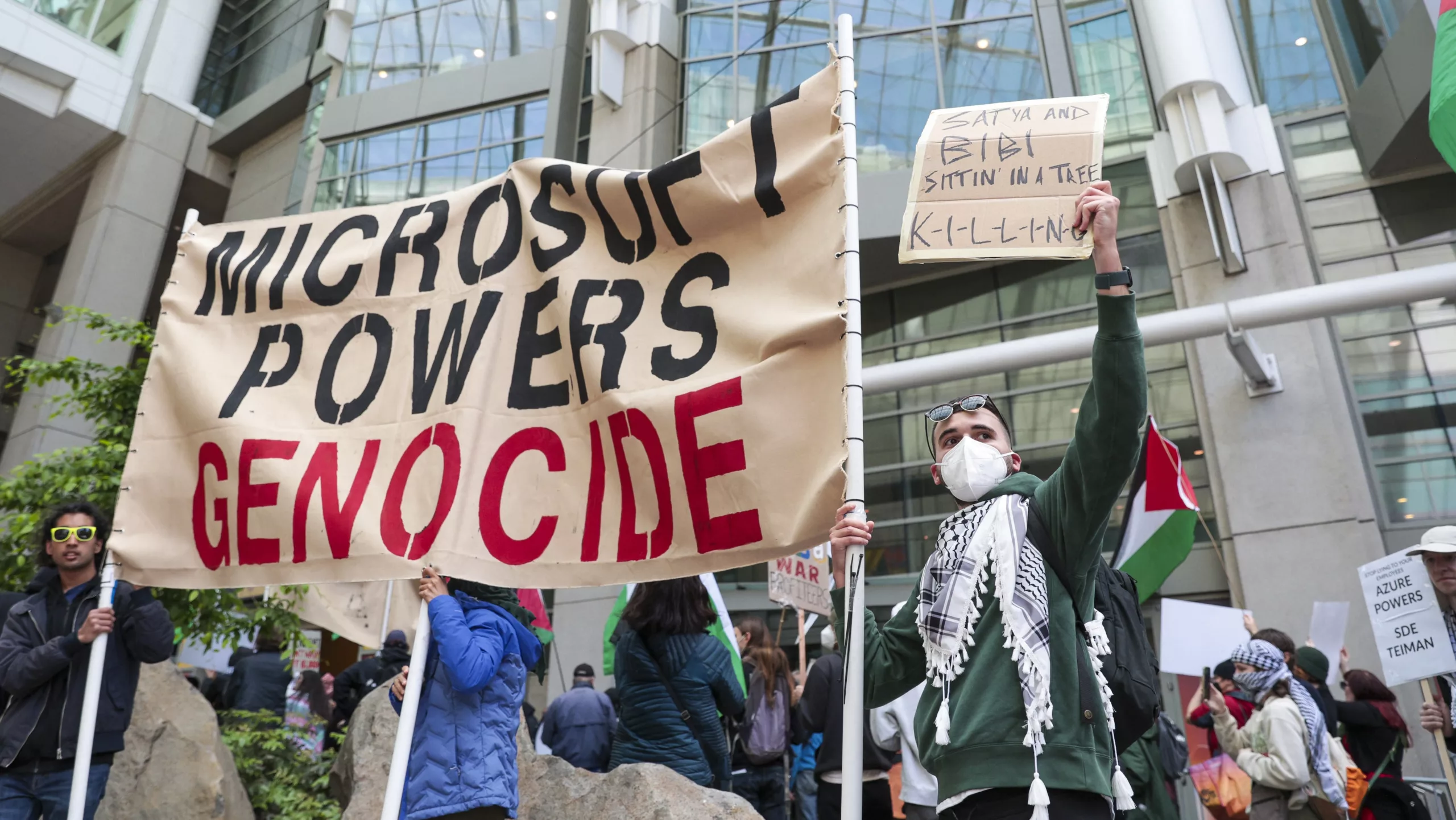
At the top of this blacklist is Microsoft, as leaked documents have exposed a deep security partnership between the company and the Israeli military. This alliance reached its peak after October 2023, when Microsoft poured millions of dollars into providing Azure services used for intelligence gathering and target identification—precisely while Gaza was being pulverized by airstrikes.

More alarmingly, Microsoft’s role extended beyond digital infrastructure in the machinery of death. It became entangled in the tools of blockade and starvation: from financing investors behind the so-called Gaza Humanitarian Foundation—which turned food distribution into death traps where the hungry were gunned down—to forging partnerships with bomb and drone manufacturers responsible for the destruction of bakeries, farms, and water facilities.

The Silent Partner in a Starvation Strategy

The Gaza Humanitarian Foundation was never truly humanitarian in purpose. It was not a relief organization aimed at helping starving Palestinians access food, nor was it an alternative to the UN’s aid mechanism. Rather, it was an Israeli-American strategy to starve, humiliate, and ultimately kill Palestinians in aid lines.

Microsoft has become a silent partner in this scheme—indirectly supporting the founders of this bloodstained project, a group of Israeli military officials, businessmen, and politicians who call themselves the “Mekivim Israel Forum.”

According to the “No Azure for Apartheid” campaign—launched by two former Microsoft employees in 2021 to expose the company’s ties to the Israeli occupation—Michael Eisenberg, who hosted the Mekivim Forum in his home, is also a Microsoft partner through his co-founding of Aleph, a company linked to Microsoft’s advertising division across Europe.

Microsoft had no qualms in backing Liran Tankman, an officer in Israel’s COGAT unit, the same division responsible for denying Palestinians access to food and water. Tankman played a key role in coordinating between American operatives executing the plan and the Israeli army. He received funding from Microsoft for his cybersecurity company Rezilion, whose software is proudly listed on the Microsoft Marketplace.

Notably, Microsoft also provided direct financial support to Elad Gil, the head of research at the Talith Institute, who crafted the operational blueprint for the “Gaza Humanitarian Foundation.” He also conceptualized so-called “humanitarian transition zones”—essentially biometric detention camps, where no food is given without a fingerprint, and no survival without the permission of an armed guard.

Microsoft’s role didn’t stop there. It provided AI services to Boston Consulting Group (BCG), which developed the foundation’s economic model, including scenarios for mass displacement of Palestinians from the Gaza Strip.

Alliances With the Israeli Military

Israel’s siege has not merely restricted food; it has systematically targeted every source of food production and storage. UN agencies have documented that over 85% of Gaza’s water and sanitation infrastructure has been rendered inoperable by continued Israeli airstrikes. A recent UN report warned that the war has virtually eradicated agriculture in Gaza, leaving only 4.6% of land arable.

Microsoft plays a tacit role in destroying Gaza’s basic life infrastructure—from water supplies to bakeries—through its network of military partners that equip the Israeli army with lethal tools.

For example:

  • General Dynamics, a gold-tier Microsoft partner, supplies Israel with 500-pound MK-82 bombs—one of which was used in June 2025 to bomb a crowded café in Gaza, killing at least 41 civilians.

  • Boeing, one of Microsoft’s top S500 clients, supplied 2,000-pound bombs used in the bombing of Al-Mawasi, an area designated as a safe zone for displaced people. Around 90 Palestinians were killed, and a key water source was destroyed.

  • Honeywell, Microsoft’s strategic defense industry partner, supplied munitions used in June 2024 to bomb UNRWA schools sheltering hundreds of displaced families.

Microsoft’s support for Israel is not limited to bomb suppliers. The “No Azure for Apartheid” campaign revealed that the company provides Azure cloud and AI tools to Caterpillar, whose bulldozers are used to raze farmland and destroy water treatment plants—deepening the humanitarian catastrophe in Gaza.

Microsoft is also implicated in environmental warfare: it maintains close ties with the companies supplying white phosphorus to Israel, a chemical used in Gaza bombings that poisons soil and water.

  • ICL, which relies on Microsoft’s Azure Quantum Elements platform for chemical development, has long-standing tech partnerships with the company.

  • Bayer, the German multinational, is another strategic client of Microsoft in cloud computing and AI.

How Microsoft Backed the Blockade Infrastructure

After October 7, 2023, Israel’s blockade on Gaza intensified into a campaign of collective punishment—cutting off basic services like electricity and water almost entirely, exacerbating the starvation crisis.

According to Human Rights Watch, Israel cut off electricity completely on October 7, 2023. By October 15, all wastewater treatment plants shut down due to fuel shortages, collapsing the sanitation system and triggering outbreaks of polio, hepatitis, and other waterborne diseases.

Microsoft played a role in this collapse. It supplies Israel Electric Corporation (IEC)—the body responsible for the blackout—with Azure services and Azure Monitor, a performance tracking system. In other words, the company that deprived two million people of vital power relies on Microsoft’s cloud infrastructure.

The water crisis followed a similar path. On October 9, 2023, Mekorot, Israel’s national water company, deliberately cut Gaza’s water supply. Since then, Palestinians receive only intermittent and inadequate water, amid systematic damage to the network and fuel shortages preventing pump operation.

Here again, Microsoft is deeply involved: Mekorot is both an Azure client and a partner in supporting startup ventures through Microsoft.

Weaponizing AI to Target Aid Efforts

The starvation policy has escalated to brutal extremes—targeting anyone attempting to provide food or water. International organizations have documented sniper attacks and airstrikes on fishermen, farmers, and aid workers, carried out using advanced military tech that runs, in part, on Microsoft services.

Microsoft-powered technologies were directly involved in one of the deadliest massacres of the war on hunger: In January 2024, Israeli drones bombed a crowd of Palestinians waiting for flour at a UN distribution center, killing over 50 people.

The drones used in the attack were made by Elbit Systems, which has close financial and technical ties to Microsoft. Other drones, such as the Matrice 600, were revealed in leaked documents to operate using Azure cloud services, making Microsoft a technical enabler of lethal operations.

This complicity extended to foreign aid workers: In April 2024, Israel assassinated an entire team from World Central Kitchen, striking their vehicles during a relief mission in Gaza. The strike was carried out using Spike missiles from Rafael Advanced Defense Systems, a Microsoft partner with a long history of collaboration in weapons tech.

Punishment for those Who Speak Out

As Microsoft deploys its technological arsenal to support Israel’s war on Gaza, voices within the company have begun to push back—despite the threat of retaliation.

Among the most prominent is Ibtihal Abu Al-Saad, whose actions garnered global attention when she interrupted a keynote by Mustafa Suleyman, Microsoft’s head of AI, during the company’s 50th anniversary celebration. She publicly accused him of weaponizing AI in service of Israeli aggression.

Ibtihal said she could no longer remain silent, especially after discovering Microsoft’s $133 million contract with Israel’s Ministry of Defense for data storage and processing via Azure.

She was not alone. Egyptian engineers Hossam Nasr and Abdo Mohamed staged a protest on October 24, 2024, at Microsoft’s headquarters, commemorating Palestinian martyrs and collecting donations for Gaza’s victims.

Microsoft’s response was swift and unequivocal: any internal dissent or expression of solidarity with Palestine was met with punishment. Employees who dared to question the company’s actions were silenced or dismissed.

In light of the above, if the Israeli occupation is the finger pulling the trigger, then Microsoft is the digital finger, the algorithm, and the cloud infrastructure that enables precise and systematized killing.

Unless the company is held ethically accountable and the world takes serious steps to investigate and confront this collusion, the partnership between technology and genocide will continue—only with new names and faces.

Download this article as PDF
Share this Article
Facebook Twitter Whatsapp Whatsapp Telegram Email Copy Link
مرام موسى
By مرام موسى صحافية سورية
Follow:
Previous Article نون بوست From “Palestinians” to “Gaza Residents”: The Terminology War in Genocidal Discourse
Next Article نون بوست This is how Israel Conceals the Crime of Starvation in Gaza

Read More

  • U.S. Regime‑Change Policies: Why They Are Destined to Fail U.S. Regime‑Change Policies: Why They Are Destined to Fail
  • The Gulf’s Balancing Act: Iran, Israel, and Hidden Links
  • Iraq–Turkey Oil Export Treaty: Why Did Ankara Cancel It After 52 Years?
  • Syria’s Northeast on Edge: QSD Between Ankara and Damascus
  • Has Europe Changed Its Stance on Israel… or Just Its Language?
part of the design
NoonPost Weekly Newsletter

You May Also Like

U.S. Regime‑Change Policies: Why They Are Destined to Fail

U.S. Regime‑Change Policies: Why They Are Destined to Fail

إسراء سيد Esraa sayed 8 April ,2026
The Gulf’s Balancing Act: Iran, Israel, and Hidden Links

The Gulf’s Balancing Act: Iran, Israel, and Hidden Links

فريق التحرير Noon Post 8 April ,2026
Iraq–Turkey Oil Export Treaty: Why Did Ankara Cancel It After 52 Years?

Iraq–Turkey Oil Export Treaty: Why Did Ankara Cancel It After 52 Years?

فريق التحرير Noon Post 8 April ,2026

قبيل مفاوضات جنيف: النظام السوري يحرز تقدمًا إستراتيجيًا في الشيخ مسكين

فريق التحرير
Noon Post Published 26 January ,2016
Share
dr_10

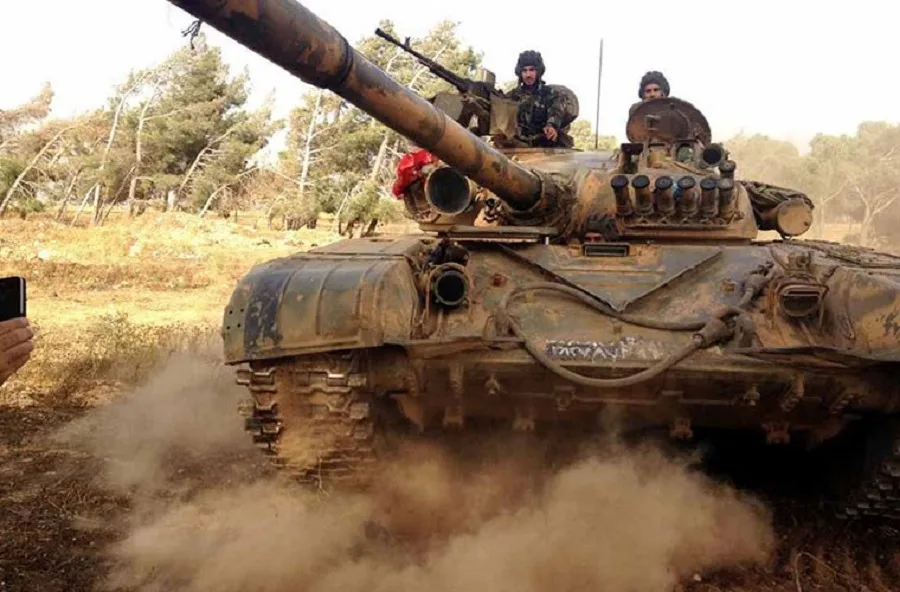
عاشت مدينة الشيخ مسكين بمحافظة درعا السورية تحت القصف المدفعي للنظام السوري وغارات جوية روسية لعدة أشهر، نظرًا للأهمية الإستراتيجية للمدينة بوصفها عقدة مواصلات المحافظات الجنوبية السورية.

هذه المدينة هي رابع مدينة من حيث المساحة وعدد السكان في محافظة درعا بعد إزرع والصنمين ومدينة درعا كانت هدفًا لقوات النظام في الأشهر الماضية محاولة لإثبات الحضور على الأرض قبيل مفاوضات جنيف المتعثرة نهاية هذا الشهر.

حيث انطقت حملة عسكرية على المدينة بدأها الطيران الروسي الذي نفّذ في أول يوم أكثر من ستين غارة جوية على المدينة أوقعت عشرات القتلى والجرحى في صفوف المدنيين، في محاولة لتقدم قوات النظام المدعومة من مليشيات عسكرية من حزب الله.

كل ذلك بهدف إعادة السيطرة على “الشيخ مسكين” لأنها عقدة مواصلات محافظات الجنوب الرئيسية، كما يسعى النظام السوري لكسب أوراق ضغط جديدة ربما يستخدمها في مفاوضات مستقبلية مع المعارضة، إذا ما ضم الشيخ مسكين، إلى إزرع والصنمين اللتين يسيطر النظام السوري عليهما.

على وقع المأساة الإنسانية التي خلفتها هذه المعارك الشرسة، وبالرغم من حشد قوات المعارضة المسلحة لجهودها لاستعادة أي أراض يتقدم فيها النظام، إلا أن قوات النظام سيطرت في النهاية بدعم من المقاتلات الروسية على معظم أحياء مدينة الشيخ مسكين في ريف درعا، عقب اشتباكات مع قوات المعارضة.

حيث أورد المرصد السوري لحقوق الإنسان أن قوات النظام بدعم من ضباط إيرانيين ومقاتلين من حزب الله اللبناني بالإضافة إلى مسلحين موالين لها، من السيطرة على كامل بلدة الشيخ مسكين في ريف درعا الشمالي عقب هجوم بدأته قبل نحو شهر.

إستراتيجية الموقع وتشكيل البلدة خطرًا على قوات النظام السوري، جعلت هناك إصرارًا على استعادة السيطرة على البلدة رغم الخسائر التي مني بها النظام في بداية الأمر، حيث إن البلدة تعد معقلًا للفصائل المعارضة المسلحة في هذه المنطقة كجبهة النصرة وفصائل الجبهة الجنوبية وجماعة تعرف باسم بيت المقدس.

إضافة إلى نقطة الموقع الإستراتيجي للمدينة القريبة جدًا من الحدود الأردنية جنوب سوريا، كما أنها تمثل المدخل الشمالي للمنطقة الجنوبية، وتقع على تقاطع طرق إستراتيجي، إذ تصل بين دمشق ومدينة درعا عن طريق محور دمشق درعا القديم، وكذلك محافظة القنيطرة الجنوبية، وتلك هي مناطق تواجد وسيطرة قوات النظام في أجزاء كبيرة من مدينة درعا ومحافظة القنيطرة، بينما تسيطر المعارضة المسلحة على غالبية المناطق بريف درعا.

أراد النظام السوري أن يقطع الإمداد عن المقاتلين في ريف درعا بهذه السيطرة للتخفيف من الهجمات التي تنطلق ناحية جنوب دمشق، حيث بدأت سيطرة قوات النظام في نهاية شهر ديسمبر من العام الماضي بإخضاع مقر اللواء 82 القريب من البلدة، والذي كان يعد أبرز نقاط تواجد النظام في ريف درعا قبل سيطرة المعارضة المسلحة عليه قبل عام، وبذلك استطاع النظام أن يُأمن خطوط إمداده على طريق دمشق – درعا.

هذه التطورات العسكرية تأتي في حين تستعد الأطراف الدولية للجولة الثالثة من مباحثات جنيف، سعيًا لما أسموه تسوية الأزمة السورية عبر الحل السياسي السلمي، حيث أكد المبعوث الخاص للأمم المتحدة إلى سوريا ستيفان دي ميستورا أنه من المتوقع أن تبدأ المباحثات الجمعة لمدة قد تصل إلى ستة أشهر.

ترتيبات هذه الجولة من المفاوضات تشهد سجالًا كبيرًا بين الوفود المفترض حضورها، حيث يهدد وفد المعارضة السورية بالانسحاب من المفاوضات في ظل إصرار الطرف الروسي على إدخال تعديلات على شكل وفد المعارضة القادم إلى جنيف أو استبداله بآخر.

بينما تعلن الولايات المتحدة والأمم المتحدة عبر مبعوثها أنهما بصدد إنهاء هذه الخلافات قبيل بدء الجولة، لكن التسريبات الواردة من وفد المعارضة السورية تقول إن جون كيري في لقائه الأخير مع الوفد “كان أشبه بالناطق باسم الخارجية الايرانية والروسية” كناية عن انحيازه الشديد للموقف الروسي.

كذلك كان الأمر مع المبعوث الأممي دي ميستورا التي تقول مصادر من دخل وفد المعارضة إنه أراد فرض شخصيات بعينها على الوفد وهيئة التفاوض، وهو الأمر الذي قُوبل بالرفض القاطع من قِبل الهيئة.

هذه الشخصيات التي يُراد فرضها عبر مبعوث الأمم المتحدة تتمثل في ممثلين لمنظمات مدنية سورية سيتم دعوتهم لحضور مؤتمر جنيف بصفة المستقلين، إلا أن الوفد يعلم أن خلف هذا الأمر نوايا تروج لهؤلاء باعتبارهم ممثلين للمعارضة ومن ثم سيتم المطالبة لاحقًا بضمهم إلى الوفد السوري المعارض في المفاوضات، وهو ما يُعد إعادة تشكيل للوفد طبقًا للرغبة الروسية.

تمسك وفد المعارضة المنبثق عن مؤتمر الرياض بتشكيلته خلفه دعم سعودي تركي لعدم القبول بالإملاءات الروسية الإيرانية، وهو ما دعى قوى المعارضة السورية لاتهام جون كيري صراحة والمبعوث الأممي بالانحياز للطرف الروسي، الذي يحاول العبث بالوفد المعارض من أجل كسب الوقت لصالح نظام الأسد.

هذه الاتهامات والتسريبات التي خرجت عن لقاء وزير الخارجية الأمريكي جون كيري والوفد المعارض في الرياض جعلت الولايات المتحدة تصدر بيانًا توضيحي من المبعوث الخاص لسوريا مايكل راتني حول ما تم تداوله بشأن اجتماع وزير الخارجية الأمريكي مع قادة الهيئة العليا للمفاوضات.

التوضيح حرص على تعديل صورة الانحياز للطرف الروسي بالقول إن هذه التصورات البعض منه ناتج عن سوء فهم والبعض الآخر بسبب تشويه مقصود، مع التأكيد على عدة ثوابت ومواقف، أهمها تمسك الولايات المتحدة بالوفد المعارض المنبثق عن اجتماع الرياض، وكذلك رفض بعض مقترحات النظام بشأن الحكومة الوطنية الموحدة، مع التمسك بالقرارات الأممية لحل الأزمة السورية، مع التأكيد على أنه في حالة تسبب النظام في إفشال عملية التفاوض فإن المعارضة السورية ستحظى بالعم الأمريكي المستمر، ونفي أي قول خلاف ذلك، وهو ما عُد بمثابة مصالحة أمريكية للوفد السوري المعارض الذي لاحظ الانحياز الأمريكي للروس قبيل بدء مفاوضات جنيف.

هذا الوضع المرتبك قبيل بدء المفاوضات يأتي في ظل استمرار الحملة العسكرية الروسية لتدعيم موقف النظام على الأرض قبيل الدخول في المفاوضات، وهي حملة شعواء تقصف المدن السورية ليل نهار بغية كسر المعارضة المسلحة على الأرض، وهو ما تم بالتحديد في مدينة الشيخ مسكين التي استعاد النظام السيطرة عليها مؤخرًا.

TAGGED: الحل السياسي في سوريا ، المعارضة السورية المسلحة ، النظام السوري ، مدينة الشيخ مسكين ، مفاوضات جنيف 3
TAGGED: الأزمة السورية
Download this article as PDF
Share this Article
Facebook Twitter Whatsapp Whatsapp Telegram Email Copy Link
فريق التحرير
By فريق التحرير تقارير يعدها فريق تحرير نون بوست.
Follow:
Next Article نون بوست The Stigma of “ISIS”: A Heavy Legacy Haunting Women and Children of Former Members

Read More

  • U.S. Regime‑Change Policies: Why They Are Destined to Fail U.S. Regime‑Change Policies: Why They Are Destined to Fail
  • The Gulf’s Balancing Act: Iran, Israel, and Hidden Links
  • Iraq–Turkey Oil Export Treaty: Why Did Ankara Cancel It After 52 Years?
  • Syria’s Northeast on Edge: QSD Between Ankara and Damascus
  • Has Europe Changed Its Stance on Israel… or Just Its Language?
part of the design
NoonPost Weekly Newsletter
dark

An independent media platform founded in 2013, rooted in slow journalism, producing in-depth reports, analysis, and multimedia content to offer deeper perspectives on the news, led by a diverse young team from several Arab countries.

  • Politics
  • Society
  • Rights & Liberties
  • Opinions
  • History
  • Sports
  • Education
  • Technology
  • Economy
  • Media
  • Arts & Literature
  • Entrepreneurship
  • Travel
  • Cinema & Drama
  • Food
  • Health
  • Culture
  • Latest Reports
  • Files
  • Long Reads
  • Interviews
  • Podcast
  • Interactive
  • Encyclopedia
  • In Pictures
  • About Us
  • Our Writers
  • Write for Us
  • Editorial Policy
  • Advanced Search
Some rights reserved under a Creative Commons license

Removed from favorites

Undo
Go to mobile version