



NoonPost NoonPost

NoonPost

  • Home
  • Politics
  • Economy
  • Society
  • Culture
  • Files
  • Long Reads
  • Podcast
AR
Notification Show More
نون بوست
“There Are Nights I Can’t Close My Eyes”: How Gazans Are Living in Homes on the Brink of Collapse
نون بوست
From al-Jolani to Ahmad al-Shara: The Evolution of Syria’s New Leader
نون بوست
When Political Islam Receded in Egypt: Who Filled the Void?
نون بوست
An Extension of Genocide: Gaza’s Detainees Speak Out
نون بوست
A Tightrope Between Survival and Sovereignty: The Syrian Government Faces Normalization Pressures
نون بوست
American Aircraft Carriers: Has the Era of “100,000 Tons of Diplomacy” Ended?
نون بوست
U.S. Regime‑Change Policies: Why They Are Destined to Fail
نون بوست
Transformations of Israeli Judaism: Between the Victim Complex and the Colonizer’s Doctrine
نون بوست
The Gulf’s Balancing Act: Iran, Israel, and Hidden Links
نون بوست
Iraq–Turkey Oil Export Treaty: Why Did Ankara Cancel It After 52 Years?
نون بوست
Syria’s Northeast on Edge: QSD Between Ankara and Damascus
نون بوست
Has Europe Changed Its Stance on Israel… or Just Its Language?
NoonPost NoonPost
AR
Notification Show More
نون بوست
“There Are Nights I Can’t Close My Eyes”: How Gazans Are Living in Homes on the Brink of Collapse
نون بوست
From al-Jolani to Ahmad al-Shara: The Evolution of Syria’s New Leader
نون بوست
When Political Islam Receded in Egypt: Who Filled the Void?
نون بوست
An Extension of Genocide: Gaza’s Detainees Speak Out
نون بوست
A Tightrope Between Survival and Sovereignty: The Syrian Government Faces Normalization Pressures
نون بوست
American Aircraft Carriers: Has the Era of “100,000 Tons of Diplomacy” Ended?
نون بوست
U.S. Regime‑Change Policies: Why They Are Destined to Fail
نون بوست
Transformations of Israeli Judaism: Between the Victim Complex and the Colonizer’s Doctrine
نون بوست
The Gulf’s Balancing Act: Iran, Israel, and Hidden Links
نون بوست
Iraq–Turkey Oil Export Treaty: Why Did Ankara Cancel It After 52 Years?
نون بوست
Syria’s Northeast on Edge: QSD Between Ankara and Damascus
نون بوست
Has Europe Changed Its Stance on Israel… or Just Its Language?
Follow US

This is how Israel Conceals the Crime of Starvation in Gaza

مرام موسى
Maram Musa Published 26 March ,2026
Share
نون بوست
نون بوست

For decades, denial has been a cornerstone of Zionist doctrine—not merely as a defensive tactic but as a strategic approach to entrench the occupation and cement its narrative. From denying the very existence of the Palestinian people and the theft of their land, to downplaying mass atrocities and minimizing humanitarian catastrophes, Israel has built its story on a threefold strategy: deny the crime, cast doubt on the narrative, then reverse the truth and blame the victim.

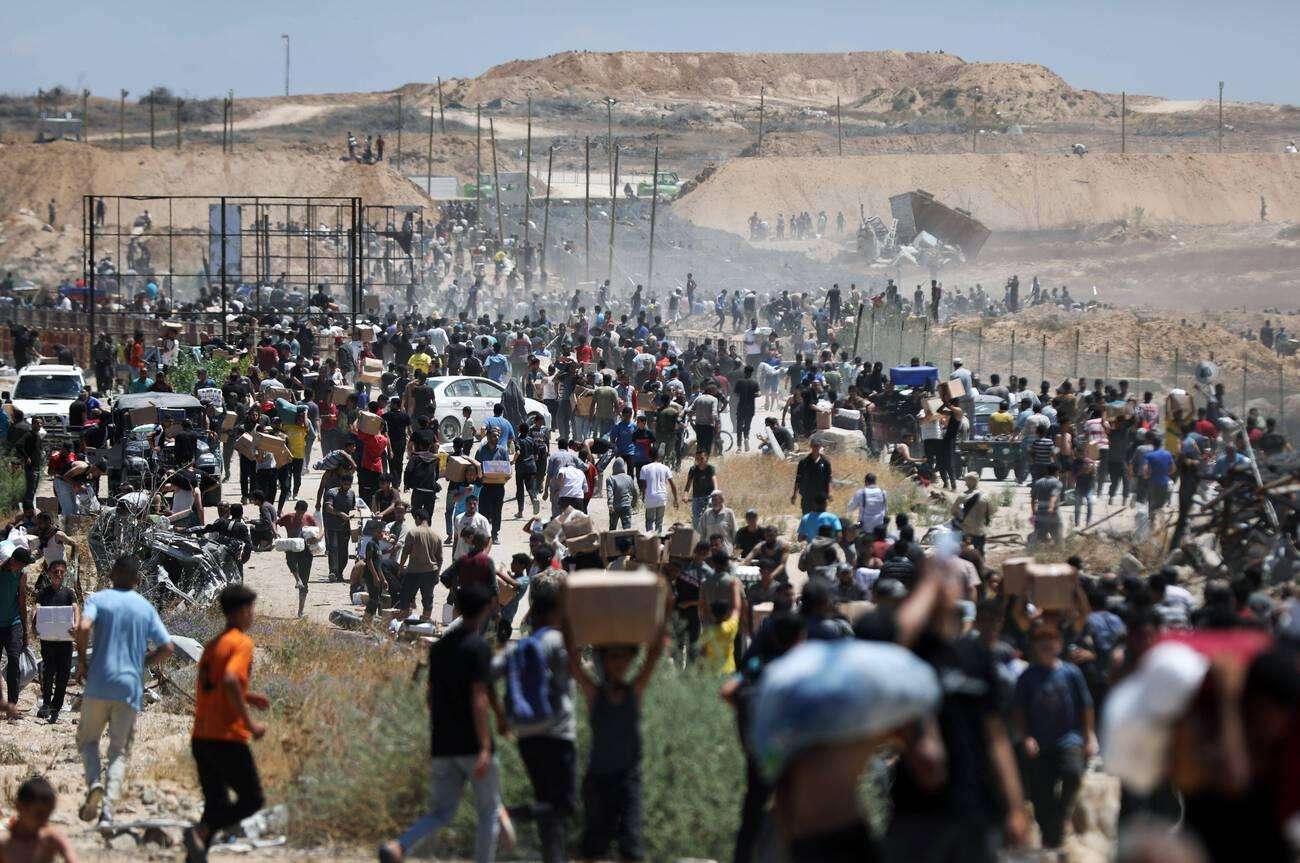
This policy has been starkly evident in the systematic starvation unfolding in Gaza. Israel is attempting to break Palestinian resolve through a deadly blockade. While the world reels from images of emaciated children and withered bodies collapsing under the weight of hunger—and as shocking statistics point to rampant malnutrition and famine—Israel mobilizes its media and diplomatic machinery to distort and deny the truth.

Its instruments of denial range from outright rejection, as seen in Netanyahu’s statements, to shameless deflection like Weitekopf’s appearance beside a banner reading “100 million meals.” Israel also routinely blames third parties such as the UN and Hamas, leveraging soft diplomacy to pressure international organizations, manipulate human rights narratives, and downplay the crisis through selective data and distorted media portrayals.

Blatant Denial

Mounting international pressure and unprecedented public condemnation—from Western nations, no less—is forcing scrutiny on Israel as the primary agent behind Gaza’s humanitarian collapse.

In response, Israeli officials have moved swiftly to deny accusations and reject even the most evident facts. Prime Minister Benjamin Netanyahu, for instance, claimed unflinchingly: “There is no famine in Gaza, and there is no starvation policy.” He dismissed images of skeletal children and fatal hunger statistics as nothing more than a “blind campaign of lies.”

Netanyahu went further, flipping the narrative to paint Israel as the benefactor of aid efforts, even though it halted those very efforts in March. “We allowed aid into Gaza even during wartime. Without that, no one would have survived, and Gaza wouldn’t exist anymore,” he said.

Meanwhile, Israeli government spokesperson David Mencer sarcastically denied famine in Gaza, saying: “There’s famine… allegedly,” mocking what he characterized as baseless claims. Israeli Foreign Minister Gideon Sa’ar went so far as to call Australian Prime Minister Anthony Albanese a “liar” after the latter accused Israel of blocking aid to Palestinians.

Yet this denial isn’t driven by embarrassment or a desire to cover up wrongdoing. Rather, it reflects a belligerent insistence on deepening the crime—if not boasting about it. Amid a devastating famine, Israeli Heritage Minister Amichai Eliyahu coldly declared: “There’s no problem with bombing fuel and food warehouses. Let the people of Gaza starve.”

Far-right National Security Minister Itamar Ben Gvir offered a stark glimpse into the occupation’s mindset: “The only thing that should be sent to Gaza is bombs, shelling, occupation, encouraging emigration, and achieving victory,” he said.

Shifting the Blame to Third Parties

Israel has deliberately diverted attention to other actors in an effort to evade accountability for the unfolding catastrophe in Gaza. This strategy of systematic denial is designed to escape legal and moral scrutiny on the international stage, particularly as Israel’s global standing continues to deteriorate.

Netanyahu not only denied the existence of famine but repeated claims that Hamas was “blocking and stealing aid.” Yet strong evidence debunks this narrative. A U.S. government internal review found no proof that Hamas had intercepted or stolen U.N. humanitarian aid.

The investigation examined 156 reports of theft or loss of U.S.-funded supplies by partner organizations between October 2023 and May 2025 and found the allegations unsubstantiated.

The United Nations wasn’t spared either. Netanyahu accused both Hamas and the U.N. of stalling aid deliveries at the Rafah crossing. “There is no excuse for the U.N.,” he declared. “They must stop lying, stop making excuses, and do their job.”

Similarly, Israel’s military liaison office blamed the U.N. for failing to retrieve aid on the Gaza side of the Kerem Shalom crossing.

In recent days, Israel launched a coordinated digital campaign targeting the U.N. for what it claims is the mishandling of aid, while presenting itself as absolved. According to fact-checking by Sanad Agency, Israeli-aligned influencers were allowed access to locations where aid had piled up, staging carefully crafted videos to suggest that the U.N. was refusing to distribute food while Israel bore no responsibility.

Among the prominent faces in this campaign was an Israeli government spokesperson who posted: “Israel imposes no restrictions on trucks entering Gaza. The problem lies with aid agencies and U.N. organizations failing to collect and deliver the aid.”

Jewish activist Bellamy Bellucci also featured in several staged videos, filmed amid stockpiled aid, alleging that the supplies had been left to rot and spoil, and accusing both Hamas and the U.N. of perpetuating the crisis.

Downplaying the Crisis in the Media

Israel has deployed its diplomatic and political apparatus to systematically obscure the extent of Gaza’s starvation, issuing carefully worded press releases and curated images of limited airdrops—portrayed as “humanitarian efforts”—while enforcing a blockade so tight that a loaf of bread has become a rare luxury.

This narrative aims to portray Israel as a “humanitarian partner” working to improve conditions, even as it repeatedly denies responsibility for creating them. One of the examples cited is the recent airdrops, which, at best, amount to the contents of two trucks—woefully inadequate.

Even these token airdrops often land in conflict zones under Israeli control, making it impossible for civilians to reach them, according to Gaza’s government media office. What is presented as a humanitarian gesture becomes a propaganda trap, used to whitewash the crime rather than alleviate suffering.

Through temporary “humanitarian corridors,” Israel allowed the passage of aid trucks that met only 15% of Gaza’s actual needs, according to local estimates—an empty gesture aimed at easing global pressure without making real changes to the blockade.

Worse still, these limited aid distributions were accompanied by escalated attacks on civilians waiting in line for food in northern, central, and southern Gaza. Since the beginning of the year through last Thursday, Gaza’s Health Ministry recorded 1,320 fatalities among those queueing for aid.

As part of its orchestrated “humanitarian” diplomacy, U.S. envoy Steve Weitekopf visited Rafah in southern Gaza to inspect aid distribution centers. He was photographed in front of a massive sign boasting “100 million meals for the displaced,” while just outside the camera frame, lines of starving people waited for food that never came.

Palestinians widely condemned the visit as a farce—a performative stunt co-produced by Netanyahu to deflect mounting international outrage and deliver a false message that the humanitarian situation was under control and improving.

This narrative engineering also includes Israel’s efforts to prevent the formal declaration of famine in Gaza. Alex de Waal, executive director of the World Peace Foundation at Tufts University and an expert in food security, explained that “Israel deliberately obstructed the data collection needed to reveal the full scale of the hunger,” especially given the U.N.’s operational limitations and restricted access.

This view is echoed by international law professor Mahmoud Hanafi, who said the U.N.’s hesitation to officially declare famine is not just due to weak data, but also its reluctance to confront powerful international actors, especially Israel and its allies.

These concerns were validated last year when the Famine Early Warning Systems Network (FEWS NET) withdrew a report warning of impending famine in northern Gaza, following a formal complaint by Israel’s ambassador to Washington—underscoring the influence exerted on international institutions.

In the end, Israel may succeed, for a time, in manipulating the narrative and buying time through deceptive diplomacy. But truth cannot be buried under rubble or starved into silence. The famine engulfing Gaza will remain etched in the world’s conscience, no matter how long denial and complicity endure.

Download this article as PDF
Share this Article
Facebook Twitter Whatsapp Whatsapp Telegram Email Copy Link
مرام موسى
By مرام موسى صحافية سورية
Follow:
Previous Article نون بوست What Does Microsoft Have to Do With Starving Gaza?
Next Article نون بوست Islamists and Perpetual Imprisonment Under Sisi: Why?

Read More

  • U.S. Regime‑Change Policies: Why They Are Destined to Fail U.S. Regime‑Change Policies: Why They Are Destined to Fail
  • The Gulf’s Balancing Act: Iran, Israel, and Hidden Links
  • Iraq–Turkey Oil Export Treaty: Why Did Ankara Cancel It After 52 Years?
  • Syria’s Northeast on Edge: QSD Between Ankara and Damascus
  • Has Europe Changed Its Stance on Israel… or Just Its Language?
part of the design
NoonPost Weekly Newsletter

You May Also Like

U.S. Regime‑Change Policies: Why They Are Destined to Fail

U.S. Regime‑Change Policies: Why They Are Destined to Fail

إسراء سيد Esraa sayed 8 April ,2026
The Gulf’s Balancing Act: Iran, Israel, and Hidden Links

The Gulf’s Balancing Act: Iran, Israel, and Hidden Links

فريق التحرير Noon Post 8 April ,2026
Iraq–Turkey Oil Export Treaty: Why Did Ankara Cancel It After 52 Years?

Iraq–Turkey Oil Export Treaty: Why Did Ankara Cancel It After 52 Years?

فريق التحرير Noon Post 8 April ,2026

فرض حكومة الوصاية الدولية في ليبيا لتمرير تدخل عسكري وشيك

فريق التحرير
Noon Post Published 26 January ,2016
Share
5625636bc46188f01e8b45be

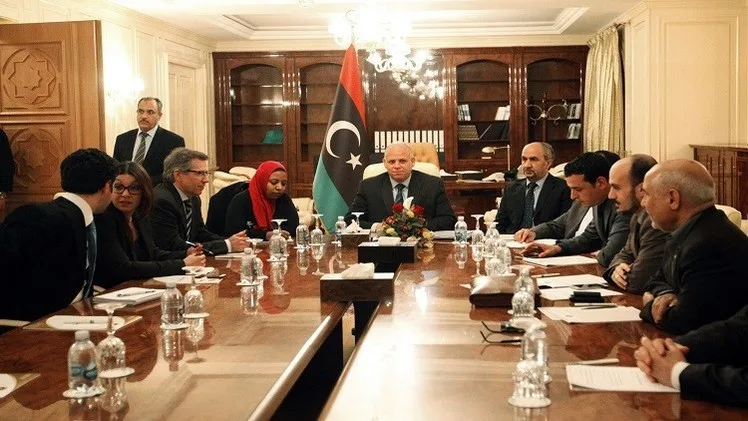
رفض برلمان طبرق المنحل الذي يتخذ من مدينة طبرق الليبية مقرًا له اقتراحًا خاصًا بإنشاء حكومة وفاق وطني، هذا المقترح الذي يُقدم حكومة برئاسة فائز السراج حظى على رفض 89 نائباً من أصل 114 حضروا جلسة البرلمان.

هذا وقد صرح فتحي المريمي المستشار الإعلامي لرئيس برلمان طبرق المنحل عقيلة صالح لوسائل الإعلام أن البرلمان رفض التشكيلة التي قدمها السراج من 32 وزيرًا على أن يُعاد تشكيل حكومة مصغرة في غضون 10 أيام من هذا الوقت.

كما اعترض أيضًا هذا البرلمان على المادة الثامنة من مسودة اتفاق الصخيرات بين أطراف النزاع الليبي، تلك المادة الخاصة بالمناصب العليا في الجيش وأجهزة الأمن وغيرها من المناصب السيادية كمنصب محافظ البنك المركزي وجهاز الرقابة الإدارية وديوان المحاسبة، والتي كانت صلاحية تعيينهم قد منحت لحكومة الوفاق، حيث طالب أغلبية أعضاء برلمان طبرق بأن تصبح هذه الصلاحيات ضمن مهمام مجلس النواب المنحل.

كانت القوى الدولية قد فرضت تسوية سياسية للنزاع الدائر في ليبيا بين البرلمان الليبي المنحل من جهة والمؤتمر الوطني العام من جهة أخرى وما يتبعمها من فصائل عسكرية، في اتفاق رعته الأمم المتحدة عُرف باسم “اتفاق الصخيرات” في المغرب.

الاتفاق وقع بضغط  دولي واضح رغم عدم حسم كثير من النقاط الخلافية بين أطراف النزاع، إلا أن الرغبة الدولية المتسرعة في إنجاز اتفاق يُنهي الانقسام كان واضحًا بغية التفرغ لقتال تنظيم الدولة الإسلامية “داعش” الذي يتمدد على الأراضي الليبية بفعل انقسام السلطة من وجهة نظر القوى الغربية، دون علاج لأصل المشكلات سبب التنازع.

هذا الأمر جعل الاتفاق محل خلاف داخلي بين القوى المتنازعة حيث بات يلقى معارضة داخلية في طرابلس معقل المؤتمر الوطني الليبي العام، وكذلك في مدينة طبرق معقل البرلمان المنحل، وهو ما ظهر في قرارات البرلمان الأخيرة التي ترفض تنفيذ بعض بنود الاتفاق رغم التوقيع عليه من قبل.

يظهر ذلك الأمر جليًا أيضًا في طرف المؤتمر الوطني الليبي، بالنظر إلى تصريحات رئيس فريق حوار المؤتمر الوطني، عوض عبدالصادق، الذي خرج على وسائل الإعلام ليصف مراسم توقيع اتفاق ‫الصخيرات بـ”المسرحية ” داعيًا الدول الغربية  والبعثة الأممية للحاق بالحوار الليبي الداخلي، مؤكدًا على رفض ما أسماها بـ”حكومة الوصاية الدولية”.

كذلك رفض الجانب الآخر الممثل في رئيس برلمان طبرق المنحل، عقيلة صالح، الذي وصف حكومة الوفاق بأنها “تتعارض مع الكرامة الوطنية، ولم تكن نتاج حوار ليبي – ليبي، وهو ما يرفضه الليبيون”، مؤكدًا أنها حلول معدة سلفًا فرضت على الأطراف الليبية الداخلية، وقد رفض البرلمان المنحل في جلسته الأخيرة تشكيلة حكومة الوفاق المقترحة كرد فعل عملي.

الأطراف الليبية كانت قد عملت على حوار وطني مستقل بعيدًا عن الوصاية الأممية في تونس، وقدم هذا الحوار وثيقة إعلان مبادئ مقترحة حظت على تأييد الوفدين الممثلين لطرفي النزاع في ليبيا، في حين رفضت القوى الدولية والبعثة الأممية الاعتراف بهذه التحركات رغم أنها كانت مثمرة أكثر من جهود المبعوث الأممي السابق برناردينو ليون الذي ثبت تواطؤه وعدم حياديته أثناء مهمته في ليبيا، إذ أسفرت لقاءات تونس إلى اجتماع بين رئيس المؤتمر الوطني العام نوري بوسهمين ورئيس برلمان طبرق صالح عقيلة في مالطا.

هذا التصلب في الموقف الدولي يعكس فرض أجندة خارجية على أطراف الصراع رفضتها الأطراف المتنازعة في ليبيا رغم تمتع البرلمان المنحل في ليبيا باعتراف دولي نسبي، بينما يرى مراقبون هذا التمسك الدولي باتفاق الصخيرات الهش على إنه إجبار للقوى الليبية الداخلية على تشكيل حكومة تكون مهمتها الأساسية فقط تسهيل التدخل الأجنبي العسكري في ليبيا تحت ذريعة محاربة تنظيم الدولة.

وقد أيدت شواهد ميدانية هذه النوايا الغربية حيث قامت مقاتلات أجنبية بعدة ضربات جوية على مواقع في ليبيا قيل أنها تابعة لتنظيم الدولة “داعش”، وتدوالت الصحف أنباء عن زيارات عسكرية أمريكية للأراضي الليبية تمهيدًا لما يُعتقد بأنه تدخل دولي عسكري وشيك على الأراضي الليبية.

هذه الحكومة التي تحاول القوى الدولية فرضها على الأطراف في ليبيا دونما حل حقيقي للنزاع ستكون مهمتها الأساسية تمرير التدخل العسكري الدولي في ليبيا، بعد فشل الاعتماد على القوات الداخلية للطرفي النزاع في تحجيم المد الداعشي لتنظيم الدولة، رغم أن قوات اللواء المتقاعد خليفة حفتر قد تلقت دعمًا عسكريًا هائلًا طوال الفترة الماضية وحظيت باعتراف دولي ولكنها فشلت في الوقوف بوجه تنظيم الدولة وتمدده في ليبيا.

مصالح القوى الغربية في ليبيا من النفط وتأمين الحدود البحرية الأوربية فرضت عليهم التدخل سريعًا بعيدًا عن جوهر الانقسام الليبي، بعد استهداف تنظيم الدولة لمصافي النفط في الفترات الأخيرة، وهو ما يمكن قراءته بشكل واضح من تصريحات السفير البريطاني لدى ليبيا، بيتر ميليت، الذي أكد أن القوى الغربية سوف تعترف فقط بالحكومة التي سيترأسها السراج.

في حين أعربت الدول المشاركة في حل الأزمة مرارًا أن المجتمع الدولي مستعد لتقديم الدعم الاقتصادي والعسكري والأمني الذي تحتاجه حكومة الوحدة الوطنية، لأن أي تدخل عسكري يجب أن يكون تلبية لدعوة من الحكومة الليبية، إذن الهدف الرئيسي هو إيجاد حكومة تسمح بتدخل عسكري وشيك في ليبيا.

TAGGED: اتفاق الصخيرات ، الانقسام في ليبيا ، البعثة الأممية ، المؤتمر الوطني العام الليبي ، برلمان طبرق
TAGGED: الأزمة الليبية
Download this article as PDF
Share this Article
Facebook Twitter Whatsapp Whatsapp Telegram Email Copy Link
فريق التحرير
By فريق التحرير تقارير يعدها فريق تحرير نون بوست.
Follow:
Next Article نون بوست The Stigma of “ISIS”: A Heavy Legacy Haunting Women and Children of Former Members

Read More

  • U.S. Regime‑Change Policies: Why They Are Destined to Fail U.S. Regime‑Change Policies: Why They Are Destined to Fail
  • The Gulf’s Balancing Act: Iran, Israel, and Hidden Links
  • Iraq–Turkey Oil Export Treaty: Why Did Ankara Cancel It After 52 Years?
  • Syria’s Northeast on Edge: QSD Between Ankara and Damascus
  • Has Europe Changed Its Stance on Israel… or Just Its Language?
part of the design
NoonPost Weekly Newsletter
dark

An independent media platform founded in 2013, rooted in slow journalism, producing in-depth reports, analysis, and multimedia content to offer deeper perspectives on the news, led by a diverse young team from several Arab countries.

  • Politics
  • Society
  • Rights & Liberties
  • Opinions
  • History
  • Sports
  • Education
  • Technology
  • Economy
  • Media
  • Arts & Literature
  • Entrepreneurship
  • Travel
  • Cinema & Drama
  • Food
  • Health
  • Culture
  • Latest Reports
  • Files
  • Long Reads
  • Interviews
  • Podcast
  • Interactive
  • Encyclopedia
  • In Pictures
  • About Us
  • Our Writers
  • Write for Us
  • Editorial Policy
  • Advanced Search
Some rights reserved under a Creative Commons license

Removed from favorites

Undo
Go to mobile version