




NoonPost NoonPost

NoonPost

  • Home
  • Politics
  • Economy
  • Society
  • Culture
  • Files
  • Long Reads
  • Podcast
AR
Notification Show More
نون بوست
“There Are Nights I Can’t Close My Eyes”: How Gazans Are Living in Homes on the Brink of Collapse
نون بوست
From al-Jolani to Ahmad al-Shara: The Evolution of Syria’s New Leader
نون بوست
When Political Islam Receded in Egypt: Who Filled the Void?
نون بوست
An Extension of Genocide: Gaza’s Detainees Speak Out
نون بوست
A Tightrope Between Survival and Sovereignty: The Syrian Government Faces Normalization Pressures
نون بوست
American Aircraft Carriers: Has the Era of “100,000 Tons of Diplomacy” Ended?
نون بوست
U.S. Regime‑Change Policies: Why They Are Destined to Fail
نون بوست
Transformations of Israeli Judaism: Between the Victim Complex and the Colonizer’s Doctrine
نون بوست
The Gulf’s Balancing Act: Iran, Israel, and Hidden Links
نون بوست
Iraq–Turkey Oil Export Treaty: Why Did Ankara Cancel It After 52 Years?
نون بوست
Syria’s Northeast on Edge: QSD Between Ankara and Damascus
نون بوست
Has Europe Changed Its Stance on Israel… or Just Its Language?
NoonPost NoonPost
AR
Notification Show More
نون بوست
“There Are Nights I Can’t Close My Eyes”: How Gazans Are Living in Homes on the Brink of Collapse
نون بوست
From al-Jolani to Ahmad al-Shara: The Evolution of Syria’s New Leader
نون بوست
When Political Islam Receded in Egypt: Who Filled the Void?
نون بوست
An Extension of Genocide: Gaza’s Detainees Speak Out
نون بوست
A Tightrope Between Survival and Sovereignty: The Syrian Government Faces Normalization Pressures
نون بوست
American Aircraft Carriers: Has the Era of “100,000 Tons of Diplomacy” Ended?
نون بوست
U.S. Regime‑Change Policies: Why They Are Destined to Fail
نون بوست
Transformations of Israeli Judaism: Between the Victim Complex and the Colonizer’s Doctrine
نون بوست
The Gulf’s Balancing Act: Iran, Israel, and Hidden Links
نون بوست
Iraq–Turkey Oil Export Treaty: Why Did Ankara Cancel It After 52 Years?
نون بوست
Syria’s Northeast on Edge: QSD Between Ankara and Damascus
نون بوست
Has Europe Changed Its Stance on Israel… or Just Its Language?
Follow US

Where Do American Muslims Place Their Political Loyalties?

هبة بعيرات
Hiba Birat Published 26 March ,2026
Share
نون بوست
نون بوست
Michigan, October 26, 2024. Reuters/Carlos Osorio

The United States is undergoing a turbulent reckoning on civil rights and liberties, while its foreign policy debates increasingly touch on highly sensitive issues. At the heart of this complex landscape lie Arab and Muslim Americans immigrants and citizens who practice a faith often subject to political scrutiny in Washington, and who hail from regions deeply impacted by U.S. foreign policy.

Although there has been little substantive divergence between the foreign policy agendas of America’s two main political parties, their approaches, principles, and treatment of Muslim Americans differ significantly.

Today, the Muslim population in the U.S. is estimated at 4 to 4.5 million, accounting for about 1% of American adults, according to a 2024 Pew Research Center study. In states with sizable Muslim populations, this demographic holds substantial electoral influence.

The same study shows that 53% of Muslims lean Democratic, while 42% identify with or lean toward the Republican Party. Yet these allegiances are anything but fixed.

What defines Muslim political participation in the United States? Which party garners more support? What shapes the community’s electoral compass? And how did the political landscape shift after October 7? What surprises might the future hold?

From Prohibition to Participation

Historically, Arabs and Muslims in the U.S. showed low levels of political engagement and were largely marginalized until the late 1980s. That decade saw widespread hostility from politicians, including the rejection of Muslim donations as with Walter Mondale in 1984 and public disavowals, like Michael Dukakis in 1988.

This political detachment was driven by multiple factors, notably a closed communal culture that viewed itself as alien to American society. Reinforcing this view were religious rulings from scholars such as former Al-Azhar University president Gad al-Haq, who declared political participation in a secular democracy as a betrayal of Islamic values.

Voices advocating for engagement arguing for the need to influence local realities and protect Muslim interests remained faint. Meanwhile, the overwhelming financial and political dominance of pro-Israel forces in U.S. politics deepened Muslim disenchantment.

A 1988 report estimated that pro-Israel groups outspent Muslim organizations by a factor of 145 to 1. The pattern repeated in 1992, with $6 million spent by Zionist organizations compared to just $40,000 from Muslim groups.

A turning point came in the 1996 election cycle, when wealthy Muslim donors began contributing to campaigns, and Islamic organizations started raising political awareness. Yet internal divisions persisted. Immigrant Muslims, often culturally conservative, leaned Republican, while Black American Muslims, rooted in marginalized communities, tended toward the Democrats a split that diluted collective political power.

Republicans: A Brief Alignment

As the Muslim American population grew in the early 2000s, its political potential caught national attention. George W. Bush became the first presidential candidate to seriously court Muslim voters in Michigan, home to the nation’s largest Muslim community. He identified with their conservative values and cautious economic outlook, securing 72% of Muslim votes in the state despite losing Michigan overall in 2000.

Bush and Vice President Dick Cheney’s early stance on Palestine also influenced Muslim support. After the collapse of Bill Clinton’s peace efforts and rising frustration with perceived Democratic capitulation to Israel, Bush’s mention of a two-state solution kindled hope among Arab and Muslim voters.

However, this fragile alliance crumbled quickly. Following Bush’s inauguration, the September 11 attacks occurred, prompting a sweeping “War on Terror” that disproportionately targeted Arab and Muslim communities, both domestically and abroad. Despite official reassurances, these communities became scapegoats.

Until 2000, many Muslims voted Republican for cultural and religious affinity. But 9/11, and the invasions of Iraq and Afghanistan, along with a surge of Islamophobia, marked a critical shift. The resulting backlash included arbitrary detentions, surveillance of mosques, and revelations of torture at Abu Ghraib and Guantanamo Bay, misleadingly dubbed “enhanced interrogation techniques.”

The Republican Party played a central role in fomenting anti-Muslim sentiment, often via right-wing populist narratives during election cycles. Consequently, Muslim voters began a two-decade migration toward the Democratic Party. In 2004, 85% voted for John Kerry; by 2008, 90% supported Barack Obama.

A Pew study from 2007 to 2017 showed this evolution: in 2007, 66% of Muslims favored Democrats versus 13% for Republicans. Support for Democrats peaked at 70% under Obama and remained above 60% in 2017, even as Hillary Clinton ran against Donald Trump. The Democrats maintained a dominant edge.

Fleeing Populist Flames

Donald Trump’s populist presidency catalyzed record voter turnout in 2020. Nationwide, 66.8% of registered voters cast ballots a 7% increase from 2016. Muslim turnout reached historic levels: 71% of 1.5 million registered Muslim voters participated.

نون بوست
Joe Biden takes selfies with guests during an Eid al-Fitr reception in the East Room of the White House, on May 1, 2023 in Washington, D.C.

This mobilization was a direct response to Trump’s discriminatory policies, including the Muslim Ban and the targeting of Islamic institutions. His unequivocal support for Israel moving the U.S. embassy to Jerusalem, promoting the Abraham Accords, and unveiling the “Deal of the Century” fueled further outrage.

An election-day survey by the Institute for Social Policy and Understanding found 86% of non-Arab Muslims and 81% of Arab Muslims voted for Joe Biden. While Trump’s Islamophobia was a central factor, domestic issues such as healthcare, taxes, and the economy also shaped voter behavior underscoring Muslim Americans’ deepening engagement with broader American concerns.

What Do Muslim Voters Want?

The Muslim American community is among the most diverse in the U.S., encompassing Arabs, Blacks, Latinos, Asians, and Whites. Consequently, political leanings vary widely across cultural and socio-economic lines.

نون بوست

Generally, Muslims support Democratic stances on immigration, diversity, and social services. According to Pew’s 2023-2024 data, 71% favor a larger government, 82% support racial and ethnic diversity, and 82% back pro-immigration policies.

Yet, they align with Republicans on family values, gender roles, and opposition to LGBTQ+ ideology. For instance, 63% believe one parent should stay home to raise children, 55% view homosexuality as socially problematic, and 48% say gender transition has negatively impacted society.

Muslims also diverge from both parties on religion in public life. Some 55% believe public school teachers should lead students in prayer a position neither party fully endorses.

In 2020, 37% of Muslim voters identified as moderate, compared to 26% progressive, 18% liberal, and only 10% conservative. This reflects a reluctance to fully align with either political ideology.

Thus, Muslim electoral behavior reflects a complex balance of domestic concerns and foreign policy stances, especially those affecting their countries of origin. U.S. policy toward the Middle East remains a key influence, with Muslims generally favoring Democrats for their diplomacy-first approach and aversion to military intervention.

Generational divides also play a role. Older immigrants often hold conservative views shaped by Islamic and Eastern traditions, while younger generations raised in the U.S. adopt more progressive stances, including support for LGBTQ+ rights, abortion access, and secular economic policies aligning more with Democratic ideals.

Soren Jordan, a political science professor at Auburn University, notes that Muslim voting patterns are shaped by the same factors influencing the broader electorate: economic realities, political climate, and the desire for change. As CAIR’s Robert McCaw puts it, Muslims are neither fully left nor entirely right. No party can assume their unconditional support.

Gaza Genocide: A Turning Point

Israel’s war in Gaza was a watershed moment for Muslim and Arab voters. President Biden’s unwavering support for Israel, refusal to back a ceasefire, and obstruction of UN efforts alienated these communities. In key swing states like Michigan, Muslims began abandoning Democrats for Republicans or third-party candidates.

نون بوست
Zohran Mamdani surrounded by members of the Muslim community in front of the Islamic Cultural Centre. October 24, 2025. Photo by: Celia Moloney.

Disillusioned voters split across multiple strategies: some backed Kamala Harris as the “lesser evil” hoping for a shift in Democratic policy, others cast protest votes for Trump based on his promise to end the war, and many supported Green Party candidate Jill Stein, despite her slim chances, to send a message. Others boycotted the election altogether.

In CAIR’s preliminary 2024 survey, less than half of Muslims voted for Harris, down from 65–70% for Biden in 2020. An Associated Press poll found 63% supported Harris.

In Michigan, home to 200,000 Muslim voters and 15 electoral votes, Trump won by 84,000 votes suggesting Muslim turnout played a decisive role.

For the first time, significant numbers of Muslims voted for a third-party candidate. Yet some, wary of repeating 2016, when Muslim votes for Stein allegedly cost Hillary Clinton key states, opted for Harris.

Arab American Institute President James Zogby noted a dramatic shift: 42% of Arabs voted for Trump and 41% for Harris, an unusually tight margin for a group that historically favors Democrats.

While Gaza was pivotal, other domestic issues economic anxiety, education, LGBTQ+ rights also influenced decisions. Notably, many Muslims oppose open-border policies and large-scale support for undocumented migrants, aligning them partially with Republican immigration stances.

Republican support among Muslims has been rising. In the 2022 midterms, 28% of Muslims voted Republican, up from 11% in 2018. This reflects growing dissatisfaction with Democratic pandemic policies and economic fallout.

A New Era

Muslim political engagement has surged not only in voting but also in running for office. As of 2022, 83 Muslims held elected positions, mostly as Democrats, with the number rising. All four Muslim members of Congress are Democrats.

Still, some Muslims have made inroads in Republican circles. Mehmet Oz ran for Senate in Pennsylvania and, though he lost, was recently appointed by Trump to a top federal healthcare role. Meanwhile, Dearborn Mayor Abdullah Hammoud, a Democrat, endorsed Trump, highlighting the fluidity of political loyalties.

Muslim voters don’t adhere strictly to party lines. Their support is shaped by context, candidate credentials, and policy agendas. In this evolving landscape, no party can take their votes for granted.

Download this article as PDF
Share this Article
Facebook Twitter Whatsapp Whatsapp Telegram Email Copy Link
هبة بعيرات
By هبة بعيرات كاتبة، ومحامية ممارسة في ولاية نيويورك الأمريكية، ماجستير في القانون الدولي وحقوق الإنسان.
Follow:
Previous Article نون بوست The Final Voice Note: How News Travels from Darfur Amid Censorship and Fear
Next Article نون بوست “Green Rafah”: Israel’s Plan to Isolate Palestinians and Cement Its Hold on Gaza

Read More

  • U.S. Regime‑Change Policies: Why They Are Destined to Fail U.S. Regime‑Change Policies: Why They Are Destined to Fail
  • The Gulf’s Balancing Act: Iran, Israel, and Hidden Links
  • Iraq–Turkey Oil Export Treaty: Why Did Ankara Cancel It After 52 Years?
  • Syria’s Northeast on Edge: QSD Between Ankara and Damascus
  • Has Europe Changed Its Stance on Israel… or Just Its Language?
part of the design
NoonPost Weekly Newsletter

You May Also Like

U.S. Regime‑Change Policies: Why They Are Destined to Fail

U.S. Regime‑Change Policies: Why They Are Destined to Fail

إسراء سيد Esraa sayed 8 April ,2026
The Gulf’s Balancing Act: Iran, Israel, and Hidden Links

The Gulf’s Balancing Act: Iran, Israel, and Hidden Links

فريق التحرير Noon Post 8 April ,2026
Iraq–Turkey Oil Export Treaty: Why Did Ankara Cancel It After 52 Years?

Iraq–Turkey Oil Export Treaty: Why Did Ankara Cancel It After 52 Years?

فريق التحرير Noon Post 8 April ,2026

هل تفتتح إيران موسم الاستثمارات الغربية؟

فريق التحرير
Noon Post Published 22 September ,2015
Share
018595316_30300

دشنت وكالة “بيزنس فرانس” مكتبًا لها في طهران لمساعدة الشركات الفرنسية الراغبة بالعمل في إيران، وذلك أثناء زيارة وفد فرنسي على رأسه وزير الزراعة الفرنسي ستيفان لوفول ووزير الدولة لشؤون التجارة الخارجية ماتياس فيكل بصحبة 150 رئيس شركة، غالبيتهم ممثلين لمجموعات تجارية فرنسية كبرى.

هذا الخبر ليس عابرًا وله من الدلالات الكثير، ويُعد مؤشرًا قويًا على رغبة غربية طويلة المدى في غزو السوق الاستثماري الإيراني، ويعكس توجهات الغرب تجاه إيران بعد الإعلان عن التوصل لاتفاق نووي بين إيران والدول الست الكبرى في فيينا، هذه التوجهات التي قابلتها إيران باستعداد واضح لتلقي سيل من روؤس الأموال الغربية لا سيما تلك القادمة من الاتحاد الأوربي.

وفود سياسية واقتصادية عديدة مرت بطهران الشهور الماضية ورغبات جامحة لدى بعض الشركات المتعددة الجنسيات في الدخول في علاقة اقتصادية مفتوحة مع إيران، هذه الفرصة التي انتظرتها تلك الشركات طويلًا حتى وصلت إلى نقطة الدفع باتجاه إبرام اتفاق نووي مع إيران ينهي حقبة من منعها غزو السوق الإيراني.

يُقدر خبراء اقتصاديين حجم الاستثمارات التي تنتظرها طهران في فترة وجيزة قادمة ما يجاوز 300 مليار دولار، في ظل تسابق الشركات الأوربية لنيل فرص الاستثمار داخل إيران. ملاحقة السوق الإيراني من قبل الغرب تظهر في تصريح لرئيس مجموعة “شركاء تركواز” الإيراني “رامين رابي” الذي أكد أن إقبال الشركات الغربية على إيران تخطى أرقامًا قياسية.

 حيث يذكر أن شركته التي تعمل على تسهيل فرص الاستثمار في إيران أصبحت تتلقى 20 رسالة إلكترونية إسبوعيًا من شركات تبحث عن فرص للاستثمار داخل إيران، وأشار إلى مقابلته مؤخرًا أكثر من 100 ممثل لشركات 90% منها شركات غربية تنتمى إلى دول مختلفة أبرزها ألمانيا وإيطاليا ودول اسكندنافية وبريطانية وحتى أمريكية.

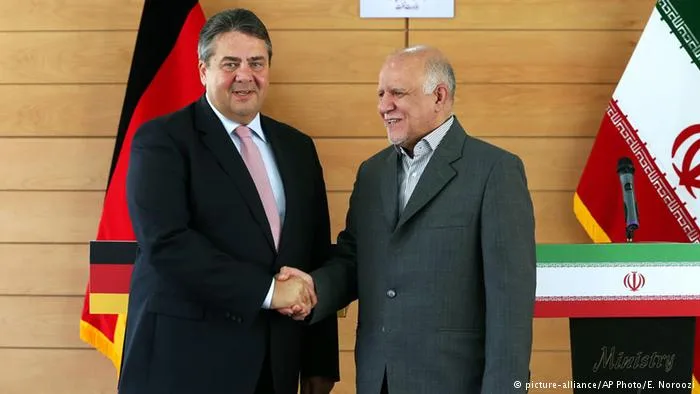
الزيارة الفرنسية المشار إليها أعلاه ليست الأولى من نوعها أوربيًا بعد التوصل للاتفاق التاريخي، حيث سبق الألمان الفرنسيين في الأمر بإرسال وزير اقتصادهم “سيجمار جابرييل” بصحبة وفد مكون من 100 من ممثلى الشركات الألمانية العالمية، وقد تباحث الوفد الألماني مع مسؤولين بالحكومة الإيرانية للنظر في الفرص الاستثمارية المتاحة بين البلدين.

ألمانيا التي تسعى وبقوة إلى تنشيط علاقاتها التجارية المتبادلة مع طهران تضع صوب أعينها على مليار متر مكعب إنتاج يومي متوقع من الغاز الطبيعي الإيراني بعد رفع العقوبات الاقتصادية، كذلك يتوقع أن يصل إنتاج إيران من النفط إلى 4.7 مليون برميل يوميًا، حيث تحتل إيران بهذا المرتبة الرابعة من حيث احتياطيات النفط على مستوى العالم، والثانية من الغاز، وعلى هذا تأمل ألمانيا رفع التبادل التجاري مع إيران ومضاعفته ليصل إلى 10 مليارات يورو في الفترة الوجيزة القادمة بحسب تصريحات رئيس الغرفتين التجارية والصناعية الألمانية، إيرك شفيتزر،  وذلك بعدما تراجع في السابق من حدود 8 مليارات يورو في عام 2004 إلى حدود 2.4 مليار يورو العام الماضي 2014 وهو أدنى مستوى تبادل تجاري بين البلدين.

كما لا يخفى على أحد في السوق الإيرانية الآن سعى العديد من الشركات الأمريكية للتواصل مع نظيراتها الإيرانية في مجالات مشتركة عدة، لترتيب أمور استثمارات بين الجانبين لا سيما في المجالات النفطية، وهو ما نقله موقع اقتصاد نيوز الإيراني الذي أكد أيضًا أن وفدًا اقتصاديًا أميركيًا سيُرتب زيارة إلى العاصمة الإيرانية طهران في أقرب وقت ممكن.

الإيرانيون من جانبهم أسالوا لعاب الغرب على سوقهم المحلي حينما أعلنوا عن حاجتهم إلى استثمارات في القطاعات المختلفة بمليارات الدولارات، كانت أضخم هذه الأرقام المعلنة ما صرحت به وزارة النفط الإيرانية في وقت سابق بأنها ستعمل على جذب نحو 100 مليار دولار من الاستثمارات في مجال الطاقة، وهو ما التقته بشراهة شركات غربية أرسلت وفودها لنيل نصيب مع الكعكة الإيرانية.

كذلك الأمر فعلته وزارة النقل والمواصلات في إيران التي أعلنت عن طرحها مشاريع استثمارية بحجم يصل إلى 80 مليار دولار لتجديد الأسطول الجوي المدني الإيراني، ومد خطوط سكك حديدية ومشاريع بنية تحتية في الموانئ الإيرانية المختلفة، وقد تقدمت بالفعل شركات غربية وآسيوية متخصصة في هذه المجالات بعروض للحكومة الإيرانية التي تعمل حاليًا على انتقاء أفضل العروض لهذا القطاع.

كل هذه الإغراءات الإيرانية جعلت الوفود الغربية تتقاطر على إيران لتخطب ودها، كما زاد الطلب على انتداب سفراء الغرب السابقين في طهران لترأس وفود تجارية لاستكشاف الفرص الاسثمارية المتاحة هناك في سوق يبلغ تعداده نحو 80 مليون مستهلك من ذوي القدرة الشرائية العالية نسبيًا، وسط توقعات من اقتصاديين لارتفاع معدل النمو السنوي للاقتصاد الإيراني الذي يبلغ حجمه قرابة 420 مليار دولار حتى يصل إلى  أكثر من 5 في المائة سنويًا وقد يتسارع إلى 7 أو 8 % في الأشهر الـ18 التالية، وبذلك يمكن القول بأننا سنكون أمام  “نمر إيراني اقتصادي” بحسب تعبيرات بعضهم.

كذلك توقع البعض أن يقفز التبادل التجاري بين إيران والاتحاد الأوربي على سبيل المثال إلى 400 %  في العام 2018، بعد أن كان 8.3 مليار دولار فقط  في العام 2014. وعن فرص دولة أوربية كإيطاليا في الاستثمار في إيران باتت أكثر سهولة ويُسر من ذي قبل، حيث بلغت قيمة الصادرات الإيطالية قبل العقوبات 1.15 مليار يورو، ومن المتوقع أن تصل إلى 4 مليارات في العام 2018 لا سيما في قطاع المواد الكيميائية.

وقد بات معلومًا لدى الإيرانيين أن الشركات الأوربية حاليًا هي الأكثر مرونة من نظيرتها الأمريكية، لذلك يتوقع أن يكون لهم النصيب الأكبر من الاستثمار في إيران، فعلى سبيل المثال لم تتقيد الشركات الأوروبية في السابق بقيود حازمة في مسألة العقوبات على إيران، حيث ظلت بعض هذه الشركات تعمل في مجال القطاعات الاستهلاكية الإيرانية حتى لا تخسرها رغم تعرضها لضغوط أمريكية عن طريق النظام المصرفي العالمي، وهو ما اضطر بعض هذه الشركات مؤخرًا لتقليص عملياتها في إيران جراء معاناتها من تحويلات الأموال خارج إيران، أما الآن فقد باتت الظروف مواتية لتوسعة نشاطات هذه الشركات الأوربية.

يُشير البعض إلى نوايا الإيرانيين من خلف هذه التسهيلات الكثيرة في جانب جذب الاستثمارات الغربية إلى سوقها، فقد تأتي هذه التسهيلات بحسب رؤية محللين في إطار الإيقاع بشبكات الاقتصاد والمال العالمية في شراك الإيرانيين، وما لهذه الشبكات من نفوذ في عالم السياسية لاستخدامهم في الضغط على الحكومات الغربية لتمرير الاتفاق دون مماطلة في رفع العقوبات، حيث أن دخول هذه الشركات إلى السوق الإيراني سيدر عليها من الأرباح الكثير ومن غير المتوقع أن تفرط فيه تحت أي ظرف أو مزعم في حالة رغبة الغرب في الدخول إلى الصراع مجددًا مع إيران.

ولكن لكي تنفذ إيران هذا الأمر وتفتح موسم الاستثمارات الغربية في سوقها عليها أولًا المضي في تطبيق شروط الاتفاق النووي حتى ترتفع العقوبات عن طهران تدريجيًا، كذلك على المستوى الاقتصادي على إيران معالجة آثار الحصار الاقتصادي بأقصى سرعة عن طريق إجراء إصلاحات هيكلية من أجل دعم الأداء الاقتصادي على المديين المتوسط والبعيد.

TAGGED: إيران والغرب ، الاتحاد الأوربي ، الاتفاق النووي الإيراني ، الاستثمار في إيران ، الاسثمارات الغربية في إيران
TAGGED: ما بعد الصفقة
Download this article as PDF
Share this Article
Facebook Twitter Whatsapp Whatsapp Telegram Email Copy Link
فريق التحرير
By فريق التحرير تقارير يعدها فريق تحرير نون بوست.
Follow:
Next Article نون بوست The Stigma of “ISIS”: A Heavy Legacy Haunting Women and Children of Former Members

Read More

  • U.S. Regime‑Change Policies: Why They Are Destined to Fail U.S. Regime‑Change Policies: Why They Are Destined to Fail
  • The Gulf’s Balancing Act: Iran, Israel, and Hidden Links
  • Iraq–Turkey Oil Export Treaty: Why Did Ankara Cancel It After 52 Years?
  • Syria’s Northeast on Edge: QSD Between Ankara and Damascus
  • Has Europe Changed Its Stance on Israel… or Just Its Language?
part of the design
NoonPost Weekly Newsletter
dark

An independent media platform founded in 2013, rooted in slow journalism, producing in-depth reports, analysis, and multimedia content to offer deeper perspectives on the news, led by a diverse young team from several Arab countries.

  • Politics
  • Society
  • Rights & Liberties
  • Opinions
  • History
  • Sports
  • Education
  • Technology
  • Economy
  • Media
  • Arts & Literature
  • Entrepreneurship
  • Travel
  • Cinema & Drama
  • Food
  • Health
  • Culture
  • Latest Reports
  • Files
  • Long Reads
  • Interviews
  • Podcast
  • Interactive
  • Encyclopedia
  • In Pictures
  • About Us
  • Our Writers
  • Write for Us
  • Editorial Policy
  • Advanced Search
Some rights reserved under a Creative Commons license

Removed from favorites

Undo
Go to mobile version