

NoonPost NoonPost

NoonPost

  • Home
  • Politics
  • Economy
  • Society
  • Culture
  • Long Reads
AR
Notification Show More
نون بوست
Generations at Risk of Regression.. What Has the War of Extermination Done to the Special Education Sector?
نون بوست
De-escalation with Lebanon and War with Hezbollah: How Is the State-Weapons Equation Being Reshaped?
نون بوست
A Compound Targeting: The UAE as a Pressure Card in Iran’s Strategy
رئيس دولة الاحتلال إسحاق هرتسوغ يرفض إصدار قرار فوري في طلب العفو
From Trial to Deal: 5 Scenarios for Netanyahu’s Corruption Case
نون بوست
The UAE’s Exit from OPEC.. The Biggest Winners and Losers
نون بوست
Not Their War, But They Are Paying the Price: Expatriate Workers in the Gulf Under Pressure from Escalation
نون بوست
How Is Settlement Penetrating the Heart of Jerusalem? An interview on Control and Demographic Engineering
يتبع كثير من سفن "أسطول الظل" نمطًا يبدأ بظهورها على الرادار ثم اختفائها
Iran’s Shadow Fleet.. How Does It Break the Hormuz Blockade?
نون بوست
What Does al-Shaibani’s Visit Mean for the Future of Egyptian-Syrian Relations?
كتلة صفراء تحدد الخط الأصفر في خان يونس في يناير/كانون الثاني 2026 (AP)
Swallowing More Territory: Israel’s New Map of Control in Gaza
نون بوست
From Cartoons to Exhibitions: How Syrian Art Confronts Repression and Oblivion
نون بوست
The Umayyad Legacy: How Did Damascus Rule Three Continents?
NoonPost NoonPost
AR
Notification Show More
نون بوست
Generations at Risk of Regression.. What Has the War of Extermination Done to the Special Education Sector?
نون بوست
De-escalation with Lebanon and War with Hezbollah: How Is the State-Weapons Equation Being Reshaped?
نون بوست
A Compound Targeting: The UAE as a Pressure Card in Iran’s Strategy
رئيس دولة الاحتلال إسحاق هرتسوغ يرفض إصدار قرار فوري في طلب العفو
From Trial to Deal: 5 Scenarios for Netanyahu’s Corruption Case
نون بوست
The UAE’s Exit from OPEC.. The Biggest Winners and Losers
نون بوست
Not Their War, But They Are Paying the Price: Expatriate Workers in the Gulf Under Pressure from Escalation
نون بوست
How Is Settlement Penetrating the Heart of Jerusalem? An interview on Control and Demographic Engineering
يتبع كثير من سفن "أسطول الظل" نمطًا يبدأ بظهورها على الرادار ثم اختفائها
Iran’s Shadow Fleet.. How Does It Break the Hormuz Blockade?
نون بوست
What Does al-Shaibani’s Visit Mean for the Future of Egyptian-Syrian Relations?
كتلة صفراء تحدد الخط الأصفر في خان يونس في يناير/كانون الثاني 2026 (AP)
Swallowing More Territory: Israel’s New Map of Control in Gaza
نون بوست
From Cartoons to Exhibitions: How Syrian Art Confronts Repression and Oblivion
نون بوست
The Umayyad Legacy: How Did Damascus Rule Three Continents?
  • Home
  • Politics
  • Economy
  • Society
  • Culture
  • Long Reads
Follow US

Media Bias and Judicial Narratives: Comparing the Coverage of Marine Le Pen and Ekrem İmamoğlu

يمان الدالاتي
Yaman Dalati Published 4 April ,2025
Share
نون بوست

A Paris criminal court has convicted far-right leader Marine Le Pen of embezzling public funds, following revelations that she and her party, between 2004 and 2016, had operated an illicit scheme to channel European Parliament funds into the coffers of the National Front — rebranded in 2018 as the National Rally. According to the court, the party falsely employed European parliamentary assistants who, in reality, were working for the party rather than the EU legislature.

French prosecutors have called for a harsh sentence: five years in prison, two of which would be served, a €300,000 fine, and a five-year ban from running for public office. The prosecution argued that Le Pen led a “highly organized system” that systematically exploited the European Parliament as a funding source for her political movement.

Le Pen, however, rejected the charges, accusing the authorities of launching a “nuclear bomb” against her party — a metaphor suggesting that the real aim of the trial was to derail her 2027 presidential ambitions. The French judiciary, for its part, underscored the independence of its decision, noting that the ruling was “strictly judicial, not political,” and was issued by a panel of three impartial judges.

This article offers a critical comparative reading of how European media outlets have covered the Le Pen case in France versus the case of Ekrem İmamoğlu in Turkey. The two cases share notable similarities in timing and substance, providing a unique lens through which to examine the European media’s purported neutrality in reporting on politically charged events.

Disparities in Media Coverage

A detailed comparison of leading Arabic-language European media platforms — including BBC Arabic, CNN Arabic, France 24, and Deutsche Welle — reveals stark contradictions and a double standard in how the two cases were presented.

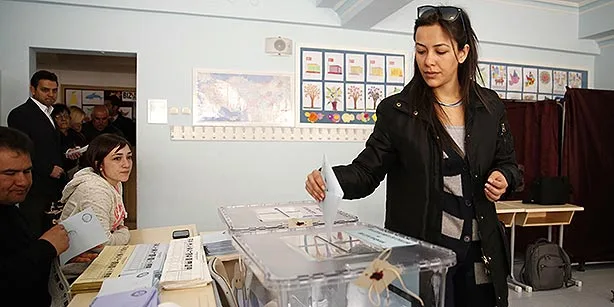
In the case of İmamoğlu, BBC Arabic and CNN Arabic rushed to deliver emotionally charged coverage, framing the mass arrests and protests in Istanbul as a dramatic turning point threatening the future of Turkish democracy. Their reporting emphasized police raids, media suppression, and consistently portrayed President Recep Tayyip Erdoğan as an authoritarian leader undermining democratic institutions — a narrative in line with their ongoing criticism of his government.

نون بوست

By contrast, the tone shifted markedly when these same outlets covered Le Pen. The drama gave way to a more reserved, analytical approach, treating the matter as a strictly legal and domestic French issue. Despite the far-reaching implications for the European far right, both outlets approached the story as a procedural affair rather than a political reckoning.

France 24, meanwhile, devoted exceptional attention to the İmamoğlu case, publishing no fewer than 23 extended news features — most exceeding 800 words — within just two weeks. These reports focused heavily on the long-standing rivalry between Erdoğan’s ruling party and İmamoğlu’s Republican People’s Party, lending the coverage a combative political dimension that suggested a historical power struggle more than a legal matter.

In its coverage of Le Pen, France 24 maintained similar volume but confined its analysis to the legal and domestic political ramifications, emphasizing electoral consequences and in-depth political commentary without veering into broader ideological battles.

Deutsche Welle’s coverage was arguably the least balanced. Despite the confirmed charges against İmamoğlu and a noticeable decline in public protests, the outlet continued publishing daily long-form analyses (often over 800 words), insisting that the case was part of a personal vendetta between Erdoğan and his political adversaries. This ongoing editorial stance further widened the gap between its treatment of Turkish versus French political affairs.

Language and Framing

An examination of the language used by these media outlets further reveals a pronounced discrepancy — one that borders on overt bias. While coverage of İmamoğlu was steeped in emotive and politically charged rhetoric, the Le Pen case was reported in markedly neutral and restrained tones.

BBC Arabic and CNN Arabic repeatedly referred to İmamoğlu as “Erdoğan’s strongest opponent” and framed his legal troubles as an attack on the Turkish opposition. They went as far as using phrases like “Erdoğan, the narcissistic despot,” injecting a personal and confrontational edge into their reporting.

France 24 and Deutsche Welle adopted similarly dramatic terminology in their coverage of the Turkish case, using words like “repression,” “disappearance,” “violence,” and “authoritarianism” at unusually high frequencies. They also heavily emphasized Turkey’s media restrictions, portraying them as oppressive measures — with little acknowledgment of the government’s justification that the restrictions aimed to curb misinformation and fabricated videos unrelated to the protests.

نون بوست

France 24, in particular, claimed that “Turkish authorities face a wave of international condemnation and growing warnings about deteriorating fundamental freedoms,” without offering sufficient context on why the government took such measures.

Deutsche Welle went further still, romanticizing the protests by portraying them as part of a youthful revolution. Headlines included statements like “Turkish youth fear for their future,” and “Not just İmamoğlu — dozens of Turkish politicians are behind bars,” followed by rhetorical calls such as “Where are the intellectuals’ voices?” — all designed to stir public sentiment.

The network also introduced the European Union as a potential diplomatic counterweight, suggesting it could influence Turkish domestic politics. One recent article, titled “Why Is the EU Cautious in Condemning Turkey’s Crackdown?” directly blamed Erdoğan for “freezing Turkey’s accession to the European family.”

Conversely, the same outlets abandoned such dramatic flair when reporting on Le Pen. Their tone was restrained and their language bureaucratic, sticking to neutral formulations and straightforward news reporting.

Political Instrumentalization of Justice

Ultimately, the difference in coverage lies less in the facts of each case and more in how media platforms choose to frame them — and to what ends.

In France, Le Pen’s conviction was presented as a milestone in the fight for European democracy, a symbolic victory against the rise of the far right. The trial was framed not as political persecution but as a necessary step in safeguarding republican values and combating corruption — implicitly benefiting centrist and liberal parties ahead of the next elections.

In Turkey, however, İmamoğlu’s arrest was portrayed from the outset as a politically motivated act — a “character assassination” of a prominent opposition figure, and a calculated move to eliminate a likely presidential contender. The event was not just reported; it was editorialized as an existential threat to Turkey’s democratic future, raising doubts about the integrity of the entire electoral process.

نون بوست

Here, the media stepped beyond its traditional role as observer, acting instead as a powerful player shaping outcomes and molding public perception. While the French judiciary was afforded the benefit of impartiality and its ruling hailed as a triumph for justice, its Turkish counterpart was immediately cast under suspicion — judged not by its rulings but by the political context in which it operates.

In doing so, the media did not merely report on the trials — it rendered judgment.

TAGGED: In Depth
Download this article as PDF
Share this Article
Facebook Twitter Whatsapp Whatsapp Telegram Email Copy Link
يمان الدالاتي
By Yaman Dalati Journalist and Editor at Noon Post
Follow:
Journalist and editor at Noon Post
Previous Article نون بوست A Bottomless Fall: How El-sisi Perpetually Reproduces Egypt’s Economic Crisis
Next Article نون بوست “We Are Fighting a Relentless Battle for Survival”: An Interview with Gaza Municipality Spokesperson

Read More

  • De-escalation with Lebanon and War with Hezbollah: How Is the State-Weapons Equation Being Reshaped? De-escalation with Lebanon and War with Hezbollah: How Is the State-Weapons Equation Being Reshaped?
  • A Compound Targeting: The UAE as a Pressure Card in Iran’s Strategy
  • From Trial to Deal: 5 Scenarios for Netanyahu’s Corruption Case
  • What Does al-Shaibani’s Visit Mean for the Future of Egyptian-Syrian Relations?
  • Swallowing More Territory: Israel’s New Map of Control in Gaza
part of the design
NoonPost Weekly Newsletter

You May Also Like

15 Years After the Revolution: How Has Syrians’ Political Consciousness Changed?

15 Years After the Revolution: How Has Syrians’ Political Consciousness Changed?

فريق التحرير Noon Post 16 March ,2026
Between Funding, Media, and Intelligence: How Washington Built Pressure Tools Inside Iran

Between Funding, Media, and Intelligence: How Washington Built Pressure Tools Inside Iran

هبة بعيرات Hiba Birat 10 March ,2026
Raqqa After a Decade of Upheaval: Can Society Regain Its Cohesion?

Raqqa After a Decade of Upheaval: Can Society Regain Its Cohesion?

فريق التحرير Noon Post 10 March ,2026
dark

An independent media platform founded in 2013, rooted in slow journalism, producing in-depth reports, analysis, and multimedia content to offer deeper perspectives on the news, led by a diverse young team from several Arab countries.

  • Politics
  • Society
  • Rights & Liberties
  • Opinions
  • History
  • Sports
  • Education
  • Technology
  • Economy
  • Media
  • Arts & Literature
  • Entrepreneurship
  • Travel
  • Cinema & Drama
  • Food
  • Health
  • Culture
  • Latest Reports
  • Long Reads
  • Interviews
  • Interactive
  • In Pictures
  • About Us
  • Our Writers
  • Write for Us
  • Editorial Policy
  • Advanced Search
Some rights reserved under a Creative Commons license

Removed from favorites

Undo
Go to mobile version