NoonPost NoonPost

NoonPost

  • Home
  • Politics
  • Economy
  • Society
  • Culture
  • Files
  • Long Reads
  • Podcast
AR
Notification Show More
نون بوست
“There Are Nights I Can’t Close My Eyes”: How Gazans Are Living in Homes on the Brink of Collapse
نون بوست
From al-Jolani to Ahmad al-Shara: The Evolution of Syria’s New Leader
نون بوست
When Political Islam Receded in Egypt: Who Filled the Void?
نون بوست
An Extension of Genocide: Gaza’s Detainees Speak Out
نون بوست
A Tightrope Between Survival and Sovereignty: The Syrian Government Faces Normalization Pressures
نون بوست
American Aircraft Carriers: Has the Era of “100,000 Tons of Diplomacy” Ended?
نون بوست
U.S. Regime‑Change Policies: Why They Are Destined to Fail
نون بوست
Transformations of Israeli Judaism: Between the Victim Complex and the Colonizer’s Doctrine
نون بوست
The Gulf’s Balancing Act: Iran, Israel, and Hidden Links
نون بوست
Iraq–Turkey Oil Export Treaty: Why Did Ankara Cancel It After 52 Years?
نون بوست
Syria’s Northeast on Edge: QSD Between Ankara and Damascus
نون بوست
Has Europe Changed Its Stance on Israel… or Just Its Language?
NoonPost NoonPost
AR
Notification Show More
نون بوست
“There Are Nights I Can’t Close My Eyes”: How Gazans Are Living in Homes on the Brink of Collapse
نون بوست
From al-Jolani to Ahmad al-Shara: The Evolution of Syria’s New Leader
نون بوست
When Political Islam Receded in Egypt: Who Filled the Void?
نون بوست
An Extension of Genocide: Gaza’s Detainees Speak Out
نون بوست
A Tightrope Between Survival and Sovereignty: The Syrian Government Faces Normalization Pressures
نون بوست
American Aircraft Carriers: Has the Era of “100,000 Tons of Diplomacy” Ended?
نون بوست
U.S. Regime‑Change Policies: Why They Are Destined to Fail
نون بوست
Transformations of Israeli Judaism: Between the Victim Complex and the Colonizer’s Doctrine
نون بوست
The Gulf’s Balancing Act: Iran, Israel, and Hidden Links
نون بوست
Iraq–Turkey Oil Export Treaty: Why Did Ankara Cancel It After 52 Years?
نون بوست
Syria’s Northeast on Edge: QSD Between Ankara and Damascus
نون بوست
Has Europe Changed Its Stance on Israel… or Just Its Language?
Follow US

How Israel Expands Its Influence Through Minority Alliances

باسل المحمد
Basil Almuhammed Published 26 March ,2026
Share
نون بوست
نون بوست

In the tangled web of Middle Eastern conflicts, Israel does not rely solely on direct military confrontations or political showdowns with its adversaries. Instead, it deploys a more subtle yet profoundly strategic approach: expanding its sphere of influence by forging alliances with non-Arab states and religious or ethnic minorities that surround its principal rivals.

This approach—now entrenched in Israeli political discourse as the “Periphery Doctrine”—emerged alongside the birth of the Israeli state in 1948 as a means to overcome the geographic and political isolation imposed by hostile Arab neighbors.

Far from being a temporary foreign policy strategy, the doctrine became integral to Israel’s national security thinking. It was designed not merely to escape isolation, but to exploit subnational identities within Arab countries, build covert networks of influence, and infiltrate the internal structures of rival states.

لإhe Birth of the Periphery Doctrine

In the aftermath of Israel’s 1948 declaration of independence, the fledgling state found itself encircled by hostile Arab coalitions. Lacking strategic depth and adequate human resources, it faced daunting challenges.

David Ben-Gurion, Israel’s first prime minister, responded with a dual-pronged doctrine: secure overwhelming military superiority with Western backing and forge alliances with non-Arab states in the region to break out of its encirclement and neutralize the Arab threat.

Thus was born the “Periphery Doctrine”—a foreign policy predicated on rapprochement with non-Arab Muslim countries like Turkey, pre-revolutionary Iran, and Ethiopia. The doctrine rested on the belief that these states shared with Israel a common fear of Arab nationalism and Nasserite expansionism, making cooperation mutually beneficial.

Israeli scholar Baruch Uziel was the first to publicly articulate the doctrine in his 1956 book The Alliance of the Periphery: A Suggested Policy for Israel, drawing parallels between Israel’s strategy and the U.S. containment policy toward the Soviet Union. He proposed forming clandestine alliances with peripheral states to counter the Arab nationalist project led by Egypt’s Gamal Abdel Nasser.

Drawing from declassified Israeli documents, researcher Jean Semaan revealed that Tel Aviv coordinated militarily and in intelligence matters with both Turkey and Iran. Israel even backed Ankara during the Cyprus crisis, in direct opposition to Nasser’s support for Greek Cypriot separatists.

Israel and Turkey also viewed the short-lived Egyptian-Syrian union (1958–1961) as a common threat, particularly as it placed trained Egyptian troops at their borders—further affirming the necessity of the Periphery Doctrine.

Over the decades, the doctrine became a cornerstone of Israel’s regional security strategy, particularly in its dealings with ethnic and religious minorities in the Arab world.

A Renewed Doctrine for a New Era

The Periphery Doctrine, originally shaped by Ben-Gurion, has not remained static. It has evolved significantly in response to shifting global and regional dynamics over the past few decades.

This evolution is not solely the result of changing Arab alignments or new adversaries. Rather, it reflects a deliberate recalibration by Israel’s security establishment to adapt the old doctrine to the post–Cold War and post–Arab Spring era, ensuring Israel’s continued dominance in a volatile region.

In a revealing interview with Yedioth Ahronoth, former Israeli intelligence officer David Ben Uziel outlined what he described as the “updated Periphery Doctrine,” now built on two key pillars:

The First Belt: Fueling conflicts between Arab states and their non-Arab neighbors—such as Turkey and Iran—to weaken regional powers and divert their resources toward internal and peripheral battles. These proxy conflicts dilute support for the Palestinian cause and fracture Arab unity, ultimately easing strategic pressure on Israel.

The Second Belt: Exploiting ethnic and religious minorities—especially those near or within Israel—by isolating them from their surrounding societies and binding their security and political interests to Israel. Through fear or marginalization, these groups become natural allies to Tel Aviv.

This strategic transformation resonates with the critique offered by Egyptian intellectual Abdel Wahab El-Messiri in his seminal encyclopedia Jews, Judaism and Zionism. El-Messiri argued that Zionism rests on two core principles:

  1. Balkanization: Fragmenting Arab countries into smaller, quarreling entities that are easier to manipulate.

  2. Economic Integration: Tying neighboring states’ economies to Israel’s, creating dependency and consolidating long-term influence.

According to El-Messiri, Israel divides the Arab world into four geopolitical circles, with a tailored policy for each to preserve its superiority amid regional instability.

For instance, the first circle includes the Fertile Crescent—Syria, Iraq, and Jordan—where Israel envisions Syria splintered into sectarian and ethnic statelets: an Alawite coastal enclave, Sunni regions in the north and south, and a Druze entity in the Golan. This mirrors Israel’s long-term strategy to dismantle Syria from within.

Similarly, El-Messiri noted Israel’s view of Iraq as a candidate for division into three distinct entities: a Shiite state in the south, a Sunni one in the center, and a Kurdish one in the north—with oil wealth kept under strict control to prevent any faction from gaining regional clout.

As for Lebanon, Israel sees it as an inherently fragile state suitable for partition into five sectarian zones, reflecting its historical weakness and fragmented national identity.

The second circle encompasses Egypt and Sudan. Here, Israel’s focus lies in eroding Egypt’s historical and symbolic leadership of the Arab world by stoking sectarian tensions, undermining the state’s coherence, and steering it toward the model of a failed or weakened state lacking strategic agency.

Israel’s Renewed Bet on Minorities

The fall of the Syrian regime and the emergence of a new regional alliance—including Syria, Turkey, and the Gulf States led by Saudi Arabia—has reignited Israeli concerns over the restoration of Syrian centrality and regional cohesion. In response, Israel is reconsidering the revival of its long-standing alliance with regional minorities—a foundational tenet of its original security doctrine.

In a notable speech delivered after the war in Lebanon and the collapse of the Syrian regime, Israeli Foreign Minister Gideon Sa’ar declared, “In a region where we will always be a minority, we can form natural alliances with other minorities.”

He called on Israel to strengthen ties with Kurds and other regional minorities—describing them as “natural allies”—while specifically urging greater engagement with the Druze in Syria and Lebanon.

This line of thinking is far from new. Historically, Israel has sought to penetrate its Arab surroundings by supporting minorities: backing southern Sudanese Christians, cultivating close ties with the Druze, coordinating with Lebanese Maronites, and fostering strong relations with Iraqi Kurds since the 1960s.

Kurdish leader Mullah Mustafa Barzani visited Israel twice, in 1968 and 1973, following military, logistical, and training support from Tel Aviv and Tehran (under the Shah) as part of a tripartite alliance against Iraq.

Following the fall of the Syrian regime, Israel wasted no time in reactivating these channels. Prime Minister Benjamin Netanyahu publicly addressed the Druze in Syria, declaring, “First and foremost, we extend a hand of peace to our Druze brothers in Syria, who are kin to our Israeli Druze citizens.”

The Druze: Vanguard of the Periphery Doctrine

Since Israel’s founding, its Zionist elite—led by Ben-Gurion—sought to reengineer the social fabric of Palestinian Arabs by fragmenting their sectarian and ethnic identity and co-opting certain groups as internal security assets.

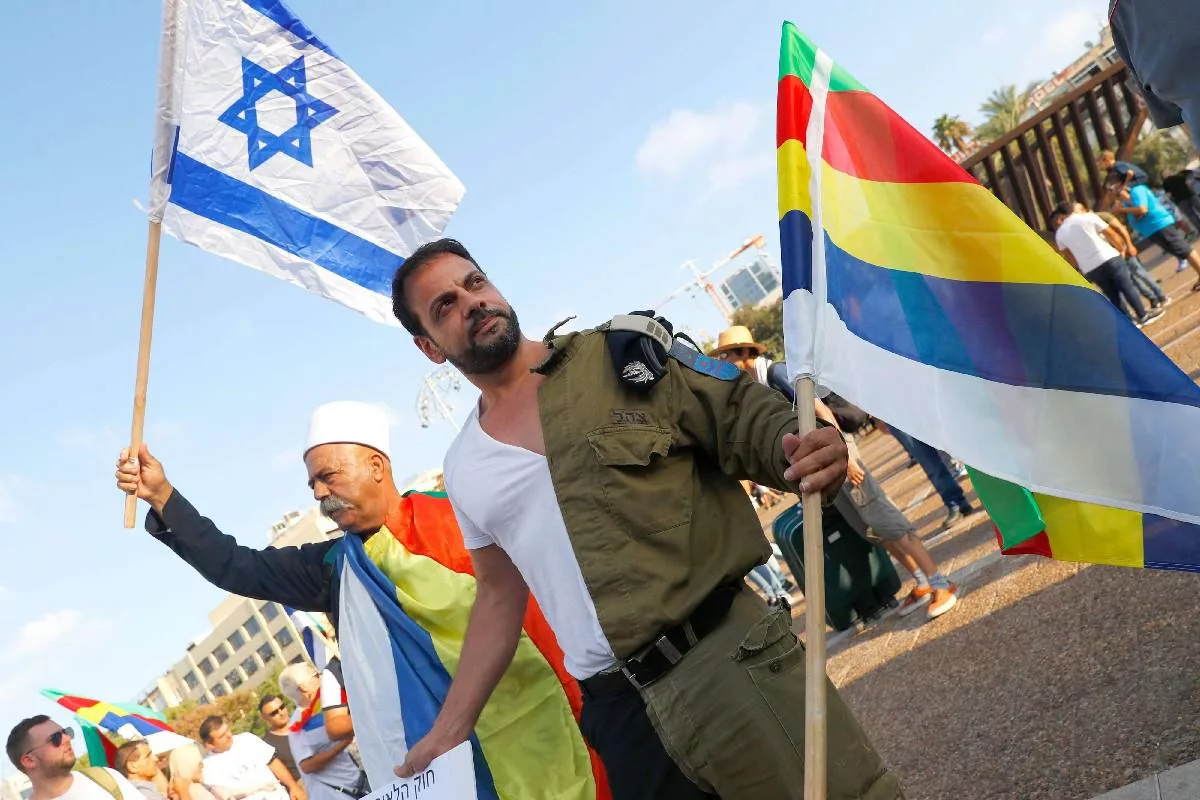
In this strategy, the Druze played a pivotal role. Granted a special legal status, they were made subject to mandatory military service in 1956—a duty from which Muslims and Christians were exempt.

This policy was not merely administrative; it laid the foundation for what became known in Israeli security literature as the “Blood Pact”—a symbolic and practical alliance rooted in the notion that the Druze differ from other Arabs and are thus more trustworthy partners.

According to a study titled Forging a Zionized Minority Identity: The Druze Case in Israel, the 1950s witnessed not just a military arrangement but a full-fledged campaign to redefine Druze identity within Israel, severing their connection to the broader Arab world. Israeli scholar Gabriel Ben-Dor underscored this perspective, asserting that “the Druze are not Arabs in the political sense,” and therefore more reliable than any other community.

This outlook has reemerged in recent years amid escalating tensions in Syria’s Suwayda province. Israeli Druze leaders—chief among them Sheikh Mowafaq Tarif—have openly supported armed Druze factions in Syria and criticized the Israeli government for what they saw as a betrayal of the Blood Pact.

In an unusual response, Israel launched airstrikes on Syrian army positions in Suwayda, later expanding them to include the Syrian General Staff headquarters in Damascus—a dramatic show of support for the Druze factions.

It is now evident that Israel’s minority alliance strategy has evolved far beyond political containment. It now involves direct military and operational partnerships, with minority groups—especially the Druze—serving as frontline instruments in the updated implementation of the Periphery Doctrine.

Download this article as PDF
Share this Article
Facebook Twitter Whatsapp Whatsapp Telegram Email Copy Link
باسل المحمد
By باسل المحمد صحفي سوري
Follow:
Previous Article نون بوست Aid Propaganda in Gaza: Sound Without Substance, and Aggressive Intentions
Next Article نون بوست Another Face of Genocide: Gaza’s Medicine Siege

Read More

  • U.S. Regime‑Change Policies: Why They Are Destined to Fail U.S. Regime‑Change Policies: Why They Are Destined to Fail
  • The Gulf’s Balancing Act: Iran, Israel, and Hidden Links
  • Iraq–Turkey Oil Export Treaty: Why Did Ankara Cancel It After 52 Years?
  • Syria’s Northeast on Edge: QSD Between Ankara and Damascus
  • Has Europe Changed Its Stance on Israel… or Just Its Language?
part of the design
NoonPost Weekly Newsletter

You May Also Like

U.S. Regime‑Change Policies: Why They Are Destined to Fail

U.S. Regime‑Change Policies: Why They Are Destined to Fail

إسراء سيد Esraa sayed 8 April ,2026
The Gulf’s Balancing Act: Iran, Israel, and Hidden Links

The Gulf’s Balancing Act: Iran, Israel, and Hidden Links

فريق التحرير Noon Post 8 April ,2026
Iraq–Turkey Oil Export Treaty: Why Did Ankara Cancel It After 52 Years?

Iraq–Turkey Oil Export Treaty: Why Did Ankara Cancel It After 52 Years?

فريق التحرير Noon Post 8 April ,2026

سؤال إنقاص الوزن الأزلي: ممارسة الرياضة أم اتباع الحمية؟

هوب وارشو
هوب وارشو Published 31 January ,2016
Share
diet-verse-exercise

ترجمة حفصة جوده

السؤال : أيهما يؤثر بشكل أكبر عندما يتعلق الأمر بإنقاص الوزن : الغذاء وتناول سعرات حرارية محددة أم ممارسة الرياضة؟

الإجابة : نعم , إنه نفس الوقت من العام مرة أخرى، وقت اتخاذ القرارات الهامة في بداية العام الجديد, مثل إنقاص الوزن، تناول الطعام بمعايير محددة, الذهاب لصالة الألعاب الرياضية، وطرح الأسئلة الهامة حول إنقاص الوزن.

بالنسبة للمبتدئين , فلنبدأ أولًا بتعريف ممارسة الرياضة، هناك نوعان رئيسيان للألعاب الرياضية, رياضة الأيروبيكس، وهي رياضة إيقاعية تقوم على نشاط بدني لكامل الجسم وتعمل على زيادة معدل ضربات القلب، حيث توصي أحدث إرشادات الحكومة حول الأنشطة البدنية بأن يمارس البالغون الأيروبيكس متوسط القوة لمدة ساعتين ونصف الساعة على الأقل كل أسبوع، أو ساعة وربع الساعة من الأيروبيكس شديدة القوة، أو المزج بين المنهجين.

النوع الثاني من الأنشطة الرياضية هي تمارين الصلابة والتحمّل، فهي تعمل على تقوية  العضلات الرئيسية وذلك بتكرار النشاط إلى حد الإرهاق حوالي 8 إلى 12 مرة، وتوصي الإرشادات الحكومية ذاتها بممارسة البالغين لأنشطة تقوية العضلات مرتين في الأسبوع على الأقل.

أطلق أحد الأبحاث، التي تبحث بالمخاطر الصحية لسلوكياتنا المستقرة، عدة توصيات أخرى تتمثل بإضافة “الحد من سلوكيات قلة الحركة والجلوس لفترات طويلة” كهدف رياضي ثالث، حيث تم تعريف “سلوك الاستقرار” بأنه جميع السلوكيات المرتبطة بكثرة الجلوس والاتكاء مما يعنى إستهلاك مستويات أقل من الطاقة وحرق القليل من السعرات الحرارية، وطبقًا للكلية الأمريكية للطب الرياضي, فإن الفترات الطويلة من ثبات الحركة, بغض النظر عن عدد مرات ممارسة الأيروبيكس وتمارين الصلابة, تعمل على زيادة مخاطر تطور أعراض ما قبل مرض السكري, والإصابة بالنوع الثاني من مرض السكري وأمراض القلب والأوعية الدموية.

إذن، القاعدة الأولى : لا تجلس أكثر من 90 دقيقة بدون حركة، إلا إذ كنت نائمًا بالطبع.

ممارسة الرياضة بانتظام هي أفضل علاج للصحة وطول العمر تبعًا للقائمة الطويلة من الفوائد الصحية البدنية والعقلية التي تتمتع بها، ومع ذلك، فالحقيقة المحزنة هي أن أقل من نصف الأشخاص البالغين بالولايات المتحدة يلتزمون بتوصيات النشاط البدني في ممارسة الأيروبيكس، والخُمس فقط يلتزمون بإرشادات ممارسة الأيروبيكس وتمارين الصلابة.

والآن لنتناقش حول السؤال الرئيسي :

قدمت الافتتاحية الأخيرة للمجلة البريطانية للطب الرياضي خلاصة القول حول موضوع ممارسة الرياضة أم الحمية الغذائية، حيث جاء بها “لا يمكنك تجاوز موضوع اتباعك لنظام غذائي سيء, فممارسة الرياضة ليست كافية لوحدها عندما يتعلق الأمر بخسارة الوزن أو الحفاظ على الصحة”.

في واقع الأمر, من الصعب أن تتجاوز موضوع النظام الغذائي،  حتى إذا اتبعت خطة غذائية صحية، طالما كنت تتناول سعرات حرارية أكثر مما يحرقة جسمك, فكر بالأمر, المشي لمسافة ميل واحد يحرق حوالي 100 سعرة حرارية، أي ما يعادل قطعة كبيرة من الفاكهة أو ملعقتين كبيرتين من المكسرات .

“تُظهر الأبحاث أن أكثر الطرق فاعلية لدى معظم الأشخاص لخسارة الوزن, هي التوفيق بين خطة من الطعام الصحي مع الانتباه للسعرات الحرارية وممارسة الرياضة بشكل كافٍ”، كما أخبرني جيم وايت, أخصائي تغذية وممارسة الرياضة وصاحب صالة ألعاب رياضية, في رسالة إلكترونية، وأضاف أيضًا أن ممارسة الأيروبيكس بمستويات عالية مع تقليل السعرات الحرارية يساعد بشكل أكبر على إنقاص الوزن مقارنةً بممارسة تمارين الصلابة فقط؛ فممارسة الرياضة فقط دون تقليل السعرات الحرارية لن يؤدي عادةً إلى فقدان الوزن.

“عادة ما يتطلب الأمر تغيير النظام الغذائي لإنقاص الوزن”، هذا ما قاله كيفين هال, الذي أجرى بحثًا عن عملية التمثيل الغذائي في المعهد الوطني للسكري وأمراض الجهاز الهضمي وأمراض الكلى, في رسالة إلكترونية، وأضاف هال أن الناس يخسرون وزنًا أقل من المتوقع عند ممارسة الرياضة فقط لسببين, أولهما, أنهم قد يصبحون أقل نشاطًا في الأوقات الأخرى من اليوم, وثانيهما أنهم يتناولون طعامًا أكثر, ربما لأنهم يعتقدون أنهم يحرقون سعرات حرارية أكثر عندما يمارسون الرياضة أكثر من ذي قبل.

وترجمةً لهذه الأبحاث على أرض الواقع، فقد أخبرت زبائني أن الاهتمام الدقيق بالاستهلاك اليومي للسعرات الحرارية يشابه الفوز بجائزة الأوسكار لأفضل ممثل, أما ممارسة الرياضة فيشابه الفوز بجائزة أفضل ممثل مساعد.

أما عن دور ممارسة الرياضة في مساعدتك للحفاظ على الوزن الذي قد خسرته, فهو أمر لابد منه؛ فممارسة الرياضة بانتظام تساعد على تعويض تباطؤ التمثيل الغذائي الذي ينتج عادة عند حدوث خسارة ملحوظة في الوزن، ويفسر هال هذا الأمر قائلًا: “عندما يستطيع الأشخاص من ذوي الوزن الزائد خسارة بعض الوزن، فعادةً ما يحرقون سعرات حرارية أقل من أولئك الأشخاص ممن هم بنفس الوزن والذين لم يعانوا مسبقًا من زيادة في الوزن”.

الحفاظ على الوزن يتطلب تعويض الفارق إما بتقليل السعرات الحرارية أو بزيادة النشاط البدني، ويقول بعض الأشخاص من السجل الوطني لمراقبة الوزن, والذي يقوم باستطلاعات منتظمة لهؤلاء الذين فقدوا الوزن وحافظوا على ذلك لعدة سنوات, أنهم يقومون بممارسة الرياضة لمدة ساعة يوميًا، كما أنهم يقللون من “سلوكيات قلة الحركة”، مثل مشاهدة التلفاز.

ببساطة, ممارسة الرياضة ليست الحل الوحيد لإنقاص الوزن والحفاظ على ما خسرته, لكنها جزء هام من المعادلة، والعنصر الأساسي الآخر هو التركيز المباشر على خطة الغذاء الصحية والتي تساعدك على التحكم بالسعرات الحرارية التي تتناولها معظم الوقت, مع وجود هامش لاتباع بعض خيارات الطعام الأقل صحية في المناسبات والاحتفالات، كما يجب أن تتأكد أيضًا من أن خطة الطعام تناسب احتياجاتك ولا تتطلب منك تغييرًا جذريًا في الطعام الذي اعتدت تناوله، وأخيرًا وليس آخرًا, يجب أن تستمر في اتباع هذا النمط من الحياة الصحية.

أخيرًا، نتمنى لكم حظًا سعيدًا في الجهود التى تبذلونها للمحافظة على أوزانكم في عام 2016.

المصدر: واشنطن بوست

TAGGED: الحمية الغذائية ، الصحة العامة ، تخفيض الوزن ، ممارسة الرياضة
TAGGED: الصحة
Download this article as PDF
Share this Article
Facebook Twitter Whatsapp Whatsapp Telegram Email Copy Link
هوب وارشو
By هوب وارشو أخصائية تغذية ومؤلفة للعديد من الكتب التي نشرتها الجمعية الأمريكية لمرضى السكر
Follow:
Next Article نون بوست The Stigma of “ISIS”: A Heavy Legacy Haunting Women and Children of Former Members

Read More

  • U.S. Regime‑Change Policies: Why They Are Destined to Fail U.S. Regime‑Change Policies: Why They Are Destined to Fail
  • The Gulf’s Balancing Act: Iran, Israel, and Hidden Links
  • Iraq–Turkey Oil Export Treaty: Why Did Ankara Cancel It After 52 Years?
  • Syria’s Northeast on Edge: QSD Between Ankara and Damascus
  • Has Europe Changed Its Stance on Israel… or Just Its Language?
part of the design
NoonPost Weekly Newsletter
dark

An independent media platform founded in 2013, rooted in slow journalism, producing in-depth reports, analysis, and multimedia content to offer deeper perspectives on the news, led by a diverse young team from several Arab countries.

  • Politics
  • Society
  • Rights & Liberties
  • Opinions
  • History
  • Sports
  • Education
  • Technology
  • Economy
  • Media
  • Arts & Literature
  • Entrepreneurship
  • Travel
  • Cinema & Drama
  • Food
  • Health
  • Culture
  • Latest Reports
  • Files
  • Long Reads
  • Interviews
  • Podcast
  • Interactive
  • Encyclopedia
  • In Pictures
  • About Us
  • Our Writers
  • Write for Us
  • Editorial Policy
  • Advanced Search
Some rights reserved under a Creative Commons license

Removed from favorites

Undo
Go to mobile version