NoonPost NoonPost

NoonPost

  • Home
  • Politics
  • Economy
  • Society
  • Culture
  • Files
  • Long Reads
  • Podcast
AR
Notification Show More
نون بوست
“There Are Nights I Can’t Close My Eyes”: How Gazans Are Living in Homes on the Brink of Collapse
نون بوست
From al-Jolani to Ahmad al-Shara: The Evolution of Syria’s New Leader
نون بوست
When Political Islam Receded in Egypt: Who Filled the Void?
نون بوست
An Extension of Genocide: Gaza’s Detainees Speak Out
نون بوست
A Tightrope Between Survival and Sovereignty: The Syrian Government Faces Normalization Pressures
نون بوست
American Aircraft Carriers: Has the Era of “100,000 Tons of Diplomacy” Ended?
نون بوست
U.S. Regime‑Change Policies: Why They Are Destined to Fail
نون بوست
Transformations of Israeli Judaism: Between the Victim Complex and the Colonizer’s Doctrine
نون بوست
The Gulf’s Balancing Act: Iran, Israel, and Hidden Links
نون بوست
Iraq–Turkey Oil Export Treaty: Why Did Ankara Cancel It After 52 Years?
نون بوست
Syria’s Northeast on Edge: QSD Between Ankara and Damascus
نون بوست
Has Europe Changed Its Stance on Israel… or Just Its Language?
NoonPost NoonPost
AR
Notification Show More
نون بوست
“There Are Nights I Can’t Close My Eyes”: How Gazans Are Living in Homes on the Brink of Collapse
نون بوست
From al-Jolani to Ahmad al-Shara: The Evolution of Syria’s New Leader
نون بوست
When Political Islam Receded in Egypt: Who Filled the Void?
نون بوست
An Extension of Genocide: Gaza’s Detainees Speak Out
نون بوست
A Tightrope Between Survival and Sovereignty: The Syrian Government Faces Normalization Pressures
نون بوست
American Aircraft Carriers: Has the Era of “100,000 Tons of Diplomacy” Ended?
نون بوست
U.S. Regime‑Change Policies: Why They Are Destined to Fail
نون بوست
Transformations of Israeli Judaism: Between the Victim Complex and the Colonizer’s Doctrine
نون بوست
The Gulf’s Balancing Act: Iran, Israel, and Hidden Links
نون بوست
Iraq–Turkey Oil Export Treaty: Why Did Ankara Cancel It After 52 Years?
نون بوست
Syria’s Northeast on Edge: QSD Between Ankara and Damascus
نون بوست
Has Europe Changed Its Stance on Israel… or Just Its Language?
Follow US

The Republic of Deficiency: Why Do Child Labor Tragedies Keep Repeating in Egypt?

مصطفى الخضري
Mostafa Al-Khoudry Published 26 March ,2026
Share
نون بوست

The recent tragedy on the Regional Ring Road in Monufia, which claimed the lives of several young girls, was neither the first of its kind—nor, tragically, the last. As Egypt’s Minister of Transport and Industry, Kamel al-Wazir, toured the site following the incident, another accident occurred—this time live on air.

Just a week after that inspection, which exemplified the arrogance and disregard for Egyptian lives in the so-called “New Republic,” a new crash on the same road claimed nine more lives and left many injured.

Only then did the president intervene, projecting concern for the lives lost in vain—bodies strewn across asphalt, normalized on what many now call the “road of death.” He ordered the closure of sections of the road undergoing maintenance and upgrades.

This highway is among the president’s pet projects—a 365-kilometer artery linking the Delta, Upper Egypt, and Greater Cairo. It’s touted as a cornerstone of the country’s revamped infrastructure, a venture that has plunged Egypt into billions of dollars in debt.

One could argue, of course, that road accidents aren’t unique to Egypt; such tragedies occur worldwide. Indeed, in 2024, Egypt recorded a 10% decrease in road accidents compared to the previous year.
نون بوست
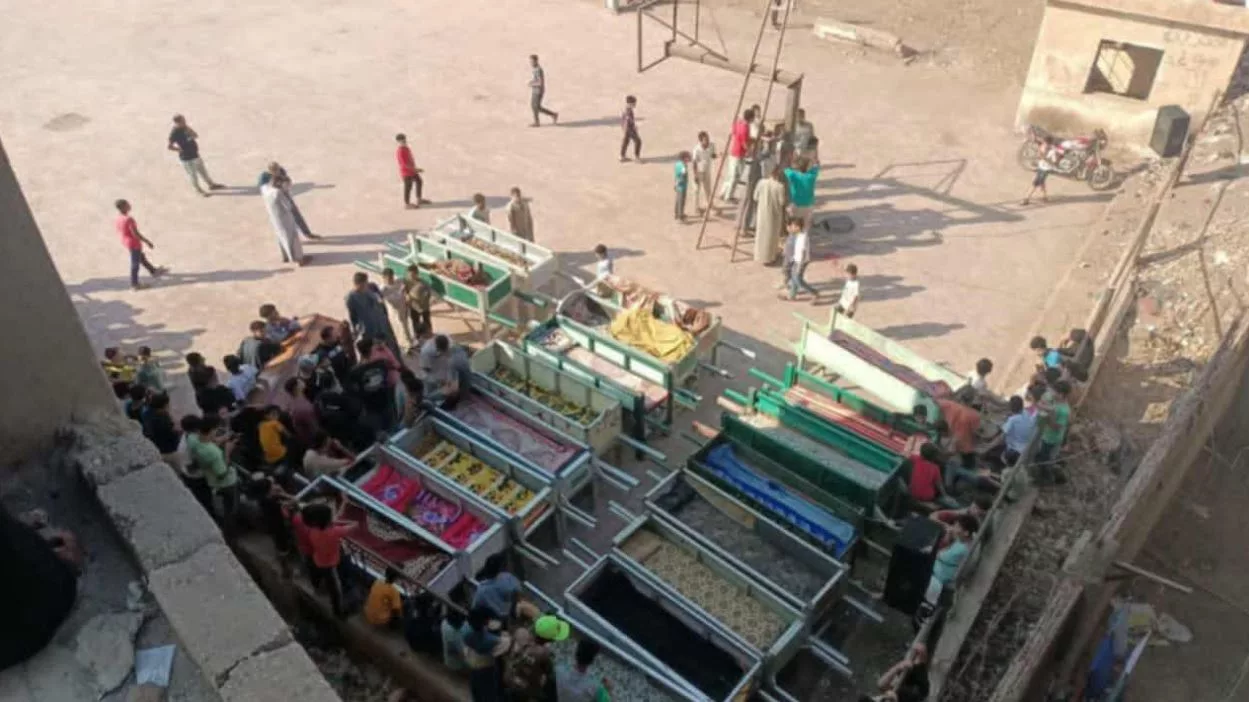
The Funeral of the Monufia Girls—Victims of the Regional Ring Road

Yet hidden beneath these statistics is a stark reality: of the 68,000 people who have died on Egyptian roads over the past decade, many were children—children who should have been in school or at play, not working to survive.

What drove them to death rather than to the classroom like their peers? Why did 19 young girls lose their lives for a daily wage of 130 Egyptian pounds—barely $3—an amount that can scarcely cover a private tutoring session or the cost of a study guide?

Poverty has long driven children in Egypt out of classrooms and into the labor force. Some leave school entirely; others attempt to juggle both.

Under President Abdel Fattah el-Sisi’s rule, the past decade of the “New Republic” has seen a cascade of policy failures that only deepen this vicious cycle. Constitutionally mandated to allocate 6% of the national budget to public education, the government has never met even half that figure. In 2023, the education budget stood at 230 billion pounds—less than a third of the required 710 billion.

Poverty, exacerbated by debt and inflation, has intensified. While the government has not released updated poverty data since 2020, a 2024 World Bank report estimates Egypt’s national poverty rate at 33.5% in 2022, with 66% of the poor living in rural areas—where child labor and road fatalities are most prevalent.

Fragile Labor and Disposable Lives

The fragrance chain “Mazaya” is among the most prestigious in Egypt, with some perfumes retailing for as much as 35,000 pounds—over $500. There are millions of Egyptians who can afford such luxuries.

The brand boasts over 25 stores nationwide and continues to expand. But these millions are mirrored by tens of millions more for whom such a shop might as well not exist—people whose daily struggle is to secure their next meal, not a bottle of perfume.

In 2024, the BBC aired a documentary exploring child labor in rural Egypt—specifically children harvesting jasmine for export to global fragrance companies. Egyptian jasmine is prized for its quality and aroma. The work is seasonal, grueling, and nocturnal—flowers must be picked before dawn to preserve their scent.
نون بوست

The documentary depicts children earning less than a dollar a day for their labor, without contracts, protections, or oversight. Child labor remains illegal in Egypt, yet enforcement is nonexistent.

If these children are fortunate, they won’t drown in an irrigation canal or die in a road accident. But even the “lucky” ones may suffer illness or injury from their labor.

In 2022, a “qanater ferry” accident claimed the lives of children who had just finished a day’s work at a poultry farm for 50 pounds—a little under $3. A pickup truck carrying 23 children (13 boys and 10 girls) plunged into the Nile. Seven died, and some bodies weren’t recovered for over a week.

That same April, in Beheira governorate, eight children aged 12 to 15 drowned after the tuk-tuk transporting them from a potato farm overturned into an irrigation canal. They were on their way home to eat suhoor during Ramadan, having earned the same paltry wage—50 pounds or less.

Beyond child labor lies another systemic failure: informal and seasonal labor. Article 76 of Egypt’s new labor law obliges the state to regulate and protect this workforce, including by establishing welfare and insurance mechanisms. Yet no action has been taken.

Girls as Routine Casualties

Among the most vulnerable to these disasters are young girls. In the Monufia village of Sanabsa, 19 school-age girls—most of them minors—perished. The tragedy, while horrifying, is not unique. It reflects a deadly, recurring pattern.

In May 2024, after finishing their middle school exams, a group of 15-year-old girls accompanied by an older woman headed to seasonal jobs at agricultural export firms. For the companies, these girls were a goldmine—cheap labor without contracts, protections, or accountability. For the girls, it was a way to help their families and themselves.

Their work was technically illegal—Egypt prohibits child labor under 14, and under 18 only under strict conditions. Yet the practice persists, sanctioned in effect by a government that sees it as a coping mechanism for the poverty its own policies have fueled. On this day, however, fate intervened: their microbus plunged into the Nile from the “Abu Ghaleb ferry,” killing 17 of them.

This wasn’t just another road tragedy—it was a window into a broader phenomenon. Media coverage focused on the driver’s recklessness—he’d left the vehicle unsecured during an argument. Police reports detailed maintenance lapses. But no one asked the real questions: Why were these girls working during their school break? Who was responsible?

The culprits named in the investigation included the driver, two ferry workers, the ferry’s owner, and a local official. But the real omissions are telling. Egypt’s Ministry of Manpower, the agricultural company that employed the girls—none were held accountable. No media outlet linked the tragedy to Egypt’s broader epidemic of child labor.

The question everyone should be asking is: What forces these girls into such dangerous, illegal work in the first place?

Answering that truthfully would mean indicting a decade of state policies that have immiserated rural Egyptians. Instead, media narratives divert attention—focusing on driver error or logistical failures. Minister Kamel al-Wazir, in defending himself after the Monufia tragedy, claimed, “If the driver is a drug addict, what can I do to stop that?”

But these are not freak accidents. In just the past three years, multiple vehicle crashes have killed groups of child laborers en route to or from work.

According to a 2025 report by the New Woman Foundation, between January 21 and April 23, there were 25 such incidents in Upper Egypt and the Delta, resulting in 305 injuries—including 81 minors—and 44 deaths, of which 12 were children.

These tragedies reveal a chilling pattern. The government blames “human error” or insufficient road maintenance. Yet what emerges clearly is a single, repeating catastrophe: children dying en masse—especially in rural and Upper Egypt. The victims are disproportionately girls, in a country that annually dedicates entire campaigns to “empowering women.”

This is not a republic of development. It is a republic of deficiency—where perfume bottles are more valuable than children’s lives.

Download this article as PDF
Share this Article
Facebook Twitter Whatsapp Whatsapp Telegram Email Copy Link
مصطفى الخضري
By مصطفى الخضري كاتب مصري
Follow:
Previous Article نون بوست The Return of George Ibrahim Abdallah
Next Article نون بوست From Aid to the Frontlines: How the Houthi Militia Undermined Yemen’s Relief Network

Read More

  • U.S. Regime‑Change Policies: Why They Are Destined to Fail U.S. Regime‑Change Policies: Why They Are Destined to Fail
  • The Gulf’s Balancing Act: Iran, Israel, and Hidden Links
  • Iraq–Turkey Oil Export Treaty: Why Did Ankara Cancel It After 52 Years?
  • Syria’s Northeast on Edge: QSD Between Ankara and Damascus
  • Has Europe Changed Its Stance on Israel… or Just Its Language?
part of the design
NoonPost Weekly Newsletter

You May Also Like

U.S. Regime‑Change Policies: Why They Are Destined to Fail

U.S. Regime‑Change Policies: Why They Are Destined to Fail

إسراء سيد Esraa sayed 8 April ,2026
The Gulf’s Balancing Act: Iran, Israel, and Hidden Links

The Gulf’s Balancing Act: Iran, Israel, and Hidden Links

فريق التحرير Noon Post 8 April ,2026
Iraq–Turkey Oil Export Treaty: Why Did Ankara Cancel It After 52 Years?

Iraq–Turkey Oil Export Treaty: Why Did Ankara Cancel It After 52 Years?

فريق التحرير Noon Post 8 April ,2026

هل يمكن للبلاي ستيشن الخاص بك إيقاف الحروب؟

فريق التحرير
Noon Post Published 9 February ,2016
Share
gettyimages-497880276_960

كانت ألعاب الفيديو محط أنظار علماء الاجتماع منذ الخمسينات، كما كانت ألعاب الفيديو بالتحديد محلًا للدراسة والنقاش المستمر منذ ثمانينيات القرن الماضي، ولكن الآن أصبح لتلك الألعاب مجالات للدراسة والصناعة خاصة بها وحدها دون كل الوسائل الترفيهية، حيث أصبحت أكثر عنفًا وأكثر دموية، وأكثر تأثيرًا على اللاوعي بشكل غير مباشر وبقوة أكثر من ذي قبل.

أثبت الدراسات بأنه يمكن لألعاب الفيديو التأثير على اللاعبين، وبخاصة الصغار منهم، ودفعهم نحو سلوك عداواني مقارنة بأقرانهم، وذلك لفترة قد تمتد لسنوات أو قد تقتصر على فترة عمرية في عمر اللاعب، كما استنتجت العديد من التجارب العلمية القائمة على المقارانات بين مجموعتين احداها تخضع لممارسة لعبة فيديو عنيفة والآخرين يمارسون لعبة عادية، ليتم استنتاج النتيجة بأن من خضعوا للعبة الدموية اتجهوا نحو أسلوب أكثر وقاحة في التعامل فيما بينهم على عكس ما فعل الأخرون.

لا يمكن الجزم بأن من تعوّد من الأطفال على ألعاب الفيديو العنيفة أو الدموية سيرتكب جرائم في المستقبل، إلا أن أمر ألعاب الفيديو كان مثيرًا للجدل مؤخرًا لدرجة اهتمام المحكمة العليا في الولايات المتحدة به وإصدارها قرارًا بمنع بيع ألعاب الفيديو العنيفة للأطفال بدون إشراف والديهم على ذلك في عام 2011، ورغم زعم البعض بأن اتهام ألعاب الفيديوبالعنف يبدو مبالغًا فيه في كثير من الأحيان، إلا أنه مؤخرًا بدأ مصممي الألعاب في التأكيد على تأثير ألعاب الفيديو النفسي والسلوكي على اللاعب؛ فبدأوا في استغلال ذلك ليخدم التأثير الإيجابي لألعاب الفيديو على اللاعب.

لعبة ” الزومبيز، اهرب!” :

نون بوست

تعد اللعبة من الألعاب الربحية، وهي مصممة في موقع يُعبر عن نهاية العالم المتصورة و كما يُحفز تصميم اللعبة اللاعب على البحث عن طريقة الخروج كما تسمح له بالتجول على الأقدام بين مدن العالم في العالم الحقيقي وتسمح لهم بالاستيلاء على مقاطعات من تلك المدن، لا يلعب اللعبة فقط من يريد الهروب من الزومبي أو غزو المدن، بل يستخدمها البعض في محاولة السيطرة على القلق.

أظهرت بعض الدراسات نتائج تفيد أن مستخدمي ألعاب الفيديو الدموية يتجهون لتقليد الرجولة الكرتونية ” cartoonish machismo”، الأمر الذي دفع العلماء لعقد مقارنات ما بين ألعاب الفيديو العنيفة ومعدلات الجريمة، وبخاصة جرائم العنف، في المجتمعات التي ينتشر فيها بيع ألعاب الفيديو القتالية، فكانت لدراسة ألمانية النصيب في وضع نتائج أولية أفادت بأن كلما ازدادت مبيعات ألعاب الفيديو العنيفة كلما قلّت معدلات الجرائم العنيفة، ووضعت الدراسة إفتراضات تفيد بأنه من الممكن أن تقوم تلك الألعاب بإلهاء من لهم قابلية افتعال الجرائم عن الخروج في الشوارع وارتكاب المشاكل، أو من الممكن أن تلك الألعاب تقوم بإشباع حاجة بعض اللاعبين لارتكاب العنف، وهي النظرية التي لا يفضلها العديد من علماء الاجتماع، ولكن يتفق معها العديد من اللاعبين.

كما يتم استخدام الإعلام والسينما في لعبة تغيير العقول، وكما يتم السيطرة بهم على مختلف وجهات النظر وتوحيد الضعيف منها ليتفق مع القوي، جاءت ألعاب الفيديو كوسيلة أخري لإحكام تلك اللعبة على الشباب والصغار، ساعد سهولة الحصول على هواتف ذكية رخيصة الثمن مع اتصالها بالإنترنت في معظم الوقت على انتشار الألعاب العنيفة أو القتالية بشكل كبير، ففهي نهاية عام 2013 وصل عدد لاعبي ألعاب الفيديو حول العالم إلى 1.2 بليون لاعب، وهي النسبة التي تشكل 44 % من مستخدمي الإنترنت، كما تشكل الإناث من تلك النسبة ما يقارب 48% فقط، كما يقل استخدامهم لألعاب العنف مقارنة بالذكور، كما يجب ذكر مستخدمي تلك الألعاب في مناطق النزاع في الشرق الأوسط، فاستخدام ألعاب الفيديو في الشرق الأوسط في ازدياد مستمر وتشكل نسبة اللاعبين حوالي 65% من إجمالي مستخدمي الإنترنت كما ورد في تقرير صحيفة ” فورين بولسي”.

لعبة ” نداء الواجب (Call of Duty) :

نون بوست

على الرغم من أنها أحد الألعاب العنيفة والقاسية، إلا أن العديد من اللاعبين يعتبرها من أجمل ألعاب القتال على الإطلاق، حيث اكتملت مجموعتها إلى أربعة أجزاء نتيجة لتزياد الطلب عليها عالميًا، هي سلسلة ألعاب تصويب حائزة على عدة جوائز، انطلقت السلسلة على الكمبيوتر الشخصي، ثم امتدت لتشمل أنظمة الألعاب والأنظمة المحمولة، تدور أحداث معظم ألعاب السلسلة خلال الحرب العالمية الثانية إلا أن أجزاء السلسة الجديدة تدور في أزمنة حديثة.

لعبة “صانع السلام” (PeaceMaker) :

نون بوست

اللعبة مصممة بناءً على فكرة الصراع الفلسطيني الإسرائيلي، اللعبة مشهورة عالميًا بتأثيرها الاجتماعي منذ عام 2007، ويقوم اللاعب بلعب دور وسيط السلام بين الطرفين، أو رئيس للمفاوضات من طرف أحد الجانبين، وهي تعطي فرصة للاعب في تعلم فن إدارة الأزمات والمفاوضات، كما تعطيه فرصة التعامل مع الضغط السياسي وتحويل مجرى الأمور في صالح هدفه سواء كان في خدمة الجانب الفلسطيني أو في خدمة الجانب الإسرائيلي، كما وجدت بعض الدراسات الخاصة بتلك اللعبة مدى تأثير اللعبة على وجهات نظر اللاعبين، فبعد إجراء تجربة مع 68 لاعبًا قاموا بلعب دور القائد الفلسطيني في اللعبة، وُجد بأن رأيهم في الصراع الفلسطيني الإسرائيلي تغير كليًا بشكل درامي.

مثال اللعبة الأخيرة يوضح مدى أهمية تصميم لعب النزاع والقتال في التأثير على وجهات النظر، ومدى تأثيرها على تغيير عقول اللاعبين سواء كان بشكل إيجابي أم سلبي، فقد تم تكوين مؤسسات تدعم تلك الألعاب مثل مؤسسة ” ألعاب من أجل السلام” (Games for Peace )،  وهي مؤسسة تهدف إلى تصميم ألعاب الفيديو التي تعمل على تقريب الشباب المتنازعين في مناطق الحروب والنزاعات، قامت تلك المؤسسة بتصنيع نموذج من الألعاب يقوم بجمع الشباب الفلسطينين مع اليهود وتقريبهم من بعض، كما فعلت من قبل في الصراع بين جورجيا وأبخازيا، في محاولة لكسر الحاجز الفكري بينهم، ومحاولة تبادل الأفكار بعيدًا عن الصراع المسلح.

مازالت ألعاب الفيديو أمرًا محيرًا ومثيرًا للجدل، في كونها مفيدة في التعليم وتقوية الذاكرة والتدريب على التفكير المنطقي واستراتيجيات إتخاذ القرار السليم، وما بين دورها في تنمية العنف والسلوك العدائي لدى اللاعبين، وما بين وجهة نظر أخرى؛ وهي هل يمكن لألعاب الفيديو أن تنجح بالفعل في تقريب وجهات النظر المتنازعة في مناطق الحروب، وتغيير منظور الشباب في تلك المناطق وإعادة التفكير في تلك النزاعات من زاوية أخرى، والأهم من ذلك هل إذا نجحت بالفعل في ذلك الأمر، هل يكون هذا شيء إيجابي في مصلحة إيقاف الحروب، أو شيء سلبي في هضم حقوق بعض الشعوب أو بعض الأقليات؟.

TAGGED: الألعاب الالكترونية ، البلاي استيشن
TAGGED: المجتمع
Download this article as PDF
Share this Article
Facebook Twitter Whatsapp Whatsapp Telegram Email Copy Link
فريق التحرير
By فريق التحرير تقارير يعدها فريق تحرير نون بوست.
Follow:
Next Article نون بوست The Stigma of “ISIS”: A Heavy Legacy Haunting Women and Children of Former Members

Read More

  • U.S. Regime‑Change Policies: Why They Are Destined to Fail U.S. Regime‑Change Policies: Why They Are Destined to Fail
  • The Gulf’s Balancing Act: Iran, Israel, and Hidden Links
  • Iraq–Turkey Oil Export Treaty: Why Did Ankara Cancel It After 52 Years?
  • Syria’s Northeast on Edge: QSD Between Ankara and Damascus
  • Has Europe Changed Its Stance on Israel… or Just Its Language?
part of the design
NoonPost Weekly Newsletter
dark

An independent media platform founded in 2013, rooted in slow journalism, producing in-depth reports, analysis, and multimedia content to offer deeper perspectives on the news, led by a diverse young team from several Arab countries.

  • Politics
  • Society
  • Rights & Liberties
  • Opinions
  • History
  • Sports
  • Education
  • Technology
  • Economy
  • Media
  • Arts & Literature
  • Entrepreneurship
  • Travel
  • Cinema & Drama
  • Food
  • Health
  • Culture
  • Latest Reports
  • Files
  • Long Reads
  • Interviews
  • Podcast
  • Interactive
  • Encyclopedia
  • In Pictures
  • About Us
  • Our Writers
  • Write for Us
  • Editorial Policy
  • Advanced Search
Some rights reserved under a Creative Commons license

Removed from favorites

Undo
Go to mobile version