NoonPost NoonPost

NoonPost

  • Home
  • Politics
  • Economy
  • Society
  • Culture
  • Files
  • Long Reads
  • Podcast
AR
Notification Show More
نون بوست
“There Are Nights I Can’t Close My Eyes”: How Gazans Are Living in Homes on the Brink of Collapse
نون بوست
From al-Jolani to Ahmad al-Shara: The Evolution of Syria’s New Leader
نون بوست
When Political Islam Receded in Egypt: Who Filled the Void?
نون بوست
An Extension of Genocide: Gaza’s Detainees Speak Out
نون بوست
A Tightrope Between Survival and Sovereignty: The Syrian Government Faces Normalization Pressures
نون بوست
American Aircraft Carriers: Has the Era of “100,000 Tons of Diplomacy” Ended?
نون بوست
U.S. Regime‑Change Policies: Why They Are Destined to Fail
نون بوست
Transformations of Israeli Judaism: Between the Victim Complex and the Colonizer’s Doctrine
نون بوست
The Gulf’s Balancing Act: Iran, Israel, and Hidden Links
نون بوست
Iraq–Turkey Oil Export Treaty: Why Did Ankara Cancel It After 52 Years?
نون بوست
Syria’s Northeast on Edge: QSD Between Ankara and Damascus
نون بوست
Has Europe Changed Its Stance on Israel… or Just Its Language?
NoonPost NoonPost
AR
Notification Show More
نون بوست
“There Are Nights I Can’t Close My Eyes”: How Gazans Are Living in Homes on the Brink of Collapse
نون بوست
From al-Jolani to Ahmad al-Shara: The Evolution of Syria’s New Leader
نون بوست
When Political Islam Receded in Egypt: Who Filled the Void?
نون بوست
An Extension of Genocide: Gaza’s Detainees Speak Out
نون بوست
A Tightrope Between Survival and Sovereignty: The Syrian Government Faces Normalization Pressures
نون بوست
American Aircraft Carriers: Has the Era of “100,000 Tons of Diplomacy” Ended?
نون بوست
U.S. Regime‑Change Policies: Why They Are Destined to Fail
نون بوست
Transformations of Israeli Judaism: Between the Victim Complex and the Colonizer’s Doctrine
نون بوست
The Gulf’s Balancing Act: Iran, Israel, and Hidden Links
نون بوست
Iraq–Turkey Oil Export Treaty: Why Did Ankara Cancel It After 52 Years?
نون بوست
Syria’s Northeast on Edge: QSD Between Ankara and Damascus
نون بوست
Has Europe Changed Its Stance on Israel… or Just Its Language?
Follow US

Scientific Research in Egypt: Abundant Output, Migrating Minds

فريق التحرير
Noon Post Published 26 March ,2026
Share
نون بوست
نون بوست

In an age of rapidly advancing technology—when science becomes the foremost weapon in the arenas of political, economic, or military conflict—nations and societies are judged by their scientific progress. Scientific research is the most precise thermometer measuring a country’s level and scale of development, positioning it on the map of renaissance and regional or global influence.

This metric starkly reveals the gulf between the priorities of advanced and developing countries. While developed nations rally and marshal their resources toward scientific breakthroughs—unveiling coffers for researchers and scientists as the foremost bulwark and prized treasure—developing nations often prioritize entertainment, sports, social displays, and the glorification of regimes. Researchers and scholars remain at the bottom of national agendas.

Egypt’s scientific research ecosystem is a particularly acute case. It reflects the ruling regimes’ vision for development and their strategies for advancement, serving as a critical gauge for interpreting both the near and distant future. It is also a primary factor that stripped Egypt of its regional leadership and shifted its influence to emerging powers. Just a few decades ago, Cairo was a hub for global researchers; today, it expels its brightest talents.

Mapping Scientific Output

Egypt’s scientific research output fluctuates year to year, peaking in 2022 with over 44,000 published papers—about 1.13% of global scientific publications—placing Egypt 24th among 233 countries globally.

According to the SCImago index, one of the world’s foremost evaluators of research output and journals, Egypt ranks 25th internationally in scientific publications and leads Africa, contributing roughly 27% of the continent’s research output.

Egypt is home to the largest number of academic and scientific institutions in the Arab world—about 65 universities (28 public and 37 private, national, or foreign), in addition to academies and institutes. As of 2020, some 128,181 faculty members and assistants work across governmental and private higher education, with over 180,000 researchers in various institutions.

Between 2008 and 2018, nearly 156,128 papers were published in international scientific journals, growing from 9,479 in 2010 to 21,961 in 2018—a compound annual growth rate of approximately 16.4%, according to the “2030 National Strategy for Science and Innovation” by the Ministry of Higher Education and Scientific Research.

Al-Azhar University hosted the highest proportion of researchers in higher education, accounting for 15%, followed by Cairo University at 12.5% and Ain Shams University at 11.4%.

Numbers Don’t Tell the Whole Story

Some view 22,000 papers per year and 180,000 researchers as staggering numbers. But relative to Egypt’s population of over 114 million, this perception changes. Official rhetoric promotes an impressive boom, yet deeper comparison shows that Egypt has only about 686.6 researchers per million people—compared to 3,878 in Belgium, 2,800 in Spain, 2,724 in Portugal, and in the Arab world, 2,378 in the UAE, 1,771 in Tunisia, 1,500 in Saudi Arabia, 1,073 in Morocco, and 819 in Algeria, per reports from ALECSO.

Moreover, the true measure lies not in quantity but in quality. As Ahmed Abdel‑Fattah of Egypt’s National Research Centre notes, “The issue is not the number of papers, but the quality of research, its credibility and novelty.”

Funding: The Most Critical Challenge

Scientific research is a long-term investment requiring strategic planning and open-ended budgets. Without adequate financing, research becomes routine or symbolic rather than impactful.

Egypt’s constitution mandates a minimum of 1% of GDP for scientific research, yet actual allocations rarely exceed 0.07%—an order of magnitude short of the constitutional requirement.

Dr. Mohamed Abu al‑Ghar, Ob/Gyn professor at Cairo University and chair of the Egyptian Social Democratic Party, observes that only around 20% of that small budget reaches actual research; 80% is absorbed by salaries and incentives. Egypt’s research funding fell from EGP 870 million in 1996 (~USD 131 million then) to EGP 5 billion in 2023 (~USD 112 million today), highlighting low governmental prioritization.

By comparison, Israel spends roughly 30 times what Egypt does on research, 50 times more on scientific internet usage, 70 times more on publications, and 1,000 times more on patents—fueling a scientific boom unlike any in the Arab world.

Globally, research spending per GDP includes Sweden at 3.4%, Germany 3.46%, UAE 1.5%, Switzerland 3.19%, USA 3.42%, China 2.41%, Israel 5.35%, France 2.35%, Japan 3.2%, and Iran 0.79%.

Absence of a Culture of Excellence

Nobel laureate Ahmed Zewail cited the “culture of excellence” and freedom he experienced in the U.S as essential to his success—freedoms absent in Egypt due to bureaucratic hurdles, committee constraints, and gatekeeping attitudes. Poignantly, Zewail noted conference attendance and paper publication could require up to 12 official signatures.

Echoing this, Egypt’s early educational reformer Taha Hussein argued that genuine productivity requires independence and freedom, free from fear. Ahmed Lutfi al‑Said, the first president of Cairo University, emphasized freedom of thought as essential to higher education.

Security interventions in the appointment of deans, department heads, and faculty have politicized and “nationalized” academic life. As Dr. Abu al‑Ghar recounts, after 1952’s revolution, security forces took over academia—appointing pliant administrators, installing security offices on campuses, and purging dissenting faculty—driving scholars of varying caliber abroad and educational standards down.

Private Sector Disengagement

Globally, the private sector is integral to research funding. U.S. firms invest around USD 150 billion annually in R&D, with pharmaceutical companies investing about 50% of their sales in research. In Germany, nearly 39,000 companies conduct R&D, and 183,700 convert research into products—spending roughly €82 billion annually.

In Egypt, however, private companies contribute less than 0.5% toward research funding; around 90% is state-funded, with the remainder from foreign sources, according to Muna Tahoun of Benha University in 2016—reflecting a deep mistrust of research’s value and a reluctance to bear its costs.

Compromised Quality

Academic leaders lament that quantity does not equate to quality. Key issues include:

  1. Graduate students pursuing degrees for prestige rather than substance.

  2. Faculty conducting research primarily to gain promotions, choosing low-impact topics.

  3. Inadequate academic committees that focus on form over substance.

  4. Rampant plagiarism: Ain Shams University reported in April 2024 that one-third of PhD theses contained plagiarism, prompting cancellations.

Numerous cases of academic theft have led to administrative and legal action. In 2020, an Al-Azhar faculty member was dismissed by the State Council for submitting plagiarized work.

Lack of Utilization

Despite Egypt’s production of around 44,000 papers annually and nearly 30,000 patents since 1960, practical application remains minimal:

  • Most studies are theoretical. In 2019, theoretical sciences, math, humanities, and education dominated doctoral outputs, while engineering, manufacturing, and ICT research lagged.

  • Research rarely aligns with market needs, hindering economic translation.

  • Foreigners file 80% of Egypt’s patents (410 of 512 in 2022), limiting domestic benefit.

  • Funding and private investment are insufficient to convert research into viable solutions, leaving studies to gather dust in academic repositories.

The political class echoes these concerns: MP Abdel‑Moneim Imam asserts universities are no longer fit for education, citing a 93% decrease in master’s and doctoral graduates since 2016. Similarly, National Research Academy head Mahmoud Sakr told Al‑Masry Al‑Youm in October 2017 that scientific research no longer attracts talent: “It consumes too much time and effort with little financial return, driving researchers to the private sector or abroad. The result: science is repelling talent.” He also noted the proportion of female researchers in Egypt now approximates 1:1—a rate he adds is unmatched globally.

Download this article as PDF
Share this Article
Facebook Twitter Whatsapp Whatsapp Telegram Email Copy Link
فريق التحرير
By فريق التحرير تقارير يعدها فريق تحرير نون بوست.
Follow:
Previous Article نون بوست Ibn Battuta’s… The Beginning of a Gateway to the World
Next Article نون بوست 12 Years Since the July 3 Declaration… Where Are al‑Sisi’s Partners Today?

Read More

  • U.S. Regime‑Change Policies: Why They Are Destined to Fail U.S. Regime‑Change Policies: Why They Are Destined to Fail
  • The Gulf’s Balancing Act: Iran, Israel, and Hidden Links
  • Iraq–Turkey Oil Export Treaty: Why Did Ankara Cancel It After 52 Years?
  • Syria’s Northeast on Edge: QSD Between Ankara and Damascus
  • Has Europe Changed Its Stance on Israel… or Just Its Language?
part of the design
NoonPost Weekly Newsletter

You May Also Like

U.S. Regime‑Change Policies: Why They Are Destined to Fail

U.S. Regime‑Change Policies: Why They Are Destined to Fail

إسراء سيد Esraa sayed 8 April ,2026
The Gulf’s Balancing Act: Iran, Israel, and Hidden Links

The Gulf’s Balancing Act: Iran, Israel, and Hidden Links

فريق التحرير Noon Post 8 April ,2026
Iraq–Turkey Oil Export Treaty: Why Did Ankara Cancel It After 52 Years?

Iraq–Turkey Oil Export Treaty: Why Did Ankara Cancel It After 52 Years?

فريق التحرير Noon Post 8 April ,2026

هل أنت انطوائي أم نرجسي متخفٍ؟

أميرة جمال
أميرة جمال Published 27 February ,2016
Share
AAEAAQAAAAAAAAISAAAAJDYzYmNiNGI1LTAyNmItNDg2Yy1hMDFkLWFkYmEwZDY3ZGI2YQ

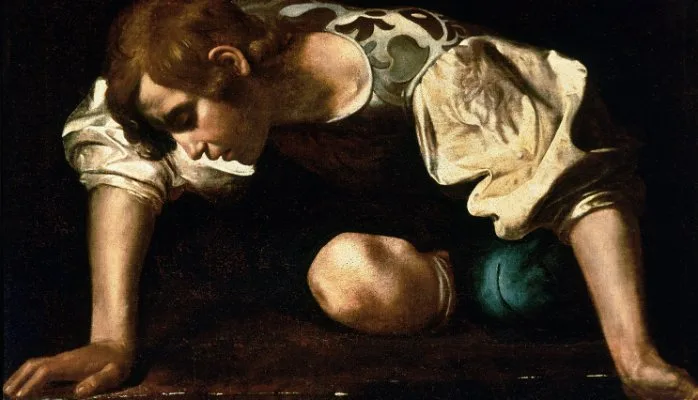
النرجسيون حولنا في كل مكان، من السهل التعرف على الشخصية النرجسية فورًا بدون إعادة التفكير في الأمر، بالطبع كانت النرجسية من قبل شيئًا غير اعتيادي على المجتمع بالنسبة للأشخاص الطبيعين، فكثرت الأقاويل بأنك تعرف النرجسي حين يحاول أن يعيد دفة الحديث حول نفسه مرة تلو الأخرى، وذلك لا يشوبه أي شيء من الخطأ، فبالفعل الشخصية النرجسية تحاول أن تجعل من نفسها مركز الحديث والمكان، وأن تُلفت الأنظار حولها وأن تجعل من نفسها شخصية ذات قيمة أكبر من قيمتها الفعلية، إلا أن طبيعة الحياة الآن والتي اختلفت كثيرًا عما كانت منذ عقد واحد فقط تجعل من الشخصيات الطبيعية في المجتمع شخصيات نرجسية بشكل لا إرادي،  فمع تلك الإعلانات في الطريق حولنا والتي نراها كل يوم بداية من “كن نفسك”، “حقق حلمك”، “افعلها على طريقتك الخاصة”، “حان الوقت لأن تكون مع نفسك قليلًا”،  كل هذا وأكثر من شعارات الماركات العالمية والمطاعم والهواتف الذكية يجعل المجتمع يتجه بشكل لا إرادي نحو الفردية “individualism”، كما أنه يشجع النرجسية بشكل واضح وينشرها بين المجتمع.

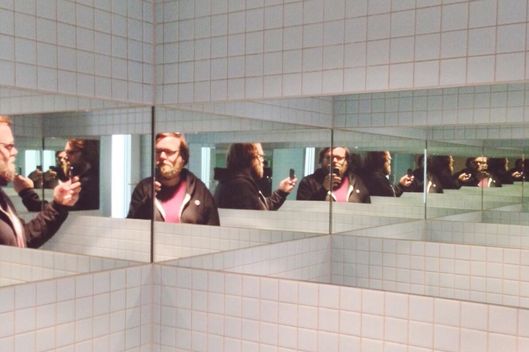
إذا أمعنت النظر في منشورات أصدقائك على وسائل التواصل الاجتماعي بمختلف أنواعها، ستجد أن هناك أغلبية نرجسية منهم بشكل واضح، فستجد البعض يكتب “أنا وأعظم الأصدقاء”، “أنا وهذا أنا وأنا أقضي وقتًا عظيمًا”، “هذا أنا في أتعس حالاتي”!، الكل يدور في فلكه زاعمًا بأنه يشارك الآخرين حينما ينشر منشورات كتلك معتقدًا أن الجميع مهتم للغاية بمعرفة أخباره.

النرجسي لا يكون وقحًا معظم الوقت، ستجده مسليًا واجتماعيًا بدرجة كبيرة ما دامت علاقتك به سطحية، ولكن لا تتوقع أن تستمر العلاقة كذلك إذا اتخذت علاقتك به شكلًا جديًا، فالنرجسي سيتحول إلى شخصية وقحة تحاول جعل نفسها في مركز الكون، ويمكنها أن تقلل من قيمة أي شخصية تحاول الاقتراب منها، كما أنه لا يجب عليك أن تقنع النرجسي بأنه على خطأ، لأنه لن يقتنع أبدًا، النرجسي دائمًا على حق من وجهة نظره، فالنرجسي لا يفهم كيف لا يجده الناس على صواب طوال الوقت.

نون بوست

هل أنت انطوائي، أم نرجسي متخفٍ؟

هل سألت نفسك هذا السؤال من قبل؟ قبل الإجابة دعنا نتعرف على أنواع الانطوائيين، هناك أربعة أنواع من الانطوائيين:

الانطوائي الاجتماعي:

وهو الذي يفضل الانضمام إلى مجموعات صغيرة جدًا من الناس على عكس الانضمام إلى المجموعات الكبيرة من الأصدقاء، أو الانطوائي الذي يكتفي بصديق واحد مقرب، أو ذلك النوع الذي يفضل التواصل عن طريق مواقع التواصل الاجتماعي فقط.

الانطوائي المُفكر: 

هم الأشخاص الذين يتمتعون بقدرات فائقة من الذكاء، ويجدون صعوبة في مشاركة ذلك مع من حولهم من الناس ذوي القدرات العادية أو المتوسطة من الذكاء.

الانطوائي القَلِق:

على عكس الانطوائي الاجتماعي، فالانطوائي القلق يسعى وراء العزلة بسبب شعوره بالغربة حين يتواجد وسط الناس، وذلك بسبب انعدام ثقته بقدراته الاجتماعية، لذلك فهو يفضل الانسحاب.

الانطوائي المكبوت:

من الممكن استعمال مصطلح الانطوائي الكتوم لهذا النوع من الانطوائية، فهو ذلك النوع من الأشخاص الذي يفكر مرتين قبل أن يتكلم أو يتخذ فعلًا، للكاتب هاروكي موروكامي مقولة توضح الانطوائي الكتوم في كتابه “What I Talk About When I Talk About Running” حيث يقول في الكتاب “عندنا أضع حذاء الجري وأستعد للرياضة، أشعر بأن قدماي ثقيلتان للغاية وكأنني لن أستطيع تحريكهما للأبد، هكذا يعمل عقلي أيضًا، بطيء جدًا قبل أن يبدأ في العمل”.

نون بوست

يحب الانطوائيون أن يستغرقوا في أفكارهم وحدهم، والتي تكون في أغلب الوقت أفكار عنهم أو تخصهم، ولكن ألا يفعل ذلك النرجسيون أيضًا! هناك العديد من التشابهات بين الشخصية النرجسية والشخصية الانطوائية، فكلاهما يقع في مصيدة التأمل الذاتي والتي تصل إلى الانشغال الذاتي أو احتلال الذات “self-preoccupation” في بعض الحالات المتقدمة، ربما تعرف إحدى تلك الشخصيات في حياتك اليومية، أولئك الذي يشعرون بأنهم متجاهلون من قبل الجميع ولا يقوم أي شخص بملاحظة قدراتهم أو مميزاتهم، فهم أيضًا يعتبرون النقد مشكلة شخصية ولا يتقبلونه بسهولة، كما يشعرون بالامتعاض إذا شاركهم أحد الأصدقاء مشاكلهم الخاصة.

ليس بالضرورة أن يكون كل نرجسي انطوائي، ولا أن يكون كل انطوائي نرجسي، ولكن هناك علاقة وطيدة بين الانطوائية والميول النرجسية الخفية، فمن الممكن جدًا أن يكون الشخص انطوائي ونرجسي متخفٍ في الوقت نفسه، ليس كل نرجسي انطوائي بالتبعية، ولكن كل انطوائي هو نرجسي متخفٍ بالتأكيد.

تذكر المراجع الأكاديمية النرجسية المتخفية تحت عدة مصطلحات مختلفة، منها النرجسية المغلقة، النرجسية شديدة الحساسية، والنرجسية الضعيفة “سريعة التأثير بالنقد”، كما ذكرها خبراء الطب النفسي بأنها صفة ملازمة للشخص المريض بجنون العظمة، والشخص الذي يشك في كل من حوله ومن يعتقد أن لديه شخصية تفوق الجميع في ذكائها.

هناك فرق بين النرجسية والبارانويا “داء جنون العظمة”، حيث يخلط البعض بينهما، كما يتهم الكثير كل من يتمحور حول ذاته أو يتسم بزيادة الأنا عنده بأنه شخصية نرجسية، في حين أنه ليس كل من يقوم بالتركيز على نفسه نرجسي بالضرورة، ولكن يجب الحذر من أن الشخصية النرجسية ماهرة في التلاعب، وخاصة التلاعب بالمشاعر، حيث يبرع النرجسي في زيادة عدد المعجبين به كل يوم عن طريق التلاعب بمشاعرهم وأفكارهم وذلك ليقوم بتغذية الأنا عنده.

يعتقد العديد من علماء الطب النفسي أن النرجسية الخفية “covert narcissism” ليس لها علاقة بالنرجسية العادية، ولكنها شكل من أشكال “العصابية” ” neuroticism” وهي الحالة التي نجدها في الشخص القلق والمتوتر والغاضب والخائف دومَا، والذي يشعر بالغيرة والوحدة معظم الوقت، كما يجب الذكر بأن النرجسية لا تعتبر اضطراب في الشخصية والذي يُعد مرضًا ضمن الأمراض النفسية، ولكن عندما يبدأ الشخص النرجسي بارتكاب مشاكل ضخمة في محيط عمله وعائلته، حينها يمكن إدراجه تحت مرض اضطراب الشخصية.   

TAGGED: الأمراض النفسية ، الطب النفسي ، النرجسية
TAGGED: المجتمع
Download this article as PDF
Share this Article
Facebook Twitter Whatsapp Whatsapp Telegram Email Copy Link
أميرة جمال
By أميرة جمال مدونة وطالبة مصرية تقيم في تركيا
Follow:
Next Article نون بوست The Stigma of “ISIS”: A Heavy Legacy Haunting Women and Children of Former Members

Read More

  • U.S. Regime‑Change Policies: Why They Are Destined to Fail U.S. Regime‑Change Policies: Why They Are Destined to Fail
  • The Gulf’s Balancing Act: Iran, Israel, and Hidden Links
  • Iraq–Turkey Oil Export Treaty: Why Did Ankara Cancel It After 52 Years?
  • Syria’s Northeast on Edge: QSD Between Ankara and Damascus
  • Has Europe Changed Its Stance on Israel… or Just Its Language?
part of the design
NoonPost Weekly Newsletter
dark

An independent media platform founded in 2013, rooted in slow journalism, producing in-depth reports, analysis, and multimedia content to offer deeper perspectives on the news, led by a diverse young team from several Arab countries.

  • Politics
  • Society
  • Rights & Liberties
  • Opinions
  • History
  • Sports
  • Education
  • Technology
  • Economy
  • Media
  • Arts & Literature
  • Entrepreneurship
  • Travel
  • Cinema & Drama
  • Food
  • Health
  • Culture
  • Latest Reports
  • Files
  • Long Reads
  • Interviews
  • Podcast
  • Interactive
  • Encyclopedia
  • In Pictures
  • About Us
  • Our Writers
  • Write for Us
  • Editorial Policy
  • Advanced Search
Some rights reserved under a Creative Commons license

Removed from favorites

Undo
Go to mobile version