During the 6th and 7th centuries AH, the Islamic world was rocked by seismic events, notably the retreat of Muslim presence in al-Andalus and the sequential fall of its cities to Christian kingdoms. In the East, the Crusades posed a persistent threat, while European naval powers asserted near-complete dominance over the Mediterranean.
Pilgrimage routes became increasingly hazardous, jeopardized by Christian and Mongol military expansion, directly impacting the safety of pilgrims and the sanctity of the paths to the Holy Sanctuaries.
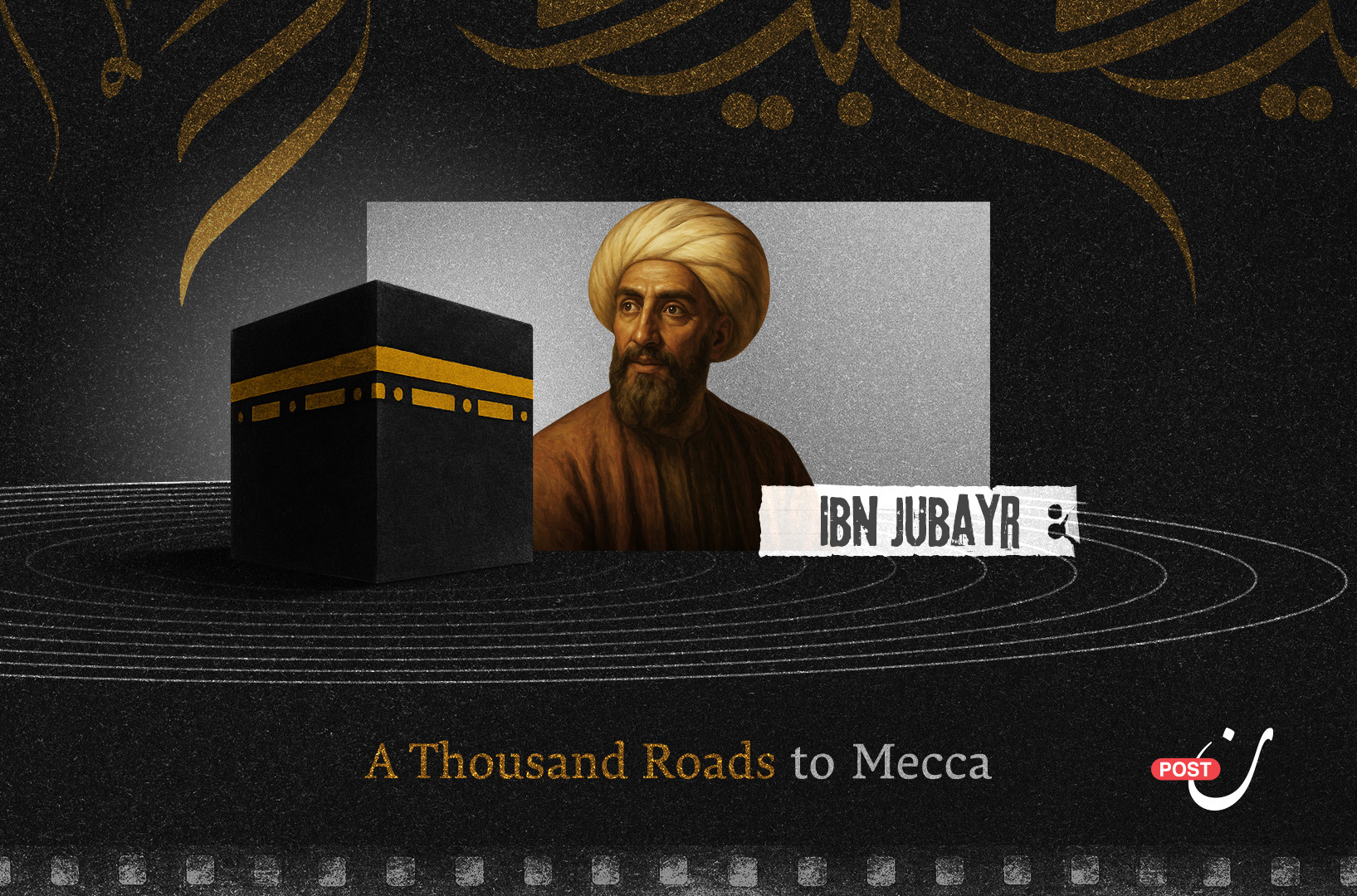
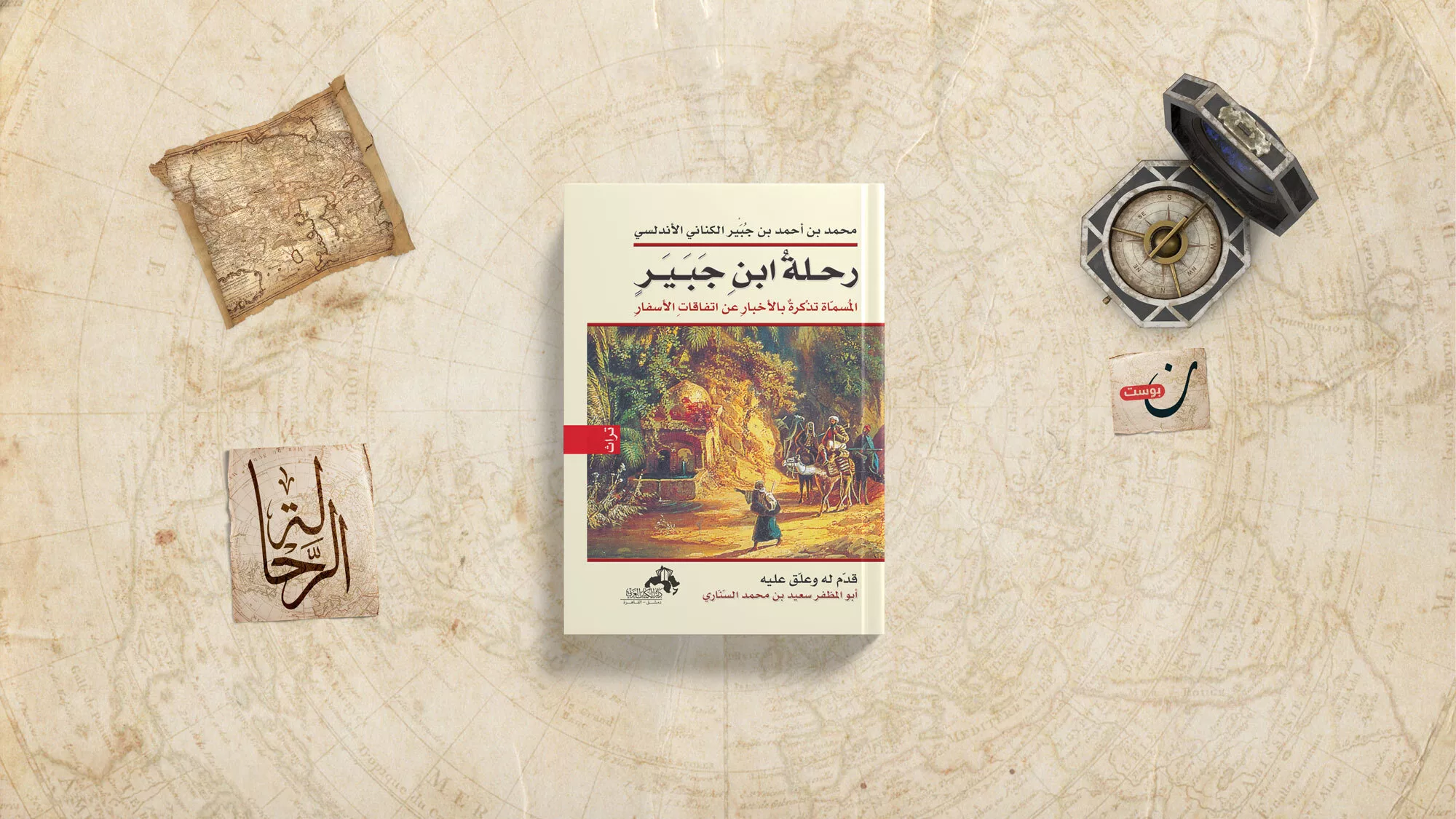
Amid this political fragmentation and chaos, pilgrimage caravans continued undeterred. Reformist leaders such as Salah al-Din al-Ayyubi launched initiatives that restored a measure of peace and dignity to the hajj in an otherwise tumultuous era. Among the most vivid historical testimonies of this period is the pilgrimage account of Ibn Jubayr, whose meticulous record captures the immense challenges pilgrims faced during the Crusades.
This article, part of the “A Thousand Roads to Mecca” series, explores the spiritual magnetism that drove countless caravans across continents, seas, and deserts toward the Kaaba—a destination longed for by souls before feet. It follows the footsteps of pilgrims as immortalized in their narratives across cultures and eras, each bearing a personal story that culminates in the sacred moment of arrival.
From Granada to Mecca: A Journey of Atonement
In one fateful night in Granada, the city’s ruler, Abu Sa’id Uthman—son of the Almohad Caliph Abd al-Mu’min—called upon his trusted scribe, Ibn Jubayr. Under the influence of wine and authority, he compelled him to drink seven cups of wine. Ibn Jubayr, steadfast in his principles, resisted, declaring his lips had never touched alcohol.
But the caliph, insistent, shouted, “Seven cups—by God, you will drink them!” Out of fear and helplessness, Ibn Jubayr reluctantly complied, each sip heavier than the last.
Regret quickly gripped the ruler upon seeing the humiliation in his scribe’s eyes. To console him, he replaced the wine with golden dinars and handed them over. But for Ibn Jubayr, the damage was done. He resigned from his post, burdened with shame, and resolved to expiate that night through pilgrimage to Mecca.
In Rabi’ al-Awwal 579 AH, at the age of thirty-eight, he set off on his journey. He departed Granada, crossed the Strait of Gibraltar to Ceuta, and embarked on a month-long sea voyage to Alexandria. The passage through narrow straits near Sardinia and Sicily was rough and treacherous.
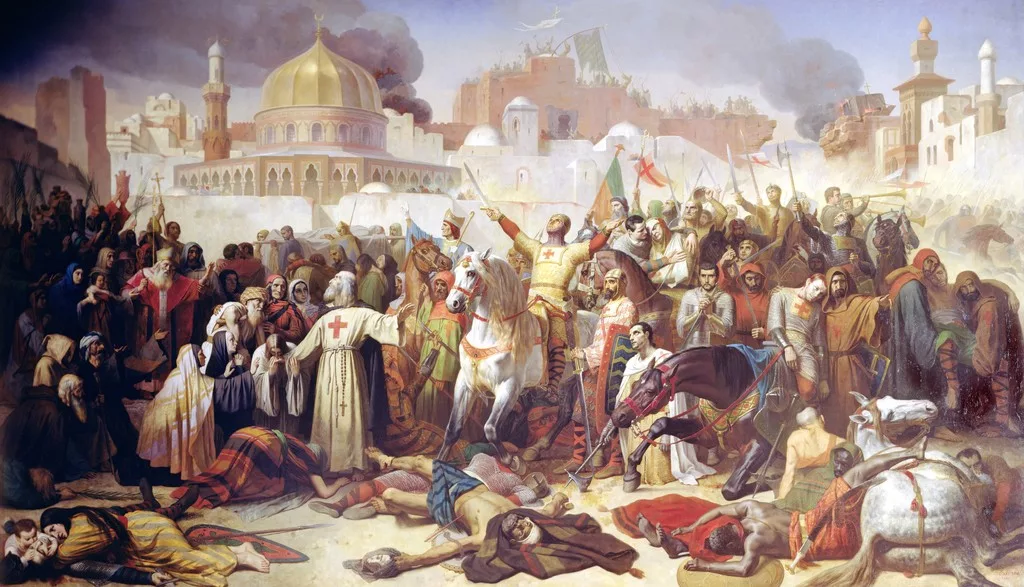
Ibn Jubayr’s anxiety stemmed not only from the turbulent sea but also from the perilous conditions facing pilgrims in the East, particularly the escalating conflict between Salah al-Din and the Crusaders. Mid-journey, he received harrowing news: Christian forces had attacked ships carrying Muslim pilgrims, killing many and capturing eighty men, women, and children to be sold into slavery. This grim report intensified his unease, especially as he himself traveled aboard a Christian vessel.
Upon reaching Alexandria, Ibn Jubayr witnessed a group of captured European soldiers being marched to prison. They were part of the infamous forces of Reynald de Châtillon, a Crusader commander known for his merciless assaults on pilgrim caravans. These soldiers openly spoke of their intent to raid Medina and desecrate the Prophet’s grave.
Ibn Jubayr continued to Cairo, now a Sunni stronghold under Salah al-Din’s rule. Though the route through Sinai was the shortest to Mecca, he avoided it due to the Crusader occupation of Jerusalem and the dangers that lurked there. Instead, he traveled south from Cairo with a caravan, enduring nine grueling days across the burning sands to the Red Sea port of Aydhab near modern-day Egypt-Sudan border. From there, he sailed to Jeddah.
His choice of route suggested prior knowledge, possibly from fellow pilgrims who had taken the journey before him. Through them, he had learned which paths were safest. He joined a caravan in Jeddah and traveled by night beneath the stars until they reached al-Qurayn at dawn—a major gathering point for pilgrims before entering Mecca.
After resting by day, they resumed their journey by night. With hearts full of anticipation, they pressed forward until Ibn Jubayr reached Mecca at daybreak. Overcome with awe and serenity, he felt as though his soul had finally come home.
On the Paths of Pilgrimage
The moment Ibn Jubayr’s feet touched Meccan soil, all fatigue vanished. Awe and gratitude overtook him as he glimpsed the Kaaba under the full moon, encircled by worshippers who resembled prophets in their humility and radiance.
He rushed to perform tawaf in thanksgiving, prayed at the Station of Abraham, and drank from the Zamzam well, praising its water as the most delicious he had ever tasted. He bathed in it, claiming it restored his vitality. He performed sa’i between Safa and Marwah, then lodged at a guesthouse called “al-Taharah” near the Gate of al-Suddah within the Grand Mosque. There he shaved his head, marking the end of his rites.
Ibn Jubayr painted a poetic portrait of Mecca, calling it “the bride of all nights and the firstborn of the world’s daughters.” He documented the Grand Mosque and its surroundings with exquisite detail. Among the landmarks he visited were the Prophet Muhammad’s birthplace east of the Kaaba, the house of Ali ibn Abi Talib, the Dome of Revelation in Khadijah’s residence, and homes of al-Khayzuran and Abu Bakr al-Siddiq.
He explored sacred structures between Safa and Marwah, including domes attributed to Umar ibn al-Khattab and Gabriel, and prayer platforms near Khadijah’s home. Moved by their beauty, he described their spiritual effect on pilgrims with reverent admiration.
During his nearly eight-month stay in Mecca, he moved between lodgings, noting the fluctuating temperatures that forced pilgrims to sleep on rooftops, wrapped in blankets against the night chill. He recorded the pilgrimage rituals with a keen observational eye, especially the Day of Arafat, which he likened to the Day of Judgment due to the crowds and solemnity. He marveled at the miracle of so many pilgrims gathered in such a small place.
He also chronicled the arrival of distinguished figures, including the ruler of Iraq, who entered Mecca with great pomp, accompanied by Persian dignitaries and prominent women. His account includes nuanced observations of women’s behavior and their acts of charity, as well as detailed notes on Mecca’s bustling economy during hajj season.
Despite his Andalusian pride, Ibn Jubayr was astonished by Mecca’s variety of fruits and produce. He noted the city’s markets were filled with milk, honey, butter, raisins, almonds, spices, and grains, as well as perfumes and medicines from India and goods from Iraq, the Levant, Khorasan, and North Africa. He credited this abundance to Yemeni traders who supplied Mecca year-round.
He praised Meccan meats and said the taste surpassed even what he knew in his homeland. One of his most vivid scenes was the ceremonial changing of the Kaaba’s kiswa on Eid al-Adha: a green silk covering, transported from Iraq on camelback amid drums and banners, its upper section adorned with a red band inscribed with Qur’anic verses and the Abbasid caliph’s name.
Ibn Jubayr noted changes in the kiswa’s color and design compared to earlier eras and observed the festive mood that had enveloped certain rituals. Though moved by the vibrant religious atmosphere, he criticized what he saw as innovations, such as drumming on the way to Arafat and firecrackers during prayers.
In a touching moment, he recounted a sermon at the Grand Mosque that ended with prayers for Salah al-Din. The pilgrims’ resounding “Amen” reflected their gratitude for the sultan’s support, including abolishing unjust taxes and improving pilgrim welfare.
Ibn Jubayr deeply engaged with Mecca’s religious and intellectual life, attending lectures and dhikr sessions with scholars from across the Muslim world. He marveled at the ethnic and linguistic diversity. On one night in Dhul-Hijjah, he heard a moving bilingual sermon in Arabic and Persian by a preacher from Khorasan.
He recorded that each of the four Sunni madhhabs (Hanafi, Maliki, Shafi’i, and Hanbali) had its own imam, with a fifth for the Zaydi school. Each led prayers independently except at Maghrib and Isha, when all congregated together.
The Trials of Pilgrimage in Ibn Jubayr’s Time
Despite the spiritual elation Ibn Jubayr experienced in Mecca, his account lays bare the formidable challenges pilgrims faced. The physical and psychological toll of constant travel, climate extremes, and unpredictable human threats added layers of hardship beyond mere distance.
Although he never met Salah al-Din, Ibn Jubayr acknowledged the sultan’s reforms that improved pilgrim infrastructure: safer maritime routes, expanded water systems, and the abolition of exploitative taxes. Yet he did not shy from criticizing the disparities in pilgrim experience.
He vividly described the luxury of elite pilgrims, protected from the heat and strain by opulent tents and elaborate furnishings—a “royal hajj” in contrast to the common pilgrim’s ordeal.
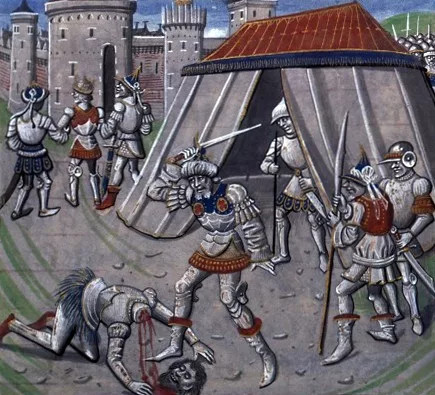
These contrasts disturbed him. Though outwardly content with his own humble lot, he wrote with barely concealed frustration at the social inequities he observed. He described in detail the grandeur of an Iraqi prince’s camp, comparing its canopy to a walled garden, adorned with the finest silks and carpets.
Ibn Jubayr also warned of greedy shipmasters who dangerously overcrowded their vessels, likening pilgrims to hens packed in a coop. Many died of thirst on the way to Mecca, and storms frequently threatened their lives.
The cost of hajj was high, burdened by corrupt customs officers and arbitrary tolls at numerous checkpoints. In Jeddah, pilgrims were routinely extorted under the guise of taxes. He decried these injustices, noting how some tribal groups, like the Banu Shu’bah, even attacked caravans between Muzdalifah and Arafat.
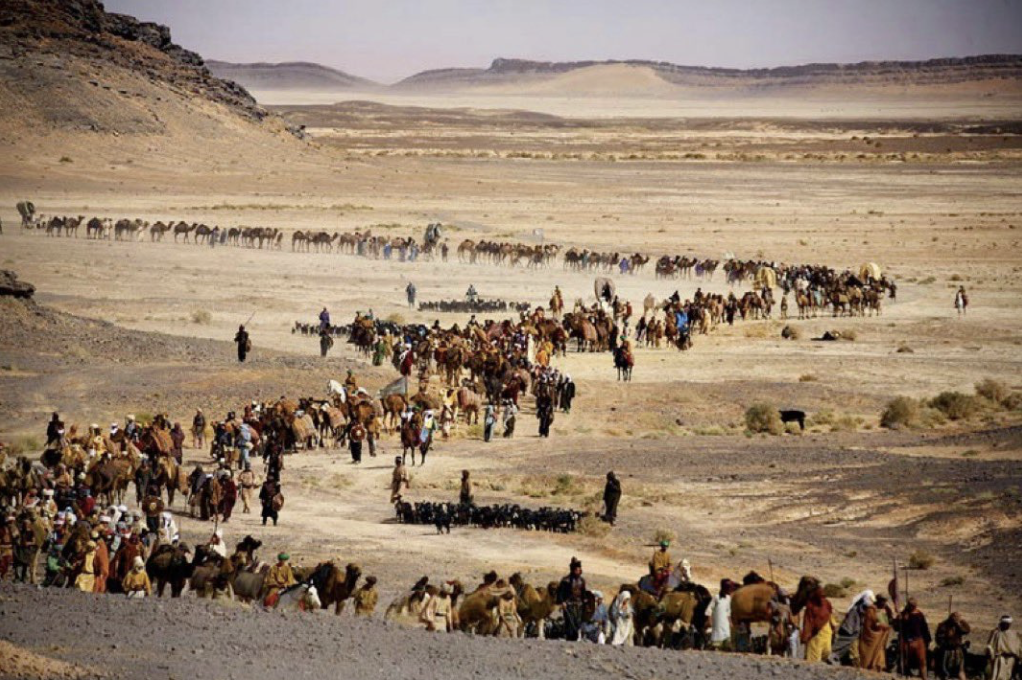
A particularly egregious episode occurred when Ibn Jubayr and others were imprisoned in Jeddah on orders from Mukhtar ibn Isa, the emir of Mecca. They were released only after paying a newly imposed tax. Salah al-Din later intervened by sending funds and wheat to curb such practices. Yet whenever the funds were delayed, the emir reverted to abusing pilgrims.
In despair, Ibn Jubayr recalled the opinion of Andalusian jurists who had declared the hajj non-obligatory for Andalusians under such dire conditions. He wrote, “Those scholars were right. How can the House of God remain in the hands of those who exploit it for illegitimate gain, turning it into a pretext for pillaging pilgrim wealth?”
His disappointment deepened into disillusionment, lamenting that true Islam seemed preserved only in the Maghreb. He bitterly described the Hijaz as divided and impious, saying its people were driven by sectarianism and greed. He went so far as to write that the Hijaz deserved to be cleansed by the sword for its betrayal of Islamic values.
Yet amid corruption and cruelty, Ibn Jubayr found solace in the generosity of Yemeni tribes like al-Saru, who annually brought their harvests to Mecca, offering them to pilgrims in exchange for local textiles. Their selflessness and service stood in stark contrast to the predatory behavior he witnessed elsewhere.
Return Home and Enduring Legacy
On the 20th of Dhul-Hijjah, 578 AH, Ibn Jubayr left Mecca after more than eight months. He journeyed to Medina, visiting the Prophet’s grave and the Baqi’ cemetery, then joined a caravan eastward toward Iraq and Turkestan. His route took him through Kufa, Baghdad, Tikrit, Mosul, and on to Harran, Aleppo, Homs, and Damascus—“the paradise of the East,” as he called it.
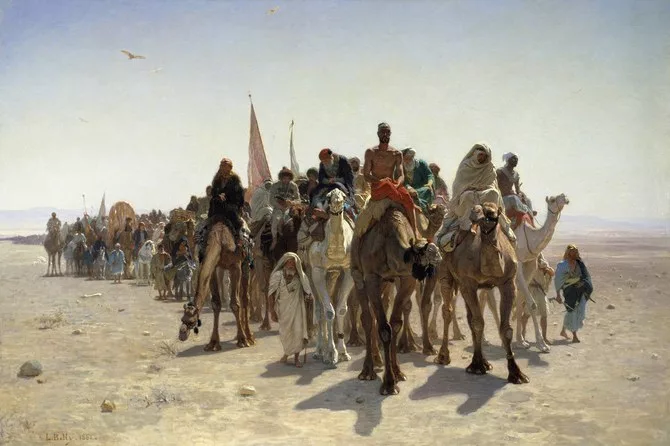
He then traveled west to the Crusader-held city of Acre. Although Crusaders resented North African pilgrims, they permitted them passage in return for higher tolls. From Acre, he crossed Crusader territory to Sicily. Disaster struck again: his ship sank in a storm, and he barely survived, eventually reaching Trapani and continuing on to Cartagena.
After over two years, he returned to Granada. Eschewing courtly life, he dedicated himself to Islamic education. Despite his deep love for al-Andalus, he did not stay long. Four years later, between 1189 and 1191, he made a second pilgrimage, thanking God for Salah al-Din’s liberation of Jerusalem. Following the death of his wife, he left his homeland once more, spending a decade between Mecca, Jerusalem, and Alexandria, teaching until his death at age 72.
Ibn Jubayr’s richly detailed observations and bold commentary became a foundational model for future pilgrimage literature. His influence extended to figures like Ibn Battuta, who, over 170 years later, directly quoted passages from Ibn Jubayr’s journey—testament to a legacy that shaped the literary canon of Islamic travel writing.