NoonPost NoonPost

NoonPost

  • Home
  • Politics
  • Economy
  • Society
  • Culture
  • Files
  • Long Reads
  • Podcast
AR
Notification Show More
نون بوست
“There Are Nights I Can’t Close My Eyes”: How Gazans Are Living in Homes on the Brink of Collapse
نون بوست
From al-Jolani to Ahmad al-Shara: The Evolution of Syria’s New Leader
نون بوست
When Political Islam Receded in Egypt: Who Filled the Void?
نون بوست
An Extension of Genocide: Gaza’s Detainees Speak Out
نون بوست
A Tightrope Between Survival and Sovereignty: The Syrian Government Faces Normalization Pressures
نون بوست
American Aircraft Carriers: Has the Era of “100,000 Tons of Diplomacy” Ended?
نون بوست
U.S. Regime‑Change Policies: Why They Are Destined to Fail
نون بوست
Transformations of Israeli Judaism: Between the Victim Complex and the Colonizer’s Doctrine
نون بوست
The Gulf’s Balancing Act: Iran, Israel, and Hidden Links
نون بوست
Iraq–Turkey Oil Export Treaty: Why Did Ankara Cancel It After 52 Years?
نون بوست
Syria’s Northeast on Edge: QSD Between Ankara and Damascus
نون بوست
Has Europe Changed Its Stance on Israel… or Just Its Language?
NoonPost NoonPost
AR
Notification Show More
نون بوست
“There Are Nights I Can’t Close My Eyes”: How Gazans Are Living in Homes on the Brink of Collapse
نون بوست
From al-Jolani to Ahmad al-Shara: The Evolution of Syria’s New Leader
نون بوست
When Political Islam Receded in Egypt: Who Filled the Void?
نون بوست
An Extension of Genocide: Gaza’s Detainees Speak Out
نون بوست
A Tightrope Between Survival and Sovereignty: The Syrian Government Faces Normalization Pressures
نون بوست
American Aircraft Carriers: Has the Era of “100,000 Tons of Diplomacy” Ended?
نون بوست
U.S. Regime‑Change Policies: Why They Are Destined to Fail
نون بوست
Transformations of Israeli Judaism: Between the Victim Complex and the Colonizer’s Doctrine
نون بوست
The Gulf’s Balancing Act: Iran, Israel, and Hidden Links
نون بوست
Iraq–Turkey Oil Export Treaty: Why Did Ankara Cancel It After 52 Years?
نون بوست
Syria’s Northeast on Edge: QSD Between Ankara and Damascus
نون بوست
Has Europe Changed Its Stance on Israel… or Just Its Language?
Follow US

Palestinian Motherhood Before Zionism

فريق التحرير
Noon Post Published 26 March ,2026
Share
نون بوست
نون بوست

At the onset of the Israeli invasion of Gaza following October 7, 2023, an estimated 50,000 pregnant women—around 5,000 of whom were in their final month—were plunged into severe health and food crises due to Israeli attacks, according to Gaza’s Ministry of Health.

However, this suffering existed even before the Al-Aqsa flood. Reports from UNICEF confirmed that one in every four pregnant women in Palestine—25%—was at risk of dying during childbirth, a consequence of the occupation’s policies aimed, as described by the Palestinian Centre for Human Rights, at restricting childbirth in Gaza.

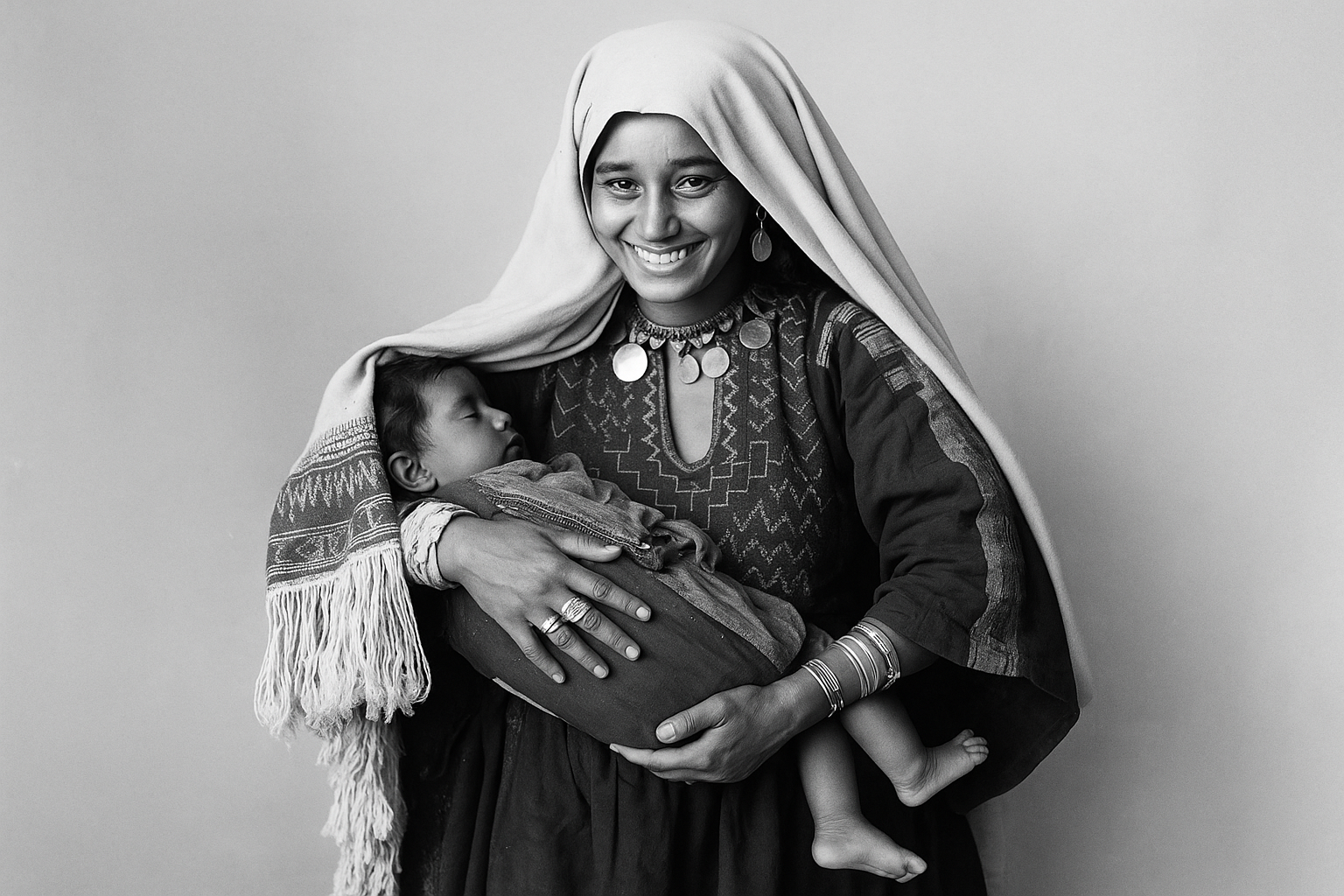
What were already perilous pregnancy and birth conditions before the Al-Aqsa catastrophe worsened into “something worse than Hell after the deluge,” when childbirth had previously been a source of joy and celebration. Below, we explore the childbirth and nursing rituals in Palestine before the existence of “Israel,” drawing from contemporaneous sources:

  • Gustav Dalman, German orientalist, in Work, Customs, and Traditions in Palestine (early 20th century);

  • Alois Musil, Austrian orientalist, in Arabia Petraea (late 19th–early 20th century);

  • Tawfiq Kanaan, Palestinian researcher, in The Saints and Islamic Shrines in Palestine;

  • Sharif Kanaaneh et al., Procreation and Childhood: A Study in Palestinian Culture and Society;

  • Nidal Taha, Popular Rituals and Beliefs from Palestine.

Birth and Its Rituals: “Relief upon your head, relief from your distress.”

Late in pregnancy, women prepare by gathering wild herbs—bluf and basa‘miya—drying and grinding them into a flour with oil. The expectant mother eats this during labor, believing it nourishes and aids delivery.

The mother-to-be receives chickens, rice, and other essentials called al-hamoola (“the load”) from family in her final month for extra nourishment during childbirth.

She might visit a local shrine, making vows—offering dates, the dish mujaddara, or even a sacrifice—asking for a safe delivery of a male child.

To protect against evil spirits or envy, she may receive a protective amulet or blue bead from a religious elder, wear a prayer-bead necklace over her belly, recite the Quran, and pray.
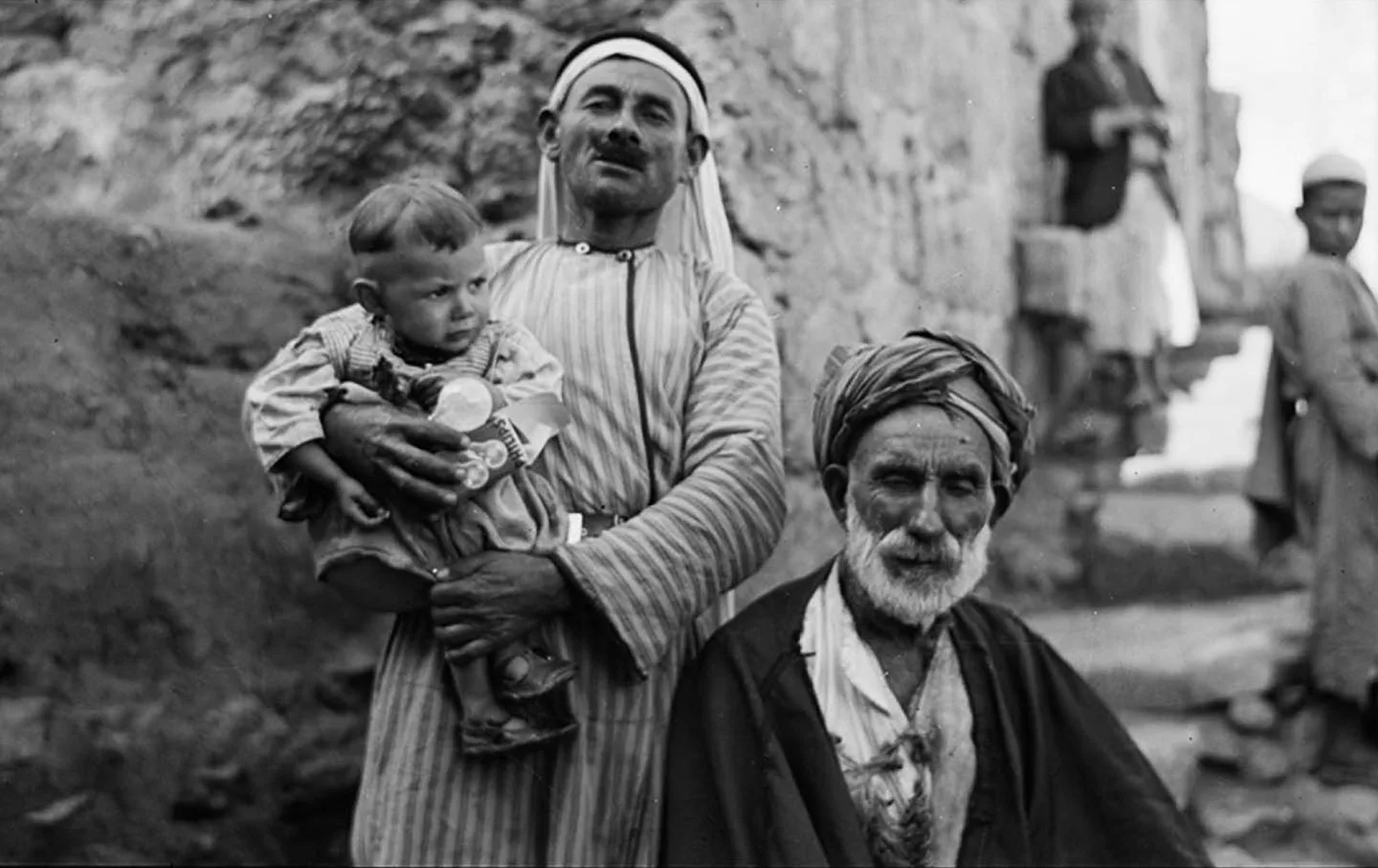
نون بوست
Three generations from the village of al-Dhahiriya (located between Hebron and Beersheba), February 9, 1940.

When labor begins, the woman sits on a birthing stone (hajar al-julus) rather than lying in bed, flanked by female relatives and attended by a midwife (dayyah), with her mother often present. If no stone is available, alternatives include a chair, an overturned clay pot, or a stack of bricks.

If labor stalls, those around chant prayers and place blessed rosaries on her belly and neck. The midwife recites an ancient, folkloric blessing invoking prophets and divine power:

“Relief upon your head, relief from your distress, O Noah, O Noah, O spiritual deliverer…”

These practices transcended religious lines. Even Christian families in areas like Beit Jala sought help from Mary and saints, with priests praying and women wearing crosses for protection.

Once the baby’s head appears, the midwife prays:

“I stretch my right hand and trust in You, Lord of the Worlds… I stretch my left hand and trust in You…”

After the birth, she performs a blessing:

“I have enveloped you with Jacob’s children under the tree… in the name of He who gave you breath…”

She then carefully delivers the placenta, known as al-khalasah (“the deliverance”), thought to be the child’s spiritual twin and guardian. It’s tied and placed respectfully—often buried or stored in a clay jar—to preserve the child’s well-being and future fertility.

Muslim families avoided Friday births, seeing them as bad omens—they would sacrifice an animal and sprinkle its blood on the home and child. Generally, an aqiqa sacrifice was performed for newborn boys (and sometimes girls), but the blood was not sprinkled unless the birth fell on a Friday.

Welcoming the Newborn (Al-Khiryān) and Naming

Three days after birth, the newborn is anointed with oil, swaddled, washed with sheep’s urine, swaddled again, and nicknamed khiryān until they are formally named. On the seventh day (al-sabu‘), they’re bathed again with clean water.

Some families delay the newborn’s first bath up to a month, believing angels wash the baby at night. When the bath finally occurs, they sing lullabies and sprinkle perfume, salt, and blessings.
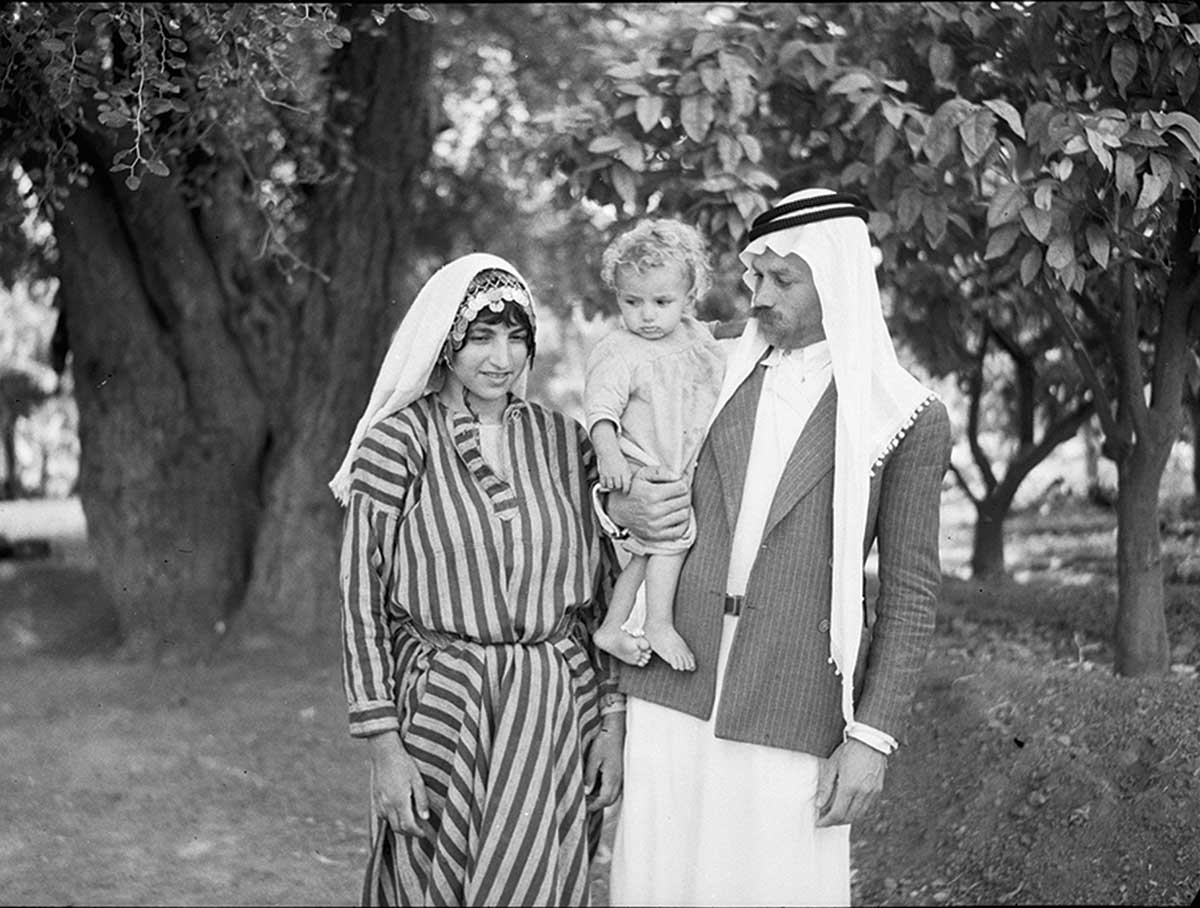
نون بوست
A Palestinian family on April 28, 1946, in Jericho.

On day seven—or sometimes at the 40-day milestone—the baby visits their paternal or maternal grandfather, accompanied by a sheep or goat for an aqiqa. A green ribbon is tied to the animal, and the grandfather gives the baby its name in a ceremony:

“O Lord, accept this (goat or lamb) as an offering for the son of so‑and‑so…”

Friends and relatives are invited to a feast and bring gifts, especially for the new mother.

In traditional folktales, male births are preferred over female ones—“A daughter is a house-breaker; a son builds the home.” Both Muslim and Christian families share this cultural bias, separate from religious decree.

At the aqiqa, a lock of the baby’s hair is cut. In many areas, this happens a year—or even two—after weaning. Parents may keep hair, tucking it in the mother’s pillow or wall; headaches in the mother could signify the hair’s misuse.
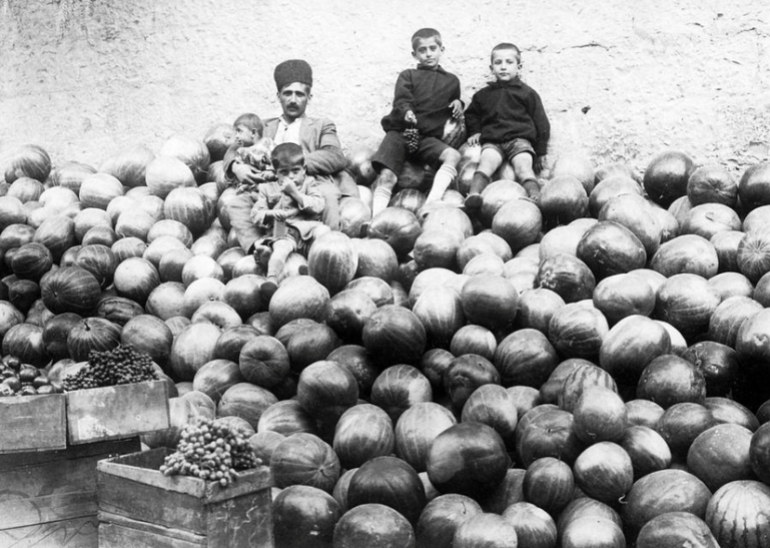
نون بوست
A father and his children sit atop a bountiful watermelon harvest, as the boy in the middle holds out a bunch of grapes.

Names reflect religion and lineage: Muslims favor prophetic or theophoric names (e.g., Muhammad, Abdullah), and Christian families choose Biblical names in Arabic, especially ones linked to saints’ feast days. Others select aspirational names like Sa‘d, Saeed, Tawfiq, or naturist names referencing animals, plants, or months.

Christians name newborns immediately but formalize the name at baptism around day 40. A priest submerges the baby three times in holy water, cuts a cross-shaped lock, anoints them, and officiates with godparents and celebratory gifts and feast, similar to the Muslim aqiqa.

Nursing and Lulling: “Nurse, little fava bean…”

Nursing was intended for two years per Quranic guidance, though often interrupted due to rapid subsequent pregnancies. A mother’s success in breastfeeding was culturally esteemed, associated with fertility and strength.

During lactation, families performed a ritual: placing seven fava beans in water and chanting:

“Nurse, little fava bean, grow like the little stalk…”

As the beans swell, it symbolized the baby’s growth and appetite.

Babies were soothed through hadhhadah (gentle rocking and lullabies) by a family member, allowing the mother to complete household chores before breastfeeding. Lullabies included:

“O valley dove, bring sleep to my child…”

At six months, with the eruption of first teeth, an aunt would massage the gums—never the maternal aunt, as it was believed only a paternal aunt (‘ammah) could ensure strong teeth.
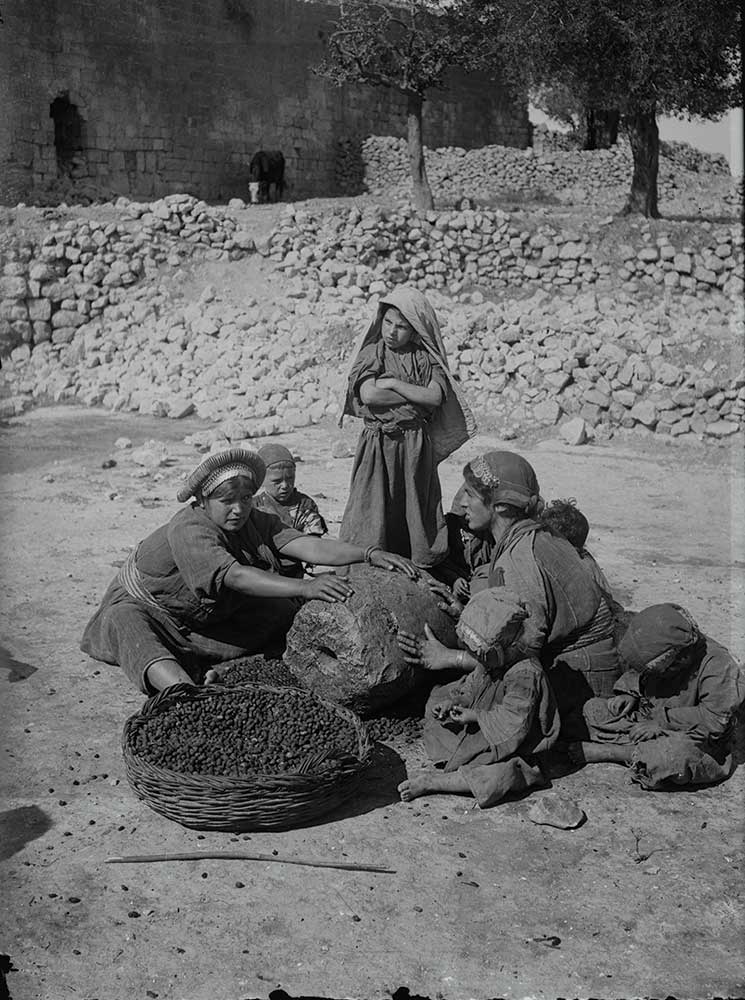
نون بوست
Women pressing olives, circa 1900–1920, accompanied by their children.

Weaning in summer was avoided; spring was preferred when animal milk supply peaks (“Wean in March even if the child is a tear”). Goat’s milk, boiled and sweetened, often supplemented.

These joyful and deeply human childbirth and nursing traditions, even when interwoven with superstition, honored the child as more than a physical being—but a spiritual continuation of ancestral life and identity.

Today, Palestinian birth remains a form of resistance—a tool against the settler-colonial erasure of indigenous inhabitants. The newborn embodies hope in the face of loss: “He who reproduces never dies.”

Download this article as PDF
Share this Article
Facebook Twitter Whatsapp Whatsapp Telegram Email Copy Link
فريق التحرير
By فريق التحرير تقارير يعدها فريق تحرير نون بوست.
Follow:
Previous Article نون بوست Ibn Jubayr’s Pilgrimage Through War and Devotion
Next Article نون بوست How Israel Weaponizes Hunger

Read More

  • Memory of Genocide in Srebrenica, Rwanda, and Gaza: How Do Survivors Remember Their Tragedies? Memory of Genocide in Srebrenica, Rwanda, and Gaza: How Do Survivors Remember Their Tragedies?
  • Bilad al-Amirin Tiberias: The Story of Algerian Villages Before and After the Nakba
  • The Layers and Masks of the Nakba: What Was Left Untold About the Fragmentation of Palestinian Society and the "Favored Minorities"
  • Embroidered Memory: Palestine in Exile and Diaspora
  • From Marseille to Marrakech: How Europe Imagined the Maghreb
part of the design
NoonPost Weekly Newsletter

You May Also Like

Memory of Genocide in Srebrenica, Rwanda, and Gaza: How Do Survivors Remember Their Tragedies?

Memory of Genocide in Srebrenica, Rwanda, and Gaza: How Do Survivors Remember Their Tragedies?

حنان سليمان Hanan Sulaiman 26 March ,2026
Bilad al-Amirin Tiberias: The Story of Algerian Villages Before and After the Nakba

Bilad al-Amirin Tiberias: The Story of Algerian Villages Before and After the Nakba

فريق التحرير Noon Post 26 March ,2026
The Layers and Masks of the Nakba: What Was Left Untold About the Fragmentation of Palestinian Society and the “Favored Minorities”

The Layers and Masks of the Nakba: What Was Left Untold About the Fragmentation of Palestinian Society and the “Favored Minorities”

سجود عوايص Sujoud Awais 26 March ,2026

هل ينخرط الأردن في الخطة “ب” في حال فشل الهدنة في سوريا؟

محمد العرسان
محمد العرسان Published 1 March ,2016
Share
الثورة السورية

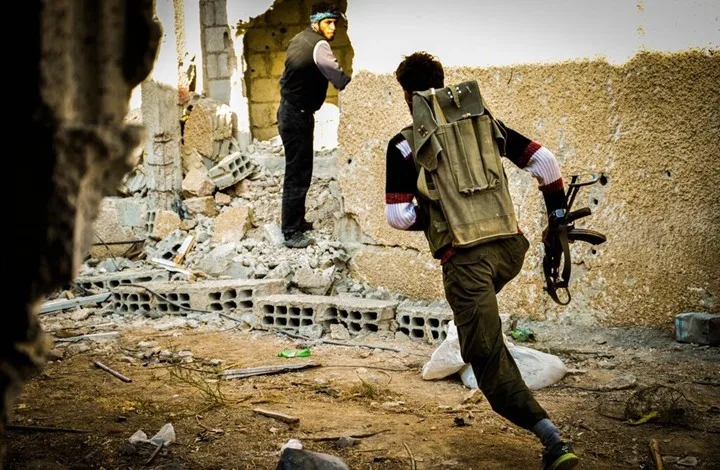
بالرغم من مرور يومين على سريان الهدنة في سوريا، سارع محللون وسياسيون لاستحضار سيناريو الخطة “ب”، التي أعلن عنها وزير الخارجية الأمريكي جون كيري في حال فشل هدنة “وقف الأعمال العدائية”، والمتمثلة بالخيار العسكري البري.

وسارع القائد السابق لقوات التحالف بحلف شمال الأطلسي (الناتو) الأدميرال المتقاعد جايمس ستافريديس، لتحديد ملامح سيناريو الخطة “ب”، والتي أكد أنها ستكون “حملة برية دون روسيا تتضمن في مرحلة من المراحل إقامة حظر للطيران في منطقة آمنة بالتعاون مع الأردن”.

وحذر وزير الخارجية السعودي أحمد الجبير، مساء الأحد، من خيارات أخرى في حال عدم احترام النظام السوري للهدنة، قائلاً إنه “كما ذكر وزير خارجية الولايات المتحدة جون كيري، فإن هناك خطة (ب)، إذا اتضح أنه لا توجد جدية لدى النظام السوري أو لدى الحلفاء، فالخيار الآخر وارد وسيتم التركيز عليه”.

استبعاد رسمي أردني للخطة “ب”

رسميًا، قلل مصدر حكومي أردني من التصريحات المتعلقة بالخطة “ب”، قائلاً إن “أي تحرك عسكري، وإقامة مناطق آمنة يجب أن يأتي بقرار من الأمم المتحدة”، مؤكدًا دعم الأردن لأي حل سياسي يحافظ على وحدة الأراضي السورية.

وسبق لرئيس الحكومة الأردنية عبد الله النسور، أن رفض في مؤتمر صحفي الحديث حول مشاركة الأردن في حرب برية، لمحاربة تنظيم الدولة في سوريا، قبل وجود قرار دولي حول ذلك.

وتميل المملكة إلى سياسة “إمساك العصا من المنتصف” فيما يتعلق بالأزمة السورية، رغم الضغوط الخليجية لفتح الحدود الأردنية أمام التسليح والدعم اللوجستي، وكان آخرها دعوات من السعودية والإمارات لإرسال قوات برية عبر الحدود الأردنية في حال وجود قرار دولي بمحاربة تنظيم الدولة في سوريا.

بدوره، رأى الخبير العسكري اللواء المتقاعد الدكتور قاسم محمد صالح، أن الحل البديل في حال تم خرق الهدنة، والتي وصفها بالهشة، هو الحل العسكري، موضحًا أنه في حال “عدم نجاح الهدنة فسيتحول العمل إلى الخطة ب العسكرية، وهذا سيدفع بأعداد كبيرة من اللاجئين إلى الأردن، وستتأثر المملكة نتيجة هذا العمل العسكري”.

ورأى خبراء أن من مصلحة الأردن المضي بالخطة (أ) المتمثلة بالحل السلمي، لما قد تجلبه الخطة البديلة والخيار العسكري من تداعيات سلبية على المملكة وأمنها، والتي قد تشهد تدفق آلاف اللاجئين على حدودها الشمالية حال احتدام المعارك، بالإضافة للتهديدات الأمنية المتمثلة “بالقذائف العشوائية” التي تتساقط على القرى الحدودية الأردنية السورية.

الخطة “ب” استهلاك إعلامي

 من جهته، استبعد الخبير والمحلل الإستراتيجي الدكتور عامر السبايلة تطبيق سيناريو الخطة “ب”، معتبرًا أن الهدنة هي النتيجة الطبيعية في موضوع القرار الأممي الذي يفرض الحل السياسي، وبالتالي فهي فرصة لكثير من الأطراف للالتحاق بالركب السياسي، وتوحيد الجهود وعزل كثير من المكونات التي ستكون هي هدف المواجهة.

وأضاف السبايلة أن الهدنة “فرصة لترتيب أوراق المعارضة المسلحة بحيث تندرج تحت مظلة القرار الدولي، وتقوم بدوها الطبيعي في مواجهة تنظيم الدولة والنصرة، وتلتحق بالحل السياسي مستقبلاً”.

وتابع المحلل السياسي بأن “الأمور تسير باتجاه تشكيل حل سياسي قد يتضمن دمج المعارضة في الجيش السوري، أو في العملية السياسية، وانخراطها في الحرب على الإرهاب، والحصول على الشرعية بأن تكون جزءًا من المكون السياسي المستقبلي لسوريا”.

وكان وزير الخارجية الأمريكي جون كيري، ذكر أن بلاده تدرس خيارات لخطة بديلة في حال لم يصمد وقف إطلاق النار في سوريا، وإذا لم تشهد البلاد مرحلة انتقالية قريبًا.

وقال كيري، أمام لجنة العلاقات الخارجية بمجلس الشيوخ الأمريكي: “نحن في طريقنا لمعرفة ذلك في غضون شهر أو شهرين، معرفة ما إذا كانت هذه العملية الانتقالية جادة حقًا، وعلى الرئيس السوري بشار الأسد اتخاذ بعض القرارات الحقيقية حول عملية تشكيل حكومة انتقالية”.

ولم يعلن وزير الخارجية الأمريكي عن تفاصيل الخطة “ب”، لكنه قال إن “الخطوط العريضة للخطة تتضمن الاستمرار في قيادة التحالف ضد داعش ودعم المعارضة ضد الأسد”.

وقال كيري إن الرئيس باراك أوباما أعطى تعليماته للبنتاغون والاستخبارات، للتحرك بشكل أكبر وأسرع في العمليات العسكرية ضد الجماعات الإرهابية.

إلا أن السبايلة وصف الحديث عن الحرب البرية والخطة العسكرية البديلة بـأنها “كلام فارغ ومادة للاستهلاك الإعلامي لا أكثر”، مفسرًا ذلك بأنه “لو كان هناك حرب برية من خلال الأردن لما وصلنا إلى ما وصلنا إليه اليوم في نقطة التسويات بين موسكو وواشنطن، والتي صاغتها عبر مجلس الأمن، من تجفيف منابع الإرهاب إلى فرض الحل السياسي الذي لم يعترض عليه أحد”.

أما حول المطلوب من الأطراف الدولية بعد سريان الهدنة، فاعتبر السبايلة أن “المطلوب من الولايات المتحدة أن تعيد إحياء تحالفها الأساسي في مكافحة الإرهاب، وأن تقوم موسكو بالعملية نفسها ليلتقي التحالفان في مواجهة داعش، لهذا فإن المواجهة البرية المحتملة إن حدثت تكون في القضاء على داعش والنصرة بتنسيق أمريكي روسي”.

وتوقع الخبير الاسترايجي أن تشهد الهدنة خروقات، لكنها “لن تقود إلى حرب برية بين الأطراف الإقليمية التي صاغت الحل السياسي”.

هدنة هشة.. وخروقات في عدة مناطق

ميدانيًا، رصد ممثل مجلس محافظة درعا وائل الزوباني، خروقات للهدنة قامت بها قوات النظام السوري في مناطق درعا البلد حتى الساعة الثانية عشرة من ليلة الأحد، قائلاً إن “قوات النظام قصفت بشكل همجي منطقة درعا البلد للتمكن من السيطرة على منطقة الجمرك، حيث استمر القصف من الخامسة مساء حتى الـ12 صباحًا، ألقت خلالها بالبراميل والصواريخ من نوع فيل أرض-أرض”.

وأضاف الزوباني أن خرق الهدنة حصل في ثلاثة محاور هي ريف حلب الشمالي وريف اللاذقية ودرعا، بالإضافة إلى المثلث الشمالي، درعا والقنيطرة وريف دمشق، وبالتحديد على منطقة الطيحة، وجميعها شهدت قصفًا”.

ولا يتوقع الزوباني “صمود” وقف إطلاق النار طويلاً؛ لوجود قصف في أغلب المناطق.

المصدر:عربي 21

TAGGED: التدخل البري في سوريا ، التدخل العسكري في سوريا ، العلاقات الأردنية السورية ، الهدنة في سوريا ، حلف الناتو
TAGGED: الأزمة السورية
Download this article as PDF
Share this Article
Facebook Twitter Whatsapp Whatsapp Telegram Email Copy Link
محمد العرسان
By محمد العرسان صحفي مستقل
Follow:
Next Article نون بوست The Stigma of “ISIS”: A Heavy Legacy Haunting Women and Children of Former Members

Read More

  • U.S. Regime‑Change Policies: Why They Are Destined to Fail U.S. Regime‑Change Policies: Why They Are Destined to Fail
  • The Gulf’s Balancing Act: Iran, Israel, and Hidden Links
  • Iraq–Turkey Oil Export Treaty: Why Did Ankara Cancel It After 52 Years?
  • Syria’s Northeast on Edge: QSD Between Ankara and Damascus
  • Has Europe Changed Its Stance on Israel… or Just Its Language?
part of the design
NoonPost Weekly Newsletter
dark

An independent media platform founded in 2013, rooted in slow journalism, producing in-depth reports, analysis, and multimedia content to offer deeper perspectives on the news, led by a diverse young team from several Arab countries.

  • Politics
  • Society
  • Rights & Liberties
  • Opinions
  • History
  • Sports
  • Education
  • Technology
  • Economy
  • Media
  • Arts & Literature
  • Entrepreneurship
  • Travel
  • Cinema & Drama
  • Food
  • Health
  • Culture
  • Latest Reports
  • Files
  • Long Reads
  • Interviews
  • Podcast
  • Interactive
  • Encyclopedia
  • In Pictures
  • About Us
  • Our Writers
  • Write for Us
  • Editorial Policy
  • Advanced Search
Some rights reserved under a Creative Commons license

Removed from favorites

Undo
Go to mobile version