NoonPost NoonPost

NoonPost

  • Home
  • Politics
  • Economy
  • Society
  • Culture
  • Files
  • Long Reads
  • Podcast
AR
Notification Show More
نون بوست
“There Are Nights I Can’t Close My Eyes”: How Gazans Are Living in Homes on the Brink of Collapse
نون بوست
From al-Jolani to Ahmad al-Shara: The Evolution of Syria’s New Leader
نون بوست
When Political Islam Receded in Egypt: Who Filled the Void?
نون بوست
An Extension of Genocide: Gaza’s Detainees Speak Out
نون بوست
A Tightrope Between Survival and Sovereignty: The Syrian Government Faces Normalization Pressures
نون بوست
American Aircraft Carriers: Has the Era of “100,000 Tons of Diplomacy” Ended?
نون بوست
U.S. Regime‑Change Policies: Why They Are Destined to Fail
نون بوست
Transformations of Israeli Judaism: Between the Victim Complex and the Colonizer’s Doctrine
نون بوست
The Gulf’s Balancing Act: Iran, Israel, and Hidden Links
نون بوست
Iraq–Turkey Oil Export Treaty: Why Did Ankara Cancel It After 52 Years?
نون بوست
Syria’s Northeast on Edge: QSD Between Ankara and Damascus
نون بوست
Has Europe Changed Its Stance on Israel… or Just Its Language?
NoonPost NoonPost
AR
Notification Show More
نون بوست
“There Are Nights I Can’t Close My Eyes”: How Gazans Are Living in Homes on the Brink of Collapse
نون بوست
From al-Jolani to Ahmad al-Shara: The Evolution of Syria’s New Leader
نون بوست
When Political Islam Receded in Egypt: Who Filled the Void?
نون بوست
An Extension of Genocide: Gaza’s Detainees Speak Out
نون بوست
A Tightrope Between Survival and Sovereignty: The Syrian Government Faces Normalization Pressures
نون بوست
American Aircraft Carriers: Has the Era of “100,000 Tons of Diplomacy” Ended?
نون بوست
U.S. Regime‑Change Policies: Why They Are Destined to Fail
نون بوست
Transformations of Israeli Judaism: Between the Victim Complex and the Colonizer’s Doctrine
نون بوست
The Gulf’s Balancing Act: Iran, Israel, and Hidden Links
نون بوست
Iraq–Turkey Oil Export Treaty: Why Did Ankara Cancel It After 52 Years?
نون بوست
Syria’s Northeast on Edge: QSD Between Ankara and Damascus
نون بوست
Has Europe Changed Its Stance on Israel… or Just Its Language?
Follow US

No Shelter for Palestinians in Israel’s Wars

سجود عوايص
Sujoud Awais Published 26 March ,2026
Share
نون بوست

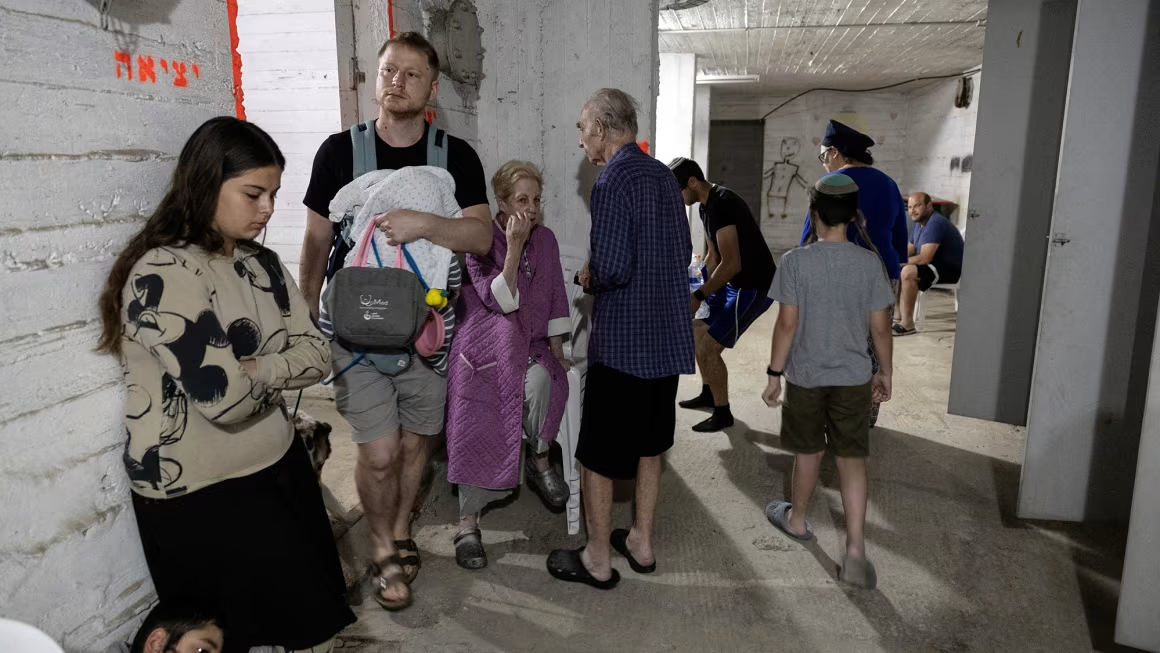
Refuges were never an afterthought in Israeli thinking, nor tied to a particular time after its establishment on Palestinian land. From the outset, the state’s founders acknowledged that its existence would ignite conflicts beyond the first war, and that its longevity depended on a military and civilian infrastructure capable of cushioning the worst of warfare.
نون بوست

Therefore, Israeli governments made shelters a natural evolution of urban development. During the first five years after statehood, many underground shelters were built in cities and suburbs to deter conventional aerial bombing threats during wars with Arab states.

Shelters as Part of Colonial Planning

In 1951, the occupation government enacted the Civil Defense Law, mandating all residential, industrial, and public buildings to include safe underground shelters reinforced with concrete. With each war near or adjoining Israel, shelters expanded and evolved.

Between the 1970s and 1980s, shelters proliferated in northern and eastern border areas to counter rockets launched by Palestinian and Lebanese forces—as well as Katyusha rockets, which overwhelmed traditional shelters. This period saw the emergence of separate shelters serving multiple buildings, alongside defensive strategies for protecting kibbutzim against close-range attacks.

During the First Gulf War in 1991, when Iraqi Scud missiles reached deep into Israel, the need arose for shelters capable of withstanding chemical weapons. As a result, the old Civil Defense Law was reinforced, and new regulations issued in 1992 requiring “merkhav mugan” (fortified internal rooms) in buildings.

These rooms are built to resist blasts and shrapnel from conventional weapons and protect against chemical and biological threats. They feature reinforced concrete walls and ceilings, 20–30 cm thick floors, and tightly sealed steel doors and windows.

Designed for architectural diversity, shelters come in various types—“miklat,” “mamad,” “migunit,” etc.—and may be built beneath streets, clubs, residential complexes, or directly adjacent to living quarters. Some are underground, some integrated within structures. They are generally resilient against rocket attacks, though earthquakes remain a vulnerability.

Shelter Laws, Unequal Protection

Following the withdrawal from Gaza and improvements in Palestinian rocket technology, additional legislation mandated that all new buildings include fortified rooms equipped with air filtration systems to defend against rockets and chemical weapons. Shelter numbers also increased in southern Israel, and fortified infrastructure was added to schools, buses, and public spaces. For instance, in 2008 alone, 300 defensive rooms were constructed in the settlement of Sderot.
نون بوست
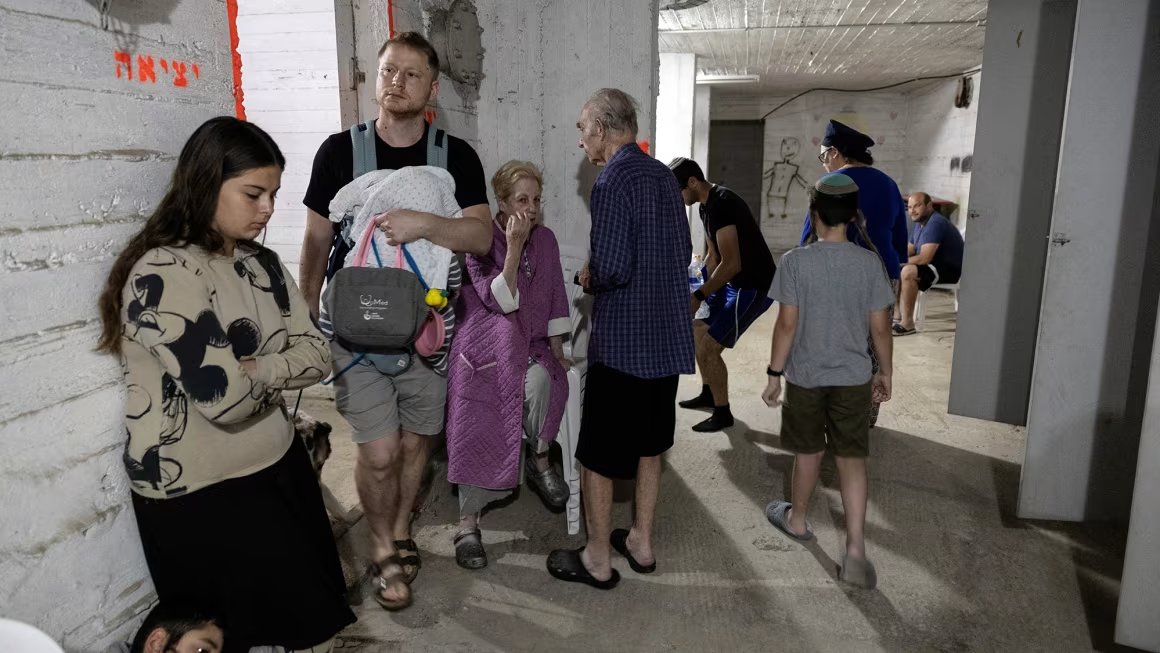
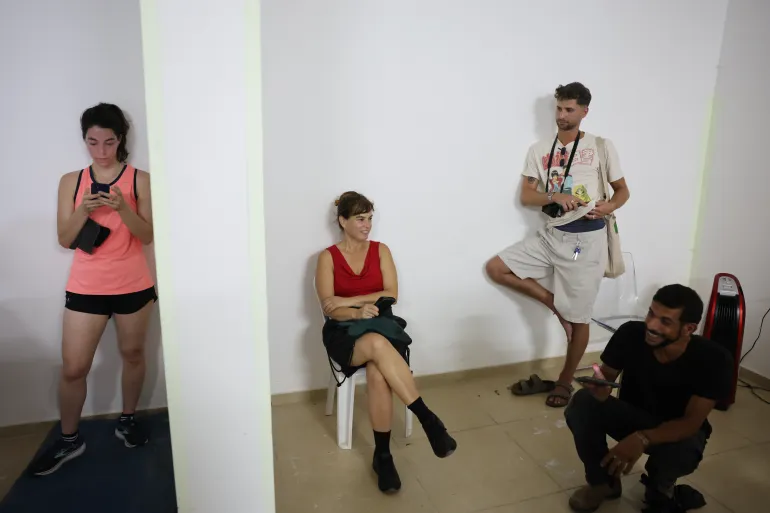
Shelters provide safety for Israelis during missile attacks – but Palestinian citizens of Israel say they’re often excluded [Abir Sultan/EPA-EFE]

However, these progressive laws and regulations consistently excluded Arab communities and towns from decision-making in development, architecture, building permits, and urban planning that matched their distribution and numbers.

Consequently, their safety was undermined in every outbreak of Israeli aggression. They remained exposed to military, demographic, environmental, and urban disasters—and became emblematic as the earliest casualties of war alongside the history of Israeli shelter development.

A Compass That Ignores Palestinians

During various wars waged by the Israeli state, Arab communities found themselves exposed early under skies filled with rockets and artillery, lacking appropriate infrastructure, shelters, or fortified rooms. In the second Lebanon War of 2006, Hezbollah launched approximately 3,900 rockets into Israel, resulting in 44 civilian deaths—of whom 19 were Arab—constituting 43% of all civilian fatalities. Violent damage spread across Arab towns and roads.

According to a 2007 state comptroller report, over 150,000 Arabs in 13 northern towns remained without adequate shelters. Even towns with defense facilities lacked resilient underground shelters such as “miklat.”

After the war, the government launched a national shelter modernization program, focusing on northern cities: Kiryat Shmona, Safed, Nahariya, Acre, and frontline settlements—excluding Arab towns, despite a budget exceeding 90 million shekels covering construction, ventilation, electricity, and lighting.

During the 2012–2020 national plan, shelters were equipped with air conditioning, modern lighting, and Wi‑Fi—but Arab communities were consistently left out. Reports noted that Jewish NGOs like “Vision for Israel” funded upgrades in 250–300 shelters during this period.

Forgotten Under Fire

Following the Al-Aqsa Flood (the Hamas-Israel conflict beginning October 2023), even as the Ministry of Defense launched a renewal program for shelters in strategic areas, implementation remained biased toward Jewish localities such as Tel Aviv, Gilm’a, Ashdod, and Hadera. Arab communities paid a heavy toll.

In November 2024, Syrian–Hezbollah rocket fire killed 46 civilians and injured 133, primarily in the Golan and northern triangle—four from Arab northern villages and 12 Arab Druze children in Majdal Shams, with 47 confirmed Arab injuries. The pattern of disparate targeting was clear.

Following Iran’s retaliatory strikes against Israel, the racial marginalization of the Arab minority took a new form. A stray rocket hit the roof of a home in the Arab town of Tammariyah (Tamra), killing four girls—an incident met with celebratory reactions from some nearby Jewish communities, reinforcing the sense among Arabs of deep-seated hostility, and prompting accusations that they were seen by the government as “punching bags.”

Equally dismal was their dire shelter situation, reflecting discriminatory planning that prioritizes Jewish towns. In Tamra—with a population of 36,000—there are only five old, portable shelters. Majd al-Krum and Deir al-Asad, together home to 53,000, share just two public shelters. Nearby Jewish Karmiel, with 55,000 residents, has 126 public shelters, hundreds of portable units, and fortified rooms.

Even the fortified rooms mandated under post‑1992 laws are missing in Arab communities due to restrictions on urban expansion. As a result, 60% of homes lack such protected rooms. A 2018 state comptroller report confirmed that 46% of Arab citizens live in unprotected buildings, compared to just 26% of Jews.

Palestinians Viewed as Collateral Victims

Israel’s discriminatory policies extend far beyond basic inequalities: 29% of schools and kindergartens in Arab communities lack attached or nearby shelters, compared with 12% in Jewish communities. Jewish areas supplement with resilient playgrounds, parks, protected buses, and robust early-warning systems—amenities absent entirely in Arab areas.

Neglect has deepened under successive right-wing governments that slashed funding for Arab public services, including first aid, civil defense, crime prevention, and infrastructure—reinforcing a political narrative that considers Palestinians, “internal enemies” to be neutralized.

Since the Nakba, Israeli policy has created a “military geography” prioritizing Jewish presence at the expense of Arabs. Preventing Arabs from building has forced unauthorized construction that remains unrecognized officially. This explains the prevalence of home demolitions in Arab areas—and the accompanying lack of shelters, inadequate sirens (e.g. primitive flares in Bedouin villages in the Negev), and delayed warnings relative to Jewish areas.

This is what happened to seven-year-old Muladda al-‘Assuni, badly injured in April 2024 by Iranian missile shrapnel while seeking shelter in the unrecognized Bedouin village of Al-Fu’ah—a village often used for Israeli air-defense drills. Designated “open areas” outside the air-defense umbrella, it frequently hosts intercepts above it, causing falling debris and injuries—again, to the detriment of Arab lives.

Instead of intercepts occurring above Jewish towns, they happen over Arab ones, exposing residents—lacking adequate shelters—to more debris. Warning times there are 1–2 minutes, versus 5–7 minutes in nearby Jewish communities—minimizing damage there, exacerbating it here.

Despite Arab demands for redistributing Iron Dome batteries, official requests from civic rights groups and the Arab Higher Monitoring Committee—for budgets to build public shelters, install fortified rooms in schools and public buildings, and synchronize alerts with Jewish communities—have resulted in only 34 portable shelters built across Tamra, Majd al-Krum, and the Negev. All this while constructing a fortified room at home takes just 14 days.

At its core, the Israeli apparatus has never been concerned with the well-being of the Arab on their own land—and never will be. As it wages existential wars, Palestinians are treated as a fifth column: valued only as collateral damage, to be acknowledged with perfunctory condolences or token compensation, often accompanied by visible relief—and at times celebration—of their pain and death.

Download this article as PDF
Share this Article
Facebook Twitter Whatsapp Whatsapp Telegram Email Copy Link
سجود عوايص
By سجود عوايص باحثة في قضايا الإعلام الفلسطيني والقانون الدولي الإنساني.
Follow:
Previous Article نون بوست Escalation with Iran: Is U.S. Direct Intervention Imminent?
Next Article نون بوست How Gaza Became the Most Complex Non‑Conventional Battlefield

Read More

  • U.S. Regime‑Change Policies: Why They Are Destined to Fail U.S. Regime‑Change Policies: Why They Are Destined to Fail
  • The Gulf’s Balancing Act: Iran, Israel, and Hidden Links
  • Iraq–Turkey Oil Export Treaty: Why Did Ankara Cancel It After 52 Years?
  • Syria’s Northeast on Edge: QSD Between Ankara and Damascus
  • Has Europe Changed Its Stance on Israel… or Just Its Language?
part of the design
NoonPost Weekly Newsletter

You May Also Like

U.S. Regime‑Change Policies: Why They Are Destined to Fail

U.S. Regime‑Change Policies: Why They Are Destined to Fail

إسراء سيد Esraa sayed 8 April ,2026
The Gulf’s Balancing Act: Iran, Israel, and Hidden Links

The Gulf’s Balancing Act: Iran, Israel, and Hidden Links

فريق التحرير Noon Post 8 April ,2026
Iraq–Turkey Oil Export Treaty: Why Did Ankara Cancel It After 52 Years?

Iraq–Turkey Oil Export Treaty: Why Did Ankara Cancel It After 52 Years?

فريق التحرير Noon Post 8 April ,2026

حكام الكرة.. قُضاة الملاعب

أيهم المدرس
أيهم المدرس Published 7 March ,2016
Share
b42ffff980eb39ba347fb64e6e2680e1_large

قضاةٌ وضحايا!

إذا كان لاعبو كرة القدم ومدربوها يحظون بقدر من الشهرة والمال كفيل بأن ينسيهم مشقة مهنتهم وعنائها، فما الذي يمكن أن يغري حكام الكرة بمهنة هي الأخف وزنًا على ميزان الشهرة والمال، والأثقل على ميزان الأعباء والمشقات والمتاعب في عالم المستديرة؟

إنه الشغف والمتعة وعشق المهنة الذي يتملك قضاة الملاعب، فينسيهم ما يتعرضون إليه من ضغوطات ومضايقات واعتراضات من قِبل الجماهير أو حتى المدربين واللاعبين، الذين قد تستبد حمى الغضب برؤوسهم نتيجة قرار تحكيمي لم يعجبهم، فيقدمون على حماقات غير محسوبة، كشتم الحكم وإهانته لفظيًا، بل وضربه وإيذائه أحيانًا، في مشاهد حولت أصحاب الصافرات من قضاة يتسيدون الملاعب إلى ضحايا يرثى لهم، كما يظهر في مقطع الفيديو التالي، الذي يوثق عشرًا من أخطر حالات التعدي السافر على حكام الكرة:

معايير تقييم الحكم الناجح

كي يبلغ حكمٌ ما درجة النجاح في ميادين الكرة، فعليه أن يتمتع بقدر كاف من معايير التقييم الـ 5 التالية:

– العدل والحيادية: الحكم ملك الملعب، والعدل أساس الملك، وكي ينجح الحكم في عمله فعليه أولًا أن يترك مشاعره وأهواءه جانبًا.

– استيعاب القوانين: ليس المطلوب من الحكام حفظ القوانين فحسب، بل المطلوب فهمها واستيعابها وتسخيرها بذكاء من أجل إيصال المباراة إلى بر الأمان.

– اللياقة البدنية: إذا كان اللاعبون يركضون حينًا ويرتاحون حينًا، فإن الحكام مطالبون بالاستمرار في الركض، لمراقبة جميع الأحداث التي قد تشهدها دقائق المباراة الـ 90 عن كثب.

– الشخصية: الحزم من غير تعنت، واللين والبشاشة في غير ضعف، فضلًا عن الهدوء والتحكم بالأعصاب، هي الصفات المطلوبة في قضاة الملاعب كي يحسنوا الإمساك بزمام المباريات.

– فريق العمل: شأنهم شأن جميع فرق العمل مع قائديها، يعتبر نجاح الحكام المساعدين في عملهم نجاحًا لحكم الساحة، وفشلهم فشلًا له.

حكام نهائيات كؤوس العالم

نون بوست

طاقم تحكيم نهائي كأس العالم 2010 بقيادة الإنجليزي هاوارد ويب

نظرًا للمكانة العظمى التي تحتلها بطولات كأس العالم في عالم المستديرة، تولي الفيفا مبارياتها النهائية أهميةً كبرى، فتختار لإدارتها أفضل أصحاب الصافرات في أزمنتهم، لتمثل تلك الاختيارات بحد ذاتها أوسمة شرف رفيعةً، يعلقها حكام الكرة على صدورهم مدى الحياة.

وفيما يلي أسماء وجنسيات حكام الساحة الـ 20، الذين تعاقبوا على إدارة المباريات النهائية لجميع بطولات كأس العالم منذ انطلاقتها الأولى قبل 86 عامًا:

– مونديال الأورغواي 1930: البلجيكي يان لانجينوس

– مونديال إيطاليا 1934: السويدي إيفان إيكلند

– مونديال فرنسا 1938: الفرنسي بيير جورج كابدوفيل

– مونديال البرازيل 1950: الإنجليزي جورج ريدر

– مونديال سويسرا 1954: الإنجليزي ويليام لينغ

– مونديال السويد 1958: الفرنسي موريس جيج

– مونديال تشيلي 1962: السوفييتي نيكولاي لايتشيف

– مونديال إنجلترا 1966: السويسري جوتفريد دينست

– مونديال المكسيك 1970: الألماني رودولف غلوكنر

– مونديال ألمانيا 1974: الإنجليزي جاك تايلور

– مونديال الأرجنتين 1978: الإيطالي سيرجيو جونيلا

– مونديال إسبانيا 1982: البرازيلي أرنالدو كويلهو

– مونديال المكسيك 1986: البرازيلي روماودو فيليو

– مونديال إيطاليا 1990: الأرجنتيني إدواردو كوديسال

– مونديال الولايات المتحدة 1994: المجري ساندر بول

– مونديال فرنسا 1998: المغربي سعيد بلقولة

– مونديال كوريا واليابان 2002: الإيطالي بيير لويجي كولينا

– مونديال ألمانيا 2006: الأرجنتيني هوراسيو إلزيوندو

– مونديال جنوب أفريقيا 2010: الإنجليزي هاوارد ويب

– مونديال البرازيل 2014: الإيطالي نيكولا ريزولي

حكم العام

نون بوست

الإيطالي نيكولا ريزولي أفضل حكام العالم في العامين الماضيين

يعتبر الاتحاد الدولي لتاريخ وإحصائيات كرة القدم (IFFHS)، الجهة الوحيدة الموثوقة والمعتمدة لدى الفيفا في تقييم أداء حكام الكرة، وقد دأب الاتحاد منذ عام 1987 على إصدار قائمة سنوية بأسماء أفضل حكام الكرة في العالم، اعتمادًا على نظام إلكتروني دقيق وضعه نخبةٌ من خبراء اللعبة والحكام السابقين، آخذين بعين الاعتبار معايير تقييم الحكام الـ 5 الواردة أعلاه.

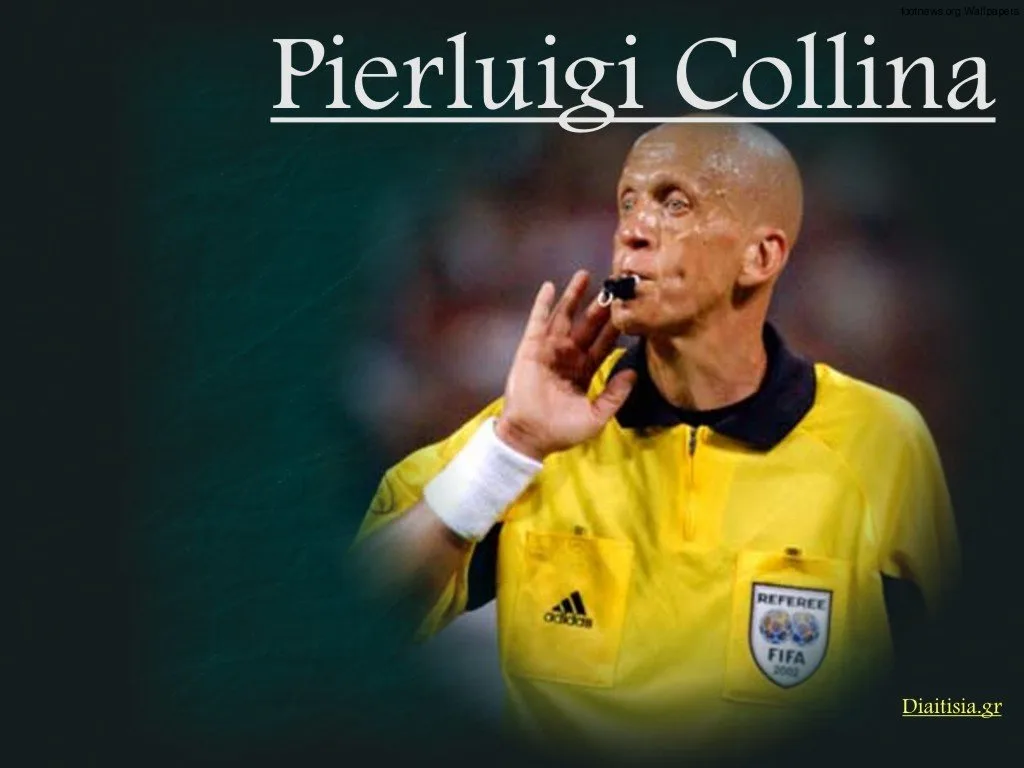
ويتصدر الإيطالي الشهير بيير لويجي كولينا ترتيب عدد مرات الفائزين بجائزة (حكم العام) منذ انطلاقها، بفوزه بها 6 مرات متتالية بين عامي 1998 و2003، يليه المجري ساندر بول بفوزه بها 4 مرات متتالية بين عامي 1994 و1997، فيما يحتل الألماني ماركوس ميرك المركز الثالث بفوزه بالجائزة 3 مرات أعوام: 2004، 2005، و2007، أما جائزة العام الماضي فقد حافظ عليها الإيطالي نيكولا ريزولي للعام الثاني على التوالي، بعد أن أحرزها أول مرة عام 2014، إثر نجاحه في قيادة نهائي مونديال البرازيل الأخير.

إليكم قائمة بأسماء وجنسيات أفضل 10 حكام لعام 2015 بحسب IFFHS:

  1. الإيطالي نيكولا ريزولي
  2. الإنجليزي مارتن إتكنسون
  3. التركي جونيت شاكير
  4. الألماني فيليكس بريش
  5. الهولندي بيورن كويبرس
  6. الإنجليزي مارتن كلاتنبيرغ
  7. الكولومبي ويليام رولدان
  8. السويدي يوناس إريكسون
  9. الإسباني كارلوس فيلاسكو كاربالو
  10. الأسترالي بين ويليامس

الصافرات الذهبية العربية

نون بوست

 الحكم المغربي سعيد بلقولة أدار المباراة النهائية لكأس العالم 1998

لم تقف سهام النقد الجارحة التي اعتاد حكام الكرة العرب على تلقيها محليًا، حائلًا دون تألقهم على الصعيدين القاري والدولي على مر العقود، ويكفي أن نعود إلى سجلات كؤوس العالم، لنجد أسماء العشرات من سفراء التحكيم العربي وقد طرزت ضمن لوائح الأفضل فيها، ولا أدل على ذلك من وصول حكمنا العربي المغربي الراحل سعيد بلقولة إلى قمة المجد التحكيمي، بعد أن عهد إليه بإدارة المباراة النهائية لكأس العالم التي استضافتها فرنسا عام 1998، وفازت بلقبها على حساب البرازيل، بعد أن نجح سفيرنا العربي في قيادة المباراة إلى بر الأمان، وهو ما نجح فيه أيضًا بكل امتياز حكمنا الإماراتي علي بوجسيم، الذي أدار 7 مباريات في 3 بطولات متتالية، اعتبارًا من مونديال عام 1994 الذي أدار خلاله مباراة المركزين الثالث والرابع، ومرورًا بمونديال 1998 الذي قاد خلاله موقعة نصف النهائي بين البرازيل وهولندا، وختامًا بمونديال 2002 الذي شرف العرب بقيادته مباراة الافتتاح.

وتطل علينا أسماءٌ تحكيميةٌ عربيةٌ أخرى أدارت العديد من مباريات بطولات كأس العالم، نذكر منها:

المصري علي قنديل الذي كان أول حكم ساحة يمثل العرب في بطولات كأس العالم عامي 1966 و1970، والسوري جمال الشريف الذي شارك في 3 مونديالات متتالية أعوام 1986، 1990، و1994، والتونسي ناجي الجويني الذي ظهر في مونديالي 1990 و1994، والمصري جمال الغندور المشارك في مونديالي 1998 و2002، والكويتي سعد كميل الذي قاد مباراة المركزين الثالث والرابع في مونديال 2002، والمصري عصام عبد الفتاح ممثل التحكيم العربي الوحيد في مونديال 2006، والسعودي خليل جلال الممثل الوحيد للتحكيم العربي في مونديال 2010، وأخيرًا الجزائري جمال حيمودي والبحريني نواف شكر الله، اللذان مثلا التحكيم العربي بكل كفاءة خلال مونديال البرازيل الأخير عام 2014.

ختامها ابتسامة

ونختتم موضوعنا بمقطع الفيديو التالي الذي يصور بعضًا من الطرائف الكروية المضحكة حينًا والمؤلمة حينًا، والتي كان أبطالها من قضاة الملاعب الخضراء:

TAGGED: الطاقم التحكيمي لمباريات كرة القدم ، حكام كرة القدم ، كأس العالم
TAGGED: كرة القدم
Download this article as PDF
Share this Article
Facebook Twitter Whatsapp Whatsapp Telegram Email Copy Link
أيهم المدرس
By أيهم المدرس كاتب سوري مهتم بالشأن الرياضي
Follow:
Next Article نون بوست The Stigma of “ISIS”: A Heavy Legacy Haunting Women and Children of Former Members

Read More

  • U.S. Regime‑Change Policies: Why They Are Destined to Fail U.S. Regime‑Change Policies: Why They Are Destined to Fail
  • The Gulf’s Balancing Act: Iran, Israel, and Hidden Links
  • Iraq–Turkey Oil Export Treaty: Why Did Ankara Cancel It After 52 Years?
  • Syria’s Northeast on Edge: QSD Between Ankara and Damascus
  • Has Europe Changed Its Stance on Israel… or Just Its Language?
part of the design
NoonPost Weekly Newsletter
dark

An independent media platform founded in 2013, rooted in slow journalism, producing in-depth reports, analysis, and multimedia content to offer deeper perspectives on the news, led by a diverse young team from several Arab countries.

  • Politics
  • Society
  • Rights & Liberties
  • Opinions
  • History
  • Sports
  • Education
  • Technology
  • Economy
  • Media
  • Arts & Literature
  • Entrepreneurship
  • Travel
  • Cinema & Drama
  • Food
  • Health
  • Culture
  • Latest Reports
  • Files
  • Long Reads
  • Interviews
  • Podcast
  • Interactive
  • Encyclopedia
  • In Pictures
  • About Us
  • Our Writers
  • Write for Us
  • Editorial Policy
  • Advanced Search
Some rights reserved under a Creative Commons license

Removed from favorites

Undo
Go to mobile version