















The resignation of Jack Lang, former president of the Arab World Institute in Paris, on February 7, 2026, over his links to the Epstein affair, marks a striking chapter in the history of the Paris-based institution. It represents a pivotal turning point for the Institute since its inauguration in the 1980s.
The Institute describes itself as “a multidisciplinary space designed to forge strong and lasting ties between cultures, and to foster a genuine and profound dialogue between the Arab world and France and Europe.” Yet controversy has long shadowed its existence. French officials have accused Arab states of failing to meet their financial commitments, while critics have faulted the Institute for elitism and for serving France’s political and cultural interests without truly bridging the divide between French society and Arab civilization.
According to official sources, €12.3 million was allocated to the Arab World Institute in 2026 within the budget of the French Ministry for Europe and Foreign Affairs—its primary and largest source of funding. That figure helps explain, at least in part, the political storm unleashed by the outgoing president’s connection to the Epstein case.
Born of Culture and Politics
It is difficult to understand the origins of the Institut du Monde Arabe without recalling the experience of the Grande Mosquée de Paris. The mosque’s construction was decided in 1916, in fulfillment of a promise France made to Muslim soldiers who fell in World War I defending its soil.
The mosque became the first institutional model of a cultural bridge between France and the Islamic and Arab worlds. The French state sought to embrace a cultural and religious project of Arab character within its capital.
By the late 1970s, the French government had grown more aware than ever of the absence of any formal representation of the Arab world on its soil, despite the deep historical ties binding France to many of the countries that comprise it.
Adam Al-Makrani, a lawyer and specialist in French affairs, told Noon Post that the Arab World Institute was founded as both a political and cultural initiative. The idea took shape in the late 1970s and early 1980s amid diplomatic tensions following the 1973 Arab oil embargo and France’s efforts to improve relations with Arab states.
Then–French President Valéry Giscard d’Estaing viewed the Institute as a means of easing tensions between France and the Arab world and opening new horizons for dialogue.
Al-Makrani continued: “Despite this partly political background, the institution adopted from the outset purely cultural and civilizational goals spreading Arab culture, enhancing knowledge of the Arab world, and encouraging mutual understanding between peoples through its museum, library, seminars, educational programs, and various cultural events.”
Melissa Tedafi, a researcher in contemporary history and Franco-Arab relations who is completing a doctoral dissertation on the Institute, argues that political context has accompanied the Institute throughout its history. Iraq’s invasion of Kuwait, for example, sparked protests and heated debates during the Institute’s “Euro-Arab Book Fair,” as well as within its board meetings.
Yet Tedafi added: “Despite these disagreements, French officials have consistently sought to emphasize a certain independence for the institution in the eyes of public opinion, even though it relies in practice on Arab parties. Nevertheless, the Institute can be regarded as a space for maintaining or strengthening diplomatic relations between Arab states and France, even when those ties are severed or frozen at the official level.”
Four Decades On: A True Bridge Between Arabs and France?
Over four decades, the Arab World Institute has hosted high-profile exhibitions and distinguished cultural evenings, successfully introducing French audiences to facets of Arab civilization.
But a genuine bridge requires two equal shores. Some founding Arab states withdrew from their financial commitments, and Arab representation within decision-making structures has remained muted. Meanwhile, much of the Institute’s audience has been elite and distant from the broader Arab communities in France.
Critics argue that it has functioned more as a dazzling cultural showcase than as a living, reciprocal space of exchange between Arabs and France.
Al-Makrani contends that as a cultural institution founded on an agreement between France and 22 Arab states, the Institute has long faced tensions tied to shifts in international politics and uneven Arab engagement. This has affected its financial independence, pushing the administration to rely more heavily on French funding inevitably influencing its ability to design cultural programs fully insulated from political pressures.
The French affairs specialist added: “The limited financial participation of some Arab states may reduce their institutional weight in the Institute’s decisions. At the programmatic level, however, the artistic and scientific administration retains relative autonomy to develop cultural content somewhat removed from direct political influence, including through joint initiatives with Arab and European institutions.”
On the accusations of elitism, Tedafi acknowledged that despite efforts made, French and Arab officials and directors at the Institute belong to a particular intellectual, political, and social elite, which may shape programmatic choices. “However, in recent years, efforts have been undertaken in this regard, allowing greater space for popular cultures,” she noted.
The Epstein Affair and the Institute: What Comes After Jack Lang?
In late January 2026, newly released Epstein files detonated a political bombshell in the heart of Paris, revealing documented ties between Jack Lang, the Institute’s former president, and the American financier Jeffrey Epstein. The relationship reportedly extended beyond friendship to shared financial interests, implicating Lang’s daughter, Caroline, as well.
President of the Institute since 2013 and a former culture minister long admired in France known for enduring initiatives such as the “Fête de la Musique” Lang suddenly found himself in the crosshairs of the National Financial Prosecutor’s Office on suspicion of “money laundering stemming from aggravated tax fraud.”
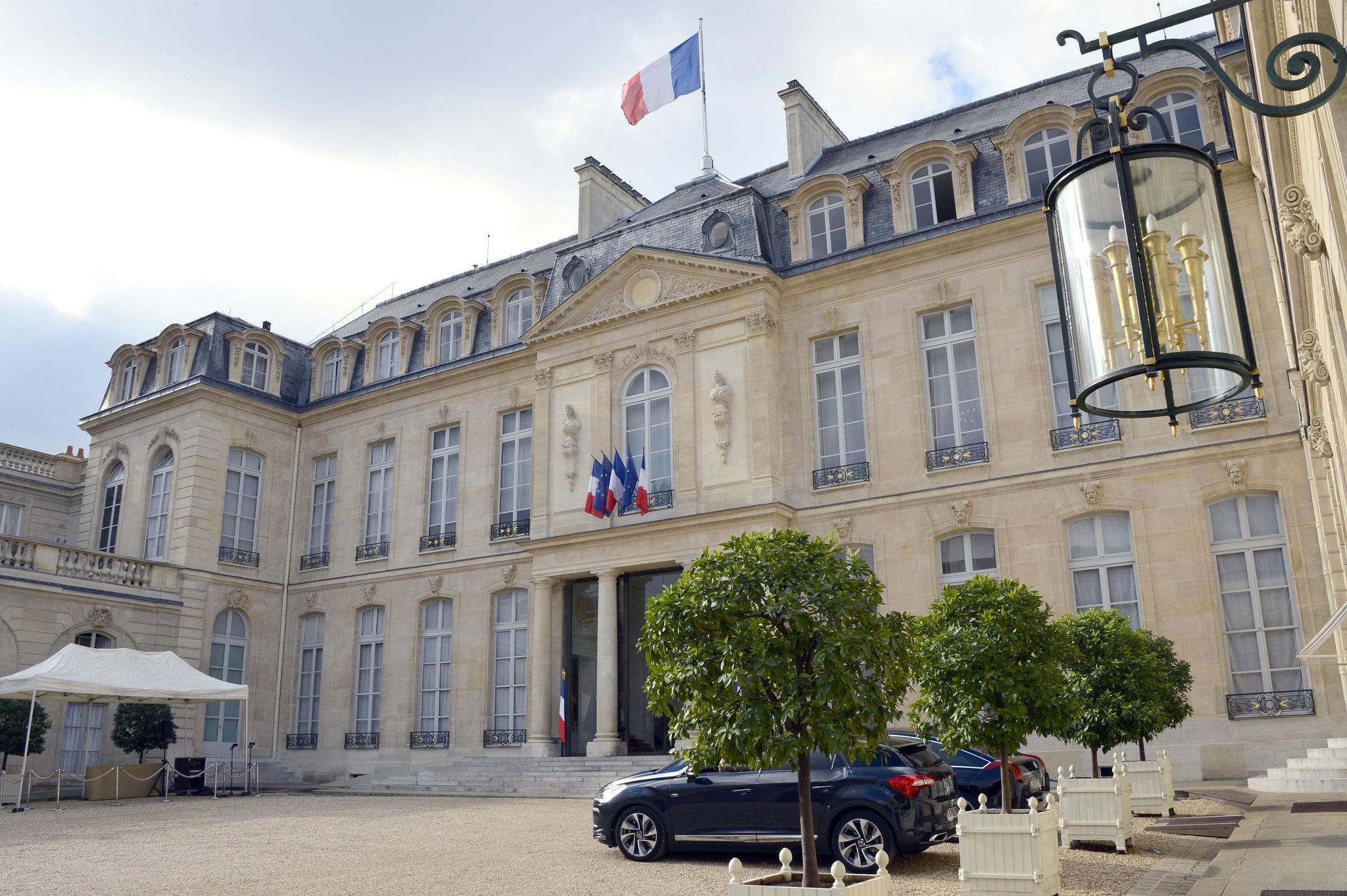
Lang did not resign voluntarily. Pressure came from the highest levels of the state: the Élysée Palace explicitly urged him to “think of the institution,” and Foreign Minister Barrot announced the launch of a transitional appointment process. On February 16, 2026, three candidates were heard as potential successors, underscoring the embarrassment the case inflicted on the French state as a whole.
Commenting on the consequences of Lang’s resignation, Al-Makrani argued that French institutions, as embodiments of the rule of law, possess formal governance mechanisms through a board of directors and oversight bodies that ensure the continuity of the Institute’s operations even in difficult circumstances.
The appointment of a new president demonstrates France’s continued commitment to managing the Institute institutionally, independent of individual personalities.
Following Lang’s resignation, Anne-Claire Legendre was appointed after an extraordinary meeting of the Institute’s board on February 17.
Tedafi believes the swift appointment reflected the government’s ability to regain control over the Institute’s affairs and to signal the importance it attaches to the institution. The new president’s familiarity with the Arab world, fluency in Arabic, and extensive experience across Arab countries, she said, “may contribute to reestablishing strong relations and mutual trust with Arab partners within the Institute.”
Domestically, Lang’s resignation from the Arab World Institute presidency has generated renewed interest in the institution and its funding, briefly reopening debate over the balance between Arab and French contributions to its budget.
Despite the close ties between some Arab countries and Lang which also contributed to his tenure at the Institute since 2013 Al-Makrani maintains that Arab contributions are not directly tied to Lang as an individual, but rather to the institutional commitments of partner states.
“The media turbulence may temporarily affect the confidence of some partners,” he concluded, “but the continuity of Arab participation depends primarily on the cultural and political agendas of Arab states themselves, not on the presidency of any particular individual within the Institute.”


