










In a bid to secure American recognition, Somaliland has signaled its willingness to grant Washington preferential access to its mineral resources and to host U.S. military bases an offer it says is also on the table for Israel.
Khadr Hussein Abdi, the region’s minister of presidential affairs, said: “We are prepared to grant the United States exclusive rights in the mining sector. We are also open to the idea of proposing military bases to the United States.”
In recent weeks, Somaliland President Abdirahman Mohamed Abdullahi has publicly floated the possibility of granting Tel Aviv concessions to exploit the region’s mineral wealth. These moves come as part of Somaliland’s broader campaign to expand international recognition, after Israel became the first to recognize it as a purported independent state in late 2025.
According to Energy and Minerals Minister Ahmed Jama Barre, Somaliland contains strategic minerals, though their quantities remain unknown due to the absence of comprehensive studies. So what exactly does this territory possess?
Mineral Wealth in Somaliland
Traditional Mineral Deposits
During an international investment summit held in early November in Hargeisa, the capital of Somaliland, the Ministry of Energy and Minerals presented a sweeping overview of the country’s natural wealth. The presentation noted:
-
Land covered by ancient crystalline rocks and greenstone belts is geologically similar to mineral-rich regions in Saudi Arabia, Sudan, and Eritrea.
-
Geological survey programs covering 15 percent of the most resource-rich areas identified precious metals such as gold and platinum-group metals.
-
The survey detected base metals including copper, nickel, lead, tin, and zinc.
-
It also revealed industrial minerals such as gypsum, feldspar, and quartz, alongside gemstones including emerald, amethyst, peridot, and ruby.
This list suggests that Somaliland’s resources extend far beyond its well-known livestock sector, pointing instead to a diverse geological reserve capable of underpinning a broad mining industry.
Strategic Minerals
The most compelling category is what the ministry calls “critical minerals for clean technologies.” These include lithium, cobalt, coltan (tantalum-niobium ore), manganese, and rare earth elements materials essential to batteries, electronics, and defense industries.
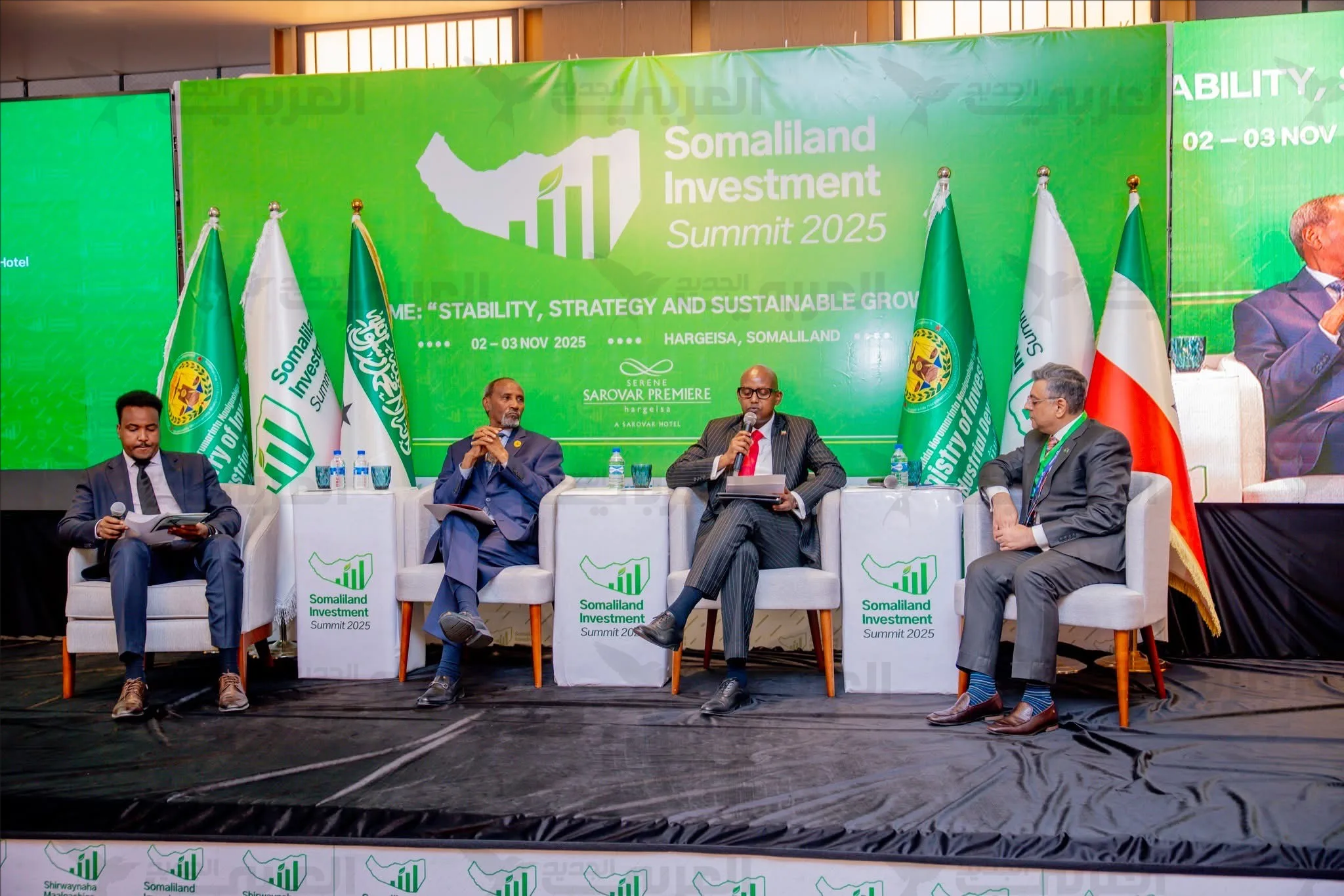
Minister Ahmed Jama Barre said his ministry had granted a major lithium extraction license to a Taiwanese company, now in advanced stages of development and discussing plans to establish a battery manufacturing plant inside Somaliland. He added that Taiwanese and Chinese firms alike are interested in lithium, and that his government seeks investment from all sides without exclusion, because “what we need is recognition.”
Although detailed studies confirming these deposits remain limited, Somaliland’s ambitions are bolstered by recent research drawing on U.S. Geological Survey data suggesting that the Horn of Africa may host untapped lithium and tin deposits capable of meeting between 3 percent and 5 percent of global demand.
Oil, Gas, and Renewable Energy
Somaliland’s wealth is not limited to hard minerals. According to the energy minister, oil and gas exploration is underway in several areas by the British company Genel Energy and the UAE-based RAK Gas. Seismic surveys have been completed, and officials are pressing to accelerate the start of drilling.
In addition, the ministry is advancing renewable energy projects, citing abundant solar and wind resources an indication of a broader vision for a diversified energy economy.
Playing to Global Demand
Washington’s Need for Critical Minerals
Washington’s interest in critical minerals has surged amid China’s dominance over global supply chains. Beijing produces and refines the majority of vital minerals worldwide, accounting for roughly 70 percent of global rare earth mining and nearly 90 percent of their processing.
A U.S. State Department report notes that rare earth minerals are essential to advanced technologies and that the current market is “highly concentrated,” rendering it susceptible to political coercion and threatening U.S. interests. For this reason, Washington has pledged to develop new sources and secure safe, diversified supply chains.
The same report indicates that the United States has signed 11 new bilateral agreements to secure mineral supplies and has allocated tens of billions of dollars to extraction and processing projects. In short, the U.S. administration is seeking new partners beyond China’s orbit, viewing regions such as Somaliland as opportunities to reduce dependence on Beijing.
An opinion piece published by the American Enterprise Institute argued that Somaliland’s true wealth may lie in its rare earth elements and warned that Chinese firms are attempting to secure mining concessions there. It added that the U.S. government discourages American companies from dealing directly with Hargeisa due to the absence of official recognition allowing China to fill the vacuum.
Should Washington alter its stance and extend recognition, Somaliland’s mineral wealth could help the United States build an alternative supply chain for defense technologies and battery manufacturing.
Israel’s Search for Natural Resources
Israel is a major producer of bromine, potash, and phosphate, but it lacks significant deposits of critical minerals such as lithium or coltan. According to a U.S. Geological Survey report on Israel’s mining sector, Tel Aviv accounted for 48 percent of global bromine production in 2020 but was not listed as a producer of rare earth minerals.
World Bank trade data show that Israel’s imports of rare earth elements, scandium, and yttrium totaled $31,000 in 2024 mostly from the United Kingdom and the United States—a modest figure that nonetheless underscores the absence of domestic production.
Studies by SFA Oxford indicate that Israel’s critical minerals are largely limited to magnesium, bromine, and phosphorus. The country is therefore focusing on innovation in green chemistry and battery recycling to reduce import dependence.
Yet these initiatives cannot provide a domestic source for lithium battery components or telecommunications equipment, prompting policymakers to explore external partnerships.
President Abdirahman Mohamed Abdullahi recently declared that Somaliland is “a country rich in resources we have meat, fish, and minerals, and they [the Israelis] need them.” He added that he expects a trade agreement with Israel covering these resources.
While Israel lacks lithium and other key inputs, it boasts an advanced technology sector and expertise in desalination and desert agriculture. Observers suggest that Tel Aviv could offer technological know-how in exchange for mining concessions, and the Somaliland president has signaled his expectation of receiving “Israeli technology” in return for resources.


