















More than a decade into Syria’s war, education remains deeply scarred by destruction and displacement. Bombings have destroyed thousands of schools, transforming many into shelters for the displaced or leaving them as empty shells no desks, no books, no learning.
According to UNICEF estimates, more than 7,000 schools across the country have been damaged or completely destroyed particularly in Aleppo, Idlib, and Daraa resulting in over a 40% decrease in functioning schools. With the exodus of tens of thousands of qualified teachers and a severe shortage of resources and salaries, education has become one of the most fragile sectors in Syria, leaving hundreds of thousands of children out of the classroom.
But a new chapter has begun since areas were retaken and stabilized, marked by the return of thousands of Syrian families from countries of asylum such as Turkey, Lebanon, Germany, and the UK. According to the latest UNHCR report, between December 8, 2024, and November 6, 2025 just eleven months over 1.2 million Syrians returned to the country. Of these, nearly 57% are school-aged children.
Yet despite the hope that comes with return, the path to education has proven far from easy. Returning students are now confronting an educational landscape starkly different from what they experienced during their years in exile.
Having developed their academic skills in foreign languages, many returning students now struggle to adapt to Arabic-language curricula and a vastly different school system. For many, Arabic is no longer their primary language.
Teachers inside Syria report clear signs of confusion as these students transition from Latin-based alphabets to Arabic script, resulting in slow reading, weak writing skills, and poor verbal expression in class.
When Language Becomes a Barrier
The struggle of returning students extends beyond merely re-entering school it manifests as a deep academic gap that accumulated over years in exile. Many are forced to relearn the basics of the Arabic language almost from scratch.
While those returning from other Arab countries integrate more easily, students coming from non-Arabic-speaking nations face a double burden.
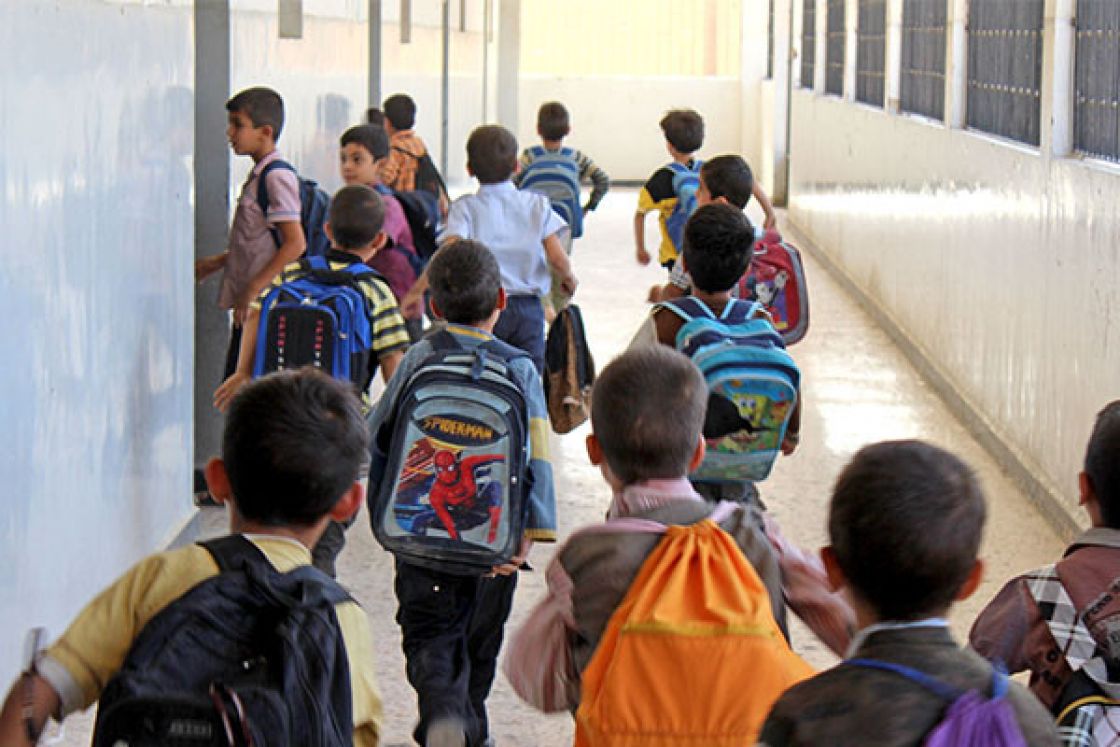
Their reliance on foreign languages has led to severe difficulties in reading and writing formal Arabic the standard in all Syrian schools making textbooks difficult to comprehend and eroding their self-confidence.
In Turkey, for instance, where schools operate in Turkish and use the Latin alphabet, some returning students cannot even recognize Arabic letters. Reports by Syria TV indicate that many such children are placed in early grades despite being older, simply because they lack foundational literacy.
Those coming from Europe face similar challenges. In the UK, for example, the entire national curriculum is built around mastery of English, with all subjects taught, assessed, and expressed in that language. Transitioning to Arabic thus represents a seismic linguistic and cognitive shift. Scientific concepts the student once learned in English become unfamiliar, forcing them to rebuild their academic vocabulary from scratch.
Samir Al-Ahmad, a father of two from rural Damascus who returned from Sweden in early 2025, explains that this sudden shift often results in the loss of academic competency during the first year, especially for children under the age of fifteen. His nine-year-old son Omar lost an entire academic year due to his weak Arabic, a reality that reflects the scale of the challenge facing thousands of returning students.
Curricula and Academic Performance
Language barriers are not the only challenge. Syrian curricula differ significantly from those abroad in both cultural perspective and ideological content, complicating the transition even for high-achieving students.
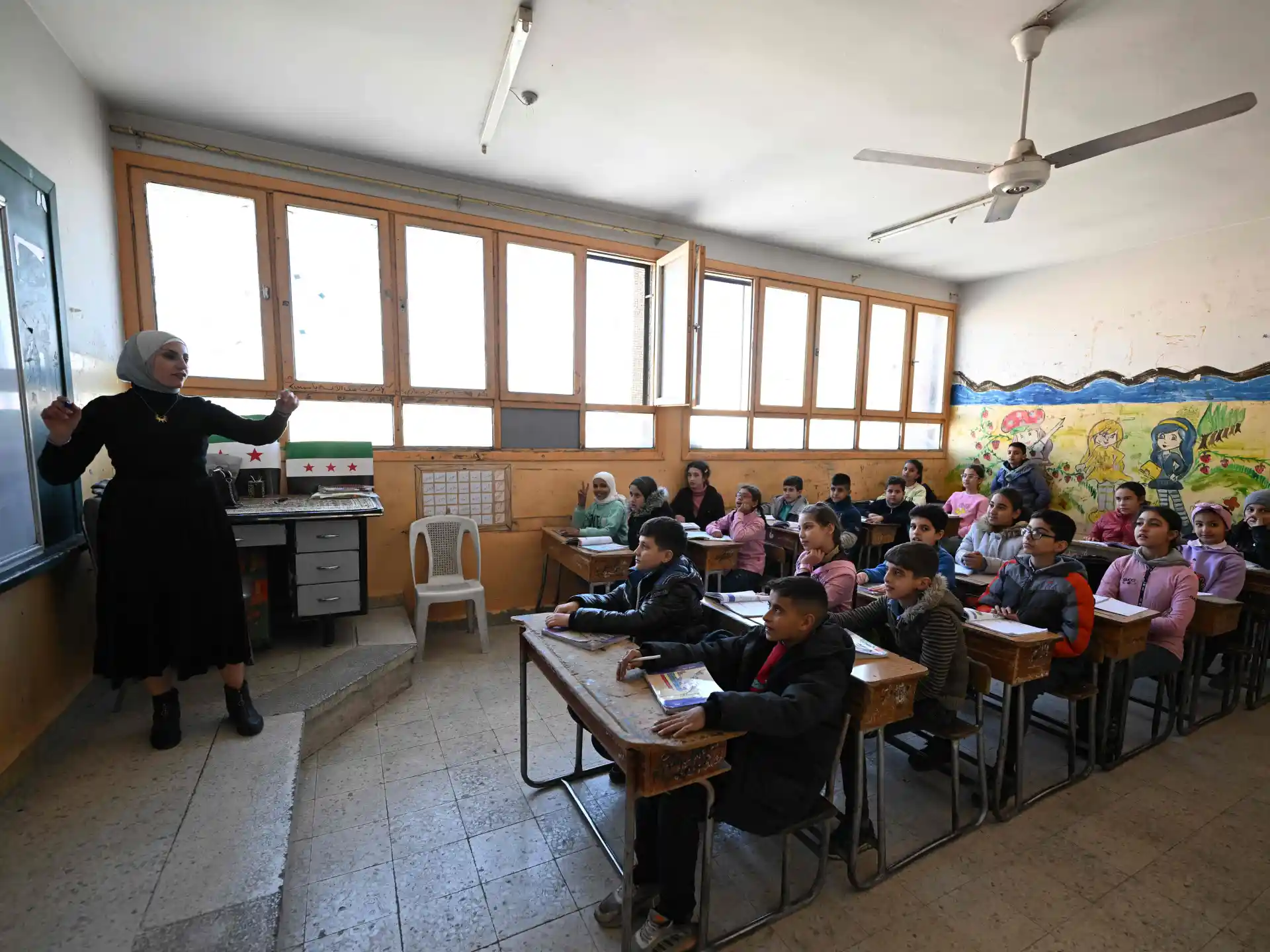
In Syria, the curriculum includes historical, religious, and cultural materials that shape a sense of Arab and national identity, whereas students abroad were educated within entirely different cultural and cognitive frameworks.
The shift to Syrian education thus feels like moving between two different educational identities.
Such differences are common between educational systems globally, but for returnee students, they can directly hinder comprehension and integration especially for those who experienced prolonged educational disruptions.
A student educated in a Western system is likely to view history and geography through a different lens and hold social concepts that do not align with Syrian textbook narratives, leading to frustration and a sense of alienation in class.
Samir confirms that the gap between Swedish and Syrian curricula is “vast, with almost no common ground.” Even in subjects like mathematics, his son struggles with simple problems because the methods and grading criteria differ.
In Sweden, students are awarded points for the problem-solving process even if the final answer is wrong. In Syria, only the correct answer matters. This, he says, makes his son feel like he is starting all over again despite years of schooling abroad.
Educational and Psychological Shock
The consequences of this academic gap are not limited to grades they extend deeply into students’ psychological and social well-being. A child who was once top of the class abroad might suddenly become one of the weakest in Syria, breeding feelings of failure and alienation. Many withdraw socially or drop out entirely.
Samir shares that his son Omar now suffers from social isolation, unable to follow many lessons and feeling left behind by classmates. Despite returning to his homeland, Omar finds it difficult to make friends, feeling disconnected from his environment.
Samir’s decision to return was driven by a desire to preserve his children’s Syrian identity and cultural heritage. Now, he questions that decision, worried about their future. “Seeing my son become this isolated breaks my heart. He used to love school. He was smart and enthusiastic,” he says. When asked about solutions, he mentions considering private Arabic tutoring but remains unsure if it will be enough.
Other reports confirm that this is not an isolated case. Many returnee children experience social anxiety, fear of bullying, and academic frustration due to unfamiliar curricula and teaching methods.
Experts warn that these psychological shocks may be more damaging than academic gaps themselves, threatening to push students out of the school system entirely.
Credential Recognition Procedures
The challenges don’t stop with the students. Their families face a maze of bureaucratic hurdles in trying to enroll their children in Syrian schools. The process begins with authenticating school certificates from host countries, which must first be approved by foreign ministries, then sent to Syrian embassies or consulates for formal verification.
The situation is worsened by severe backlogs at consular offices, where appointment delays can stretch for weeks. Some families wait over two months, while others pay extra fees or resort to intermediaries to expedite the process.
But paperwork is only the first obstacle. Upon return, students face the “sabr” placement exam, conducted by the Ministry of Education to determine their academic level and appropriate grade. The test typically covers Arabic, math, and national subjects such as history and geography.
The “sabr” exam is seen as both a psychological and educational hurdle. Students who studied for years in foreign languages often struggle to understand questions or respond in Arabic, leading to poor results and forced placement in lower grades sometimes two or three levels below.
One such case is Hassan Al-Hammadi, who told Syria TV he was demoted from 10th to 8th grade after failing the exam a situation teachers say is increasingly common among returnees from Turkey and Europe.
A report by the Harmoon Center for Contemporary Studies notes that the lack of a standardized national policy for recognizing foreign credentials leaves room for subjective decisions by school administrators, leading to significant disparities.
In some provinces, certificates are accepted without a “sabr” exam, while in others, students are demoted despite holding verified documents.
Government Support and Response Plans
To date, the Ministry of Education has not issued any clear policy regarding returnee students. There are no official programs to address their specific needs. As a result, many Syrian families in the UK told Noon Post they remain hesitant to return, fearing uncertainty about their children’s educational future.
A teacher at a private school in Homs told Enab Baladi that “the ministry has issued no directive or plan for dealing with these students the responsibility is left entirely to the teachers.”
In the absence of a clear national strategy, the burden of integration falls on parents, schools, and teachers who are already operating with limited resources. As refugee returns continue and the education sector remains under strain, the gap widens, and returning to school becomes less a fresh start and more an additional emotional and social burden.
Given these challenges, the Ministry of Education must urgently develop a comprehensive plan to support returnee students. This should include training programs for teachers, academic bridging classes, and psychological and social support systems.
After all, this is not just a matter of academic performance it is the future of an entire generation in need of an equitable, secure, and inclusive learning environment.


