












Morocco joined the wave of Arab normalization with the Israeli occupation in late December 2020, hastily following in the footsteps of the UAE, Bahrain, and Sudan. The move came as no surprise at the time, given the Jewish lobby’s longstanding influence over the Moroccan regime.
For decades, one of the top advisers to King Mohammed VI just as he had been to his father, King Hassan II has been Jewish.
Normalization extended across all sectors, including cultural and athletic spheres, which helps explain the silence of the Chairman of the Al-Quds Committee King Mohammed VI regarding Israel’s repeated violations against Palestinians and their holy sites. The most recent of these has been the ongoing genocide in Gaza since October 2023.
Despite the monarch’s habitual silence, Moroccan public sentiment has consistently aligned with the Palestinian people and their resistance. In fact, some Moroccans made their way to the Holy Land during the early years of the Nakba.
Among them were two sisters, Nadia and Rita Bradley, who led the first attempted bombing operation inside Israel by non-Palestinian foreigners.
The Bradley Sisters: Raised in a Revolutionary Home
Nadia and Rita were born into the prominent Bradley family in Casablanca. Their father owned a transportation company and a tourism agency offering travel to Spain and France. Yet, their hearts were captivated by the ideals of resistance and the right of nations to self-determination.
Their father, Bachir Ben Ammar Al-Shadmi nicknamed “Bradley” out of admiration for the American World War II general Omar Bradley was himself a resistance fighter against French colonialism.
In an interview with Al Jazeera, Rita recalled how their father was arrested multiple times for his activism and once sustained 17 gunshot wounds. Their mother, a Frenchwoman of Spanish origin, was also pursued by French authorities.
The two Moroccan sisters grew up with a deep sense of solidarity for the oppressed, and they believed that revolution was the path forward. At the time, they followed news of the Palestinian people’s suffering and repeated Israeli assaults against them, while the international community remained silent.
In the wake of the 1967 Six-Day War, and Israel’s further territorial expansions into Palestine, Egypt, and Syria, the sisters resolved to take action.
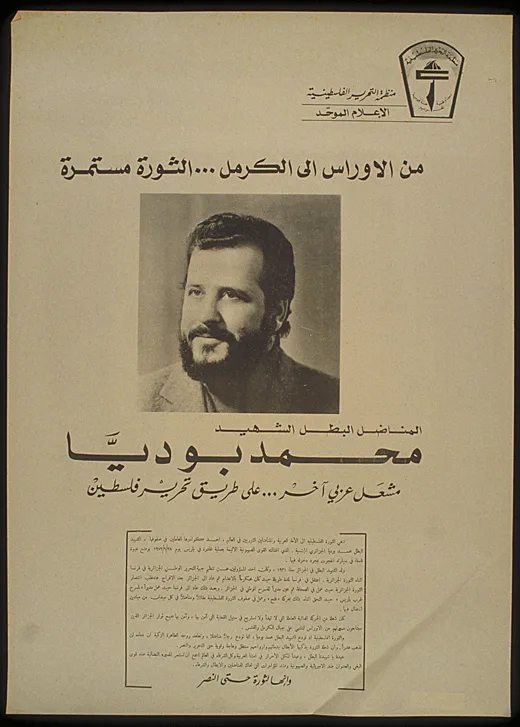
Nadia was then studying political science and economics at the Sorbonne in Paris, alongside theater studies. It was there that she met the playwright and revolutionary Mohammed Boudia, also known as “Mohamed Bou Diya.”
Inspired by Boudia’s revolutionary ideology, both Nadia and Rita became increasingly committed to the Palestinian cause. Their resolve was solidified in September 1970, when the Jordanian army launched attacks on armed Palestinian factions across several cities during the events of “Black September.”
Mission to Tel Aviv
The Bradley sisters turned their backs on the comforts of life and chose struggle in solidarity with the Palestinian cause. They joined the ranks of Arab fedayeen under the banner of the Democratic Front for the Liberation of Palestine (DFLP), hoping to contribute meaningfully to a cause long neglected by Arab leaders and the global community.

At the time, most resistance operations against Israel were taking place in Europe. But Nadia and Rita aimed higher: they planned a daring mission inside Israel itself. In 1971, they joined what became known as the “Easter Commandos,” a group preparing to carry out synchronized bombings at nine hotels across Israel.
Nadia was 25 years old; her younger sister Rita, just 19. The group spent three weeks preparing in Paris, frequently changing locations to avoid detection. The operation involved three additional French nationals.
Explosives were prepared with assistance from DFLP operatives and hidden inside clothing and the soles of shoes. The garments had been soaked in plastic-based explosives, making them essentially wearable bombs.
On April 11, 1971, the group landed at Lod Airport (now Ben Gurion International Airport), with the Bradley sisters posing as French tourists on holiday in the Holy Land, using French passports.
Everything was going according to plan until Israeli authorities discovered explosive powder and detonator batteries in their luggage. Nadia was arrested near the Hilton Hotel shortly after leaving the airport and passing through security.
The presence of a French woman named Evelyne Barge, a known former member of the Palestinian resistance under French surveillance, also helped expose the operation.
The mission shocked Israeli authorities, who never expected foreign women to carry out such a bold act on their soil. Commenting on the motivation behind the attack, Rita told Al Jazeera that “this operation was intended to put the Palestinian issue on the international stage. Palestinians were suffering immensely after Black September, and the world knew very little about it.”
During their interrogation, the Bradley sisters were tortured. They were placed in dark solitary cells, forced to sit for hours without rest, deprived of sleep, and injected with sedatives to coerce confessions.
After four months of continuous interrogation, they were brought before a military court. The trial lasted two months, resulting in a 10-year sentence for Rita and 12 years for Nadia.
Despite the sentencing, Israeli authorities continued questioning them. Nadia’s health deteriorated severely due to the sedative injections; she developed acute infections, gangrene, and severe swelling in her hands. As her condition worsened, Morocco and France exerted pressure on Israel for her release. After three years, she was deported to France. A few months later, Rita was also freed.
Training Camps in Lebanon
After their release, both sisters remained steadfast in their commitment to the Palestinian cause. Upon arriving in Paris, they soon planned their move to Lebanon the heart of Palestinian resistance at the time.

In Lebanon, they were welcomed as heroes. Following a long recovery period, the sisters received intensive military training in the use of weapons, including the Kalashnikov and various rifles. However, Yasser Arafat, then Chairman of the PLO, assigned them a different mission.
They were offered a chance to host a Hebrew-language radio program on “Voice of Palestine,” aimed directly at Israelis. Nadia focused on ideological and political issues and the education of Palestinians, while Rita worked on security-related content with Nayef Hawatmeh, Secretary-General of the DFLP.
The sisters again came face-to-face with death during the Israeli invasion of Lebanon in 1982. On June 6, Israeli forces stormed across the border with 60,000 troops, backed by artillery, naval, and air power. Within days, they reached Beirut and occupied Baabda Palace on June 13.
For weeks, the sisters endured relentless Israeli bombardment cluster bombs, white phosphorus, and napalm resulting in over 26,000 casualties, including 11,840 children, 868 women, and 1,100 fighters.
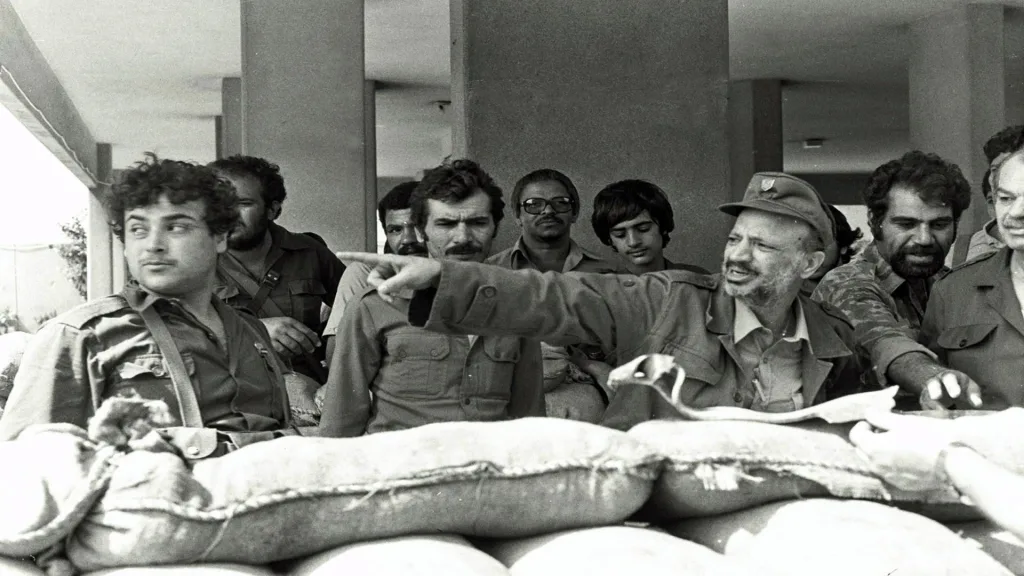
The ordeal ended with the devastation of Beirut and the evacuation of Palestinian fighters under international guarantees from France, Italy, and the U.S. The Bradley sisters chose to return to Morocco and reunite with their family, who had long awaited their return.
Back in Morocco, the sisters resumed a normal life after years of sacrifice for a cause they had embraced since childhood. On August 10, 1995, Nadia passed away from complications linked to the illness she developed during her time in Israeli custody. She was 50 years old.
Despite their significant contributions to the Palestinian resistance, Nadia and Rita Bradley never received the recognition they deserved in Arab media. Their story remains largely unknown even among Palestinians and Moroccans. Few are aware that two Moroccan women gave up lives of comfort to fight for Palestine.


