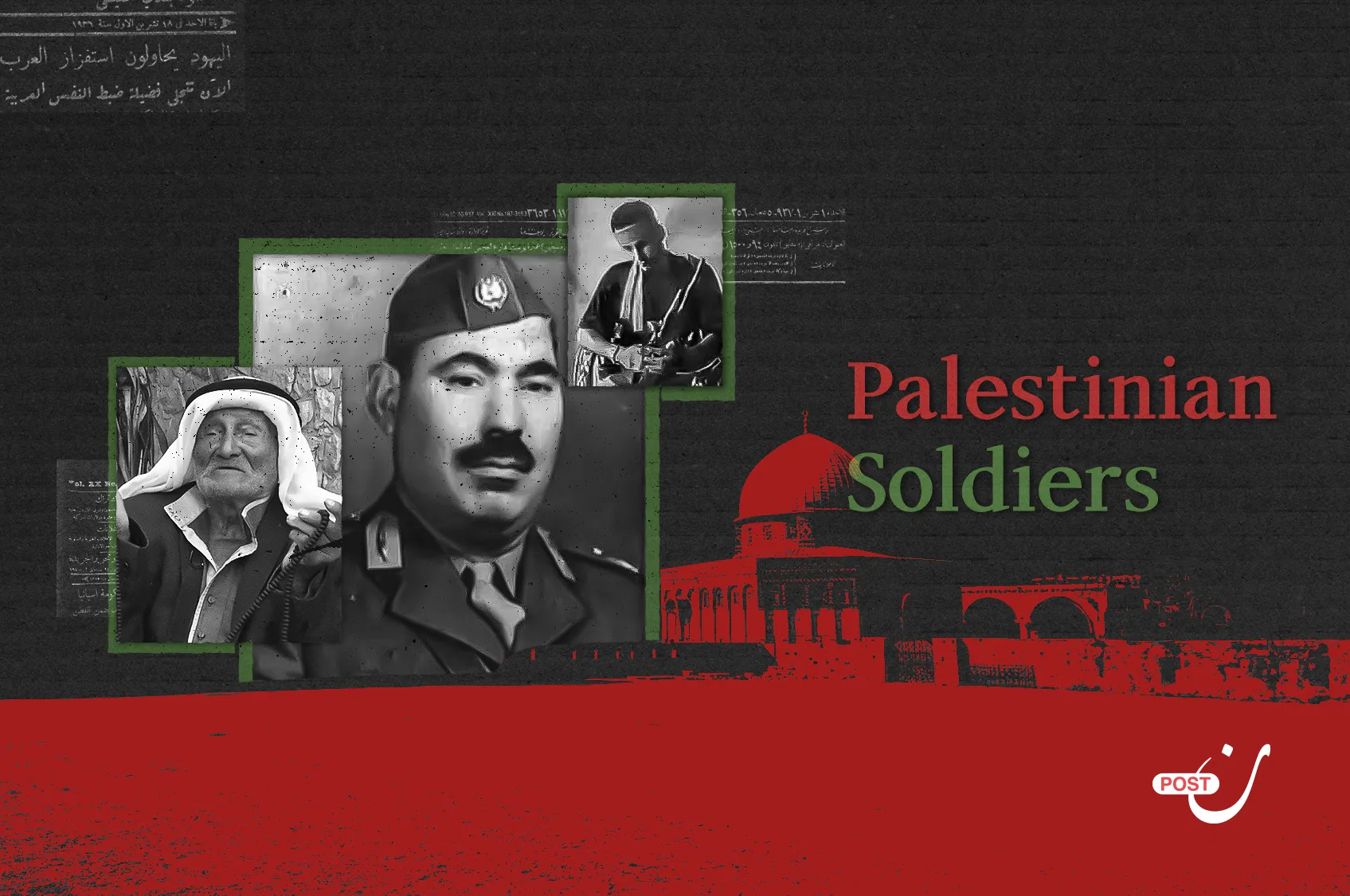













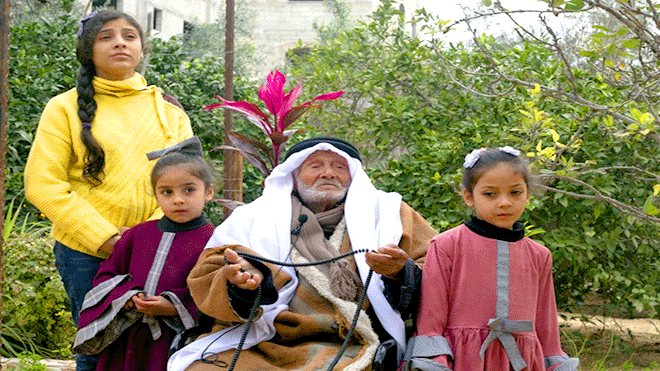
Ninety years ago, he left his homeland in Yemen on foot, heading toward the holy sites. He arrived in Jerusalem, then Jaffa, and finally settled in the Gaza Strip. Along the way, he participated in the Great Palestinian Revolt against British colonial forces, Zionist militias, and settlers.
Ahmad Badr Hassan Badr, known as “Abu Badr Al-Yemeni,” eventually made his home in Jabalia, northern Gaza. He refuses to return to Yemen, having fully assimilated with the Palestinian people. He has shared their wars, uprisings, and tragedies as though he were one of them.
A Pilgrimage That Turned Into a Lifelong Cause
Abu Badr’s journey with Palestine began in 1934. That year, he left his village of Bareq in the Sarabi enclave of Bani Al-Awwam District, Hajjah Governorate in Yemen, and traveled on foot to the sacred Islamic sites.
After completing the pilgrimage in Mecca, he headed to Jerusalem to visit Al-Aqsa Mosque in a traditional act known as “sanctifying the pilgrimage” a custom dating back to Ottoman times, when pilgrims often visited Al-Aqsa either before or after Hajj to spiritually link the mosque to the broader Islamic ritual.
From there, he traveled to Jaffa, just 60 kilometers from Jerusalem. At the time, Jaffa was one of the most vibrant Palestinian coastal cities on the Mediterranean and the country’s primary economic hub.
His arrival in Palestine coincided with escalating clashes between Zionist militias and Palestinians. Returning to Yemen became difficult, prompting him to settle in Jaffa and work as a building guard.
When Abu Badr decided to stay in Jaffa, the city was home to over 120,000 Palestinians—mainly in the Old City, Ajami, and Manshieh neighborhoods—while just a few thousand impoverished Jews from Eastern and Central Europe had recently arrived.
At that time, Palestine was under British Mandate, imposed after World War I with the primary objective of implementing the 1917 Balfour Declaration, which promised to establish a national home for the Jewish people in Palestine.
Resistance Against British Rule and Zionist Militias
Initially, Abu Badr intended to settle peacefully and work in Palestine. But the eruption of the Great Palestinian Revolt against British forces and Zionist militias who were violently displacing Palestinians compelled him to join the resistance.
The revolt was sparked largely by Sheikh Izz al-Din al-Qassam, a Syrian-born preacher from Jableh, who led armed resistance against both British rule and Jewish settlers. At the time, Al-Qassam was the imam and preacher of the Independence Mosque in the coastal city of Haifa, and he seamlessly blended religious leadership with armed resistance.
After Sheikh Al-Qassam’s martyrdom in November 1935, calls emerged to carry on his legacy. A six-month general strike was declared to express widespread Palestinian outrage over illegal Jewish immigration and British colonial policy.
The strike began in Jaffa and soon spread across Palestine, involving many national bodies. Abu Badr was among those who participated. Over time, general strikes became a powerful form of protest for Palestinians, a tradition that continues to this day in response to repeated Zionist violations.
British authorities ignored Palestinian demands, escalating the situation into an armed uprising. This ultimately led to the launch of the Arab Revolt (1936–1939), calling for independence from British rule.
The revolt lasted four years, ending in September 1939 with the outbreak of World War II. It played a key role in shaping Palestinian national consciousness and resistance to both British policy and the Zionist project.
Abu Badr personally witnessed the massacres committed by Zionist militias often with British support—against Palestinians before the Nakba of May 15, 1948. These atrocities were perpetrated with the backing of the Western world.
He joined Palestinian and Arab volunteers supporting the Arab Liberation Army, formed by the Arab League in response to the UN Partition Plan of November 29, 1947. Jaffa, where he lived, became a major theater of resistance, especially as waves of Jewish immigrants continued to arrive.
Abu Badr says he bought his own weapon, even though the Arab League had pledged support and allocated 10,000 rifles and a million pounds to arm volunteers. Yet, only a fraction of that aid ever reached the Palestinians.
Despite the option to return to Yemen, Abu Badr chose to stay and defend the land of the prophets. He fought with a simple weapon alongside Arab forces. He was eventually captured but later released after an armistice was signed between Israel and Arab states.
Life as a Refugee
During the war, Abu Badr’s pregnant wife and her family were killed. His home in Jaffa like hundreds of other Palestinian houses was destroyed by Zionist militias, many of whom had recently arrived from Eastern Europe. These groups forcibly displaced Palestinians from 20 cities and around 400 villages.
This created a humanitarian catastrophe, displacing millions including Abu Badr. After his release from captivity, he and dozens of Arab fighters were received by the Egyptian government and sent to Gaza, where he was resettled in Al-Bureij refugee camp.
He accepted his new reality and rebuilt his life in Al-Bureij, working in construction and later moving to Jabalia. He remarried, had eight children five sons and three daughters—and now has 51 grandchildren with whom he spends most of his days.
Though he has no official birth certificate, his family estimates he is now 128 years old most of which he spent defending Palestine, a land and people he grew to love deeply. He refuses to return to Yemen until Palestine is free and its people regain their rights.
To this day, Ahmad Badr, the Yemeni pilgrim turned resistance fighter, remains a living archive of Palestinian history from the early massacres by Zionist gangs, to the Nakba and the 1967 defeat, and finally the ongoing Arab indifference to the Palestinian cause.