














In moments of seismic change, a people hidden from global consciousness suddenly emerges, only to be deliberately obscured again—so that mere acknowledgment of their existence becomes a crime: synonymous with antisemitism, terrorism, self‑hating Jews, Western guilt, and a threat to an armored regime that controls an entire region’s systems, populations, and resources.
This erasure and marginalization are neither recent nor sporadic, but as old as the Israeli state itself—entrenched in academic, political, legal, and populist levels. It is intentional and engineered to guarantee its continuity.
It began with first waves of dispossession, where Zionism adopted a language of cancellation and deletion as synonymous with purity, aiming to erase everyone—not leaving a single village, clan, or person—to affirm the success of the Zionist project, as Joseph Weitz, head of settlement at the Jewish National Fund, articulated.
From this womb of erasure come practices that strip people of their names, nationalist identifiers, and humanity. Israeli political and media discourse now prefers terms like “Arabs,” “Gazans,” or “Gaza residents” instead of the true name “Palestinians,” as occurred with Johnny Maur, head of Gaza Humanitarian Foundation, in his Washington speech.
Through this structure of cancellation, this article shines a light on the colonial adaptation of language into a tool of repression and marginalization, systematically aiming to remove national and identity attributes when speaking of the other—one whose existence is either forbidden or denied recognition at the national or physical level.
From Nakba to Statehood
Language was never a neutral medium for the Zionist project—but a deliberate erasure of the Palestinian other through control over terminology, names, and official narratives. Even before the declaration of the state of “Israel,” Zionism had built a colonial and settlement system capable of managing a state from inception, organizing people, resources, and policies without disruption.
Components of this system included the Jewish National Fund of Palestine, Palestine Jewish Airways (today El Al), Bank Leumi (formerly Anglo-Palestine Bank), the Israeli pound (originally the Palestinian pound post‑Nakba), the Palestine Police (later Jewish auxiliary police), and the Jerusalem Post (once Palestine Post)—all institutional labels suffixed with “Palestine” before being stripped by Zionist control.
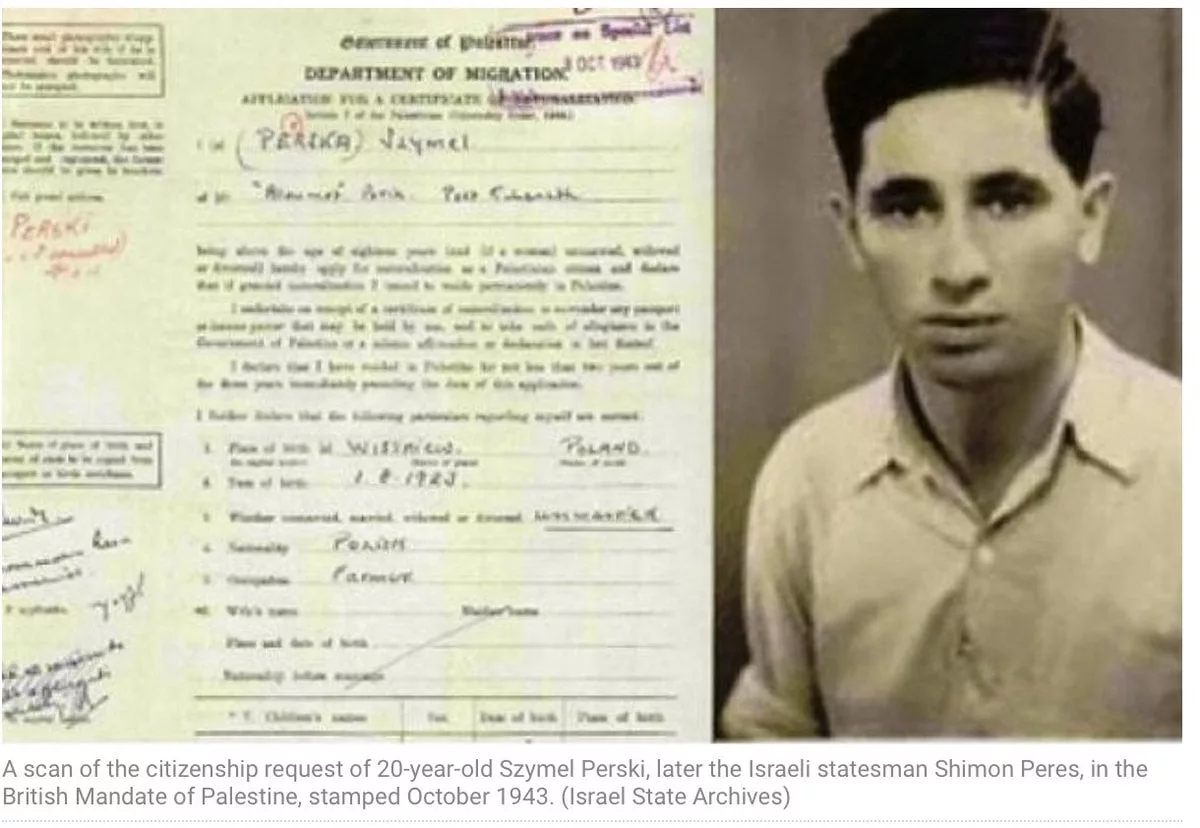
The problem wasn’t merely renaming Jewish institutions—it was turning that renaming into a systematic policy to purge everything Palestinian from history. Palestinian citizens of Israel became labeled legally and institutionally as “Arab community” or “Israeli Arabs,” defined by their Arabic language secondary to Hebrew.
Researcher Nadeem Rouhana describes the situation of Palestinians inside the state as “living in a constitutionally exclusive ethnic state, reinforced by structural and legal settings enabling exclusion, and dynamics confirming that the state manipulates its security fears to control its Arab citizens.”
This “Israeli-ization” separates them from other Palestinians, especially those from the West Bank and Gaza Strip, undermining emotional, social, and familial ties and thereby reducing any perceived internal threat.
Such linguistic manipulation enables Israeli epistemic denial of the Nakba, shifting blame onto fleeing Palestinians or Arab armies from 1948. It dismisses the right of return, restitution for property and losses, accountability for crimes, or demands for historical justice, even as “new historians” emerged to challenge state narratives and validate Palestinian oral histories.
Importantly, Israeli erasure is two‑fold: geographic Palestine is recognized in administrative terms inherited from the British mandate, but Palestinian national identity is entirely undermined. Jewish leaders once referred to themselves as “Palestinian Jews” or part of a “Palestinian body,” while Golda Meir famously declared in 1938, “I’m Palestinian, but a Zionist Jew,” only to later assert in 1969, “There is no such thing as a Palestinian people—it never existed.”
This ongoing erasure transforms into legal and cultural structures—from Palestinian citizens to those in occupied territories and the diaspora: enshrined through laws like the Jewish Nation-State Law and the Law of Return, histories omitted in curricula, and place names Hebraized, turning erasure into a full colonial edifice.
Murder and Its Justification
Once again, colonial language is brought to the blade to depict the other as barbaric, demonized, and unworthy of existence. This blade is genocide, which since day one equated “Palestinian” with “human animals,” “monsters,” “terrorists,” “barbarians,” “Amalekites,” stripping them—even children—of any humanity.
In October 2023, Netanyahu described Palestinians purely as “Hamas members” and “terrorists,” never using the term “Palestinians,” saying: “We are fighting savage terrorists, not civilians. Gaza is not a civilian entity—it is a haven for terror.”
Across speeches by Netanyahu, his ministers, military leaders, and Israeli representatives abroad, “Palestinian” vanishes, replaced by “terrorist,” “Hamas,” “Gazans,” or “residents of Gaza.” Even UN evacuation briefings describe them as a “transient population” to be removed.
Erasing the name erases recognition of a people as a legal, historical, cultural entity with a right to self-determination, accountability, and redress. This isn’t novel, but characteristic of colonial patterns seen under British, French, and Italian rule—where colonized peoples were reduced to “locally resident inhabitants” instead of citizens.
Israel replicates this dichotomy with “citizens of Israel,” “people of Israel,” versus “local residents,” “Gaza residents,” or “Gazans.” In language, we hear what politics dare not confess: the settlement project aims not just at land occupation, but the erasure of the names and identities of its people—turning occupation into denial of existence.
Western—and even some Arab—media play this linguistic role: we read “war on Gaza,” not “war on Palestine,” “Israel vs. Hamas,” not “Israel’s war on Palestinians,” though Hamas is neither a state nor a conventional army, and its defeat won’t end the underlying aggression.
Johnny Maur recently reflected this: the U.S. administration’s rhetoric removed “West Bank” from discourse, symbolically folding it into “Judea and Samaria.” Daniela Weiss, architect of annexation, shamefully refused to utter “Palestinian,” insisting the concept was a historical fiction.
This speech is not unexpected—it aligns with a settler-colonial belief in “a land without a people.” Changing its name over time is arrogance incarnate. As Weiss said to journalist Piers Morgan, she denied the existence of the Palestinian people entirely.
Indeed, there are thousands of living documents and millions of living testimonies of Israeli erasure. Yet we often drain ourselves deconstructing one discourse at a time instead of confronting a stark, raw truth: amid decaying corpses, starving people, endless rubble, and violence as spectacle, a regime exists that sees only itself—and relegates all else to the margins.


