















For nearly six decades, Israel’s position on the strategically significant Golan Heights—seized with remarkable ease in the 1967 June War—has evolved from official annexation, unrecognized by any country except the United States (and only belatedly, under Donald Trump), to tentative negotiation during the Madrid Conference.
And even acceptance of full withdrawal as outlined in the so-called “Rabin Deposit.” Yet more recently, Israel has shifted to outright refusal to negotiate and insists on the Golan’s “Israeli” identity as a precondition—an impossible threshold aimed at raising the stakes in any future talks with a new Syria.
The Fall of the Golan
Israel captured the Golan Heights during the 1967 war with minimal resistance, despite the area’s formidable fortifications and strategic location. Syrian soldiers fought with courage and self-sacrifice, yet in the absence of any serious or professional military strategy. The Ba’athist regime declared the territory lost even as battles and resistance raged on, later claiming that the Golan was a fair price for the regime’s survival.
In October 1973, Syrian troops again fought valiantly and managed to reclaim limited territory. However, the final days of the war were marked by collapse, due largely to the lack of coordination between Damascus and Cairo. Once again, the Syrian leadership fell short of matching the determination and sacrifices of its people.
Following the war, US Secretary of State Henry Kissinger brokered a disengagement agreement in 1974, under which UNDOF forces were deployed solely on the liberated Syrian side—against strategic logic that called for a presence on both sides.
The arrangement was widely perceived as a concession by the Syrian regime to ensure American tolerance of its continued rule, enabling it to act freely in Lebanon against the Palestinian resistance and nationalist forces, while consolidating Israeli and American dominance.
This dynamic was later encapsulated by Rami Makhlouf’s infamous 2011 remark at the outset of the Syrian uprising: “The regime’s security is Israel’s security.”
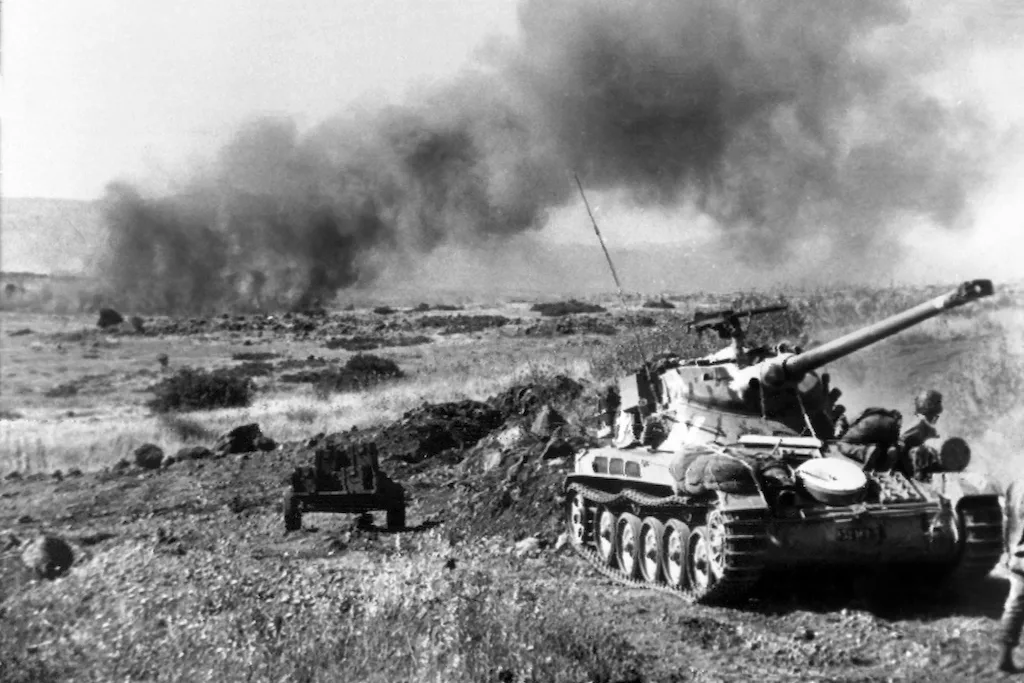
Since 1974, the Golan front has remained the quietest among all the borders surrounding occupied Palestine. Not a single shot has been fired in nearly half a century.
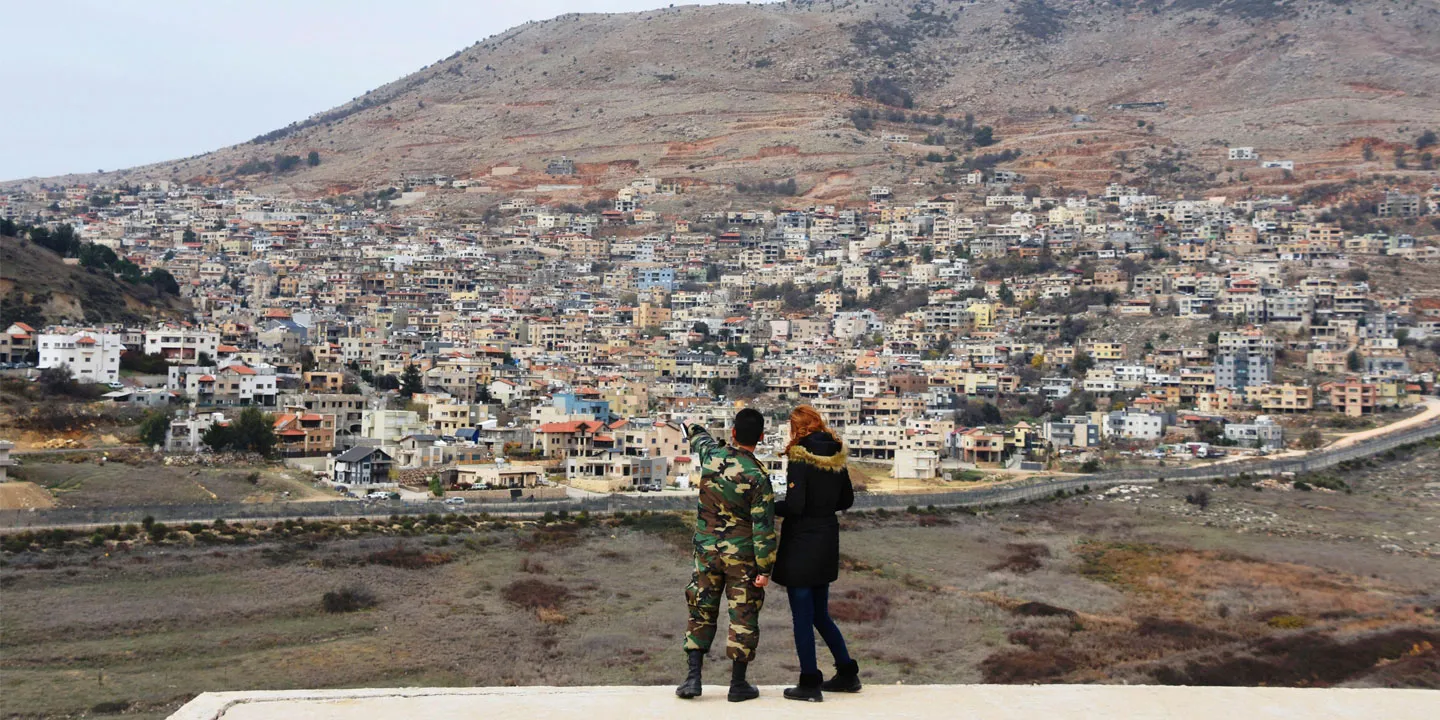
In 1980, Israel formally annexed the Golan, an act rejected by the United Nations, global powers, and the Golan’s own residents, who have held fast to their Syrian national and Arab identity. The United States did not recognize the annexation until Donald Trump’s presidency.
Negotiations: Ebbs and Flows
The Madrid Conference in 1991 and subsequent agreements—Oslo (1993), Wadi Araba (1994), and Camp David (1979)—breathed new life into regional diplomacy based on the “land for peace” formula and UN Resolutions 242 and 338. President Hafez al-Assad demanded full withdrawal from 1967-occupied territories in return for a peace deal, following the Egyptian and Jordanian models.
The most significant development came with Prime Minister Yitzhak Rabin’s so-called “deposit,” delivered to US Secretary of State Warren Christopher, in which Rabin expressed willingness to withdraw to the June 4, 1967 lines—conditional on normalization steps. Assad accepted the terms, and talks were based on this understanding.
In the late 1990s, Israeli PM Ehud Barak attempted to isolate the Palestinians by prioritizing negotiations with Syria. While the talks faltered, they didn’t collapse entirely, despite Barak’s disregard for Rabin’s deposit and his refusal to withdraw fully from the Golan. When Bill Clinton’s administration later attempted to revive the Palestinian track, talks collapsed again at Camp David II, followed by the eruption of the Second Intifada in 2000.
Under George W. Bush, formal negotiations were replaced by backchannel message exchanges. In a symbolic gesture, Bashar al-Assad once sent a full pot of hummus to Israeli PM Ehud Olmert’s office. But the peace track disintegrated completely after Israel’s 2008 war on Gaza.
Which also led to Olmert’s fall and the return of Benjamin Netanyahu, in alliance with right-wing leaders like Ehud Barak, Avigdor Lieberman, and Benny Gantz—before Netanyahu ultimately consolidated power alongside extremists like Bezalel Smotrich and Itamar Ben Gvir.
Secretary of State John Kerry later tried to revive multi-track peace efforts under President Obama, appointing Arab-American George Mitchell as envoy. But the Arab Spring—particularly Assad’s brutal crackdown on the Syrian revolution—derailed any hope of a peace deal or international backing to rehabilitate the Syrian regime.
Israel then declared the Golan file closed, asserting it would never return the land, nor negotiate with a regime that murders its own people—even as it engaged in similar policies toward Palestinians. With Russian intervention from 2015 onward, Israel quietly accepted Assad’s survival, on condition it could act freely against Iranian entrenchment and maintain calm on the Golan front.
The most pivotal shift came with Trump’s recognition of Israel’s annexation. President Biden, notably, has not reversed this decision—effectively removing the issue from the international agenda.
After Assad…
The Assad regime fell in December, a long-anticipated event ever since the revolution began with children scrawling “Down with the dictator” on school walls in Daraa, or perhaps even earlier, with Mohamed Bouazizi’s self-immolation in Tunisia. Russia’s deepening entanglement in Ukraine since 2022 also played a role, as Moscow had propped up Assad from 2015 after Iran and its militias failed to do so.
Following the regime’s collapse, Israel’s greed reached new heights, embodying the Hebrew concept of chutzpah—a term so brazen it defies translation, though “audacity” or “shamelessness” come close. Israel sought to insert itself into Syria’s reconstruction through criminal raids and interventions aimed at disrupting the emergence of a new Syrian state.
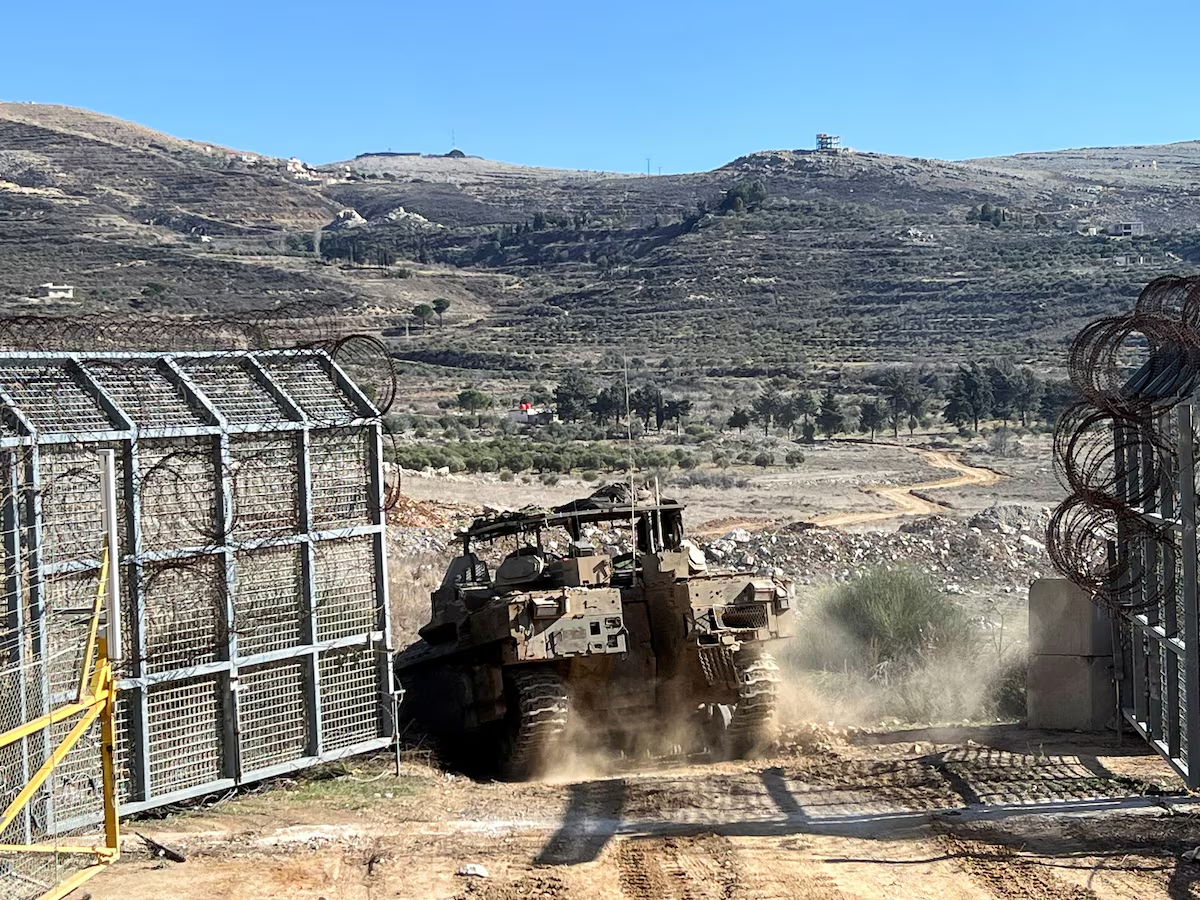
These included bombings, raids, and illegal incursions, all under the guise of “protecting minorities”—while in reality violating the 1974 disengagement agreement and occupying parts of the buffer zone.
Israel was eventually forced to retreat tactically in the face of a broad Arab–Turkish–international umbrella supporting Syria’s rebirth. It then pivoted to feigning interest in peace and normalization, on the impossible condition that Syria accept Israel’s annexation of the Golan. This duplicity revealed Israel’s true aim: not peace, but a security arrangement akin to UN Resolution 1701 in Lebanon—a refreshed version of the 1974 agreement.
Ultimately, Israel’s priority remains to cement the status quo, hold on to the Golan and Shebaa Farms, and reject any negotiation grounded in the Arab Peace Initiative, “land for peace,” or international legitimacy—flawed as that may be.


