NoonPost NoonPost

NoonPost

  • Home
  • Politics
  • Economy
  • Society
  • Culture
  • Files
  • Long Reads
  • Podcast
AR
Notification Show More
نون بوست
“There Are Nights I Can’t Close My Eyes”: How Gazans Are Living in Homes on the Brink of Collapse
نون بوست
From al-Jolani to Ahmad al-Shara: The Evolution of Syria’s New Leader
نون بوست
When Political Islam Receded in Egypt: Who Filled the Void?
نون بوست
An Extension of Genocide: Gaza’s Detainees Speak Out
نون بوست
A Tightrope Between Survival and Sovereignty: The Syrian Government Faces Normalization Pressures
نون بوست
American Aircraft Carriers: Has the Era of “100,000 Tons of Diplomacy” Ended?
نون بوست
U.S. Regime‑Change Policies: Why They Are Destined to Fail
نون بوست
Transformations of Israeli Judaism: Between the Victim Complex and the Colonizer’s Doctrine
نون بوست
The Gulf’s Balancing Act: Iran, Israel, and Hidden Links
نون بوست
Iraq–Turkey Oil Export Treaty: Why Did Ankara Cancel It After 52 Years?
نون بوست
Syria’s Northeast on Edge: QSD Between Ankara and Damascus
نون بوست
Has Europe Changed Its Stance on Israel… or Just Its Language?
NoonPost NoonPost
AR
Notification Show More
نون بوست
“There Are Nights I Can’t Close My Eyes”: How Gazans Are Living in Homes on the Brink of Collapse
نون بوست
From al-Jolani to Ahmad al-Shara: The Evolution of Syria’s New Leader
نون بوست
When Political Islam Receded in Egypt: Who Filled the Void?
نون بوست
An Extension of Genocide: Gaza’s Detainees Speak Out
نون بوست
A Tightrope Between Survival and Sovereignty: The Syrian Government Faces Normalization Pressures
نون بوست
American Aircraft Carriers: Has the Era of “100,000 Tons of Diplomacy” Ended?
نون بوست
U.S. Regime‑Change Policies: Why They Are Destined to Fail
نون بوست
Transformations of Israeli Judaism: Between the Victim Complex and the Colonizer’s Doctrine
نون بوست
The Gulf’s Balancing Act: Iran, Israel, and Hidden Links
نون بوست
Iraq–Turkey Oil Export Treaty: Why Did Ankara Cancel It After 52 Years?
نون بوست
Syria’s Northeast on Edge: QSD Between Ankara and Damascus
نون بوست
Has Europe Changed Its Stance on Israel… or Just Its Language?
Follow US

Behind Washington’s Terrorist Designation of the Muslim Brotherhood: Who Pushed the Move and Why Now?

فريق التحرير
Noon Post Published 26 March ,2026
Share
نون بوست
نون بوست
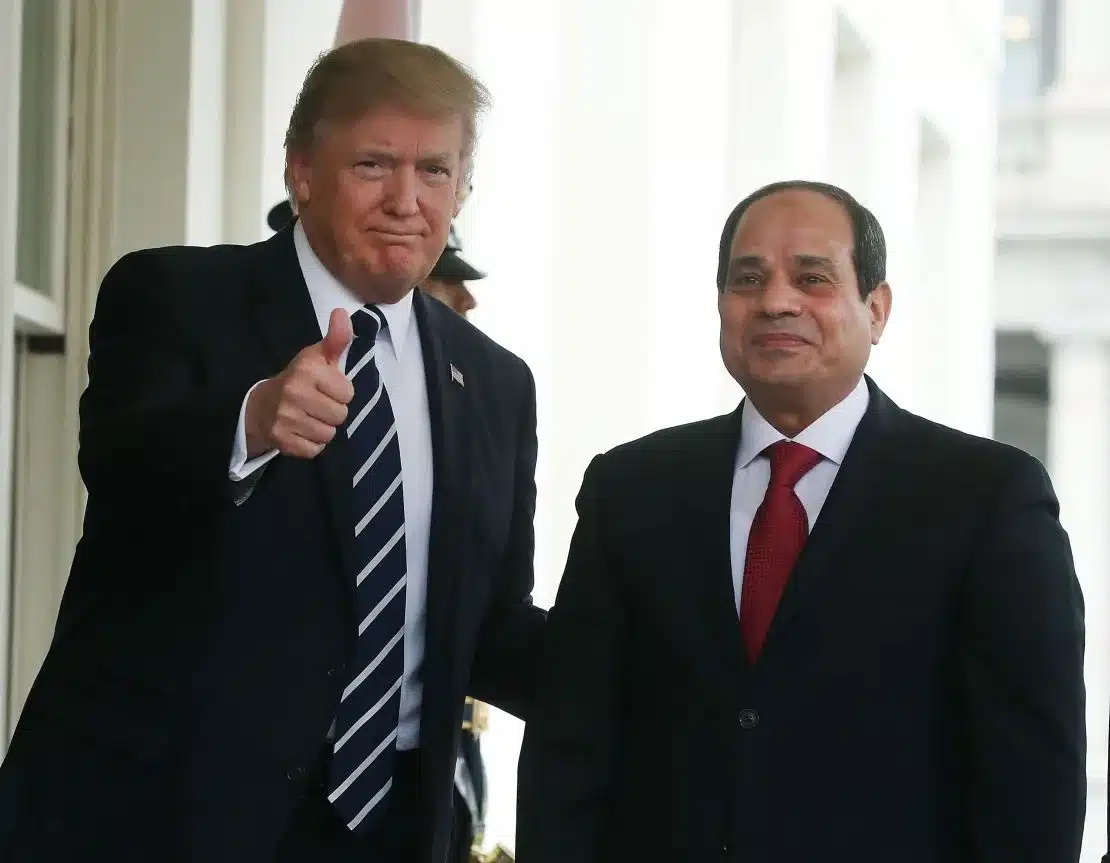
Sisi has consistently urged Washington to designate the Muslim Brotherhood as a “terrorist group”.

In an unprecedented move, the administration of President Donald Trump has designated the Muslim Brotherhood and its branches in Egypt, Jordan, and Lebanon as “terrorist organizations,” citing alleged support for Hamas and activities Washington claims threaten its interests and those of its allies.

The decision has sparked questions about its timing, motivations, and the forces that influenced the White House to act. It also raises significant legal and political implications, both domestically and internationally including potential impacts on individuals and entities connected to the Brotherhood within the United States.

Timing and Justifications

The designation imposes economic sanctions and bans all financial or logistical support for the listed branches.

The U.S. Department of the Treasury designated the Brotherhood’s branches in Egypt and Jordan as Specially Designated Global Terrorists (SDGT). Meanwhile, the State Department labeled the group’s Lebanese branch a Foreign Terrorist Organization (FTO).

Many analysts believe the timing of the decision is driven by several factors:

  • It follows up on an executive order signed by Trump in November 2025 to initiate the designation process.

  • The decision accelerated in the wake of the Israeli assault on Gaza, after official documents alleged that a Brotherhood-linked faction in Lebanon had launched rockets at Israel following the October 7, 2023, Hamas attack.

  • Accordingly, the Trump administration based its decision on accusations that these branches supported Hamas and orchestrated “destabilizing campaigns” against U.S. allies.

  • Trump also sought to fulfill a longstanding promise popular among America’s right-wing circles, where Republicans and conservative figures have for years pushed for a tougher stance on the Brotherhood.

Trump previously attempted to take this step during his first term in 2019, under pressure from Arab allies, but the move was postponed at the time. Now, with a second term underway, the political environment has shifted, allowing Trump to pursue what he views as part of a broader campaign against what he calls “radical political Islam.”

Who Pushed Washington Toward Designation?

A combination of domestic and foreign pressure drove Washington toward this decision. The following are the key actors who encouraged or welcomed the designation:

  • Egypt: Cairo played a leading role in lobbying for the move. Since the 2013 military coup and the domestic classification of the Brotherhood as a terrorist group, President Abdel Fattah el-Sisi’s regime has repeatedly urged Washington to adopt the same stance. During a 2019 visit to the White House, Sisi explicitly asked Trump to add the Brotherhood to the U.S. terror list. Today, Cairo warmly welcomed the decision, hailing it as a “decisive step” that reflects the alleged “danger of the group.”

  • United Arab Emirates: The UAE has opposed the Brotherhood since 2011, labeling it a terrorist organization in 2014 alongside Saudi Arabia and Egypt. It promptly welcomed the U.S. decision, describing it as evidence of the Trump administration’s “systematic and sustained efforts” to confront what it called “the Brotherhood’s violence and destabilizing activities.”

  • Saudi Arabia: Riyadh has designated the Brotherhood a terrorist organization since 2014, claiming its ideology undermines social cohesion. It praised the U.S. decision, reiterating its “condemnation of extremism and terrorism and its support for anything that strengthens Arab nations’ security and stability.”

  • Israel: While no official Israeli statement has been issued, analysts suggest that Tel Aviv stands to benefit the most from the decision. The Brotherhood and its affiliates most notably Hamas are among Israel’s fiercest regional adversaries. Brotherhood leaders claim Trump acted under pressure from Israel and the UAE to serve political goals unrelated to direct U.S. interests.

  • U.S. Domestic Actors: The Trump administration’s move was also backed by a strong domestic current. The Republican right has long viewed the Brotherhood as a threat. Prominent supporters of the president such as activist Laura Loomer and others have publicly called for a more aggressive stance.

    In fact, conservative-led states like Texas and Florida launched their own campaigns in 2025 to classify the Brotherhood as a terrorist group at the state level. Florida Governor Ron DeSantis even signed an executive order listing the Council on American-Islamic Relations (CAIR) as a terrorist organization, citing alleged ties to the Brotherhood.

Anticipated Ramifications

The decision carries a range of legal and political consequences, both within the United States and across the Middle East:

1. Legal and Security Implications in the U.S.

With the designation in place, any financial or material support for the Brotherhood or its branches becomes a federal crime under laws prohibiting support for terrorist organizations. While no formal Brotherhood organization exists within the U.S., the ruling could affect individuals or entities proven to have direct ties to its branches in Egypt, Jordan, or Lebanon.

For example, any known member of these branches seeking to enter the U.S. would be automatically barred under FTO entry restrictions.

U.S.-based individuals with current or even historical organizational ties to those branches could face legal action, including deportation or asset freezes if any form of support is proven.

Experts also note that the decision could influence asylum and visa applications by individuals with Brotherhood affiliations. U.S. courts may become less inclined to grant asylum to Brotherhood members or sympathizers. This hardline stance could extend to allied Western nations that may follow Washington’s lead, further restricting international movement and residency for Brotherhood-affiliated figures.

Overall, the move provides U.S. law enforcement with stronger legal grounds to target alleged Brotherhood-linked funding networks including charities suspected of serving as fronts.

2. Impact on the Middle East Political Landscape

Regionally, the decision is likely to embolden the Brotherhood’s adversaries. Egypt may use it to press other countries to extradite senior Brotherhood figures residing abroad.

Jordan might intensify its investigations into investments or organizations suspected of Brotherhood ties, using the U.S. stance as justification. More broadly, the climate for political Islam in the region may deteriorate.

Observers fear the move could weaken Islamic movements that have participated in democratic processes such as Tunisia’s Ennahda or Morocco’s former ruling Justice and Development Party by lumping them together under one label. This could further marginalize them politically and deepen polarization across the region.

In short, Washington’s designation marks a significant turning point in its Middle East policy. Far from being a spur-of-the-moment decision, it reflects the convergence of pressure from Arab allies, the influence of America’s right wing, and a volatile regional backdrop shaped by the Gaza war.

Time will tell how this designation is leveraged in U.S. policy, and whether it will succeed in weakening a century-old organization as its supporters claim or only fuel further polarization and instability, as its critics warn.

Download this article as PDF
Share this Article
Facebook Twitter Whatsapp Whatsapp Telegram Email Copy Link
فريق التحرير
By فريق التحرير تقارير يعدها فريق تحرير نون بوست.
Follow:
Previous Article نون بوست Faces of Gaza’s Transitional Phase: Who Will Govern the Strip?
Next Article نون بوست Ali Shaath Appointed Head of Gaza Technocratic Committee: What Do We Know About Him?

Read More

  • U.S. Regime‑Change Policies: Why They Are Destined to Fail U.S. Regime‑Change Policies: Why They Are Destined to Fail
  • The Gulf’s Balancing Act: Iran, Israel, and Hidden Links
  • Iraq–Turkey Oil Export Treaty: Why Did Ankara Cancel It After 52 Years?
  • Syria’s Northeast on Edge: QSD Between Ankara and Damascus
  • Has Europe Changed Its Stance on Israel… or Just Its Language?
part of the design
NoonPost Weekly Newsletter

You May Also Like

U.S. Regime‑Change Policies: Why They Are Destined to Fail

U.S. Regime‑Change Policies: Why They Are Destined to Fail

إسراء سيد Esraa sayed 8 April ,2026
The Gulf’s Balancing Act: Iran, Israel, and Hidden Links

The Gulf’s Balancing Act: Iran, Israel, and Hidden Links

فريق التحرير Noon Post 8 April ,2026
Iraq–Turkey Oil Export Treaty: Why Did Ankara Cancel It After 52 Years?

Iraq–Turkey Oil Export Treaty: Why Did Ankara Cancel It After 52 Years?

فريق التحرير Noon Post 8 April ,2026

المتعة تنشر عبقها في كوبا أمريكا

أيهم المدرس
أيهم المدرس Published 6 July ,2015
Share
image

الحدث

إلى حيث المتعة والمرح، إلى حيث المهارة والجنون، إلى القارة الأمريكية الجنوبية، وتحديدًا إلى ساحلها الغربي حيث تقع جمهورية تشيلي، اتجهت أنظار عشاق الساحرة المستديرة لتتابع أمتع السهرات اللاتينية وأشهى الوجبات الكروية على مائدة البطولة القارية الأعرق على الإطلاق، بطولة أمم أمريكا اللاتينية بكرة القدم (كوبا أمريكا)، والتي اُختتمت فعّالياتها التي جرت على مدار 24 يومًا في ثمانية مدنٍ تشيلية، وكانت الكلمة الفصل في آخر المطاف للمنتخب التشيلي صاحب الأرض والضيافة، الذي استطاع أخيرًا تدوين اسمه في السجل الذهبي للفائزين بكوبا أمريكا.

كيف جرت أحداث ووقائع هذه البطولة؟ ومن كان أبرز نجومها وأكثر من خيّب الآمال فيها؟ ما هي أهم اللقطات والإحصائيات التي سُجلت خلالها؟ وماذا عن تاريخ كوبا أمريكا وذكرياتها؟ كل هذه التساؤلات وغيرها ستجدون لها الإجابات الشافية في سياق التقرير التالي:

لمحة تاريخية

اتسمت هذه البطولة عبر تاريخها بالعشوائية وغياب الانتظام، فأول انطلاقة لها كانت عام 1916، عندما استضافت الأرجنتين جيرانها منتخبات البرازيل والأورغواي وتشيلي في بطولةٍ رباعيةٍ أقامتها بمناسبة الذكرى المئوية لاستقلالها، اتُفق على اعتبارها أول نسخ (بطولة أمريكا الجنوبية للمنتخبات)، وقد حمل منتخب الأورغواي لقب تلك البطولة، التي استمرت تقام بشكل شبه سنوي حتى عام 1930، حين استضافت الأورغواي أول نسخ بطولة كأس العالم الدولية، فسرقت الاهتمام من البطولة القارية، مما تسبب بتوقفها لمدة خمس سنوات، قبل أن تستأنف عام 1935، وتستمر بشكل غير دوري وبمشاركة كيفية من المنتخبات حتى نهاية الخمسينيات.

وفي الستينيات أُقيمت البطولة مرتين فقط، توقفت بعدها لمدة ثماني سنوات حتى نسخة عام 1975، التي شهدت تغيير اسمها ليصبح (بطولة كوبا أمريكا لكرة القدم).

وظلت البطولة تقام كل أربع سنوات حتى عام 1987، حيث أصبحت البطولة تقام كل عامين بنظام المداورة ين منتخبات أمريكا اللاتينية العشرة، واكتملت سلسلة المداورة الأولى عام 2007 باستضافة فينزويلا، وبدأت سلسلة المداورة الثانية في النسخة الماضية من البطولة التي استضافتها الأرجنتين، وكان مقررًا للبطولة الأخيرة – التي حملت الرقم 44 – أن تقام في البرازيل، ولكنها اعتذرت عن ذلك تاركةً دورها في الاستضافة للدولة التي تليها – بحسب الترتيب الأبجدي اللاتيني – وهي تشيلي.

وقائع البطولة الحالية

نون بوست

دور المجموعات:

أُجريت خلاله 18 مباراة بين 12 فريقًا في المجموعات الثلاث، تأهلت من خلالها ثمانية منتخبات إلى الدور ربع النهائي، فيما ودّعت المنتخبات الأربعة المتبقية البطولة.

المجموعة الأولى: افتتحتها تشيلي بفوزٍ سهلٍ على الإكوادور بهدفين نظيفين، قبل أن تتعادل بوليفيا والمكسيك سلبًا في نفس الجولة، وشهدت الجولة الثانية غزارةً تهديفيةً كبيرةً إثر التعادل المثير بين تشيلي والمكسيك بثلاثة أهداف في كل شبكة، والفوز الثمين لبوليفيا على الإكوادور بثلاثة أهداف لهدفين، وفي الجولة الأخيرة أمّنت تشيلي صدارتها للمجموعة بفوزٍ كبيرٍ على بوليفيا بخماسية بيضاء لم تمنع الأخيرة من التأهل، فيما لم تنفع الإكوادور صحوتها المتأخرة وفوزها على المكسيك بهدفين لهدف، فودّعتا البطولة معًا.

الترتيب: تشيلي 7 نقاط – بوليفيا 4 نقاط – الإكوادور 3 نقاط –  المكسيك نقطتان.

المجموعة الثانية: الجولة الافتتاحية شهدت تعادلاً مثيرًا بين الأرجنتين والباراغواي بهدفين لكل فريق، وفوزًا صعبًا للأورغواي على جامايكا بهدف وحيد، فيما حققت الأرجنتين فوزًا ثمينًا على الأورغواي بهدفٍ نظيفٍ في الجولة الثانية، التي شهدت كذلك فوز الباراغواي على جامايكا بنفس النتيجة، أما جولة الحسم فأسفرت عن تأهل الأرجنتين في صدارة المجموعة بعد فوزها الضئيل على جامايكا بهدف يتيم، وتعادل الأورغواي والباراغواي بهدف لهدف، لتتأهلا معًا إلى الدور التالي رفقة الأرجنتين.

الترتيب: الأرجنتين 7 نقاط – الباراغواي 5 نقاط – الأورغواي 4 نقاط – جامايكا صفر.

المجموعة الثالثة: في الجولة الأولى حققت البرازيل فوزًا متأخرًا على البيرو بهدفين لهدف، فيما سقطت كولومبيا بشكل مفاجئ أمام فينزويلا بهدف، وعوّضت كولومبيا خسارتها الأولى بفوزها الغالي على البرازيل بهدف نظيف، في المباراة التي شهدت طرد البرازيلي نيمار وحرمانه من استكمال البطولة، فيما اقتنصت البيرو فوزًا ثمينًا من فينزويلا بهدفٍ قاتل، وشهدت جولة الحسم إثارةً كبيرةً ولم تحسم حتى الأنفاس الأخيرة، فتأهلت البرازيل في صدارة المجموعة بفوزها الصعب على فينزويلا بهدفين لهدف، ورافقتها كل من البيرو وكولومبيا بعد تعادلهما السلبي في ختام مباريات الدور الأول.

الترتيب: البرازيل 6 نقاط – البيرو 4 نقاط – كولومبيا 4 نقاط – فنزويلا 3 نقاط.

الدور ربع النهائي:

تشيلي – الأورغواي: 1-0، سجّل لتشيلي: ماوريسيو إيسلا

نجحت الدولة المضيفة في إقصاء حاملة اللقب بفوزٍ صعبٍ بهدف إيسلا المتأخر، بعد مباراةٍ عاصفةٍ حافلةٍ بالخشونة والاعتراضات، شهدت طرد مهاجم الأورغواي كافاني إثر اشتباكه مع مدافع تشيلي غونزالو خارا، الذي عوقب بالحرمان من استكمال البطولة.

البيرو – بوليفيا: 3-1، سجل لليرو: باولو غيريرو(3)، ولبوليفيا: مارسيلو مورينو

بثلاثية المتألق باولو غيريرو هداف البطولة السابقة، كررت البيرو إنجاز النسخة الماضية بالتأهل إلى الدور نصف النهائي، وأقصت المنتخب الأخضر الذي كان يمنّي النفس بالمضي قدمًا في البطولة التي لم يحقق لقبها سوى مرةً واحدة في تاريخه.

الآرجنتين- كولومبيا: 0-0 (5-4 بضربات الترجيح)

أنقذت ضربات الترجيح أبناء التانغو من وداعٍ مخيّبٍ كان وشيكًا، فرغم الأداء الجيّد والسيطرة على مجريات المباراة، فشلت الماكينة التهديفية الأرجنتينية بقيادة ميسي وأغويرو في اختراق الدفاعات الحصينة لرفاق خاميس رودريغيز، الذين ودّعوا البطولة بعد مشاركةٍ لم تكن على مستوى التطلعات، اكتفوا فيها بتسجيل هدفٍ يتيمٍ في أربع مباريات.

البرازيل – الباراغواي: 1-1 (3-4 بضربات الترجيح)، سجل للبرازيل: روبينيو، وللباراغواي: ديرليس غونزاليز

لم يستوعب أبناء السيليساو درس النسخة الماضية، فوقعوا في نفس الفخ وأمام نفس المنافس، في سيناريو مشابهٍ لما حدث قبل أربع سنوات، فرغم تقدمهم بهدف المخضرم روبينيو، فشل البرازيليون في حسم المباراة في وقتها الأصلي، عندما نجح المنتخب المخطط في معادلة النتيجة عبر ديرليس غونزاليز، إثر ركلة جزاءٍ تسبب بها المدافع البرازيلي تياغو سيلفا، لتذهب المباراة إلى ركلات الترجيح التي خذلت فريق المدرب دونغا، ليودّع نجوم السامبا البطولة مبكراً، ويمضي رفاق روكي سانتا كروز قُدُمًا نحو نصف النهائي.

الدور نصف النهائي:

نون بوست

تشيلي – البيرو: 2-1، سجّل لتشيلي: إ.فارغاس (2)، وللبيرو: ميديل (بالخطأ في مرماه)

بأداءٍ هجوميٍّ رائعٍ وهدفين للمهاجم المتألق إدواردو فارغاس، اقترب المنتخب الأحمر من تحقيق حلمه بحمل كأس البطولة التي عزّت عليه عبر تاريخها، وذلك بعد إبطاله مفعول المفاجأة البيروفية التي توقفت عند حاجز نصف النهائي للمرة الثانية تواليًا، بعد مباراةٍ مثيرةٍ شهدت طرد مدافع البيرو زامبرانو وتسجيل مدافع تشيلي ميديل هدفًا في مرماه، لم يمنع أبناء المدرب سامباولي من تحقيق الفوز والتأهل إلى النهائي المنتظر أمام جماهيره العريضة.

الأرجنتين – الباراغواي: 6-1، سجّل للأرجنتين: روخو وباستوري ودي ماريا (2) وأغويرو وهيغواين، وللباراغواي: باريوس

بسداسية كان أبرز أبطالها لاعبي الوسط دي ماريا وباستوري، سجّلت الأرجنتين عبورًا آمنًا إلى نهائي البطولة التي تفتقد إلى لقبها منذ عام 1993، على حساب منتخب الباراغواي الذي وجد نفسه بلا حولٍ ولا قوّةٍ أمام تألّق أبناء مدربهم الأسبق تاتا مارتينو، الذي قرأ بتمعّن أوراق منتخبٍ استعصى على الخسارة أمام عمالقة القارة في هذه البطولة، فنجح في اصطياد أخطائه الدفاعية العديدة واندفاعه الهجومي الزائد ليوقع به شرّ هزيمة.

مباراة الثالث والرابع: البيرو – الباراغواي: 2-0، سجل للبيرو: أندريه كاريو وباولو غيريرو

كررت البيرو إنجاز النسخة الماضية بحصولها على المركز الثالث، بعد فوزها بهدفين نظيفين على الباراغواي في مباراة شهدت غياب الكثير من الأساسيين من الجانبين.

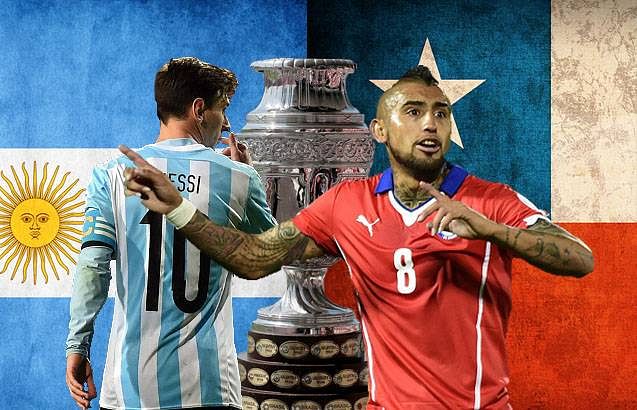
المباراة النهائية: تشيلي – الأرجنتين: 0-0 (4-1 بضربات الترجيح)

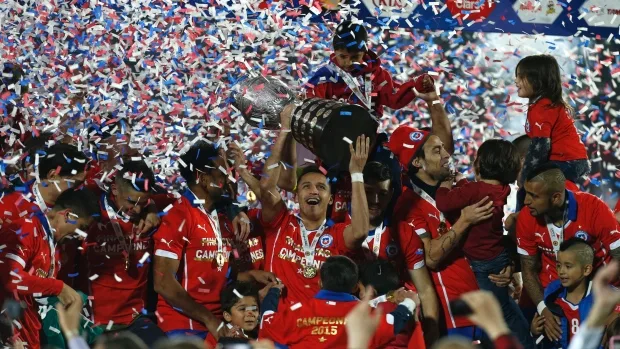
وأخيرًا فعلها الأبطال الحمر، وافرحوا شعبًا لطالما انتظر هذه اللحظة، بلقبٍ عزّ عليهم على مدى 99 عامًا، وذلك بعد أداءٍ بطوليّ لم يدّخروا فيه قطرة عرقٍ واحدةٍ في سبيل تحقيق حلم جماهيرهم التي احتشدت في الملعب الوطني للعاصمة سانتياغو، فصمدوا في وجه منتخبٍ يفوقهم عدّةً وعتادًا، بل يفوق أغلب منتخبات العالم حاليًا، هو المنتخب الآرجنتيني وصيف بطل كأس العالم الأخيرة، الذي عاد يجر أذيال الخيبة للمرة الثانية خلال أقل من عام، بعدما لامس حلم الفوز بالبطولة دون أن يطاله، ليستمر صيامه عن الألقاب منذ عام 1993، رغم امتلاكه جيلًا ذهبيًا تحسده عليه جلّ منتخبات العالم، يقوده الأسطورة ليونيل ميسي، الذي حقّق جميع الألقاب الممكنة مع ناديه برشلونة، دون أن يتمكّن من تصدير نجاحاته إلى منتخب بلاده، ففشل مرّة أخرى في الاختبار، وكان شبحًا لميسي برشلونة، واستسلم للرقابة والضغط العالي الذي فرضه عليه مدافعو تشيلي، فعطّلوا بذلك أهمّ أسلحة التانغو، وساهمت إصابة دي ماريا في منتصف الشوط الأول في تسهيل مهمة التشيليين، فاستطاعوا فرض إيقاعهم على جلّ فترات المباراة، التي لم تشهد فرصًا حقيقيةً للتهديف خلال أشواطها الأربعة إلا فيما ندر، ليتكرر سيناريو ركلات الترجيح للمرة الثالثة في هذه البطولة، والثانية مع أبناء التانغو، الذين عبس الحظ في وجههم هذه المرّة، وابتسم في وجه رفاق فيدال وأليكسيس وفارغاس وبرافو وفالديفيا وميديل وأرانغويز وإيسلا، ليكتبوا تاريخًا جديدًا لبلادهم، ويحفروا أسماءهم بأحرف من ذهبٍ في خلد كل مواطن من الشعب التشيلي العاشق للكرة حتى النخاع.

لقطات وإحصائيات من البطولة

نون بوست

– تصدر كل من التشيلي إدواردو فارغاس والبيروفي باولو غيريرو – هداف البطولة السابقة – قائمة هدافي البطولة الحالية برصيد أربعة أهداف لكل منهما، تلاهما كل من الأرجنتيني سيرخيو أغويرو والتشيلي أرتورو فيدال والباراغواني لوكاس باريوس بثلاثة أهداف لكل منهم.

– رغم اكتفائه بتسجيل هدفٍ وحيدٍ ومن ركلة جزاء، اختارت اللجنة المنظمة للبطولة الأرجنتيني ليونيل ميسي كأفضل لاعب في البطولة، فيما اختير التشيلي المتألق كلاوديو برافو كأفضل حارس، والمدافع الكولومبي الشاب جايسون موريلو كأفضل لاعب واعد.

– بلغ عدد مباريات البطولة 26، سُجل خلالها 59 هدفًا بزيادة خمسة أهداف عن البطولة السابقة التي استضافتها الأرجنتين عام 2011، واستحق المنتخب التشيلي لقب الهجوم الأقوى بتسجيله 13 هدفًا، تلاه المنتخب الأرجنتيني بعشرة أهداف، أما أضعف خط هجوم فكان لمنتخب جامايكا الذي خرج من البطولة صفر الأهداف.

– سجلت هذه البطولة سبقًا خاصًا تمثل بتواجد أربعة مدربين أرجنتينيين في دورها نصف النهائي، هم خورخي سامباولي مدرب تشيلي، ورامون دياز مدرب الباراغواي، وريكاردو غاريكا مدرب البيرو، إضافة إلى تاتا مارتينو مدرب منتخب التانغو.

– بفوزه في نهائي سانتياغو، حجز المنتخب التشيلي مقعده في بطولة كأس القارات التي ستقام عام 2017 في روسيا، بوصفه ممثلًا عن قارة أمريكا الجنوبية، لينضم إلى منتخبات ألمانيا بطلة العالم، وروسيا المستضيفة، وأستراليا بطلة أسيا، بانتظار أبطال القارات الأربع المتبقية.

– ماتزال الأورغواي منفردةً بالرقم القياسي لعدد مرات الفوز بالبطولة برصيد 15 لقبًا، بعد أن أضاعت الأرجنتين فرصة معادلتها، لتبقى في المركز الثاني بـ 14 لقبًا، تليها البرازيل بثمانية ألقاب، ومن ثم كل من البارغواي والبيرو بلقبين لكل منهما، وتتساوى ثلاث منتخبات برصيد لقب واحد هي بوليفيا وكولومبيا وتشيلي التي سجلت اسمها مؤخرًا، فيما عجزت منتخبات الإكوادور وفينزويلا عن تحقيق أي لقب.

TAGGED: الساحرة المستديرة ، كرة قدم ، كوبا أمريكا
TAGGED: كرة القدم
Download this article as PDF
Share this Article
Facebook Twitter Whatsapp Whatsapp Telegram Email Copy Link
أيهم المدرس
By أيهم المدرس كاتب سوري مهتم بالشأن الرياضي
Follow:
Next Article نون بوست The Stigma of “ISIS”: A Heavy Legacy Haunting Women and Children of Former Members
part of the design
NoonPost Weekly Newsletter
dark

An independent media platform founded in 2013, rooted in slow journalism, producing in-depth reports, analysis, and multimedia content to offer deeper perspectives on the news, led by a diverse young team from several Arab countries.

  • Politics
  • Society
  • Rights & Liberties
  • Opinions
  • History
  • Sports
  • Education
  • Technology
  • Economy
  • Media
  • Arts & Literature
  • Entrepreneurship
  • Travel
  • Cinema & Drama
  • Food
  • Health
  • Culture
  • Latest Reports
  • Files
  • Long Reads
  • Interviews
  • Podcast
  • Interactive
  • Encyclopedia
  • In Pictures
  • About Us
  • Our Writers
  • Write for Us
  • Editorial Policy
  • Advanced Search
Some rights reserved under a Creative Commons license

Removed from favorites

Undo
Go to mobile version