




The year 2025 was far from ordinary in the history of Israeli politics. It served as a harsh litmus test for the structures of governance, security, and society alike. Amid an open-ended war with no clear horizon, Israel experienced a profound unraveling of its deterrence architecture and an accumulation of internal crises that were forcibly postponed under the weight of ongoing conflict.
Since October 7, Israel has found itself trapped in a political quagmire managing failure more than resolving it, and attempting to impose realities through force rather than providing strategic answers to the fundamental questions sparked by that day’s events.
Throughout the year, the Israeli government appeared as preoccupied with securing its political survival as with waging the war itself. Tensions between political and military leadership mounted over responsibility and strategic options, while divisions within Israeli society deepened.
The public found itself suspended between a mobilizing rhetoric that promised decisive victory and an increasingly burdensome and draining reality militarily, economically, and socially.
Meanwhile, no genuine political approach to the Palestinians emerged; instead, there were continued attempts to resolve the conflict through brute force.
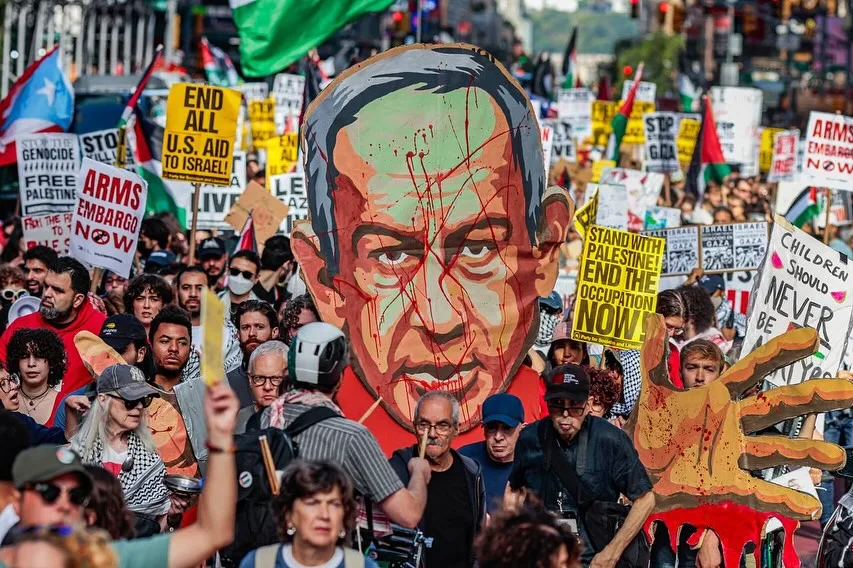
Externally, Israel endured a difficult year for its global image and standing. International criticism intensified, traditional narratives eroded, and the war on Gaza became a growing political, legal, and moral liability despite continued U.S. support in various forms.
Between a fractured home front and a shifting international landscape, Israeli politics closed out 2025 with no clear answers for the so-called “day after.” Instead, it accumulated indicators of a deeper crisis, one poised either to explode or undergo a fundamental transformation in the coming phase.
The Israeli Government: Forced Cohesion, Structural Division
Entering 2025, the Israeli government was burdened by a heavy legacy of political and security failures. Yet the war also offered it a temporary shield against internal collapse. Prime Minister Benjamin Netanyahu treated the continuation of the war as much a political necessity as a security choice.
The “state of war” provided a convenient pretext to freeze domestic obligations, postpone leadership accountability, and reorder national priorities around a single goal: survival.
Outwardly, the governing coalition remained intact, avoiding official dissolution despite deep internal disagreements. However, this cohesion was largely the product of mutual fear among its components.
Netanyahu, facing both internal credibility crises and postponed legal battles, could not afford early elections. Meanwhile, his far-right partners feared political backlash or being blamed for government collapse if they acted during wartime.
Beneath the surface, 2025 revealed a structural schism within the government itself between two opposing logics: one ideological, seeking to leverage the war to expand right-wing dominance and territorial control; the other pragmatic and security-oriented, wary of the limits of force and the costs of prolonged attrition.
This contradiction manifested in repeated disputes over settler violence, formal annexation efforts in the West Bank, regional escalation boundaries, conscription of ultra-Orthodox Jews, and Gaza’s future all unresolved without a coherent strategic vision.
Security and Military Establishment: From Deterrence Doctrine to Managing Failure
For Israel’s security and military establishment, 2025 was a watershed year not only because the war continued, but due to the deep exposure of national security vulnerabilities since October 7.
Long perceived as the “people’s army,” backbone of the state, and guardian of deterrence and stability, the military found itself at the epicenter of one of Israel’s gravest intelligence and operational failures.
Over the course of the year, its role shifted more toward managing the consequences of failure than restoring its image or reestablishing credible deterrence. Internally, both the Israeli army and Shin Bet embarked on incomplete internal reviews, overshadowed by defensive posturing and blame-shifting amid political pressures that blocked the formation of comprehensive, independent investigative commissions.
While the IDF leadership tried to conduct internal reviews, the political echelon sought to fragment accountability and manipulate the crisis to reshape power dynamics within the state, rather than facilitate a systemic reckoning.
Operationally, military campaigns in 2025 revealed a sharp decline in the IDF’s capacity to secure swift victories or meaningful, marketable gains. The protracted conflict, marked by incremental advances and attrition, drained human and logistical resources without delivering on the promise of “decisive victory.”
This marked a profound shift away from Israel’s traditional military doctrine, built on swift, overwhelming strikes and battlefield dominance.
This reality forced the military to reassess its evolving security doctrine promoted post-October 7 which emphasized preemptive strikes, expanded offensive operations, and a multi-layered deterrence system. Yet such a doctrine demands constant intelligence vigilance, wide force deployment across all borders, and long-range strike capabilities posing immense logistical and personnel burdens.
As the war dragged on and fronts multiplied, even within military circles doubts grew over the sustainability of this strategy especially amid a shifting Middle East and rising skepticism about Israel’s deterrence capabilities. Despite unprecedented military strikes, strategic goals remained unfulfilled, leaving the military operating under growing constraints not just of force but of endurance.
Concurrently, Netanyahu exploited this turmoil to assert greater political control over the military and intelligence sectors. He viewed the security failure not as a crisis warranting independent accountability, but as an opportunity to restructure what he considers Israel’s “deep state” to align more closely with his political agenda.
This led to early tensions between Netanyahu and newly appointed Chief of Staff Herzi Halevi’s successor, Eyal Zamir, who repeatedly offered more cautious operational assessments, diverging from Netanyahu’s aggressive posture. Zamir faced increasing political pressure aimed at curbing military independence especially regarding war management and post-war scenarios.
One of the most prominent clashes came with former Shin Bet chief Ronen Bar, whose dispute with Netanyahu escalated from a professional disagreement into a political-legal showdown. Netanyahu ultimately prevailed, appointing right-wing military figure David Zini to lead Shin Bet, consolidating his grip over one of the state’s most sensitive security institutions and neutralizing potential internal opposition.
Publicly, these shifts impacted the security establishment’s image. Families of soldiers, reservists, and segments of the former military elite voiced growing frustration, questioning the war’s purpose and the lack of a political vision that might justify the mounting human cost.
Externally, the military’s image also suffered, as allegations of war crimes and legal challenges targeting IDF personnel surged across international jurisdictions. These developments restricted operational freedom and intensified political and legal risk calculations.
Israeli Society: Fractured Within, Eroding the Idea of a “Safe Haven”
Israeli society was among the most fragile and affected arenas in 2025, deeply shaken by the war and political crisis. The initial unity that followed October 7 gradually dissolved into fatigue, doubt, and conflicting narratives about the war’s goals and limits.
The fractures were clearest in the widening rift between the government and growing societal segments—especially families of soldiers, captives, and reservists who shifted from passive support to active protest, demanding clear answers about their loved ones and questioning the rationale behind a seemingly endless war with no political horizon.
The absence of a post-war vision fueled skepticism about the narrative of open-ended sacrifice and the political leadership’s ability to translate losses into strategic gains.
One of the most alarming indicators was a surge in negative migration a signal of waning social cohesion and confidence in the state’s future. Israel registered its lowest population growth rate since its founding, around 0.9%. Birth and death rates remained positive, but a sharp imbalance in migration caused the decline.
According to Professor Sergio DellaPergola, roughly 69,000 residents left Israel and had not returned after nine months or more, while only around 25,000 returned. New immigrant numbers also dropped significantly from 30,000 in 2024 to about 20,000 in 2025 resulting in a net population loss of nearly 30,000 people in one year.
More concerning than the numbers was the profile of those leaving: educated young adults aged 25–40 the demographic most critical to national productivity and innovation. DellaPergola attributed the trend to a combination of factors: war-induced fatigue, economic uncertainty, deep political divisions, and systemic inequities in military conscription, with some reservists serving hundreds of days while others were completely exempt.
Despite relatively positive macroeconomic indicators like low unemployment and a strong shekel, daily life painted a bleaker picture. Rising living costs, surging housing prices, and declining purchasing power pushed many toward lucrative opportunities abroad. Experts warned of a potential brain drain, especially in sensitive sectors like healthcare and technology, undermining long-term national resilience.
Simultaneously, Israel’s entrenched societal divides resurfaced more sharply. The rift between right-wing religious factions and the secular center-left was not frozen by war as often claimed but reproduced within it.
This polarization extended to Jewish diaspora communities, increasingly hesitant to align with a government accused of undermining judicial independence and exploiting the war for domestic political ends.
Managing Conflict Through Force and Engineering Geography and Demographics
In 2025, Israel’s policy toward the Palestinians continued to be shaped by a singular security-driven framework, with no serious effort to craft a viable political horizon. More than a year after the war began, Israel failed to present a clear vision for the “day after.” Instead, it focused on consolidating new on-the-ground realities and reorganizing violence in service of strategic goals without addressing the conflict’s root causes.
In Gaza, Israel did not aim to end the war or shift toward a political track. Instead, it sought to transform the ceasefire agreement based on U.S. President Donald Trump’s 20-point initiative and Security Council parameters into a mechanism for managing low-intensity warfare.
The agreement was instrumentalized not to stop the violence but to systematize it, repackaging ongoing destruction and deprivation into a sustainable condition where calibrated levels of killing, starvation, and demolition serve incremental Israeli objectives without incurring the political or legal costs of open war.
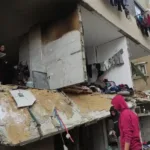
In the West Bank, Israeli escalation surpassed conventional security operations, becoming structural and expansive in nature. The centerpiece was a concentrated military campaign in the northern West Bank, especially in the refugee camps of Jenin, Tulkarem, and Nur Shams.
The campaign aimed at the wholesale restructuring of these areas, involving widespread destruction of infrastructure, dismantling of the camps’ urban fabric, and forced displacement of an estimated 60,000 residents.
This policy sought to erase the refugee camp as both a physical and symbolic space undermining its political memory and transforming it into a generic urban zone integrated into nearby cities. By erasing its distinct identity, the policy advanced the de facto erasure of the right of return from the spatial and collective Palestinian consciousness.
Concurrently, the West Bank was effectively transformed into a fragmented archipelago of cantons, severed by hundreds of military checkpoints and roadblocks. This obliterated geographic contiguity and turned everyday Palestinian life into a cycle of forced navigation through barriers.
In Jerusalem, 2025 witnessed unprecedented levels of Judaization. The Al-Aqsa Mosque compound saw over 70,000 settler incursions, along with the introduction of new Talmudic rituals in its courtyards and a sharp rise in expulsion orders. Even prayer for Gaza during Friday sermons became grounds for punitive measures.
The policy of systematic Israelization of education also intensified, with the closure of dozens of schools and the imposition of Israeli curricula. Simultaneously, UNRWA operations were halted in Jerusalem and its refugee camps notably Qalandiya and Shuafat in a clear effort to strip refugee status both politically and legally, and rebrand the city with an exclusively settler identity.
In Hebron, control over the Ibrahimi Mosque was further solidified through its transfer to a “Religious Council” based in the Kiryat Arba settlement. This step laid the groundwork for near-total Israeli control over Hebron’s Old City, integrating it into the settler administrative apparatus.
The move extended beyond religious governance it was part of a broader strategy to reengineer the city’s urban and sovereign landscape.
This trajectory epitomized the “creeping annexation” that defined Israel’s 2025 agenda, aligning with Finance Minister Bezalel Smotrich’s declaration of the year as the “Year of Sovereignty over the West Bank.”
Annexation proceeded in practice through the legalization of settlement outposts, accelerated land seizures, and a gradual shift from Area C to Area B territories nominally under Palestinian Authority control. The strategy aimed at a de facto land grab with minimal political or legal cost.
Regional Aggression: Unchecked Belligerence and the Limits of Israeli Power
In 2025, Israel’s regional conduct reached unprecedented levels of aggression surpassing deterrence to what can be termed regional belligerence. Israel expanded its military strikes and operations beyond Palestine, normalizing violations of the sovereignty and territorial integrity of neighboring countries as routine tools of conflict management.
From Palestine to Lebanon, Syria, and Yemen, and even into direct confrontations with Iran, Israel operated as if unrestrained. The aim was to project an image of a state capable of striking in all directions, free from political or strategic constraints.
The pinnacle of this behavior was the airstrike on Doha, which targeted a Hamas negotiation delegation. This strike flagrantly violated diplomatic norms and sent a clear message: Israel now viewed regional capitals as legitimate arenas of pressure and coercion. It signaled a shift toward a psychological and political deterrence doctrine that exceeded the military domain.
Within this context, a new Israeli approach emerged: “coercive normalization.” This strategy operated on the premise that no de-escalation especially in Lebanon or Syria would be possible without normalization and acquiescence to Israeli security and political demands.
This included efforts to establish effective or indirect Israeli control over strategic zones in southern Lebanon and southern Syria as preconditions for a “partial calm” that would serve Israeli interests without offering reciprocal political gains to the other side.
But 2025 ultimately revealed the limits of this doctrine. Israel failed to disarm Hezbollah, to establish demilitarized zones in Syria with state consent, or to neutralize Iran’s military programs. On the contrary, Israel’s aggressive posture helped revive a counter-narrative across the region centered on the need for collective deterrence and resistance, rather than compliance with threats.
The Doha airstrike in particular raised alarm across the region including among U.S. allies. It was not merely seen as a threat to Israel’s enemies, but as a destabilizing signal for regional security architectures.
As a result, several states increased pressure on the U.S. to rein in Israeli actions and sought additional security guarantees, including major arms deals—chiefly F-35s—and expanded bilateral and multilateral defense agreements.
Ironically, instead of reinforcing deterrence, Israel’s behavior generated a backlash. The coordinated regional push—including efforts by eight Arab and Muslim nations for a Gaza ceasefire was one reflection of this counter-pressure. Their role in shaping post-war negotiations, particularly by Turkey, Egypt, and Qatar, complicated Israeli ambitions to translate Donald Trump’s plan into a one-sided strategic victory.
Israel and the World: Diminishing Status and the Collapse of Its Narrative
The year 2025 proved one of the most damaging to Israel’s international image and standing in decades. The ongoing war and unchecked use of force became an escalating diplomatic, legal, and moral liability.
Despite military superiority and sustained Western backing, Israel struggled to maintain its self-portrayal as a “nation under threat.” Instead, it was increasingly seen as an occupying power employing disproportionate violence without a political horizon weakening its once-potent narrative, a cornerstone of its strategic posture.
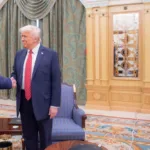
With the United States, Israel continued to rely on military and political support especially under President Trump, who provided sweeping cover for Israeli operations and worked to reshape the war and ceasefire into an Israeli political win.
Yet even this backing came with growing American efforts to temper Israeli behavior and prevent full-blown regional escalation, amid rising concerns about the broader impact on regional stability and U.S. interests.
Israel’s ties with Europe, however, deteriorated sharply. As the war dragged on and destruction mounted, European criticism intensified, shifting from cautious diplomatic statements to open pressure. This included calls for a ceasefire, arms export reviews, support for international legal proceedings, and growing endorsements of Palestinian statehood.
Traditional European alignment with Israeli narratives was no longer guaranteed. Instead, it became conditional and hotly contested within parliaments and public opinion—exposing a widening gap between official positions and societal sentiment across the continent.
Legally, 2025 saw an unprecedented escalation in international legal pressure. Proceedings advanced through both the International Court of Justice and the International Criminal Court.
While Israel downplayed these moves as politically motivated, they nonetheless constrained its political maneuverability and painted Israel as a legally embattled, rather than legally proactive, state.
Media-wise, 2025 marked the peak of Israel’s narrative collapse. As official claims lost credibility, and digital media platforms proliferated with visual evidence from Gaza and the West Bank, Israel could no longer monopolize the framing of “self-defense.”
On the contrary, the Palestinian narrative reached unprecedented visibility across global media, academic, labor, and human rights spheres reshaping the international perception of the conflict as one of colonialism and rights, not just security.
Surplus Force Without Victory: A Crisis Set to Spill Over
In sum, 2025 revealed that despite Israel’s overwhelming use of force, genocidal campaign against Palestinians, and rampant regional aggression, it failed to decisively win any of its major battles. Gaza remained unconquered, the West Bank unpacified, the region unstable, and deterrence unredeemed.
This accumulation of failure has shattered the “total victory” narrative championed by Netanyahu for the past two years laying bare its implausibility. Facing this impasse, Netanyahu appears poised not to resolve the crisis but to prolong it, likely turning the coming year into another cycle of regional escalation.
He seems ready to bypass or reframe existing ceasefires as mechanisms to contain Israel’s adversaries while granting the IDF near-complete freedom to conduct operations without binding political constraints.
Domestically, the outlook points to deepening political paralysis amid the looming elections. According to the latest polls published in Maariv at year’s end, Netanyahu’s bloc rose to 52 seats benefiting from a two-seat bump for Likud while the opposition bloc stood at 58, with the Arab lists holding 10 seats evenly split. Neither side holds a clear path to forming a stable coalition.
This sets the stage for another round of electoral limbo and chronic political instability at a time when Netanyahu’s eyes remain fixed on continued U.S. support, not only for geopolitical cover but as a potential legal and political lifeline. He hopes such backing could enable a pardon or grant him “political immunity,” allowing him to remain in power and postpone reckoning over corruption charges and accountability for security failures.
Ultimately, Israel’s internal landscape suggests that the next phase will likely involve exporting crises outward, amplifying the sound of war to mask widening internal fractures. Netanyahu’s strategy hinges on freezing his personal and political dilemmas for as long as possible burying them under rubble and escalation.
But even if successful in the short term, this approach only deepens the underlying tensions, raising the future cost of continuity both domestically and across the region.