NoonPost NoonPost

NoonPost

  • Home
  • Politics
  • Economy
  • Society
  • Culture
  • Files
  • Long Reads
  • Podcast
AR
Notification Show More
نون بوست
“There Are Nights I Can’t Close My Eyes”: How Gazans Are Living in Homes on the Brink of Collapse
نون بوست
From al-Jolani to Ahmad al-Shara: The Evolution of Syria’s New Leader
نون بوست
When Political Islam Receded in Egypt: Who Filled the Void?
نون بوست
An Extension of Genocide: Gaza’s Detainees Speak Out
نون بوست
A Tightrope Between Survival and Sovereignty: The Syrian Government Faces Normalization Pressures
نون بوست
American Aircraft Carriers: Has the Era of “100,000 Tons of Diplomacy” Ended?
نون بوست
U.S. Regime‑Change Policies: Why They Are Destined to Fail
نون بوست
Transformations of Israeli Judaism: Between the Victim Complex and the Colonizer’s Doctrine
نون بوست
The Gulf’s Balancing Act: Iran, Israel, and Hidden Links
نون بوست
Iraq–Turkey Oil Export Treaty: Why Did Ankara Cancel It After 52 Years?
نون بوست
Syria’s Northeast on Edge: QSD Between Ankara and Damascus
نون بوست
Has Europe Changed Its Stance on Israel… or Just Its Language?
NoonPost NoonPost
AR
Notification Show More
نون بوست
“There Are Nights I Can’t Close My Eyes”: How Gazans Are Living in Homes on the Brink of Collapse
نون بوست
From al-Jolani to Ahmad al-Shara: The Evolution of Syria’s New Leader
نون بوست
When Political Islam Receded in Egypt: Who Filled the Void?
نون بوست
An Extension of Genocide: Gaza’s Detainees Speak Out
نون بوست
A Tightrope Between Survival and Sovereignty: The Syrian Government Faces Normalization Pressures
نون بوست
American Aircraft Carriers: Has the Era of “100,000 Tons of Diplomacy” Ended?
نون بوست
U.S. Regime‑Change Policies: Why They Are Destined to Fail
نون بوست
Transformations of Israeli Judaism: Between the Victim Complex and the Colonizer’s Doctrine
نون بوست
The Gulf’s Balancing Act: Iran, Israel, and Hidden Links
نون بوست
Iraq–Turkey Oil Export Treaty: Why Did Ankara Cancel It After 52 Years?
نون بوست
Syria’s Northeast on Edge: QSD Between Ankara and Damascus
نون بوست
Has Europe Changed Its Stance on Israel… or Just Its Language?
Follow US

With Dogs and Batons: Harrowing Testimonies of Rape Inside Israeli Prisons

فريق التحرير
Noon Post Published 26 March ,2026
Share
نون بوست
نون بوست
Israeli prisons have entered a phase of systematic escalation against prisoners since Itamar Ben-Gvir took over the Ministry of National Security.

Warning: This report contains extremely graphic and distressing testimonies.

Day after day, shocking testimonies continue to surface, revealing that Palestinian detainees and even foreign solidarity activists have been subjected to unprecedented levels of torture and sexual abuse inside Israeli prisons.

Recently leaked video footage showed five Israeli soldiers beating, stripping, and raping a handcuffed Palestinian prisoner inside the Sde Teiman military camp in southern occupied Palestine. That incident, however, was merely the one captured on camera. Other accounts that have since emerged are even more brutal.

Below are some of the most prominent testimonies given by former detainees between 2023 and 2025, documenting the horrific sexual assaults they endured in Israeli prisons.

Sami Al‑Sa’i – Raped With a Baton

Journalist Sami Al‑Sa’i (44), from Tulkarm, was arrested by Israeli forces in the West Bank in February 2024. During 16 months of administrative detention, he endured what he describes as an unprecedented ordeal of torture:

Upon his arrival at Megiddo Prison, guards bound his hands and blindfolded him, then dragged him into a foul‑smelling room where a “bloody reception” began. They stripped him naked and forced him into a prostration position before inserting a baton into his anus. Four guards took turns raping him with it while he remained bound and blindfolded.

The pain, Al‑Sa’i recalls, was indescribable. The guards twisted the baton in all directions while one of them stomped on his head and neck, nearly crushing them. Others struck his genitals, threatening him: “We’ll bring all the journalists and do this to them. We’ll bring your wife, your sisters, your mother, and your son.”

He heard one soldier say, “Bring me a carrot,” before another object was inserted. Throughout the assault, the guards laughed and filmed what they were doing. When he screamed in agony, one of them yanked his testicles and pulled his penis to silence him.

The rape lasted roughly 25 minutes, during which Al‑Sa’i says he wished for death. When he later complained to the prison doctor, the doctor himself threatened to rape and beat him.

“Halim Salem” – Raped by a Dog

“Halim Salem” is a pseudonym for a Palestinian father from the West Bank who was arrested months after the outbreak of the Gaza war in 2023 and spent nearly a year in Israeli prisons. From the moment of his arrest, he says, he was subjected to the most brutal forms of torture.

One dawn at Ofer Prison, dozens of guards stormed the cells, threw stun grenades, and ordered prisoners to lie face‑down on the floor. Eleven detainees including Halim were handcuffed on the ground as guards trampled them “like carpets.”

Blindfolded, Halim was dragged to a restroom, beaten, and ordered to strip completely. His hands were bound behind his back and hoisted upward in a painful position, then he was forced to kneel with his head inside a toilet bowl.

While one guard kicked him violently in the genitals and another pressed a boot on his head, they brought in a trained dog. The dog lunged at Halim and raped him. “I felt its penis inside me,” he says.

When he screamed for help, he was beaten again his screams, the guards said, were “disturbing the dog.” The assault lasted several minutes as guards held him down, laughing. Afterwards, they threw him into the cold prison yard wearing only his underwear, still handcuffed, for six hours as further punishment.

The dog attack, Halim says, was only the culmination of a year of suffering. During body searches, guards routinely inserted their fingers into his anus under the pretext of searching for contraband.

“N. A.” – A Female Detainee Subjected to Repeated Rapes

In a report issued by the Palestinian Center for Human Rights in November 2025, several harrowing testimonies emerged from recently released detainees from Gaza.

Among them was a 42‑year‑old Palestinian mother, identified as “N. A.,” who was arrested at an Israeli checkpoint north of Gaza in November 2024.

On the fourth day of her detention, she was blindfolded and transferred to an unknown location. She was ordered to strip naked, her hands shackled to the edge of a metal bed, and her legs violently spread apart. Several Israeli soldiers pinned her onto a metal table, pressing her chest and head down, and gang‑raped her anally for about ten minutes.
نون بوست
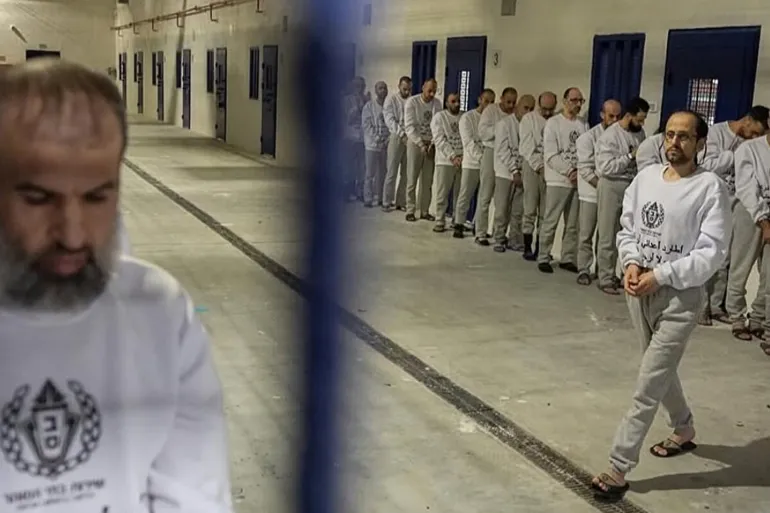
Videos have been leaked showing five Israeli soldiers assaulting, stripping, and raping a Palestinian prisoner.

After the first assault, they left her bound in the same position for an hour, writhing in pain, before returning to rape her again in the same manner. Whenever she screamed or tried to resist, they beat her.

She recalls hearing soldiers laughing and the sound of a camera taking photos. “I wished for death every moment,” she said.

After another hour of being left naked and restrained, additional soldiers entered the room and raped her vaginally, continuing to laugh and beat her whenever she screamed.

The following day, she was raped twice more in the same brutal fashion. About two days later, a masked soldier told her in Arabic, “I’m Russian,” removed her blindfold, and forced her into a degrading sexual act. When she refused, he beat her before raping her.

The ordeal lasted three hellish days. On the third day, she was left completely naked in her cell without food or water, while soldiers deliberately peered at her through the door slot and photographed her with their phones.

“A. A.” – Dogs That Urinate and Rape

Former detainee A. A., a 35‑year‑old Palestinian father of two, was held for around 19 months (March 2024–October 2025) at the Sde Teiman military camp after being arrested from inside Al‑Shifa Hospital in Gaza.

During one mass search operation, soldiers took him and other detainees to a corridor away from surveillance cameras, stripped them naked, and forced them to lie on the floor. Police dogs were unleashed on them, jumping on their bodies and urinating on them to humiliate them.

One dog then focused on A. A. and raped him from behind for about three minutes. He insists the dog was trained and knew exactly what it was doing—as if it had been conditioned for this act.

“I was left in an extremely fragile psychological state,” A. A. says. “I felt utterly humiliated. I never imagined something like this could happen to me.”

Afterwards, the soldiers left him lying there, shattered both physically and psychologically.

“T. Q.” – Raped Until He Lost Consciousness

T. Q. (41), a father, was arrested while fleeing with his family toward Kamal Adwan Hospital in northern Gaza in December 2023. He was held for 22 months and recounts a chilling testimony of systematic sexual torture.

On one occasion, an Israeli soldier raped him by violently inserting a wooden baton into his anus. After about a minute, the soldier pulled it out, then thrust it back in with even greater force, causing unbearable pain.

When T. Q. screamed, the soldier removed the baton again, forced him to open his mouth, and made him lick it while it was still covered in blood. Overwhelmed by humiliation and trauma, T. Q. lost consciousness for several minutes.

When he woke up, he found blood flowing from his anus due to severe tearing. He requested to go to the bathroom and saw the extent of the bleeding himself. He continued to suffer intense physical and psychological pain long afterward.

“M. A.” – Raped With Bottles

Another testimony documented by the rights group concerns M. A., an 18‑year‑old from Gaza who was arrested for the second time in 2024 near what he described as a supposed aid distribution center.

He says Israeli soldiers forced him and six other detainees to kneel, then raped them using a glass bottle. The bottle’s neck was repeatedly inserted and withdrawn from each detainee’s anus in turn.

M. A. says the bottle was thrust into him roughly ten times during each assault. He and the others screamed in agony. This happened to him four times during his detention—twice alone, and twice in groups, once with six detainees and once with twelve.

In one group assault, they were forced to watch one another being raped to maximize their humiliation. Soldiers even positioned a dog behind them as if it were participating, seemingly to instill further terror.

“These mass assaults crushed our dignity and shattered our psyches and any hope we had left in life,” M. A. said.

Anna Liedtke – Gang Rape

The abuse extended beyond Palestinian detainees to include foreigners. In late December 2025, German journalist Anna Liedtke (25) caused an international outcry when she revealed that she had been raped while in Israeli custody after participating in the “Convoy of Steadfastness,” a maritime effort to break the siege on Gaza.

Liedtke said she was detained for five days after Israeli forces intercepted the aid ship she was aboard in the fall of 2025. During transfers between detention facilities, soldiers subjected her to forced strip searches that included gang rape.

In her first public statement, she stressed that what she endured was not an isolated incident, but part of a broader pattern of systematic sexual torture inside Israeli prisons. She said she chose to break her silence to speak on behalf of all Palestinian men and women who have suffered sexual violence behind bars.

Israeli Calls to Legalize Rape

Most alarming of all, instead of accountability, extremist Israeli voices have openly called for the legalization of such crimes.

In August 2024, Israeli journalist Yehuda Shlesinger publicly called for legalizing and regulating the rape of Palestinian detainees, arguing they “deserve this punishment” and that rape would deter any future repetition of October 7, 2023.

In the same vein, Israeli soldier Meir Ben Shtreit one of the main suspects in the rape of a Palestinian detainee at Sde Teiman appeared masked on Israel’s Channel 14 to defend himself and his colleagues. Rather than showing remorse, he lashed out at Israeli journalist Guy Pelleg, who had exposed videos of the assaults, angrily asking: “Why did you do that? Why did you tarnish our image before the world?”

Since Itamar Ben‑Gvir assumed office as Israel’s minister of national security in late 2022, Israeli prisons have seen a systematic escalation against Palestinian detainees, beginning with the stripping away of basic living conditions and the transformation of rights into tools of punishment and humiliation.

After the events of October 7, 2023, this escalated dramatically. Prisons became arenas of vengeance, where starvation, medical neglect, torture, and rape intensified as part of a policy of collective punishment.

Ultimately, these collective testimonies reveal that sexual torture has become a systematic instrument of repression in Israeli prisons between 2023 and 2025, building on violations that have been documented for decades.

Download this article as PDF
Share this Article
Facebook Twitter Whatsapp Whatsapp Telegram Email Copy Link
فريق التحرير
By فريق التحرير تقارير يعدها فريق تحرير نون بوست.
Follow:
Previous Article نون بوست Experts Explain: How Arson Became a Tool of Systematic Displacement
Next Article نون بوست Turkey 2025: Turning the Page on the PKK and First Gains from Monetary Policy

Read More

  • U.S. Regime‑Change Policies: Why They Are Destined to Fail U.S. Regime‑Change Policies: Why They Are Destined to Fail
  • The Gulf’s Balancing Act: Iran, Israel, and Hidden Links
  • Iraq–Turkey Oil Export Treaty: Why Did Ankara Cancel It After 52 Years?
  • Syria’s Northeast on Edge: QSD Between Ankara and Damascus
  • Has Europe Changed Its Stance on Israel… or Just Its Language?
part of the design
NoonPost Weekly Newsletter

You May Also Like

U.S. Regime‑Change Policies: Why They Are Destined to Fail

U.S. Regime‑Change Policies: Why They Are Destined to Fail

إسراء سيد Esraa sayed 8 April ,2026
The Gulf’s Balancing Act: Iran, Israel, and Hidden Links

The Gulf’s Balancing Act: Iran, Israel, and Hidden Links

فريق التحرير Noon Post 8 April ,2026
Iraq–Turkey Oil Export Treaty: Why Did Ankara Cancel It After 52 Years?

Iraq–Turkey Oil Export Treaty: Why Did Ankara Cancel It After 52 Years?

فريق التحرير Noon Post 8 April ,2026

العبودية في موريتانيا: العدالة الاجتماعية هي الحل

فريق التحرير
Noon Post Published 2 August ,2015
Share
mauritanie

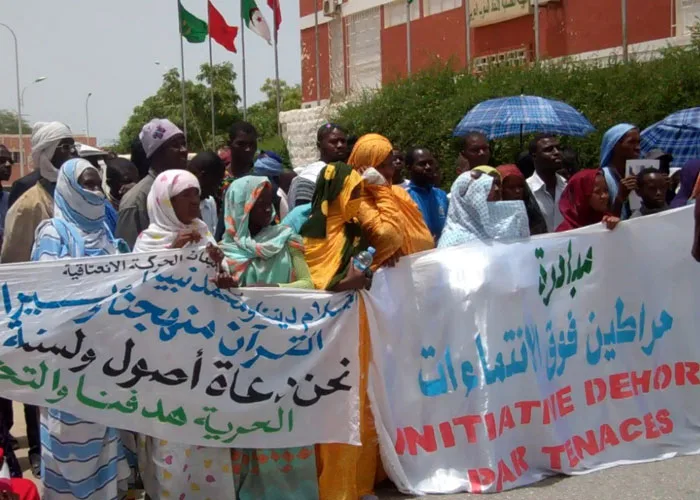
شهد الشارع الموريتاني، الخميس، مواجهات بين محتجين وقوات مكافحة الشغب على خلفية دعوة المبادرة من أجل انبعاث الحركة الانعتاقية “إيرا” المناهضة للعبودية لتظاهرات طالبوا فيها بإطلاق سراح كل من بيرام ولد الداه ولد اعبيد رئيس الحركة، وإبراهيم ولد بلال رمضان نائب الرئيس، الموقوفين بحكم قضائي منذ أشهر، ونتج عن هذه المواجهات بحسب مصادر غير حكومية جرح أربعة أشخاص وإصابة العديد من المتظاهرين بالإغماء، إضافة إلى اعتقال 20 شابًا من نشطاء “إيرا” لا يزالون قيد التحقيق إلى حدود الساعة.

وفي الحقيقة، هذه المظاهرات ليست الأولى من نوعها في موريتانيا، فرغم نفي السلطات الرسمية تواصل الرق في المجتمع، لايزال هذا الملف أحد المشاغل المتجددة مجتمعيًا.

حول العبودية في موريتانيا

تحتل موريتانيا المرتبة الأولى عالميًا في مؤشر العبودية، حسب إحصاءات 2014 التي أصدرتها مؤسسة Walk Free Foundation، غير أن الحكومة في موريتانيا تنفي انتشار العبودية بهذا القدر، وتعتبرها ممارسات فردية من مستعبدين خارج إطار القانون، الذي يجرم الاستعباد.

ورغم نفي السلطات الرسمية للظاهرة كسياسة دولة، إلا أنها تقر بأن “ممارسات” مرتبطة بالرق لا تزال موجودة في البلاد، وهو ما يعارضه باستمرارالمدافعون عن حقوق أبناء الأرقاء السابقين الذي يصرون على تأكيد وجود حالات من العبودية تمارس ضد العرب السود أو الحراطين كما يطلق عليهم في الشارع الموريتاني، مع تركزها أساسًا في المناطق القروية حيث يغيب نشاط الجمعيات والحركات الحقوقية.

من حيث التنظيم، تعتبر فئة الحراطين المبادرة من أجل انبعاث الحركة الانعتاقية “إيرا” أحد منابرها التي تخاطب بها السلطات المحلية والعالم، وتنادي هذه المبادرة منذ خمس عقود بتحقيق المساواة بين “البيضان” والزنوج ومحاربة الرق ومحو آثاره المتفشية في النسيج المجتمعي الموريتاني.

وقد ساهمت الضغوطات التي مارستها “إيرا” بدعم من جمعيات حقوقية دولية في إلغاء الرق ثلاث مرات كان آخرها سنة 1981، كما أصدر المُشرّع الموريتاني قانونًا يُجرّم العبودية بمظاهرها المختلفة سنة 2007، وحاول النظام الحاكم في عهد الرئيس معاوية ولد الطايع – الذي أزيح من الحكم بانقلاب عسكري – أن يحتوي أزمة الحراطين من خلال تعيين شخصيات اعتبارية منهم في مسؤوليات كبيرة داخل الدولة، إلا أن الأزمة على ما يبدو أعمق من هذه المعالجات السطحية.

ورغم تواجد شخصيات من فئة الحراطين في الصف الأول للدولة، مثل محمد ولد ابليل رئيس البرلمان، والصغير ولد مبارك رئيس المجلس الدستوري، تشهد جارة المغرب الغربية حراكًا متواصلاً تحت ذات العناوين: محاربة الرق والعبودية.

تجدر الإشارة إلى أن الخارطة العرقية للمجتمع الموريتاني تتكون من الحراطين والبيضان والقبائل الزنجية.

كيف تدخلت المؤسسة الدينية لتطويق الشرخ المجتمعي؟

عند البحث عن مواقف الدعاة في موريتانيا، تُصادفنا فتوى الداعية الموريتاني محمد الحسن ولد الددو، حول الرق، في أبريل ، التي أثارت جدلاً واسعًا في الشارع الموريتاني، خاصة أن موضوع محاربة آثار الرق يعد حديث الساعة في موريتانيا بعد إقرار قانون جديد يجرم الرق.

وقال الددو في فتواه إن ما شهدته البلاد من الرق مخالف للشريعة الإسلامية، وهو ما أثار غضب وزارة الشؤون الإسلامية التي ترى أن هذه الفتوى تنسف جهود الوزارة ورؤيتها في الموضوع، وكانت وزارة الشؤون الإسلامية الموريتانية قد نظمت ملتقى حول الرق قبل أشهر، كما أصدرت رابطة علماء موريتانيا فتوى تجرم ممارسة الرق مستقبليًا، ونظمت حملة ضد مخلفات الاسترقاق.

وقد احتفت حركة “إيرا” بفتوى “الددو”، وقالت في بيانها إن موقف الشيخ الددو من ظاهرة الاسترقاق ملأ الفراغ وأجاب على السؤال الأساسي بقوله إن الاسترقاق في موريتانيا “باطل شرعًا” من حيث الأصل، وطالبت الدولة الموريتانية بتبني فتوى الداعية الشهير والإعلان عن موقف رسمي جرئ من ظاهرة الاسترقاق، يحطم كل التابوهات ويتوعد من وصفتهم بـ “المجرمين الاستعباديين” بتطبيق القانون دون تمييز ولا تحيز، كما دعت النظام القائم في موريتانيا إلى الاعتذار باسم الدولة للأرقاء وأبنائهم عما لحق بأعراضهم وكرامتهم من ظلم و افتراء على الله ورسوله، وأن تفكر في أنجع الطرق للتعويض لهم.

وكررت حركة “إيرا” انتقاداتها لرابطة العلماء الموريتانيين (أكبر تجمع للعماء في البلاد) بخصوص بيان أصدرته في مارس الماضي تنفي فيه وجود أي حالة استرقاق في البلاد، وهو ما يتناقض تمامًا مع مواقف الحركة التي تؤكد وجود حالات عبودية واستغلال في القرى والأرياف والمناطق المعزولة.

القوانين والفتاوى وحدها لا تكفي

وعلى الرغم من أن العبودية مُجرّمة قانونًا ومحرّمة دينيًا وأن النصوص القانونية عمومًا مرضية للنشطاء الحقوقيين، إلا أن ذلك لم يقضِ على الظاهرة.

وبحسب بعض الناشطين، يعود ذلك إلى عدم الحزم في تطبيق القانون وبقائه حبيس الأوراق والدفاتر، فتطبيق القانون يحتاج قضاءً مستقلاً قويًا وهو ما لا يوجد في موريتانيا باعتبار أن الجسم القضائي “يُناصر الأقوياء”، ويسود إجماع لدى النشطاء المُناهضين للعبودية بأن ترسانة القوانين لا تعدو أن تكون سوى مُحاولات لتجميل صورة النظام وبحث عن توفير قابلية خارجية له بما يسمح له من جلب للأموال الأجنبية.

وتبقى هذه القوانين والفتاوى دون الجدوى المرجوة منها لسببين اثنين: الأول يتعلق بغياب الحزم في تطبيق القانون؛ ما يخلق حالة من الاستخفاف باعتبار أن مآلات مخالفته ليست مُقلقة بالشكل الذي ينبغي، والثاني يتعلق بحقيقة أن العبيد السابقين يُعانون، كنتيجة لاسترقاق ذويهم، من الفاقة والفقر ما يجعل من الاستعباد شرًا لا بد منه في غياب الآفاق والعدل في تقسيم الثروات؛ ما يجعلهم في حاجة دائمة لأسيادهم وقابلية للاستعباد شبيهة بقابلية الاستعمار التي تحدث عنها مالك بن نبي.

لا يمكن تخليص المجتمع الموريتاني من العبودية دون مُعالجة ترسباتها التي تشكّلت على مدى أجيال متعاقبة وأهمها التفكير في إعادة تقسيم الثروة الوطنية وخاصة الأراضي الزراعية بشكل ينفي الفوارق العرقية الكفيلة بتشكيل حقد اجتماعي بين مكونات المجتمع الواحد، فرغم ما قد يُخيل للمراقب من بعيد من مظهر سياسي وحقوقي للملف، فإنه يحوي في عمقه عنوانًا شاملاً وهو العدالة الاقتصادية والاجتماعية.

TAGGED: الحريات في موريتانيا ، الحقوق والحريات ، الرق ، العبودية
Download this article as PDF
Share this Article
Facebook Twitter Whatsapp Whatsapp Telegram Email Copy Link
فريق التحرير
By فريق التحرير تقارير يعدها فريق تحرير نون بوست.
Follow:
Next Article نون بوست The Stigma of “ISIS”: A Heavy Legacy Haunting Women and Children of Former Members

Read More

  • U.S. Regime‑Change Policies: Why They Are Destined to Fail U.S. Regime‑Change Policies: Why They Are Destined to Fail
  • The Gulf’s Balancing Act: Iran, Israel, and Hidden Links
  • Iraq–Turkey Oil Export Treaty: Why Did Ankara Cancel It After 52 Years?
  • Syria’s Northeast on Edge: QSD Between Ankara and Damascus
  • Has Europe Changed Its Stance on Israel… or Just Its Language?
part of the design
NoonPost Weekly Newsletter

You May Also Like

U.S. Regime‑Change Policies: Why They Are Destined to Fail

U.S. Regime‑Change Policies: Why They Are Destined to Fail

إسراء سيد Esraa sayed 8 April ,2026
The Gulf’s Balancing Act: Iran, Israel, and Hidden Links

The Gulf’s Balancing Act: Iran, Israel, and Hidden Links

فريق التحرير Noon Post 8 April ,2026
Iraq–Turkey Oil Export Treaty: Why Did Ankara Cancel It After 52 Years?

Iraq–Turkey Oil Export Treaty: Why Did Ankara Cancel It After 52 Years?

فريق التحرير Noon Post 8 April ,2026
dark

An independent media platform founded in 2013, rooted in slow journalism, producing in-depth reports, analysis, and multimedia content to offer deeper perspectives on the news, led by a diverse young team from several Arab countries.

  • Politics
  • Society
  • Rights & Liberties
  • Opinions
  • History
  • Sports
  • Education
  • Technology
  • Economy
  • Media
  • Arts & Literature
  • Entrepreneurship
  • Travel
  • Cinema & Drama
  • Food
  • Health
  • Culture
  • Latest Reports
  • Files
  • Long Reads
  • Interviews
  • Podcast
  • Interactive
  • Encyclopedia
  • In Pictures
  • About Us
  • Our Writers
  • Write for Us
  • Editorial Policy
  • Advanced Search
Some rights reserved under a Creative Commons license

Removed from favorites

Undo
Go to mobile version