NoonPost NoonPost

NoonPost

  • Home
  • Politics
  • Economy
  • Society
  • Culture
  • Files
  • Long Reads
  • Podcast
AR
Notification Show More
نون بوست
“There Are Nights I Can’t Close My Eyes”: How Gazans Are Living in Homes on the Brink of Collapse
نون بوست
From al-Jolani to Ahmad al-Shara: The Evolution of Syria’s New Leader
نون بوست
When Political Islam Receded in Egypt: Who Filled the Void?
نون بوست
An Extension of Genocide: Gaza’s Detainees Speak Out
نون بوست
A Tightrope Between Survival and Sovereignty: The Syrian Government Faces Normalization Pressures
نون بوست
American Aircraft Carriers: Has the Era of “100,000 Tons of Diplomacy” Ended?
نون بوست
U.S. Regime‑Change Policies: Why They Are Destined to Fail
نون بوست
Transformations of Israeli Judaism: Between the Victim Complex and the Colonizer’s Doctrine
نون بوست
The Gulf’s Balancing Act: Iran, Israel, and Hidden Links
نون بوست
Iraq–Turkey Oil Export Treaty: Why Did Ankara Cancel It After 52 Years?
نون بوست
Syria’s Northeast on Edge: QSD Between Ankara and Damascus
نون بوست
Has Europe Changed Its Stance on Israel… or Just Its Language?
NoonPost NoonPost
AR
Notification Show More
نون بوست
“There Are Nights I Can’t Close My Eyes”: How Gazans Are Living in Homes on the Brink of Collapse
نون بوست
From al-Jolani to Ahmad al-Shara: The Evolution of Syria’s New Leader
نون بوست
When Political Islam Receded in Egypt: Who Filled the Void?
نون بوست
An Extension of Genocide: Gaza’s Detainees Speak Out
نون بوست
A Tightrope Between Survival and Sovereignty: The Syrian Government Faces Normalization Pressures
نون بوست
American Aircraft Carriers: Has the Era of “100,000 Tons of Diplomacy” Ended?
نون بوست
U.S. Regime‑Change Policies: Why They Are Destined to Fail
نون بوست
Transformations of Israeli Judaism: Between the Victim Complex and the Colonizer’s Doctrine
نون بوست
The Gulf’s Balancing Act: Iran, Israel, and Hidden Links
نون بوست
Iraq–Turkey Oil Export Treaty: Why Did Ankara Cancel It After 52 Years?
نون بوست
Syria’s Northeast on Edge: QSD Between Ankara and Damascus
نون بوست
Has Europe Changed Its Stance on Israel… or Just Its Language?
Follow US

The Bounds of the Possible and Impossible: Can Zohran Mamdani Really Change New York?

هبة بعيرات
Hiba Birat Published 26 March ,2026
Share
نون بوست
نون بوست

“The Big Apple” or “The City That Never Sleeps” New York is now handing over its keys to a young man of immigrant roots, a practicing Muslim with a socialist ideology. He represents a fundamentally different model from any of his predecessors in a city with a truly global identity.

This article sheds light on Zohran Mamdani’s program as the new Mayor of New York, exploring what he can realistically achieve, what lies beyond his authority, and whether he can genuinely reshape the face of this iconic city. We assess his potential impact on issues relevant to Arabs and Muslims from immigration, religious freedom, and national belonging to his relationship with Trump and whether the latter can derail the ambitious young mayor chosen by New York.

We also examine the complex dynamic between Mamdani and the city’s Jewish community one of the largest outside Israel and trace recent shifts within the Democratic Party. Are these changes tied to our region, or are they mere side effects of America’s political turbulence?

A former Dutch colony once called “New Netherland,” New York today is one of the world’s most dynamic and complex cities, with a population nearing 8.5 million, a workforce of over 300,000, a police force of nearly 35,000, and a budget exceeding $120 billion. Its GDP rivals that of ten countries combined, reaching $1.3 trillion. Millions of children attend its public schools, and just as many ride its public transit daily.

Mamdani now oversees all this with considerable authority. His campaign carried lofty promises—some labeled them dreamy, others saw real hope for change. Since assuming office in January 2026 for a four-year term, the question remains: can Mamdani deliver on his promises? What are his powers? What constraints does he face? What forces may help—or hinder—his agenda? This article explores these questions in depth.

Between the City Council and the Governor: Who Holds the Mayor in Check?
Mamdani is not new to politics. Despite his youth, he has served in public office since 2021 as a state assemblyman representing Astoria in Queens. But the mayoralty is a different beast altogether he is now the city’s chief executive, with vast powers.

He appoints and dismisses commissioners of about 30 key city agencies police, fire, transportation, finance, cultural affairs, small business services, and many more. He also oversees more than 200 committees and councils that govern housing, complaints, economic development, infrastructure, and beyond.

His role impacts city contracts and includes appointing judges to criminal and family courts, and temporarily to civil courts. Mamdani also sits on the boards of public libraries, museums, arts centers, parks, hospitals, and the city’s health corporation.

Yet despite his sweeping powers, the mayor remains one actor within a broader system of checks and balances. The State Legislature in Albany, composed of the State Senate and Assembly, operates much like a state-level Congress. Above all stands the Governor, whose jurisdiction includes New York City.

The relationship between city and state is fraught, shaped by shifting alliances and competing interests. Mayors have often clashed not with federal Republican governments, but with their own state’s Democratic leadership. Former Mayor Bill de Blasio (2014–2021) was famously stymied by Governor Andrew Cuomo (2011–2021)—ironically, Mamdani’s rival in the mayoral race who blocked de Blasio’s proposal to tax the wealthy to fund universal pre-K, striking a deal with state Republicans instead.

In contrast, former Mayor Michael Bloomberg understood these constraints well. Rather than confront the city’s power brokers, he focused on non-controversial goals: environmental reform, youth employment, and public health achieving success without altering the city’s deeper power structures.

Mamdani enjoys notable support from Governor Kathy Hochul and legislative leaders like State Senate Majority Leader Andrea Stewart-Cousins and Assembly Speaker Carl Heastie, who backed his campaign. But support is not guaranteed compliance.

Hochul is up for re-election in 2026 and may avoid alienating powerful donors by endorsing steep tax hikes. Moreover, Mamdani’s influence wanes outside New York City, limiting his leverage with legislators representing other districts.

Crucially, the City Council—New York’s legislative body—plays a pivotal role. Under the city’s separation of powers model, only the Council can pass laws on housing, labor, tech, safety, health, environment, and other daily concerns. The mayor may propose and sign bills—or veto them. The Council, however, can override a mayoral veto with a two-thirds vote.

Tensions are frequent. The Council has repeatedly overridden mayoral vetoes—on wage laws, business regulations, and police policies. Mayor Eric Adams’s objection to restricting liquor licenses in the Bronx, for instance, was dismissed due to public and commercial pressure.

Ultimately, the mayor must function as a central cog in the city’s machinery—success depends on compromise and coalition-building, not unilateral control.

From Top to Bottom: The Tax Debate

Taxes formed the cornerstone of Mamdani’s campaign. The fervent socialist pledged to raise taxes on the city’s ultra-wealthy figures like Michael Bloomberg, Ralph Lauren, Rupert Murdoch, Julia Koch, Stephen Schwarzman, and Chase Coleman. Many funded efforts to defeat him, pouring $40 million into campaigns supporting rivals like Andrew Cuomo and Curtis Sliwa via PACs like “Fix the City” and “Defend New York.”

While some of this opposition was rooted in pro-Israel and anti-Muslim sentiment, the lion’s share stemmed from Mamdani’s aggressive tax platform: $5 billion in levies on major corporations and capital gains, and a new tax on individuals earning over $1 million annually.

Yet Mamdani lacks unilateral authority to implement these hikes. While he controls the city’s budgetary planning, significant tax changes require approval from the Governor and both chambers of the State Legislature. Raising the corporate tax from 7.5% to 11.5%, for instance, hinges on his ability to forge alliances in Albany.

Critics argue that higher taxes will drive out businesses and residents. Some, like millionaire grocer John Catsimatidis, have threatened to relocate to New Jersey or Florida. Opponents claim this could tarnish New York’s global financial reputation.

Housing: New York’s Core Crisis
Skyrocketing rents plague New Yorkers, two-thirds of whom are renters. Citywide, housing costs are double the national average, and inflation continues to erode affordability. Although laws cap rent increases in certain pre-1974 buildings with six or more units, housing remains a flashpoint.

Mamdani pledged to freeze rent hikes during his term—a promise that helped him defeat Cuomo in the Democratic primary. He also vowed to build 200,000 permanently affordable housing units over the next decade and expand public housing programs.

As mayor, Mamdani appoints the nine-member Rent Guidelines Board, which sets annual rent adjustments. Though theoretically plausible, a rent freeze could backfire if not carefully managed, hurting small landlords struggling with inflation-driven maintenance costs. With nearly 1 million such units citywide, balance is critical.

Previous mayors have often sided with landlords. Mayor Eric Adams’s board approved a 4.5% increase on two-year leases and 3% on one-year leases—a move that Mamdani used as a rallying cry. Still, rent freezes are possible: Bill de Blasio enacted three during his tenure.

Public Transit: Right or Revenue Source?

Mamdani’s boldest transport pledge was free bus service. Public transit is New York’s lifeline, costing $21 billion annually, funded through fares, tolls, and taxes. Eliminating fares could create a shortfall of $600–800 million, requiring state-level approval and cross-agency support.

Mayor Eric Adams piloted free service on five bus routes from 2023 to 2024. The program ended due to high costs and traffic congestion, despite a 30% ridership boost. The state’s transportation authorities—and not the mayor—control most transit policy, complicating further efforts.

While Mamdani envisions free buses citywide, a limited rollout in low-income areas appears more feasible. His rival Cuomo criticized universal free transit as a burden that would benefit the wealthy unnecessarily.

Groceries and Basic Goods: Soviet Redux or Social Justice?

Mamdani also promised subsidized grocery stores offering low-cost essentials a $140 million annual commitment requiring City Council approval. Critics labeled it Soviet-style policy. Mamdani counters that city-owned stores, supported by public land and wholesale pricing, would serve each borough without undermining private grocers.

The concept isn’t new: New York already supports food security programs amid rising prices and widespread food insecurity. Cities like Madison, St. Paul, Chicago, and Atlanta run similar initiatives. Atlanta’s Mayor Andre Dickens defended his city’s public grocery plan, citing private-sector failures to meet the needs of marginalized communities.

Wages and Early Childhood Care

Mamdani proposed raising the minimum wage to $30/hour by 2030 double the current $15 baseline set in 2018. Critics warn of job losses and a shift to informal labor markets, but proponents argue it’s vital amid soaring living costs.

Another key proposal is free early childhood care (from six weeks to five years old), costing up to $6 billion annually. It enjoys the backing of Governor Hochul, who pledged to prioritize the plan in the next state budget.

Four Years to Test the Dream

According to Lynn Weikart, author of Mayor Michael Bloomberg: Limits of Power and professor of public administration at James Madison University, successful mayoral leadership requires smart staffing, realistic goal-setting, and deliverable outcomes. Recklessly challenging the system, she warns, invites institutional resistance.

This is precisely what Mamdani has set out to defy.

His victory rattled mainstream media and power centers. Critics hoped to discredit him, fueled by Islamophobia, xenophobia, and disdain for socialism. Yet beneath the pessimism lies real fear not that Mamdani will fail, but that he might succeed.

Success would not only transform Mamdani’s legacy but also empower the communities he represents. If he can upend the rules and turn New York into a city for all its people—not just the super-rich—it would be historic.

Skeptics cite the city’s entrenched elite and decades of failed reform. But Mamdani’s supporters argue that his promises are practical and necessary. Economist Maliha Safri, author of Solidarity Cities: Confronting Racial Capitalism and the Path to Change, says New York’s history from its unionized era in the 1930s–60s to its neoliberal turn in the 1970s shows it can be reclaimed by the people.

To her, Mamdani’s labor-inspired, anti-racist vision marks a return to democratic urban governance. While some of his goals exceed traditional mayoral powers, careful appointments, strategic alliances, and political savvy may allow Mamdani to deliver real change.

Whether New York becomes a city for its people or remains a playground for the elite may well be decided in the next four years.

Download this article as PDF
Share this Article
Facebook Twitter Whatsapp Whatsapp Telegram Email Copy Link
هبة بعيرات
By هبة بعيرات كاتبة، ومحامية ممارسة في ولاية نيويورك الأمريكية، ماجستير في القانون الدولي وحقوق الإنسان.
Follow:
Previous Article نون بوست The killing of Abu Ubaida… Gaza’s Voice and an Icon of Its Resistance
Next Article نون بوست Prosecutions and Sentences: How Many Iraqis Are Fighting in Ukraine?

Read More

  • U.S. Regime‑Change Policies: Why They Are Destined to Fail U.S. Regime‑Change Policies: Why They Are Destined to Fail
  • The Gulf’s Balancing Act: Iran, Israel, and Hidden Links
  • Iraq–Turkey Oil Export Treaty: Why Did Ankara Cancel It After 52 Years?
  • Syria’s Northeast on Edge: QSD Between Ankara and Damascus
  • Has Europe Changed Its Stance on Israel… or Just Its Language?
part of the design
NoonPost Weekly Newsletter

You May Also Like

U.S. Regime‑Change Policies: Why They Are Destined to Fail

U.S. Regime‑Change Policies: Why They Are Destined to Fail

إسراء سيد Esraa sayed 8 April ,2026
The Gulf’s Balancing Act: Iran, Israel, and Hidden Links

The Gulf’s Balancing Act: Iran, Israel, and Hidden Links

فريق التحرير Noon Post 8 April ,2026
Iraq–Turkey Oil Export Treaty: Why Did Ankara Cancel It After 52 Years?

Iraq–Turkey Oil Export Treaty: Why Did Ankara Cancel It After 52 Years?

فريق التحرير Noon Post 8 April ,2026

السعودية قد تفلس حتى قبل ازدهار صناعة النفط في أمريكا

أمبروز إيفانز
أمبروز إيفانز Published 7 August ,2015
Share
_615585195_5

ترجمة وتحرير نون بوست

إذا كان مستقبل السوق النفطية صحيحًا، فإن المملكة العربية السعودية ستدخل في طور الأزمة في غضون عامين من الآن، وستتحول أزمتها إلى أزمة وجودية بحلول نهاية العقد الحالي.

السعر العقدي المحدد للنفط الخام الأمريكي الذي سيتم تسليمه في ديسمبر 2020 يبلغ حاليًا 62.05 دولار أميركي، وهذا يحمل في طياته تغييرًا جذريًا في المشهد الاقتصادي لمنطقة الشرق الأوسط، وللدول البترو-ريعية.

في نوفمبر الماضي، خاضت السعودية مقامرة ضخمة عندما توقفت عن دعم أسعار النفط، واختارت بدلًا من ذلك إغراق السوق وطرد المنافسين خلال الدورة الانكماشية، حيث عمدت لزيادة انتاجها إلى 10.6 مليون برميل يوميًا.

ويقول مصرف أميركا بأن منظمة أوبك “توهن بشكل متزايد” اليوم، حيث أغلق هذا الكارتل الكبير مكاتبه في فيينا بغية توفير بعض المال.

إذا كان الهدف من زيادة الإنتاج وتخفيض سعر النفط هو التضييق على صناعة النفط الصخري في الولايات المتحدة وخنقها، فإن السعوديين قد أساؤوا الحكم كثيرًا في هذا الموضوع، تمامًا كما أخطؤوا بالحكم على التهديد المتزايد للنفط الصخري خلال كل مرحلة من مراحل السنوات الـ8 الماضية، حيث يذكر تقرير الاستقرار المالي الصادر عن مؤسسة النقد العربي السعودي (البنك المركزي السعودي) الذي صدر مؤخرًا “أصبح واضحاً أن الدول المصدرة للنفط من خارج الأوبك لا تستجيب لأسعار النفط المنخفضة بالقدر المتصور سابقًا، على الأقل في المدى القصير”.

وتابع التقرير موضحًا “لقد كان الأثر الرئيس للأسعار المنخفضة الحالية هو الحد من عمليات الحفر للبحث عن آبار نفط جديدة، عوضًا عن الحد من تدفق النفط من الآبار الحالية، ولذا من المتوقع أن تؤثر الأسعار المنخفضة في الفترة الراهنة على الإنتاج المستقبلي للنفط بدلًا من الإنتاج الحالي، ويتطلب ذلك قدرًا من الصبر من دول الأوبك المنتجة للنفط”.

ولكن أحد الخبراء السعوديين كان أشد فظاظة في حكمه على هذا الأمر حيث قال” لم تنجح هذه السياسة، وسوف لن تنجح أبدًا”.

من المؤكد أن سياسة السعودية وشركائها الخليجيين النفطية التي تسببت بانخفاض أسعار النفط قتلت احتمالات المباشرة بمجموعة من المشاريع النفطية ذات التكلفة العالية، كالمشاريع النفطية في القطب الشمالي الروسي، خليج المكسيك، المياه العميقة في منتصف المحيط الأطلسي، ورمال القطران الكندية، حيث يشير الاستشاريون في وود ماكنزي بأن شركات النفط والغاز الكبرى أجلت 46 مشروعًا نفطيًا كبيرًا، مرجئة بذلك المباشرة بمشاريع استثمارية تبلغ قيمتها 200 مليار دولار أميركي.

ولكن المشكلة بالنسبة للسعوديين هي أن تكلفة استخراج النفط الصخري في الولايات المتحدة ليست مرتفعة، بل هي بالغالب متوسطة التكلفة، وكما سبق لي وأن ذكرت في مقالة سابقة نقلت فيها الآراء المطروحة في منتدى الطاقة (CERAWeek) في هيوستن، فإن الخبراء من شركة (IHS) الاستشارية المالية الأمريكية يعتقدون بأن شركات النفط الصخري قد تكون قادرة على تخفيض تكاليف استخراج هذا النفط بنسبة 45% هذا العام، وهذا التخفيض ليس ناجمًا فقط عن التحول التكتيكي لاستخراج النفط من الآبار ذات العوائد المرتفعة.

فتقنيات منصات الحفر المتقدمة تسمح بإطلاق عمليات الحفر في خمسة أو عشرة آبار في اتجاهات مختلفة من نفس الموقع، والحفارات الذكية المزودة برقائق الكمبيوتر قادرة على تحديد مواقع التشققات في الصخر عوضًا عن الحفر في طبقات الصخر السميكة، والسدادات الجديدة القابلة للذوبان تعد بتوفير حوالي 300 ألف دولار أميركي في كل بئر نفطي، “لقد خفضنا تكاليف الحفر بنسبة 50%، ونسعى حالياً لتخفيضها بنسبة 30% أيضًا”، قال جون هيس رئيس شركة هيس.

نون بوست

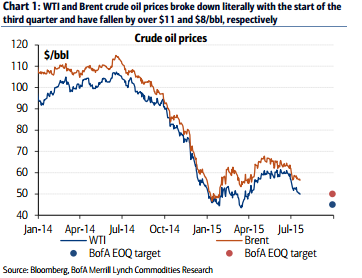
أسعار النفط الخام لغرب تكساس المتوسط وبرنت تنكسر بشكل حاد مع بداية الجزء الثالث من السنة المالية.

ومن ذات المنطلق قال سكوت شيفيلد، رئيس شركة بايونيير للموارد الطبيعية “لقد حفرنا لتونا بئرًا بعمق 18.000 قدم خلال 16 يومًا في حوض البرمي، وفي العام الماضي استغرقت ذات العملية 30 يوماً”.

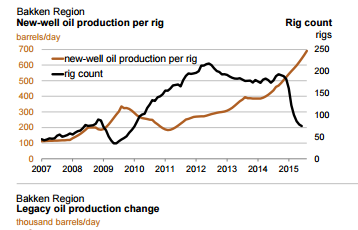
وعلى الرغم من أن عدد الحفارات في شمال أميركا انخفض إلى 664 من 1608 في أكتوبر الماضي، بيد أن الانتاج شهد ارتفاعًا ملحوظًا إلى 9.6 مليون برميل باليوم في يونيو، وكما يقول ريكس تيلرسون، رئيس شركة إكسون موبيل النفطية “قطار شحن نفط شمال أميركا الخفيف لم يتوقف عن الحركة”.

نون بوست

مخطط بياني يوضح الانتاج النفطي الجديد لكل حفارة، حيث يمثل الخط الأحمر انتاج النفط الجديد لكل حفارة، والخط الأسود يمثل عدد الحفارات العاملة

وتابع تيلرسون موضحًا بأن مرونة صناعة الغاز الصخري الشقيقة تعطي تحذيرًا واضحًا لأولئك الأشخاص الذين يعولون في تخميناتهم على عدد الحفارات العاملة؛ فعلى الرغم من أن أسعار الغاز انهارت من 8 دولار إلى 2.78 دولار منذ عام 2009، ورغم انخفاض عدد حفارات الغاز إلى 209 حفارة، بيد أن الإنتاج ارتفع بنسبة 30% خلال تلك الفترة.

حتى الآن، مازالت حفارات الصخر بعيدة عن المخاطر نتيجة لارتباط عملها بعقود تحوط مالي، والاختبار الحقيقي لقدرتها سيحل خلال الأشهر القادمة بمجرد انتهاء هذه العقود، ولكن حتى لو أفلست هذه الصناعة نتيجة لفرط تعويلها على أموال الاستدانة، فإن هذا لن يعمل على تحسين الأمور بالنسبة لأوبك، كون هذه الآبار ستبقى موجودة، والتكنولوجيا والبنية التحتية التي تعتمد عليها لن تندثر، وبالتالي ستستحوذ شركات أقوى على هذه الآبار والبنية التحتية بأسعار رخيصة، وبمجرد صعود أسعار النفط إلى 60 دولار أميركي، أو حتى 55 دولار، ستباشر هذه الشركات إنتاجها على الفور.

تجري الرياح اليوم بما لا تشتهي أوبك، كون كل ارتفاع في سعر النفط سيرافقه زيادة في نسبة إنتاج النفط الأمريكي، والقيد الوحيد على هذا الموضوع هو حجم احتياطيات الولايات المتحدة التي يمكن استخلاصها بتكلفة متوسطة، وهذه الاحتياطيات قد تكون أكبر مما هو متوقع، ناهيك عن إمكانية استخراج النفط من الأرجنتين وأستراليا، أو إمكانية استعمال تقنية الحفر النظيف في الصين من خلال تكنولوجيا ضخ البلازما التي تقلل الحاجة للماء.

نون بوست

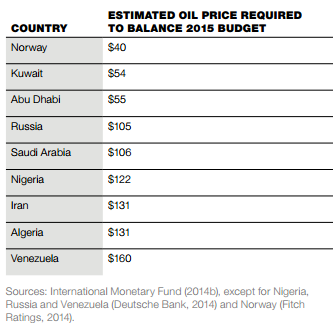
سعر برميل النفط المفترض اللازم لموازنة ميزانية الدول النفطية

يشير شيفيلد بأن حوض البرمي في ولاية تكساس وحده، قادر على إنتاج من 5 إلى 6 مليون برميل يوميًا على المدى الطويل، وهذا الرقم يفوق ما ينتجه حقل الغوار العملاق في المملكة العربية السعودية، وهو حقل النفط الأكبر في العالم.

بشكل عام، فإن المملكة العربية السعودية هي المتضرر الأكبر من كل ما تقدم، كونها تعتمد على إيرادات النفط في 90% من إيرادات ميزانيتها؛ فبعد خمسين عامًا كاملة من الطفرة النفطية، لا يوجد أي صناعة أخرى غير النفط، يمكن التعويل عليها لدفع الاقتصاد السعودي.

المواطنون السعوديون لا يدفعون ضريبة على الدخل، ولا فوائد، ولا يتم حتى اقتصاص مبالغ من أرباح أسهمهم، كما أن البنزين في محطات الوقود يباع بمبلغ 12 سنتًا للتر الواحد، وسعر الكيلو واط الواحد من الكهرباء يقدر بـ1.3 سنت، فضلًا عن أن إنفاق المملكة على الرعاية الاجتماعية وصل إلى أرقام فلكية إبان انطلاق ثورات الربيع العربي، في خضم سعي المملكة لخنق المعارضة.

يقدر صندوق النقد الدولي أن عجز الموازنة في السعودية سيصل إلى 20% من الناتج المحلي الإجمالي هذا العام، أو حوالي 140 مليار دولار، وسعر التعادل المالي لبرميل النفط القادر على موازنة الميزانية يقدر بـ106 دولار للبرميل.

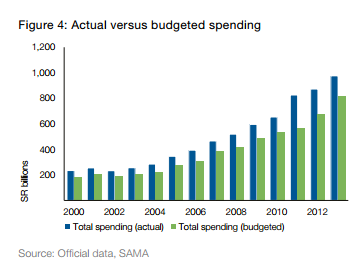
وبدلًا من تخفيض الانفاق، عمد الملك سلمان إبان اعتلائه للعرش السعودي على ذر المال بشكل متزايد، حيث تخلى عن حوالي 32 مليار دولار أنفقها على شكل مكافئة تتويج وزعت على جميع العاملين والمتقاعدين، كما باشر حربًا مكلفة ضد الحوثيين في اليمن، خاضها بتعزيزات عسكرية ضخمة تعول كليًا على الأسلحة المستوردة من الخارج، علمًا أن انفاق المملكة العربية السعودية على التجهيزات الدفاعية يضعها في المركز الخامس عالميًا.

العائلة المالكة في السعودية تقود حربًا سنية ضد متمردي إيران، حيث تقاتل السعودية بغية اغتنام الهيمنة في خضم الصراع المرير والطويل بين السنة والشيعة في منطقة الشرق الأوسط، “في الوقت الراهن، السعوديون لديهم شيء واحد فقط في أذهانهم وهو إيران، ولكن هذه مشكلة خطيرة جداً بالنسبة للسعوديين، كون وكلاء إيران يعملون في اليمن، سورية العراق، ولبنان” قال جيم وولسي، الرئيس السابق لوكالة الاستخبارات المركزية الأمريكية.

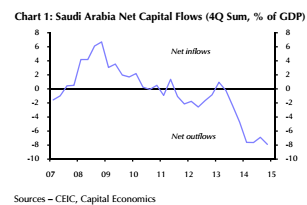
من الملاحظ وجود اتجاه تصاعدي في تسرب رؤوس الأموال خارج المملكة العربية السعودية إبان انطلاق ثوارت الربيع العربي، حيث بلغ صافي تدفقات رأس المال الخارجة حوالي 8% من الناتج المحلي الإجمالي سنويًا، وذلك حتى قبل انهيار أسعار النفط، والبلاد منذ ذلك الحين تحرق احتياطياتها من النقد الأجنبي بوتيرة مذهلة، حيث بلغت هذه الاحتياطيات ذروتها في شهر أغسطس من عام 2014 بمبلغ 737 مليار دولار أميركي، وانخفضت إلى 672 مليار دولار في مايو، وهذا ما يعني أن السعودية ضمن وتيرة الانفاق الحالية تنفق حوالي 12 مليار دولار من احتياطياتها كل شهر.

يشير خالد السويلم، المسؤول السابق في البنك المركزي السعودي، والذي يعمل حاليًا في جامعة هارفارد، بأنه يجب تغطية كل دولار من العجز المالي من خلال السحب من الاحتياطيات، وبشكل عام، إن الاحتياطيات السعودية ليست كبيرة نسبيًا، وذلك نظرًا لنظام الصرف الثابت الذي تتبعه البلاد، فالكويت وقطر وأبوظبي جميعهم يمتلكون احتياطيات تبلغ ثلاثة أضعاف نصيب الفرد، ويعلق سويلم على هذا قائلًا: “لهذا نحن أكثر عرضة للخطر، ولهذا السبب نحن رابع دولة في الخليج بتصنيف ائتماني هو -AA”.

وكالة التصنيف الائتماني ستاندرد آند بورز (Standard & Poor’s) خفضت تقييماتها الائتمانية للمملكة العربية السعودية لتصبح “سلبية” في فبراير الماضي، حيث تم تعليل ذلك بالقول “نحن ننظر إلى اقتصاد المملكة العربية السعودية باعتباره اقتصادًا غير متنوعًا، وضعيفًا تجاه التراجع الحاد والمستمر في أسعار النفط”.

نون بوست

الانفاق في السعودية، حيث يمثل الخط الأزرق الانفاق الفعلي، والخط الأخضر الانفاق المغطى بناتج الدولة الاجمالي

كتب سويلم تقريرًا لهارفارد حول المملكة العربية السعودية، مشيرًا بأن السعودية كان بإمكانها توفير تريليون دولار إضافي بأصولها المالية، لو اعتمدت على النموذج النرويجي لصندوق الثروة السيادية، بغية إعادة تدوير الأموال، عوضًا عن التعامل معها باعتبارها حصالة لوزارة المالية، وتسبب هذا التقرير بعاصفة كبيرة في الرياض، “كنا محظوظين سابقًا لأن سعر النفط تعافى في الوقت المناسب، ولكن لا يمكننا الاعتماد على ذلك مرة أخرى”، يقول سويلم.

أوبك أخفقت في معالجة الأمورأمو، رغم أنها لا تمتلك أدوات يمكنها استعمالها لمحاربة تقدم التكنولوجيا الأمريكية؛ فبعد فوات الأوان، تبين بأن قيام أوبك بإبقاء الأسعار مرتفعة جدًا ولفترة طويلة، كان خطأ إستراتيجيًا كبيرًا، كونه سمح لحفارات النفط الصخري، ولصناعة الطاقة الشمسية، بالعمل والتضخم والوصول إلى سن الرشد.

السعودية في وضع لا تحسد عليه اليوم، كونها محاصرة من جميع الاتجاهات، فحتى لو أبرمت صفقة مع روسيا للاتفاق على خفض الانتاج لدعم الأسعار، وهو احتمال بعيد جدًا، فإنها بذلك قد تكتسب بضع سنوات أخرى من الدخل المرتفع، ولكن هذا الإجراء سيتم على حساب تقديم موعد طفرة زيادة إنتاج النفط الصخري في وقت لاحق.

وفي حال استمرت السعودية باتباع النهج الحالي، فإن احتياطياتها من النقد الأجنبي ستهبط حتى 200 مليار دولار بحلول نهاية عام 2018، ولكن رد فعل السوق سيسبق هذا الهبوط بفترة طويلة، فمجرد الاحساس بهذا الخطر، كفيل بتسارع واطراد وتيرة هروب رؤوس الأموال خارج البلاد.

نون بوست

تدفقات رأس المال الصافي في السعودية مقاساً على الناتج العام

يمكن للحكومة أن تخفض الإنفاق الاستثماري لفترة من الوقت، كما فعلت في منتصف الثمانينيات، ولكنها في النهاية يجب أن تواجه سياسات التقشف الصارم، وبالتالي لن تستطيع حينها تحمل دعم مصر، والحفاظ على رعايتها السياسية الباهظة لجميع أنحاء العالم السني.

الإنفاق على المناحي الاجتماعية هو الغراء الذي يجمع شتات النظام الوهابي الذي يحكم بعقلية العصور الوسطى في الوقت الذي تختمر فيه الاضطرابات بين الأقلية الشيعية في المنطقة الشرقية، وتزداد به الهجمات الصادمة لجماعة داعش الإرهابية، وتلاقي فيه السعودية مصير رد الفعل الارتدادي جرّاء غزوها لليمن.

الإنفاق الدبلوماسي هو ما يُدعّم مجال التأثير والسيطرة السعودية في النسخة الشرق أوسطية من حرب الثلاثين سنة في أوروبا، والتي لا تزال تعاني من صدمات ما بعد الثورة الديمقراطية.

أخيرًا، فقد تثبت لنا الأيام بأن صناعة النفط الأمريكية تتمتع بقابلية أكبر على البقاء والصمود من تلك التي تتمتع بها الدول التي تقف خلف الصرح السياسي المتهالك لأوبك.

المصدر: ذي صاندي مورنينغ هيرالد

TAGGED: البترول ، الخليج ، النفط الأمريكي ، النفط السعودي ، النفط الصخري
Download this article as PDF
Share this Article
Facebook Twitter Whatsapp Whatsapp Telegram Email Copy Link
أمبروز إيفانز
By أمبروز إيفانز محرر شؤون اقتصادية عالمية
Follow:
Next Article نون بوست The Stigma of “ISIS”: A Heavy Legacy Haunting Women and Children of Former Members

Read More

  • U.S. Regime‑Change Policies: Why They Are Destined to Fail U.S. Regime‑Change Policies: Why They Are Destined to Fail
  • The Gulf’s Balancing Act: Iran, Israel, and Hidden Links
  • Iraq–Turkey Oil Export Treaty: Why Did Ankara Cancel It After 52 Years?
  • Syria’s Northeast on Edge: QSD Between Ankara and Damascus
  • Has Europe Changed Its Stance on Israel… or Just Its Language?
part of the design
NoonPost Weekly Newsletter

You May Also Like

U.S. Regime‑Change Policies: Why They Are Destined to Fail

U.S. Regime‑Change Policies: Why They Are Destined to Fail

إسراء سيد Esraa sayed 8 April ,2026
The Gulf’s Balancing Act: Iran, Israel, and Hidden Links

The Gulf’s Balancing Act: Iran, Israel, and Hidden Links

فريق التحرير Noon Post 8 April ,2026
Iraq–Turkey Oil Export Treaty: Why Did Ankara Cancel It After 52 Years?

Iraq–Turkey Oil Export Treaty: Why Did Ankara Cancel It After 52 Years?

فريق التحرير Noon Post 8 April ,2026
dark

An independent media platform founded in 2013, rooted in slow journalism, producing in-depth reports, analysis, and multimedia content to offer deeper perspectives on the news, led by a diverse young team from several Arab countries.

  • Politics
  • Society
  • Rights & Liberties
  • Opinions
  • History
  • Sports
  • Education
  • Technology
  • Economy
  • Media
  • Arts & Literature
  • Entrepreneurship
  • Travel
  • Cinema & Drama
  • Food
  • Health
  • Culture
  • Latest Reports
  • Files
  • Long Reads
  • Interviews
  • Podcast
  • Interactive
  • Encyclopedia
  • In Pictures
  • About Us
  • Our Writers
  • Write for Us
  • Editorial Policy
  • Advanced Search
Some rights reserved under a Creative Commons license

Removed from favorites

Undo
Go to mobile version