



NoonPost NoonPost

NoonPost

  • Home
  • Politics
  • Economy
  • Society
  • Culture
  • Files
  • Long Reads
  • Podcast
AR
Notification Show More
نون بوست
“There Are Nights I Can’t Close My Eyes”: How Gazans Are Living in Homes on the Brink of Collapse
نون بوست
From al-Jolani to Ahmad al-Shara: The Evolution of Syria’s New Leader
نون بوست
When Political Islam Receded in Egypt: Who Filled the Void?
نون بوست
An Extension of Genocide: Gaza’s Detainees Speak Out
نون بوست
A Tightrope Between Survival and Sovereignty: The Syrian Government Faces Normalization Pressures
نون بوست
American Aircraft Carriers: Has the Era of “100,000 Tons of Diplomacy” Ended?
نون بوست
U.S. Regime‑Change Policies: Why They Are Destined to Fail
نون بوست
Transformations of Israeli Judaism: Between the Victim Complex and the Colonizer’s Doctrine
نون بوست
The Gulf’s Balancing Act: Iran, Israel, and Hidden Links
نون بوست
Iraq–Turkey Oil Export Treaty: Why Did Ankara Cancel It After 52 Years?
نون بوست
Syria’s Northeast on Edge: QSD Between Ankara and Damascus
نون بوست
Has Europe Changed Its Stance on Israel… or Just Its Language?
NoonPost NoonPost
AR
Notification Show More
نون بوست
“There Are Nights I Can’t Close My Eyes”: How Gazans Are Living in Homes on the Brink of Collapse
نون بوست
From al-Jolani to Ahmad al-Shara: The Evolution of Syria’s New Leader
نون بوست
When Political Islam Receded in Egypt: Who Filled the Void?
نون بوست
An Extension of Genocide: Gaza’s Detainees Speak Out
نون بوست
A Tightrope Between Survival and Sovereignty: The Syrian Government Faces Normalization Pressures
نون بوست
American Aircraft Carriers: Has the Era of “100,000 Tons of Diplomacy” Ended?
نون بوست
U.S. Regime‑Change Policies: Why They Are Destined to Fail
نون بوست
Transformations of Israeli Judaism: Between the Victim Complex and the Colonizer’s Doctrine
نون بوست
The Gulf’s Balancing Act: Iran, Israel, and Hidden Links
نون بوست
Iraq–Turkey Oil Export Treaty: Why Did Ankara Cancel It After 52 Years?
نون بوست
Syria’s Northeast on Edge: QSD Between Ankara and Damascus
نون بوست
Has Europe Changed Its Stance on Israel… or Just Its Language?
Follow US

Saudi Arabia’s Sudan Strategy: From Cautious Neutrality to Calculated Engagement

عماد عنان
Emad Anan Published 26 March ,2026
Share
نون بوست
نون بوست

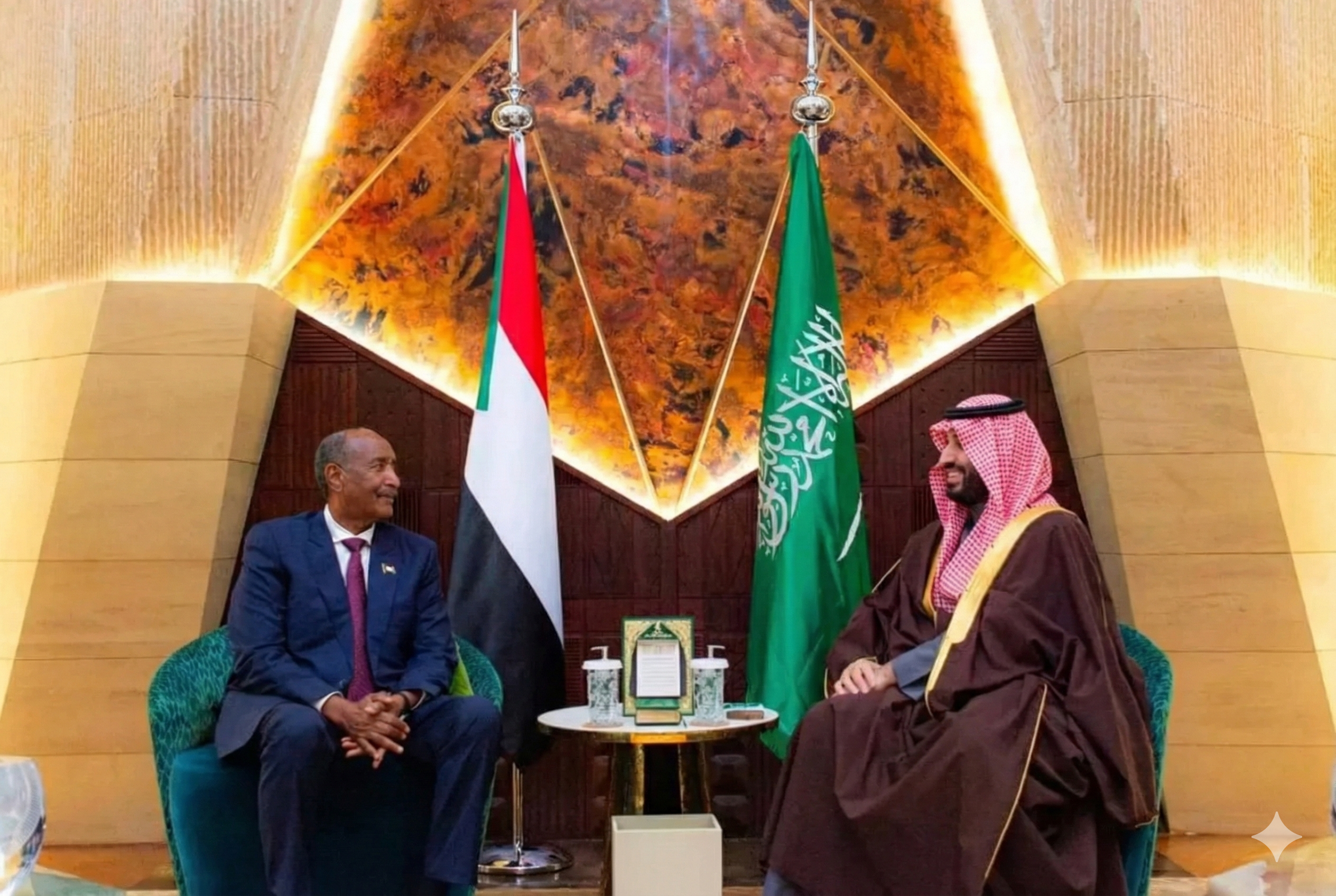
The recent visit by Sudan’s Chairman of the Sovereignty Council and Defense Minister, General Abdel Fattah al-Burhan, to Saudi Arabia has reignited debate about Riyadh’s evolving stance on the Sudanese conflict particularly amid significant battlefield shifts in the war against the Rapid Support Forces (RSF), which have made gains in recent months with continued backing from the United Arab Emirates.

This visit Burhan’s third since the war erupted in April 2023 carries particular weight. He met with Saudi Crown Prince Mohammed bin Salman in a high-level meeting attended by the defense minister, national security advisor, and finance minister, signaling Riyadh’s readiness to move beyond passive observation toward a deeper, more calculated involvement in Sudan.

From Saudi Arabia’s perspective, the war in Sudan has outgrown its internal dimensions and become a complex geopolitical theater. Its repercussions span from the Red Sea to the heart of Africa, directly intersecting with regional security imperatives and the broader goals of Saudi Vision 2030.

This article seeks to examine Riyadh’s approach to the Sudanese crisis at a moment when neutrality appears insufficient. Sudan has become a strategic arena testing Saudi Arabia’s ability to safeguard its interests and reshape regional dynamics.

Sudan in Saudi Arabia’s Strategic Calculus

Sudan has never been peripheral to Saudi foreign policy. Rather, it has consistently held strategic importance for Riyadh, due to a matrix of geopolitical, security, and economic considerations that make its stability essential not only bilaterally, but for broader regional security.

Foremost among these considerations is Red Sea security. Sudan lies on the sea’s western shore, directly opposite the Saudi coast. Its stability is thus critical for maritime safety, port protection, and the secure flow of trade and energy. Any sustained unrest in Sudan risks spilling over into the Red Sea now central to Saudi Arabia’s economic vision and future mega-projects.

Sudan also serves as a vital strategic depth in the Horn of Africa. For Riyadh, Khartoum is a key gateway into this increasingly contested region. Saudi involvement there aims to counterbalance competing regional powers and prevent the Horn from falling under the sway of hostile or unstable actors, which could threaten long-term Saudi interests.

Economically, Sudan’s vast agricultural and water resources position it as a pivotal partner in achieving Saudi food security goals. Saudi firms have long-standing investments in Sudan’s agricultural and livestock sectors, making political and security stability essential to both protect and expand those investments in line with long-term development strategies.

Historically, diplomatic ties between the two countries have remained robust since Sudan’s independence, with Riyadh maintaining open channels with successive Sudanese governments. This enduring relationship has enabled Saudi Arabia to act as a relatively accepted mediator and to bolster its role as a regional stabilizer and facilitator of political settlements.

Internationally, Sudan also occupies a shared space in Saudi diplomacy with the United States and other global partners. This enhances Riyadh’s diplomatic leverage in broader regional arrangements, especially those tied to Red Sea and Horn of Africa security.

In this context, Sudan represents a convergence point for geography, economics, and regional power projection. Saudi Arabia’s strategic worldview rests on a fundamental conviction: Sudanese security is inseparable from Saudi national security and the stability of the Red Sea corridor.

Saudi Arabia’s Six-Pronged Approach

Riyadh’s approach to the Sudan conflict stems from an evolved understanding of Sudan’s place atop its strategic priorities. Saudi Arabia views the country as a high-stakes geopolitical asset that cannot be left to power vacuums or unregulated regional competition.

As the internal Sudanese power struggle veers toward all-out collapse, Riyadh appears to be entering a moment of strategic reckoning one where passivity is no longer viable.

1. Prioritizing Regional Stability

Saudi Arabia views Sudan as essential to the security of both the Red Sea and the Horn of Africa two corridors vital to energy flows, trade, and maritime security directly linked to Saudi national interests. Continued conflict threatens navigation safety, expands organized crime and trafficking risks, and fuels instability along the western Red Sea coast, transforming Sudan from a potential strategic ally into a sustained security liability.

2. Betting on State Institutions

Saudi Arabia favors the Sudanese Armed Forces (SAF) as the sole structured institution capable at least in theory of maintaining state cohesion. This stance aligns with a broader Saudi philosophy that rejects the normalization of non-state armed actors, recognizing the regionally contagious and state-fragmenting risks posed by militia politics.

3. Mediator, Not Combatant

Despite this institutional bias, Riyadh is careful to frame itself as a mediator rather than a partisan in the conflict. This is evident in its sponsorship of the Jeddah peace talks alongside Washington, and in its repeated efforts to broker humanitarian truces and ceasefires. This posture allows Saudi Arabia to maintain diplomatic credibility with Sudanese factions and regional and international players alike.

4. Soft Power Through Humanitarianism

Complementing its political strategy is a robust humanitarian engagement. In the war’s early weeks, Saudi Arabia coordinated large-scale evacuations across the Red Sea and extended aid to multiple nationalities, leveraging soft power to project an image of responsible leadership focused not solely on geopolitical outcomes, but also on alleviating human suffering.

5. Shielding Sudan from Proxy Escalation

Saudi Arabia remains keenly aware of its regional rivalry with the UAE, especially as Emirati influence in Sudan expands. Yet Riyadh resists turning Sudan into a battleground for open proxy confrontation. Instead, it pursues calculated diplomatic maneuvering, recognizing that escalation risks spiraling into uncontrollable regional chaos with severe strategic costs.

6. Backing a Political Solution

Ultimately, Riyadh sees a negotiated political settlement as the most realistic path to ending the war—even if such a process is slow and complex. A civilian-led transitional government is viewed as the most sustainable route to rebuilding legitimacy and stability, rather than imposing military dominance.

In sum, Saudi Arabia’s approach to Sudan is a cautious pragmatism: supporting state institutions, staying engaged diplomatically, emphasizing humanitarianism, and working to insulate Sudan from regional conflict escalation. The goal is not to remake Sudan by force but to prevent its total collapse.

Backing the Sudanese Army

Within this pragmatic framework, Saudi Arabia has deemed support for the SAF under Burhan to be the optimal route for achieving its strategic objectives, aligning with its vision of Sudan as a vital regional partner.

Political and Diplomatic Support

Riyadh has worked to legitimize Burhan through repeated high-level meetings. Since the war began in April 2023, he has visited Saudi Arabia three times (November 2023, March 2025, and December 2025). Saudi officials have also applied pressure on Washington particularly under the Trump administration to designate the RSF as a terrorist group, thereby isolating it internationally and bolstering the army’s standing.

Economic and Security Support Aligned with Vision 2030

Saudi Arabia has offered tangible economic aid, including urgent infrastructure projects in Port Sudan launched in March 2025 to shore up government resources and boost its standing with the public. This support aims to counterbalance the UAE’s backing of the RSF and reinforce a long-term strategic partnership with Khartoum.

Indirect Military Aid

While there’s no concrete evidence of direct arms shipments, multiple reports suggest indirect military assistance channeled through trusted intermediaries such as Egypt and Turkey helping to strengthen the army while avoiding international backlash or overt Gulf rivalries.

Strategic Escalation and Reprioritization

Saudi backing peaked recently when Crown Prince Mohammed bin Salman asked former President Donald Trump during a Washington visit to intervene directly in the Sudan crisis. This marked Sudan’s return to the forefront of US foreign policy and triggered renewed American efforts to stabilize the conflict and the region.

Countering Emirati Influence

The UAE’s growing footprint in Sudan has become a major strategic concern for Riyadh one increasingly difficult to ignore. Abu Dhabi’s expanding presence in Sudan mirrors its wider assertiveness across Yemen and the Horn of Africa, directly intersecting with Saudi national security interests and raising sensitive questions about regional power balance.

Sudanese analyst Fadil Ibrahim argues that Emirati actions in Sudan are part of a broader regional doctrine that involves empowering non-state actors, often with separatist agendas, to secure control over resource-rich or strategically significant areas.

This pattern, according to Ibrahim, is evident in UAE interventions elsewhere from backing Khalifa Haftar in eastern Libya, to arming factions in Puntland, Somaliland, and Jubaland in Somalia. There is also growing evidence that the port of Bosaso in Puntland has served as a supply hub for RSF forces.

In February 2025, the UAE backed an RSF proposal to form a parallel government in territories under its control a move firmly rejected by the SAF and explicitly opposed by Saudi Arabia, which remains committed to Sudan’s territorial integrity and legitimate institutions.

Saudi Arabia’s growing involvement in Sudan thus marks a strategic shift from declared neutrality to a form of indirect but active engagement. Its aim is to protect its own strategic interests and prevent a regional power imbalance while avoiding open confrontation with the UAE, a partner with whom relations have been increasingly strained, though rarely publicly acknowledged.

Sudan, already located at the intersection of two of the world’s most volatile regions the Sahel to the west and the Red Sea-Horn of Africa axis to the east has now become a wide-open arena for geopolitical contestation. Amid this entanglement of agendas, the priorities of ordinary Sudanese have been pushed to the sidelines, as the conflict is managed through the lens of interests rather than state salvation.

As Federico Donelli, a political scientist at Italy’s University of Trieste, put it, the current Saudi-Emirati rivalry in the Horn of Africa resembles “a powder keg waiting to explode.” So long as Mohamed Hamdan Dagalo (Hemedti) retains UAE support and Burhan enjoys Saudi backing, prospects for resolving the war will remain dim.

In this light, the Sudanese conflict stands out as one of the most brutal examples of modern proxy warfare where each side is armed and emboldened by external powers not to resolve the crisis, but to outmaneuver their rivals. And it is Sudan that bears the cost of a war it neither owns nor controls.

Download this article as PDF
Share this Article
Facebook Twitter Whatsapp Whatsapp Telegram Email Copy Link
عماد عنان
By عماد عنان كاتب صحفي وباحث في الإعلام الدولي
Follow:
Previous Article نون بوست Has Israel Launched a New “Wrath of God” After October 7?
Next Article نون بوست The Bondi Attack: 5 Ways Western Media Linked the Incident to Gaza and Muslims

Read More

  • U.S. Regime‑Change Policies: Why They Are Destined to Fail U.S. Regime‑Change Policies: Why They Are Destined to Fail
  • The Gulf’s Balancing Act: Iran, Israel, and Hidden Links
  • Iraq–Turkey Oil Export Treaty: Why Did Ankara Cancel It After 52 Years?
  • Syria’s Northeast on Edge: QSD Between Ankara and Damascus
  • Has Europe Changed Its Stance on Israel… or Just Its Language?
part of the design
NoonPost Weekly Newsletter

You May Also Like

U.S. Regime‑Change Policies: Why They Are Destined to Fail

U.S. Regime‑Change Policies: Why They Are Destined to Fail

إسراء سيد Esraa sayed 8 April ,2026
The Gulf’s Balancing Act: Iran, Israel, and Hidden Links

The Gulf’s Balancing Act: Iran, Israel, and Hidden Links

فريق التحرير Noon Post 8 April ,2026
Iraq–Turkey Oil Export Treaty: Why Did Ankara Cancel It After 52 Years?

Iraq–Turkey Oil Export Treaty: Why Did Ankara Cancel It After 52 Years?

فريق التحرير Noon Post 8 April ,2026

بيرلو يفكر .. إذاً هو يلعب

أيهم المدرس
أيهم المدرس Published 31 August ,2015
Share
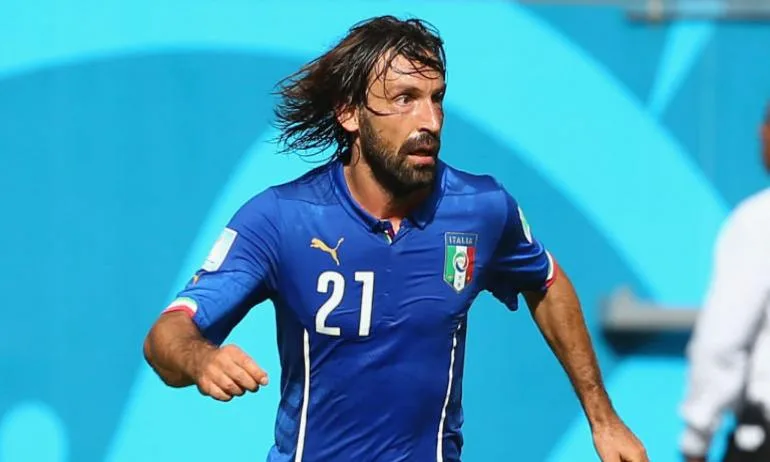
andrea-pirlo-italy-costa-rica_3163056

آخر عباقرة الآزوري

رغم تصنيفها كواحدةٍ من أهمّ المدارس الدفاعيّة في كرة القدم، وشهرتها بتخريج أهمّ نجوم الدفاع في تاريخ المستديرة، لم يعقم رحم الملاعب الإيطاليّة عن إنجاب عددٍ من عباقرة اللعب الأفذاذ الذين متّعوا الجمهور العاشق للكرة بلمساتهم الراقية ومواهبهم الخلاقة، من أمثال فالنتينو مازولا وجياني ريفيرا وروبيرتو باجيو، وأخيراً أندريا بيرلو، ذلك النابغة الذي أدخل البهجة إلى كلّ بيتٍ في إيطاليا، بقيادته كتيبة محاربي الآزوري إلى انتزاع لقب كأس العالم عام 2006 من أنياب أعتى المنتخبات العالميّة، بحنكة القائد الملهم وعقليّة المفكّر المتواضع الذي لا يجيد الكلام والصراخ، بل يدع قدميه تتحدثان عنه، بمهاراتٍ نادرةٍ ولمساتٍ بديعةٍ ورؤيةٍ ثاقبةٍ قلّما تخطئ، جعلته جديراً بحمل لقب آخر عباقرة الطليان، الذين لن تُنكّس راية أمجادهم الكرويّة وأمثاله بين ظهرانيهم!

فتى بريشيا الموهوب

ولد يوم التاسع عشر من شهر أيار عام 1979 في بلدة فليرو ضمن مقاطعة بريشيا شمال إيطاليا، وتنقّل بين صفوف فرق صغار بلدته، قبل أن يحطّ به الرحال في ناشئي نادي بريشيا، حيث لفت الأنظار إليه بموهبته الفطرية في التمرير وقدرته على التحكّم بالكرة والتسديد الدقيق، ليصبح قائداً لشبّان النادي، ويحظى بفرصةٍ مبكّرةٍ للظهور مع الفريق الأوّل لناديه في دوري الدرجة الأولى الإيطالي (السيري آ)، وذلك في مباراة ريجينا أواخر موسم 1994-1995، وهو ابن 16 عاماً لا غير، ليكون أصغر من مثّل بريشيا في الدوري عبر تاريخه، ولم تتح له فرصة الظهور مجدّداً في (السيري آ) الموسم التالي بسبب هبوط ناديه إلى الدرجة الثانية والمكوث في غياهبها موسمين، كان لناشئ بريشيا الموهوب في ثانيهما اليد الطولى في إعادة ناديه إلى أضواء السيري آ، ليخوض موسم 1997-1998 أساسياً منذ بدايته كلاعب وسطٍ هجوميٍّ، ويسجّل أوّل أهدافه في جنّة الأضواء يوم 19/10/1997 في مرمى فيشنزا، ويتابع تألّقه بتسجيل ثلاثة أهدافٍ أخرى وصناعة العديد منها خلال 29 مباراة خاضها مع فريقه، دون أن يكون ذلك  كافياً لدعم صمود ناديه في الدرجة الأولى فهبط مجدّداً إلى السيري ب، وعلم بيرلو حينها أن مستقبله الرياضي لابدّ أن يكون في نادٍ أكبر من بريشيا المتواضع، فقبل بعرض الانتقال إلى إنتر ميلانو صيف العام 1998.

رياح الإنتر العاتية

نون بوست

لم يحظ فتى بريشيا بمكانٍ أساسيٍّ في تشكيلة النيرازوري الغنيّة بالنجوم، فاكتفى بلعب 18 مباراة طيلة موسمه الأوّل معه شارك في معظمها كبديل، قبل أن يقضي ثاني مواسمه 1999-2000 معاراً إلى نادي ريجينا حيث استعاد إيقاع المباريات، فشارك أساسياً في 28 مباراة مسجّلاً ستّة أهدافٍ، ليكافأ صيف العام 2000 بالاستدعاء إلى منتخب إيطاليا للشباب للمشاركة في بطولة أوروبا للشبّان (تحت 21 عاماً) في سلوفاكيا، حيث أبدع المايسترو الإيطالي وقاد فريقه إلى التتويج بلقب البطولة، مع إحرازه جائزتي أفضل لاعبٍ والهدّاف، ليقدّم أوراق اعتماده كنجمٍ قادمٍ للآزوري. وعاد بعدها إلى ناديه الإنتر محمّلاً بآمالٍ عريضةٍ وطموحاتٍ وثّابةٍ بالمضي قدماً في طريق النجوميّة، ولكنّ رياح النيرازوري جرت بما لا تشتهي سفن بيرلو، فأحبطت سعيه وعطّلت مسيرته بتهميش دوره وركنه على دكّة البدلاء طيلة مرحلة الذهاب موسم 2000-2001، قبل أن يجد في الإعارة إلى ناديه القديم بريشيا ملاذاً من ظلم وتعنّت ناديه الإنتر، فلبث هناك ستة أشهرٍ داوى فيها جراحاته مع أصدقاء طفولته، تحت قيادة المدرب القدير كارلو مازوني، الذي كان أوّل من نقله إلى مركز صانع الألعاب الخلفي الذي وجد فيه راحته، كما وجد نفسه قريباً من لاعبه المفضّل وقدوته روبرتو باجيو الذي كان يقضي آخر أيامه في الملاعب، فنهل من خبرته وتجربته، واستمع إلى نصيحته بتغيير الأجواء والانتقال بعيداً عن إنتر ميلانو.

ضلع الميلان الذهبي

نون بوست

في الثلاثين من شهر حزيران لعام 2001، أصبح أندريا بيرلو لاعباً في نادي إس ميلان بعد انتقاله إليه مقابل رسومٍ بلغت حوالي 17 مليون يورو، لم يجد مسؤولو الميلان في دفعها أيّة غضاضةٍ، فعين مدربهم الخبير كارلو أنشيلوتي -التي وجدت في هذا اللاعب الموهوب مشروع نجمٍ قادم- قلّما تخطئ، وطريقته الهادئة الأبويّة في إيصال خططه وأفكاره التكتيكيّة إلى نجوم فريقه، خلقت جوّاً مريحاً وبيئةً مناسبةً للعبقريّ الصغير كي ينثر إبداعاته، ففي موسمه الأول 2001-2002 تصاعدت دقائق مشاركته منذ مطلع الموسم حتى غدا أساسياً قبل نهايته التي لم تأتِ بألقابٍ تذكر، وكرّس نفسه قطعةً لا غنى عنها في جسد الفريق منذ مطلع موسمه الثاني، حيث ثبّته أنشيلوتي في مركز صانع الألعاب الخلفي إلى جانب المحارب غاتوزو والدينامو سيدورف، ليكوّن معهما مثلثاً ممتازاً في خط الوسط خلف النجمين روي كوستا وكاكا والهدّاف شيفشينكو، ويشكّل مع رباعي الدفاع المتين بقيادة الأسطورة باولو مالديني، نواة فريق الميلان الذهبي الذي تألّق محلياً وأوروبياً على مدى نصف عقدٍ من الزمن، أحرز خلاله العديد من الألقاب الكبرى، بدايةً بكأس إيطاليا عام 2003، ومن ثمّ لقب دوري أبطال أوروبا المجيد في نفس الموسم بعد الانتصار على الجار يوفنتوس بركلات الترجيح، ومن ثمّ كأس السوبر الأوروبي في ذات الصيف، بعد الفوز على بورتو بهدفٍ في الوقت الممدّد سجّله بيرلو من ركلة جزاء.

وازدادت أهميّة بطلنا في فريقه، فغدا مع مرور الوقت القائد الحقيقي لكوكبة النجوم الميلانيّة على أرض الملعب، حيث فاز معهم عام 2004 بأوّل ألقابه في الدوري الإيطالي، قبل أن يردفه بكأس السوبر الإيطالي في نفس العام، وليعود الموسم التالي عام 2005 للتأهل إلى نهائي كأس الأبطال حيث عاش بيرلو ورفاقه تجربةً قاسيةً بعدما فرطوا في تقدّمهم الثلاثي وخسروا اللقب أمام ليفربول، ولكنّ العام التالي حمل معه الفرح الأكبر للعبقريّ الإيطالي رغم خروجه خالي الوفاض مع ناديه، حين فاز بلقب كأس العالم مع منتخب الآزوري عام 2006، وتوّج شخصياً بلقب أفضل لاعبٍ في مباراتي نصف النهائي والنهائي، فضلاً عن اختياره عضواً في منتخب نجوم كأس العالم.

وتابع المايسترو المفكّر رحلة تألّقه، ففاز مجدّداً بلقب كأس الأبطال مع ناديه، بعد أن انتقموا من ليفربول بالذات، بالفوز عليهم بهدفين لهدف في نهائي أثينا عام 2007، وأردفه بلقبي كأس السوبر الأوروبي وكأس أندية العالم في نفس العام، الذي شهد ترشيحه لجائزة أفضل لاعبٍ في العالم، التي فاز بها زميله في الميلان البرازيلي كاكا، ليقضي بعدها الميلان موسمين صعبين بلا ألقابٍ، انتهيا بمغادرة المدرّب أنشيلوتي والنجم كاكا النادي صيف عام 2009.

ومع رحيل كارليتو، فقد بيرلو جزءاً من أهميّته في الفريق الذي خرج بلا ألقابٍ في موسم تدريب ليوناردو له، قبل أن يعود للفوز بلقب الدوري الإيطالي عام 2011 على يد المدرب ماسيمليانو أليجري، دون أن يكون لهذا الإنجاز أيّ طعمٍ أو لونٍ بالنسبة للنجم العبقري، الذي شعر وهو في عامه الثاني بعد الثلاثين بأنّ دوره لم يعد رئيسياً مع النادي الذي قضى فيه زهاء عشرة أعوامٍ، وأنّ من حوله صار ينظر إليه نظرة الهرِم الذي نضب عطاءه وأوشك على الاعتزال، وهو ما لم ترتضه روحه الوثّابة التي مازالت تنبض بحماس شابٍ لم يتجاوز العشرين.

عودة الشباب مع السيّدة العجوز

نون بوست

غادر أندريا ناديه الميلان من الباب الضيّق بعد أن رفض تجديد عقده، ووقّع لمنافسه وغريمه اليوفنتوس بالمجان صيف عام 2011، ليأخذ سريعاً مكانه في تشكيلة المدرب كونتي، الذي وجد في خبرة بيرلو وشخصيته القيادية ضالّته المفقودة، وحجر الأساس في مشروع إعادة شباب السيّدة العجوز، الذي نجح فيه أيما نجاح! فأحرز لقب الدوري الغائب عن خزائن البيانكونيري منذ تسع سنوات، في موسمٍ استعاد فيه العبقريّ المخضرم عنفوان شبابه، فصنع 13 هدفاً لزملائه وسجّل ثلاثةً أخرى، ليتوّج بلقب أفضل لاعبٍ في الكالتشيو لعام 2012، الذي شهد كذلك بلوغه نهائي اليورو مع منتخبه الآزوري، في البطولة التي اختاره المراقبون عضواً في منتخب نجومها.

وأعاد الكرّة في موسميه التاليين مع اليوفي، فحمل لقب الدوري فيهما وتُوّج بجائزة أفضل لاعب في الكالتشيو لعامي 2013 و2014، بفضل تمريراته الميليمتريّة العميقة التي لطالما قدّمت الأهداف لزملائه على طبقٍ من ذهب، فضلاً عن أهدافه الحاسمة التي سجّل معظمها من الركلات الحرّة المباشرة، التي أصبح في مصاف أفضل منفّذيها على مرّ العصور.

وفي الموسم المنصرم، لم يحد المايسترو العبقريُّ -تحت قيادة مدربه الجديد القديم أليجري- عن سكّة التألّق مع البيانكونيري في موسمه الرابع معهم، فقاد فريقه وهو ابن 36 إلى التتويج بثنائية الدوري والكأس الإيطاليتين، فضلاً عن بلوغه نهائي دوري أبطال أوروبا، الذي خسره فريقه أمام البارسا بعد مباراةٍ ملتهبةٍ، ذرف على إثرها صاحب الرقم 21 دموع الحسرة لضياع لقبٍ كان يمنّي النفس أن ينهي به مسيرته الحافلة مع الكرة الإيطاليّة والأوروبيّة، والتي كان قد اتخذّ قراره بوضع حدٍّ نهائيٍّ لها، مفضّلاً خوض تحدٍّ جديدٍ جديرٍ بالتجربة، عبر الانتقال إلى نادي نيويورك سيتي الأمريكي، ليودّع بذلك جنّة كرة القدم (الكالتشيو) تاركاً أحلى الذكريات، بعدما مكث في فيافيها قرابة عشرين عاماً، لعب خلالها 493 مباراة مع خمسة فرقٍ مختلفة، وأحرز ستة ألقابٍ في الدوري ولقبين في كأس إيطاليا، فضلاً عن لقبيه الأوروبيين المجيدين مع الميلان.

فلسفة العباقرة

نون بوست

كثيرٌ من لاعبي المستديرة استحقّوا لقب (النجوم)، ولكنّ قليلاً من هؤلاء النجوم استحقوا لقب (عباقرة الكرة)، وأندريا بيرلو كان واحداً منهم، شأنه شأن أساطير خالدة كيوهان كرويف وميشيل بلاتيني وزين الدين زيدان وتشافي، إضافةً إلى نجمنا العربي المصري الرائع محمد أبو تريكة الملقّب بـ(الفيلسوف)، أولئك جابوا الملاعب بفكرهم قبل أرجلهم، وداعبوا الكرة بشغاف أفئدتهم قبل أنامل أقدامهم، ففازوا بقلوب الملايين من عشّاق الفنّ الكرويّ الراقي، الذين استهوتهم فلسفة العباقرة، تلك التي جعلها بيرلو عنوناً لكتاب سيرته الذاتيّة: (أنا أفكّر إذاً أنا ألعب).

TAGGED: أفضل لاعبين خط الوسط ، افصل لاعبين كرة القدم ، الاعبين العباقرة
TAGGED: كرة القدم
Download this article as PDF
Share this Article
Facebook Twitter Whatsapp Whatsapp Telegram Email Copy Link
أيهم المدرس
By أيهم المدرس كاتب سوري مهتم بالشأن الرياضي
Follow:
Next Article نون بوست The Stigma of “ISIS”: A Heavy Legacy Haunting Women and Children of Former Members
part of the design
NoonPost Weekly Newsletter
dark

An independent media platform founded in 2013, rooted in slow journalism, producing in-depth reports, analysis, and multimedia content to offer deeper perspectives on the news, led by a diverse young team from several Arab countries.

  • Politics
  • Society
  • Rights & Liberties
  • Opinions
  • History
  • Sports
  • Education
  • Technology
  • Economy
  • Media
  • Arts & Literature
  • Entrepreneurship
  • Travel
  • Cinema & Drama
  • Food
  • Health
  • Culture
  • Latest Reports
  • Files
  • Long Reads
  • Interviews
  • Podcast
  • Interactive
  • Encyclopedia
  • In Pictures
  • About Us
  • Our Writers
  • Write for Us
  • Editorial Policy
  • Advanced Search
Some rights reserved under a Creative Commons license

Removed from favorites

Undo
Go to mobile version