NoonPost NoonPost

NoonPost

  • Home
  • Politics
  • Economy
  • Society
  • Culture
  • Files
  • Long Reads
  • Podcast
AR
Notification Show More
نون بوست
“There Are Nights I Can’t Close My Eyes”: How Gazans Are Living in Homes on the Brink of Collapse
نون بوست
From al-Jolani to Ahmad al-Shara: The Evolution of Syria’s New Leader
نون بوست
When Political Islam Receded in Egypt: Who Filled the Void?
نون بوست
An Extension of Genocide: Gaza’s Detainees Speak Out
نون بوست
A Tightrope Between Survival and Sovereignty: The Syrian Government Faces Normalization Pressures
نون بوست
American Aircraft Carriers: Has the Era of “100,000 Tons of Diplomacy” Ended?
نون بوست
U.S. Regime‑Change Policies: Why They Are Destined to Fail
نون بوست
Transformations of Israeli Judaism: Between the Victim Complex and the Colonizer’s Doctrine
نون بوست
The Gulf’s Balancing Act: Iran, Israel, and Hidden Links
نون بوست
Iraq–Turkey Oil Export Treaty: Why Did Ankara Cancel It After 52 Years?
نون بوست
Syria’s Northeast on Edge: QSD Between Ankara and Damascus
نون بوست
Has Europe Changed Its Stance on Israel… or Just Its Language?
NoonPost NoonPost
AR
Notification Show More
نون بوست
“There Are Nights I Can’t Close My Eyes”: How Gazans Are Living in Homes on the Brink of Collapse
نون بوست
From al-Jolani to Ahmad al-Shara: The Evolution of Syria’s New Leader
نون بوست
When Political Islam Receded in Egypt: Who Filled the Void?
نون بوست
An Extension of Genocide: Gaza’s Detainees Speak Out
نون بوست
A Tightrope Between Survival and Sovereignty: The Syrian Government Faces Normalization Pressures
نون بوست
American Aircraft Carriers: Has the Era of “100,000 Tons of Diplomacy” Ended?
نون بوست
U.S. Regime‑Change Policies: Why They Are Destined to Fail
نون بوست
Transformations of Israeli Judaism: Between the Victim Complex and the Colonizer’s Doctrine
نون بوست
The Gulf’s Balancing Act: Iran, Israel, and Hidden Links
نون بوست
Iraq–Turkey Oil Export Treaty: Why Did Ankara Cancel It After 52 Years?
نون بوست
Syria’s Northeast on Edge: QSD Between Ankara and Damascus
نون بوست
Has Europe Changed Its Stance on Israel… or Just Its Language?
Follow US

Egypt’s Economy: Addicted to Debt and Hoping for Miracles from Abroad

فريق التحرير
Noon Post Published 26 March ,2026
Share
نون بوست
نون بوست

From the era of the late President Gamal Abdel Nasser to that of current President Abdel Fattah el-Sisi, one constant has endured across Egypt’s successive regimes: an unwavering reliance on foreign assistance and loans.

Throughout decades, Egypt has remained tethered to external lifelines grants, aid packages, and international borrowing driven by a chronic expectation of salvation from abroad and an entrenched tendency toward indebtedness.

Successive governments of the republic have consistently failed to generate sufficient domestic revenues or to cut spending to match deteriorating public finances. As a result, the country has frequently found itself mired in debt crises with far-reaching impacts on the national economy and the Egyptian pound.

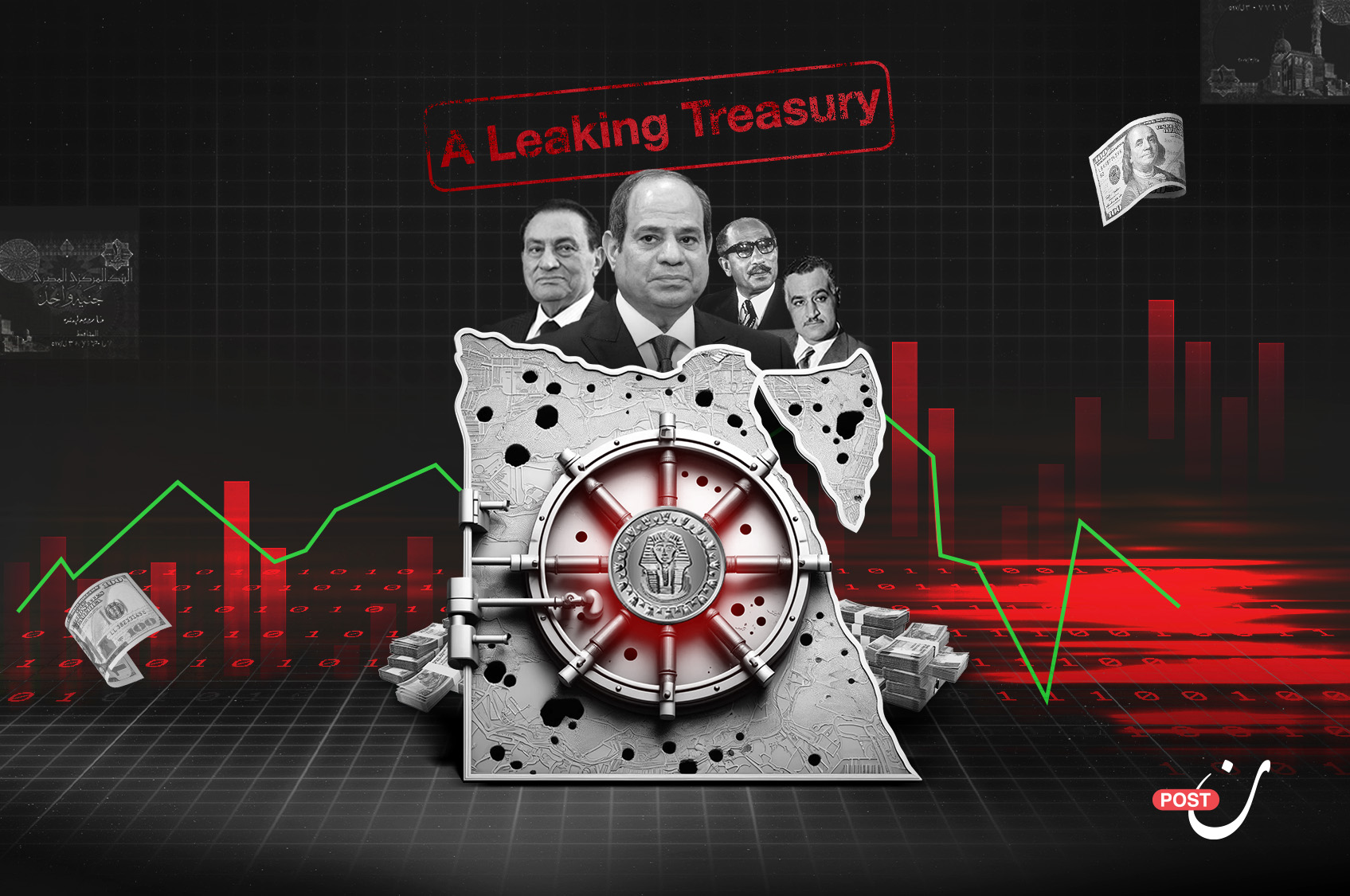
Despite differing fiscal approaches and varying narratives to justify borrowing, each administration found reasons to look outward for solutions. In this series, “A Leaking Treasury,” we examine the core structural problems in Egypt’s economy and the ruling regimes’ attempts to patch them often to cover up corruption and policy failure.

This installment traces the evolution of Egypt’s debt dependency, from Nasser to Sisi, and unpacks the rationale that has driven the nation to depend on foreign financial support.

One Hand to America, the Other to the Soviets

In The Strong Regime and the Weak State, economist Samer Soliman argues that while Nasser’s regime achieved political stability, it required a constant flow of financial resources to maintain that control.

After nationalizing the assets of foreign capitalists, the regime exhausted that pool and turned to foreign loans and aid a defining feature of the political system that continued under Sadat and Mubarak.

Ironically, the act of nationalizing foreign assets became a key reason for Egypt’s borrowing, as the government needed to compensate British shareholders of the Suez Canal Company and other foreign nationals whose assets had been seized.

According to economist Galal Amin in The Story of the Egyptian Economy from Mohamed Ali to Mubarak, Egypt secured various loans in the 1950s and 1960s amounting to approximately 800 million Egyptian pounds 300 million from the United States and 500 million from the Soviet Union.

These loans funded the High Dam, industrial development, infrastructure expansion, public subsidies, and military efforts in Yemen.

By the end of Nasser’s rule in 1970, Egypt’s external debt had reached $1.8 billion about 21% of its GDP, estimated at $8.3 billion. Amin contends that Nasser’s borrowing was largely productive, aimed at capacity-building rather than consumption.

Unlike later periods, Nasser avoided high-interest borrowing, relying instead on grants or soft loans from the Eastern bloc, even if this slowed development.

Sadat’s Debt: Pivoting from East to West

Under Anwar Sadat, Egypt’s debt skyrocketed. In just five years, foreign civil debt jumped 350%, from $1.8 billion to $6.3 billion. While external conditions played a role, Galal Amin attributes much of the crisis to poor economic management especially the unrestrained import of luxury consumer goods after the 1973 war, which drained foreign currency reserves amid declining exports.

To cover the growing trade deficit, the regime turned to expensive short-term loans. Sadat dismissed internal objections to these policies, deeming them “higher political matters.” Amin compares the pressure Sadat faced to that endured by Khedive Ismail in the 19th century from intermediaries and financiers.

Though Egypt received far more Arab aid under Sadat than under Nasser, nearly half of the country’s foreign currency deficit during Sadat’s early years was covered by grants from Gulf states. Nevertheless, regional donors began to express skepticism over Egypt’s ability to use the aid effectively, citing mismanagement and corruption.

According to Soliman, Egypt’s dire financial state compelled Sadat to make historic political concessions including his visit to Israel under pressure to secure international support. The westward pivot, often interpreted as admiration for the West, was more a desperate attempt to avoid regime collapse.

This strategic shift temporarily revived Egypt’s economy between 1977 and 1981, driven by increased oil exports and worker remittances. Yet, instead of reducing debt, Egypt borrowed even more foreign civil debt surged from $4.8 billion in 1975 to $22 billion in 1981.

Amin argues that the resulting investments were misallocated to low-productivity sectors, leaving Egypt saddled with debt but without the productive capacity to service it.

While the postwar reconstruction of the Suez Canal region and restocking of essential goods offered limited gains, the 1973 war itself had been largely funded by Arab grants, undermining its use as a justification for spiraling debt.

A Heavy Legacy and a Pivotal Reprieve

Hosni Mubarak inherited a staggering debt load from Sadat $30 billion, or 141% of GDP at the time. In his first year, servicing just the civil portion of that debt cost $2.9 billion.

Declining revenues from oil, the Suez Canal, and remittances forced Mubarak’s regime to continue borrowing. By 1987, Egypt’s debt had ballooned to $44.15 billion, according to World Bank figures.

Facing an economic crisis by the late 1980s, Egypt teetered on the brink of insolvency. In Egypt Under Mubarak (1989), political analyst Robert Springborg outlined three scenarios: authoritarian rule via military-capitalist alliance; a pact with Islamists to legitimize the regime; or a strategy of waiting for foreign resources to reappear.

It was the third scenario that materialized. Iraq’s 1990 invasion of Kuwait opened a new geopolitical opportunity. In return for joining the US-led coalition against Saddam Hussein, Egypt received a $13.7 billion debt write-off and $4.7 billion in new aid. This extraordinary turn of events helped the country avert collapse.

The 2008 global financial crisis, however, reversed some of the progress, as FDI and exports fell. The government responded with more borrowing, and by the time of the 2011 revolution, Egypt faced renewed economic strain marked by rising debt, inflation, and unemployment.

Sisi’s Debt: Teetering on the Brink

Today, Egypt is grappling with an unprecedented debt crisis. While the government no longer publishes domestic debt figures, estimates suggest public debt may exceed GDP. According to the Central Bank, Egypt is due to repay at least $42.3 billion in 2025, including $32.8 billion in medium- and long-term debt and $9.5 billion in short-term obligations. Total external debt stands at around $170 billion.

Under President Abdel Fattah el-Sisi, Egypt initially benefited from a historic inflow of Gulf aid estimated at $100 billion between 2011 and 2015. Simultaneously, the administration embarked on massive infrastructure projects, starting with the expedited Suez Canal expansion in 2015, which drained foreign reserves and contributed to a dollar crisis.

As Gulf countries grew reluctant to offer further grants, citing Egypt’s failure to build a self-sustaining economy, Cairo turned back to the IMF after a 26-year hiatus. The 2016 deal involved a $12 billion loan tied to austerity conditions: subsidy cuts, spending reductions, currency devaluation, and tax hikes.

The IMF’s endorsement enabled Egypt to tap global debt markets, issuing high-yield bonds and attracting short-term speculative capital. But while this provided liquidity, it also multiplied Egypt’s debt burden, which quadrupled over Sisi’s tenure.

The Russian invasion of Ukraine in 2022 exposed Egypt’s fragility: $25 billion in “hot money” exited the country, deepening the crisis. Egypt responded the only way it knew—seeking aid and taking on more debt. It issued $71.6 billion in short-term debt instruments in early 2024 alone, offering interest rates exceeding 30%.

Despite the warnings, the borrowing spree continues. Egypt must secure 2.8 trillion Egyptian pounds in financing in the next fiscal year, mostly through more foreign loans and debt issuances.

Then came the miracle. Amid escalating tensions following the Hamas-led Al-Aqsa Flood operation in October 2023, Egypt emerged as a key player in regional diplomacy, owing to its geography and strategic relevance. The West moved quickly to stabilize its most crucial partner.

A $35 billion deal with the UAE to acquire Ras El Hekma and an $8 billion EU aid package arrived just in time echoes of the Gulf War reprieve under Mubarak.

Debt has been a central force shaping Egypt’s modern history. Under Nasser, loans were used for industrialization and infrastructure. Under Sadat, they fed consumer imports and unproductive investments. Mubarak borrowed to service existing debts and preserve regime stability.

Under Sisi, borrowing fueled vanity megaprojects, exacerbated economic fragility, and led to record inflation, currency devaluation, and declining living standards.

Egypt’s financial policies have evolved from state-led development to survival through speculation, as each crisis deepens the country’s dependency on external rescue. Once again, a geopolitical twist has granted Egypt temporary relief but unless the structural flaws are addressed, the cycle of debt will only continue.

Download this article as PDF
Share this Article
Facebook Twitter Whatsapp Whatsapp Telegram Email Copy Link
فريق التحرير
By فريق التحرير تقارير يعدها فريق تحرير نون بوست.
Follow:
Previous Article نون بوست Controversial Poll on French Muslims Sparks Outcry: Statistics or Electoral Strategy?
Next Article نون بوست Layers of Cultures: The Making of Moroccan Identity

Read More

  • U.S. Regime‑Change Policies: Why They Are Destined to Fail U.S. Regime‑Change Policies: Why They Are Destined to Fail
  • The Gulf’s Balancing Act: Iran, Israel, and Hidden Links
  • Iraq–Turkey Oil Export Treaty: Why Did Ankara Cancel It After 52 Years?
  • Syria’s Northeast on Edge: QSD Between Ankara and Damascus
  • Has Europe Changed Its Stance on Israel… or Just Its Language?
part of the design
NoonPost Weekly Newsletter

You May Also Like

U.S. Regime‑Change Policies: Why They Are Destined to Fail

U.S. Regime‑Change Policies: Why They Are Destined to Fail

إسراء سيد Esraa sayed 8 April ,2026
The Gulf’s Balancing Act: Iran, Israel, and Hidden Links

The Gulf’s Balancing Act: Iran, Israel, and Hidden Links

فريق التحرير Noon Post 8 April ,2026
Iraq–Turkey Oil Export Treaty: Why Did Ankara Cancel It After 52 Years?

Iraq–Turkey Oil Export Treaty: Why Did Ankara Cancel It After 52 Years?

فريق التحرير Noon Post 8 April ,2026

أوراق من رحلتي: في ديار الأكراد

محمد عبد اللطيف
محمد عبد اللطيف Published 18 September ,2015
Share
dsc_0690

ديار بكر أو “أمد” كما يسميها الأكراد، هي أكبر مدينة فى جنوب شرق تركيا، تقع على ضفاف نهر دجلة، على موقع مدينة أميدا الأثرية اكتسبت اسمها من بني بكر بن وائل الذين سكنوا بها بعد الفتح الإسلامي فى عهد سيدنا معاوية رضي الله عنه، وغالبية سكان تلك المحافظة من الأكراد، كانت مكانتها مهمة جدًا في مختلف الحضارات التي استوطنت المنطقة بحكم موقعها الذي يشكل معبرًا بين الأناضول وإيران وبلاد الشام والعراق.

أظهرت الحفريات وجود آثار حياة في المدينة منذ أكثر من عشرة آلاف سنة، وأول حضارة كبيرة تركت آثارها واضحة في ديار بكر هي حضارة الحوريين فكانت عاصمتهم، وقد حُكمت من قِبل السومريين والميديين والحثيين والآشوريين والأرمن والسلوقيين والبارثيين، و يقال إنه تواجدت بها 33 إمبراطورية.

سيطر عليها الرومان عام 66 قبل الميلاد وأطلقوا عليها اسم آميدا، وبعد الرومان وقعت تحت سيطرة الفرس عام 359 للميلاد، ثم انتقلت من أيديهم إلى أيدي المسلمين العرب عام 639 في فترة الحكم الأموي.

نون بوست

أحد شوارع المدينة القديمة

تنقلت المدينة تحت سيطرة الدول والإمارات الإسلامية التي تعاقبت على المنطقة، وبعد معركة ملاذ كرد عام 1071 للميلاد سيطر عليها الأتراك السلاجقة، ثم الأراتقة، ثم الأيوبيون الذين حكموها مدة قرن كامل قبل أن يسيطر عليها المغول ثم التركمان.

احتدمت المنافسة على المدينة بين الصفويين – إثر صعود دولتهم مع مطلع القرن السادس عشر الميلادي – والعثمانيين، حيث سيطر كل من الفريقين على المدينة مرات عديدة حتى منتصف القرن السابع عشر الميلادي، بسبب وقوعها على نقطة تماس مع الدولة الصفوية، وكان لها مركز إداري كبير حيث صنفت عاصمة لمقاطعة عثمانية كبرى.

“شهدت المدينة في فترة الجمهورية التركية بعد عام 1923 زيادة كبيرة في عدد السكان ومستوى النشاط الاقتصادي، وخلال فترة إعادة تشكيل الولايات التركية في ثمانينيات وتسعينيات القرن العشرين اختيرت ديار بكر باعتبارها مدينة كبرى لتكون عاصمة لكبرى الولايات ذات الأغلبية الكردية في تركيا”.

ديار بكر مدينة الشيخ سعيد بيران زعيم ثورة 1925 و لتي على إثرها أُعدم عدد كبير من الزعامات الدينية بعد الثورة التي أشعلوها ضد أتاتورك مطالبين بعودة الخلافة والشريعة، وتم تعليق جثث الشيخ سعيد – رحمه الله – ورفاقه بفروع شجرة عملاقة أمام الجامع الكبير، وأنقل تلك السطور التي ترجمتها من كتاب أتاتورك لـ جولسيرين أورهون لكم: “وكانوا يدّعون بالقيام بالمظاهرات لحفظ الدين الإسلامي…

على سبيل المثال ما حدث في فبراير 1925 في الأناضول الشرقية في منطقة الفرات العُليا، عندما قاد الشيخ سعيد التظاهرات – وكان شيخًا لإحدي الطُرق – مستغلاً نفوذه وسلطته الدينية ليعارض الحكومة التركية الجديدة لإسقاطها الخلافة وإقامة دولة علمانية، وتحت لواء الإسلام “الأخضر” ادعى أن ثورته من أجل عودة الشريعة فقامت قواته بالسيطرة على العديد من المكاتب الحكومية وقاموا بالتقدم إلى عدة مدن كـ “الأزيغ” وديار بكر، ولم يُهتم كثيرًا في بداية الأمر بخطورة الأمر، ولكن فيما بعد أصدر المجلس مباشرة قانونًا ينص على أنه من يستخدم الدين كوسيلة ليدمر النظام العام فسيتهم بالخيانة، وبنهاية مارس أُحيطت المنطقة أجمعها بالدبابات، ثم قدم للمحاكمة وتم إعدام الشيخ سعيد، ولقد صرح بأنه إذا كان قد تم له النجاح في ثورته لأعاد فتح المدارس الدينية وأعاد الشريعة ولعاد للناس استقلالهم”.

على جانب آخر، مما ساءني كثيرًا حين زرت ديار بكر، أنني وجدتهم يتحدثون الكردية بين بعضهم البعض، لم يسيئني تحدثهم بلغتهم الأم بالطبع، ولكن ما ساءني هو إجبارهم دومًا على أن يتحدثوا بلغة غير لغتهم، في المدارس، في المصالح الحكومية .. إلخ، هذا شعور سيء لا يعرفه إلا من يُجبر على التحدث بلغة غير لغته الأم، فمهما أتقنتها، فإن لغتك الأم تظل هي الصدر الذي ترتاح حين تتحدث به، ظُلم الأكراد كثيرًا في الفترات السابقة ما قبل أردوغان واُضطهدوا كثيرًا.

نون بوست

وسط مدينة ديار بكر

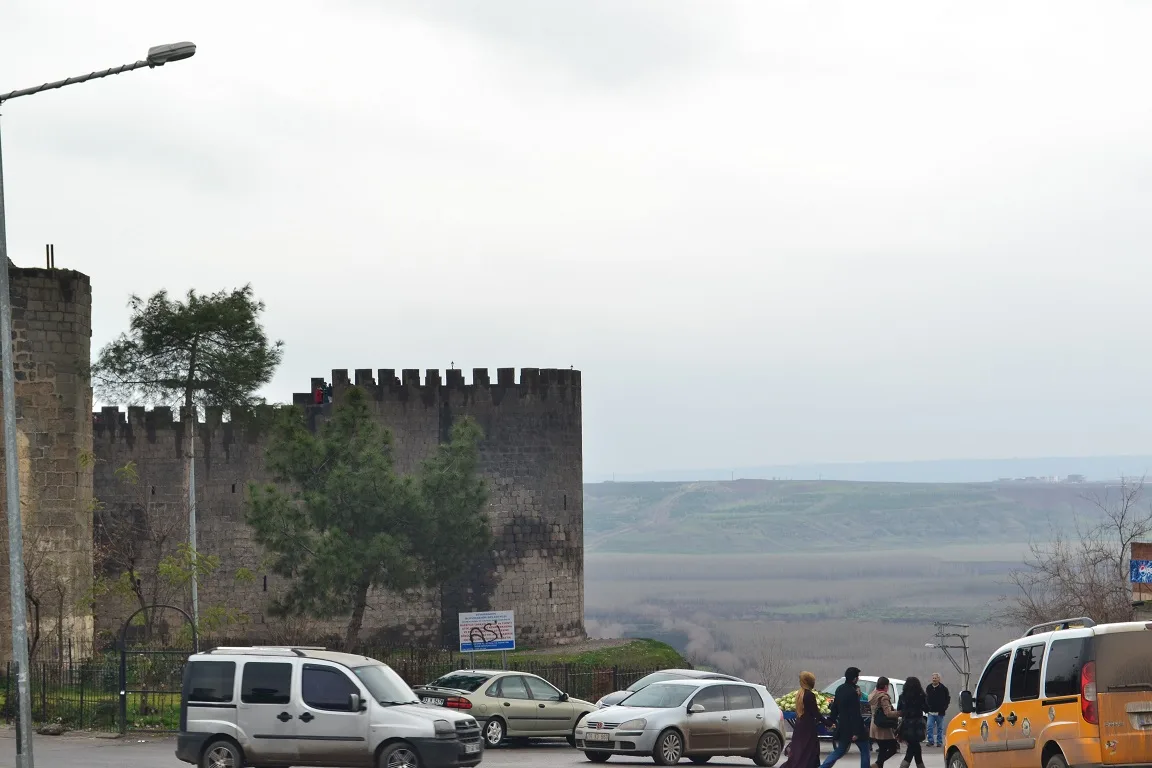
تحاط ديار بكر القديمة بسورعال من البازلت الأسود (يبلغ طوله 5.5 كم)، وهو أكبر سور متواجد فى تركيا ومن أكبر المدن المحاطة بأسوار على مستوى العالم أيضًا، ومن هنا بدأت رحلتي في المدينة، تسلقت السور ونظرت نظرات خاطفة إلى المدينة قبل أن أنزل مستكملاً جولتي في وسط البلد متجهًا إلى خان حسن باشا الأثري الذي تتواجد به الأسواق والمطاعم والكافيهات المتنوعة، ثم اتجهت سريعًا إلى الجامع الكبير لأصلي الجمعة، وهو جامع مبني من طرف السلاجقة في القرن الحادي عشر بالبازلت الأسود والحجر الجيري، ويعتبر من أقدم مساجد تركيا ويسع لحوالى 5500 مصلٍ، وعندما ذهبت هناك وجدت العديد من قوات الشرطة أمام المسجد، ووجدت المسجد ممتلئًا إلى آخره، ولم أجد مكانًا أصلي به بسهولة، واستمعت إلى الخطبة وكانت رائعة بحق، وبعد الانتهاء من صلاة الجمعة وجدت الإمام والمصلين يصلون جماعة من جديد، أربعة ركعات، لم أصلها معهم لعدم معرفتي ماذا يفعلون، وبعد السؤال وجدت أنهم يعيدون صلاة الظهر ثانية بعد الخطبة أو شيئًا من هذا القبيل الذي لم أره من قبل، ومن المعروف أن مذهب أهل ديار بكر شافعي بخلاف مذهب الغرب التركي الحنفي، لذا تختلف بعض الأمور كما حدث ورأيت، وكان صديقي الكردي فيما سبق يذكرني دومًا كدليل على قرب الأكراد من ثقافتنا بتشابه مذهبنا، وإذا سألتم رأيي فبالفعل ثقافة الأكراد أقرب منا من ثقافة الأتراك بوجه عام.

نون بوست

الجامع الكبير من الداخل

بعد الانتهاء من الصلاة اتجهت إلى قصر جميل باشا والذي سيتحول إلى متحف ولكنه فى طور التحويل الآن، فزرته لرؤية معماره، وأعجبني جدًا تصميمه الذي تشعر فيه بأصالة التاريخ التي ستُمزج بعصرية الحاضر بعد تحويله للمتحف، هو مكان يستحق الزيارة قطعًا بلا شك.

كانت الخطة التالية هي زيارة كبري العشرة أعين المبني على نهر دجلة، وهو أول جسر إسلامي يُبنى في الأناضول طوله 178 مترًا وله عشر فتحات (عيون)، لذلك سمي بجسر العشرة أعين، تم ترميمه حديثًا وانتهى ترميمه عام 2010، ومن المؤسف أن النهر لم يكن نظيفًا جدًا، ولكن لا يزال صوت تدفق المياه وتغريد الطيور صاحب تأثير ساحر على كل من يزوره، وكنت سعيدًا جدًا في هذا اليوم برؤيتي لنهر دجلة، ذلك النهر الذي طالما سمعت به ولم أتخيل يومًا أنني سأزوره.

نون بوست

نون بوست

أول جسر إسلامي يُبنى في الأناضول

بعد الانتهاء من الزيارة اتجهت إلى المنارة ذات الأعمدة الأربعة وبدأ المطر، ولكن كان لا بد لى من أن ألتقط بعدستي تلك التحفة المعمارية الغريبة كما سترونها في الصورة، من الأساطير المشاعة حول ذلك المكان أن من يمر سبع مرات بين الأعمدة الأربعة ستحقق له أمانيه!

نون بوست

المنارة ذات الأعمدة الأربعة

اتجهت بعد ذلك إلى كنيسة صرب جيراجوس، التي تم ترميمها بمساعدة خارجية هولندية، والتي تقوم أساسًا على التبرعات الآن، لم أقض الكثير من الوقت هناك، بعد ذلك اتجهت مباشرة إلى الطعام لأقوم بتجربة طعام ديار بكر الشهير، وبالفعل يصدق من يقول إن طعام جنوب شرق الأناضول ألذ كثيرًا من الطعام هنا في بورصة أو في المدن الغربية بوجه عام، ولكن المطبخ العربي لا يزال متربعًا على عرش قمة ذوقي الخاص.

نون بوست

الكنيسة من الداخل

نون بوست

أحد شوارع المدينة

TAGGED: أكراد تركيا ، المدن التركية ، جنوب تركيا ، دياربكر ، رحلة إلى تركيا
Download this article as PDF
Share this Article
Facebook Twitter Whatsapp Whatsapp Telegram Email Copy Link
محمد عبد اللطيف
By محمد عبد اللطيف مدون مصري مقيم في تركيا
Follow:
Next Article نون بوست The Stigma of “ISIS”: A Heavy Legacy Haunting Women and Children of Former Members

Read More

  • U.S. Regime‑Change Policies: Why They Are Destined to Fail U.S. Regime‑Change Policies: Why They Are Destined to Fail
  • The Gulf’s Balancing Act: Iran, Israel, and Hidden Links
  • Iraq–Turkey Oil Export Treaty: Why Did Ankara Cancel It After 52 Years?
  • Syria’s Northeast on Edge: QSD Between Ankara and Damascus
  • Has Europe Changed Its Stance on Israel… or Just Its Language?
part of the design
NoonPost Weekly Newsletter

You May Also Like

U.S. Regime‑Change Policies: Why They Are Destined to Fail

U.S. Regime‑Change Policies: Why They Are Destined to Fail

إسراء سيد Esraa sayed 8 April ,2026
The Gulf’s Balancing Act: Iran, Israel, and Hidden Links

The Gulf’s Balancing Act: Iran, Israel, and Hidden Links

فريق التحرير Noon Post 8 April ,2026
Iraq–Turkey Oil Export Treaty: Why Did Ankara Cancel It After 52 Years?

Iraq–Turkey Oil Export Treaty: Why Did Ankara Cancel It After 52 Years?

فريق التحرير Noon Post 8 April ,2026
dark

An independent media platform founded in 2013, rooted in slow journalism, producing in-depth reports, analysis, and multimedia content to offer deeper perspectives on the news, led by a diverse young team from several Arab countries.

  • Politics
  • Society
  • Rights & Liberties
  • Opinions
  • History
  • Sports
  • Education
  • Technology
  • Economy
  • Media
  • Arts & Literature
  • Entrepreneurship
  • Travel
  • Cinema & Drama
  • Food
  • Health
  • Culture
  • Latest Reports
  • Files
  • Long Reads
  • Interviews
  • Podcast
  • Interactive
  • Encyclopedia
  • In Pictures
  • About Us
  • Our Writers
  • Write for Us
  • Editorial Policy
  • Advanced Search
Some rights reserved under a Creative Commons license

Removed from favorites

Undo
Go to mobile version