
The Regional Kurdish Map: A Single Reality with Multiple Political Experiences
In the heart of the Middle East across its mountain fringes and fractured political borders the Kurdish question stands as one of the most complex national‑issues and most multifaceted.
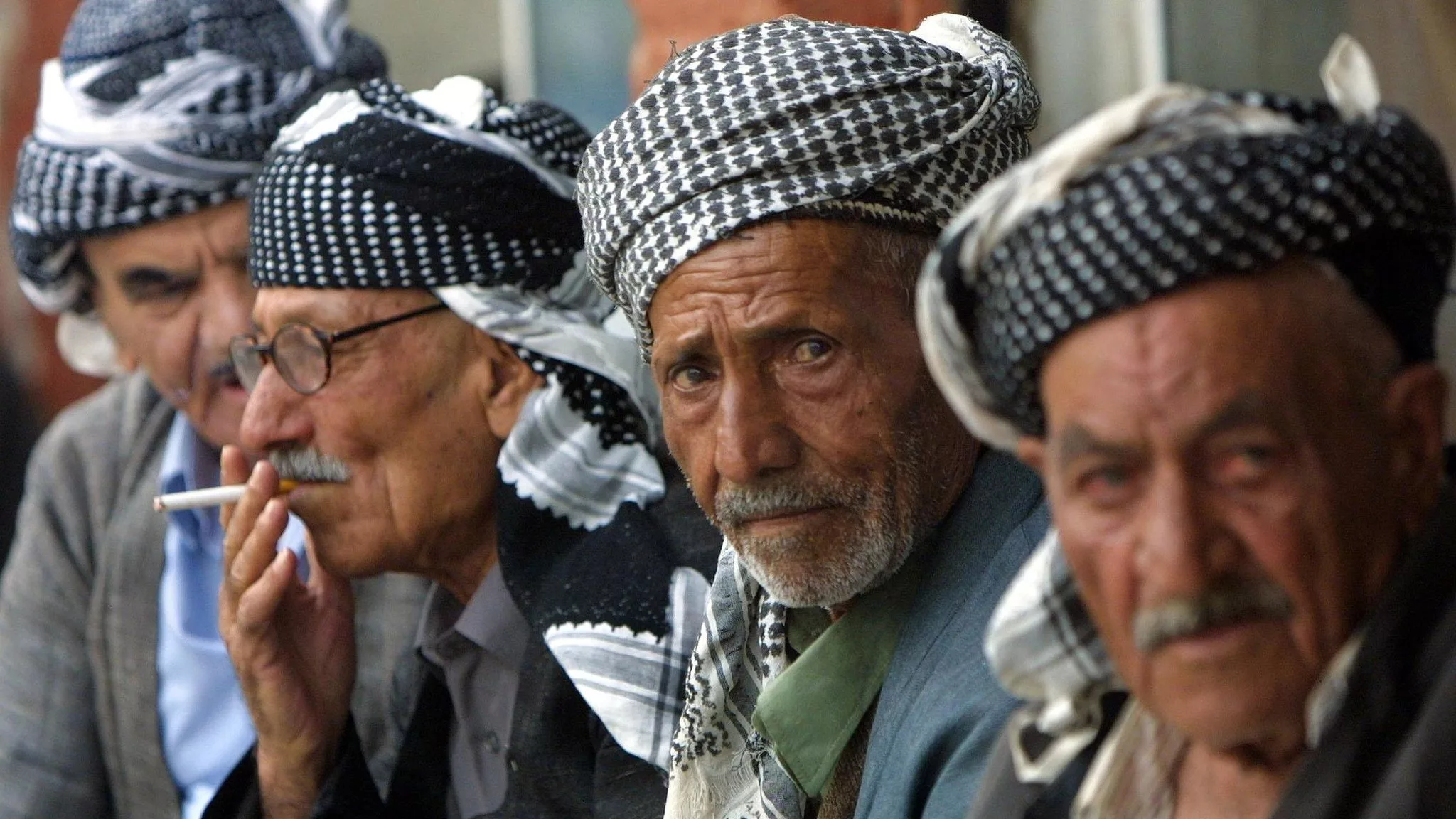
The Kurds, regarded as the largest stateless people in the world, are dispersed across Turkey, Syria, Iraq and Iran in a historically contiguous geographic region but politically fragmented. Language, culture and nationalist aspiration intertwine with maps of national sovereignty.
Despite shared heritage and affiliation, Kurdish experiences in these countries have diverged along distinct paths. In Iraq the Kurds achieved a constitutionally recognized federal region; in Syria, the chaos of war offered them an opportunity to build a de‑facto self‑rule; while in Turkey Kurdish communities continue to face challenges associated with constitutional recognition and political participation within a complex and enduring relationship with the state.
Mapping the distribution
The Kurds form one of the largest ethnic‑national groups in the world without an independent state: their global population is estimated between 36 and 45 million. They are concentrated in the region historically known as “Kurdistan”, stretching across four main countries: Turkey in the north, Iran to the east, Iraq to the south, and Syria to the west.
In Turkey which encompasses roughly half the historical Kurdistan area Kurds represent the country’s largest ethnic and linguistic minority. Although there are no accurate official statistics owing to the sensitivity of the issue, independent estimates place their share between 15% and 20% of the total population of some 85 million, meaning between 15 and 20 million Kurds.
Meanwhile the Kurdish Institute in Paris estimates the share could reach a quarter of Turkey’s population, putting their number closer to 20 million underlining the Kurdish weight within the Turkish state.
In Iraq, Kurds rank second (after Arabs) by population. According to the Kurdistan Region’s statistical body in 2023, their number exceeds 6.5 million about 15%–17% of Iraq’s total population.
They are mainly concentrated in the provinces of Erbil, Sulaymaniyah, Duhok and Halabja within the Region, plus a significant presence in the disputed province of Kirkuk, and smaller clusters in Nineveh, Diyala and other provinces.
Some other estimates reduce the number to around 5.2 million because of differing criteria in counting populations in ethnically mixed areas.
In Syria, Kurds constitute the largest ethnic minority. The Kurdish Institute in Paris estimated their share before the war at about 15% of the total population more than 3 million people.
They are traditionally concentrated in the northeast, especially in Al‑Hasakah province (cities like Qamishli and Al‑Malikiya/Dêrik), in addition to areas in Aleppo province in the northwest such as Jabal al‑Akrad and Afrin (before Turkey’s takeover of the area in 2018), and extending to the southern slopes of the Taurus range.
Damascus also hosts a historic Kurdish quarter, known as “Kurdish Quarter” or “Rukn al‑Din”, in which a Kurdish community has lived for decades.
Despite long‑standing interaction with other groups, the Kurds in northeastern Syria especially those who migrated from Turkey in the 1920s have preserved their distinct cultural and linguistic character. Meanwhile other segments, especially in the northwest and in Damascus, have merged to varying degrees into Arab society, speaking Arabic alongside Kurdish and coexisting with their surroundings without losing their identity entirely.
Turkey: From the promises of the republic to the Kurdish file’s complications
Since the founding of the modern Turkish Republic in 1923, Ankara adopted a strict nationalist project that sought to integrate all components of society under a singular Turkish identity. The Kurds were excluded from any official recognition of their national distinctiveness.
Although Mustafa Kemal Atatürk reportedly made promises to Kurdish leaders of administrative roles in the new Turkey in exchange for their support for the War of Independence, the signing of the Treaty of Lausanne and the consolidation of the nation‑state concept rendered those early understandings void the era of “lost promises” was closed.
In the early decades of the republic, early Kurdish uprisings such as in 1925 and 1937 were met with violent military responses, followed by a political‑cultural denial state in which the Kurdish language was banned, Kurdish identity references were removed from public discourse, and Kurds were officially described as “Mountain Turks”.
With the rise of Kurdish nationalism in the 1960s and the emergence of new political awareness, in 1978 the Kurdistan Workers’ Party (PKK) was founded under the leadership of Abdullah Öcalan and launched an armed insurgency in 1984 demanding national rights and a degree of autonomy.
Turkey subsequently entered a protracted, bloody conflict that claimed over 40,000 lives, triggered waves of displacement and deportation, including the evacuation of thousands of Kurdish villages and the forced removal of approximately a million Kurds from the country’s southeast.
In 1999 the arrest of Öcalan marked a turning point in the insurgency’s trajectory; the party announced a unilateral cease‑fire, before resuming activity in 2004 after peace efforts faltered.
Upon the rise of the Justice and Development Party (AKP) to power, Ankara launched the so‑called “democratic opening” in 2009 including unprecedented steps toward cultural recognition of Kurds: permitting Kurdish‑language education in private schools, opening media channels in Kurdish, lifting the ban on Kurdish names, and supporting development projects in Kurdish‑majority provinces.
Politically, the last decade witnessed an increase in Kurdish representation in parliament: Selahattin Demirtaş emerged as a prominent Kurdish figure who ran for the presidency in 2014. The Peoples’ Democratic Party (HDP) achieved a landmark breakthrough in entering parliament strongly in 2015.
Yet those glimmers of hope did not translate into a lasting solution: following the collapse of peace talks with the PKK in mid‑2015, the insurgent group declared self‑administrations in Kurdish‑areas, to which Ankara responded with extensive military operations that dismantled them and tightened security measures.
Tensions increased further when Ankara linked Kurdish influence in Syria where Kurds established a self‑administration with Western support with the PKK’s armed activity inside Turkey, and expanded Turkish military operations into northern Iraq and northeast Syria in an effort to dismantle the Kurdish militants’ logistical infrastructure.
On the other hand, the PKK carried out lethal attacks targeting Turkish urban centers, reinforcing the security‑establishment’s conviction that the Kurdish issue represented a strategic security threat that toleration cannot risk.
In a significant development that may close one of the longest insurgency chapters in Turkey’s modern history, in 2024 Ankara began implementing a comprehensive strategy called “Turkey without Terrorism”, which aims to end the conflict with the PKK by a mixture of security pressure, political measures and social initiatives.
Syria: From decades of marginalization to a self‑administration experiment
Historically, the condition of Kurds in Syria was no different to their counterparts in neighboring states. After independence and especially with the rise of Ba’ath Party rule in 1963 the Kurdish presence was dealt with as a threat to the unity of the national state.
The exceptional census in Al‑Hasakah province in 1962 marked a critical turning point: some 120,000 Kurds were stripped of Syrian citizenship, officially classified as “foreigners” deprived of citizenship rights at a time when a new generation known as “maktoumeen” (stateless) emerged one of the most severe exclusionary policies directed at Kurds in the region.
Simultaneously, the “Arab Belt” plan targeted demographic change in Kurdish regions along the Turkish border, coinciding with a blanket ban on Kurdish culture and language and prohibition of naming births and places with Kurdish names an attempt to assimilate Kurdish identity into the state’s Arab framework.
But that marginalization scenario flipped dramatically with the 2011 Syrian uprising. Amid the withdrawal of government forces from northeastern zones in 2012, Kurdish parties seized a rare opportunity to build self‑administration on the ground.
The regime used that moment to retreat from some previous policies most notably granting citizenship to many previously stateless Kurds and permitting limited cultural space for Kurdish activity and education.
During the war, the People’s Protection Units (YPG) was formed as a Kurdish military force and later aligned with the Syrian Democratic Forces (SDF), which played a pivotal role with U.S. support in the fight against Islamic State (ISIS).
Thanks to this role, Kurdish‑controlled areas expanded beyond traditionally Kurdish‑heavy zones, and in 2014 they declared the “Autonomous Administration”, which in 2016 evolved into a federal‑style system the first Kurdish local governance model in Syria.
With the acceleration of field and political shifts in late 2024, Syrian Kurds found themselves at an unprecedented turning point when Bashar al‑Assad’s regime collapsed unexpectedly on December 8 2024, ending five decades of absolute rule.
On this basis, Kurdish leadership entered urgent negotiations with the new transitional authority headed by Ahmad Ashar, leading to an agreement in Damascus on March 10 2025. The deal calls for a comprehensive cease‑fire, the integration of SDF forces into state institutions, recognition of the Kurdish community as an indigenous component of Syria’s national identity, and full guarantees of their political and constitutional rights.
The agreement also includes a rejection of division and hate speech, ensures the return of displaced persons under state protection, and cooperation in confronting remnants of the former regime and any terrorist or separatist threats. The end of 2025 is set as the deadline for completing all of these measures under joint committees’ supervision.
Nonetheless, concerns remain about how these pledges will translate into practice. Years of mistrust between the parties do not vanish easily. Details of the shape of decentralization and the Kurds’ role in central decision‑making remain under discussion in the political transition pathway.
Turkey is also watching developments cautiously: although it welcomes the collapse of Roj Ava and the integration of SDF into the Syrian army, Ankara fears that elements tied to the PKK will remain in the new structure.
Iraq: From oppression to federalism
Iraqi Kurds charted a long and turbulent path before arriving at one of the most advanced autonomy models among parts of Kurdistan. Since the founding of modern Iraq after World War I, Kurds found themselves a marginalized minority within an Arab‑majority state, which spurred a series of uprisings led by Mahmoud Al‑Hafeed between 1919 and 1940, all brutally suppressed.
The Kurdish issue escalated through both the monarchy and republican eras until the first real breakthrough came with the March 11, 1970 agreement between Baghdad and the Kurdish revolutionary leadership under Mulla Mustafa Barzani, which envisaged autonomy for three provinces (Erbil, Duhok and Sulaymaniyah), recognition of Kurdish as an official language alongside Arabic, and Kurdish participation in governance.
However, the agreement soon collapsed due to implementation disputes, especially over Kirkuk and oil‑sharing.
In 1974 the Kurdish Democratic Party rejected a new autonomy law proposed by the Ba’athist regime, deeming it a regression on the 1970 accord. The regime retaliated with a major military campaign, then the Algiers Accord in 1975 between Iraq and the Shah of Iran led to the withdrawal of Iranian support for Barzani, and the collapse of his armed movement.
After the 1991 Gulf War, Kurds rose again only to face harsh repression until intervention by the United States, Britain and France imposed a no‑fly zone north of the 36th parallel. This effectively allowed the regime’s forces to withdraw from Kurdistan and enabled Kurds to establish the first self‑administration on the ground.
In 1992 local elections produced a parliament and government for the Kurdistan Region, despite internal fighting between the two main Kurdish parties (the KDP and the PUK) from 1994 to 1998, before U.S. intervention forced a peace agreement and gradual restoration of stability.
The fall of Saddam Hussein’s regime in 2003 marked a major turning point: Iraq’s 2005 constitution enshrined the federal structure, recognized the Kurdistan Region as a federal entity with its own parliament, government and security forces (the Peshmerga), and made Kurdish an official language of Iraq.
Kurds participated vigorously in the political process: Jalal Talabani became president of Iraq, while the Region retained wide powers over local governance, from legislation to investment and oil exports.
The security and economic stability that the Region enjoyed over the past two decades turned its cities especially Erbil, Duhok and Sulaymaniyah into thriving urban centers attractive for investment and internally displaced persons.