NoonPost NoonPost

NoonPost

  • Home
  • Politics
  • Economy
  • Society
  • Culture
  • Files
  • Long Reads
  • Podcast
AR
Notification Show More
نون بوست
“There Are Nights I Can’t Close My Eyes”: How Gazans Are Living in Homes on the Brink of Collapse
نون بوست
From al-Jolani to Ahmad al-Shara: The Evolution of Syria’s New Leader
نون بوست
When Political Islam Receded in Egypt: Who Filled the Void?
نون بوست
An Extension of Genocide: Gaza’s Detainees Speak Out
نون بوست
A Tightrope Between Survival and Sovereignty: The Syrian Government Faces Normalization Pressures
نون بوست
American Aircraft Carriers: Has the Era of “100,000 Tons of Diplomacy” Ended?
نون بوست
U.S. Regime‑Change Policies: Why They Are Destined to Fail
نون بوست
Transformations of Israeli Judaism: Between the Victim Complex and the Colonizer’s Doctrine
نون بوست
The Gulf’s Balancing Act: Iran, Israel, and Hidden Links
نون بوست
Iraq–Turkey Oil Export Treaty: Why Did Ankara Cancel It After 52 Years?
نون بوست
Syria’s Northeast on Edge: QSD Between Ankara and Damascus
نون بوست
Has Europe Changed Its Stance on Israel… or Just Its Language?
NoonPost NoonPost
AR
Notification Show More
نون بوست
“There Are Nights I Can’t Close My Eyes”: How Gazans Are Living in Homes on the Brink of Collapse
نون بوست
From al-Jolani to Ahmad al-Shara: The Evolution of Syria’s New Leader
نون بوست
When Political Islam Receded in Egypt: Who Filled the Void?
نون بوست
An Extension of Genocide: Gaza’s Detainees Speak Out
نون بوست
A Tightrope Between Survival and Sovereignty: The Syrian Government Faces Normalization Pressures
نون بوست
American Aircraft Carriers: Has the Era of “100,000 Tons of Diplomacy” Ended?
نون بوست
U.S. Regime‑Change Policies: Why They Are Destined to Fail
نون بوست
Transformations of Israeli Judaism: Between the Victim Complex and the Colonizer’s Doctrine
نون بوست
The Gulf’s Balancing Act: Iran, Israel, and Hidden Links
نون بوست
Iraq–Turkey Oil Export Treaty: Why Did Ankara Cancel It After 52 Years?
نون بوست
Syria’s Northeast on Edge: QSD Between Ankara and Damascus
نون بوست
Has Europe Changed Its Stance on Israel… or Just Its Language?
Follow US

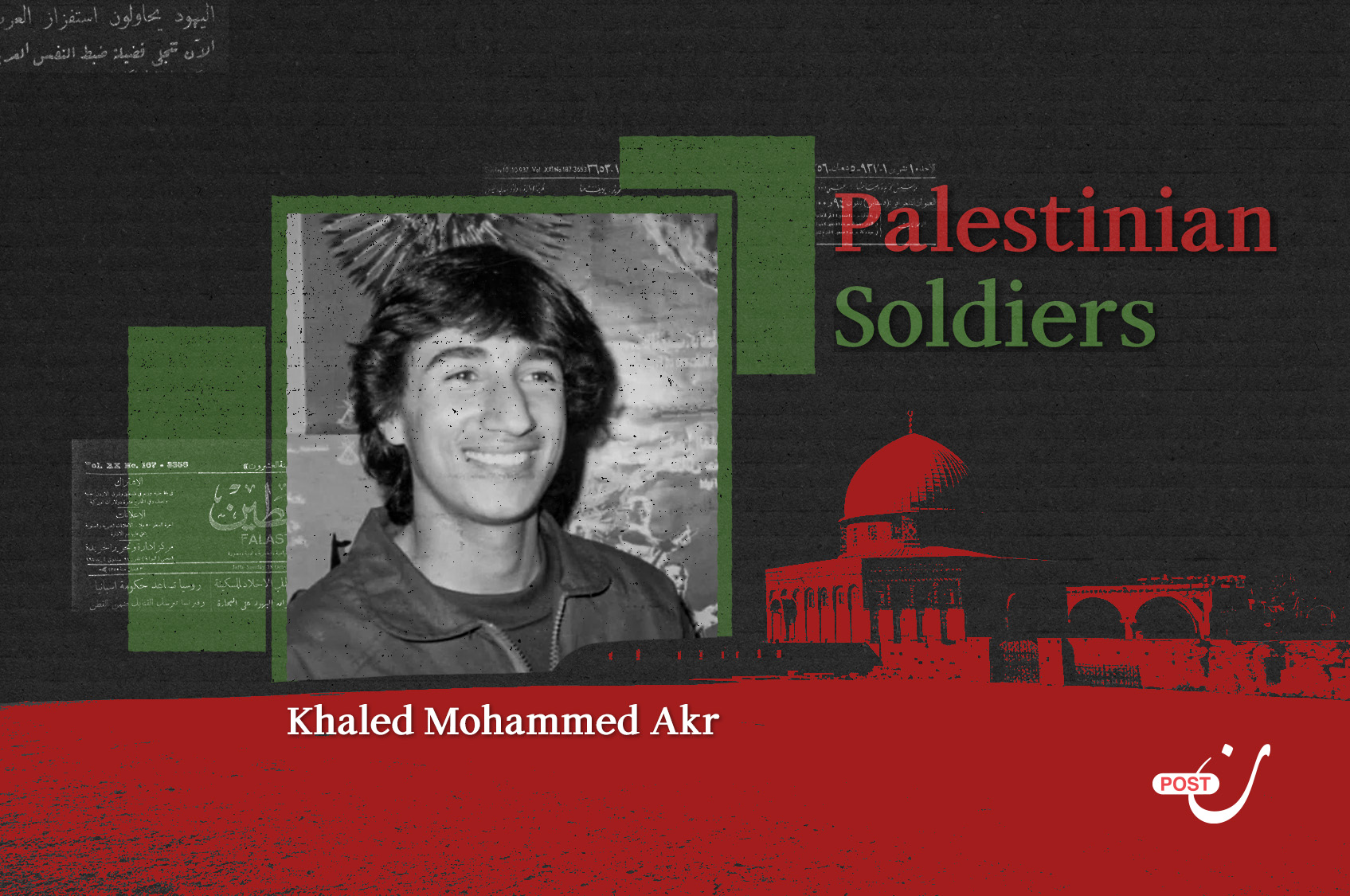
Khaled Akra: The Syrian Who Soared into Palestine

فريق التحرير
Noon Post Published 26 March ,2026
Share
نون بوست
نون بوست

In the early hours of Saturday, October 7, 2023, fighters from the al-Qassam Brigades the military wing of Hamas crossed the skies above Israeli settlements surrounding Gaza using rudimentary paragliders in an operation dubbed the “Al-Aqsa Flood.”

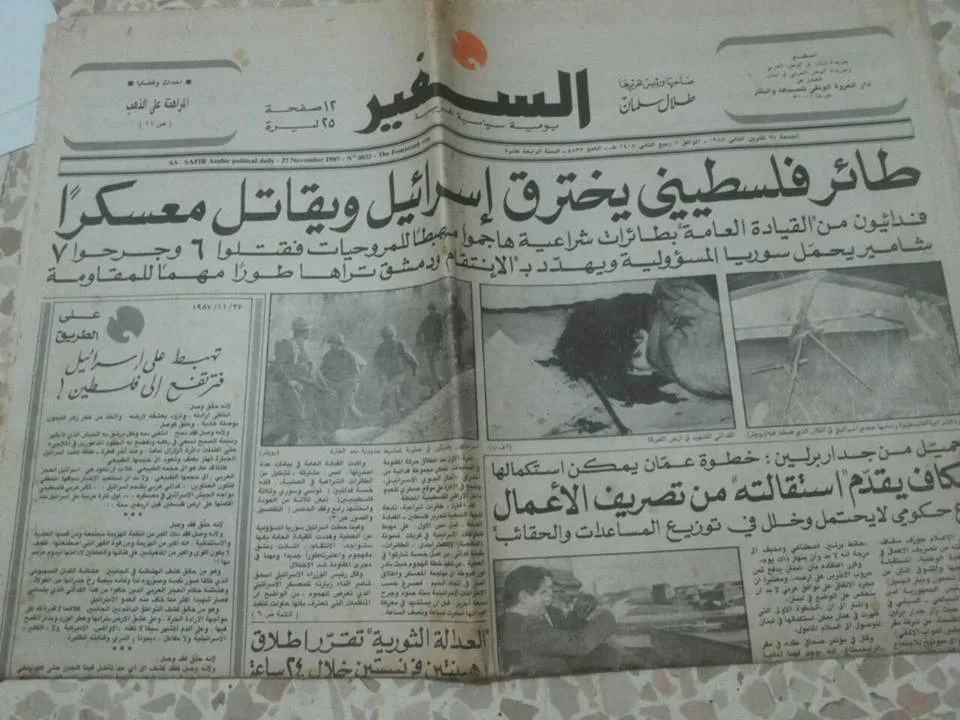
This striking image of human-powered aircraft equipped with simple wheels and propellers evoked a scene from 36 years earlier, when two Arab men affiliated with the Popular Front for the Liberation of Palestine General Command (PFLP-GC) launched a similar attack.

Using gliders from near the Lebanese-Israeli border, one of the men infiltrated an Israeli military base, killing and injuring several soldiers.

That operation was led by Syrian fighter Khaled Mohammad Akra from Aleppo. It was carried out in response to the 1953 Qibya massacre. Akra had joined the Palestinian resistance in Lebanon at the age of 14 and died a martyr as he glided toward Palestine in a traditional hang glider.

Khaled Akra

Born in 1967, Syrian national Khaled Mohammad Akra believed that armed struggle was the only path to liberating Palestine. In 1983, driven by this conviction, he joined the Palestinian resistance, hoping to support his Palestinian brethren in the face of an Israeli occupation that had seized land and violated dignity with impunity before Arab leaders.

Akra aligned himself with the Popular Front for the Liberation of Palestine General Command, a leftist, nationalist Palestinian faction that broke away from the main PFLP on April 24, 1968, establishing its leadership headquarters in Damascus.

Akra who later took the nom de guerre Abu Rami was drawn to the faction because of its pan-Arab character; its ranks included fighters from across the Arab world, with some even rising to leadership positions.
نون بوست

The group emphasized that its struggle was part of a global fight against colonialism, racism, and terror targeting oppressed peoples.

He received his military training in Naameh, southern Lebanon, where he learned to carry and use weapons, holding onto the hope that one day he would be selected for a fedayeen operation against the Israeli occupation, either inside the occupied territories or abroad.

At the time, the PFLP-GC had conducted several such attacks targeting Israeli interests both within and outside of Palestine.

A Unique Operation

After months of training and an unrelenting desire to be martyred for Palestine, Akra was selected to lead a four-man fedayeen unit that included himself, Tunisian fighter Miloud bin Naja Nouma, and two Palestinians. Their mission: to carry out a bold assault against Israeli soldiers. Akra was just 20 years old.

Unlike previous operations that typically involved crossing land borders, this mission would breach Israeli territory from the sky an unprecedented tactic aimed at bypassing the fortified border fence, which made land incursions nearly impossible.

Late on November 25, 1987, the team prepared their gliders. However, the two Palestinian fighters were forced to land back in Lebanon due to technical issues, while the Syrian and Tunisian continued their flight. High hopes rested on their shoulders within the leadership of the PFLP-GC.

With red-and-white wings, the oversized gliders powered by small engines and fans no larger than a lawn mower took off across the northern border of occupied Palestine. Onboard were Arab fighters who had dedicated their lives to the Palestinian cause.

Israeli soldiers heard the buzz of engines overhead and issued alerts to military bases and civilian centers in the north. Helicopters equipped with searchlights were deployed but found nothing the gliders were flying low, just above the treetops that blanketed the area.

Akra successfully crossed the buffer zone, which ranged between 5 and 12 miles wide in the south, and landed in a field of grass and thorns near the settlement of Kiryat Shmona in northern occupied Palestine.

Armed with a Soviet-made Kalashnikov rifle, a silenced pistol, and grenades strapped to his body, he ran roughly 200 meters to Gibor military base, home to elite Israeli special forces.

Spotting an Israeli military truck, Akra opened fire, killing the driver and injuring a female soldier. He then infiltrated the base with ease, passing an armed guard who fled upon hearing gunfire.

Once inside, the Syrian fighter unleashed a barrage from his assault rifle and threw grenades into tents crowded with Israeli troops. He killed five more soldiers and wounded six others, catching the entire base by surprise.

The clash lasted over an hour, prompting Israeli soldiers to call for reinforcements. Helicopters, flares, and tracer rounds lit up the battlefield until the young fighter from Aleppo, Khaled Mohammad Akra, was killed by Israeli machine-gun fire.

An Israeli Shockwave

The attack left widespread destruction: three barracks were demolished, five tents burned, and more than six vehicles destroyed. Casualties littered the base and its entrances. It was the deadliest Palestinian assault inside occupied territory since March 1978, when 11 Palestinian fighters killed 37 Israelis and injured 82 others after hijacking a bus.

The Israeli military faced sharp criticism in the aftermath. Despite heightened alert levels, it had failed to take necessary precautions, according to Israeli media. The sentry at the base gate, rather than engaging the attacker, had fled in fear.

Israeli outlets also revealed that many of the soldiers killed or wounded were playing backgammon and checkers when the Arab fighters stormed the base, highlighting a significant military failure.

The operation shattered the myth of Israeli military invincibility. Gibor was assumed to be a heavily fortified military complex yet it was exposed as vulnerable to even a single determined fighter.

Israel was stunned that one Arab fighter could inflict such damage. The incident rekindled old fears that Palestinian armed groups might still pose a cross-border threat, despite years of perceived calm.

The next day, numerous Israeli businesses and institutions shuttered. Residents were told to shelter in place, and commando units were dispatched to search for any additional infiltrators.

To deflect public outrage, Israeli authorities blamed the base’s guard. He was sentenced to three years in prison for cowardice a scapegoat in what came to be known as the “Shin-Gimel Syndrome,” a term describing the tendency to punish lower-ranking individuals to shield senior commanders from accountability.

The Night of the Gliders

The glider attack proved a bitter disappointment for Israel. Two fighters from the Palestinian resistance had struck a base housing some of Israel’s most elite forces using no more than modified paper-thin gliders equipped with propellers and lawn mower engines.

The operation also served as a morale boost for the Palestinian national movement. Just days later, the First Intifada known as the “Children of the Stones” uprising erupted and continued until 1992, culminating in negotiations between the PLO and Israel that led to the Oslo Accords in 1993.

The glider mission stands as a testament to the Palestinian struggle against occupation and a reminder of Arab solidarity with a cause long neglected by the international community and Arab leadership alike.

Download this article as PDF
Share this Article
Facebook Twitter Whatsapp Whatsapp Telegram Email Copy Link
فريق التحرير
By فريق التحرير تقارير يعدها فريق تحرير نون بوست.
Follow:
Previous Article نون بوست “MK-Ultra”: The CIA’s Mind Control Project
Next Article نون بوست Will Trump Dissolve the Palestinian Authority?

Read More

  • U.S. Regime‑Change Policies: Why They Are Destined to Fail U.S. Regime‑Change Policies: Why They Are Destined to Fail
  • The Gulf’s Balancing Act: Iran, Israel, and Hidden Links
  • Iraq–Turkey Oil Export Treaty: Why Did Ankara Cancel It After 52 Years?
  • Syria’s Northeast on Edge: QSD Between Ankara and Damascus
  • Has Europe Changed Its Stance on Israel… or Just Its Language?
part of the design
NoonPost Weekly Newsletter

You May Also Like

U.S. Regime‑Change Policies: Why They Are Destined to Fail

U.S. Regime‑Change Policies: Why They Are Destined to Fail

إسراء سيد Esraa sayed 8 April ,2026
The Gulf’s Balancing Act: Iran, Israel, and Hidden Links

The Gulf’s Balancing Act: Iran, Israel, and Hidden Links

فريق التحرير Noon Post 8 April ,2026
Iraq–Turkey Oil Export Treaty: Why Did Ankara Cancel It After 52 Years?

Iraq–Turkey Oil Export Treaty: Why Did Ankara Cancel It After 52 Years?

فريق التحرير Noon Post 8 April ,2026

الفيفا وحكاية جدول التصنيف العالمي

أيهم المدرس
أيهم المدرس Published 17 October ,2015
Share
fifa_logo

الاتحاد الدولي لكرة القدم (الفيفا)

تدور هذه الأيام عجلة المباريات الدولية في جميع قارات المعمورة، ضمن نطاق ما يدعى بأسبوع الفيفا، وهو أسبوع معين من كل شهر أو أكثر، يقتصر فيه النشاط الكروي على إقامة المباريات بين المنتخبات الوطنية، سواء ضمن تصفيات البطولات العالمية والقارية، أو الودية الاستعدادية، بمعدل مباراة أو اثنتين لكل منتخب، يتم الاتفاق على مواعيدها سلفًا بين الاتحاد الدولي لكرة القدم (الفيفا) من جهة، وبين الاتحادات المحلية التي تمثل أندية كرة القدم في بلادها من جهة أخرى، وينص الاتفاق على أن تسمح الأندية للاعبيها بالالتحاق بمنتخبات بلادهم عند الطلب، وذلك قبل ثلاثة أيام – كحد أدنى – من انطلاق مبارياتهم ضمن أسبوع الفيفا.

وما دمنا في الحديث عن الاتحاد الدولي لكرة القدم، فلا بد من التطرق إلى فضيحة الفساد المدوية، التي ضربت أروقته وهزت كيانه مؤخرًا، بعد أن ارتفعت الأصوات الخافتة التي كانت تتهامس منذ سنين، عن غرق أكبر كيان رياضي يحكم عالم كرة القدم في مستنقع وخم من الفساد المالي، وخرجت إلى العلن وثائق وثبوتيات تدين أغلب أعضاء الاتحاد الدولي، وبعض أعضاء الاتحادات القارية، بتلقي الرشى والبراطيل مقابل تقديم تسهيلات تتعلق باستضافة الأحداث الرياضية الهامة، ولم تستثن التحقيقات التي لاتزال أحداثها تتوالى فصولًا في المحاكم الأمريكية والسويسرية، أي شخصية يُشك في ضلوعها بجرائم الفساد، حتى وصل الأمر أخيرًا إلى رأس الهرم الكروي العالمي السويسري جوزيف بلاتر، الذي صدر في حقه أخيرًا قرارًا يقضي بإيقافه عن ممارسة أي أنشطة تتعلق بكرة القدم لمدة 90 يومًا، شأنه شأن رئيس أهم اتحاد قاري للعبة، الفرنسي ميشيل بلاتيني رئيس الاتحاد الأوروبي، والذي كان أبرز المرشحين لخلافة بلاتر في سدة رئاسة الفيفا.

حكاية جدول تصنيف المنتخبات الشهري

نون بوست

قبل مونديال 1994، كانت قرعة دور المجموعات في جميع بطولات كرة القدم التابعة للفيفا، تقام على أسس متباينة غير دقيقة، كنتائج البطولات السابقة مهما قدمت، أو التوزيع الجغرافي، أو حتى الترتيب الأبجدي، هذا التقسيم كان يؤدي إلى كثير من الظلم والإجحاف في حق بعض المنتخبات، التي قد تجد نفسها ضمن مجموعات نارية تفرض عليها وداع البطولات من أدوارها الأولى، مقابل مسيرات هينة مفروشة بالورود لمنتخبات أخرى تخدمها القرعة، هذا الواقع فرض على الفيفا إيجاد حل يضمن مزيدًا من الدقة والموضوعية والعدالة في تقسيم الفرق، وذلك عبر إيجاد نظام تصنيفي دوري خاص بمنتخبات كرة القدم، يعتمد على نتائج المباريات ضمن فترة زمنية معينة، أسوةً بألعاب رياضية أخرى كالتنس، فكان شهر كانون الأول من عام 1992، موعدًا لإطلاق أول تصنيف شهري خاص بمنتخبات الاتحادات الوطنية التابعة للفيفا، وكان عددها 167 اتحادًا من جميع قارات العالم، وتصدره حينها المنتخب البرازيلي.

وقد كان أساس التصنيف بسيطًا للغاية عند تأسيسه، بحيث يمنح ثلاث نقاط للفائز ونقطةً واحدةً للمتعادل ولا شيء للخاسر، ويراكم نقاط كل منتخب في الأعوام الثمانية الأخيرة، واستمر العمل بهذا التصنيف حتى مطلع عام 1999، حيث خضع لتعديلات جذرية، أصبحت بموجبها النقطة التصنيفية تعادل عشر نقاط قديمة، كما أصبح هناك قيمة لعوامل أخرى كعدد الأهداف المسجلة، ومكان المباراة (على ملعب الفريق أو خارجه)، إضافةً إلى قوة الخصم (ترتيبه على جدول التصنيف)، وأهمية المباراة (ضمن نهائيات أو تصفيات أو ودية)، وبقيت هذه المعايير على حالها حتى شهر يوليو من عام 2006، حيث أجريت بعض التعديلات الطفيفة عليها، بحيث اختصرت مدة تراكم النقاط إلى أربعة أعوام بدلًا من ثمانية، وأضيف معيار جديد يتعلق بتصنيف الاتحاد القاري (مباريات منتخبات الاتحادين الأوروبي والأمريكي الجنوبي تحظى بنقاط أعلى من نظيرتها في بقية الاتحادات القارية)، لتتخذ المعايير المتبعة في تصنيف الفيفا شكلها النهائي الذي لايزال معتمدًا حتى يومنا هذا.

منتخب العام

نون بوست

تعاقبت على صدارة جدول التصنيف منذ تأسيسه سبعة منتخبات وطنية فحسب، هي: البرازيل، إيطاليا، ألمانيا، فرنسا، الأرجنتين، إسبانيا، وهولندا، وقد اتفق على تتويج المنتخب الذي ينهي العام في صدارة التصنيف بجائزة (منتخب العام)، والتي احتكرتها خمسة من هذه المنتخبات السبعة، على رأسها منتخب السيليساو الذي أنهى 12 عامًا في صدارة التصنيف، ومن ورائه المنتخب الإسباني الذي فاز بالجائزة ستة أعوام متتالية إبان عصره الذهبي، أما جائزة العام الماضي فاستحقها المنتخب الألماني بعد فوزه بكأس العالم، فيما احتل منتخبا الأرجنتين وكولومبيا المركزين الثاني والثالث.

وهاكم قائمة تفصيلية بالمنتخبات الخمسة الفائزة بجائزة (منتخب العام) منذ تأسيسها:

البرازيل: 12 مرة، أعوام: 1994، 1995، 1996، 1997، 1998، 1999، 2000، 2002، 2003، 2004، 2005، 2006.

إسبانيا: 6 مرات، أعوام: 2008، 2009، 2010، 2011، 2012، 2013.

ألمانيا: مرتين، عامي: 1993 و2014

فرنسا: مرة واحدة، عام 2001

الأرجنتين: مرة واحدة، عام 2007

التصنيف الحالي

حافظت الأرجنتين على موقعها في صدارة التصنيف العالمي للمنتخبات، في الجدول الجديد الذي صدر في الأول من أكتوبر من العام 2015، وذلك للشهر الرابع على التوالي، فيما استرد منتخب المانشافت (بطل العالم) المركز الثاني من نظيره البلجيكي، واستعاد المنتخب الإسباني موقعه ضمن العشرة الأوائل، فيما بقي منتخب فرنسا خارج لائحة العشرين الأفضل، متأثرًا بابتعاده عن المباريات التنافسية واقتصاره على خوض المباريات الودية، نتيجة إعفائه من خوض تصفيات أمم أوروبا بسبب استضافته لنهائياتها، كما احتفظت منتخبات: الجزائر، إيران، المكسيك، ونيوزلندا، بصدارة منتخبات قارات: أفريقيا، أسيا، أمريكا الشمالية، وأوقيانيا، على التوالي.

إليكم قائمة أفضل 20 منتخبًا في تصنيف الفيفا الأخير، مع رصيد النقاط لكل منهم:

الأرجنتين: 1419 نقطة

ألمانيا: 1401 نقطة

بلجيكا: 1387 نقطة

البرتغال: 1235 نقطة

كولومبيا: 1228 نقطة

إسبانيا: 1223 نقطة

البرازيل: 1204 نقطة

ويلز: 1195 نقطة

تشيلي: 1177 نقطة

إنجلترا: 1161 نقطة

النمسا: 1100 نقطة

سويسرا: 1044 نقطة

رومانيا: 1042 نقطة

هولندا: 1004 نقطة

التشيك: 983 نقطة

كرواتيا: 965 نقطة

إيطاليا: 962 نقطة

سلوفاكيا: 936 نقطة

الجزائر: 927 نقطة

الأورغواي: 919 نقطة.

ملاحظة: للتعرف على ترتيب المنتخبات الـ208 كاملةً، مع الإحاطة بتفاصيل إضافية حول آلية احتساب نقاط كل منتخب على حدة، والتغيرات التي طرأت على ترتيبه تاريخيًا، إضافةً لإمكانية المقارنة بين منتخبين أو أكثر، بإمكانكم زيارة صفحة التصنيف العالمي على موقع الاتحاد الدولي لكرة القدم (الفيفا) عبر الرابط التالي: هنا.

المنتخبات العربية

نون بوست

يذكر التاريخ بأن منتخبين عربيين استطاعا اقتحام غمار لائحة المنتخبات العشرة الأفضل عالميًا، أولهما منتخب أسود الأطلس المغربي، الذي احتل المركز العاشر في أبريل من عام 1998، وثانيهما منتخب الفراعنة المصري، الذي استطاع بلوغ المركز التاسع عالميًا في يونيو من عام 2010، وهو أفضل مركز يبلغه منتخب عربي في تاريخ تصنيف الفيفا.

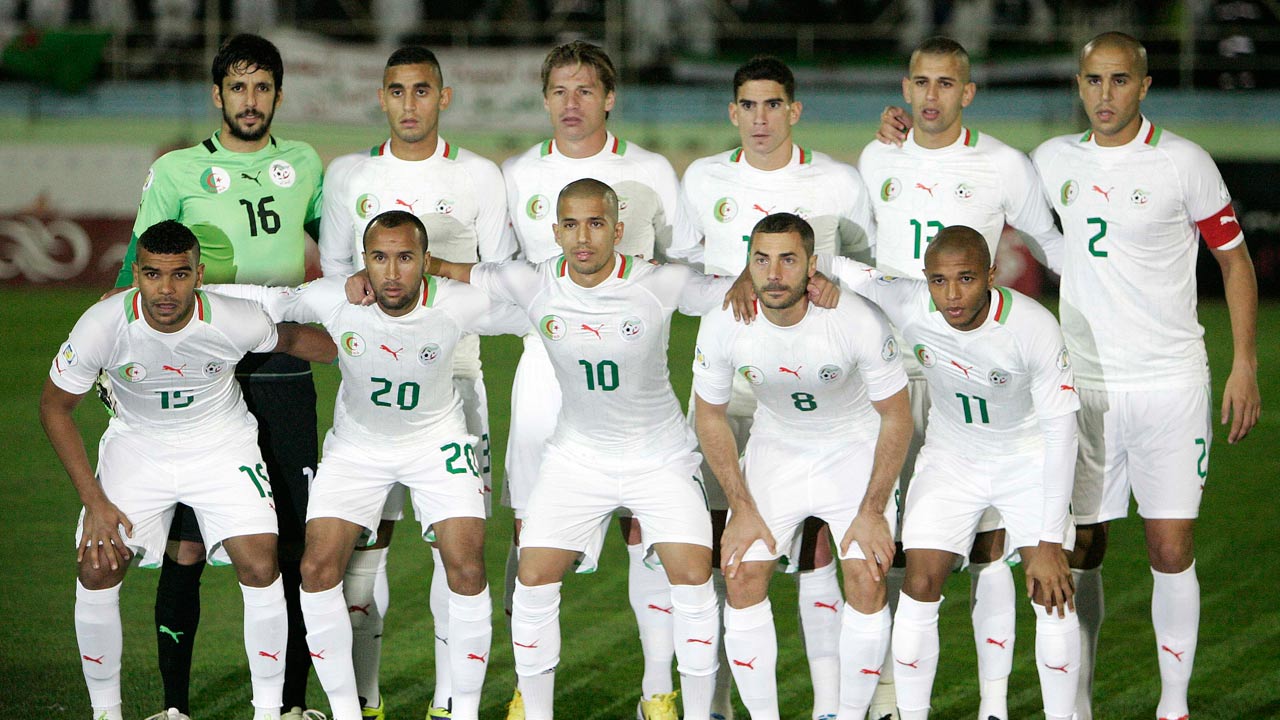
أما على صعيد التصنيف الحالي، فيحتل منتخب محاربي الصحراء الجزائري صدارة المنتخبات العربية، بحلوله في المركز الـ19 عالميًا والأول أفريقيًا، علمًا بأنه أنهى العام الماضي في المركز الثامن عشر عالميًا، يليه المنتخب التونسي الذي يحتل المركز الـ36 عالميًا والرابع أفريقيًا.

إليكم فيما يلي ترتيب جميع المنتخبات العربية في جدول تصنيف الفيفا الأخير الصادر في الأول من أكتوبر الجاري، إضافةً إلى التعرف على التصنيف القاري الحالي لكل منتخب:

الجزائر: المركز الـ19 (الأول أفريقيًا)

تونس: المركز الـ36 (الرابع أفريقيًا)

مصر: المركز الـ51 (التاسع أفريقيًا)

الإمارات: المركز الـ70 (الخامس أسيويًا)

المغرب: المركز الـ80 (الـ21 أفريقيًا)

السودان: المركز الـ84 (الـ22 أفريقيًا)

العراق: المركز الـ85 (الثامن أسيويًا)

السعودية: المركز الـ88 (التاسع أسيويًا)

موريتانيا: المركز الـ89 (الـ23 أفريقيًا)

قطر: المركز الـ92 (العاشر أسيويًا)

الأردن: المركز الـ99 (الـ11 أسيويًا)

عُمان: المركز الـ102 (الـ12 أسيويًا)

ليبيا: المركز الـ105 (الـ29 أفريقيًا)

سورية: المركز الـ123 (الـ13 أسيويًا)

البحرين: المركز الـ124 (الـ14 أسيويًا)

الكويت: المركز الـ128 (الـ15 أسيويًا)

فلسطين: المركز الـ130 (الـ17 أسيويًا)

لبنان: المركز الـ140 (الـ19 أسيويًا)

اليمن: المركز الـ180 (الـ38 آسيويًا)

الصومال: المركز الـ203 (الـ53 إفريقيًا)

جيبوتي: المركز الـ206 (الـ54 أفريقيًا).

TAGGED: أفضل منتخبات كرة القدم ، الاتحاد الدولي لكرة القدم ، الفيفا ، فساد الفيفا
TAGGED: كرة القدم
Download this article as PDF
Share this Article
Facebook Twitter Whatsapp Whatsapp Telegram Email Copy Link
أيهم المدرس
By أيهم المدرس كاتب سوري مهتم بالشأن الرياضي
Follow:
Next Article نون بوست The Stigma of “ISIS”: A Heavy Legacy Haunting Women and Children of Former Members

Read More

  • U.S. Regime‑Change Policies: Why They Are Destined to Fail U.S. Regime‑Change Policies: Why They Are Destined to Fail
  • The Gulf’s Balancing Act: Iran, Israel, and Hidden Links
  • Iraq–Turkey Oil Export Treaty: Why Did Ankara Cancel It After 52 Years?
  • Syria’s Northeast on Edge: QSD Between Ankara and Damascus
  • Has Europe Changed Its Stance on Israel… or Just Its Language?
part of the design
NoonPost Weekly Newsletter
dark

An independent media platform founded in 2013, rooted in slow journalism, producing in-depth reports, analysis, and multimedia content to offer deeper perspectives on the news, led by a diverse young team from several Arab countries.

  • Politics
  • Society
  • Rights & Liberties
  • Opinions
  • History
  • Sports
  • Education
  • Technology
  • Economy
  • Media
  • Arts & Literature
  • Entrepreneurship
  • Travel
  • Cinema & Drama
  • Food
  • Health
  • Culture
  • Latest Reports
  • Files
  • Long Reads
  • Interviews
  • Podcast
  • Interactive
  • Encyclopedia
  • In Pictures
  • About Us
  • Our Writers
  • Write for Us
  • Editorial Policy
  • Advanced Search
Some rights reserved under a Creative Commons license

Removed from favorites

Undo
Go to mobile version