NoonPost NoonPost

NoonPost

  • Home
  • Politics
  • Economy
  • Society
  • Culture
  • Files
  • Long Reads
  • Podcast
AR
Notification Show More
نون بوست
“There Are Nights I Can’t Close My Eyes”: How Gazans Are Living in Homes on the Brink of Collapse
نون بوست
From al-Jolani to Ahmad al-Shara: The Evolution of Syria’s New Leader
نون بوست
When Political Islam Receded in Egypt: Who Filled the Void?
نون بوست
An Extension of Genocide: Gaza’s Detainees Speak Out
نون بوست
A Tightrope Between Survival and Sovereignty: The Syrian Government Faces Normalization Pressures
نون بوست
American Aircraft Carriers: Has the Era of “100,000 Tons of Diplomacy” Ended?
نون بوست
U.S. Regime‑Change Policies: Why They Are Destined to Fail
نون بوست
Transformations of Israeli Judaism: Between the Victim Complex and the Colonizer’s Doctrine
نون بوست
The Gulf’s Balancing Act: Iran, Israel, and Hidden Links
نون بوست
Iraq–Turkey Oil Export Treaty: Why Did Ankara Cancel It After 52 Years?
نون بوست
Syria’s Northeast on Edge: QSD Between Ankara and Damascus
نون بوست
Has Europe Changed Its Stance on Israel… or Just Its Language?
NoonPost NoonPost
AR
Notification Show More
نون بوست
“There Are Nights I Can’t Close My Eyes”: How Gazans Are Living in Homes on the Brink of Collapse
نون بوست
From al-Jolani to Ahmad al-Shara: The Evolution of Syria’s New Leader
نون بوست
When Political Islam Receded in Egypt: Who Filled the Void?
نون بوست
An Extension of Genocide: Gaza’s Detainees Speak Out
نون بوست
A Tightrope Between Survival and Sovereignty: The Syrian Government Faces Normalization Pressures
نون بوست
American Aircraft Carriers: Has the Era of “100,000 Tons of Diplomacy” Ended?
نون بوست
U.S. Regime‑Change Policies: Why They Are Destined to Fail
نون بوست
Transformations of Israeli Judaism: Between the Victim Complex and the Colonizer’s Doctrine
نون بوست
The Gulf’s Balancing Act: Iran, Israel, and Hidden Links
نون بوست
Iraq–Turkey Oil Export Treaty: Why Did Ankara Cancel It After 52 Years?
نون بوست
Syria’s Northeast on Edge: QSD Between Ankara and Damascus
نون بوست
Has Europe Changed Its Stance on Israel… or Just Its Language?
Follow US

Generation Z Protests: Morocco as a Mirror of Cairo’s Authoritarian Fears

فريق التحرير
Noon Post Published 26 March ,2026
Share
نون بوست
نون بوست

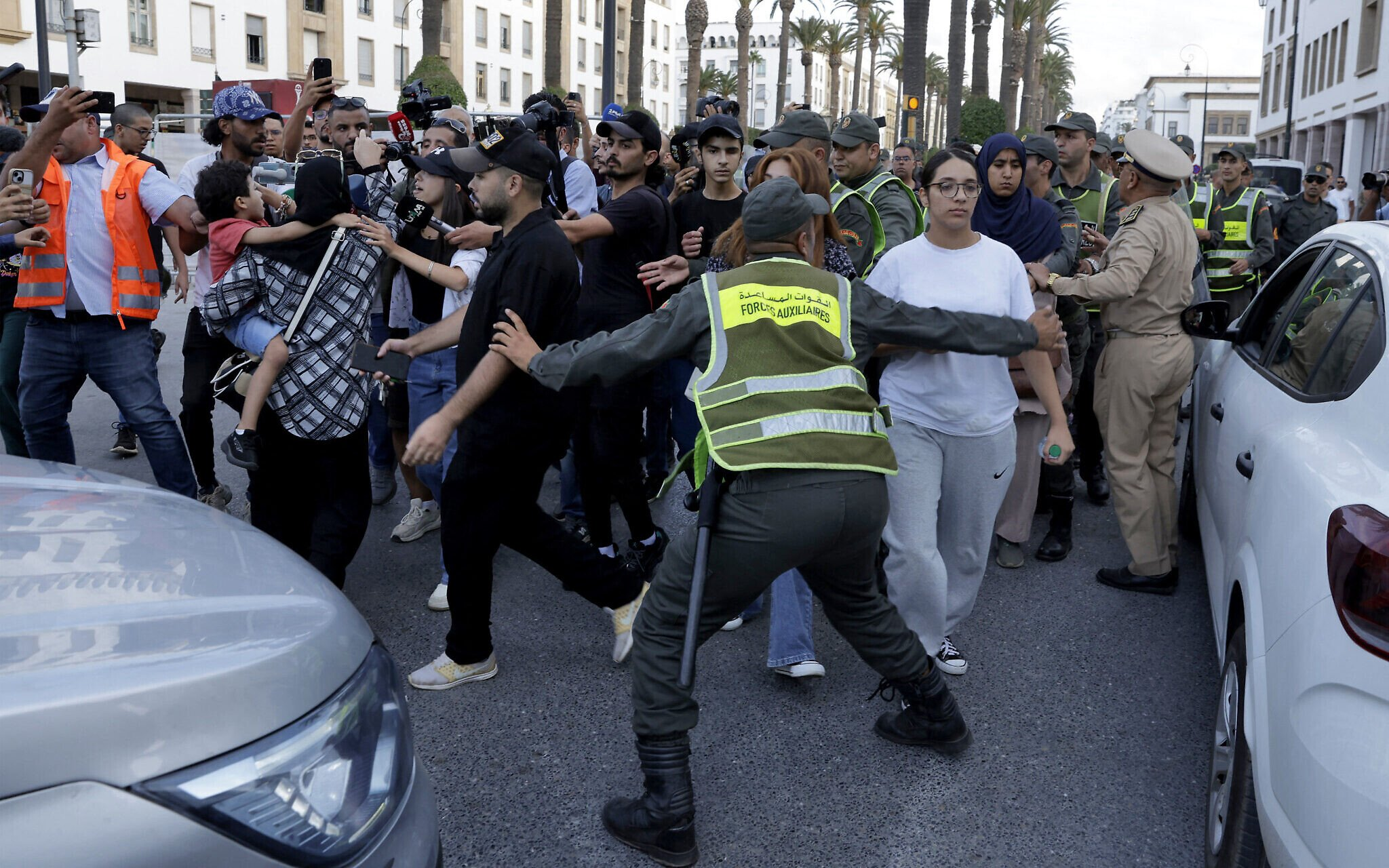
For days, Morocco has witnessed an unprecedented wave of protests, led by a non-ideological youth movement drawn from Generation Z those born between 1996 and the early 2010s. Emerging from the virtual realm into the streets, this digital-native cohort has rapidly transformed into a tangible force shaking the foundations of the Kingdom.

These young protesters, who organized behind the closed walls of platforms like Discord before spreading like wildfire across Facebook, TikTok, and Instagram, have rallied around purely social demands, targeting the country’s deteriorating healthcare services and educational standards.

Despite their decentralized structure and lack of unified leadership, the protests have resonated far beyond Morocco’s borders, casting a long shadow across the region. In authoritarian Arab regimes, where youth-led uprisings are often perceived as existential threats, the unrest has sparked acute anxiety particularly in Cairo, which views such movements with deep apprehension, especially when they stem from a demographic notoriously resistant to control or co-optation.

Egypt stands out among regional capitals for watching the Moroccan protests with particular trepidation, haunted by memories of the 2011 Arab Spring. The country’s pro-government media has already launched a smear campaign against the protests and their aims suggesting that what’s unfolding in Rabat could easily be replicated elsewhere, from Algiers to Muscat. But what exactly is fueling Cairo’s unease?

Not Just a Moroccan Phenomenon

To view Morocco’s Generation Z protests as an isolated event is to miss the broader picture. Rather, they represent a link in an emerging global chain of youth unrest. Early signs of this generational rebellion against traditional ideological frameworks surfaced across South Asia in Nepal, Bangladesh, and Sri Lanka before spreading to sub-Saharan Africa, particularly Kenya and Madagascar, and eventually arriving in North Africa via Morocco.

The phenomenon has also gained traction across Europe, with protest movements sweeping major cities from London and Paris to Berlin, Stockholm, Amsterdam, and Oslo. In the US, it has already become a defining force, with mobilizations erupting from New York and Washington to Texas, San Francisco, Chicago, and Denver.

Despite their diverse geographies and contexts, these uprisings share a common thread: they are the product of an entirely digital generation young people with little life experience but immense online savvy. They’ve turned the virtual world into a launchpad for expressing discontent, bypassing traditional political frameworks and rejecting both parties and governments alike.

From their online origins, these movements have spilled into the physical world with striking coordination. Demonstrations are organized with algorithmic precision and flexible networks that confound security forces through rapid mobilization and unpredictable routes. Their demands are specific and immediate, unburdened by the political posturing of previous generations.

Contrary to widespread assumptions, this marginalized generation has proven remarkably organized and politically aware. They’ve repurposed entertainment platforms and gaming apps as tools for political mobilization, breaking through the fear barrier in a public sphere long characterized by apathy. In doing so, they’ve ushered in a new era that threatens to dismantle long-standing taboos.

Morocco, as the first Arab and African country to face this new wave of protest with such intensity, now stands on the cusp of a historical transformation one that is redefining politics outside traditional institutions. This has sent ripples of concern across the region, particularly in nations that share similar socio-political foundations.

Egypt and Morocco: The Economic Parallels

What makes Morocco’s protests particularly unsettling for Cairo is the striking similarity in their root causes. Both countries are grappling with deteriorating economic conditions, declining public services, youth marginalization, and chronic mismanagement of national resources.

In Morocco, the unrest has been driven by budget cuts to healthcare and education two sectors critical to youth welfare. In the 2025 national budget, only 16.4% (118 billion dirhams or $11.5 billion) was allocated to these sectors out of a total 721 billion dirhams ($72.1 billion).

The World Economic Forum ranks Morocco 101st globally and 9th in the Arab world in terms of education quality, while the Global Knowledge Index places the country 98th out of 141 nations. Though Morocco’s GDP growth reached 3.9% in 2025 (up from 3.2% in 2024), the improvement failed to resonate with the public.

Unemployment remains a pressing concern. The High Commission for Planning reported 1.595 million unemployed Moroccans in Q2 of 2025 a rate of 12.8%. Even more alarming, the Economic, Social and Environmental Council identified 4.3 million Moroccans outside the labor force, education, or vocational training, including 1.5 million youth aged 15 to 24.

Moreover, 80% of Moroccan households expect unemployment to rise further in 2025, signaling a profound crisis of confidence in the government’s ability to generate meaningful employment.

Despite these challenges, Morocco has made progress in reducing poverty, with the absolute poverty rate dropping from 15.3% in 2001 to just 1.7% in 2019, according to official data.

By contrast, Egypt presents an even grimmer picture. While the constitution mandates allocating 7% of GDP to education and healthcare (4% and 3% respectively), actual spending has fallen far short just 2.7% combined (1.5% for education, 1.2% for health).

Egypt’s ranking in global education indices has steadily declined, sitting at 95th according to the World Economic Forum, with some reports placing it near the bottom globally. The Ministry of Education has officially denied these lower rankings.

Unemployment reached 6.1% in Q2 of 2025, affecting over 2 million individuals out of 33.6 million in the labor force, according to government data. Meanwhile, poverty has surged to unprecedented levels. In 2021–2022, unofficial estimates placed the poverty rate at 34%, up from 29.7% in 2020 suggesting that around 34 million Egyptians live on less than $1 per day.

Generation Z: A New, Disruptive Political Actor

In both Morocco and Egypt, Generation Z represents a powerful demographic. In Morocco, 8.2 million people aged 15 to 29 account for roughly 25% of the population. Egypt’s youth population is even larger, with 21.3 million in the same age group (nearly 20% of the total population).

What makes this group uniquely potent and dangerous, from the regime’s perspective—is their deep political consciousness and rejection of traditional political structures. Disillusioned with parties and unions, they’ve embraced a “post-institutional” identity. They’re not apathetic but seek to redefine public engagement on their own terms.

This poses a major challenge to authoritarian regimes, whose old mechanisms of control have grown obsolete. Political parties can no longer serve as intermediaries, and unions are unable to absorb rising public anger.

The result is a combustible environment: a digitally organized, self-sufficient youth movement confronting a security apparatus that relies solely on repression. In the absence of meaningful dialogue or legitimate mediation channels, the risk of social explosion becomes far more difficult to contain.

The Ghost of 2011: What Haunts Cairo?

Each time a protest erupts in an Arab or foreign capital, Cairo feels the tremors. The Egyptian regime continues to live under the long shadow of January 2011 a moment it has never truly escaped. Any protest, no matter how minor, rekindles the haunting question: Could the impossible happen again?

The uprising in Morocco is thus viewed not as an isolated event but as a “disturbing mirror,” reflecting what might unfold in Egypt under similar conditions: unrelenting repression, political stagnation, economic hardship, and a growing rift between the state and its youth.

The core dilemma for Cairo is that Generation Z remains entirely beyond its radar. This is a generation that doesn’t fear like previous ones did, that bypasses traditional media and institutions, and that communicates across borderless networks the state struggles to monitor. Disillusioned but globally connected, these youth pose a complex political puzzle for Arab regimes.

Cairo’s true fear is not mass protests, but the contagious political imagination they inspire a shift in mindset that redefines the role of youth in shaping their political future.

In Conclusion…

The Generation Z uprising in Morocco is no longer a domestic affair. It has become a regional alarm bell, particularly for Egypt, which fears the spread of awareness more than the spread of protest itself. The concern is not about how large or radical the demonstrations become, but about their essence: a digital-native generation that neither seeks permission nor recognizes gatekeepers in its demand for change.

The Arab world has entered a new phase of political and social fluidity, where regimes can no longer predict where the next threat will emerge or how to contain it. These youth, raised in boundless virtual spaces, defy the constraints of geography and fear, armed with tools of mobilization that outpace state surveillance.

Morocco’s protests may be just the beginning of a broader transformation one that redefines the relationship between young people and power across the Arab world.

Cairo’s deepest concern isn’t the crowds in Casablanca, but the growing digital consciousness incubating behind screens an invisible political force preparing for its moment. The real danger lies not in the visible marches, but in the kind of political imagination this generation is forging an imagination that no longer sees authority as sacred, nor control as inevitable.

As regimes try to suppress this new wave through defamation, denial, or brute force, it becomes clear: Generation Z is the Arab world’s new political actor leaderless, ideology-free, and unwavering. They don’t seek to dismantle the state, but to redefine it into something more transparent and representative.

And from Morocco, this tectonic shift might just begin compelling rulers and ruled alike to rethink politics, legitimacy, and freedom in the 21st century. The only question is whether Cairo will heed the lesson in time, or continue silencing dissent under the guise of “national security” and imaginary conspiracies that place Egypt alone at the center of a phantom global threat.

Download this article as PDF
Share this Article
Facebook Twitter Whatsapp Whatsapp Telegram Email Copy Link
فريق التحرير
By فريق التحرير تقارير يعدها فريق تحرير نون بوست.
Follow:
Previous Article نون بوست October’s Memory: When History Becomes a Justification for the Present
Next Article نون بوست Engineering After Genocide: Mapping Arab Positions on the “Day After” in Gaza

Read More

  • U.S. Regime‑Change Policies: Why They Are Destined to Fail U.S. Regime‑Change Policies: Why They Are Destined to Fail
  • The Gulf’s Balancing Act: Iran, Israel, and Hidden Links
  • Iraq–Turkey Oil Export Treaty: Why Did Ankara Cancel It After 52 Years?
  • Syria’s Northeast on Edge: QSD Between Ankara and Damascus
  • Has Europe Changed Its Stance on Israel… or Just Its Language?
part of the design
NoonPost Weekly Newsletter

You May Also Like

U.S. Regime‑Change Policies: Why They Are Destined to Fail

U.S. Regime‑Change Policies: Why They Are Destined to Fail

إسراء سيد Esraa sayed 8 April ,2026
The Gulf’s Balancing Act: Iran, Israel, and Hidden Links

The Gulf’s Balancing Act: Iran, Israel, and Hidden Links

فريق التحرير Noon Post 8 April ,2026
Iraq–Turkey Oil Export Treaty: Why Did Ankara Cancel It After 52 Years?

Iraq–Turkey Oil Export Treaty: Why Did Ankara Cancel It After 52 Years?

فريق التحرير Noon Post 8 April ,2026

ماذا تعرف عن ناطوري كارتا؟

نوران شرف
نوران شرف Published 7 December ,2015
Share
350

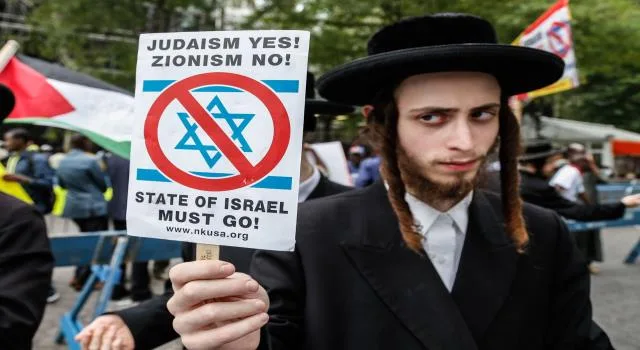
ربما يستغرب البعض عندما يرون صورًا لحاخامات يرفعون العلم الفلسطيني ويقفون ضد جرائم الكيان الصهيوني، ولكن لا ينتهي الأمر عند هذا الحد، فبعضهم يكرهون الصهيونية حتى أنهم يرفضون التعامل مع الحكومة الإسرائيلية، يقاطعون الانتخابات ويمتنعون عن دفع الضرائب ويرفضون حتى أموال المساعدات من الضمان الاجتماعي، يطلق على تلك الجماعة اسم “ناطوري كارتا”.

تم تأسيس حركة ناطوري كارتا – والتي تعني “حراس المدينة” باللغة الآرامية –  في مدينة القدس عام 1938 أي قبل احتلال الأراضي الفلسطينية بـ 10 أعوام، وهي حركة يهودية أرثودكسية نشأت لمناهضة الحركة الصهيونية التي استطاعت أن تنتشر بين اليهود الفلسطينيين آنذاك ولا زالت حتى الآن تعادي دولة إسرائيل المزعومة.

وعلى مدار السنين، هاجر العديد من نشطاء ناطوري كارتا إلى عدة مدن وخاصة لندن، ونيويورك لعدة أسباب تتضمن رفضهم للتعامل مع الحكومة الصهيونية غير الشرعية، أو نفيهم من قِبل الحكومة لرفضهم التعامل معها، أو بسبب المضايقات الأمنية والتعذيب الذي يتعرض له أعضاء الحركة وأسرهم من قِبل الجنود الصهاينة.

 أدى ذلك إلى انتشار الحركة في مدينتي لندن ونيويورك وإنشاء المؤسسات التثقيفية ودور النشر والمنظمات التابعة للحركة ومن أشهرها منظمة “أصدقاء القدس” في نيويورك.

يقول الحاخام دوفيد فيلدمان (أحد نشطاء الحركة) في لقاء تليفزيوني له عام  2012 أن من أهم أدوار الحركة حاليًا هو تقديم المعرفة لليهود لمساعدتهم على فهم معتقداتهم وفلسفتهم بشكل صحيح، كما يري أن عدد المتأثرين بالحركة يزداد عامًا بعد عام، حتى أن بعض اليهود الذين اعتنقوا المبادئ الصهيونية بدأوا يدركون الحقيقة خصوصًا بعدما أصبح واضحًا أن وعود الحركة الصهيونية بحياة آمنة لن تتحقق.

تقوم معاداة حركة ناطوري كارتا للمبادئ الصهيونية على معتقدهم بأن استخدام القوة لاستعادة الأرض المقدسة قبل عودة المسيح مخالف لإرادة الله بناءً على التلمود البابلي، كما أنه محرم عليهم أن يثوروا على الدول غير اليهودية وأن يبقوا مواطنين أوفياء في فترة المنفى التي كتبها الله عليهم، كما يرفضون ممارسات الكيان الصهيوني بحق الفلسطينيين لاعتقادهم أنه محرم علي اليهود أن يسودوا أو يقتلوا أو يؤذوا أو يذلوا أقوامًا آخريين.

وبهذا الشأن تحدث الحاخام دوفيد وايس، المتحدث الرسمي باسم حركة ناطوري كارتا، في لقاء تليفيزيوني أجراه عام 2002 حينما سئل عن الحركة الصهيونية حيث قال: “إن التوراة تقول إن الجيش اليهودي أُعطي أرضًا ومن يرتكب الخطيئة يُخرج من الأرض، وكتب الأنبياء تقول بكل صراحة إننا طردنا بسبب خطيئتنا من تلك الأرض، كل يهودي يعرف ويعترف بذلك، اليهود قبلوا بهذا العقاب من الله، وقبلوا أن يعيشوا بين الأمم بسلام وباحترام القانون في كل بلد يقيمون فيه، حتى جاءت الصهيونية التي تركت الديانة اليهودية التي تتبع التوراة، فمؤسسو الحركة الصهيونية لم يكونوا متدينيين بل قاموا بتحويل اليهودية من دين روحي قدسي إلى حركة وطنية علمانية، كيان علماني، أن نقيم دولة ونحمي أنفسنا ولا يزعجنا أحد، هذه بالنسبة إلينا كفر ضد الله”.

وعليه تحرم حركة الناطوري كارتا أي نوع من أنواع التعامل مع حكومة الكيان الصهيوني، فالمقيمون في القدس من أعضاء الحركة يقاطعون الانتخابات ويرفضون جميع أنواع المساعدات والدعم، حتى أن بعضهم يرفضون التعامل بالعملة الإسرائيلية “الشيكل الإسرائيلي”، كما أنهم يصلون يوميًا لإنهاء وتفكيك دولة إسرائيل بشكل هادئ وسلمي لأن كل ما يقف في وجه التوراة يجب أن ينتهي عاجلاً أو آجلاً.

حسب المتحدث الرسمي للحركة الحاخام دوفيد وايس عدد المنضمين للحركة يعد بالآلاف، بينما يصل عدد المؤيدين لها حول العالم مئات الآلاف، وبحسب مصادر أخرى فإن عدد المنتمين للحركة داخل القدس والأراضي المحتلة يصل إلى الـ 5000 عضو.

أما عن أنشطتهم فبحسب الموقع الخاص بالحركة تتضمن تنظيم العديد من المظاهرات المناهضة للاحتلال في عدة مدن مثل: القدس، لندن، تورونتو، بروكلين، نيويورك.. إلخ، بالإضافة إلى تنظيم الندوات والمؤتمرات وإصدار الخطابات المفتوحة الموجهة للأمم المتحدة وبعض المنظمات والحكومات بجانب المؤسسات التابعة لهم كدور النشر التي تصدر كتبًا بعدة لغات عن حقيقة اليهودية والصهيونية، والمؤسسات التعليمية المختلفة والموجودة في عدة مدن.

عالميًا

فتح

بدأت علاقة الحاخام موشيه هيرش، مسؤول سابق للشؤون الخارجية لحركة ناطوري كارتا، بالرئيس الفلسطيني الراحل ياسر عرفات في ثمانينات القرن الماضي عندما كان عرفات منفيًا في تونس، وبحسب مصادر إسرائيلية فإنه في عام 1993 عينه الرئيس عرفات مستشارًا لشؤون اليهود، ولكن لم تصرح الحركة بذلك ولكن أشارت إلى زيارة واحدة رسمية من الحاخام لمقر الرئيس ياسر عرفات في رام الله عام 2001.

إيران

شارك ممثلون عن الحركة في مؤتمر الهولوكوست الذي أقامته إيران عام 2006 والذي بالرغم من تأكيد منوشهر متكي، رئيس الخارجية الإيراني وقتها، على أن المؤتمر لا ينفي ولا يؤكد حادثة الهولوكوست بل يوفر المناخ العلمي المناسب للعلماء المشاركين ليشاركوا آرائهم بخصوص قضية تاريخية، إلا أنه قد وجه إلى المؤتمر انتقادات شديدة باعتباره مؤتمر لإنكار الهولوكوست.

ولكن أكد أعضاء الحركة مرارًا على أنهم لا ينكرون حادثة الهولوكوست ولكنهم يؤكدون أن حادثة كهذه لا يجب أن تستخدم كمبرر للممارسات الوحشية بحق الفلسطينيين، استمرت علاقة ناطوري كارتا بالرئيس الإيراني السابق أحمدي نجاد بعد المؤتمر من خلال اجتماعات عقدها بإيران.

حماس

شارك 4 أعضاء من حركة ناطوري كارتا في قافلة تحيا فلسطين الثانية في منتصف عام 2009، حيث قابلوا القيادي بحركة حماس إسماعيل هنية، وبعد الاجتماع صرح هنية بأن حركة حماس ليست ضد اليهود ولكن ضد الاحتلال الإسرائيلي القائم على الصهيونية، واثنى على حركة ناطوري كارتا لمعارضتهم للاحتلال.

رأي الصهاينة

يرى الصهاينة حركة ناطوري كارتا كمجموعة قليلة من اليهود المتشددين الذين لا يمثلون الشعب اليهودي، وأن معتقدهم بأنه محرم على الشعب اليهودي العودة إلى الأرض المقدسة معتقد خاطئ بدليل أن الحاخامات كانوا يشجعون اليهود على الهجرة إلى فلسطين قبل ظهور الحركة الصهيونية، كما يرون أن تمسك ناطوري كارتا بالوعود التي أخذها الشعب اليهودي على نفسه بالطاعة للأمم غير اليهودية تشدد؛ حيث إن هذا الوعد كان مشروطًا بأن لا يتم قتل وتعذيب الشعب اليهودي وقد انتهي بحادثة الهولوكوست، كما يتهم الصهاينة الحركة بعدة اتهامات مشهورة منها المشاركة في مؤتمر “إنكار الهولوكوست” في إيران، والتخابر لصالح إيران ضد إسرائيل، واستلام مبالغ كبيرة من حكومة ياسر عرفات، والتعاون مع الجماعة الإرهابية حماس.. إلخ.

ويبقي التساؤل الأهم مطروحًا، هل يمكن لحركة بهذا العدد أن تكون ذات أثر حقيقي في واقع الصراع الفلسطيني؟ وهل تستطيع أن تنشر أفكارها بالرغم من هيمنة الكيان الصهيوني على الإعلام العالمي؟

TAGGED: الأصولية اليهودية ، الصهيونية ، القضية الفلسطينية ، المنظمات الصهيونية ، حركة ناطوري كارتا
Download this article as PDF
Share this Article
Facebook Twitter Whatsapp Whatsapp Telegram Email Copy Link
نوران شرف
By نوران شرف مدونة وطالبة مصرية
Follow:
Next Article نون بوست The Stigma of “ISIS”: A Heavy Legacy Haunting Women and Children of Former Members

Read More

  • U.S. Regime‑Change Policies: Why They Are Destined to Fail U.S. Regime‑Change Policies: Why They Are Destined to Fail
  • The Gulf’s Balancing Act: Iran, Israel, and Hidden Links
  • Iraq–Turkey Oil Export Treaty: Why Did Ankara Cancel It After 52 Years?
  • Syria’s Northeast on Edge: QSD Between Ankara and Damascus
  • Has Europe Changed Its Stance on Israel… or Just Its Language?
part of the design
NoonPost Weekly Newsletter

You May Also Like

U.S. Regime‑Change Policies: Why They Are Destined to Fail

U.S. Regime‑Change Policies: Why They Are Destined to Fail

إسراء سيد Esraa sayed 8 April ,2026
The Gulf’s Balancing Act: Iran, Israel, and Hidden Links

The Gulf’s Balancing Act: Iran, Israel, and Hidden Links

فريق التحرير Noon Post 8 April ,2026
Iraq–Turkey Oil Export Treaty: Why Did Ankara Cancel It After 52 Years?

Iraq–Turkey Oil Export Treaty: Why Did Ankara Cancel It After 52 Years?

فريق التحرير Noon Post 8 April ,2026
dark

An independent media platform founded in 2013, rooted in slow journalism, producing in-depth reports, analysis, and multimedia content to offer deeper perspectives on the news, led by a diverse young team from several Arab countries.

  • Politics
  • Society
  • Rights & Liberties
  • Opinions
  • History
  • Sports
  • Education
  • Technology
  • Economy
  • Media
  • Arts & Literature
  • Entrepreneurship
  • Travel
  • Cinema & Drama
  • Food
  • Health
  • Culture
  • Latest Reports
  • Files
  • Long Reads
  • Interviews
  • Podcast
  • Interactive
  • Encyclopedia
  • In Pictures
  • About Us
  • Our Writers
  • Write for Us
  • Editorial Policy
  • Advanced Search
Some rights reserved under a Creative Commons license

Removed from favorites

Undo
Go to mobile version