












هذا التقرير متاح أيضًا بـ العربية
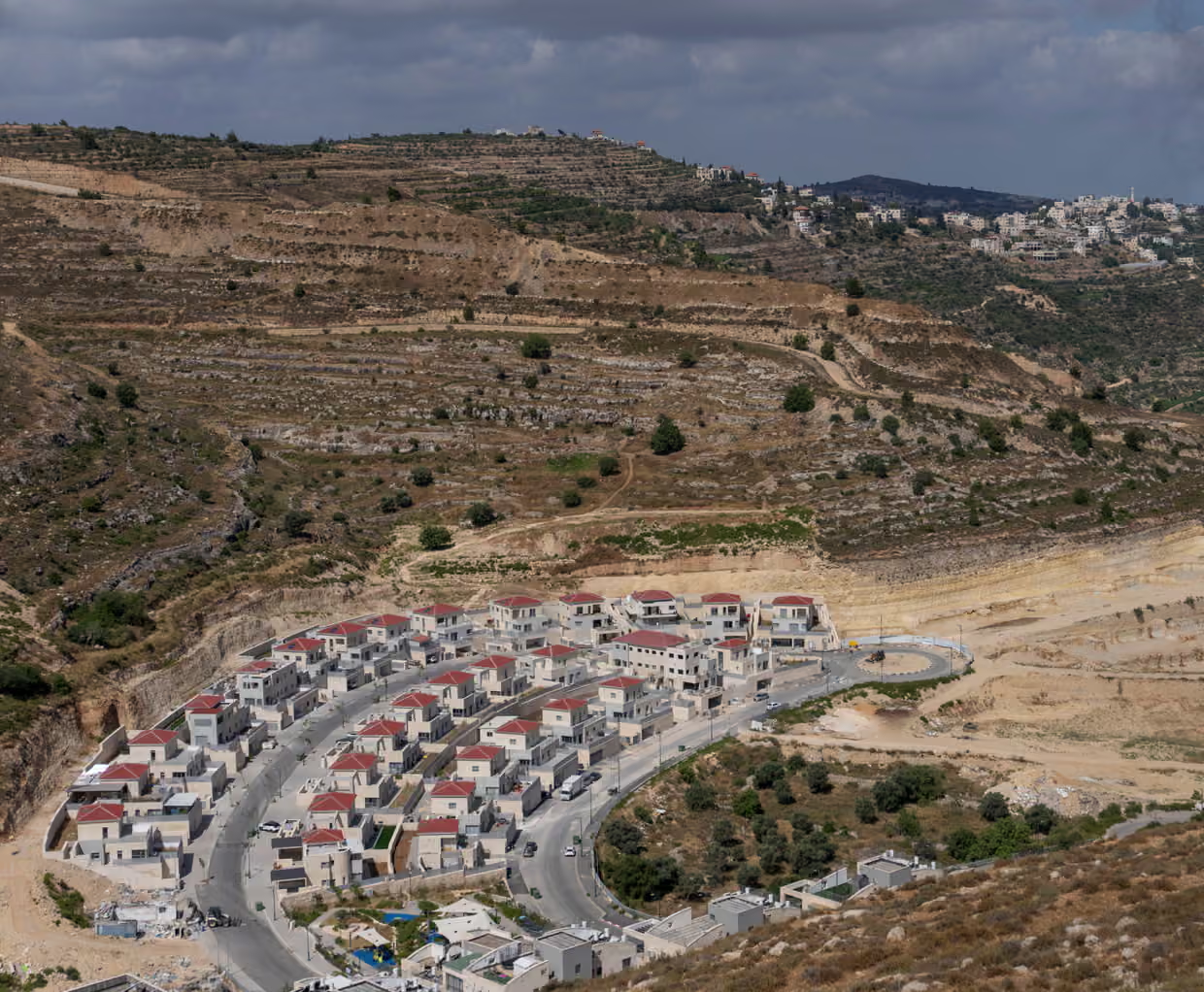
When the Israeli occupation authorities take control of land or establish a settlement on it, the land begins to be developed as a residential or economic project. It then becomes a property with market value and enters a cycle of development, financing, marketing and trading. It may eventually reach buyers and investors in Israel, the US and Europe.
A property’s value is created through a system involving developers, banks and marketing companies, alongside planning decisions that grant building rights, infrastructure that makes a site more attractive, and government incentives that reduce investment costs.
Sites are selected according to their proximity to Jerusalem, the Green Line, major roads, transport hubs, and employment and service centres, as well as the agricultural or tourism value of some areas. Building rights also help drive up land prices, making geography, planning and infrastructure tools for creating a property market in settlements.
This market extends beyond the West Bank and Jerusalem. Settlement properties are marketed in different countries as investment opportunities or as properties near Jerusalem and religious, historical and tourist sites. This investigation tracked marketing events held in the US, Canada, Britain, France, Australia, Panama and Mexico, with platforms such as My Home in Israel and IMP Group featuring prominently.
This report traces how Palestinian land moves from confiscation and planning to investment and global marketing. It examines the network that turns the land into an economic asset that can be sold and traded, identifying the actors involved, their interests and how their activities entrench the settlement project.
From land to property
Khalil Tafakji, a settlement affairs expert, former director of the maps department at the Arab Studies Society and a member of the Palestinian negotiating delegation from 1993 to 2001, said that after occupying the West Bank, Israel considered itself the legitimate successor to the Jordanian government. On that basis, it took control of state property registered in the name of the treasury of the Hashemite Kingdom of Jordan, along with land classified as “miri land,” and designated more than 40 per cent of the West Bank as “state land.”
He added that this policy ignored international law, which considers the transfer of Israeli civilians into occupied Palestinian territory a war crime, while Israel treated these lands as “disputed.” It used several means to seize them, classifying some as “state property,” others as nature reserves or military zones, and then turning them into sites for Israeli settlements.

The process went beyond taking control of land and establishing settlements to marketing the associated projects and properties in the West Bank, Jerusalem and abroad. These sites are offered to Israelis and wealthy Jews around the world to establish settlements and investment projects, or to buy homes and property, with preferential terms for those interested in living or investing there.
Tafakji said this marketing also takes the form of property offers abroad, with some homes and properties promoted on the basis of their location and proximity to Jerusalem or religious, tourist and historical sites. The offers describe properties in terms of their proximity to the “Temple Mount,” holy places, beaches and tourist areas, or sites associated with the biblical narrative, particularly in Christian Zionist circles. A property’s geographical location and religious and tourism associations thus become central to marketing it and attracting buyers and investors abroad.
He added that these investments include building housing units, establishing industrial zones and factories, and launching economic projects in different parts of the West Bank for settlers or foreign investors. The land thus becomes part of investment activity spanning housing, industry and other economic projects.
Tafakji explained that when a project is built on land classified as “state land”, title to the land remains in the state’s name and under Israeli government control. The land is made available for leasing or investment for renewable periods of up to 99 years. The investor or company can own, buy, sell and trade the property or project built on it.
He said this arrangement is used in Jerusalem and various parts of the West Bank, where companies lease land from the Israeli government for renewable periods, then invest in it and develop projects on it. He cited the company “Watan” as one example, alongside other companies established in the West Bank that deal with this land. These companies can buy and sell properties and trade the rights associated with them, while title to the land remains with the Israeli government.
According to Tafakji, project locations are chosen on the basis of geographical and economic factors that make them attractive investments. Settlements have been established near the Green Line and transport hubs, and in areas with agricultural or tourism potential, such as the Jordan Valley, or therapeutic and tourism potential, such as the Dead Sea area. Integrated infrastructure, including roads, water and services, makes these sites more attractive. It facilitates travel between home and work and makes it easier to invest and buy and sell property.
He noted that Israel classifies these areas as “national priority areas,” where companies and investors receive preferential treatment and government incentives. Anyone establishing a factory there, for example, may benefit from tax exemptions for up to five years, alongside other grants for investors. He also mentioned wealthy investors in Jerusalem, such as Irving Moskowitz and Arnon Soffer, saying that investment in these areas may combine economic and religious considerations.
How did settlement become an investment?
Tafakji says the settlement project began in response to a social problem within Israel associated with protests by marginalised and impoverished groups, particularly the Black Panthers movement in 1975. With Likud’s rise to power, the project expanded under a programme aimed at erasing the Green Line, preventing a return to the armistice lines, controlling groundwater and transport hubs, and investing in the Jordan Valley.
In his account, the settlement project went through three main stages: it began with a social dimension, then became a political and geographical project, before property and economic investment became a central component. Tafakji cites the “Stars” project proposed by Ariel Sharon in 1990, which aimed to establish settlements inside Israel, on the Green Line and in the West Bank, from the Latrun area to Umm al-Fahm. Groundwater and transport hubs influenced the choice of several of these sites.
Over time, the settlements’ proximity to the Green Line, along with roads and infrastructure, helped make the lifestyle in the settlements more like that inside Israel, from an Israeli perspective. This was also facilitated by easy travel between home and work and the absence of Palestinian villages in some locations where settlements were established. The project gradually developed into its current investment phase.
Tafakji places the role of major foreign companies within the broader context of foreign investment associated with an Israeli policy aimed at annexing and reshaping the West Bank. This coincides with the displacement of Palestinian residents, the demolition of buildings and the creation of infrastructure serving settlements, alongside separate infrastructure for Palestinians, entrenching geographical segregation.
He added that foreign investors, whether British or of another nationality, buy property in the West Bank and invest under Israeli law, while the land remains in the state’s name and sovereignty over it remains with the Israeli government. The property can later be sold to another investor, and companies can also buy properties and resell them to Israelis, while sovereignty over the land remains unchanged.
Tafakji concludes by pointing to two legal systems in the West Bank: one based on Israeli legislation applied to Palestinians, and the other comprising Israeli civil law applied to settlers and foreign investors. Property investment in settlements takes place within an Israeli legal framework, while title to the land remains under Israeli government control.
Three stages that shaped the settlement project
Professor Rassem Khamaisi, an urban planner, professor of urban planning at the University of Haifa and head of the Center for Planning and Kafr Kanna Studies, explains that turning land into a site with property and economic value depends on two main factors: ownership or title, and the planning rights granted over it. The broader those rights, the higher the land’s property value.
He explained that land value varies according to its designated use. Agricultural land is priced lower than land designated for housing, commerce or industry. The land’s property value rises with more extensive planning, a higher permitted building ratio on a plot and a wider range of potential uses.
He added that value also depends on location, alongside ownership and planning rights. Property value is determined by the interaction between location, title and the building and usage rights established through planning. Expanding these rights raises the land’s economic and property value.

Khamaisi stressed that location is decisive in determining land value and development potential, citing the well-known geographical rule: “location, location, location.” The closer land is to an urban centre or a road leading to it, and the better connected it is to a transport network, the higher its value and development potential.
Land value rises further in areas where planning grants more extensive building rights. Proximity to city centres or settlements, services, and industrial and commercial zones also affects future development prospects.
Khamaisi explains that investment in settlements is linked to replanning and urban renewal. It involves investment in land already covered by plans, or replanning land and increasing its building rights, allowing more extensive use and raising its property value.
He links this to the presence of immigrants, or what Israeli Zionist terminology calls “new arrivals,” who settle in these towns, alongside investors who see them as investment opportunities. He attributes this partly to government support policies, including lower land prices, building rights, and tax reductions and exemptions.
He added that these factors together attract investors, immigrants and new residents to buy property, especially when current prices are relatively low. Values are expected to rise because of location, building rights, the level of demand, and the financial or practical returns the properties may generate, depending on land uses and development plans.
He noted that proximity to road networks, railways and train stations is another factor in determining land’s market value. The better connected a site is to transport networks, urban centres, settlements, services and economic centres, the greater its value on the free market and its prospects for development and investment.
Who is behind the settlement market?
Khamaisi distinguishes between the roles of those supporting property investment in settlements according to each party’s nature and interests. He places Israeli settlement bodies in the West Bank at the forefront of efforts to intensify the Jewish and Zionist presence in Palestinian territory, increase settler numbers and strengthen demographic and geographical control over the land. These efforts could thwart or weaken the prospect of a political solution based on two states.
In his view, these efforts draw on the settlements’ geographical location, especially their proximity to the central region and Tel Aviv. Some towns near Ariel, along the Trans-Samaria Highway, for example, are about 10 minutes from Kafr Saba. This enhances their geographical and geopolitical importance and helps expand what he described as Israel’s “flank”.
Khamaisi explains that economic considerations are foremost for banks, which seek to make profits, though norms, values and geopolitical considerations may also influence their approach to these investments. Banks finance land and property purchases, grant housing and investment loans, and accept land as collateral or mortgage security.
Banks earn returns from investment and financing, while also benefiting from stimulating the economy and attracting investors from abroad. This expands investment and strengthens the Israeli economy’s cross-border reach.
Khamaisi links the role of the state and government to Israeli government policies, especially those of right-wing governments, whose aims include expanding settlement, controlling land, “Judaizing space” and taking possession of it. He sees populating the land, especially with Jewish immigrants who settle in these sites, as one means of achieving these goals.
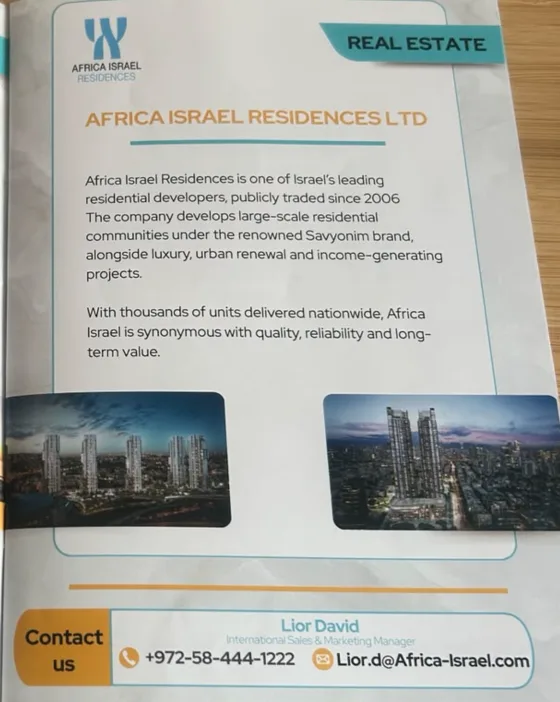
He confirmed that the government uses several tools, including allocating so-called “state land” and offering it on the free market for sale or investment, lowering its price, and providing support and tax exemptions. Free-market mechanisms thus overlap with government intervention in directing investment. In his view, this serves ideological and geopolitical goals of expanding settlement, controlling land and strengthening the Jewish presence, with the aim of preventing the establishment of a Palestinian state and reducing the area of Palestinian land.
Khamaisi considers the Palestinian economy’s losses in the context of Palestinians and Israelis sharing a single economic space. He explains that the benefits and returns generated by Israeli settlement necessarily come at the expense of the Palestinian economy, which faces unequal competition, both economically and politically.
He attributes this to the Palestinian economy’s links with, and dependence on, the Israeli economy, which limit its ability to compete and create independent economic opportunities. Removing strategically located land from Palestinian use and turning it into settlement-related projects reduces the space available for the Palestinian economy to expand, invest and benefit from that land.
Khamaisi concludes by linking this imbalance to the planning system in Area C, where Israeli authorities hold most planning powers and determine building rights and development possibilities, including the establishment of economic projects. In these circumstances, competition on the free market is unequal, leaving the Palestinian economy in the weaker position and bearing the greater share of economic losses.
Settlement profits and Palestinian losses
Dr Tareq Sadiq, a professor of economics at Birzeit University and dean of the Faculty of Business and Economics, believes property investment has become one of the tools of Israeli settlement expansion in the West Bank. He points to its multiple sources of financing.
Foremost among these, he says, is direct Israeli capital from property developers or Israeli banks, alongside foreign capital. The latter includes Jews buying flats and homes, as well as foreign capital invested directly in settlement property.
Sadiq bases this account on UN reports, noting that a report issued in 2025 referred to 158 companies, particularly in Europe and the US, involved in financing settlement.
He also highlights the Israeli government’s role in confiscating land and providing settlement infrastructure, as well as offering incentives to encourage settlers to live there, including soft loans for those wishing to move. Property investment thus draws on multiple sources of financing, while the Israeli government acts as its guarantor by reducing the associated risks.
Sadiq says low land costs make this investment attractive to Israeli and foreign investors. Investors obtain confiscated land at prices below those in the regular property market, while developing it allows for high returns. Low land costs combine with government support, infrastructure provision and high expected returns, making property investment part of the system financing settlement expansion.

He explains that profits from selling property built on confiscated Palestinian land go primarily to Israeli property developers. Other beneficiaries include suppliers of construction materials, equipment and services, as well as Israeli and non-Israeli banks that finance the projects through loans and earn returns from them.
He points to more than one Israeli party benefiting from this process, while property developers remain the main beneficiaries, especially Israelis with substantial capital, some of whom have ties to the Israeli government. Parties indirectly linked to the government may thus benefit from settlement activity, alongside Israeli and foreign investors.
Profits extend beyond the initial property sale. An investor may buy a flat or house for 1 million shekels, then see its value rise after a year as activity in the settlement grows and demand for property increases. The investor profits from that rise in value, and may aim to make a quick return through resale rather than live in the property.
Rising property values also affect government revenues: higher prices and buying and selling activity generate greater tax revenues for the Israeli government. Confiscated land thus becomes a source of economic value, with returns distributed among developers, investors, banks, construction-related sectors and, through taxes, the government.
Sadiq said that marketing settlement properties abroad, including in the US and European cities such as London, broadens the pool of potential investors, increases demand and raises prices. Overseas marketing thus helps attract capital and support settlement expansion by widening its market.
The promotion goes beyond residential property. Some settlements, for example, market projects comprising a farm and a small house to Jews living abroad. These sites are presented as part of the “Holy Land” or what Israeli discourse calls “Judea and Samaria,” attracting groups seeking to practise Jewish religious rituals there.
Another form of promotion combines property investment with religious tourism. Some sites can be used for rituals or weddings by Jews living in Europe or the US, who then travel to a West Bank settlement to hold their ceremonies.
Where does the responsibility of states and companies begin?
Dr Lahbib Naimi, a researcher and visiting professor at Ibn Zohr University in Agadir, Morocco, places settlement-related property activities within a broad framework of international responsibility. This encompasses the obligations of states and the responsibilities of companies, investors and financial entities involved. Naimi specialises in international criminal justice, international human rights law and international humanitarian law, and has written books and research papers on international law and Palestine.
Naimi notes that determining responsibility first requires distinguishing between two types of international obligation: obligations of conduct and obligations of result. These are based on the rules of international law, judgments and advisory opinions on those rules, and the work of the International Law Commission and the UN Sixth Committee in codifying and interpreting them.
He also distinguishes between the obligations of Israel as the occupying power and those of third states whose companies or investors participate in economic activities in the occupied Palestinian territories.
He draws on the International Court of Justice’s July 2024 advisory opinion on the legal consequences of Israel’s policies and practices in the occupied Palestinian territory, including East Jerusalem, and states’ responsibilities in relation to them. The advisory opinion differs from binding judgments in contentious cases, but has important value in interpreting the law. National, regional and international courts can draw on it to understand international rules and obligations.
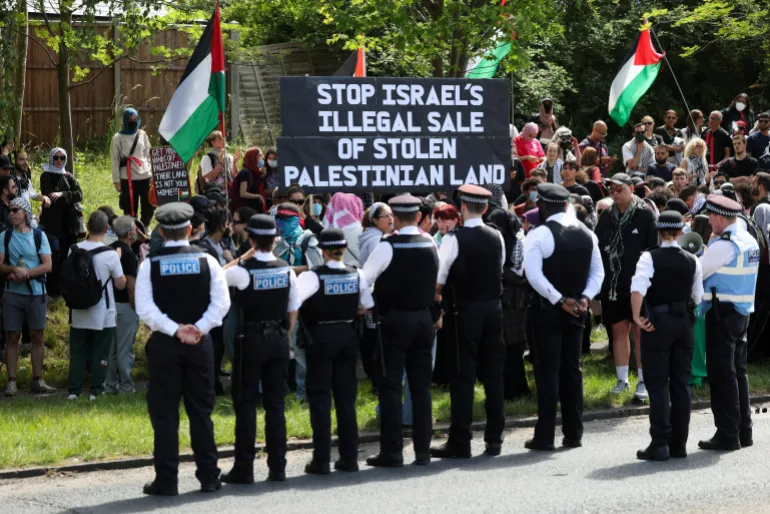
He stresses that international law regulates these matters and defines the rules and obligations, while implementation depends on the will of states and the bodies responsible for political and legal decisions within them. States’ principal obligations are not to recognise the unlawful situation arising from occupation and settlement, and to refrain from providing aid or assistance to maintain it.
He explains that aid and assistance are linked to forms of responsibility that may include encouragement, support or complicity in acts prohibited by international law. He also highlights states’ obligation to distinguish in their relations between Israel and the occupied Palestinian territories, so that they do not treat the situation arising from occupation as legally normal.
He adds that the International Court of Justice’s advisory opinion stressed the need to take steps concerning trade and investment relations that may entrench the unlawful situation. In his view, commercial or property activity should be assessed in its context and according to how far it helps consolidate an unlawful situation arising from occupation, land confiscation and annexation by force. Israeli domestic laws do not make these practices lawful.
Ending settlement activity forms part of broader responsibilities, while states are obliged to take measures to prevent contributing to the entrenchment of the unlawful situation or assisting its continuation. Naimi explains that Israel’s obligations are more direct: they include ending its unlawful presence and settlement activity, and evacuating settlers from the occupied Palestinian territories. In his view, these are the essential legal obligations concerning the existing situation in those territories.
Naimi explains the legal status of transactions involving properties built on confiscated Palestinian land by distinguishing between the responsibility of the Israeli state, third states, and participating companies and individuals. A party’s presence in the chain of sale, marketing or financing is not enough to determine responsibility. Its role, knowledge of the unlawful context and the harm resulting from its activity must all be examined.
He adds that state responsibility may arise under the rules governing responsibility for internationally wrongful acts, particularly in relation to obligations of conduct. International criminal responsibility may also arise for natural or legal persons, including companies, when, through their activities, they participate in or contribute to the commission of international crimes.
The inquiry extends beyond the direct act to companies’ involvement in marketing, financing, transferring ownership and other activities. These activities may fall within the framework of contribution, or what is legally known as complicity, when the relevant conditions are met. Under this conception, complicity exists when a party provides aid or a material contribution to acts linked to an international crime while knowing their unlawful nature.
Naimi draws on judicial precedents involving the prosecution of companies and those responsible for them for contributing to international crimes. These indicate the possibility of holding companies accountable when the legal conditions are met. Depending on the relevant legal and judicial system, responsibility may extend to both legal and natural persons.
He also stresses the need to distinguish between the roles of those participating in the settlement property market and their degrees of criminal responsibility. Assessing the responsibility of someone who buys a flat in a settlement, for example, depends on their actual role, knowledge, nature of participation, connection to the unlawful act, and how far their activity contributed to harm or the continuation of the unlawful situation.
These standards are particularly important when examining corporate responsibility. Establishing responsibility requires examining how much the company or its officials knew about the activity’s unlawful nature, how far they contributed to strengthening or sustaining the unlawful act, and the harm resulting from their activity.
Naimi links this to the legal rules governing Palestinian land. He explains that confiscated Palestinian land is subject to the rules of international law governing occupation, including the 1907 Hague Convention, the Fourth Geneva Convention of 1949, and the judgments and opinions of the International Court of Justice. It is also subject to the Rome Statute, which criminalises settlement in occupied territory, including forms of indirect transfer.
Indirect transfer is particularly important in the case of settlements. Naimi distinguishes it from the direct forcible transfer of populations, explaining that it may be linked to policies encouraging settlement in the colonies. These include financial incentives, tax exemptions and infrastructure development that facilitate settlers’ establishment in occupied territory.
The marketing, financing or development of properties built on confiscated Palestinian land should therefore be assessed in the context in which they arose. The more clearly it is established that a company, investor or financial entity knew the nature of the land and the unlawful context, and that its activity contributed to entrenching this situation or perpetuating its effects, the more important it becomes to examine legal responsibility.
Naimi also links states’ responsibility to the duty of due diligence. This includes making their companies aware of the legal risks of operating in conflict zones and the occupied Palestinian territories, and taking the necessary measures to prevent commercial activities that contribute to the continuation of the unlawful situation. Measures may include halting projects or prosecuting companies before the competent judicial bodies, including in cases concerning victims of Palestinian land confiscation.
When does investor responsibility begin?
Naimi states that the legal responsibility of an investor or foreign citizen buying property in a settlement depends on the circumstances of each case and does not arise automatically from the purchase alone. Nor do the nature of the land and the settlement project give the investor absolute immunity from responsibility. A range of factors must be examined to determine their legal position.
He explains that responsibility may, depending on each party’s role, extend to the investor buying the property, the company facilitating the investment, the bank financing it, the entity transferring its returns abroad and the company marketing the properties. Each case requires consideration of the extent of the party’s knowledge of the nature of the activity, its compliance with due diligence requirements, and its awareness that a violation of international law exists in the occupied territories.
Naimi stresses that establishing responsibility requires showing a link between the conduct or investment activity and harm or the continuation of the unlawful situation. This means verifying whether the investment or commercial activity contributed to sustaining occupation, settlement or any other conduct unlawful under international law. These factors must therefore be examined together, whether the case concerns companies or natural persons, and whether it is before national courts or the competent international judicial bodies.
He explains that states are obliged to prevent investment activities that may link their companies to the occupying power or contribute to the continuation of settlement. They can fulfil these obligations through national legislation, financial and investment rules, customs exemptions and mechanisms regulating companies’ dealings abroad. The duty of due diligence and companies’ commitment to the UN Guiding Principles on Business and Human Rights are particularly relevant here.
Naimi argues that corporate responsibility needs to be considered within a broader framework. The settlement project’s continuation also depends on external funds and investments, and on companies providing equipment, machinery, technical expertise, surveillance services, technology and other commercial services. Foreign companies’ involvement in these activities may therefore contribute to the continuation of settlement and the associated violations.
He believes this legal framework weakens the argument of some companies that use the provision of dual-use services to evade responsibility for the actions of the end user – the Israeli side. He stresses that due diligence requires companies to assess the risks of their activities and establish how far they contribute to sustaining an unlawful situation.
Naimi concludes by calling for broader legal scrutiny of entities operating in the occupied territories and foreign companies working in construction, communications, technology and other fields. He also calls for examining the possibility of holding these companies accountable in the courts of the countries where they are headquartered, including France, Sweden, Britain and other European countries, under the jurisdictional rules available there.
