



هذا التقرير متاح أيضًا بـ العربية
Ties between Palestinians in Gaza, the West Bank and inside Israel (the 1948 territories) did not begin on 7 October. Decades of geographical, political and legal division had drawn boundaries between these communities. The war put those ties to an unprecedented test: Palestinians faced a shared predicament, but each community experienced it differently and had different means of responding.
In Gaza, life has been defined by war, killing, displacement and the loss of basic necessities. In the West Bank, Palestinians have faced mounting restrictions, settlement expansion, settler attacks and economic pressure. Inside Israel, questions of citizenship, political rights and the limits of expression and solidarity came to the fore, alongside efforts to help Gaza and strengthen ties with other Palestinians.
Shared suffering did not necessarily translate into collective action. The war revived a common sense of belonging while exposing political and social divisions that had developed over many years.
Three contributors examine what changed after 7 October: Khalil Shaheen offers a political analysis, Dr Bassam Awartani a sociological assessment, and Moatasem Zidan an account from inside Israel. Their perspectives show how ties between Palestinians have endured, despite differences in their experiences, circumstances and capacity to act.
A shared threat of uprooting
Khalil Shaheen — political researcher and analyst, and director of programmes at the Masarat Centre
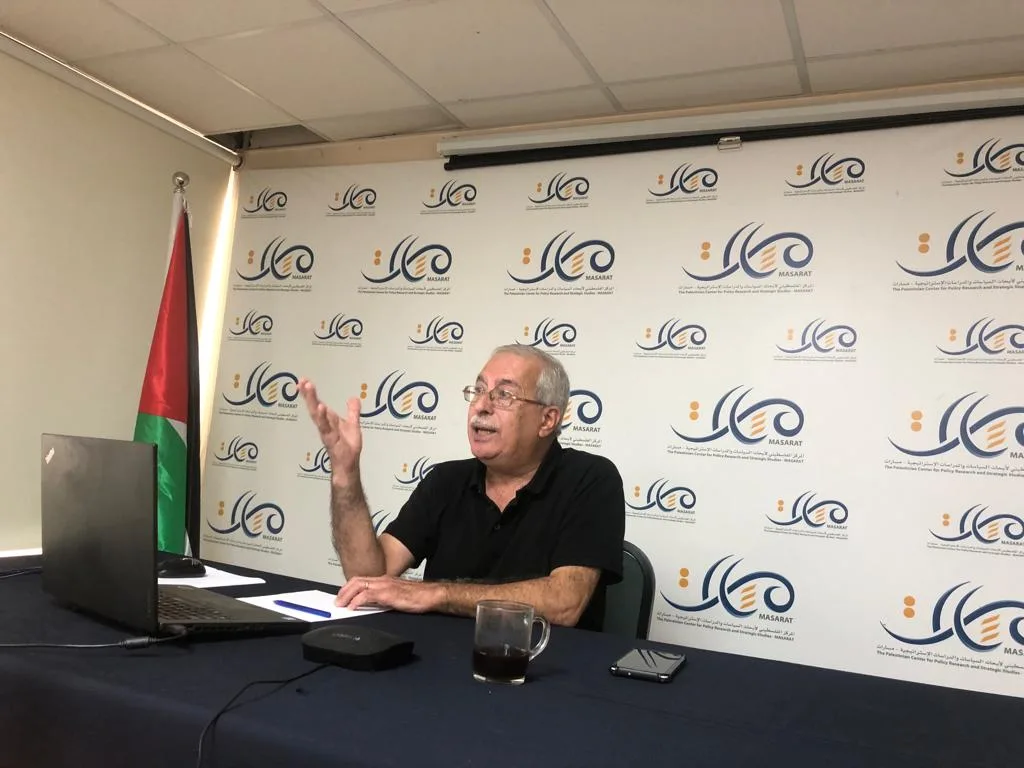
Khalil Shaheen, a political researcher and analyst and director of programmes at the Palestinian Center for Policy Research and Strategic Studies, Masarat, told Noonpost that ties between Palestinians in Gaza, the West Bank and inside Israel had developed gradually in the years before 7 October. He traces this particularly to Israel’s 2014 assault on Gaza, which he describes as a “foundational event” that renewed Palestinians’ sense of their ability to act, struggle and achieve gains.
This continued with the “unity of the arenas” in 2021, when Palestinians across the three areas mobilised in different ways around Sheikh Jarrah and Jerusalem. Against that backdrop, he sees 7 October as the high point of a shared Palestinian belief that action and struggle could bring gains.
The war that followed sharpened Palestinians’ awareness of the danger they faced, alongside their sense of agency. Shaheen argues that Israel’s response marked a shift towards what he describes as a “savage and exterminatory” dimension of the Zionist project. Palestinians in the West Bank and inside Israel also felt increasingly threatened, amid growing fears of uprooting and killing.
In his analysis, Palestinians now face two realities: a sense of their capacity to act and a growing awareness of a threat to their very existence.
Inside Israel, Shaheen says, the war changed priorities. Crime, violence and everyday problems had dominated public concern. Now, he argues, the danger extends beyond security and social issues to an existential threat to Palestinians’ continued presence in the 1948 territories, amid growing talk of displacement, home demolitions and restrictions on political participation.
The war also renewed and broadened popular mobilisation worldwide around the Palestinian cause, reconnecting Palestinians in Gaza, the West Bank, inside Israel and the diaspora. Shaheen points to the mobilisation of Palestinian youth in the US and Britain, and to joint action such as boycotts. He sees these efforts as a basis for overcoming geographical fragmentation.
For Shaheen, shared feelings do not mean identical experiences. Israel has developed different means of controlling each Palestinian community: checkpoints, settlement expansion and land confiscation in the West Bank; siege, extermination and war in Gaza; and a different legal and political system inside Israel. He argues that this project drew on earlier experiences, including South Africa, and adapted its methods of control in ways that, alongside international political and media campaigns, prevented Israel from being officially described as an apartheid regime.
Shaheen believes the system has changed since 7 October. He describes it as a “settler-colonial exterminatory regime,” citing statements and positions taken by Israeli officials. He says this discourse extends beyond far-right parties such as Religious Zionism and Jewish Power to Likud officials, including Defence Minister Israel Katz, whose positions, he argues, reflect the direction of the government and its leadership.
He argues that the nature of this settler-colonial regime casts doubt on the possibility of a political settlement because it is based on excluding and eliminating Palestinians, even though its methods of control differ from place to place.
Different circumstances have produced different priorities and forms of struggle. In Gaza, the priority is to stop the killing and secure food, medicine and other basic necessities. In the West Bank, confronting settlement expansion, land confiscation and settler attacks takes precedence, alongside restrictions on daily life. Inside Israel, political and civil rights, violence and discrimination are central concerns.
Shaheen sees a shared danger to Palestinians’ ability to remain on their land across all three areas. This raises a central question: how can each community’s daily struggles become part of a common struggle against the threat to Palestinian existence as a whole?
He says Palestinians need a shared strategy to defend their right to exist in their homeland while respecting the distinct circumstances of Gaza, the West Bank and Palestinians inside Israel, and the different forms their struggles take. But there is no political framework capable of bringing these efforts together. He points to the weakening of the institutions of the Palestine Liberation Organization and the Palestinian Authority, and to shifts in power within the political system that prioritise retaining authority and ensuring its survival over building a framework centred on the survival and rights of the Palestinian people.
Shaheen calls for a unified strategy that allows for multiple forms of struggle. He proposes an “equation” that connects daily struggles with liberation from settler colonialism, meets Palestinians’ needs in each area and brings their efforts together against land seizure, displacement and threats to their existence.
He believes such a framework can accommodate disagreement over the eventual political solution, whether two states, one state or another arrangement. The common ground, he says, is Palestinians’ right to self-determination in their homeland and opposition to reserving that right for Jews alone in this territory.
Shaheen therefore calls for Palestinians to rethink their methods of action and broaden their understanding of resistance beyond armed struggle. Under current conditions, he says, Palestinians cannot fight on equal terms with the occupation army and settlers, whom the Israeli government has armed with tens of thousands of weapons.
He proposes a strategy that strengthens Palestinians’ ability to remain steadfast and connects those efforts with the work of Palestinians in the diaspora and civil and political groups worldwide. He sees the Palestinian cause as “an international cause, not only a national or Arab nationalist one,” creating opportunities for “shared projects of struggle between Palestinians and the peoples of the world” and extending Palestinian action beyond direct confrontation.
Shaheen believes these connections could change the balance of power by turning a confrontation between Palestinians and Israelis, in which the occupying state has a substantial advantage, into a global struggle against the Israeli project.
Shared suffering, widening social divisions
Dr Bassam Awartani — sociology researcher
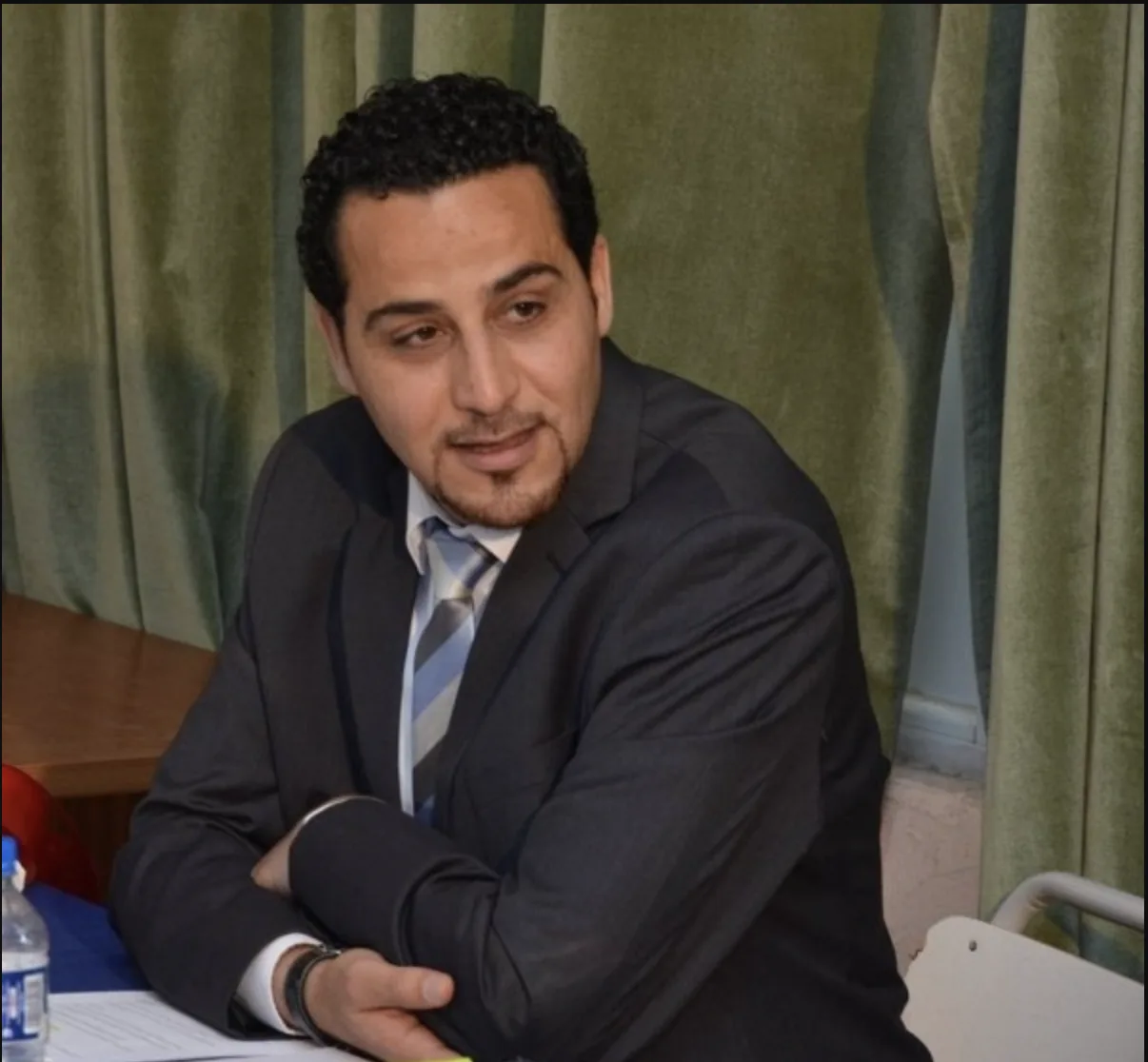
In an interview with Noonpost, sociology researcher Dr Bassam Awartani points first to the lack of studies or research papers that clearly measure the extent of change in Palestinian society since 7 October, apart from some reports by humanitarian organisations.
He is therefore cautious about drawing firm conclusions about relations between Palestinian communities. His direct experience is concentrated in the West Bank; he follows conditions in Gaza and inside Israel through news and reports.
Awartani believes 7 October and the subsequent war brought Palestinians into a period of hardship and tragedy, aggravating existing social crises. Unemployment, crime and other problems predated the war. The new conditions made them worse, particularly economically, with consequences for social relations.
He points to rising crime rates, saying available statistics show an increase of about 40 per cent between 2022 and 2024. He sees these figures as indicators of social change that receives less attention than political developments.
Awartani prefers to speak of “Palestinian societies” rather than “Palestinian society.” The West Bank, Gaza and Palestinian communities inside Israel have distinct geographical, political and economic circumstances, as well as differences in outlook, relationships and demographic composition.
He believes pain and suffering have historically encouraged empathy between Palestinians, but that this does not necessarily develop into strong relationships or lasting social solidarity in ordinary circumstances. As war recedes, political and security pressures ease and normal life resumes, calculations and disagreements resurface.
Awartani therefore describes Palestinian unity as existing more “on the surface” than being deeply rooted in social structures. He attributes this to history, colonial conditions and the existence of multiple communities, as well as a political and media discourse that, he says, entrenches fragmentation instead of strengthening ties.
These differences become clearer when comparing Gaza with the West Bank. A Palestinian in Gaza might view the war in these terms: “We paid the heavy price, and you watched us.” In the West Bank, Palestinians in villages face settler attacks and constant restrictions. Experiences also differ within the West Bank, between people in villages exposed to these attacks and city residents living under different conditions.
Awartani says these disparities create distance and “gaps” between Palestinians because “each area pulls out its own thorns with its own hands.” Solidarity often consists of financial support, aid and media engagement, while the forms it takes on the ground vary.
He acknowledges the economic ties, social bonds, family relationships and connections between the West Bank, Gaza and other Palestinian communities. But he also sees these ties as affected by disparities arising from different experiences and conditions.
Awartani cites several indicators of mounting social pressure, which he says has coincided with declining solidarity and the growth of what he calls “social selfishness.” According to official statistics from the Palestinian police centre and the Palestinian Central Bureau of Statistics, fights increased by roughly 40 per cent, with some ending in killing or attempted killing, while thefts nearly doubled between 2022 and 2024 and fraud also rose. He also points to fewer marriage contracts because of difficult economic conditions, and a divorce rate equivalent to about 25 per cent of the number of registered marriage contracts.
He sees these figures as signs of a deeper social problem. Under economic pressure, an inability to repay debts may produce “relationships of hatred within society” and “confrontational relationships.” He describes Palestinian society as “a society that is deeply afraid,” saying these pressures also affect marriages, family relationships and education. He sums up the situation with the phrases “Our structure is shaking” and “a structure is disintegrating.” He warns of the danger of this disintegration and believes that, if current conditions persist, they could change daily life and social relations in the coming years.
Awartani believes these crises will have effects beyond the end of the war, and that society will need time to regain its balance and return to normal life. He sees changes in habits and coping strategies as characteristic of war: people adapt to what is available, using some tools and abandoning others as circumstances change. In this sense, the war exposed existing disparities and may have reinforced some of them.
He remains cautious about predicting the future of relations between Palestinians. Assessing whether the effects are positive or negative requires measurement over time. To establish whether solidarity has strengthened or divisions have widened, he says, researchers need measurable indicators of cooperation, work, unemployment, family relationships, marriage and divorce. They also need to monitor new practices, such as growing racism or refusals to employ people from Gaza or other Palestinian areas.
Individual impressions, Awartani argues, cannot establish precisely how these relations are changing. Someone who lived through the war in Gaza may frame the experience as “We sacrificed and suffered,” and may need time and continued observation to understand the circumstances of others.
He expects disparities to persist, with the possibility of new forms of solidarity emerging, but leaves firm conclusions to field research and continuing statistical monitoring. For him, relations between Palestinian communities extend beyond feelings: their social structures must be studied to establish whether the war brought them closer or drove them further apart.
Palestinian communities as separate prisons
Moatasem Zidan — writer and youth activist from inside Israel
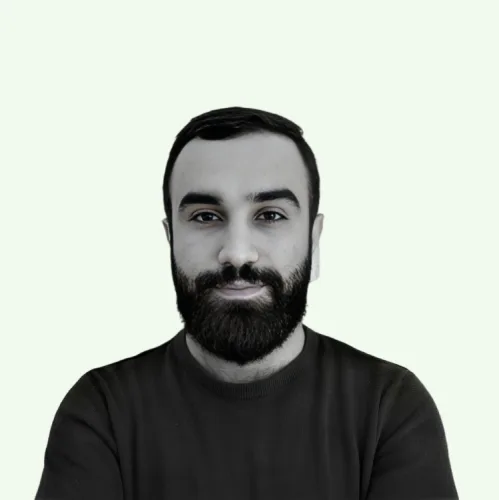
In his interview with Noonpost, Moatasem Zidan, a writer and youth activist from inside Israel, argues that separating Palestinian communities has long been, and remains, part of Israel’s political project. He believes this separation has gone beyond geography, creating different political and social conditions in Gaza, the West Bank, inside Israel and Jerusalem.
Zidan says Israel’s response after 7 October targeted Palestinians across these areas, using different methods in each. He sees their interconnected experiences as arising more from Israel’s application of the same approach in different forms than directly from the events of 7 October.
Relations between Palestinians, he says, faced a test in which “we failed miserably.” Each community was unable to do enough, from its own position and with the means available, to confront what Gaza was subjected to.
He cites Palestinians inside Israel, who he says had some scope to protest and oppose the war and displacement within the law. He connects the limits of this action to a wider crisis in the Palestinian political project. Alongside the effects of the Nakba, he argues, the Oslo Accords helped deepen the separation between Palestinian communities. The period after 7 October exposed that crisis more painfully: Gaza faced a brutal war while other communities could not offer enough support, given their circumstances and capabilities.
For Zidan, this helplessness is also personal. He says he feels ashamed before his friends in Gaza because he could not get enough medicine and food to them while civilians, including premature infants, were dying of hunger. He believes silence and withdrawal into their own communities damaged relations between Palestinians and left a deep mark on them.
He sees this reflected in the national project itself. Palestinians may not yet have fully absorbed what happened, he says, but this period helped fragment the notion of “one people” and entrench a reality Israel has worked for decades to create, in which each Palestinian community is an island cut off from the others. He invokes the words of the martyred Palestinian prisoner Walid Daqqa: “Beware of becoming separate prisons,” arguing that, to varying degrees, Palestinians have become “separate prisons.”
Zidan then turns to citizenship for Palestinians inside Israel after 7 October. He describes it as a “fig leaf” that Israel can strip away at any moment. He cites an attempt to establish a settlement outpost on privately owned land in Majd al-Krum as an indication of a change in Palestinians’ status and relationship with the state.
This raises a broader question for Zidan: what does it mean to be a Palestinian citizen in Israel after 7 October? He believes that question is still missing from intellectual, political and social debate among Palestinians inside Israel, despite accelerating changes in their circumstances. These include pressure on political and social leaders, home demolitions in the Naqab, and changes in Palestinians’ status and relationship with the state.
Zidan also questions the role of the Palestinian national movement inside Israel. Why, he asks, have these changes not prompted renewed political debate and the development of methods and a discourse suited to the new circumstances? He believes the response must go beyond addressing individual incidents. It requires reunifying the national movement and reshaping its methods and discourse to match the scale of the changes, particularly what he describes as Religious Zionism’s presence across Israeli state institutions.
He sees a widening gap between rapid change and a slow political response. In his assessment, society is disintegrating and the national movement is fragmented, while the conditions of Palestinians’ existence and their political status inside Israel are changing. He says this is evident in the political discourse surrounding preparations for Knesset elections. He had hoped for substantive intellectual debate and deeper discussion of the changes brought by the period since 7 October.
Solidarity, public expression and contact between Palestinians inside Israel and other Palestinians nevertheless continued. Zidan points to initiatives to collect donations, supplies and medicine. Tens of thousands of Palestinians inside Israel contributed millions of shekels during the war, alongside medical, health and food supplies. He also noticed people who had previously shown less interest in politics taking part after witnessing the extent of Palestinians’ suffering in the war.
Caution also became part of daily life. According to Zidan, Palestinians inside Israel became more careful about what they said and how they expressed their views on social media, at universities and in workplaces. The question of what was permitted and what was forbidden became a constant concern.
The desire to connect with the West Bank persisted. Zidan recalls periods of relative calm when hundreds of cars and families travelled from inside Israel to cities such as Jenin and Nablus. He believes these journeys were about more than shopping: they offered a chance to visit places where people spoke the same language and shared a sense of belonging.
Zidan says the failure of the political project requires Palestinians to adapt their actions. Their inability to stop the war means they must continue to work within the possibilities currently available. He sees the solidarity that emerged during the war as one such form of action, although it remained limited and did not develop into sustained practical engagement.
He holds political organisations and civil society institutions responsible for failing to turn that solidarity into sustained, organised action. Donations and aid matter, but their contribution is limited given the scale of need. Gaza, he says, needs action involving tens of thousands, perhaps hundreds of thousands, of Palestinians.
Zidan proposes “harm reduction” as the task for the present. With existing political tools limited and unable to bring about major change, reducing the harm inflicted on people becomes the priority until those tools can be repaired and whatever can be rebuilt is rebuilt. He describes this as a duty for the current period, rather than a final solution.
He believes the debate must extend beyond whether to boycott or participate in elections to consider the tools, mechanisms and discourse the national movement needs for the next stage. Without the foundations of a clear political project, he stresses, Palestinians must continue to work with what is available. He sums up his position: “Why should I say we should settle? In principle, let’s keep working.”
