













هذا التقرير متاح أيضًا بـ العربية
The Umayyad state kept pace with its geographic expansion and environmental diversity through radical updates to its financial and economic structure. This was reflected in the expansion of irrigation projects, the construction of dams, canals, and aqueducts, the stimulation and expansion of agriculture in a number of regions, more efficient investment of resources, and attention to industries and handicrafts.
The reign of Abd al-Malik ibn Marwan was a pivotal phase, as he implemented a series of economic reforms that helped organize the economy. He minted Islamic currency, expanded commercial activity across the empire’s various regions, in addition to conducting a census of the population and property in 691 CE.
During the reign of Umar ibn Abd al-Aziz, the state’s financial and economic reforms took on a social dimension. This caliph focused on supporting the poor, redressing injustices, confiscating usurped properties, and reducing taxes.
In the following decades, land surveys were conducted and tax records were reorganized, especially during the reign of Hisham ibn Abd al-Malik, whose economic policies were marked by efficiency, to the point that he was praised by the Abbasid caliph Abu Ja’far al-Mansur for his ability to manage the state’s financial resources. It is said that Abu Ja’far emulated Hisham and followed his example in matters of governance.
The Financial System in the Umayyad State
The Umayyads adopted a financial system that included kharaj (land tax), jizya, zakat, and ushur, in addition to other revenues such as spoils of war and state-owned lands (sawafi). These resources were collected through a combination of juristic rulings and administrative discretion, and together—especially kharaj—formed the foundation on which state financing and financial administration rested.
Zakat was one of the most important resources of the Umayyad financial system. Dr. al-Sallabi notes in his book “The Umayyad State: Factors of Prosperity and Repercussions of Collapse” that the zakat system was applied during the Umayyad era according to Islamic legal principles, reaching an advanced level of organization under Caliph Umar ibn Abd al-Aziz.
As for kharaj, the tax on agricultural land, it was among the state’s most important financial resources due to the vast agricultural lands in the conquered provinces. Ushur taxes were also imposed on commercial goods entering or leaving the state’s territories, fees that closely resembled modern customs duties.
In addition, the financial structure of the Umayyad state included sawafi, lands whose ownership had passed to the state treasury and were invested to generate regular income, as well as direct revenues such as one-fifth of war spoils, which constituted an important resource in the early stages of the Umayyad era as the conquests continued.
Infrastructure as a Driver of the Economy
From the earliest days of their rule, the Umayyads adopted a comprehensive strategy to develop infrastructure in order to stimulate economic activity and secure commercial transport between the far-flung ends of the state. These efforts followed integrated tracks. In logistics and trade, roads were paved and improved to facilitate caravan movement, central markets were established in cities, and the fortifications of coastal urban centers were strengthened to secure maritime routes.
The major infrastructure projects adopted by the Umayyads were not merely isolated architectural achievements; they were the vital artery that fed the path of integration between agricultural production and commercial activity. The state focused on building massive bridges to overcome natural obstacles and connect production areas to points of sale. This ingenuity was evident in the construction of the Mosul Bridge in 126 AH, alongside multiple bridge projects built over the Tigris River at the beginning of the second Islamic century.
As a result of this logistical interconnectedness, Umayyad cities emerged as global economic centers. While Damascus, thanks to its strategic location, became an international center of trade, provincial cities such as Kufa, Basra, and Fustat witnessed rapid urban and architectural growth.
Within a few decades, these cities had become major economic poles ranked among the largest cities in the world at the time. Estimates cited by Andrew Marsham in his book “The Umayyad Empire” indicate that the number registered in the Fustat diwan rose from around 15,000 at its founding to nearly 100,000 in the eighth century CE, while Basra’s population exceeded 250,000 and Kufa’s reached about 200,000 by the mid-eighth century.
Infrastructure development efforts also extended to North Africa. Corisande Fenwick notes in her study “The Umayyads and North Africa” that the city of Kairouan, established by the Umayyads, was equipped with comprehensive infrastructure such as markets and water reservoirs, and that the city saw major infrastructure development during the reign of Caliph Hisham ibn Abd al-Malik, who encouraged migration to it.
Tunisia also witnessed major infrastructure development during Hisham’s reign. Construction and development works in North Africa were part of a comprehensive program under Caliph Hisham that has not received sufficient appreciation from researchers. His reign also saw major investments in building markets in Syria, Palestine, and beyond.
In his book “The Political and Civilizational History of the Umayyad Era,” Ibrahim Za’rour recounts that the era of al-Walid ibn Abd al-Malik witnessed broad internal reforms to develop the infrastructure of Umayyad cities, including paving roads, surveying land and repairing irrigation canals, standardizing measures, scales, and weights, and preventing migration from villages to major cities in order to preserve agricultural production.
It can be said that infrastructure development efforts in the Umayyad state covered vast areas of the empire, as the Umayyads invested in modernizing the infrastructure of existing cities and establishing new ones such as Ramla in Palestine and Kairouan in North Africa.
Minting Islamic Currency
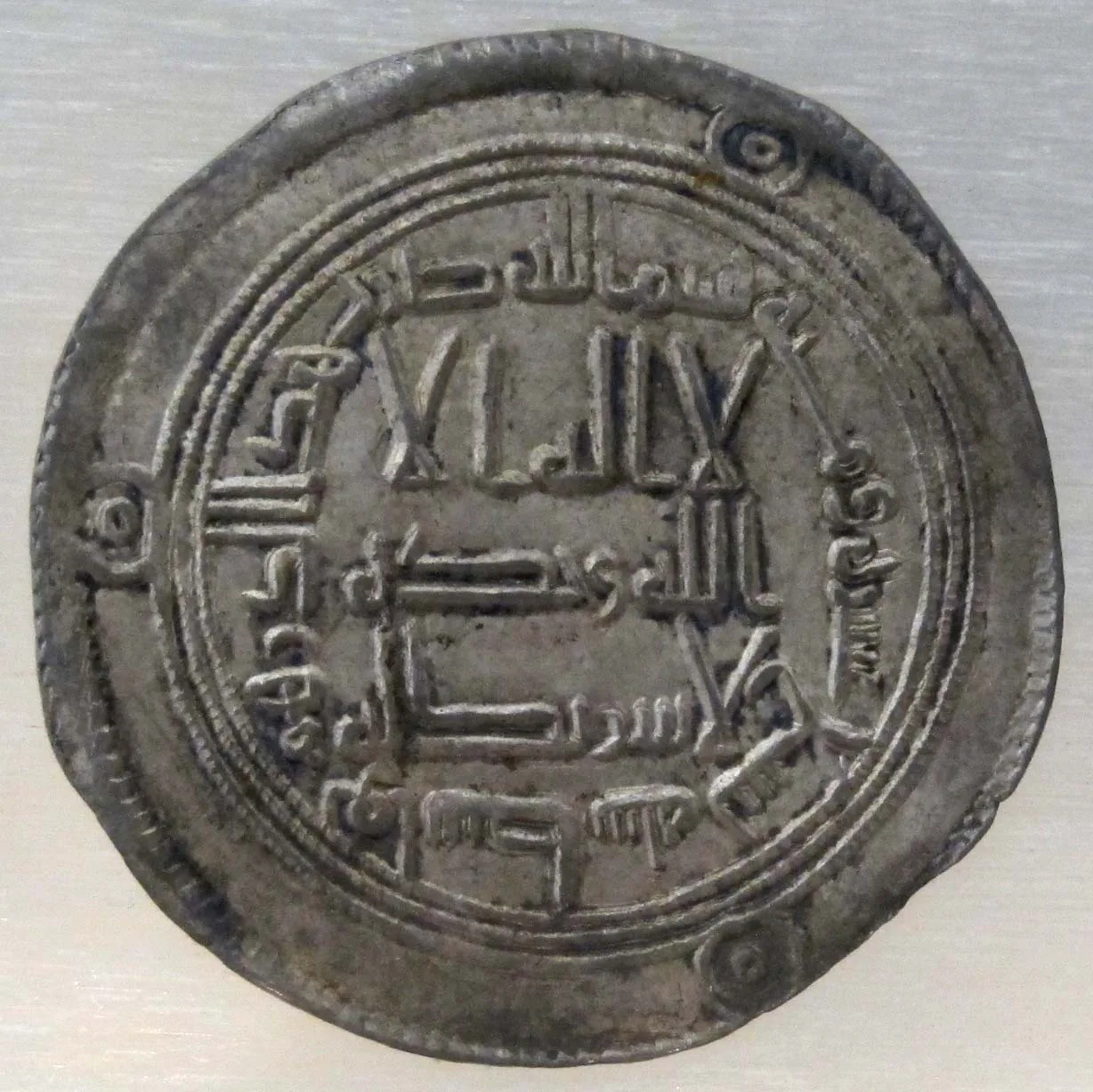
Until the early Umayyad period, monetary transactions were conducted using Byzantine and Sasanian coins. But when Abd al-Malik ibn Marwan assumed the caliphate, he launched a major monetary revolution by minting the Umayyad dinar and dirham, adorning them with the two testimonies of faith and Quranic verses, thereby declaring the state’s monetary independence.
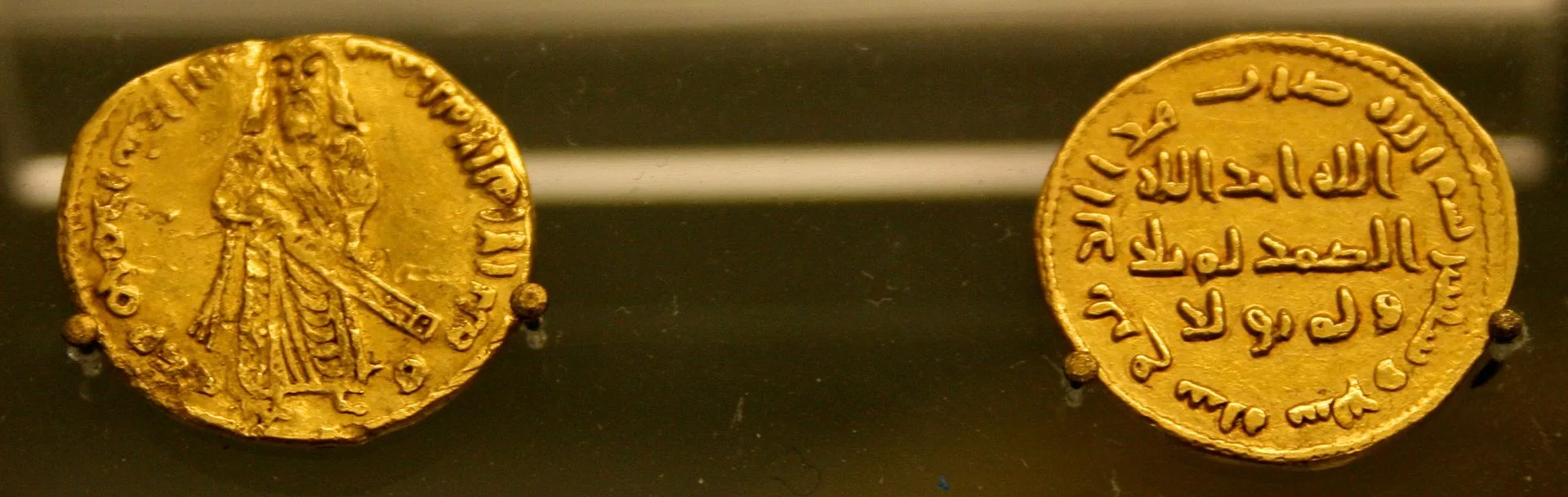
This transformation was not limited to changing the form of currency; it extended to the state’s administrative structure through the establishment of “mints” in most of the conquered provinces, even in North Africa, the Maghreb, and al-Andalus. This step strengthened administrative centralization and unified the Byzantine and Sasanian monetary systems under the umbrella of a single currency.
More importantly, Abd al-Malik ibn Marwan laid the firm foundations of the Islamic monetary system that was adopted by most of the Islamic states and dynasties that came to power after the Umayyads.
Umayyad Trade Networks
The Umayyads played a prominent role in commercial activity even before the establishment of their state. Muawiya ibn Abi Sufyan and his father were among Quraysh’s leading merchants, and from the moment he assumed power, Muawiya took an interest in merchants’ interests and worked to expand trade and invigorate markets.
Thanks to infrastructure development and the expansion of the road network linking the state’s provinces, active commercial centers emerged in regions such as North Africa, Syria, Egypt, Iraq, Khurasan, and al-Andalus. The state also managed to extend its influence over the world’s most important trade routes, including the Mediterranean, the Indian Ocean, and the Silk Road.
Damascus emerged in the Umayyad era as a major commercial center and a pivotal station for eastern trade, to the point that it was said its markets contained goods from around the world. Commercial activity also flourished in other Levantine cities such as Aleppo, al-Rusafa, Homs, Ramla, Jerusalem, and Antioch.
Meanwhile, Qinnasrin was one of the most important economic centers in northern Syria due to the activity of its markets and its strategic location on trade routes. Trade was also active in Iraq in the cities of Kufa and Basra, and the cities of the Hijaz and Najd witnessed flourishing commercial movement, though the cities of the Levant remained superior in commercial prosperity compared with the rest of the provinces.
At the international level, the Umayyad state strengthened its trade relations closely with China and India on the one hand, and with the Byzantine Empire on the other. The affluence enjoyed by the ruling class and its entourage, along with their love of luxury products, helped stimulate markets, as demand increased for expensive commercial goods.
Some sources indicate the existence of a trade route in the Umayyad era linking Iraq with India, China, and Sri Lanka via the Arabian Gulf and the Indian Ocean, a route that gained increasing importance with the growth of Basra and Kufa. Archaeological evidence indicates that trade along the Gulf coast was active from the late seventh and early eighth centuries CE.
In fact, economic organization and activity in the Umayyad era were not limited to land routes alone, but also included the maritime economy. The Umayyads worked to establish and develop important ports such as al-Qulzum and Jeddah, exploit coastal resources, and increase grain exports to meet the needs of pilgrims during the Hajj season.
Veronica Morris and Donald Whitcomb note in their study on the Red Sea in the Umayyad era that the Umayyads succeeded in turning the Red Sea into an integrated maritime economic sphere by regulating navigation, exploiting coastal resources, imposing taxes, and linking ports to regional and international trade networks.
Agriculture and Irrigation Projects
The Umayyad state laid the foundations of its economic renaissance beginning with the agricultural sector, and the reign of Muawiya ibn Abi Sufyan marked the starting point of this orientation. Muawiya adopted an early investment vision by directing part of the revenues from the conquests toward developing the Hijaz, al-Yamama, and Taif, and established vast farms in Mecca, Medina, and al-Yamama, in addition to digging wells.
Dr. al-Sallabi mentions in his book “The Umayyad State” that the Umayyad state paid great attention to developing agriculture through the construction and maintenance of irrigation facilities, such as digging wells, regulating river courses, and building dams. It also sought to reclaim land and expand cultivated areas, especially in Bilad al-Sham, and the Umayyads established water installations around their desert palaces to support agricultural investment.
The Umayyads continued to develop the agricultural sector by reclaiming uncultivated lands and establishing large agricultural estates. Surplus production was invested in regional markets, and the Umayyads carried out broad projects for irrigation and regulating water distribution, such as dams and aqueducts to control water resources, while advanced irrigation installations appeared in some locations such as desert palaces.
In fact, major cities, foremost among them Damascus, witnessed development in water distribution systems, relying on a branching network of channels from the Barada River that delivered water to neighborhoods and farms, in addition to the use of aqueducts to facilitate water transport in some areas.
In her study on ecology, economy, and the conquest of Khurasan, Arezou Azad notes that the Umayyads in Khurasan developed older water management systems there. Supervision of canals and dams was the responsibility of the water overseer (mir ab), who led a large crew to maintain water channels and used precise measuring tools. Egypt also witnessed during the Umayyad era notable development of the Nilometer, which was one of the most important innovations in water resource management.
Dr. al-Sallabi explains that the signs of agricultural development in the western region of the Umayyad state were linked to several factors, most notably the increase in kharaj revenues in al-Jazira and Bilad al-Sham as a result of the survey conducted during the reign of Abd al-Malik ibn Marwan, and the development of the irrigation system through the distribution of water among subsidiary rivers, which led to increased productivity of agricultural lands.
Al-Sallabi also mentions that the governor of Mosul during the reign of Hisham ibn Abd al-Malik ordered the digging of a river through the middle of the city. Its excavation took thirteen years at a cost of three million dirhams, and it had a major impact on agricultural development, as most of the city’s farms benefited from it.
Moreover, Khalid al-Qasri built dams and aqueducts on the Tigris River to control flooding, and in al-Jazira, Maslama ibn Abd al-Malik built a great dam on the Balikh River, which had positive effects on agricultural development.
Crafts and Industries
In his book “The Umayyad Empire”, Andrew Marsham notes that the Umayyad economy relied on a wide variety of natural resources, especially metals, which formed the basis of monetary and economic activity. Iron and copper were extracted from multiple regions in Anatolia, Syria, Persia, and the Arabian Peninsula; tin came from the Arabian Peninsula and the Taurus Mountains; silver was extracted from the Arabian Peninsula, the Maghreb, and Khurasan; while gold was extracted from the Caucasus, the Alborz Mountains, and the Hijaz.
As al-Sallabi explains in his book, crafts and industries in the Umayyad era were linked to the nature of an economy that depended primarily on agriculture. Accordingly, several industries tied to agricultural production flourished, such as textiles, mills, and presses.
In fact, industries in the Umayyad era witnessed notable diversity. The textile industry flourished, and special factories known as “tiraz houses” were established for it. Construction industries also prospered as a result of urban expansion in Umayyad cities, and stonework, marblework, and architectural ornamentation spread widely to meet the growing demand for erecting and decorating buildings, especially with major construction projects such as mosque building.
The cities of Bilad al-Sham, especially Damascus, Tiberias, and Jerusalem, witnessed major industrial activity as a result of increasing population density and urban expansion. Some industries, such as pottery and glassmaking, moved from the outskirts of cities to their centers, and the number of markets and shops increased.
Likewise, the papyrus industry in Egypt was among the industries that acquired special importance in the Umayyad era, as it was used in administrative correspondence before paper manufacturing became widespread. The Umayyads directly supervised papyrus production because of its importance in managing state affairs, and its exports also constituted an important economic resource. Alongside this, other crafts flourished, such as blacksmithing, woodworking, and the making of ornaments and jewelry.
Military industries also developed, foremost among them shipbuilding, whether military or commercial vessels. The Umayyads were keen to build a strong naval fleet to confront the Byzantine navy, which threatened the western shores of the Islamic state, and thus the manufacture of warships developed greatly and continuously during the Umayyad era.
It is well known that Muawiya ibn Abi Sufyan ordered the establishment of a shipyard in the city of Acre and brought in experts from Egypt to benefit from their expertise. The Umayyad state continued to develop shipbuilding after Muawiya’s reign, and as this industry advanced, new shipbuilding centers were established during the reign of Abd al-Malik ibn Marwan, who founded a shipyard in Tunis.
Alongside warships, commercial shipbuilding also flourished, especially in regions overlooking maritime trade routes. The Bahrain region and the city of Wasit in Iraq became known for building commercial vessels used in navigation across the Arabian Gulf.
In conclusion, the Umayyad experience remains clear proof that the rise of nations does not depend solely on the abundance of wealth, but on the efficiency of its management. The Umayyads succeeded in formulating a successful equation that combined the financial discipline established by Abd al-Malik ibn Marwan with logistical connectivity between the peripheries and the center, culminating in water security through advanced hydraulic engineering. The lessons of this experience reflect the Umayyads’ ability to transform resources into economic power that yields benefits for both land and people.