













هذا التقرير متاح أيضًا بـ العربية
Islamic architecture entered a new phase during the reign of Caliph al-Walid ibn Abd al-Malik (705–715 CE), embodying the ambitions of the Umayyad state and its political and religious identity. Al-Walid personally oversaw his major architectural projects, assembling a team of local and foreign craftsmen and using materials brought from across the Umayyad world to shape an architectural style that blended classical and eastern traditions within an emerging Islamic vision.
The Umayyads built new cities such as Ramla and Kairouan, developed existing urban centers such as al-Rusafa, and constructed palaces and complexes in the Syrian and Jordanian desert. They also launched a broad urban program that included expanding and renovating mosques such as the Prophet’s Mosque and the Mosque of Amr ibn al-As, alongside building fortifications, road and irrigation networks, mint houses, and hospitals (bimaristans). Despite the short lifespan of their state, their architectural legacy remained present in later eras.
The Height of Beauty: Architecture of Glory in the Heart of Damascus
In 705 CE, Caliph al-Walid ibn Abd al-Malik began constructing the Great Umayyad Mosque in the heart of Damascus, on a site with deep historical roots. The project was not merely the building of an ordinary mosque, but a vast architectural monument announcing the birth of a new urban model. Al-Walid devoted enormous resources to it estimated at around 5,600,000 dinars, and its construction took nearly ten years.
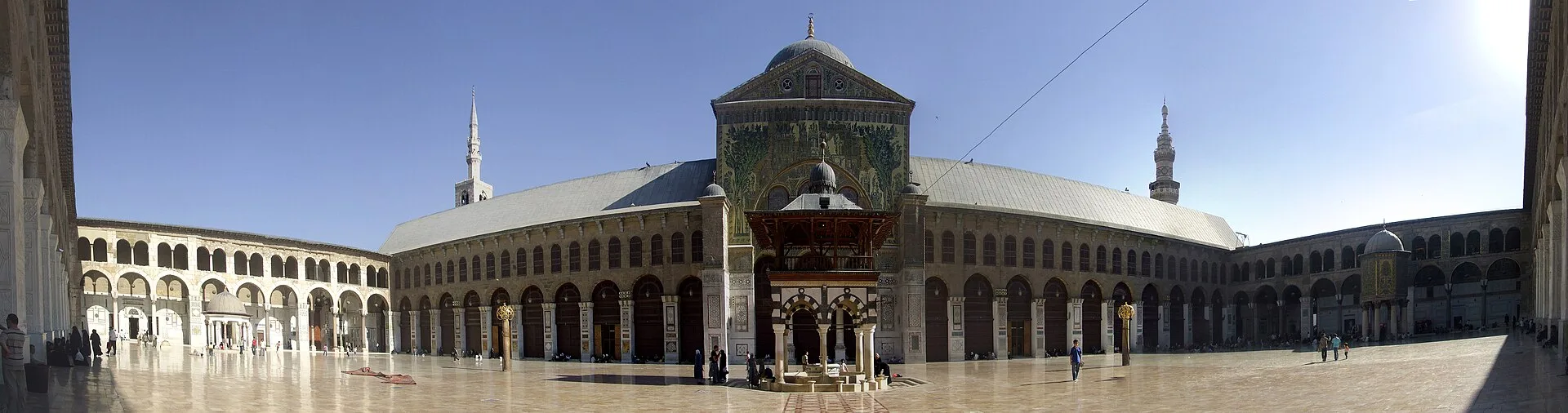
The design combined Roman columns and Byzantine mosaics in an Islamic spirit, and its arcades were adorned with marble, gilded wood, and mosaics depicting natural scenes of rivers and gardens, without human or animal imagery. The mosque also included the shrine of the Prophet Yahya (John the Baptist) and was equipped with water systems to meet the needs of worshippers. To this day, it remains a living testament to the height of Umayyad glory.
The Umayyads in Jerusalem: Art in al-Haram al-Sharif
In his study of Jerusalem in the Umayyad era, Suleiman Mourad notes that the Umayyads viewed Jerusalem as a religious and political center within the state project, and worked to consolidate the sanctity of al-Haram al-Sharif and strengthen the city’s standing among Muslims by developing Jerusalem’s religious architecture and infrastructure.
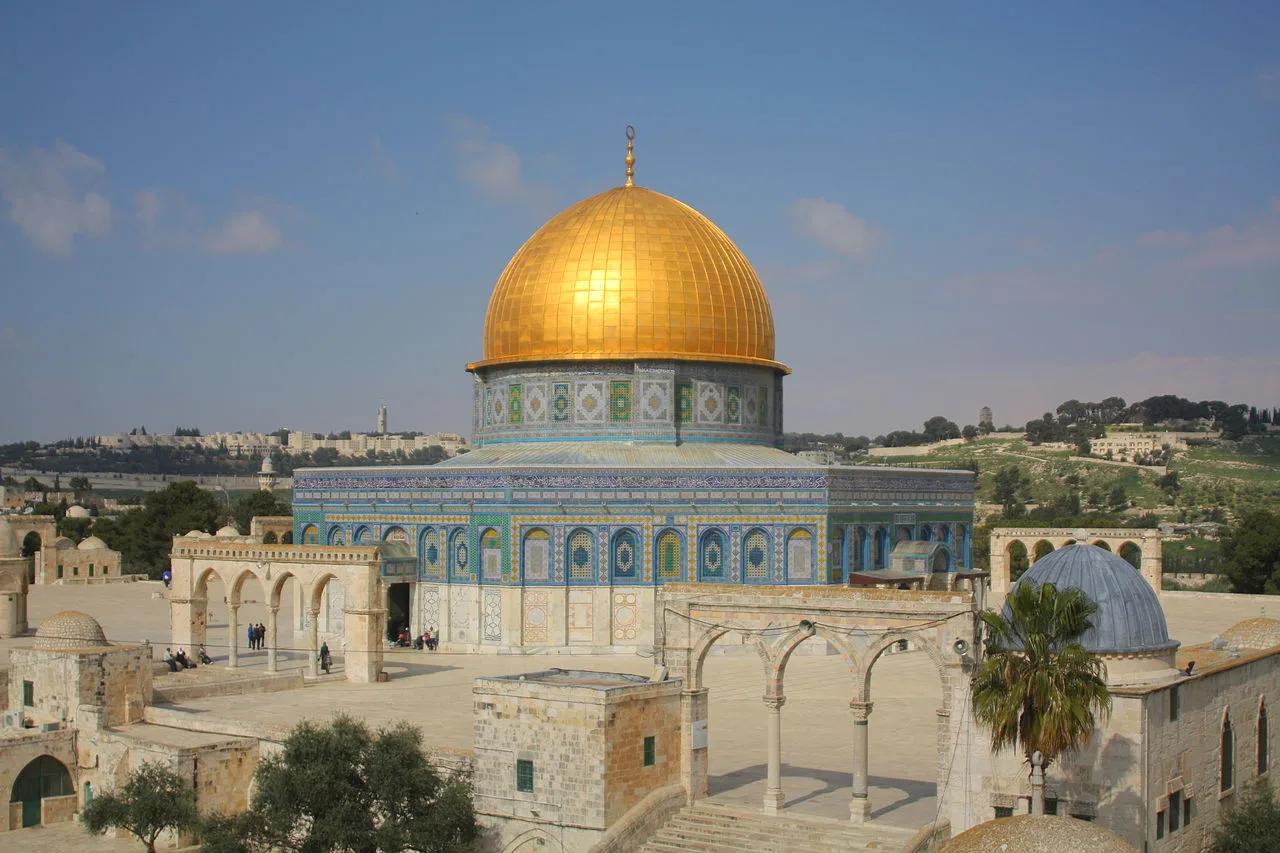
It is mentioned that Caliph Umar ibn al-Khattab was the first to think of protecting the Rock of the Mi’raj, from which the Prophet Muhammad ﷺ ascended to heaven, and ordered a wooden canopy to be built over it to shield it from sun and rain. Umar ibn al-Khattab also built a simple mosque on the southern side of al-Haram al-Qudsi after the Islamic conquest in 15 AH/636 CE, making that step the first nucleus in the formation of the landmarks of al-Aqsa Mosque.
Attention to Jerusalem then moved into a broader architectural phase during the Umayyad era. Under Caliph Abd al-Malik ibn Marwan (685–705 CE), the city witnessed a qualitative transformation when he launched the construction of the Dome of the Rock (691–692 CE) in the heart of al-Haram al-Qudsi, presenting a majestic monument that combined Islamic architectural innovation with the art of Kufic inscription.
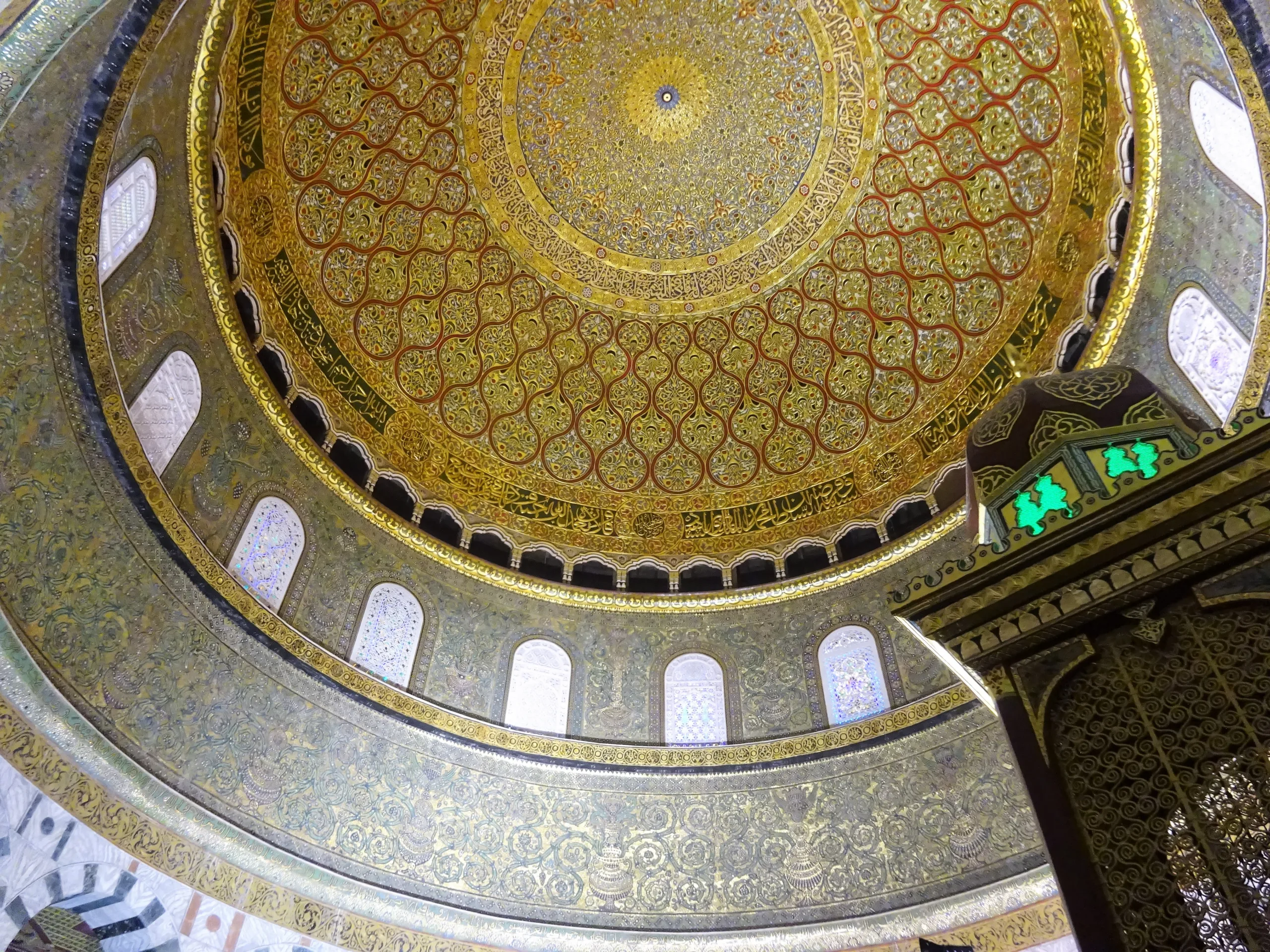
The interior inscriptions of the Dome of the Rock, composed of Quranic verses affirming the oneness of God and the prophethood of Muhammad ﷺ, are among the oldest surviving Arabic epigraphic texts. Abd al-Malik’s name was recorded in them as patron of the project, before it was later replaced with the name of Caliph al-Ma’mun.
This project continued under his son al-Walid ibn Abd al-Malik (705–715 CE), who reinforced the Islamic presence in Jerusalem by expanding and renovating al-Aqsa Mosque, and also ordered the construction of an administrative complex adjacent to the southern side of the sanctuary. Modern archaeological excavations have uncovered a group of buildings dating back to the Umayyad period, including two palaces and administrative buildings.
Umayyad Cities: The Genius of Urban Planning
Architectural innovation in the Umayyad era extended to cities, as al-Walid ibn Abd al-Malik developed a style reflecting the ambitions of the state, and architectural prosperity continued under Hisham ibn Abd al-Malik. Urban development was not limited to Damascus, but included the founding of new cities and centers serving administrative, military, economic, and religious goals.
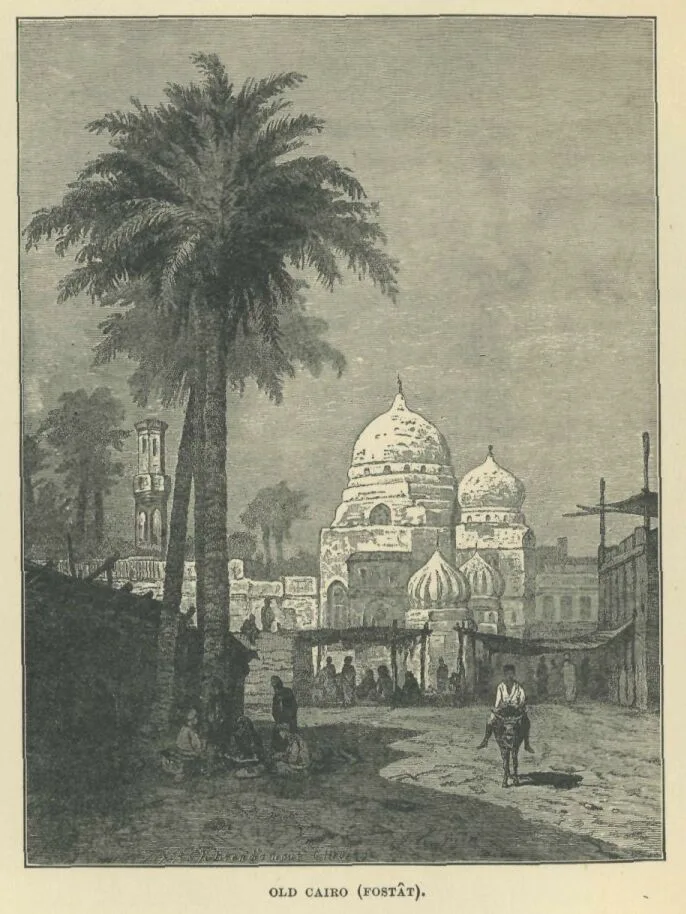
The beginning was with the development of the city of Fustat in Egypt, founded by Amr ibn al-As in 641 CE on the orders of Caliph Umar ibn al-Khattab as the first new Islamic city. It was divided into administrative, religious, residential, and economic sectors, and included a large mosque and a massive palace complex.
Fustat witnessed a major urban boom during the Umayyad era. The Umayyads built a Nilometer and expanded the Mosque of Amr ibn al-As, and churches were also built in the city. As Khaled Azab explains in his book “Fustat: Emergence.. Prosperity.. Decline,” the city of Fustat was transformed during the Umayyad period into an integrated model of a true, demographically mixed city.
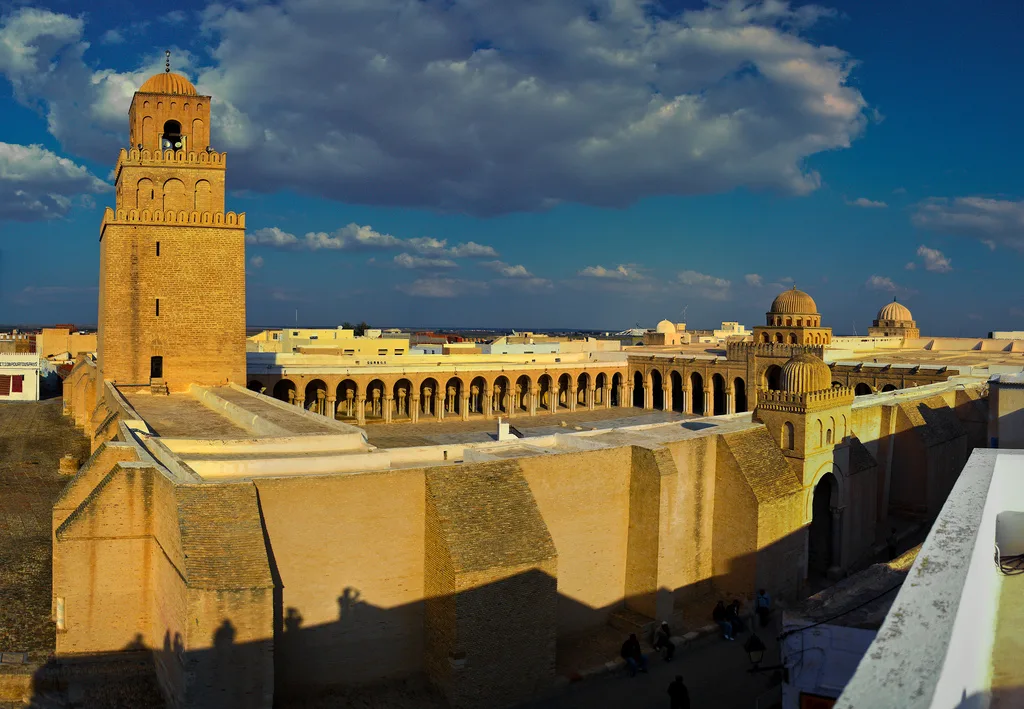
Like Fustat, the Umayyads established other cities such as Ramla and Kairouan, which was founded in the 670s as the capital of Ifriqiya. From there, the conquest extended to Tangier before crossing the strait into al-Andalus in 711 CE. Kairouan was the greatest city in the Maghreb, the richest in trade and wealth, and the finest in dwellings and markets.
Dr. Ali Muhammad al-Sallabi notes in his book “The Umayyad State: Factors of Prosperity and Repercussions of Collapse” that the organized scholarly movement in the Maghreb did not begin until after the founding of the city of Kairouan in 50 AH, which became a center of Islamic civilization in the Maghreb and attracted large numbers of Berbers who came to Kairouan to learn the religion.
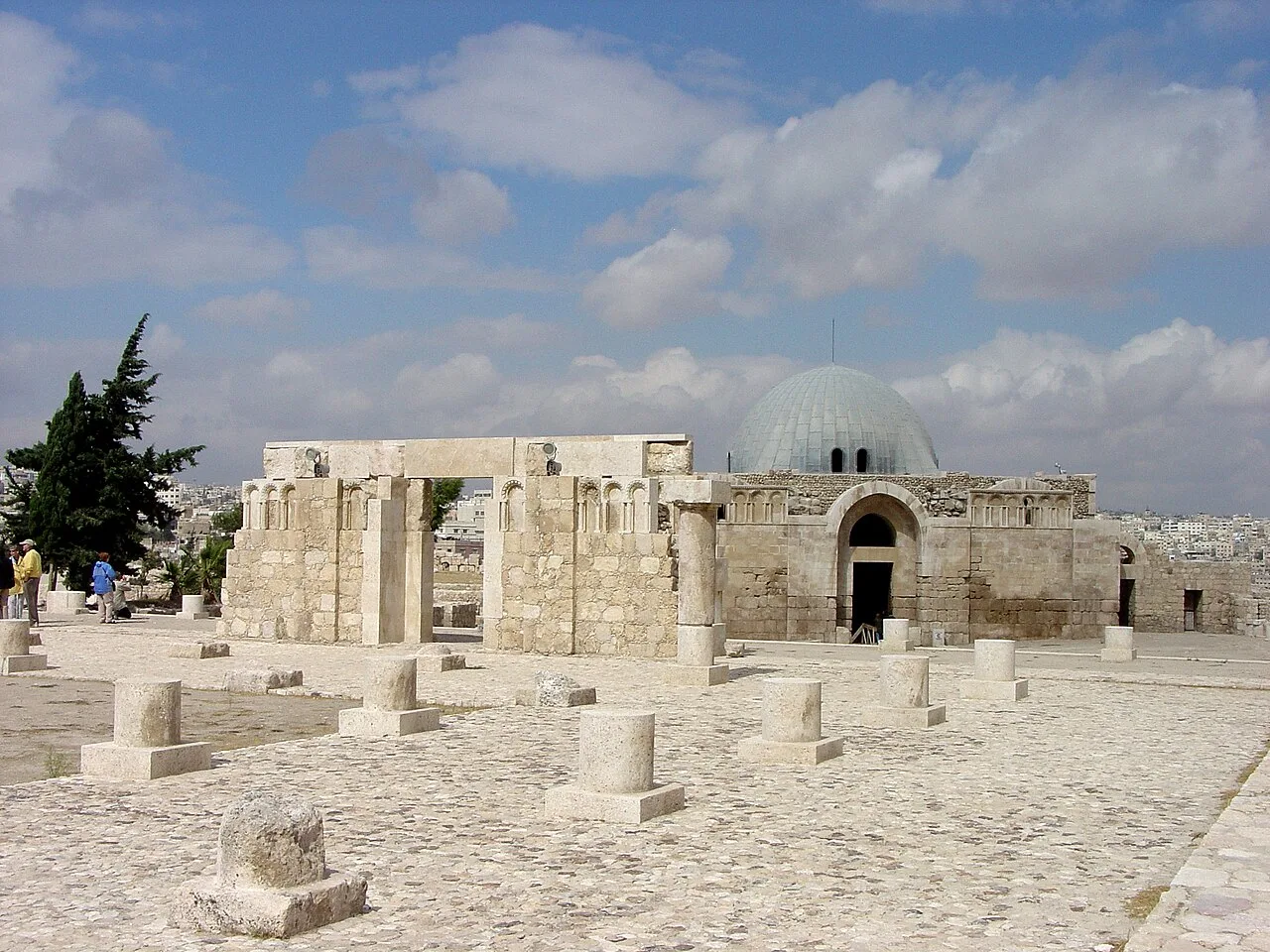
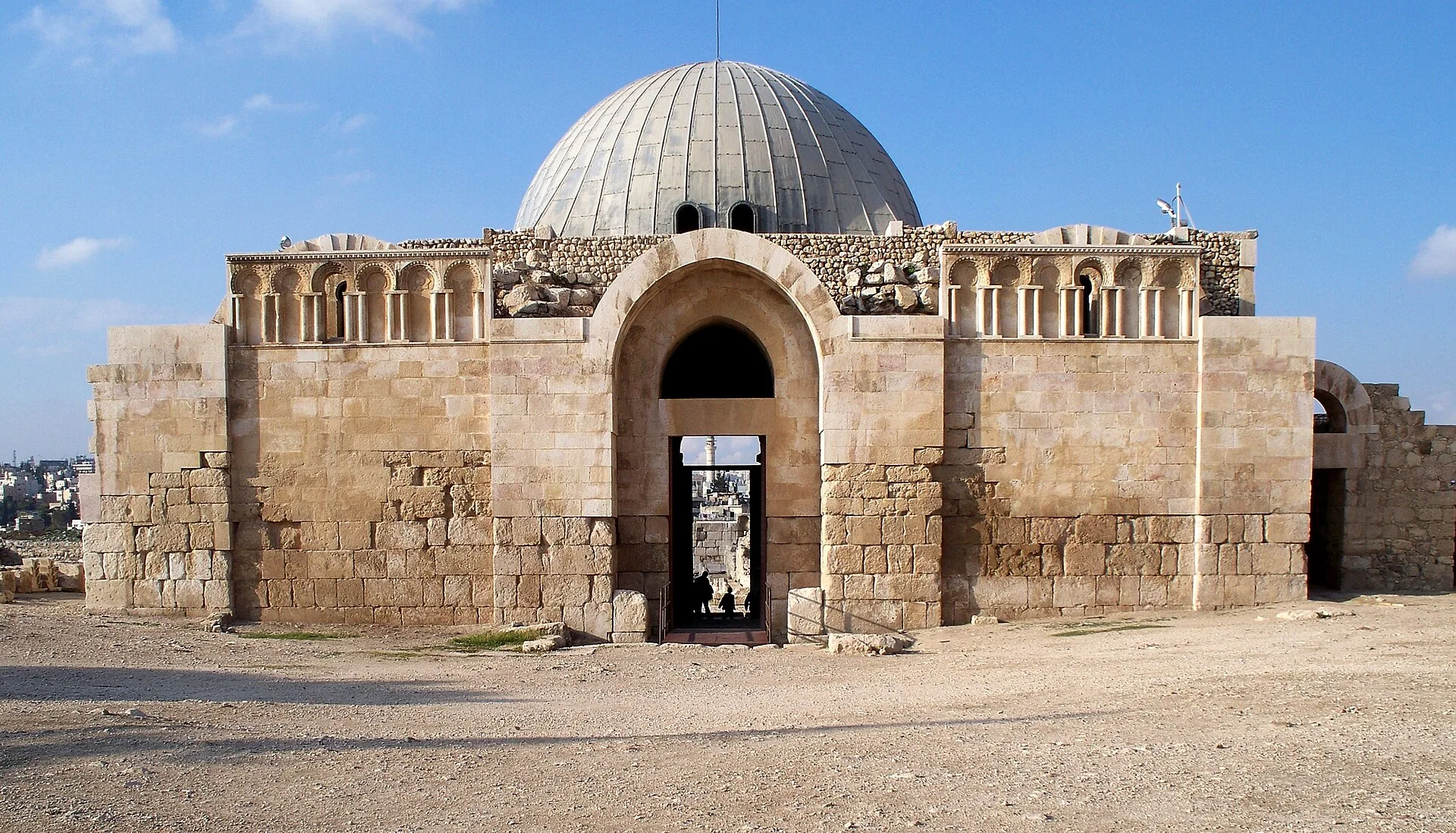
The Amman Citadel also represents a prominent model of a hilltop city in the Islamic world. The citadel was built in the first half of the eighth century to serve as the seat of the governor of al-Balqa. It was divided into the lower city, which retained churches alongside the new mosque, and the upper citadel, which included a large palace, a central mosque, a market, and residences, in addition to administrative and military facilities such as the mint and military garrison.
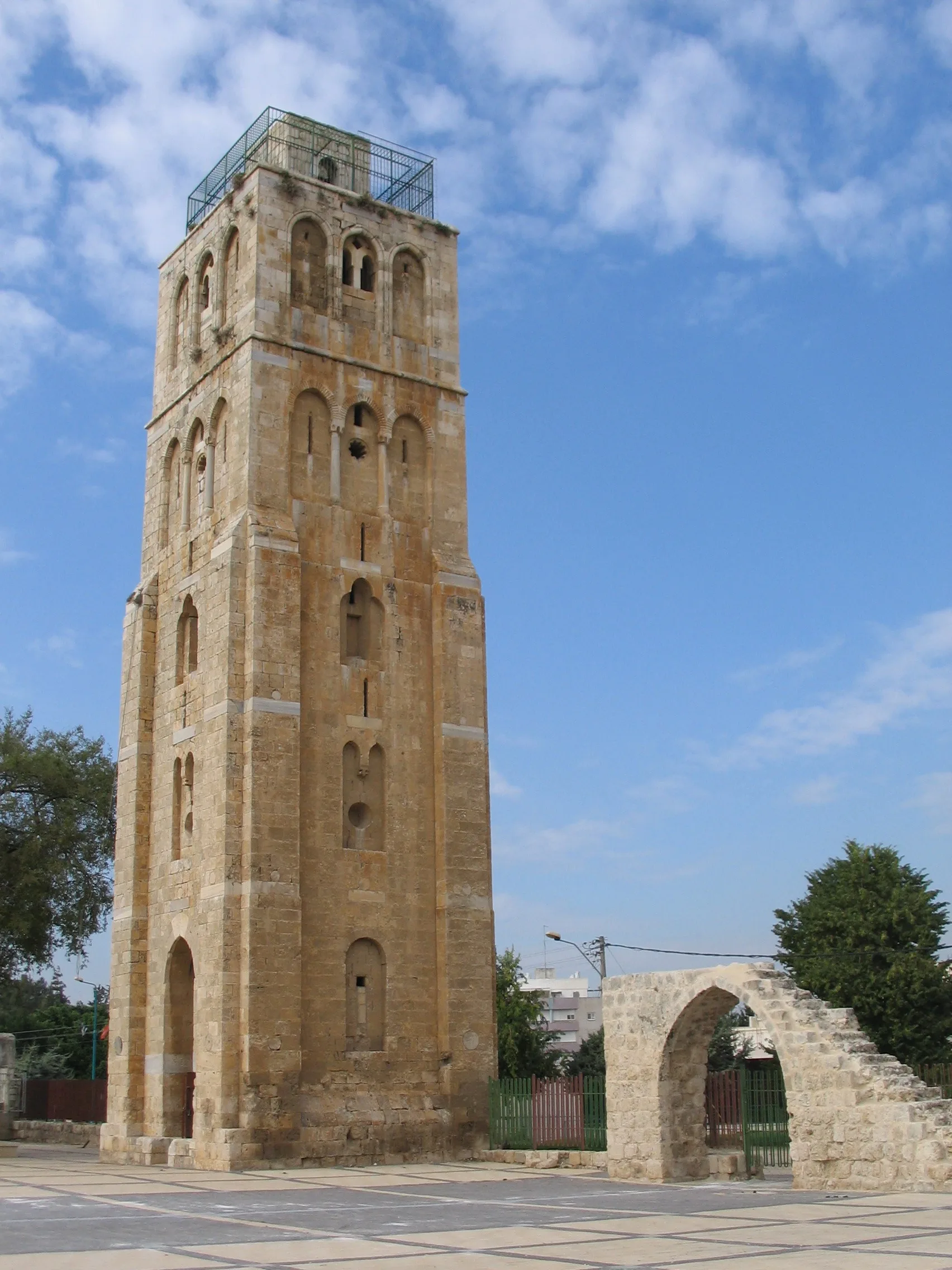
In Palestine, meanwhile, founded Sulayman ibn Abd al-Malik (715–717 CE) the city of Ramla as a new administrative center, and built in it a palace and a mosque, along with water-supply infrastructure, with an urban layout that allowed residents to build within a defined planning framework.
In the same context, witnessed cities such as Beisan and Jerash during the eighth century processes of reorganization and development, including the construction of major mosques and commercial and administrative buildings. Urban activity was not confined to cities, but extended into the countryside, where urban complexes appeared in the al-Balqa region south of Amman, such as the site of Umm al-Walid, which included fortified structures, a mosque, three castles, and buildings linked to agricultural activity and water-resource management.
Al-Rusafa also saw intense urban activity during the reign of Hisham ibn Abd al-Malik (724–743 CE), who established two palace complexes on the road between Damascus and northern Syria, while prioritizing the frontier regions north of the Euphrates to strengthen military and economic control and establish fortified centers controlling strategic roads and passages.
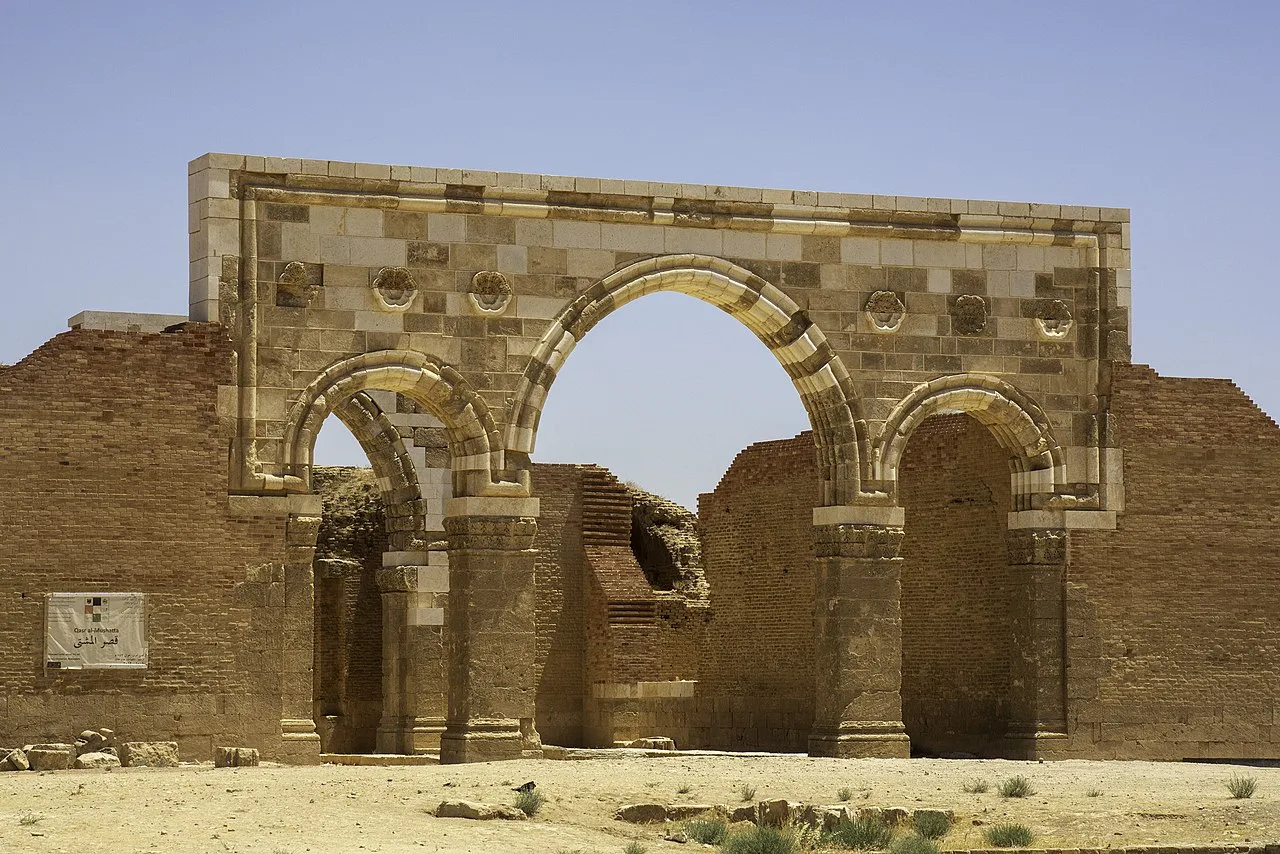
As for the cities of northern Bilad al-Sham such as Aleppo and Edessa, they demonstrated the civilizational diversity of the Umayyad era, where Greek, Arab, Syriac, and Jewish elements interacted. These cities witnessed two phases of construction: the first after the conquest to establish small places of worship, and the second in the eighth century with the building of prominent mosques in city centers, while preserving places of worship for other communities.
A number of researchers believe that Umayyad cities represent one of the most prominent forms of early urban formation in the Islamic world, as they were created to perform overlapping administrative, military, economic, and religious functions. The Umayyad experience can thus be seen as a foundational stage in the development of Islamic urban planning.
Umayyad Desert Castles: Innovation in the Heart of the Desert
The Umayyad palaces of the Umayyad era served as centers of political and military power and economic administration. These palaces were also a laboratory for architectural and artistic innovation away from Byzantine or Persian imitation, featuring murals decorated with human and vegetal scenes, along with the use of domes.
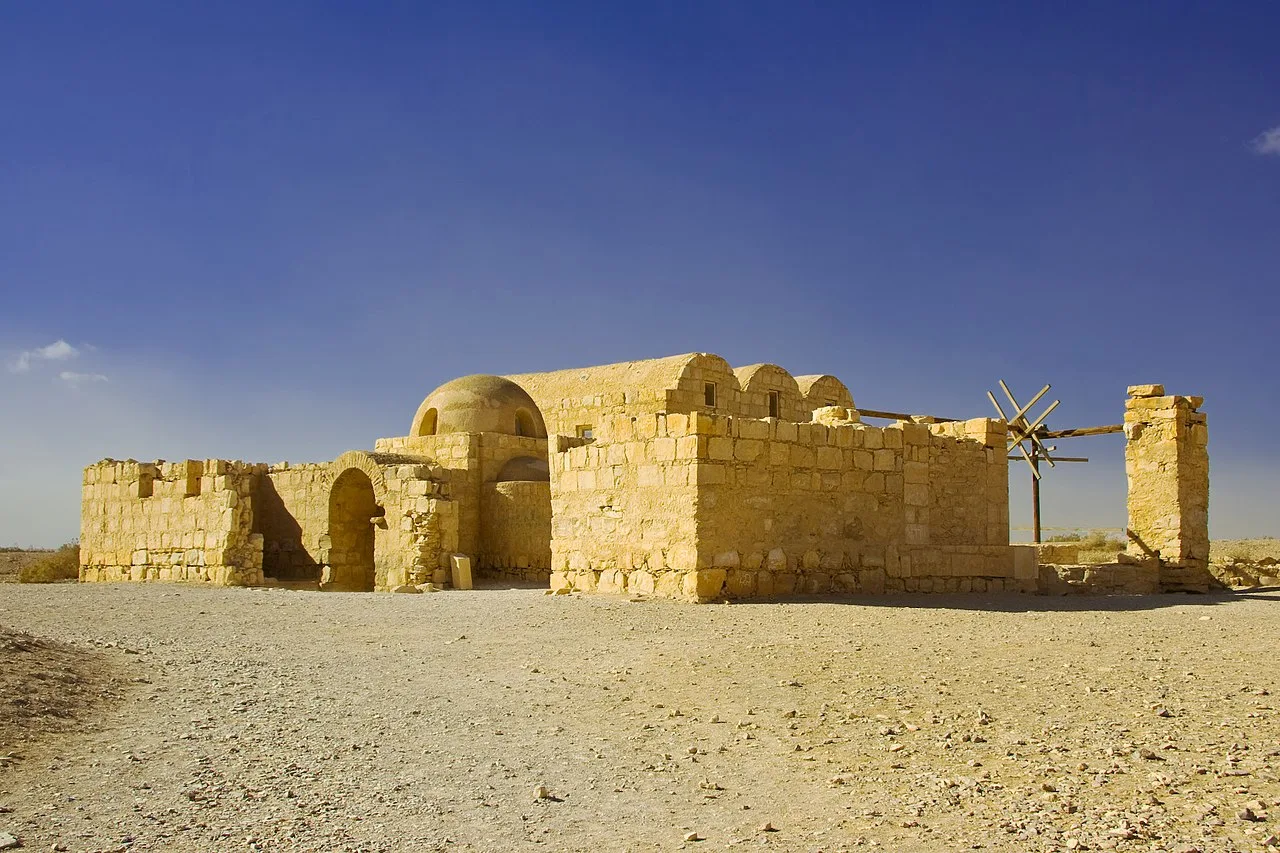
Qasr Amra is an important model for understanding urban transformations in Syria under Umayyad rule, as it embodied the interaction between Arab, Byzantine, Sasanian, and local influences, and was part of a broader network of desert palaces linked to irrigation systems, agriculture, fortifications, and mosques, stretching along trade and pilgrimage routes. These projects were carried out by craftsmen local to the region, with the participation of some skilled migrant artisans.
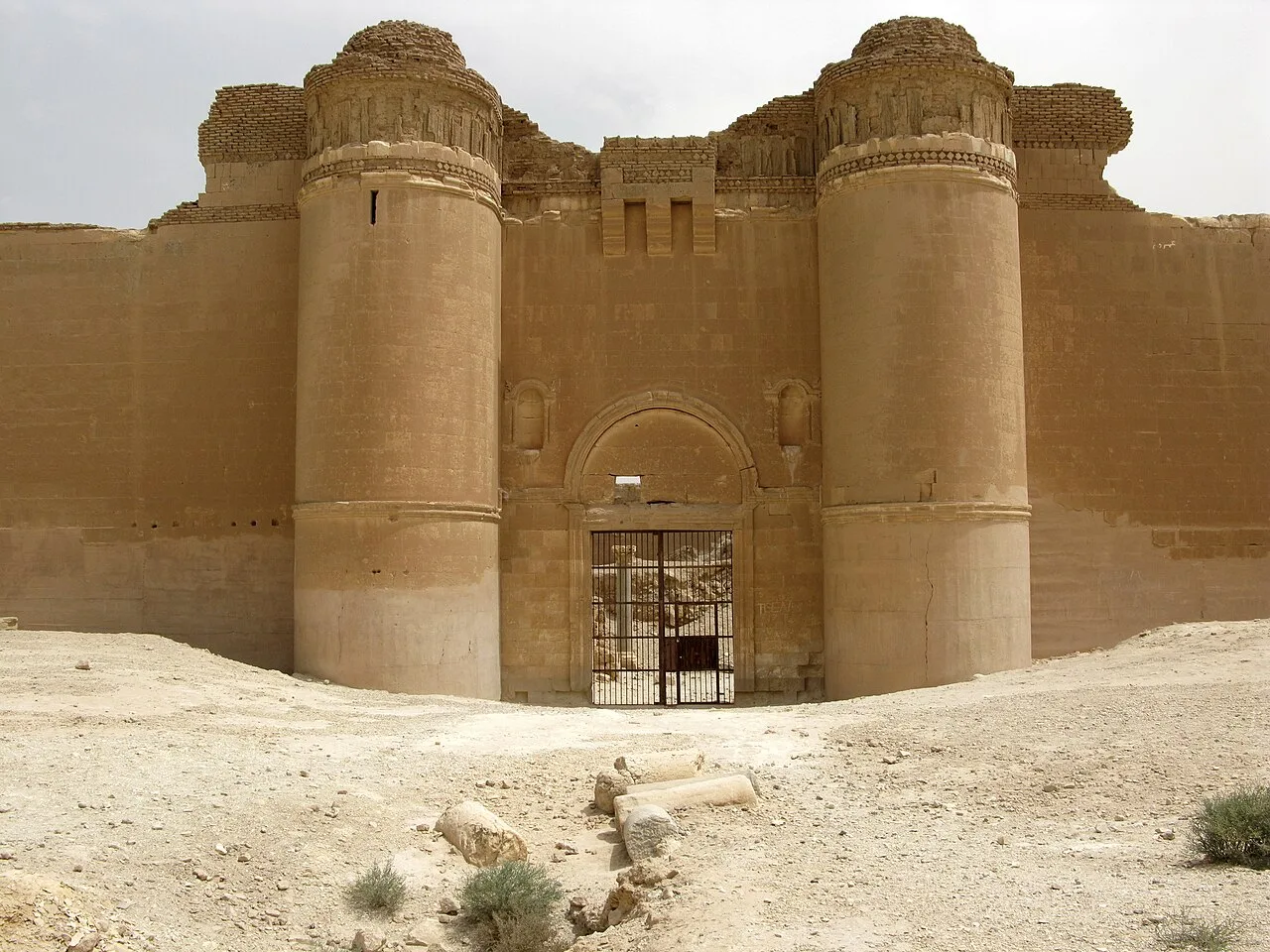
Also notable is Qasr al-Hayr al-Sharqi as one of the most important Umayyad palaces. It lies between Palmyra and the Euphrates River and is attributed to Hisham ibn Abd al-Malik. It is divided into two parts: the first, a palace for meetings with tribes; the second, larger section includes residences for the elite, a mosque, a water reservoir, baths, olive presses, and extensive residential and agricultural areas.
According to a study by Denis Genequand on the economic and political factors behind the Umayyad desert castles, these palaces did not stand in isolation from their surroundings, but formed the nucleus of larger complexes that included mosques, baths, residences, irrigation systems, and dams, in addition to industrial facilities for processing agricultural products such as olive presses and watermills.
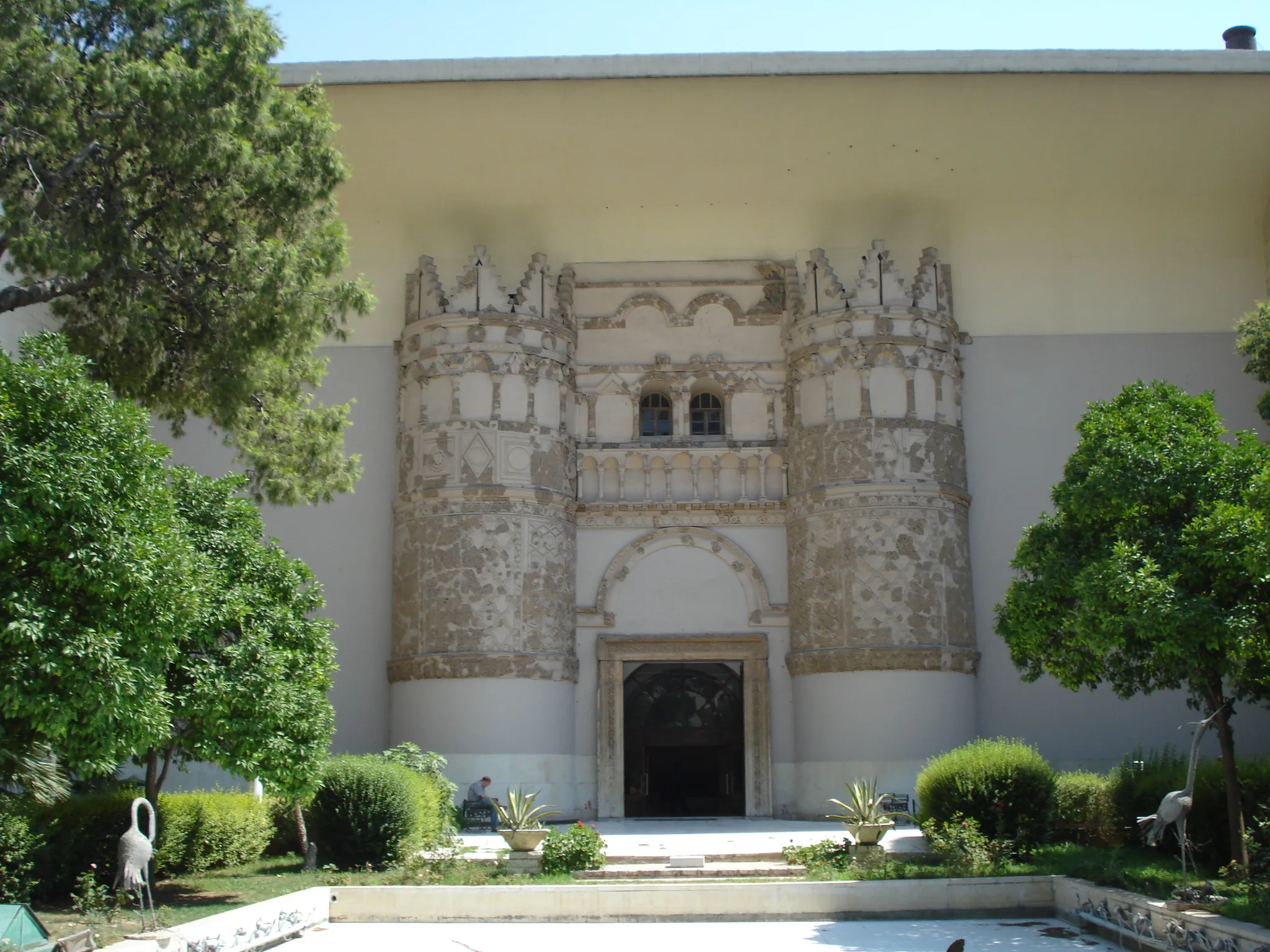
With Hisham ibn Abd al-Malik’s accession to power (724–743 CE), attention to the northern provinces and the Byzantine frontier intensified, and the Jazira region and the roads linking Damascus and al-Rusafa witnessed notable urban activity. Hisham is credited with the construction of two complexes on the road between Damascus and al-Rusafa, and the development of frontier centers north of the Euphrates and in the Balikh Valley, including Hisn Maslama and the lands of Balis, to secure strategic routes.
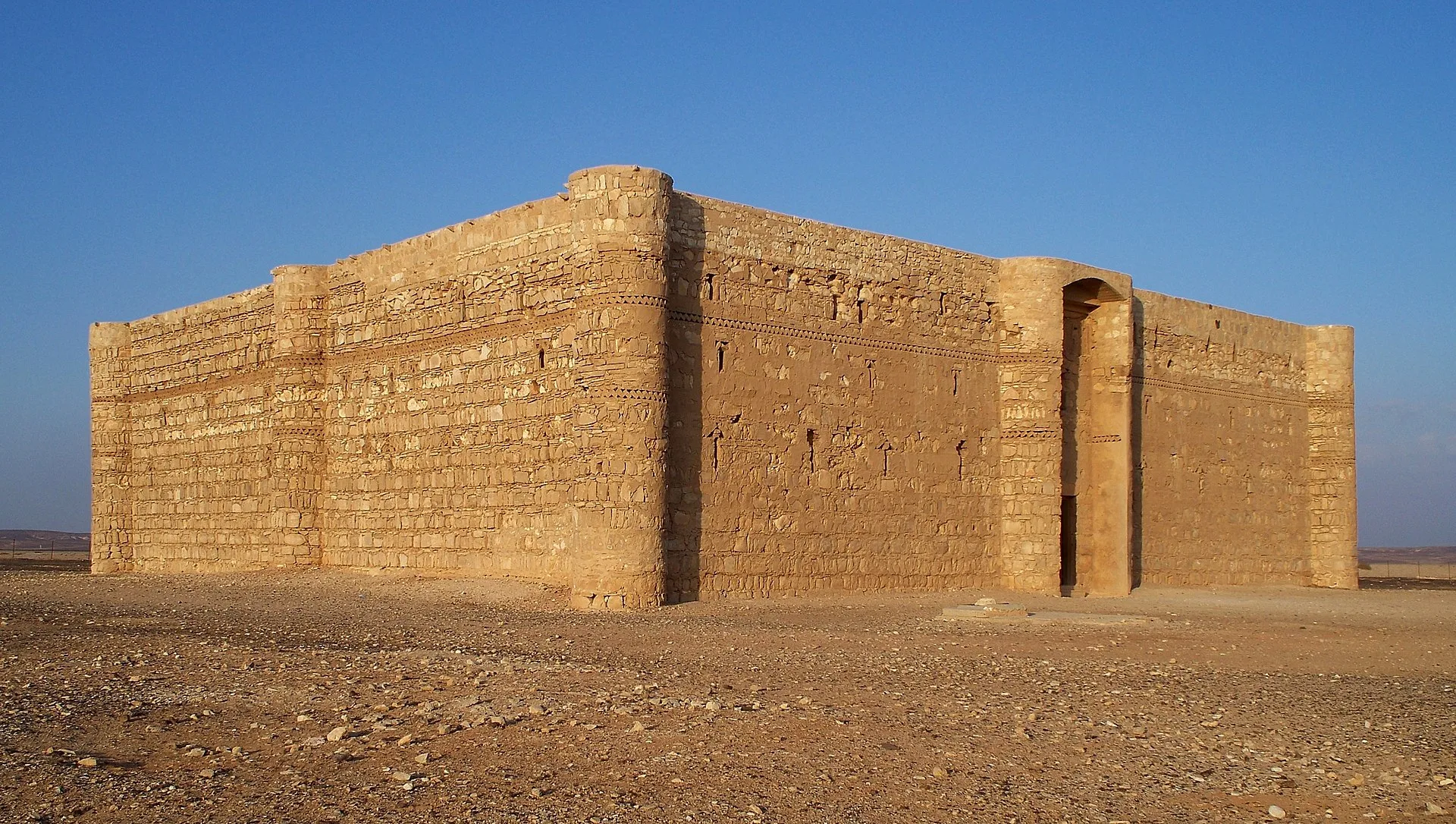
The number of these Umayyad castles is estimated at around 41 scattered across the deserts of Syria and Jordan. Thus, the “Umayyad Desert Castles” constitute one of the most prominent material testimonies to the Umayyad presence in the architectural sphere, and today allow for an integrated reading of the architectural, political, and economic dimensions of that era.
In conclusion, despite the decline of the Umayyad state, its architecture remained a testament to an enduring glory in the memory of Islamic civilization. The Umayyad experience in urban planning appears almost like an open message to Damascus today as it searches for a new formula to reorder its space after the transformations it has undergone. Umayyad cities offered a model of cities capable of embracing diversity and organizing their religious, administrative, and economic affairs within one integrated fabric.