














هذا التقرير متاح أيضًا بـ العربية
Egypt was not a direct party to the US-Israeli war on Iran, but it is among the Arab economies most exposed to its indirect shocks.
The effects of the war reached Cairo through four clear channels: a higher oil and gas bill, disruption to shipping and the Suez Canal, increased shipping and insurance costs, and then new pressure on food and commodity prices ultimately paid by consumers.
The Egyptian economy depends on imports of energy, wheat, and production inputs, while the Suez Canal is one of its most important sources of income tied to global trade flows. For that reason, the war was not entirely distant from Egypt.
Energy… the oil and gas bill
The war came as Egypt was already suffering from a clear gas gap: domestic production hovering around 4.1 to 4.2 billion cubic feet per day, compared with demand of about 6.2 billion cubic feet, which rises in summer.
With Israeli supplies suspended after the outbreak of the war, Cairo was forced to increase its purchases of liquefied natural gas from the international market, before gas flows from Israeli fields gradually resumed in April.
But the impact of the shock remained visible in the bill, as said Prime Minister Mostafa Madbouly, the cost of energy imports rose by between two and 2.5 times, and the monthly gas bill jumped from about $560 million to about $1.65 billion for the same quantities.
This figure represents major pressure on the budget of a state covering a widening gas and fuel gap through imports, which explains the government’s move to pass part of the cost on to consumers. On March 10, raised fuel prices by between 14 and 17%.
- Diesel rose by 3 pounds to 20.5 pounds per liter.
- Gasoline 80 rose to 20.75 pounds, Gasoline 92 to 22.25 pounds, and Gasoline 95 to 24 pounds.
- The price of natural gas for vehicles rose from 10 to 13 pounds per cubic meter.
- The price of a household gas cylinder increased from 225 to 275 pounds.
The government justifies these decisions by the rise in oil prices (Brent crude) from around $69 before the war to more than $108 per barrel afterward. Raising prices in this way reflects the limited ability to continue subsidies when the import bill doubles.
Industrial companies also felt the weight of the crisis. On May 3, announced raising gas prices for energy-intensive factories to:
- $14 per million thermal units for cement plants.
- $7.75 for iron, steel, and fertilizer industries.
- $6.50–$6.75 for other industries.
The increases aim to cover the cost of importing LNG, but they also raise production costs in vital sectors such as construction and put pressure on building material prices.
These policies have led to an increase in iron prices by about 8%, bringing the price per ton to 40,000 pounds, an example of the energy shock being transmitted to local industry.
And estimated Morgan Stanley that the continuation of the confrontation and disruption of transit through Hormuz could add between $1 billion and $2.4 billion to Egypt’s energy import bill during the rest of the fiscal year.
The Suez Canal… disruption to navigation and transit
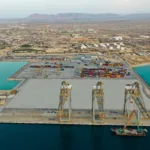
In the Red Sea and Bab el-Mandeb, Houthi attacks kept risks elevated, while in the Gulf and the Strait of Hormuz, transit risks and global insurance and shipping costs increased.
The diversion of ships away from Suez also remained primarily linked to the risks in the Red Sea and Bab el-Mandeb. These lengthy diversions increased the distance between Asia and Europe from about 10,000 to 13,000 nautical miles, and extended voyage time from 31 to 41 days.
The additional cost was clear: the voyage of a medium-sized container ship rose from about $1 million to $1.7 million.
Before the outbreak of the war, the Suez Canal had been showing signs of relative recovery. By February 8, 2026, announced the Canal Authority that 1,315 ships had passed through, generating revenues of $449 million since the start of the year, compared with $368 million in the same period of 2025.
But this early recovery preceded the February 28 shock. After the escalation with Iran, major shipping companies became cautious again.
Thus, halted Maersk future voyages via the Suez/Bab el-Mandeb route, while Hapag-Lloyd continued rerouting its IMX service around the Cape of Good Hope, and maritime reports said major companies postponed a broad return to the Red Sea and the Suez Canal.
Egyptian President Abdel Fattah el-Sisi spoke of a loss of about $9 billion to $10 billion in canal revenues over two years because of Red Sea disruptions.
Although this figure also includes the repercussions of the war in Gaza, it illustrates the extent of dependence on the canal as a source of foreign currency.
Imports… shipping, insurance, and more expensive goods
The third blow to the Egyptian economy came from higher shipping and insurance costs on container imports, which is illustrated by the following infographic:
By contrast, the fees announced by Hapag-Lloyd — $1,500 for a standard container and $3,500 for a refrigerated one — were directed at Gulf routes. MSC also announced a mandatory fee of $800 per container for affected shipments bound for the Gulf.
In addition to shipping fees, the war raised the benchmark price for maritime risk in the region. In the Gulf and Hormuz, war-risk premiums on some ships reached 3% of the vessel’s value, up from about 0.25% before the war, with insurance prices for cargoes and risky voyages reviewed on a case-by-case basis.
The Federation of Egyptian Chambers of Commerce expected imported goods prices to rise by about 10% because of these increases. Since imports account for roughly a quarter of GDP, even a slight increase in cost is quickly reflected in local prices.
The impact of import costs is especially clear in wheat, as depends Egypt on foreign sources for more than half of its wheat consumption. With fuel and transport costs rising, a source in this sector told Reuters that wheat prices in the local market increased by about 2,000 pounds per ton to around 16,000 pounds.
In January and February 2026 data, imports of durum wheat reached $638 million, corn $523 million, and soybeans $351 million. Imports of intermediate goods also totaled $7.06 billion, inputs directly affected by shipping, insurance, and supply chains.
In February alone, rose Egypt’s imports by 24.7% year-on-year, with notable increases in natural gas, wheat, iron and steel, and copper. The disruption to shipping did not only pressure imports, but also affected exports.
In the first days of the war, fell Egyptian export declarations by 77% year-on-year, while declarations bound for Saudi Arabia and the UAE dropped by 83% and 90%, respectively. The significance of this lies in the fact that these two Gulf markets together account for more than a third of Egypt’s exports.
Inflation and the consumer… how is the shock worsening?
In prices, the impact did not appear as an immediate across-the-board jump, but rather as additional pressure on top of already existing inflation.
Thus, slowed annual urban inflation to 14.9% in April 2026, compared with 15.2% in March, while prices rose 1.1% month-on-month.
And declined food and beverage prices by 0.7% month-on-month, but they remained 6.7% higher year-on-year.
And warned the Central Bank in its monetary policy report that Iran-US tensions and energy shocks could increase inflation, expecting it to range between 16% and 17% in 2026 if pressures continue.
And the index of core inflation, which excludes goods with volatile prices, fell to 13.8% in April, but it may rise when the impact of the new charges becomes clear.
Likewise, higher fuel prices directly increased the cost of public and private transportation, which was reflected in the prices of vegetables, fruit, and manufactured products.
Some factories also passed the burden of expensive gas on to the final product, with prices of cement, iron, and imported foodstuffs rising because of higher shipping costs.
By contrast, consumers temporarily benefited from increased local fruit supply after exports to the Gulf stopped, but this supply is not enough to offset increases in other goods.
Official figures also show that food and beverage prices rose by 6.7% year-on-year in April.
Although some of this increase may be due to domestic factors such as subsidy policies and the exchange rate, the larger part is linked to higher energy and shipping prices.
Therefore, the question facing policymakers remains how to protect low-income groups from the new wave of inflation amid limited resources.