


هذا التقرير متاح أيضًا بـ العربية
The new Syrian administration’s efforts to attract investment continue by presenting Syria as a “Gateway to the East“—a promising destination for capital. President Ahmed al-Sharaa has linked the reconstruction process to investment, calling on companies, businesspeople, and states to seize the available opportunities, as the country “has room for everyone,” drawing on Syria’s geopolitical location and the potential it offers in the energy, infrastructure, and supply chain sectors.
This direction has been accompanied by broad economic and diplomatic activity, including meetings, visits, and successive receptions for delegations from chambers of commerce and industry, business councils and their associations, investment forums, major companies, and businesspeople and industrialists from both within the country and abroad, against the backdrop of a heavy legacy and a deteriorating economic and humanitarian reality.
Some 90% of Syrians live below the poverty line, 16.5 million people need humanitarian assistance, around 1.2 million homes have been destroyed wholly or partially, and nearly 1.3 million people remain in camps. The cost of reconstructing damaged physical assets is estimated at between $140 billion and $345 billion.
This focus on investment has translated into memorandums of understanding, contracts, and declared investment intentions in the Syrian market, with the value of direct investments reaching 28.5 billion dollars during the first seven months of 2025, in addition to the signing of contracts for major projects in infrastructure, energy, telecommunications, and ports. Meanwhile, the agricultural sector, which accounted for about 33% of GDP before the war, is still waiting for investors and knocking on their doors.
The report reviews the map of the positioning of economic actors and investors, and discusses with experts and researchers the model of linking reconstruction to investment, amid a sensitive and fragile phase seen as an early distribution of economic influence that contributes to shaping the contours of the Syrian economy and controlling its keys.
At the same time, experts warn that the government’s race to attract investors could lead to counterproductive results through unjust reconstruction that generates poverty and leads to a concentration of wealth and declining development opportunities.
Map of Investors
There is no comprehensive database on the volume of investments in Syria in the post-Assad phase, as the website of the “Syrian Investment Authority“, the official body concerned with preparing the investment environment, providing facilities, and supporting projects, is still newly launched. It indicates that the national investment vision, as well as statistics, reports, and bilateral agreements, will be presented “soon,” without specifying a clear timetable.
Within a year of Syria’s liberation from Assad’s rule, the number of registered companies reached 18,023 companies, in what the Ministry of Economy considered an indication of efforts to improve services provided to investors, though this does not necessarily reflect the actual volume of investments. Meanwhile, investment activity is witnessing growing momentum, with scattered statistics and announcements of contracts and sites being offered for investment, including more than 90 foreign and Arab companies expressing interest in entering the oil sector during December 2025.
Qatari investments stand out as one of the most active forms of economic presence, showing increasing diversity across sectors including food industries, the financial sector, energy, and infrastructure, through major companies moving toward long-term projects and memorandums of cooperation that pave the way for a broader entry into the Syrian market.
Qatari company “Baladna”
On April 27, 2026, Baladna Food Industries, listed on the Qatar Stock Exchange, signed an advisory cooperation agreement with the International Finance Corporation (IFC), the private-sector development arm of the World Bank Group, with the aim of assessing opportunities to rehabilitate and develop Syria’s dairy sector.
On July 3, 2025, the company announced its intention to invest in an integrated industrial project to produce milk, dairy products, and juices in Syria, with an estimated value of $250 million, alongside establishing a subsidiary in Egypt to provide support services to the parent company, as part of its regional expansion and the strengthening of its operational network.
“Estithmar Holding”
On April 26, 2026, signed Estithmar Holding, a Qatari public shareholding company, in the Syrian capital Damascus, an agreement to invest in “Shahba Bank,” in partnership with Saudi Fransi Bemo Bank (PJSC) and National Credit Bank (PJSC).
Under the agreement, “Masaref Holding,” a subsidiary of “Estithmar Capital,” will acquire a 49% stake in the bank, with the deal remaining subject to the necessary regulatory approvals from the relevant Syrian authorities, including the central bank, the Securities and Markets Authority, and the Competition Protection and Anti-Monopoly Authority.
Qatari “UCC Holding” (UCC Holding)
On April 5, 2026, Qatar’s UCC Holding, through its subsidiary “UCK Power,” led an international consortium to sign two agreements with Siemens Energy for energy projects in Syria.
The two agreements include the supply of combined-cycle power plant packages for the Zayzoun and Deir Ezzor power station projects in Syria, with a planned capacity of around 1,000 megawatts for each plant, ensuring the allocation of manufacturing capacity for key long-lead components, including advanced gas turbines and their associated systems.
On August 7, 2025, signed a consortium of five international companies, led by UCC Holding, a strategic memorandum of understanding with the Syrian government to develop and expand Damascus International Airport with investments exceeding $4 billion.
On September 22, 2025, work on the airport’s development began through this consortium , with the participation of HESCO Engineering & Construction as the project designer, Dar Al-Handasah as project manager, the U.S.-based “Assets Investments,” and Turkey’s Cengiz, Kalyon, and TAV, in cooperation with the U.S.-based Parsons and DG Jones as consulting and engineering firms.
The work at this stage includes:
- Rehabilitating the airport road between Lebanon and Syria up to the airport by expanding lanes, improving entrances and exits, and enhancing lighting and landscaping.
- Building a new five-star hotel with a capacity of 150 keys in cooperation with partners from Turkey and the United States, to be managed by a global hospitality operator.
- Developing Terminal 2 and all related facilities to improve service efficiency and enhance the passenger experience.
- Developing Terminal 1 and then Terminal 3 in successive phases, reaching an annual capacity of 31 million passengers.
Saudi Investments
Saudi investments in Syria are seeing notable expansion in the sectors of air transport, water, telecommunications, and digital infrastructure, through strategic partnerships between major Saudi companies and Syrian government entities, within projects aimed at rehabilitating vital sectors, strengthening regional connectivity, and improving the efficiency of essential services in the country, amid a Syrian view that “Saudi Arabia is Syria’s gateway to the world.”
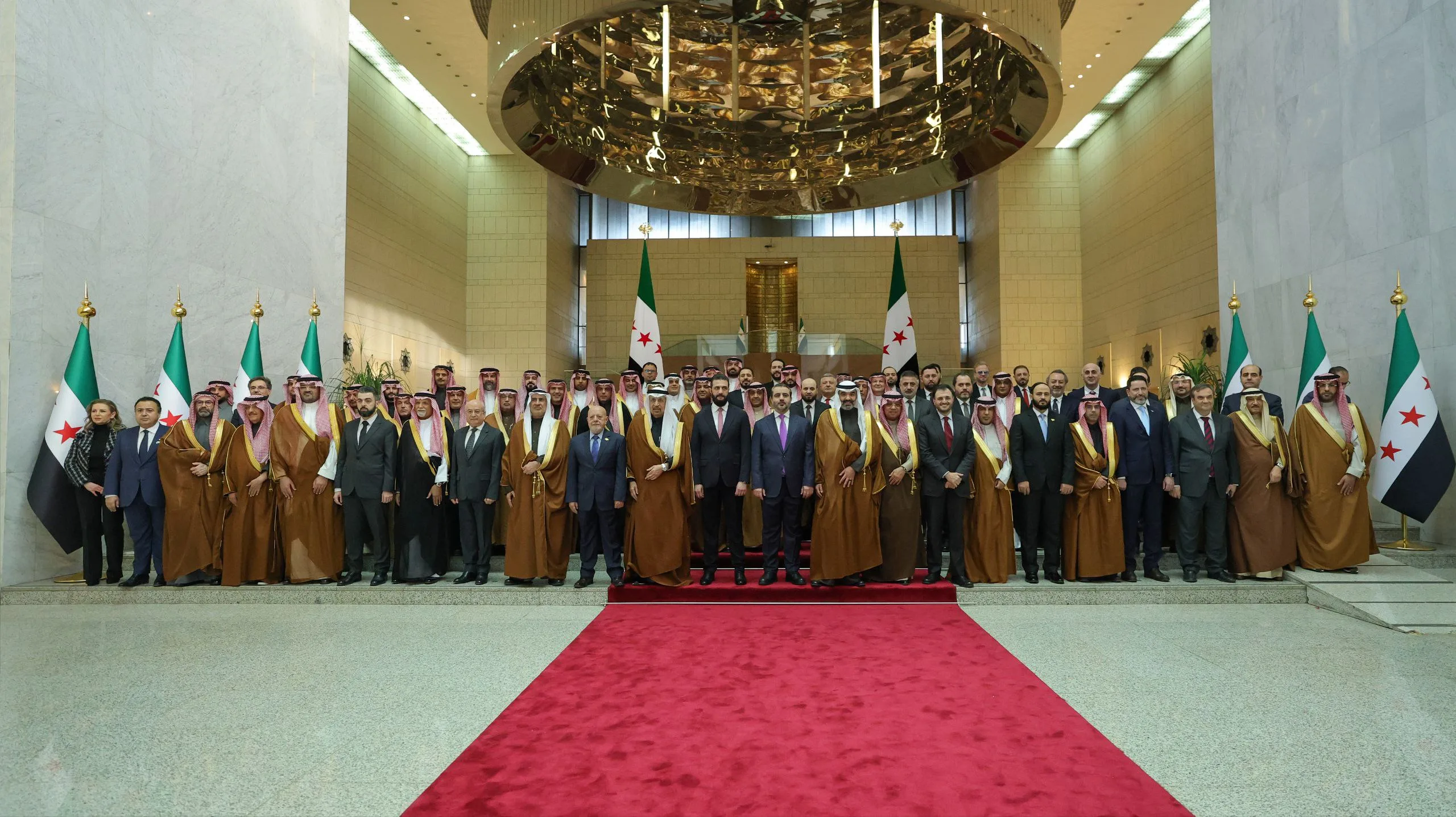
On July 24, 2025, the signing of 47 Saudi agreements and memorandums of understanding worth an estimated 24 billion Saudi riyals ($6.4 billion) was announced, covering vital sectors such as industry, energy, infrastructure, real estate, telecommunications, health, education, and logistics services. In October of the same year, the activation of 8 agreements worth 8 billion riyals ($2.13 billion) was announced, alongside the establishment of the “Elaf” investment fund inside Syria.
flynas
On February 7, 2026, signed low-cost carrier flynas an agreement with the Syrian Civil Aviation Authority to establish a new commercial airline under the name “flynas Syria,” with joint ownership between the two sides, with operations set to begin in the fourth quarter of the current year, 2026.
The company’s shares are divided as 51% for the Syrian General Authority of Civil Aviation and Air Transport, and 49% for flynas. “flynas Syria” will operate flights to a number of destinations in the Middle East, Africa, and Europe.
stc and the “SilkLink” project
On February 7, 2026, Saudi digital enabler “stc” announced the signing of an agreement to implement the “SilkLink” project in Syria at a value exceeding three billion riyals (about $800 million), after winning the project through a competitive process in which regional telecommunications companies participated.
The project aims to strengthen the infrastructure of Syria’s telecommunications sector and connect it regionally and internationally through a long-distance fiber-optic network, contributing to improved telecommunications and internet service quality. The project also includes the establishment of advanced digital infrastructure, including data centers and communication stations, supporting digital transformation and enhancing Syria’s position as a digital corridor linking Asia and Europe.
The “ACWA” consortium and the water transport company
On February 8, 2026, ACWA“, the world’s largest private water desalination company and the leading company in green hydrogen, announced the signing of a joint development agreement between the Syrian Ministry of Energy on one side and the “ACWA” consortium with Water Transmission Company (WTCO) in Saudi Arabia on the other.
Under the joint development agreement, the two parties will conduct technical, commercial, and feasibility studies during the development phase. These studies include assessing water demand, evaluating available water resources, and reviewing potential desalination and water transmission solutions. The studies aim to support the assessment of seawater desalination projects with a total capacity of up to 1.2 million cubic meters per day, along with the necessary water transmission infrastructure and supporting facilities.
“The Bowment”
On April 7, 2026, the Syrian Ministry of Tourism signed an agreement to develop the residential, commercial, and tourism project “The Bowment Damascus” with Izdihar Holding“, founded by Syrian-Saudi businessman Wafiq Rida Saeed, with an estimated investment value of 300 million US dollars.
France and the UAE
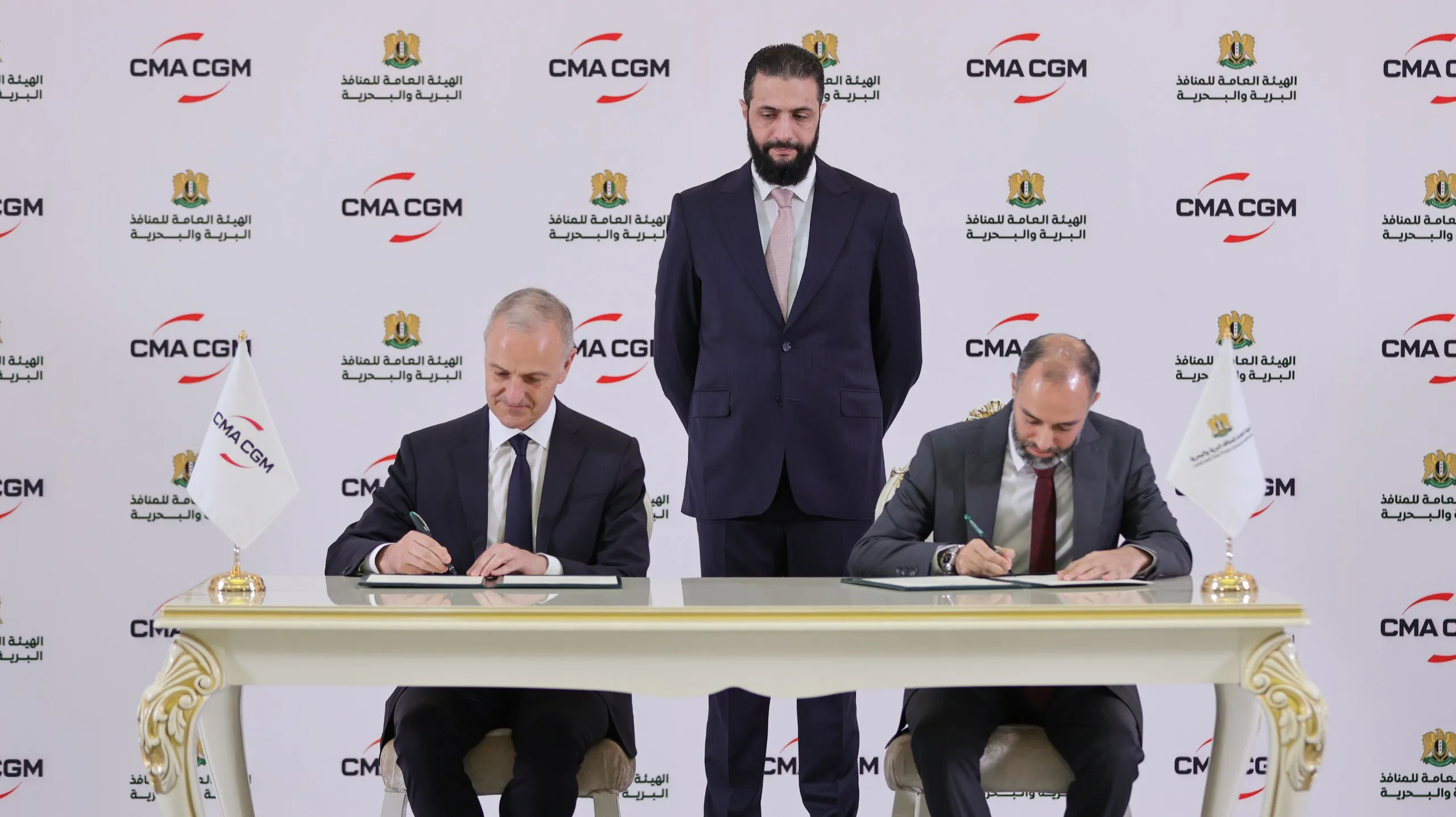
On May 1, 2025, the Syrian government signed a concession contract with the French shipping company “CMA CGM” to develop and operate the Port of Latakia for 30 years, with a total investment of about 230 million euros, aimed at modernizing the infrastructure and increasing the port’s operational capacity.
On November 6, 2025, AD Ports“, a company owned by the UAE government and considered one of the largest companies in the region in port management and operations, entered as an investor and partner by purchasing a minority stake in the container terminal, as part of a plan to raise its capacity from about 250,000 containers annually to 625,000 by 2026.
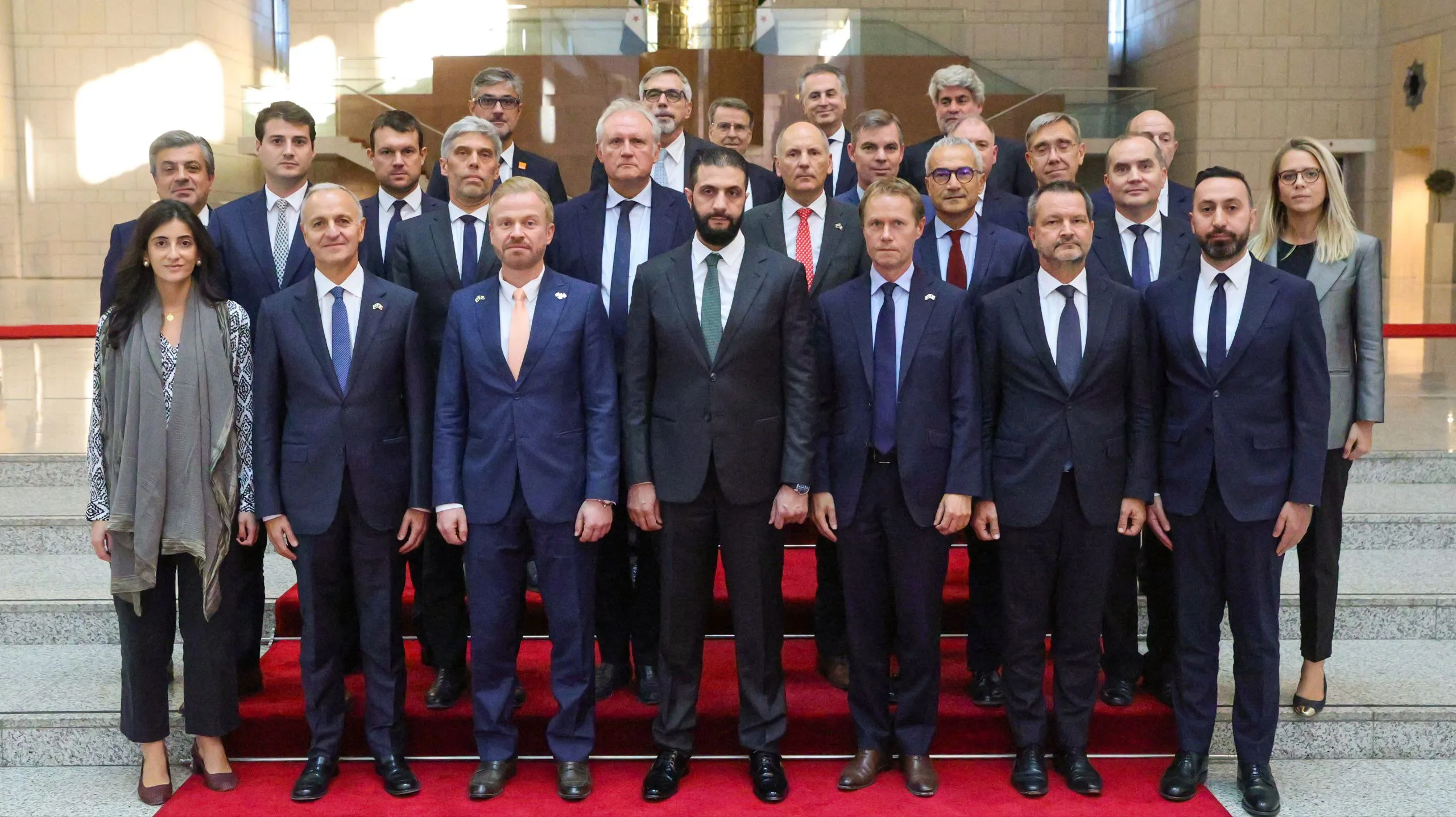
In November 2025, Dubai Ports World officially began operating at the Port of Tartus, after signing a concession agreement extending for thirty yearsincluding an investment of up to 800 million U.S. dollars.
American interest without a presence on the ground
No American companies have so far announced any operating projects or direct investments inside Syria, whether in infrastructure, energy, or telecommunications. The American presence remains limited to preliminary political and economic interest tied to the future reconstruction phase, reflected in statements by U.S. officials and discussions at energy-sector events, in addition to the recent proposal of a U.S. plan to rehabilitate Syria’s oil sector over four years and turn Syria into a regional hub.
In this context, the U.S. special envoy to Syria, Tom Barrack, said that “the United States is working to remove obstacles to Syria’s economic recovery, including reviewing sanctions and facilitating investments in sectors such as energy, telecommunications, and infrastructure,” noting that the U.S. administration believes it is necessary to allow any investment or economic participation that supports Syria’s stability and reconstruction.”
Meanwhile, media reports spoke of U.S. pressure on Damascus to reduce its reliance on Chinese telecommunications equipment and networks, especially those linked to companies such as “Huawei,” and calls to use American technology or that of U.S. allies, on the grounds that they conflict with American interests and threaten U.S. national security, though no binding official agreements have yet been issued in this regard.
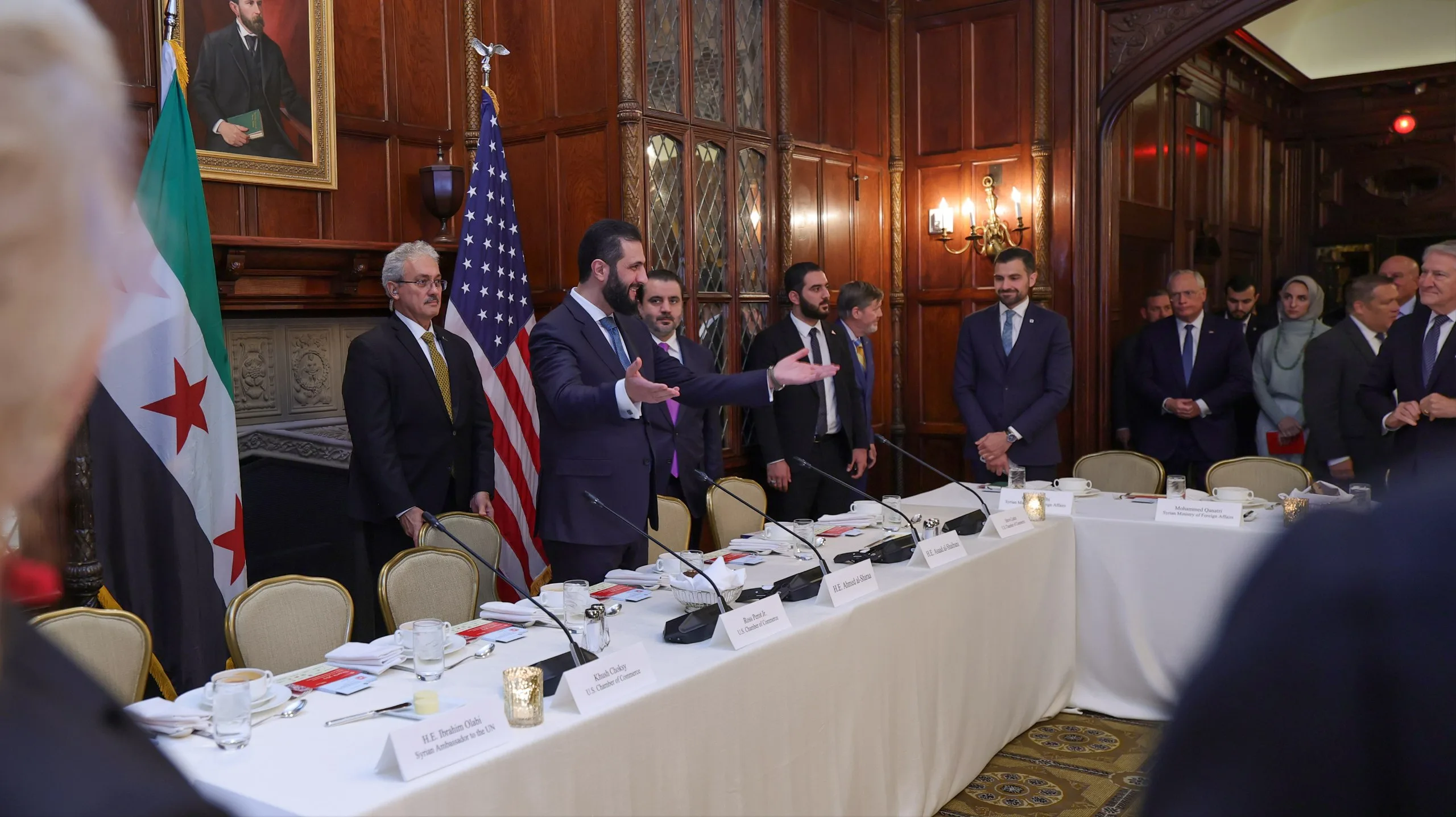
At the energy-sector level, American companies such as “Chevron,” “Hunt Oil,” and “Victron Energy,” along with diplomatic officials and energy experts, participated in energy-sector events in the United States, where general discussions were held on Middle East energy markets and reconstruction possibilities, without these events including official announcements of investment projects in Syria.
On February 4, 2026, the Syrian Petroleum Company signed a memorandum of understanding with Chevron and Qatar’s Power International Holding, aimed at exploring, prospecting, and assessing oil and gas in Syria’s first offshore field in the Mediterranean Sea.
The company also signed on November 18, 2025, a cooperation agreement in the gas sector with the American company Conoco Phillips and the European company Novaterra, covering the development of existing gas fields and the exploration of new ones using modern technologies, with the aim of increasing local production and enhancing energy security, with official expectations that output will rise by about 4 to 5 million cubic meters per day within one year.
Broad investment, however, still faces major challenges, most notably security instability, the continued impact of previous sanctions, and the need for a stable political and economic framework to attract global companies.
Turkey… more trade than investment
Unlike investments that are directed toward operating contracts and direct investment in specific sectors, Turkish investments in Syria so far appear within the framework of connectivity, transport, and reviving logistical infrastructure projects, with a focus on facilitating trade movement and providing developmental and humanitarian support.
On September 23, 2025, announced the Turkish Ministry of Transport that Turkey, Syria, and Jordan had reached an understanding on a draft memorandum of understanding to revive the historic Hejaz Railway line, including completing the missing section of infrastructure inside Syria, approximately 30 kilometers long, with Turkish participation and technical support.
This understanding comes within efforts to revive the line that was established at the beginning of the twentieth century during the Ottoman era to connect Damascus with Medina, without any official figures being announced for the volume of investments allocated to the project, as it remains within the framework of understandings and technical studies.
Reuters, citing Syrian Central Bank Governor Abdelkader Husriya:
📌 We are approaching the final stages of opening a correspondent bank account with the central bank in Turkey
📌 We are working to ensure this account helps facilitate cross-border payments and trade finance operations
📌 We expect to expand cooperation with Turkey to include integrated payment systems… pic.twitter.com/mWRwFa6X6v
— Noon Syria (@NoonPostSY) April 10, 2026
In January 2026, Syria’s General Authority for Land and Sea Ports signed a strategic investment agreement with the Turkish company “KUZEY STAR SHIPYARD – DENİZCİLİK SANAYİ VE TİCARET A.Ş” to establish an integrated shipyard at the Port of Tartus, with an investment term extending for 30 years and a commitment to inject no less than 190 million dollars over five years. Meanwhile, discussions are continuing with the Turkish company “Bomako” to examine implementing a joint project to establish and develop the free zone planned for Idlib Governorate.
Turkey has a more prominent presence on the commercial side than the investment side in the Syrian market, as its exports to Syria rose in 2025 by about 60% compared with 2024, from $2.2 billion to $3.5 billion, led by mill and grain products worth $232.7 million.
Exports also recorded continuous growth , rising during the first two months of 2025 by 47.5% to reach $526.2 million, before surpassing $666.7 million in the same period of 2026, an annual growth of 26.7%.
Restructuring the Economy
Alongside investment, which represents the backbone of the reconstruction process in Syria, this process has been linked to several other trends, including fundraising campaigns in some governorates that remain limited in impact and faltering, in addition to the establishment of the “Development Fund“, which relies on individual and institutional donations, grants and gifts, monthly subscriptions, and partnerships with international development funds.
Despite the issuance of Decree No. “114” concerning amendments to the Investment Law, and what President al-Sharaa announced about these amendments serving the interests of investors, and that major global companies had reviewed them, describing them as among the ten best laws in the world, some criticism remains present. A number of businesspeople complain of restrictions, obstacles, administrative sluggishness, “suspicions of corruption,” and bureaucracy that hinder the investment environment.
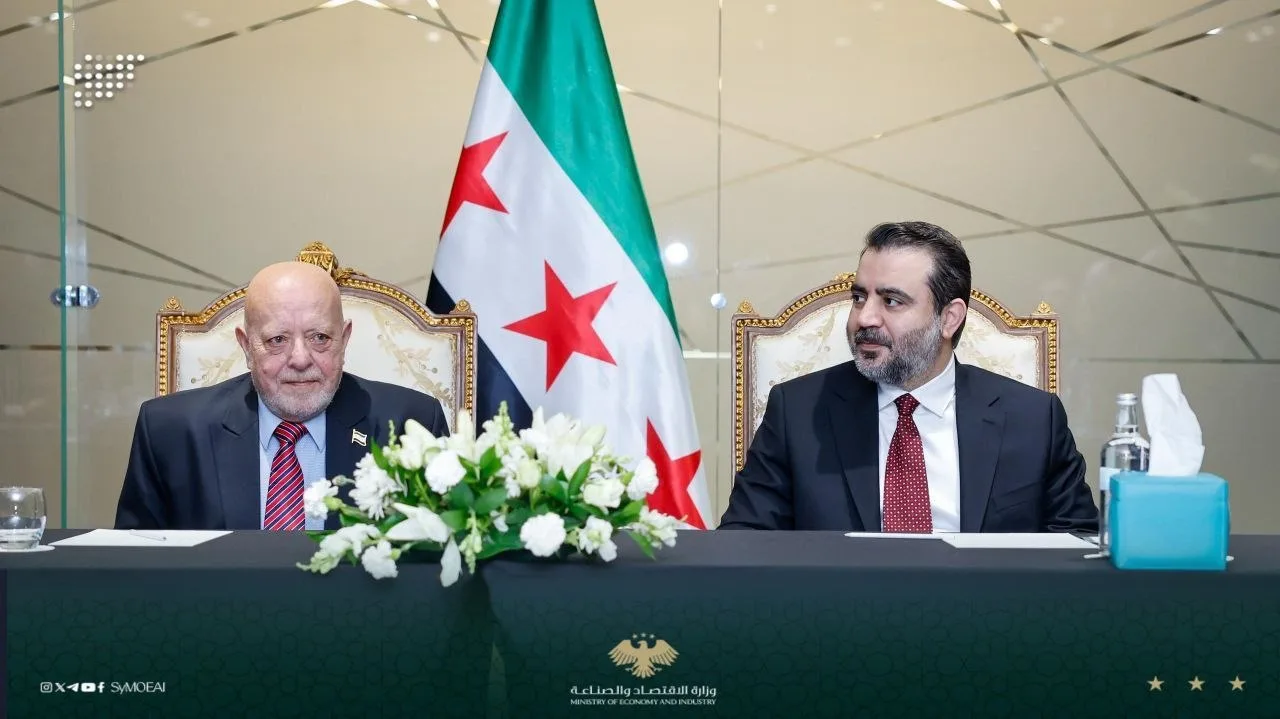
The government’s steps as part of reorganizing and reviving the Syrian economy have been accompanied by a series of criticisms, starting with fears of monopolizing economic and investment decision-making, especially with the creation of the “sovereign fund,” passing through weak transparency and the failure to turn some memorandums of understanding into contracts and projects on the ground, and ending with warnings of the possibility of strengthening cronyism , in light of revelations that the Syrian administration is secretly working to restructure the economy.
The financial “settlements” being conducted by the Syrian administration with businesspeople close to the ousted Assad regime are also stirring anger in the street, amid demands to hold them accountable and not recycle them back into the economy. This comes against statements by the head of the Illicit Gains Committee Basil al-Suwaidan that these settlements aim to recover the greater part of illicit funds, return economic activity to the formal framework, and close the financial file without infringing on the rights of the state, the judiciary, or the victims.
As for reconstruction related to destroyed homes, and the existence of two parallel plans for villages and towns on the one hand, and cities on the other, President al-Sharaa did not hide that there is a blackout surrounding them, considering that the lack of disclosure of the plans’ details is due to avoiding problems that might arise from doing so. At the same time, he pointed out that the investment climate is suitable for reconstruction, but it still needs clear and regulating laws.
Challenges accompanying it… Is investment enough?
Salah al-Din al-Jassem, a lecturer at the Faculty of Economics at Gaziantep University in the Aleppo countryside, stresses that direct investment plays a pivotal role in reconstruction, as it helps stimulate economic growth, create new job opportunities, and support local supply chains, which positively reflects on the development of small and medium-sized enterprises, strengthens financial stability through increased exports and an improved trade balance, and transfers modern technical and administrative skills to the local workforce.
Al-Jassem explains to “Noon Post” that attracting investment in the post-conflict phase requires a set of decisive factors that influence investors’ decisions, most notably improving the quality of regulatory frameworks, consolidating political stability, enhancing government efficiency and effectiveness, and addressing macroeconomic imbalances, foremost among them inflation, considering these to be key determinants with a direct impact on direct investment flows.
For his part, Mahmoud al-Hussein, a researcher in post-conflict studies, development, and reconstruction, believes that investment is important for reconstruction and constitutes a fundamental element in getting the economy moving by creating projects, stimulating economic growth, and providing job opportunities, in addition to supporting infrastructure, services, and more.
Al-Hussein explains in his interview with “Noon Post” that reconstruction is not limited to service projects or infrastructure, because it is a broader process that includes reforming institutions, strengthening the judiciary and security system, restructuring the military sector, as well as disarmament and the reintegration of fighters into society, in a way that ensures long-term stability and prevents renewed violence.
The researcher points to two interconnected problems surrounding the investment file in Syria. The first relates to the absence of a clear vision defining the nature and direction of this investment, whether it is directed toward the private sector, based on partnerships with sovereign wealth funds, or concerns the relationship with investors, noting that in some cases there is a tendency to favor foreign investors at the expense of Syrians.
The second problem lies in the weakness of the investment-attracting environment, starting with the security factor, despite the relative improvement in the level of stability during the recent period, and extending to the ambiguity of the legal framework and the lack of clarity in the governing studies, which keeps investors hesitant and limits their entry into the market, according to the researcher. He notes that Syria’s continued designation as a “state sponsor of terrorism” still affects the decisions of Arab and foreign investors and considers it one of the biggest challenges.
Al-Hussein stresses that investment alone is not sufficient for reconstruction, especially when speaking about projects led by business investors rather than state interventions or projects funded by donor countries, given the scale of destruction Syria has witnessed.
He believes the solution lies in diversifying investment patterns by involving the private sector, establishing genuine partnerships with states in some sectors, and leveraging the role of non-governmental organizations, UN agencies, and donor countries. He notes that the government is trying to deal with this file amid major challenges, which requires broader coordination and the involvement of as many relevant parties as possible in the reconstruction process.
Five risks… most notably entrenched influence and structural imbalances
Returning to the map of investment positioning, the trend toward vital and strategic sectors such as energy, ports, and telecommunications stands out, while other sectors are absent, foremost among them agriculture, despite its importance, as it once accounted for about 33% of GDP and absorbed more than 30% of the workforce before 2011.
Researcher Mahmoud al-Hussein points to a recurring problem in post-conflict phases: the formation of the economy under weak transparency may entrench what is known as “crony capitalism.” This situation appears through granting projects to parties linked to states or to specific networks of investors to the exclusion of others, whether for the purpose of building relationships or achieving mutual interests, leading to the emergence of a new pattern of economic clientelism.
He adds to “Noon Post” that this experience emerged in cases such as Iraq after 2003 and Afghanistan, where it contributed to strengthening corruption and concluding suspicious deals, stressing the need for transparency in awarding contracts because its absence opens the door to such practices and contributes to producing a class of businessmen linked to power, which negatively affects the structure of the economy and its sustainability.
As for economic expert Salah al-Din al-Jassem, he points out that private investments often tend to concentrate in sectors with the characteristics of natural monopoly or quasi-monopoly, such as vital infrastructure in the fields of energy, telecommunications, and transport, given the stable and relatively predictable cash flows they provide, which reduces levels of uncertainty in environments with fragile institutions.
Accordingly, these sectors play a dual role: they are not limited to generating direct economic returns, but also contribute to enhancing the state’s political legitimacy through tangible and relatively rapid results, such as restoring basic services and revitalizing economic activity, which is sometimes described as a “quick political return.”
By contrast, this pattern of sectoral concentration, despite its justifications related to reducing risks and maximizing returns, raises a number of structural problems within the logic of political economy, connected to the redistribution of economic power and the entrenchment of patterns of influence within the economy, according to al-Jassem, who sees five potential risks.
First, concentration in sectors of a monopolistic or quasi-monopolistic nature leads to the risks of regulatory capture, whereby large companies acquire increasing ability to influence regulatory rules in ways that serve their interests, especially in light of weak institutional capacities in post-conflict states, which may transform the state from a market regulator into a party affected by the balance of economic power.
Second, this model entrenches long-term influence in strategic sectors such as energy and telecommunications through long-term contracts and partnership models with external actors, thereby strengthening their presence in vital infrastructure with sovereign and security dimensions.
Third, this trend contributes to deepening structural imbalances within the Syrian economy by favoring sectors with quick returns at the expense of long-term developmental sectors, foremost among them agriculture, which already suffers from heightened climate risks, deteriorating water resources, weak pricing and marketing institutions, fragmented landholdings, and damaged rural infrastructure, all of which reduce its investment appeal and limit its role in food security and employment.
Fourth, this pattern is linked to reinforcing spatial and social disparities through the concentration of investments in cities, ports, and logistics hubs, as opposed to the marginalization of rural and peripheral areas, thereby reproducing development gaps and fragility that may have been among the causes of the conflict in the first place.
Fifth, reliance on this pattern may lead to financial and political fragility in the medium term, as linking political stability to what is known as the “quick political return” makes the state’s legitimacy contingent on the continued performance of these sectors. If shocks occur economic, security-related, or even regulatory this may quickly be reflected in overall stability.