














هذا التقرير متاح أيضًا بـ العربية
The Umayyads left their enduring mark on the pages of human civilization through the broad cultural, intellectual, and artistic renaissance of their era (661–750 CE), which encompassed architecture, the arts, literature, oratory, poetry, the Arabization of the state bureaus, and the emergence of religious scholars who helped spread the teachings of Islam. Efforts also began to translate Sasanian and Greek sciences and literature, compile the noble Prophetic hadith, and engage in intellectual and theological debates that reflected the vitality of society.
In this report, we continue exploring “The Legacy of Banu Umayya” drawing closer to the achievements of caliphs and scholars, tracing how they shaped the identity of the الأمة, and highlighting the scientific, cultural, and intellectual revival under their rule, as well as how their efforts laid the foundations upon which the Abbasid era would later flourish.
Arabization of the State Bureaus
When the center of the caliphate moved to Damascus in 41 AH/661 CE, Arabic was not yet the official language of administration across the state. In his book “The Umayyad State: Factors of Prosperity and Repercussions of Collapse,” Dr. Ali al-Sallabi recounts that in the early Umayyad state, the bureaus in Syria were written in Greek, in Iraq in Persian, and in Egypt in Coptic.
As the state expanded and the need grew for a more cohesive and effective central administration, a phase of major reforms began under Caliph Abd al-Malik ibn Marwan (685–705 CE), who launched a comprehensive project to reorganize the machinery of the state, foremost among them the Arabization of its bureaus.
Thus, the bureaus of Syria, Iraq, Egypt, and other provinces were Arabized. Al-Sallabi argues that transferring the bureaus from foreign languages into Arabic aimed to remove foreign influence from the state’s administrative and financial institutions and to achieve the Umayyad state’s distinct identity and independence.

The movement to Arabize the bureaus under Abd al-Malik ibn Marwan achieved remarkable results in the political, administrative, cultural, and linguistic spheres, and paved the way for the emergence of an important class of Arab and mawali scribes who replaced Persian and Byzantine scribes in managing the bureaus. Al-Sallabi notes that the maximum annual salary for scribes throughout the Umayyad era was 3,600 dirhams, while the minimum was 720 dirhams.
While Arabization was primarily a means of unifying the state’s administrative systems, ending the administrative influence of foreign cadres, and strengthening state sovereignty, al-Sallabi also sees it as a response to the expansion of Islam and the entry of multilingual peoples into the new faith.
In his book “The Umayyad State: The First Dynasty of Islam,” G. R. Hawting argues that the spread of Arabic as a language of administration helped transform it into a language of culture and social mobility, and it spread among non-Arabs as the conquests expanded from Central Asia in the east to southern France in the west.
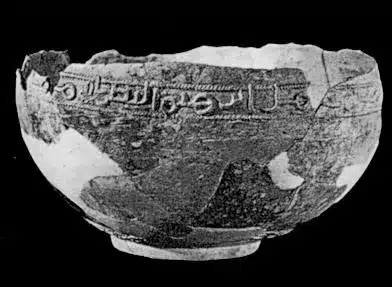
In Damascus itself, which before Islam had been a mosaic of Aramaic, Greek, and Syriac, this transformation reshaped its linguistic and cultural landscape, making Arabic the language of the marketplace, administration, and urban life, and leading local elites to adopt it.
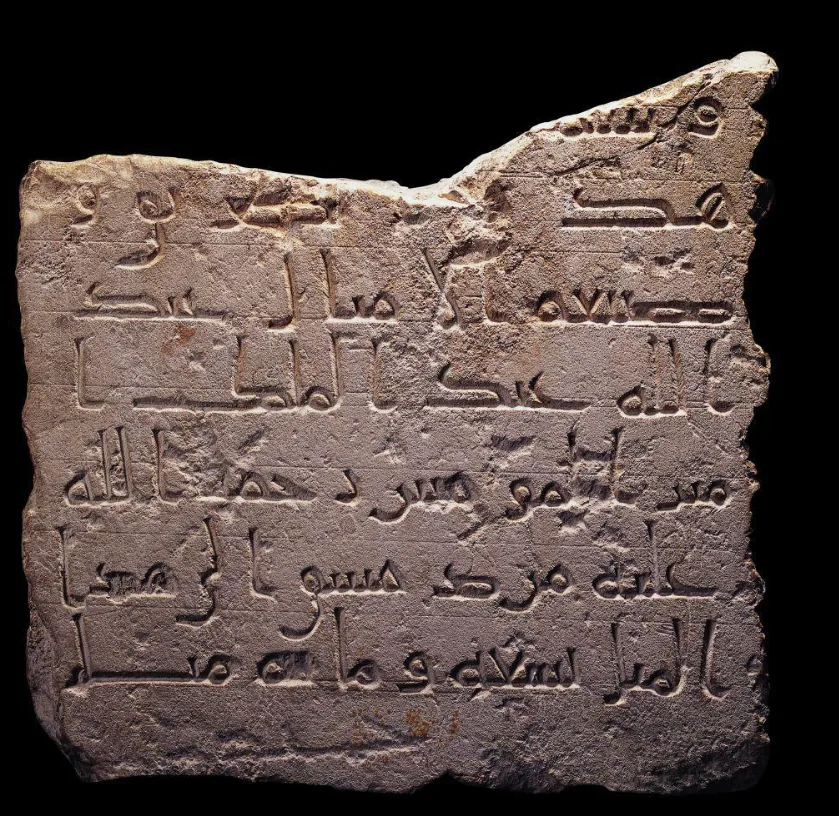
According to Omar Abu al-Nasr in his book The Arab Umayyad Civilization in Damascus, Abd al-Malik also introduced reforms to Arabic writing itself, such as improving the script of letters and adding diacritical and vocalization marks to facilitate reading the Quran and reduce mistakes and grammatical errors.
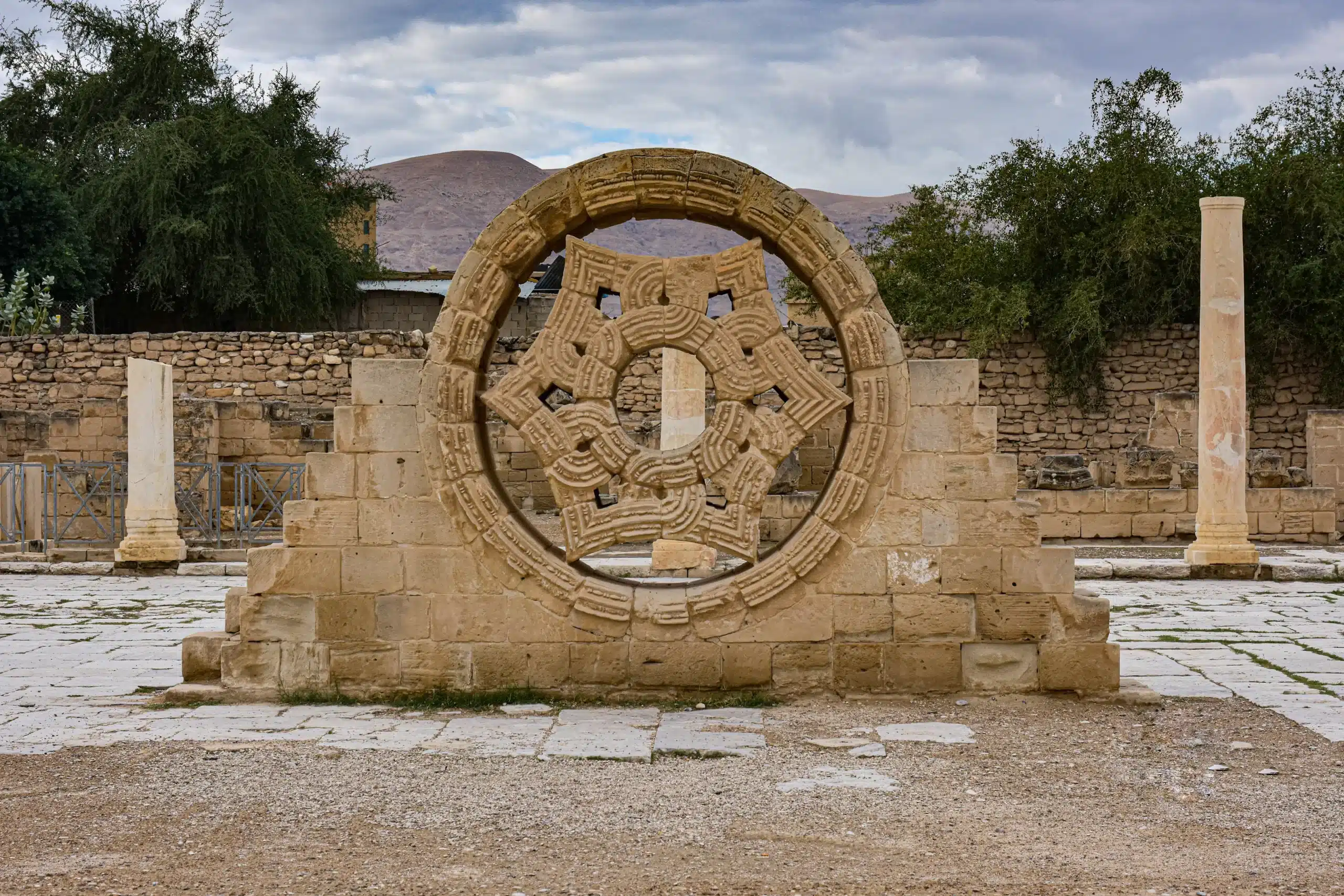
In her study on the written transmission of the Holy Quran in the Umayyad era, Eléonore Cellard shows that the Umayyad period witnessed patronage of Quran manuscript copying and care in their production, along with reforms in orthography and reading marks. Arabic script in the Umayyad era also rose to a architectural form that adorned mosques and palaces.
A Scientific and Intellectual Revival
Al-Sallabi recounts in “The Umayyad State” that Muawiya ibn Abi Sufyan personally encouraged governors, scholars, and the people of the الأمة to foster a civilizational cultural revival. His era witnessed advances in Quranic exegesis, Quranic sciences, and jurisprudence, and saw the rise of a number of scholars whose knowledge, sayings, and legal reasoning Muslims would continue to draw upon and cite thereafter. The principal sciences were the Holy Quran, the Prophetic Sunnah, jurisprudence, and the Arabic language.
As noted by Ibn al-Nadim, author of al-Fihrist, the recording of literary and scholarly materials began in the Umayyad era as early as the reign of Muawiya ibn Abi Sufyan, who loved collecting reports and historical narratives and ordered them documented by transmitters such as Ubayd ibn Shariyah. More systematic authorship continued later in the second Hijri century at the hands of scholars such as Abd al-Malik ibn Jurayj, Abu al-Nasr Saeed ibn Abi Arubah, and Rabi ibn Subayh.
Ibrahim Zaarour and Ali Ahmad, in their book “The Political and Civilizational History of the Umayyad Era,” point out that the Arabic and religious sciences spread across the various Umayyad provinces as a number of Companions and Followers established religious schools based on the Quran, hadith, jurisprudence, and the Arabic language. This movement was concentrated in Medina, Fustat, Basra, Kufa, and Damascus, while the city of Kairouan became a center of Islamic civilization in the Maghreb and attracted large numbers of Berber students.

From the middle to the later Umayyad period, the phase of compiling the Prophetic hadith began in order to regulate narrations and preserve them from distortion. Among the prominent figures in this field were al-Hasan al-Basri, Ibn Shihab al-Zuhri, Saeed ibn al-Musayyib, Rabiah al-Ra’y, Malik ibn Anas, Sufyan al-Thawri, Abu Abd al-Rahman ibn al-Mughirah, Abd al-Malik ibn Jurayj, Mughirah al-Dabbi, and Malik ibn Anas, who grew up in the late Umayyad state.
In fact, the Umayyads contributed to supporting the religious sciences and consolidating the foundations of Islam through their patronage of scholars. The Umayyad caliphs—especially Abd al-Malik ibn Marwan, who was not far removed from scholarly circles—maintained close ties with scholars, exchanging views with them on jurisprudential matters. It is reported that he corresponded with Urwah ibn al-Zubayr on certain issues, while the hadith scholar Saeed ibn al-Musayyib was close to the Umayyad court and enjoyed the esteem and respect of al-Walid ibn Abd al-Malik.
Al-Sallabi explains in “The Umayyad State” how scholars played an important role in supporting the reformist approach of Caliph Umar ibn Abd al-Aziz, as they backed his decisions and some contributed by offering him advice and counsel. Umar ibn Abd al-Aziz also worked to spread knowledge by sponsoring scholars and preachers and allocating salaries to them from the public treasury so they could devote themselves to teaching and Dawah, even granting stipends to those who dedicated themselves in mosques to studying jurisprudence and teaching the Quran.
G. Hawting explains in his book “The First Dynasty of Islam” that during the Umayyad period a class of religious scholars emerged who would later become the principal reference point in Sunni doctrine. Hawting emphasizes that this group made a decisive contribution to shaping the features of Islam as it came to be known in later eras.
As for education, Omar Abu al-Nasr notes in his book The Arab Umayyad Civilization that the Umayyad era saw the spread of kuttab schools near mosques in cities and villages to teach children reading and writing and Quran memorization. Higher or advanced education, meanwhile, was held in study circles in mosques, where scholars taught without pay and enjoyed freedom in presenting their views. Some families also employed tutors to teach their children reading, writing, the Quran, poetry, and literature for a fee.
The Beginnings of the Translation Movement and the Transmission of Knowledge
It is often assumed that the translation movement began with the Abbasids, but its earliest roots go back to the Umayyad era. Al-Sallabi recounts that the first signs of patronage for science and scholars appeared during the reign of Muawiya ibn Abi Sufyan, and that Muawiya established a House of Wisdom in Damascus the first library in the Islamic world.
Some accounts point to Muawiya’s particular interest in transferring medical knowledge into Arabic, and his court was associated with a number of physicians and intellectuals, among them the physician Ibn Athal, to whom the transmission of some medical knowledge into Arabic is attributed.
It can be said that the Arabization process itself, led by Abd al-Malik ibn Marwan (685–705 CE), not only helped transfer a large number of administrative and financial terms into Arabic, but also opened the door to a movement for translating foreign knowledge. Al-Sallabi explains that the earliest beginnings of this translation movement go back to the efforts of the Umayyad prince Khalid ibn Yazid ibn Muawiya, who is considered among the first to encourage the translation of books on medicine and alchemy from Greek into Arabic.
Khalid ordered the bringing in of a number of Greek scholars who had received their education at the School of Alexandria in Egypt and were proficient in Arabic, commissioning them to translate a collection of books from Greek and Coptic into Arabic. He also asked them to translate the medical works of the Greek physician Galen.
Khalid’s interest was not limited to medicine and alchemy; it extended to other sciences as well. During his time, books on astronomy and the stars, warfare, machines, and crafts were translated. He was also known for his closeness to translators, philosophers, men of wisdom, and craftsmen.
Omar Abu al-Nasr recounts in his book “The Arab Umayyad Civilization” that with the reign of Abd al-Malik ibn Marwan, official interest in translation and the transmission of knowledge began, especially from Greek and Syriac. This continued under Umar ibn Abd al-Aziz, who also paid attention to medical sciences, transferring the medical school from Alexandria to Antioch and appointing Ibn al-Abjar to oversee it.
The Umayyads gave great attention to medicine. Caliph Muawiya ibn Abi Sufyan established a hospital in Damascus, and Caliph al-Walid ibn Abd al-Malik founded in 88 AH / 707 CE a bimaristan to isolate lepers and housed them in a secluded village. Bimaristans also spread to other cities such as Fustat in Egypt, indicating that medicine was at the forefront of the sciences in the Umayyad era.
Omar Abu al-Nasr recounts that the translation movement and interest in non-Arab heritage continued under Caliph Hisham ibn Abd al-Malik, who was known for his passion for studying the literary and intellectual legacies of other nations, and ordered the translation of a Persian book dealing with the history of the Persians.
This interest was passed on to some of those close to him, and his mawla Salim translated a number of Aristotle’s works into Arabic. But translation activity began to decline toward the end of Hisham’s rule because of the internal unrest the Umayyad state experienced.
The Development of the Judiciary and Jurisprudence
In the early Umayyad state, the governor stood at the top of the judicial hierarchy in his province and enjoyed broad powers to adjudicate disputes, while the caliphs themselves also exercised a judicial role. Over time, the office of the qadi gradually took shape as a distinct function. In his study “The Umayyads and the Emergence of Islamic Judiciary,” Mathieu Tillier shows that the Umayyad era constituted a decisive stage in the establishment of the judiciary, as administrative and legal structures were built whose maturity was completed in the Abbasid period.
In fact, the Umayyad era represented a phase of experimentation and debate over the organization of the judiciary and its procedures before the rules settled into a systematic jurisprudential framework in the Abbasid era. Dialogues between judges and scholars—sometimes with the participation of caliphs and governors—also helped bring practices closer together and gradually unify them.
As al-Sallabi notes, judges in the Umayyad era received salaries from the state ranging from a minimum of 1,200 dirhams annually to a maximum of 3,000 dirhams. They often held office for short periods, and many came from administrative and military backgrounds. In Egypt, some judges of Fustat combined the judiciary with heading the police or supervising the treasury, placing them directly below the governor in rank, while Iraq tended to select judges from scholarly circles.
As for court sessions, the mosque was not initially their fixed venue; they were held in markets and public squares, then moved inside mosques in the late Umayyad period. One of the distinctive achievements of the Umayyad era in the judiciary was the beginning of recording the judicial rulings issued by the judge. Salim ibn Anz al-Tujibi, judge of Egypt during the reign of Muawiya, is considered the first to record judicial rulings.
In his study on al-Awza‘i and the influence of the Umayyads on the development of Islamic jurisprudence, Steven Judd explains that Abd al-Rahman ibn Amr al-Awza‘i was close to the Umayyad caliphs and had several jurisprudential opinions. Ibn al-Nadim also reports in his book “al-Fihrist” that al-Awza‘i authored jurisprudential books, and Ibn al-Nadim attributed two works to him: Kitab al-Sunan fi al-Fiqh and Kitab al-Masa’il fi al-Fiqh.
Tracing the opinions of al-Awza‘i reveals his contribution to shaping early jurisprudential discourse. His school remained influential in al-Andalus for a long time before Maliki jurisprudence replaced it. Al-Awza‘i was not an isolated case; alongside him emerged scholars such as al-Sha‘bi, Makhul, al-Zuhri, and others.
In fact, the judiciary in the Umayyad era retained its basic features from the Rashidun period while taking into account developments resulting from the expansion of the caliphate. Al-Sallabi explains that new sources for judicial rulings appeared in the Umayyad era, including custom, the opinion of a Companion, and the consensus of the people of Medina, alongside the Quran and Sunnah and interpretive sources such as analogy, consensus, and reasoned opinion.
On the other hand, continued Jewish and Christian religious courts to play their role within their communities, but Islamic courts gradually began attracting non-Muslims as well, given their binding authority in resolving disputes.
The Literary Renaissance
The Umayyad era witnessed a literary and artistic flourishing that reflected the political and social transformations accompanying the rise, expansion, and conflicts of the state. Words—whether in poetry, oratory, or prose—became at once a media weapon, a tool of propaganda, and an instrument of struggle. At the beginning of the Umayyad era, Muawiya ibn Abi Sufyan recognized the importance of poetry in shaping public opinion and brought poets close to his court, for poetry at the time was the foremost expression of identity and a central element in the culture of society.
As political conflicts intensified, poetry flourished in praise, satire, love, and wine verse, and the Umayyad court opened its doors to major poets such as al-Akhtal, al-Farazdaq, and Jarir. Alongside poetry, oratory rose in status, addressing public affairs and being used to win supporters and answer opponents, often practiced by politicians themselves. At the same time, maghazi literature began to take shape, first collected orally and later written down, with Musa ibn Uqbah among the earliest to care for it.
Artistic prose also developed in letters and official documents, and prominent writers contributed—such as Abd al-Hamid al-Katib—to paving the way for the prose renaissance in the Abbasid era. Many researchers agree that Abd al-Hamid al-Katib had a clear impact on prose writing and literature in later periods.
Music and singing also flourished at the Umayyad court, especially during the reign of Caliph al-Walid ibn Yazid, who was known for his poetic contribution, particularly in developing wine poetry, and whose poems receive extensive coverage in Kitab al-Aghani.
The Umayyad era laid the foundations of culture and practical renaissance whose effects extended into later ages. The Umayyads also demonstrated an exceptional ability to combine power, religion, knowledge, and literature, and the Arabic language rose to become an instrument of sovereignty and identity, while scholars, jurists, and hadith transmitters emerged as a principal engine of the sciences.
The translation movement and the transmission of foreign knowledge developed, while the judiciary, jurisprudence, and administrative systems advanced to sophisticated levels. Literary, poetic, oratorical, and prose arts flourished simultaneously. All these achievements were not merely an expression of a vibrant society; they also paved the way for the Abbasid era ahead.