







هذا التقرير متاح أيضًا بـ العربية
“Since the Western world’s dependence on Arab oil is absolute, that means we live at the mercy of the Arabs – that is, at the mercy of the Russians. And if that is true, then we no longer need a foreign policy establishment, and it may be better to disband the armed forces, for it makes no sense to spend $85bn a year only to be unable to do anything.”
— Seizing Arab Oil, Miles Ignotus
On the eve of the Second World War, a contradiction was beginning to emerge – one that would leave a lasting mark on the future of the region. Britain’s substantial stake in Middle Eastern oil companies had ensured a broad alignment between the interests of the British government and those of the oil industry. The United States, by contrast, held no shares in oil companies, but it faced another problem: it had a large domestic oil industry of its own.
This created a conflict between the government and domestic producers. Washington wanted to conserve the country’s oil reserves, while American oil companies wanted to increase production. Domestic producers were therefore wary of government efforts to help major companies invest in foreign oil fields, fearing that increased global production would create an oversupply and drive down prices.
Yet not everything war brings is destructive. For President Franklin Roosevelt, the Second World War also created an opportunity to reshape the relationship between the US government and the country’s oil interests abroad.
In June 1943, Roosevelt approved the creation of the Petroleum Reserves Corporation to bring American oil interests in Saudi Arabia under greater government control and limit the oil companies’ dominance over decisions affecting the country’s energy resources. The move was presented as a matter of national security and the protection of US interests during wartime.
Interior Secretary Harold Ickes was among the policy’s most prominent advocates. He argued that “the federal government, if necessary, [should] take direct control of all oil resources owned by American companies in Saudi Arabia”.
Against this backdrop, the US government sought to acquire all the shares of the company holding the Saudi exploration concession, bringing it under federal control. It later proposed building a pipeline from the Arabian Gulf to the Mediterranean, partly to reduce private oil companies’ influence.
The corporation’s board was also designed to ensure direct government oversight. It included the secretaries of war, the navy and state, with Ickes serving as chairman.
But these plans encountered fierce resistance. The private oil industry and members of Congress opposed them, with critics denouncing the proposals as economic fascism and an assault on the free market. Faced with that opposition, the Roosevelt administration froze many of its broader plans to place Middle Eastern oil at the centre of a government-led national security strategy.
What emerged instead was what former World Bank economist Jenny Spaulding described as “the deal that keeps oil flowing”. That deal took shape during Roosevelt’s meeting with King Abdulaziz aboard the USS Quincy, which we discussed previously. Its basic premise was straightforward: oil in exchange for security.
The principle later took a more explicit strategic form in the Carter Doctrine, announced in 1980. It declared that any attempt by an outside power to gain control of the Gulf would be considered an assault on the vital interests of the United States and could be met with military force.
During the Iran-Iraq War, the US military presence helped keep the Strait of Hormuz open. The same logic was evident during the 1991 Gulf War, when US forces helped defend Saudi Arabia and its oil infrastructure, while Riyadh provided financial support and fuel.
This history might suggest that the United States and the Gulf monarchies were always bound by a straightforward convergence of interests whenever Gulf oil security was at stake.
The reality was more complicated. There were moments when relations were far removed from cordial, including periods when Washington considered using military force to seize control of oil fields in the Gulf.
This file examines this little-discussed chapter in US-Gulf relations. Coverage of the 1973 oil crisis, which followed the Arab-Israeli war, has largely focused on its economic consequences. Less attention has been paid to the political developments that unfolded between Washington and its Gulf allies during the crisis – developments that exposed US contingency plans for taking control of Gulf oil, while also revealing the limits that Gulf rulers, particularly Saudi Arabia, were prepared to place on their relationship with their American protectors.
The new formula and the road to the embargo
After the 1953 coup against Mohammad Mossadegh, the relationship between oil-producing states and Western oil companies began to change. A new formula gradually emerged across the Middle East, giving governments a growing share of oil production and revenues.
By the early 1970s, Saudi Arabia was negotiating a further redistribution of ownership with the American oil companies operating in the kingdom. Riyadh chose its timing carefully. In 1972, the White House was preoccupied with President Richard Nixon’s re-election campaign, giving the Saudis greater room to press their demands.
As Saudi pressure mounted, the negotiations ended with Aramco agreeing to Saudi participation in the company. Under the agreement, the Saudi government acquired an initial 25 per cent stake in 1973, with its share scheduled to rise to 51 per cent by 1982, emphasising Saudi Arabia’s growing influence over oil resources.
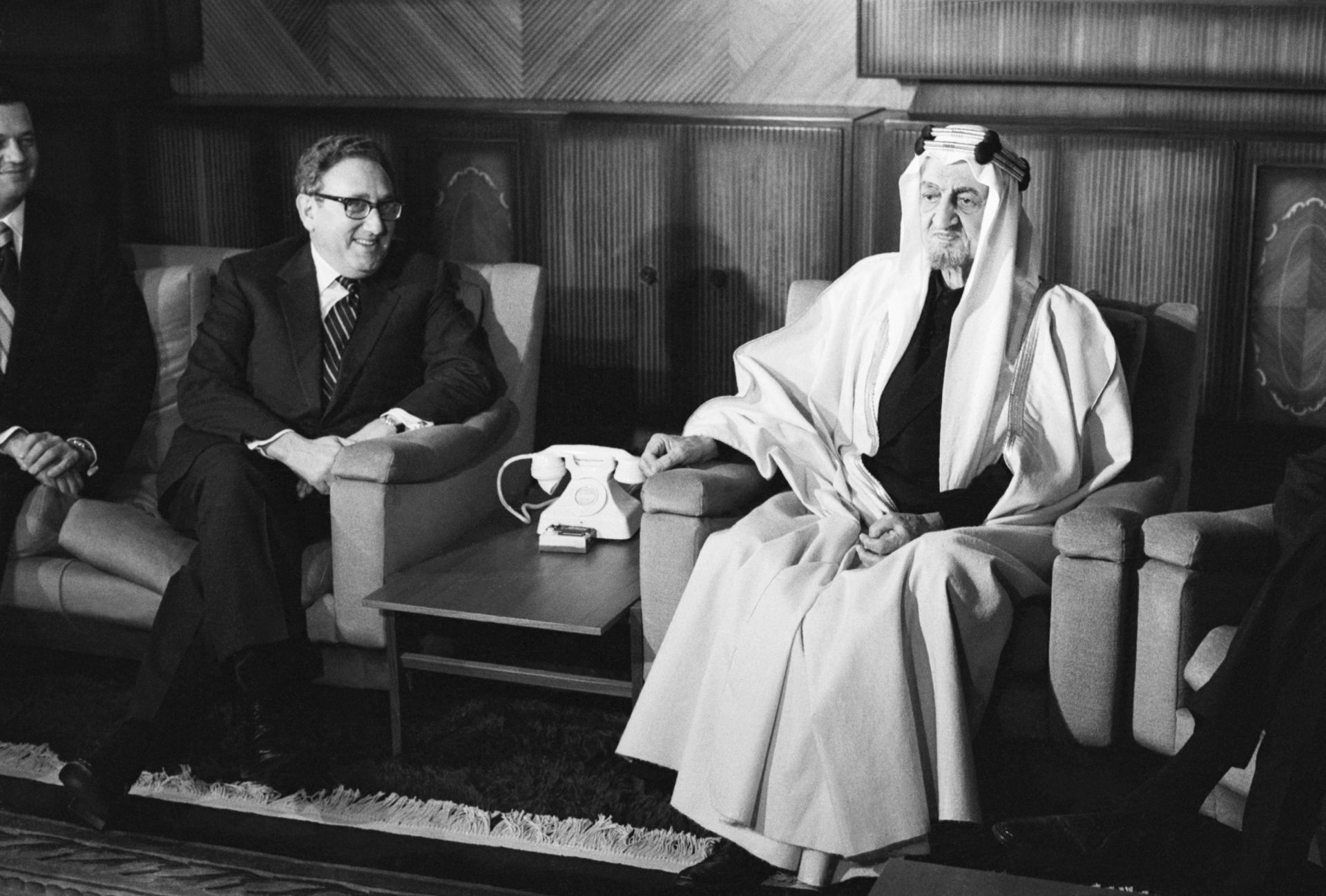
For King Faisal, it was a significant victory. Yet Henry Kissinger publicly criticised the American negotiators. As Andrew Scott Cooper recounts in The Oil Kings, Kissinger believed that accepting the Saudi terms risked turning American oil companies into instruments of governments whose interests might not always coincide with those of the United States.
A private conversation with John Connally, however, reveals a more nuanced position. Kissinger told Connally that he had urged Prince Saud to avoid a confiscatory approach, while also stressing: “It is not in our interest to impose on them a settlement that puts them in a worse position than other countries, because we care about their stability.”
The message to King Faisal was clear: the Nixon administration recognised Saudi Arabia’s desire for a greater share of its oil wealth, signalling a shift in regional power dynamics and underscoring the strategic importance of Saudi oil to US interests.
While Kissinger may have sought to minimise the agreement’s immediate importance, the 1973 oil embargo’s long-term impact on US foreign policy became evident as oil transformed into a key instrument of Arab political pressure, shaping subsequent US strategies in the Middle East.
The Map Room and restoring American power
In early 2004, the release of previously classified documents under the 30-year rule brought new details to light about how Washington assessed its response to the 1973 oil crisis at the time.
A British Joint Intelligence Committee report estimated that, if the crisis escalated, the Nixon administration might consider the drastic step of occupying oil fields in the Arab Gulf states, highlighting the potential military risks and strategic calculations involved in safeguarding US access to oil resources.
The committee assessed that the United States could secure enough oil for itself and its allies by seizing fields in Saudi Arabia, Kuwait and Abu Dhabi, whose combined reserves were estimated at more than 28 billion tonnes.
At the time, Saudi officials were increasingly aware of the power of the oil embargo as a political weapon, a significance Kissinger had played down shortly before the 1973 war began.
In November, Saudi oil minister Ahmed Zaki Yamani said: “We are tracking every barrel of oil that reaches the United States.” The atmosphere in Washington was increasingly tense. Some Pentagon officials believed a show of force was necessary to restore American power in the Gulf, highlighting fears of losing influence over regional policies.
The Soviet Union also featured prominently in American military calculations. Hawks at the Pentagon argued that Soviet leader Leonid Brezhnev would not have threatened to deploy Red Army troops to the Middle East had the United States maintained a stronger military posture in the region.
Their conclusion was that Washington needed to demonstrate its power in the Middle East – and find a way to break the oil embargo.
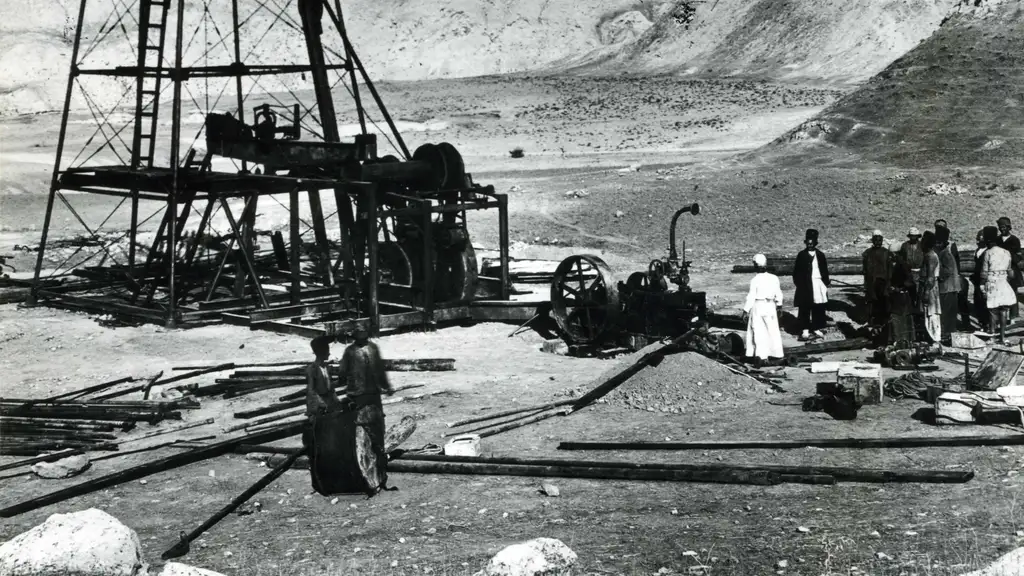
In line with that thinking, senior policymakers met in the White House Map Room on the morning of 3 November to discuss the situation in Saudi Arabia.
Saudi Arabia had imposed an oil embargo on the United States, threatening to disrupt supplies to the US Air Force and Navy. Riyadh had also threatened to reconsider the agreement it had signed with Aramco the previous year, under which it had acquired a 25 per cent stake in the company, and move towards full nationalisation.
Henry Kissinger, Defence Secretary James Schlesinger, CIA Director William Colby, and other senior officials attended the meeting. Schlesinger opened the discussion bluntly: “The Saudis are very much carried away with oil power. I am not sure they have any future except with the West, and they cannot get away with threatening to burn down the West.”
He wanted to send Riyadh a sharp warning. The crisis, in his view, also presented an opportunity to reassert American power in the Middle East and remind the Gulf states of the consequences of challenging Washington.
Abu Dhabi: an American colony
The emirate of Abu Dhabi appeared to offer precisely that opportunity. Only 15 years earlier, Abu Dhabi had been a small fishing settlement. By 1973, it had become a rapidly developing oil emirate with a population of around 30,000, and it also took part in the Arab oil embargo.
Its location was strategically important, offering a potential launch point for US military operations in the Gulf. Schlesinger reportedly put the matter bluntly: “Abu Dhabi will give us what we want.”
He envisaged a limited, calculated operation: landing US forces in the heart of an Arab oil state to deliver a warning about the consequences of the Gulf states’ actions. According to Cooper, the option remained under consideration, alarming Saudi Arabia and other Gulf states.
The final 10 days of November were seen as a possible window for intervention. By then, several US destroyers were expected to be stationed at the entrance to the Arabian Gulf for previously scheduled naval exercises. The aircraft carrier USS Hancock, carrying more than 80 attack aircraft, was also heading towards the region.
Kissinger, meanwhile, was preparing for trips to the Middle East and China and worried about possible Soviet intervention. When Schlesinger was asked what Washington would do in such a scenario, he replied: “We turn Israel loose on the Third Army, and we tell Sadat that if he turns the Soviets loose, it will be disastrous for him.”
Iran also played a potential role. The Shah of Iran told the US ambassador that his navy was prepared to participate in an invasion, and that Iranian ports, airports, and fuel depots were available to the US military for logistical support.
But Tehran had its own concerns. The Shah feared violating a 1962 treaty with Moscow that restricted Iran from allowing its territory to be used as a base for a foreign power to establish missile-launching facilities. His support was therefore cautious.
In any case, the crisis was soon moving towards a different kind of resolution. On 8 November, Kissinger flew to Riyadh and met King Faisal for a session lasting more than three hours.
One meeting, many accounts
The meeting took place against a backdrop of mounting tension. Faisal knew that a US naval force was positioned just offshore and that Washington possessed the military capacity to strike the kingdom and potentially threaten the other Gulf monarchies.
The presence of the USS Hancock was a reminder of the imbalance of power underlying the relationship. In Alexei Vassiliev’s King Faisal: Personality, Faith and Times, the author recounts one version of the meeting’s private exchanges. Kissinger adopted a conciliatory tone, telling Faisal that he had read his correspondence with Presidents John F. Kennedy, Lyndon Johnson and Nixon and understood his disappointment with US policy in the region.
Kissinger told him Faisal was justified in feeling that way and suggested a settlement might now be possible. He asked whether the king supported convening a peace conference. Faisal said he did.
Kissinger then asked whether he supported lifting the oil embargo, arguing that its continuation was becoming politically damaging in the United States. It was fuelling anti-Arab sentiment and making it harder for Washington to press Israel to withdraw gradually from the occupied territories.
According to one version of the meeting recounted by Vassiliev, Kissinger ended by asking Faisal whether the embargo would continue as long as Jerusalem remained occupied. The king did not answer.
A different account appears in Cooper’s book. In that version, which Kissinger later relayed to his colleagues, Faisal hinted that he was prepared to reach an agreement to end the embargo. In a cordial exchange, he reportedly told Kissinger: “You can force Israel to withdraw immediately within three weeks. Can’t you help me? Can’t you give me Jerusalem?”
Kissinger replied: “Give us time, and we will do it.” On 19 November, the day US naval exercises in the Gulf began, the White House sent Faisal a reassuring signal. It announced: “For the time being, the United States has decided not to retaliate against the Arab states.”
“Suicide for the developed world”
Two days later, Kissinger appeared at a news conference and made clear that the military option had not disappeared. The administration, he said, might consider countermeasures if economic pressure continued “unreasonably and indefinitely”.
Washington, he added, would not accept economic pressure while simultaneously trying to negotiate a Middle East peace agreement. The Saudi response was striking. Oil minister Ahmed Zaki Yamani warned that Saudi Arabia could adopt a scorched-earth policy. He said: “We will cut our production by 80 per cent if Western powers take measures to break the blockade, and any military action could amount to suicide for the developed world, because your entire economy would inevitably collapse suddenly. Some sensitive areas in the Saudi oil fields will be blown up.”
The threat was not confined to rhetoric. Arab oil-producing states began preparing their facilities for the possibility of an American intervention, including plans to sabotage or destroy key installations.
Kuwait surrounded some of its oil fields with land mines. Yet behind the public escalation, another process was underway. Faisal was increasingly inclined to avoid a confrontation with the United States, Saudi Arabia’s most powerful ally.
On the morning of 28 November, Kissinger called Schlesinger with what he described as an interesting message from Riyadh: Faisal wanted to ease the embargo and explore an early agreement on convening a peace conference.
Schlesinger welcomed the news. He had concluded that assembling a credible invasion force would take another six weeks. The administration’s combination of diplomatic pressure and military preparation appeared to be producing results. While Kissinger explored a diplomatic exit, Schlesinger was preparing for the possibility of military action if negotiations failed.
November had begun with the Map Room meeting. It ended on 29 November with Kissinger telling his colleagues: “King Faisal is our friend. But he is under pressure from the extremists, so he is outflanking them so as not to embarrass himself over his relationship with the United States, and I have the impression that the Saudis are backing down.”
By then, CIA Director William Colby had learned that the Saudis had secretly instructed Aramco to increase production and were prepared to provide secret fuel shipments to the US Navy as a gesture of goodwill.
Kissinger commented: “It looks as if they are looking for a way out.” He was right. By March 1974, the oil embargo against the United States had ended.
Faisal’s capitulation: political realism or collusion?
In Yamani: The Inside Story, Jeffrey Robinson recounts a conversation with James Akins, the former US ambassador to Saudi Arabia. Akins, who was sometimes mockingly described as a “radical Arab”, had long believed he was better suited than Kissinger to mediate the Arab-Israeli conflict.
Their conversation focused on Kissinger’s reputation in Saudi Arabia after the 1973 war and during the oil embargo. “The Saudis regarded Kissinger as a great con man,” Akins said. “If he told them the sun would rise in the east tomorrow, they would say: Fine, we’ll wait and make sure first.” Faisal was already sceptical of Kissinger. What, then, led him to yield?
In Vassiliev’s account, the Saudi king held another conviction: that the United States was deeply engaged in the Middle East and, unlike the Soviet Union, was not governed by atheistic communism. Faisal therefore regarded Nixon as the leader best positioned to negotiate a settlement to the Arab-Israeli conflict.
Washington and Riyadh had to manage the confrontation within that larger calculation. Akins later summed up Faisal’s position: “He was more careful of our interests than we were.”
In the end, however, Jerusalem remained under Israeli control, and Israel did not return to its pre-1967 borders. When Faisal was assassinated in March 1975, he did not live to see the political settlement he had hoped for. As for oil, it kept flowing through Aramco’s pipelines. But the oil crisis had not disappeared. It had entered a different phase.
Devils on camelback
For many in Washington, the lesson of the 1973 oil crisis was clear: the Arab Gulf states could not be allowed to exercise unchecked control over the world’s oil supply.
Calls for military intervention grew louder. The embargo ended, but OPEC members continued to act collectively to raise prices and capture greater revenues, while Americans faced long queues at petrol stations.
“We must discipline those devils on camelback.” The phrase appears in Vassiliev’s book as the reported words of a US military commander, at a time when Saudi Arabia watched anxiously as its oil policies, alongside OPEC’s, put increasing pressure on Western economies.
For Riyadh, there was a limit that it did not want to cross. The logic was simple: desperate governments could resort to desperate and potentially destructive measures.
By 1975, some in Washington appeared willing to test that limit. In January that year, Commentary magazine published a piece by Professor Robert Tucker titled “Oil: The Issue of American Intervention”. Tucker argued that the United States should seize militarily the Arab Gulf coast, which at the time accounted for around 40 per cent of OPEC production.
His argument attracted considerable attention in Washington, coming amid Kissinger’s ambiguous comments about the possibility of using force rather than standing by in the face of economic pressure.
But the article that alarmed Saudi Arabia most appeared in Harper’s. It was a lengthy and provocative investigation titled “Seizing Arab Oil”, written by an author using the pseudonym “Miles Ignotus”, Latin for “unknown soldier”.
The article has at times been attributed to Kissinger himself, although that attribution remains disputed. According to Cooper, its publication prompted the Saudi royal family to meet and, together with King Hussein of Jordan, send a message to President Gerald Ford urging him to prevent similar calls for intervention from gaining momentum.

In that article, the “unknown soldier” called for the occupation of Saudi Arabia’s oil-rich eastern provinces for 10 years, arguing that the United States could seize Gulf oil with a force of no more than 40,000 troops. If Iran was the only power in the Gulf capable of obstructing such an invasion, the shah’s silence, he suggested, could be bought by giving him Kuwait — a concession for which he would be grateful.
Alongside other articles and discussions advancing similar ideas, the campaign appeared coordinated in Ambassador Akins’ view. He found it hard to believe that more than eight people could have independently arrived at the same bizarre proposal at roughly the same time. In a television interview, he said that anyone proposing such an operation was either insane, criminal or an agent of the Soviet Union. He was subsequently dismissed from his post and remained convinced until his death that Henry Kissinger had orchestrated the campaign.
The campaign eventually subsided as reports emerged that military operations to seize the oil fields would cause extensive damage to the infrastructure and offer little economic benefit. As Alexei Vassiliev writes in Gulf Oil and the Arab Cause, despite the growing volume of threats, it appeared that advocates of partnership and reciprocal engagement would ultimately prevail in Washington’s approach to the Gulf. In this reading, such proposals were trial balloons testing how far worst-case scenarios in the relationship between the two partners might be taken.
The words of former US Undersecretary of State George Ball carried greater weight than any newspaper article. “The age of threats has passed and gone,” he said. “No one who understands current strategic realities can seriously entertain a military adventure to seize oil-producing areas. Those are antiquated fantasies. Russia’s presence in the Mediterranean basin takes this issue off the agenda. So let us face the facts: As long as no government in Washington intends to turn oil-producing regions into a nuclear hell, we should not talk about such things. Great powers do not brandish threats unless they actually intend to carry them out.”
A coup within OPEC and the region’s future
The 1977 oil crisis most clearly revealed the nature of the relationship that would subsequently take shape between the United States and Saudi Arabia—with the Arab-Israeli guns silent and Anwar Sadat’s intention to visit Jerusalem emerging, Washington and Riyadh appeared capable of finding a new formula for their relationship.
That year, the oil market was thrown into turmoil by a split among OPEC members over proposed prices for the following year. The shah proposed a 15 per cent increase, while King Khalid opposed it at American urging, arguing that higher oil prices were unjustified while Western economies were in recession.
His oil minister, Yamani, even told the German newspaper Der Spiegel: “We are worried about the economic situation in the West, worried about the possibility of another economic recession, and worried about the situation in Britain, Italy and France because of the danger of communism.” Andrew Cooper argues in his book that this position reflected Kissinger’s behind-the-scenes influence.
The Shah emerged from the dispute believing he had prevailed after persuading the rest of OPEC to adopt a double-digit price increase in 1977. The Saudi response, however, was swift. Riyadh announced that it would take firm measures to oppose the pricing system proposed by Iran. After walking out of the Doha conference, Yamani asked: “Is it fair for OPEC countries to meet and decide the price of Saudi oil? Is it fair for others to decide for us what we want?”
Saudi Arabia then chose to challenge Iran through production. It increased output, pumped more crude into the market and sold it at a lower price than its competitors. The move was implemented rapidly, depriving Iran of billions of dollars in anticipated oil revenues. The financial pressure added to the problems already confronting the shah’s government, which subsequently sought a short-term loan from foreign banks and pursued austerity measures.
The consequences extended beyond the oil market. The United States and Saudi Arabia had sought to contain the influence of radical forces in Iran. Still, their efforts to manage the oil dispute also contributed to tensions between Riyadh and Tehran. Within two years, the shah was overthrown, and Ayatollah Ruhollah Khomeini returned to Iran, ushering in a revolutionary order that transformed the regional balance of power.
The 1977 oil dispute thus became part of a larger pattern in which the pursuit of oil-market interests intersected with Washington’s strategic calculations and those of its regional allies. The geopolitical earthquake that followed the Iranian Revolution would in turn reshape the US approach to Gulf security. One of its clearest manifestations was the Carter Doctrine, which transformed the logic of the emergency occupation plans considered in 1973 into a formal declaration of America’s readiness to use force to defend its interests in the Gulf.
In early 1980, US President Jimmy Carter announced that any attempt by an outside power to gain control of the Gulf would be regarded as an assault on the vital interests of the United States and would be met by “any means necessary”, including military force.
Its consequences became increasingly visible in the decades that followed, as wars and a growing network of US military bases reshaped the strategic landscape around the Gulf — ostensibly to deter threats to regional security and protect the flow of oil.
