









هذا التقرير متاح أيضًا بـ العربية
“The biggest and most famous mistake in human history was Christopher Columbus’s arrival in America. He left Barcelona searching for India, found America, and America found us.” — Mahmoud Darwish, “The Penultimate Speech of the Red Indian.”
On the 250th anniversary of the founding of the United States of America, which comes amid a war it is waging against Iran, we find ourselves in urgent need of heeding the words of the Palestinian poet Mahmoud Darwish, with which we opened and with which he introduced his poem “The Penultimate Speech of the Red Indian.” If a quarter-millennium of American existence in the world is to weigh heavily on any history, then the Middle East has undoubtedly borne the largest — and most negative — share of that presence.
The United States has always been a hero in the European narrative, while many of its neighbors in South America cried out against its treatment of them as backyards for American imperial influence. But at some point, they learned to live with it — and to rebel against it as well.
The United States may also appear in Japan’s narrative wearing a two-faced mask, one half savage, the other a guardian against Chinese engulfment. Yet there is one region in the world whose relationship with the United States began as one marked by optimism, even by invoking it against British and French influence, and ended in an unending, full-fledged tragedy: our region.
Historically, it is well established that discussion of the Middle East’s relationship with the United States has received extensive treatment in a wide range of literature almost since that relationship began. And at the very moment these lines are being written, lines about that relationship are surely being written elsewhere as well. For that reason, a chronological narrative approach does not seem the best choice for covering that relationship on its 250th anniversary, given how conventional it is, how much has already been written about it, and how difficult it is to cover because of the density of its events.
That is why, in this series we have called “America and us,” published by NoonPost, we seek to move beyond the familiar classical milestones to angles that have remained on the margins of coverage in the history of that relationship, despite their deep and unmistakable impact on its pages over more than a century. From there, this series begins with the early cultural and human presence of the United States in the region, before intersecting with the complexities of oil, the doctrine of arms, and the structural attachment to Israeli decision-making, all the way to examining the current quagmire of American entanglement in the Middle East.
“America and us” … an introduction to the series
The premise of this series is to demonstrate just how historical US-Middle East relations are — in the sense that they did not take shape over the decades as a tightly woven imperial conspiracy, but rather as events that developed through the interaction of various geopolitical circumstances with the ambitions and objectives of different regimes and administrations, American and Middle Eastern alike. That makes this series full of examples of wrong decisions that had catastrophic consequences for the American presence in the region. At times, we even see that the United States made its own enemies, believing it was protecting its interests.
Thus, contrary to what is often portrayed as a conspiracy — one that has consumed much ink as part of the many ways our history with them has been told — we will find that many events resulted from miscalculation rather than conspiracy. And if there is any purpose behind establishing that, it is only that this quarter-millennium anniversary may remind us of what the United States has meant in the world of politics since its rise as a superpower: It is not absolute in manifestation and presence, nor unfailingly able to impose its will as it is often portrayed, but rather a powerful political actor — one that is vulnerable to pressure and capable of defeat, if its peers show sufficient courage.
In this series, too, we are certainly seeking to move beyond the standard historical templates for explaining that relationship. While we affirm the existence of fundamental forces that do indeed govern it, such as oil and “Israel,” we also acknowledge the ability of other things to shape it at many moments — such as knowledge.
To dispel the confusion surrounding that phrase, we quote at length from the words of the American scholar and historian Zachary Lockman in his book “Contending Visions of the Middle East: The History and Politics of Orientalism,” when he says: “Interpretive frameworks produced and reproduced within specific political and cultural contexts have to a large extent shaped Western policymakers’ understanding of Islam and the Middle East … This is not to suggest for a moment that material interests have not played a role in shaping policy: For example, if the Middle East lacked vast petroleum reserves, its geopolitical significance would undoubtedly be far less for policymakers.”
And yet, how one defines those interests is itself a matter bound up with differing — even competing — perceptions and programs. For example, US policy long rested on using all necessary means to ensure the flow of relatively cheap oil from the Arabian Gulf. Yet it can also be argued that dependence on cheap oil is in fact harmful to the United States economically, socially and environmentally, and that a set of policies aimed at weaning the country off its addiction to fossil fuels would serve us far better in the long run — if only by eliminating many of the reasons for the massive US military presence in the Middle East and its repeated interventions there, among other things.
Thus, how we define US interests in the Middle East is itself a contested issue, one that entails considerations about whether one definition or another of national interests serves the interests of a particular party — such as transnational energy companies, or what President Dwight Eisenhower called the “military-industrial complex,” made up of the country’s powerful elites who produce and consume oil — or the interests of other sectors of the population, and so on. Which brings us back to the politics of knowledge.
Now, through a selective timeline of events that we see as pivotal in the course of that relationship despite receiving little coverage, we will seek in this series, by recalling and interpreting them, to understand a quarter-millennium of American presence in the world and its repercussions for our region. We will begin in the 19th century, to see how that relationship was inaugurated in a framework different from its current nature, in order to understand how it became what it is today.
Dreaming clergymen … emerging from isolation
Before geopolitical ambitions set them in motion, Americans emerged from their isolation across the Atlantic for the purpose of preaching their version of Christianity. Around the beginning of the 19th century, American Protestant missions began to arrive, foremost among them the American Board of Commissioners for Foreign Missions, which was founded in 1810. The missionaries Levi Parsons and Pliny Fisk carried the missionary banner before the later missions of hundreds of members, when they set out in 1919 for the Middle East to preach among Eastern Christians, and more timidly among Muslims.
After Fisk settled in Beirut and became proficient in Arabic and Greek, and after losing his friend Parsons upon his death in Alexandria in 1922, he decided to write to the Missionary Herald, as writer Michael Oren recounts in his book “Power, Faith, and Fantasy: America in the Middle East, 1776 to the Present,” asking what could be done and achieved, and by what means. If the missionary could not convert the peoples of the Middle East, then at the very least he could educate their children, according to American methods, to open their minds to the possibility of salvation through Christ. Thus, Fisk’s school opened its doors as the first American-founded school in 1823.

The missionary effort over the decades was a failure — indeed, tragic even at the individual level — as seen in the case of Asaad Al Shidyaq, who converted from Maronite Christianity to Protestantism and was tortured on the orders of the Maronite patriarch until he died, becoming a martyr and a symbol of Protestantism in Greater Syria and the Middle East.
Yet it left a clear mark in establishing the American presence in the region through education and medicine, so that American missions gradually became part of the fabric of local life rather than remaining alien to it.
What was never planned
The shift from missionary work to education produced institutions that still exist today, foremost among them the American University of Beirut, founded in 1866 as the Syrian Protestant College. It later graduated four Lebanese prime ministers, and its name became associated with the founders of the two most prominent Arab magazines of what is known as the Nahda era: Al-Muqtataf, founded by Yaqub Sarruf, and Al-Hilal, founded by Jurji Zaydan. Here lies the central paradox of America’s beginnings in the region: It transformed from a project religious in origin into one of the most important channels of secular modernity in the Arab East.
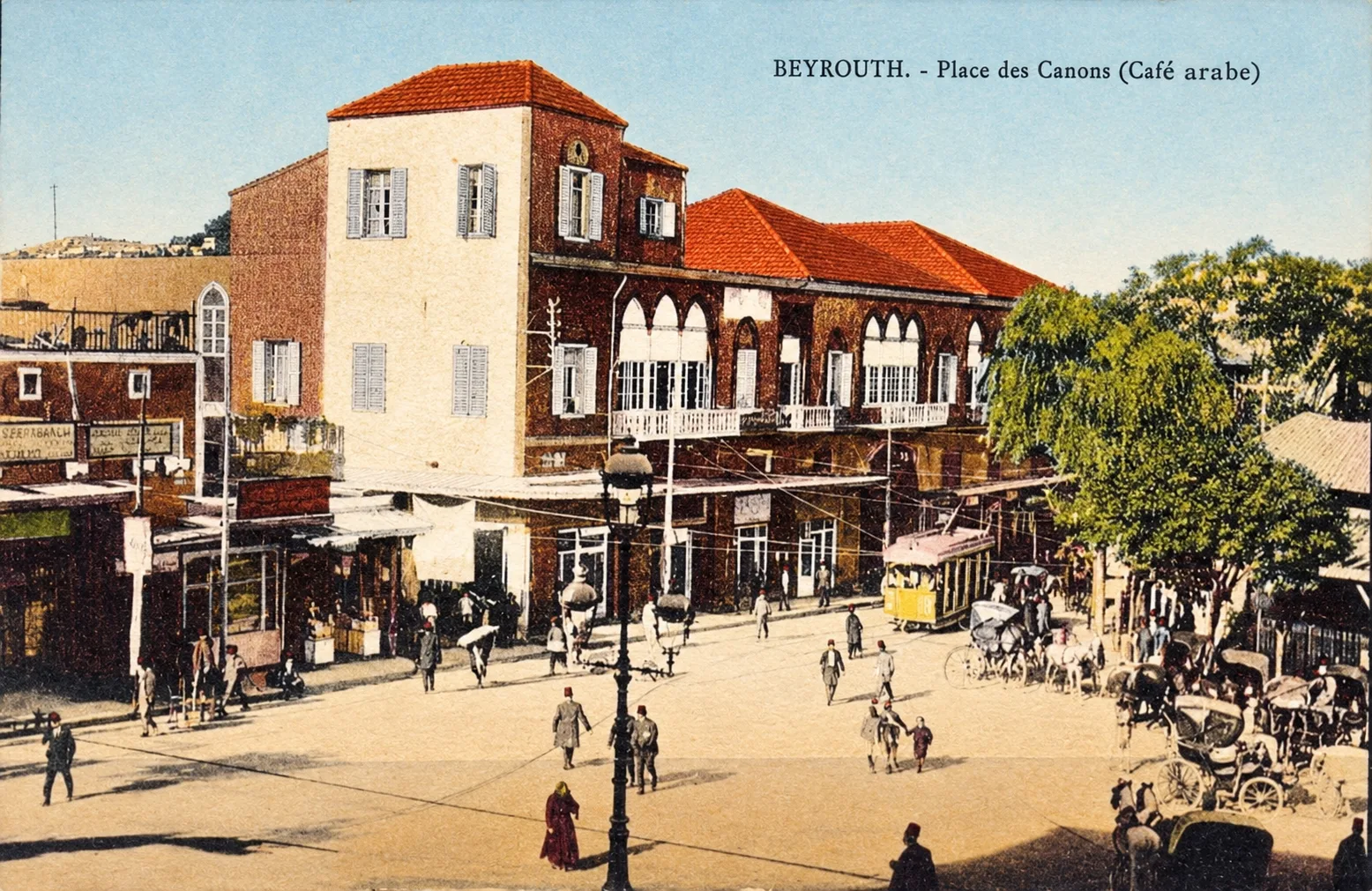
Still, there are observations that must be made about this paradox. As will become clear at other moments as well, it came about contrary to American intent. As historian and scholar Ussama Makdisi notes in his book “Artillery of Heaven: American Missionaries and the Failed Conversion of the Middle East,” the mission was not eager to waste its precious resources producing educated individuals who did not advance its precisely defined religious goal. For that reason, Rufus Anderson, the American secretary for religious affairs, ordered that only Arabic be taught in mission schools and that English-language instruction be reduced, so that conversion to Christianity would precede conversion to civility — despite the missionaries’ awareness that secular education and foreign languages were the urgent demand of students in Syria.
The educational missions loathed people like Butrus Al Bustani, one of the leading pioneers of the Arab Nahda, who grew up in their orbit and saw them as a means that helped broaden their horizons and understanding, without necessarily creating a contradiction between learning English and despising their Arab culture. Anderson, however, wanted to free Al Bustani and others like him “from illusion,” so they would realize that the American Board simply envisioned native storytellers, informants and assistants paving the way for a native Protestant church.
When did we become the Middle East?
The American presence in the Arabian Gulf was not initially about oil, but came through those same missionary missions, which enjoyed great renown in Bahrain in particular. As writer Penelope Tuson notes in her book “Playing the Game: The Story of Western Women in Arabia,” the Arabian Mission was founded in 1891 with the aim of basing itself in Basra, Iraq, seeking to establish a girls’ school and a hospital. But it faced fierce opposition and restrictions from the Ottoman authorities, prompting it to try to expand its influence elsewhere. It went in search of places such as Kuwait, Al-Ahsa and Bahrain, until it settled on Manama, where it opened a branch in 1892 that would also fail in missionary work, but would nonetheless become a turning point in the cultural history of the region.
During that period, from the late 19th century into the early 20th, American interest in the Arabian Gulf flourished, to the point that one journey around it established a new conceptualization of the world and of history. The term “Middle East” itself first appeared in the September 1902 issue of National Review in an article titled “The Persian Gulf and International Relations” by Alfred Thayer Mahan, the American officer — and later the father of American maritime strategic thought — who sailed around the Arabian Peninsula and was struck by the region’s strategic importance as the meeting point of three continents.

As writer Guillemette Crouzet notes in her book “Inventing the Middle East,” the need for the term emerged after the region between Persia, Kabul, Baghdad and Belgrade had been referred to as the Orient. At that time, with Japan and China opening up to the West and colonial conflicts escalating in Asia and the Pacific, the need arose to distinguish between the Near East and the Far East on the one hand, and between the Near East and Bulgaria, the Balkans, the Arabian Peninsula, Persia and the Arabian Gulf on the other. From there, the term “Middle East,” coined by Alfred Mahan, acquired its importance and its continuity to this day.
While the US-Middle East relationship revolved around missionary work and culture, political America was constrained by the Monroe Doctrine of 1823, which stipulated that European colonization in the Americas would be barred in exchange for the United States not intervening in European affairs and interests. In practice, this doctrine established a separation between the New World and the Old World, isolating America and its interests behind the Atlantic Ocean — until the moment came that founded the political relationship between the United States and us.
The Wilson moment … the birth of American Superman
If there were one person who changed the course of history in the 20th century without being mentioned much, it would certainly be President Woodrow Wilson and his 14 points, which affirmed the right of nations to self-determination at the end of World War I.
We can find an echo of Wilson’s call in the visual archive of Egypt’s 1919 revolution against British occupation, through a photo of a member of the effendi class raising the American flag. This was not an exception, but a general condition that gripped the intelligentsia in the Middle East, which was influenced by the American model. Its manifestations appeared in places from Egypt to Turkey, and are summed up in the words of the Lebanese political writer Amin Rihani as he contemplated the Statue of Liberty in New York Harbor, writing: “When will you turn your face toward the East, O liberty? When will your light mingle with the light of this radiant moon, circling the earth with it, illuminating the darkness of every oppressed people? Might the future see a statue of liberty beside the pyramids?”

There is also something else worth mentioning in this regard. Just as Prince Faisal bin Hussein asked President Woodrow Wilson for an American mandate over Palestine, should the mandate system be approved, the same request was present not only among adventurous figures like Faisal, but among the heirs of a great empire as well. Regarding the circumstances surrounding the founding of the Turkish state after the Ottoman defeat in the war, writer Andrew Mango recounts in his book “Ataturk: The Biography of the Founder of Modern Turkey” a story of hoped-for American rescue.
In Istanbul, a group known as the Wilson Society was founded in December 1918, drawing on the American president’s principles of self-determination, at a time when Britain, France and Italy were vying for control over Turkish lands after the Ottoman defeat in the war. The idea of an American mandate appealed to the liberal wing of the Committee of Union and Progress, Ottoman nationalists, Turkish nationalists and members of the intelligentsia such as the feminist writer Halide Edib (Adivar), as an alternative to subordination to the Europeans and out of the belief that Turkey could not survive without the support of a great power. In that case, the United States appeared to them as a great power without ambitions.
Even Mustafa Kemal Ataturk, for a time, softened under the pressure of proposals for an American mandate, saying cautiously without declaring approval or opposition: “We are confident that America is the only country capable of helping us after the experiences we have been through.”
But the US Senate’s failure to ratify the United States’ membership in the League of Nations stripped that discussion of any realism — a point to which we will return later.
The birth of a mutual fascination
In his book “Faith Misplaced: The Broken Promise of U.S.-Arab Relations, 1820-2001,” historian Ussama Makdisi documents how the absence of traditional colonial ambitions on the part of the United States in the region, compared with Britain and France, created in the early decades of the 20th century a positive image of Washington among Arab elites as a power untainted by the legacy of direct colonialism. This was embodied in the eagerness with which the region received Wilson’s 14 points, which he announced in 1918 at the end of World War I — as we reviewed above, along with broader examples too numerous to include here.
To that extent, the United States represented an inspiring model — even a savior.
But despite Congress’s refusal to engage in the post-World War I diplomatic order through the League of Nations, the end of the war had brought with it for many Americans a more radical conception of the new world order and a sense of their new central role in the Arab world, to the point that Howard Bliss, president of the Syrian Protestant College, was the one who delivered the address at the Versailles Conference on behalf of Arab nationalists.
American political scholar Robert Kaplan later summed up that American outlook and those sentiments in retrospect when he wrote: “While the British and French were drawing lines on maps and trading rulers like chess pieces, American Protestants were suffering deeply over the victims of famine and massacres, the two principal worldly horrors that were among the dire consequences of World War I. And while Britons such as Lawrence, Philby and Miss Bell were falling in love with the Arabs, the missionaries were learning more than ever before what it felt like to be an Arab. In other words, while the British were living in the tents of kings and centers of power, the Americans were working in taverns and soup kitchens. Some of them were dealing, for example, with the consequences of the famine in Syria among 300,000 people besieged by Turkish forces, and they were also the first to bring news of the Armenian massacres to the world, all while working in conditions full of hostility. They sympathized with the Arabs’ desire for self-determination, and no imperial institution with hidden motives in the region deterred them from carrying out their tasks.”
The seeds of betrayal in a neglected report
It is impossible to address the postwar world without addressing Sykes-Picot, and impossible to address Sykes-Picot without touching on the Balfour Declaration, which marked the early stirrings of the Zionist project. And with a president committed to Zionism like Woodrow Wilson, the American position deserves scrutiny in how it would deal with that dilemma.
In his book “Sykes-Picot-Balfour: Beyond the Maps,” Lebanese historian Fawwaz Traboulsi explains the American position in the war as that of a partner rather than an ally. The United States refused from the outset to commit itself to any of the secret agreements concluded by the Allies, and Edward House, President Wilson’s foreign affairs adviser, publicly opposed the Sykes-Picot Agreement, describing it as a bad agreement.
The American sense of responsibility toward the Arab cause of independence took concrete form in June 1919, when President Wilson dispatched an American commission of inquiry to Syria and Palestine, historically known as the King-Crane Commission after its two heads, Henry King and businessman Charles Crane.
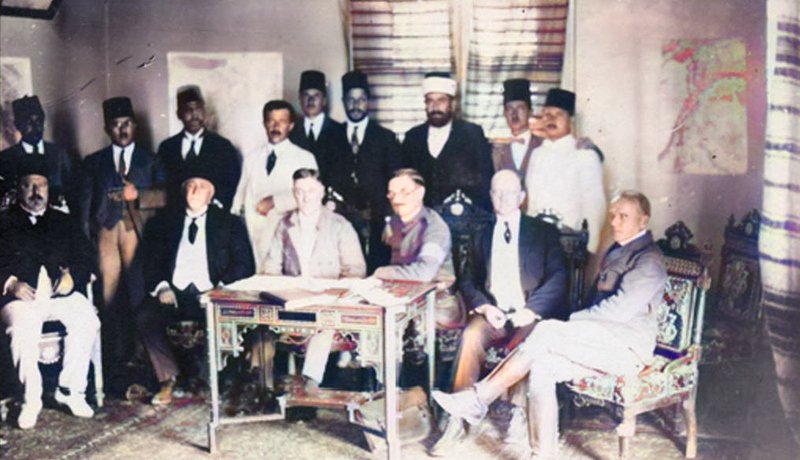
Arthur Balfour, author of the famous declaration, was displeased by the American president’s proposal for a commission to conduct a plebiscite in the region because it further complicated the situation, and he demanded that Palestine be excluded from the plebiscite and from the right to self-determination. As Fawwaz Traboulsi notes, President Wilson, after pressure from his Zionist advisers, ultimately adopted a position on the Balfour Declaration and gave approval to a unified political entity with self-rule in Palestine. But he also asked in one side session: “Why should the wishes of a minority of Jews prevail over the wishes of a broader and larger number of Arabs?” Balfour replied that it was wrong to apply numerical self-determination in the case of Palestine.
Thus, while the American purpose behind the commission was to ascertain the wishes of the region’s inhabitants after the fall of the Ottoman Empire, the commission did in fact tour the region between June 10 and July 21, 1919, receiving about 1,875 popular petitions. Its analysis concluded that 72 percent of them explicitly opposed the Zionist project in Palestine.
The commission’s report reached an explicit recommendation that the extreme Zionist program for Palestine be fundamentally reconsidered, that Jewish immigration be limited, and that the project of making Palestine an entirely Jewish state be abandoned, as writer James Barr notes in his book “A Line in the Sand: Britain, France and the Struggle That Shaped the Middle East.”
But for the reasons we mentioned earlier — Wilson’s falling under the influence of his advisers and Balfour’s entreaties, as well as his suffering a severe stroke in 1919 that forced him to leave the Paris Conference, followed by his shock at Congress’s rejection of US membership in the League of Nations — the commission’s report was stillborn. Indeed, it remained locked in drawers and was not made public until December 1922, a full three years after it was completed, by which time realities on the ground such as the Balfour Declaration and the British Mandate had already imposed themselves. It thus turned from a document that might have changed the course of the conflict into merely a historical testimony to what might have been and was not, establishing an American political tradition of betraying the Arabs when it comes to “Israel.”
At this point, a first phase of the American relationship with the Arabs and the Middle East comes to an end — one often marked by sympathy, romanticism, even sincere intentions, and an Arab faith that proved misplaced. The two decades following World War I would represent a transition between two models of American presence in the Middle East. From the failure of the soft-power model based on education, medicine and the moral diplomacy Wilson promoted for himself and his country, there would emerge, beginning in the 1930s, a model centered on the pursuit of oil, shifting the American center of gravity from Beirut and Cairo to the oil fields of Dhahran in the nascent state of Al Saud, and introducing energy as a governing variable in the shaping of US policy toward the region.
Amid a power vacuum created by the era of decolonization after World War II, and the parallel birth of “Israel,” Arab elites would discover that the original mental image of an untainted colonial power had been nothing more than a transitional phase preceding full geopolitical immersion.
