





هذا التقرير متاح أيضًا بـ العربية
“We built a large industrial city and residential neighborhoods, and constructed roads, malls, markets, and many other things amid war. Commercial activity picked up, and we were able to provide jobs for the unemployed, all through local, self-generated efforts,” Syrian President Ahmad al-Sharaa said, describing the experience of governance and institution-building in Idlib. He was speaking about an economy that took shape during wartime and, despite limited resources and other challenges, managed to develop economic sectors, institutions and commercial activity.
That economy was managed by several figures, some of whom also belonged to Sharaa’s inner circle. Mohammad Omar Qdeid, known as “Abu Abdul Rahman al-Zarba,” was among the most prominent. His activities spanned border crossings, fuel, investment, real estate, financial transactions and transport. He was involved in companies and economic entities that emerged and disappeared over those years.
Qdeid’s growing prominence was accompanied by accusations of “monopoly, creating overlapping companies, manufacturing crises for financial gain, expanding economic influence, managing crossings and outlets, in addition to accusations of embezzlement.” These allegations appeared in media and research reports, some drawing on local testimony and others on testimony from defectors from Hayat Tahrir al-Sham (HTS). They have neither been confirmed nor settled in court. They formed part of the controversy surrounding Qdeid’s role and influence.
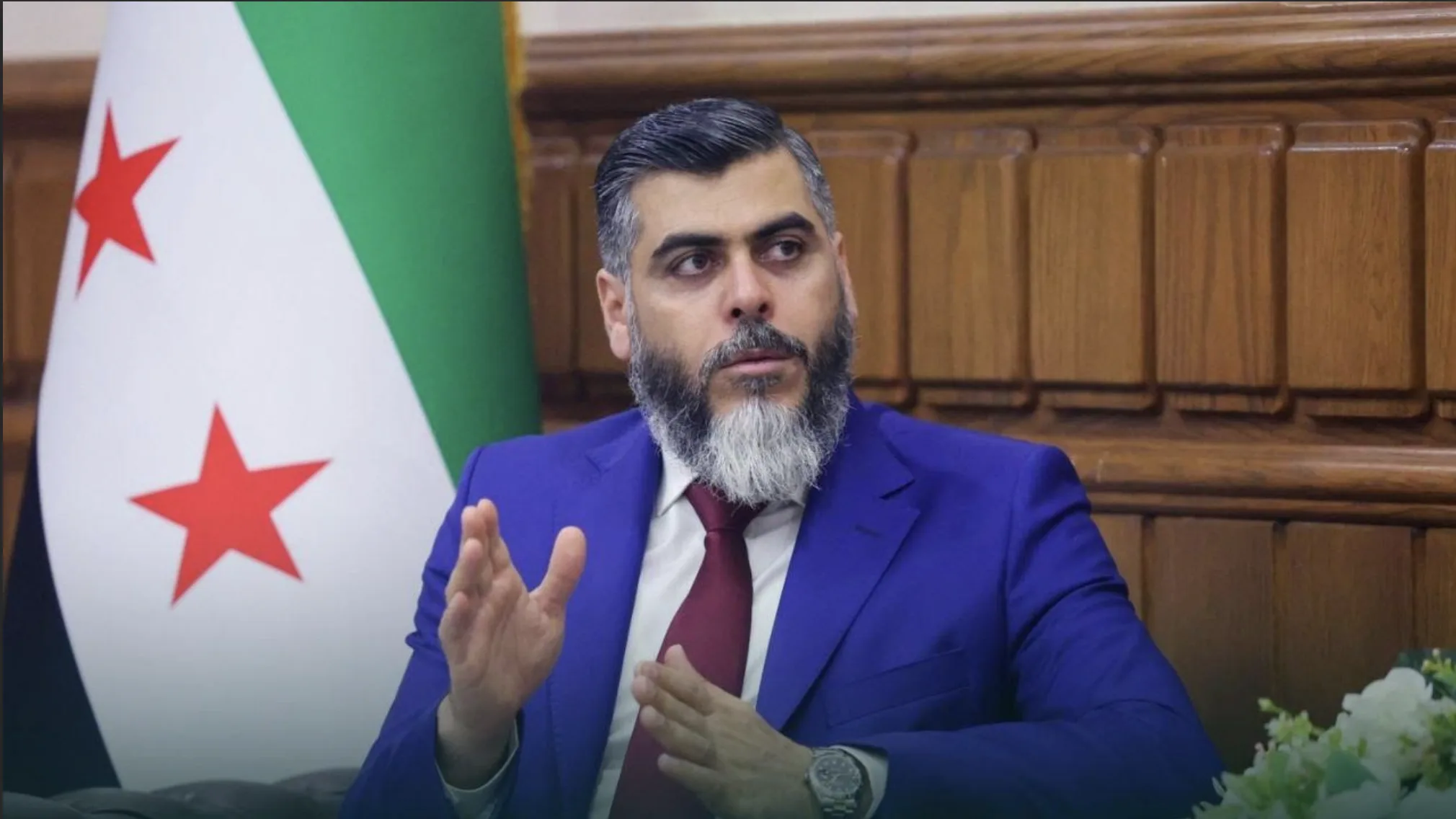
Following the fall of the Assad regime and Sharaa’s assumption of the country’s leadership, “Abu Abdul Rahman al-Zarba” has headed Syria’s Central Financial Control Authority since March 2025. The post marks the latest stage in a career that began in baking and pastry-making, continued through his association with HTS and his expanding role in fuel, finance and investment, and led to an official position in Syria’s new administration.
The rise of his economic influence
Mohammad Omar Qdeid was born in 1981 in Darkush, a town in rural Idlib. He began his working life as a baker before becoming one of the early founders of Jabhat al-Nusra in Idlib in 2011. He initially worked as a driver for the religious official Abdul Rahim Atoun, who now heads the Advisory Office for Religious Affairs at the Syrian presidency. Qdeid remained with the group as it evolved from Jabhat al-Nusra into Jabhat Fatah al-Sham and then HTS, steadily expanding his economic role.
Qdeid founded Al-Waseet, a currency exchange and money transfer company, with capital said to have exceeded $30 million. Most of that money reportedly came from levies imposed on those working in Idlib’s currency exchange sector. His name was also linked to control over several official buildings and public properties.
With the establishment of the Salvation Government, the General Monetary Institution was created at Qdeid’s direction. Affiliated with HTS, it was headed by Qdeid from its founding on 11 May 2017. In 2018, he transformed Al-Waseet into Sham Bank, further expanding his role in managing the financial and economic sector. He was known as “Abu Abdul Rahman al-Zarba,” and his name appeared as both Mohammad Omar Qdeid and Mustafa Qdeid.
His influence extended across fuel, real estate, trade and investment. Through his management of institutions that operated as private economic arms of HTS, he became a common link between several entities central to Idlib’s economy. He chaired the board of Namaa Investment Fund from its establishment in April 2019 and also managed Al-Khair Investment Fund and Al-Baraka Investment Fund, alongside Watad Fuel, Riyada Real Estate Development and Alpha Electrical Appliances.
Qdeid also played a central role in the crossings controlled by Jabhat al-Nusra and its successors. Both internal crossings and those on the border were among the group’s most important sources of revenue. Control over them became a focus of conflict and clashes during the faction’s years of military expansion. The most prominent included Morek on the Aleppo-Damascus road; Qalaat al-Madiq and Abu al-Duhur in southern rural Idlib; al-Eis and al-Mansoura in rural Aleppo; Miznaz in eastern rural Idlib; and Deir Ballut and Darat Izza in western rural Aleppo.
Qdeid was the clearest link between these entities and their various names. A Middle East Institute report described him as the “mastermind” of HTS’s economy, while the entities he managed formed an interconnected network of some of that economy’s most prominent institutions and businesses.

Accusations and suspicions
HTS’s economic expansion was accompanied by accusations that it controlled vital sectors and monopolised certain goods and markets, most notably fuel. Watad Fuel was established in 2018 and quickly became the sole importer of fuel into areas under the Salvation Government’s control, with Qdeid managing the company.
HTS’s control also extended to the movement of goods through the crossings. It closed the Darat Izza-Ghazawiya and Deir Ballut-Atmeh crossings to fuel shipments from areas controlled by the Syrian National Army. It also barred the entry of some agricultural products, affecting prices and market activity. HTS justified these measures as protection for local production.
During Idlib’s sugar shortage in February 2022, accusations extended to claims that the shortage had been deliberately engineered to raise prices and generate financial gains. The management of markets and crises became one of the most prominent aspects of Qdeid’s role during that period.
In 2023 and 2024, when disputes rocked HTS over the issue of “collaboration and infiltration,” its economic committee remained in place and directly linked to Sharaa, and its members continued working. “Abu Abdul Rahman al-Zarba” was among the committee’s supporters and one of its most important members responsible for managing HTS’s resources after Qutaiba Badawi, known as “al-Mughira Binnish,” reflecting his senior economic role even in the most difficult circumstances.
Amid those disputes, accounts emerged alleging that Qdeid had fled abroad with sums ranging from $14 million to $31 million, according to reports published at the time. Media outlets aligned with HTS denied reports that he had fled.
Companies that shaped Idlib’s economy expand across Syria
Among the companies that emerged in Idlib and were managed by Qdeid, Watad was the most prominent in the fuel sector, becoming the exclusive importer of fuel. Kaf and al-Shahba also operated in the sector, but their presence remained limited, with an undeclared connection to Watad. Watad faced public protests and was described as the “Dracula of the liberated areas” before ceasing operations in October 2022, about five years after its establishment.
Taiba Fuel quickly rose to prominence, although it had been founded in 2019 and began operating by opening four petrol stations in Idlib city. It then expanded into several villages and towns before acquiring Watad and securing the largest share of fuel tenders in the province. Taiba says it is one of Namaa Investment’s companies and its main arm in the energy and petroleum products sector.
According to media reports, “Taiba” obtained approval to invest in fuel stations affiliated with the General Oil Administration, as well as a concession to invest in dozens of military stations belonging to the former regime, without open tenders or public auctions.
Zajel Transport began operating in October 2020 after the Transport Directorate approved its investment in an urban transport route in Idlib city. Although the company denied ties to HTS and the Salvation Government, it was managed by Qdeid. It came to prominence during the sugar shortage by supplying the local market with sugar and establishing an import route from Turkey in return for substantial customs fees.
After the overthrow of the Assad regime, Zajel expanded into other Syrian provinces, and its buses became widespread in several of them. In June 2025, the company changed its Facebook page image to that of the “General Establishment for Transport.”
In 2018, Al-Waseet Financial Transfers, the company founded by Qdeid, was converted into Sham Bank. It became the main source of Turkish currency circulating in Idlib and played a key role in setting the terms for currency exchange and money transfers in the area.
In July 2024, the “Sham Cash” app began operating in Idlib as an electronic payment intermediary and wallet, allowing users to send and receive cash transfers. It is affiliated with Sham Bank, which guaranteed that the app would not be shut down. After the regime’s fall, the Finance Ministry adopted it to pay public-sector salaries, while the Grain Establishment adopted it to pay farmers for their wheat.
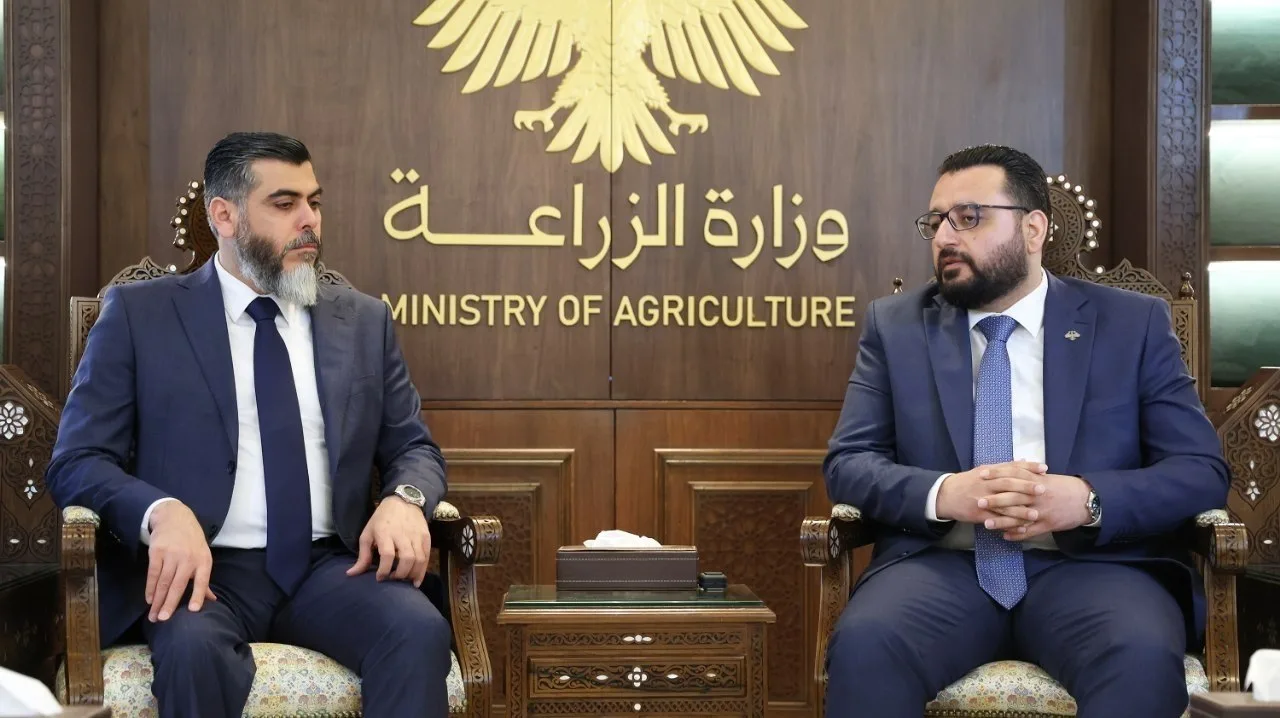
Qdeid played a central role in shaping HTS’s economy but remained out of the spotlight before Assad’s fall, with little known about him beyond limited information and a few photographs. He has since become head of Syria’s Central Financial Control Authority, without an official announcement of his appointment, and now handles financial corruption cases.
The authority announced violations amounting to about 679.5 billion Syrian pounds and $3.41 billion in 2025. In early 2026, it said it had investigated 268 proven corruption cases since the regime’s fall, worth about 527 billion Syrian pounds and $3.385 billion.
Qdeid’s multiple roles reveal a pattern in which “Abu Abdul Rahman” combined the management of commercial entities in fuel, transport and currency exchange with leadership of regulatory bodies such as the General Monetary Institution. This gave him a role in managing economic sectors and the flow of resources within a centralised structure tied to President Ahmad al-Sharaa. That structure continued after Assad’s fall, as Reuters revealed a secret restructuring of the country’s economy in which Qdeid was among the most prominent figures working behind the scenes.