










هذا التقرير متاح أيضًا بـ العربية
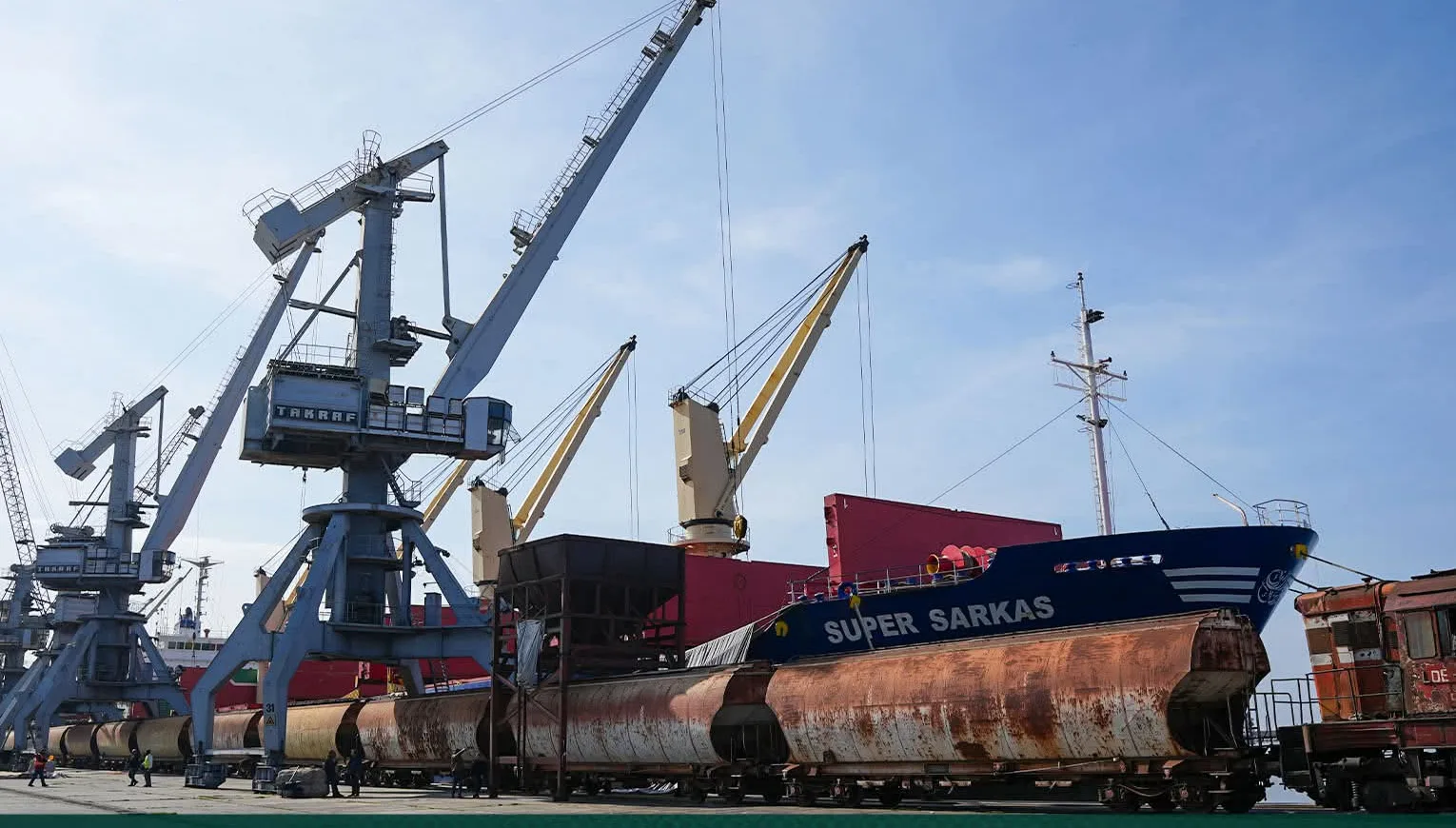
At the Port of Latakia, on Syria’s Mediterranean coast, seeing containers unloaded from ships is not enough to judge whether trade has returned. The real test begins after the dock: Can goods reach the cities regularly, or will the route inland remain the weakest link?
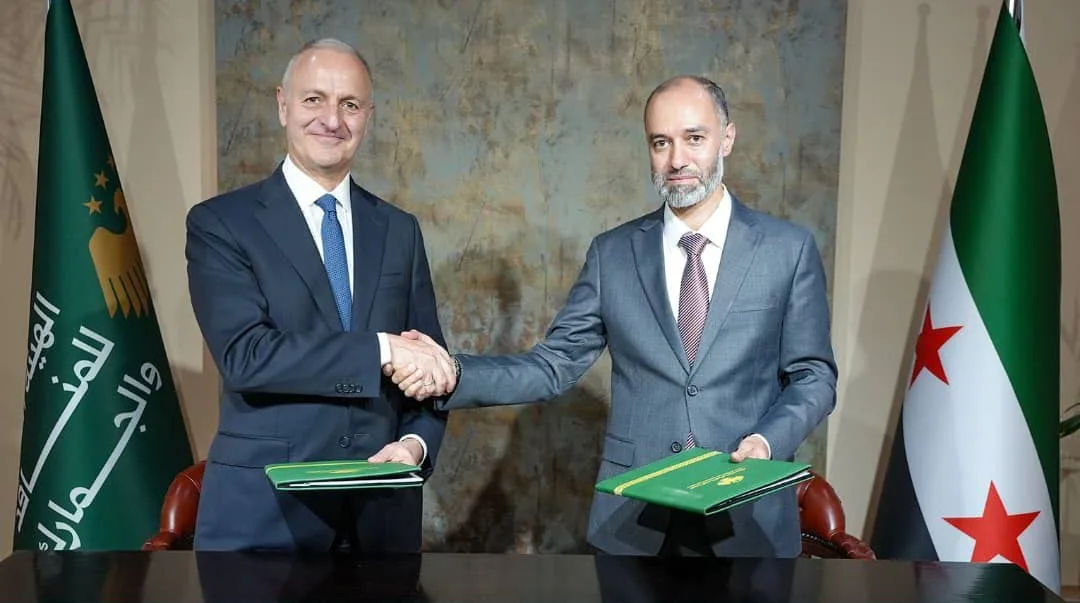
That question returned to the forefront in May 2026, after signed the Syrian government signed an agreement with the French shipping company CMA CGM to operate inland logistics centers in Adra, near Damascus, and in Aleppo.
This comes alongside the launch of a trial train to transport containers from Latakia to Adra after more than 14 years of suspended rail freight service on this route.
The two developments do not mean the route has fully returned, but they do reveal a Syrian attempt to rebuild a link that had been nearly broken between the port and the interior: a seaport that receives containers, inland centers that store, sort, clear, and distribute them, and a train testing the railways’ ability to move goods instead of confining transport to trucks.
But is signing an agreement and running a single train enough to restore the route to its former state? Or does the challenge go beyond the paper contract to repairing railways, roads, and customs, securing financing and equipment, and providing regular transport service? This report explains the story through three stages: the problem, the solution, and the test.
Why isn’t operating the Port of Latakia alone enough?
To understand the story, the events must be arranged chronologically:
- CMA CGM has had a longstanding presence at the Latakia container terminal since 2009.
- In May 2025, the company signed a long-term 30-year contract with Damascus to modernize and operate the port’s container terminal, with an investment of 230 million euros.
- In the same month in 2026, a new link was added: an agreement to operate two dry ports in the free zones of Adra in the Damascus countryside and Aleppo, with the aim of developing the country’s transport and logistics sector, alongside a trial container train between Latakia and Adra.
In this picture, the story is no longer limited to the seafront dock. It has become about the container’s full route from the coast to the interior. Under normal conditions, a container should not remain on the dock for long: It is either cleared quickly or moved inland by truck or train, then reaches an importer, factory, or market.
But this is where the bottleneck appears. The seaport can only receive containers, while moving them to Damascus or Aleppo requires another network : regularly functioning railways, passable roads, fast customs procedures, available trucks, and checkpoints that do not disrupt the journey. If any link in this chain breaks down, the container turns from moving cargo into an added cost in storage, transport, and delay.
During the years of the revolution, Syria’s transport network was severely damaged . Of the railway network, which once stretched for about 2,800 kilometers, only a limited portion remains operational, while Syrian estimates and statements have said the network needs billions of dollars for rehabilitation.
This means the container often becomes hostage to trucks, long roads, fuel and maintenance costs, and waiting times, instead of being moved by a regular train from the coast to the interior.
The bottleneck does not stop at the railways. Overland transport between the coast and the interior faces roads damaged by war and neglect, as well as high fees and operating costs. In addition, the old customs system was considered one of the most complicated links in trade because of the large number of procedures, the multiplicity of authorities, and varying clearance times.
Even with new amendments and measures issued to regulate customs work, the real test remains implementation: Can the container move from the port inland without long delays?
In that sense, the problem does not lie with the Port of Latakia alone. A container that reaches the coast is of no use to factories in Damascus or traders in Aleppo if it remains stuck at the dock or takes days and weeks to find its way inland. At its core, then, this story is an attempt to fix what comes after the port.
What do Adra and Aleppo add to the Port of Latakia?
The idea behind the Adra and Aleppo agreement lies in moving part of the port’s function inland. Instead of keeping all storage, sorting, clearance, and distribution operations tied to Latakia alone, containers can move to inland centers closer to markets and factories, operating as a land-based extension of the seaport — what are known as dry ports.
In Adra, the container becomes closer to Damascus, its industrial zones, and its major markets. Instead of the trader or factory sending trucks to Latakia to complete every step, the container can arrive at an inland center where its customs files are opened, it is stored temporarily, its cargo is sorted, and it is then distributed to factories or traders in Damascus and its countryside.
Aleppo, however, serves a different function. It was considered the heart of northern Syria’s industry, and any effort to revive its industries still requires a faster, closer channel for receiving raw materials, machinery, and goods.
That is why having a logistics center there means an attempt to connect the north to a goods route whose stages are not all completed on the coast, but instead shift part of the storage, clearance, and distribution process into the city or near its industrial zone.
In this sense, Adra and Aleppo do not merely add storage buildings, but rather inland “processing points ” for goods. The container does not arrive there simply to be parked, but to enter a new work cycle: storage, sorting, clearance, consolidation, and then distribution.
If this cycle succeeds, pressure on the Port of Latakia will ease, and the seaport will become the beginning of the journey rather than a point of congestion.
But the success of these centers does not depend on their name alone. A dry port only truly functions if trains or trucks reach it regularly, if fast customs procedures are available inside it, and if traders and factories can use it at a lower cost and in less time than keeping goods on the coast or moving them intermittently.
So far, the full details of these centers’ operating capacity, the cost of their services, and the date they will become a regular link in the goods route have not been announced.
Will the Latakia-Adra train become a regular line?
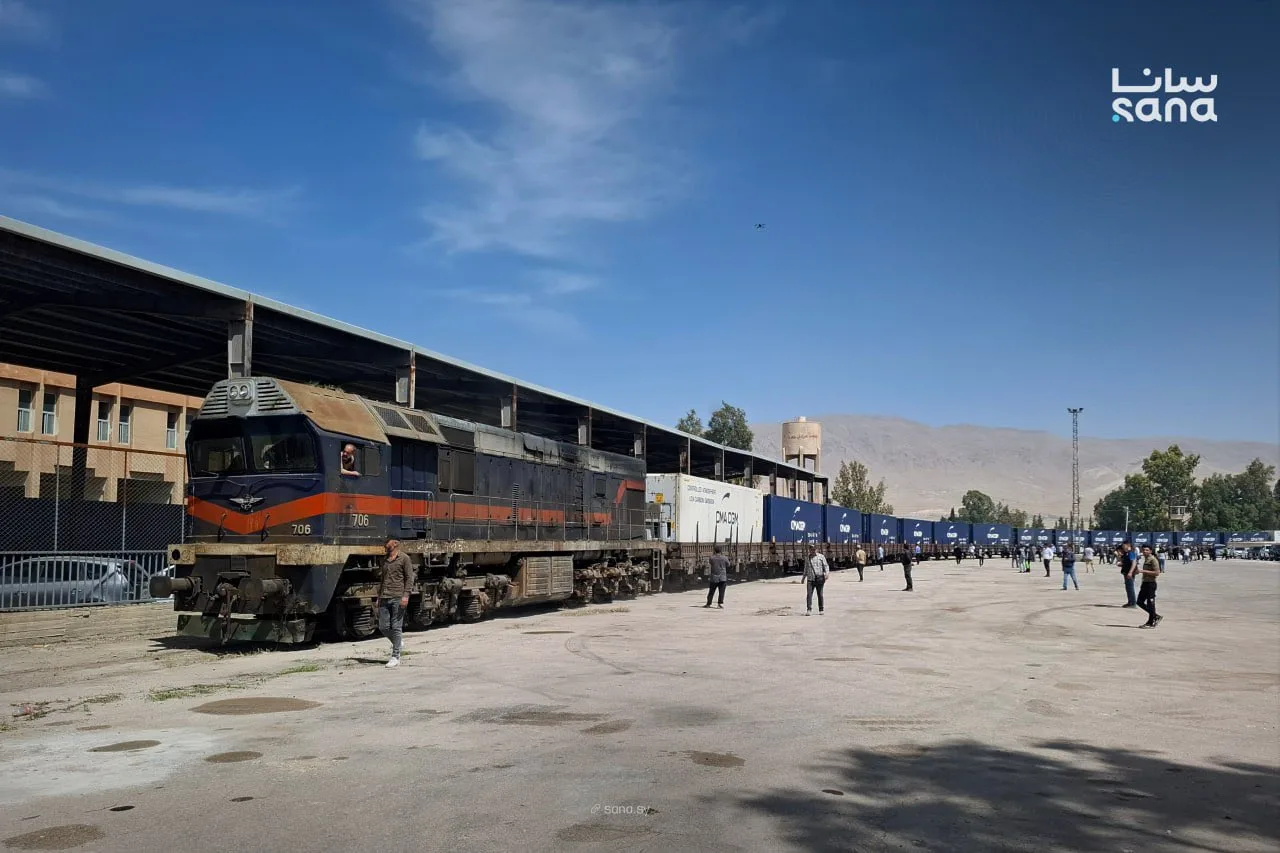
On May 19, 2026, a trial container train set off from the Port of Latakia to Adra carrying 20 containers, including refrigerated containers, according to Syrian sources.
The importance of this trial lies not only in the number of containers, but in the fact that it tested for the first time in many years the idea of moving goods from the seafront dock to an inland center by rail.
But a trial is one thing and regular service is another. A single train can prove that the line is operable, but it does not prove that a freight route has returned to service.
Regular service requires:
- Safe rail tracks and signaling
- Locomotives and railcars that can be maintained
- A clear trip schedule
- Coordination among the port, the railways, customs, and the logistics center in Adra
If the train succeeds in becoming a recurring service, it could reduce reliance on trucks, ease pressure on roads, and make container transport more regular.
But it will not play that role if it remains only a trial trip operated when needed. So the practical question is not: Did the train reach Adra? Rather, it is: Will there be a container line operating regularly between Latakia and the interior?
Expanding the trial toward Aleppo would be an even more complex step, because linking that city to the route means rehabilitating longer lines, ensuring security, connecting the logistics center to the rail or road network, and providing enough trade volume to sustain the service.
The obstacles are not limited to the railways alone. After most Western sanctions on Syria were lifted, the problem was no longer a general ban as it once was, but rather the capacity of the logistics and financial system to resume functioning.
Although CMA CGM’s role is clear in operating the container terminal and the logistics centers, turning the train into a sustainable service remains tied to the Syrian Railways establishment, financing, and the ability of government agencies to coordinate among the port, customs, and inland centers.
So the success of the trial is not measured by the number of containers that reached Adra, but by this route’s ability to be repeated: a regular train, clear procedures, and goods arriving on a timetable that traders and manufacturers can rely on.