








هذا التقرير متاح أيضًا بـ العربية
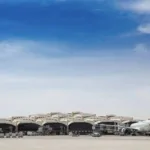
The controversy over the conversion of Mezzeh Military Airport into a civilian airport has not subsided, given the site’s legacy of abuses, the rights of victims and the missing, and questions over land ownership. It has now been reignited by the identity of the party involved in the investment project, although no official announcement has yet been made. Syrian authorities have announced only Syrian efforts to undertake preliminary work, including clearing rubble and rehabilitating some air navigation infrastructure.
According to the local outlet “Zaman al-Wasl,” “SyriaJet,” a company established in Syria in 2025 and owned by Adel Mardini, is participating in the Mezzeh Airport investment project. It is affiliated with the parent company “Jetex,” founded in the UAE in 2005. The group has declared commercial operations in Israel, having won a tender in May 2025, in partnership with the Israeli company “Layam,” to operate VIP lounges in Terminal 3 at Ben Gurion Airport for six years, renewable for a further 36 months.
NoonPost asked the Syrian Civil Aviation Authority whether the information about SyriaJet’s participation in rehabilitating and investing in Mezzeh Airport was accurate. It also sought clarification on the nature of any contract or agreement concluded with the company, should its involvement be confirmed. The authority had not responded by the time of publication. NoonPost also contacted SyriaJet about its participation in the project but had received no response by the time of publication.
Under normal circumstances, a multinational company’s operations across several markets would not be unusual and may simply reflect its commercial expansion. But Jetex Group’s presence in the Israeli market, alongside the participation of an affiliated company in a Syrian project, gives the move significance beyond purely commercial considerations. It raises the possibility of economic opening and normalisation at a time when negotiations on a security agreement remain stalled.
Since mid-2025, Syria and Israel have been engaged in US-mediated negotiations focused on security issues, border arrangements and the Israeli occupation of Syrian territory, with Damascus insisting on the 1974 disengagement agreement. The talks have yet to produce a final security agreement. Syrian President Ahmad al-Sharaa said the negotiations had progressed 90 per cent of the way towards an agreement, but that Israel had withdrawn from the deal for various reasons and pretexts.
Syrian President Ahmad al-Sharaa: We had reached roughly 90% of an agreement with “Israel,” but it withdrew from the agreement for various reasons and pretexts. https://t.co/pqLrDxBTFd
— Noon Syria (@NoonPostSY) September 23, 2026
In recent years, Arab normalisation with Israel has been associated with political agreements, diplomatic relations and the opening of embassies. But economic and commercial interests can develop in parallel with politics, and sometimes ahead of it. This became more apparent during the fifth round of Syrian-Israeli negotiations in January 2026, when talk first emerged of “commercial opportunities” and “economic cooperation” alongside security issues. This coincided with Israeli media reports about the possibility of opening talks in civilian sectors, including medicine, energy and agriculture.
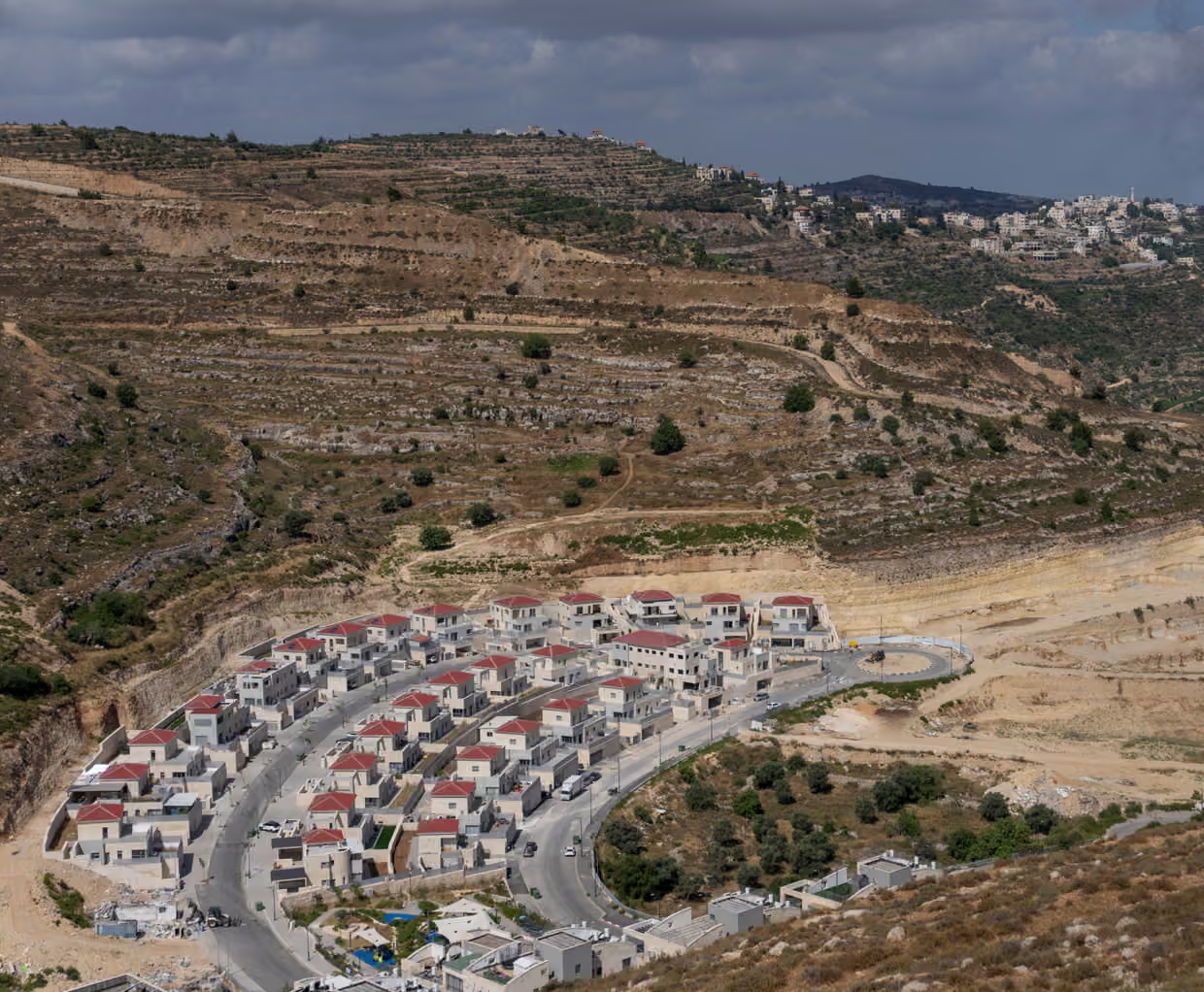
This report examines the possibility of economic normalisation between Syria and Israel, without assuming that Damascus has begun an official process towards it. There is insufficient information to say that the rehabilitation of Mezzeh Airport forms part of a Syrian-Israeli political agreement, especially since Syrian law prohibits such relations with the country’s historic enemy, which continues to commit violations in southern Syria.
Cross-border companies: A potential gateway to economic rapprochement?
Syrian law prohibits commercial, economic and investment relations with Israel, classifying them as serious smuggling offences affecting national security. Decree No. 109 of 2026, which includes a new customs law, reinforced these restrictions by banning goods of Israeli origin from entering Syria, whether destined for domestic markets or free zones. The ban also covers the entry of Israeli nationals into Syrian territory.
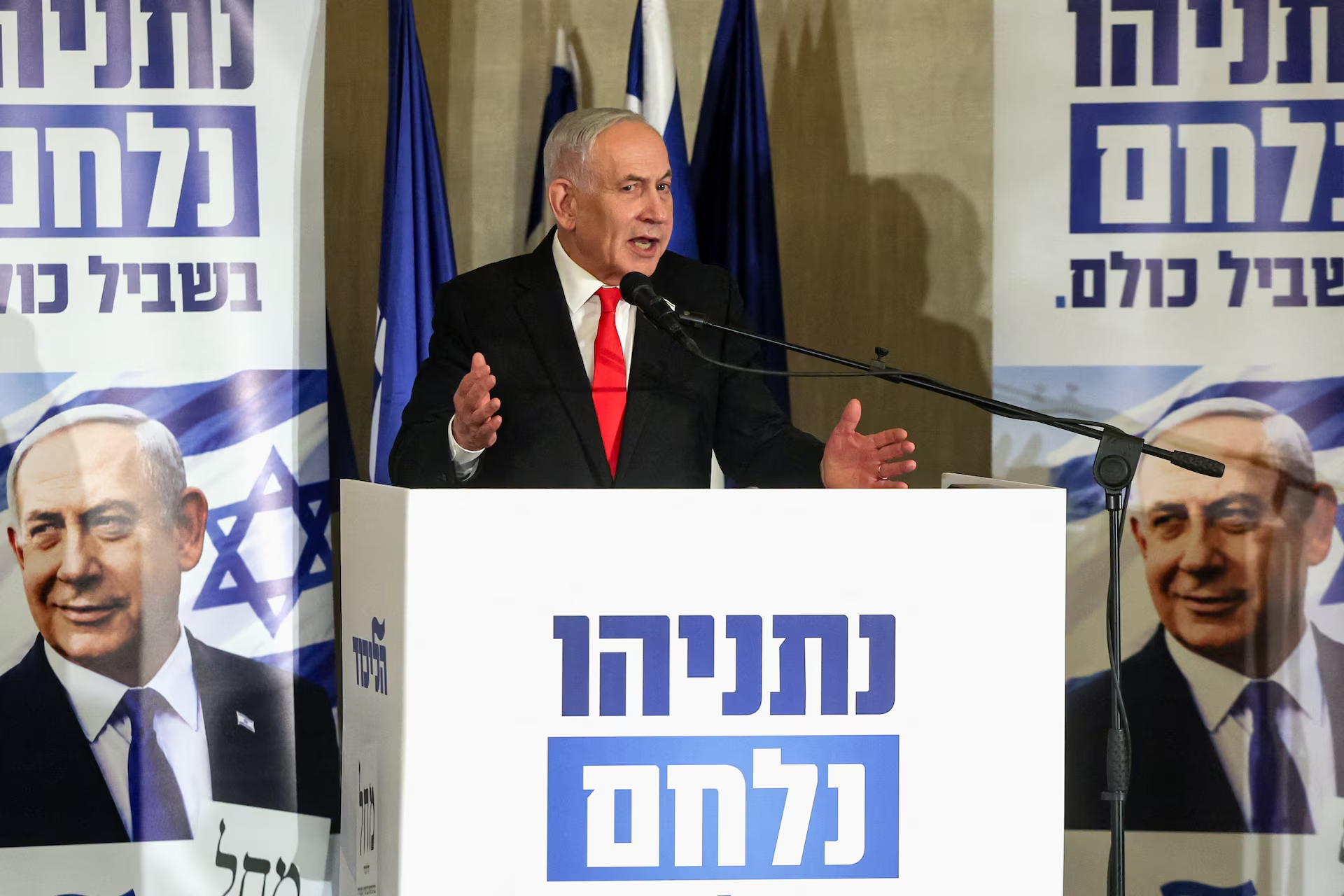
By contrast, Israel is seeking to establish economic relations with Syria as part of the ongoing negotiations between them. Israeli Prime Minister Benjamin Netanyahu’s office disclosed this during the Paris round on 6 January 2026, although no specific commercial projects or agreements were announced.
The joint statement issued by the US, Syria and Israel after the Paris meeting also set out an agreement to establish a joint coordination mechanism under Washington’s supervision. Its purpose was to facilitate ongoing coordination on intelligence sharing, military de-escalation and diplomatic engagement, alongside “commercial opportunities.” The statement announced no steps, relations or cooperation concerning those opportunities.
Given the historic hostility between Syria and Israel, indirect commercial ties may have significance beyond the companies’ business interests, particularly when they connect parties operating in markets with no official relations.
Such networks may create overlapping interests and enable economic contact before any declared change in political position. But determining whether these ties are paving the way for broader rapprochement requires information about the nature and scale of the partnerships and the extent of their connections to projects inside Syria. The fact that one of the companies has commercial operations in Israel is not sufficient on its own.
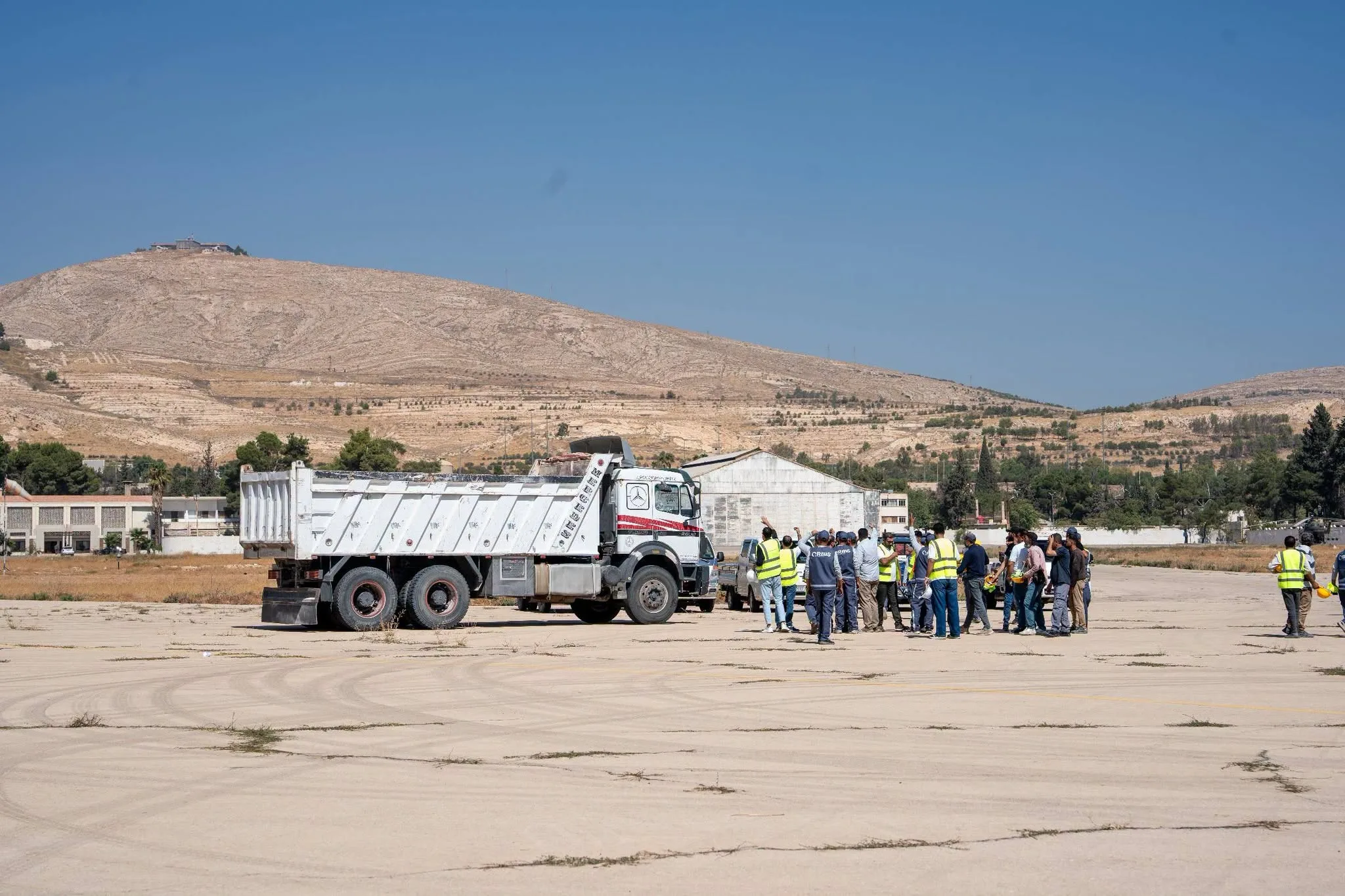

Reports of SyriaJet’s participation in the Mezzeh Airport investment project have not been confirmed by an official or independent source. Ayman al-Dasuqi, a researcher in political economy and local administration, says that, if the information is accurate, it raises three possible explanations. The first is that Syria’s boycott mechanisms have limited effectiveness, or that there are loopholes in their application to companies with indirect commercial ties to Israel.
Al-Dasuqi told NoonPost that the second explanation is that economic considerations and the need to attract foreign investment are being prioritised over some political restrictions associated with the boycott. The third is that cross-border commercial relations could provide an opening for informal contacts between Syrian and Israeli parties.
The third possibility takes on greater significance given the roles businesspeople can play in settings and crises where stable official channels of communication are lacking, or where those channels fail to achieve breakthroughs that would advance negotiations.
According to the researcher, businesspeople’s multiple economic networks create opportunities to convey messages, explore shared interests and propose limited confidence-building initiatives, outside the political commitments required by formal negotiations.
In this context, al-Dasuqi points to Adel Mardini’s participation in the “Conscience” initiative in 2013, which sought to propose a “political settlement to the Syrian crisis.” He cites this as an indication of Mardini’s previous involvement in political initiatives. It does not, however, constitute evidence that Mardini is playing any role between Syria and Israel.
From this perspective, businesspeople with cross-border ties can be seen as potential actors in reshaping Syrian-Israeli relations by testing opportunities for cooperation, identifying shared interests and proposing confidence-building initiatives, according to the researcher.
