





هذا التقرير متاح أيضًا بـ العربية
From its beginnings in Jewish history, the yeshiva has been a religious institution for studying Jewish law through its foundational sources. Despite its strict Orthodox character, it has shown greater openness to change than midrash schools, opening the way to women’s education and diversifying its teaching methods. Its importance grew until, in Jewish doctrine, studying there became a symbolic alternative to studying in the “Temple.”
In the mid-19th century, a strand of Religious Zionist education emerged that linked the yeshiva to immigration to Palestine and settlement there, marking its first ideological shift. The occupation of the West Bank in 1967 then brought geography and Jewish history together in these schools’ eyes, prompting some of their students to establish settlements in places they saw as a “reinvocation of Jewish history.”
Today, Religious Zionist schools in Homesh, Hebron and Yitzhar share a goal: expanding settlement and entrenching a permanent Jewish presence in the West Bank. They pursue this despite differences in their educational and religious traditions and their positions on the government and certain issues. Alongside them, institutions such as the “Temple Mount Yeshiva” in Jerusalem organise their students’ presence in the courtyards of Al-Aqsa Mosque.
This report traces how religious study in Zionist yeshivas has developed into an organised physical presence, and how their rabbis and graduates have helped shape settlement politics and impose new facts on the ground. It follows this process through to their role in incursions into Al-Aqsa Mosque and efforts to Judaise it.
The origins of Zionist yeshivas
The development of Zionist yeshivas — the plural of yeshiva — began with Rabbi Abraham Isaac Kook, who founded Mercaz HaRav, described as the mother of Zionist yeshivas, in Jerusalem in 1923. Kook gave the Zionist project religious meaning. His son, Zvi Yehuda Kook, put that vision into practice through his students, who helped establish settlements based on his view of Hebron, Nablus and Jericho as part of the “Jewish state and its history.”
After the occupation of the West Bank in 1967, Mercaz HaRav graduate Hanan Porat re-established the “Kfar Etzion settlement” in just three months, on the site of the kibbutz founded in 1943. In April 1968, Rabbi Moshe Levinger led a group into Hebron that insisted on remaining there and later established the settlement of Kiryat Arba.
The establishment of Kiryat Arba marked a turning point in Mercaz HaRav’s role. Participation in settlement activity widened from students to families and grew to include funding and political work. The army and government also intervened to support the settlement’s establishment, providing human, intellectual and financial support.

At the start of the 1970s, religious schools expanded their role through the Gush Emunim movement. Lessons and sermons about security and land became a strategy of remaining on the ground and applying pressure, leading to an agreement with the government that ended in colonisation. This happened in December 1975, when a settler group’s presence on the outskirts of Sebastia led to an agreement allowing some of its members to remain at a nearby military site before expanding into the surrounding areas.
This expansion, together with growing enrolment in religious institutes that promoted settlement, contributed to the emergence of the “Hesder Yeshivas Union”, a coordinating body combining religious education and military service, alongside pre-military academies, known as mechinot.
Today, the union is the largest umbrella body representing Religious Zionist schools in dealings with the army and the Ministry of Defence. It includes 64 yeshivas and more than 10,000 students. Its responsibilities include combining religious study with military service, educating students to unite religious commitment with national belonging, supporting the Religious Zionist education system and encouraging the wider public to study religious texts.
The union plays a central role in expanding settlement in the West Bank through its curricula and the political and on-the-ground activities of its students and rabbis. That role finds its fullest expression in efforts aimed at “reversing the disengagement plan”: restoring legitimacy to evacuated settlements and incorporating them into government planning, alongside dozens of other settlements approved as a result of students’ and rabbis’ regular presence on their land.
Return to the north
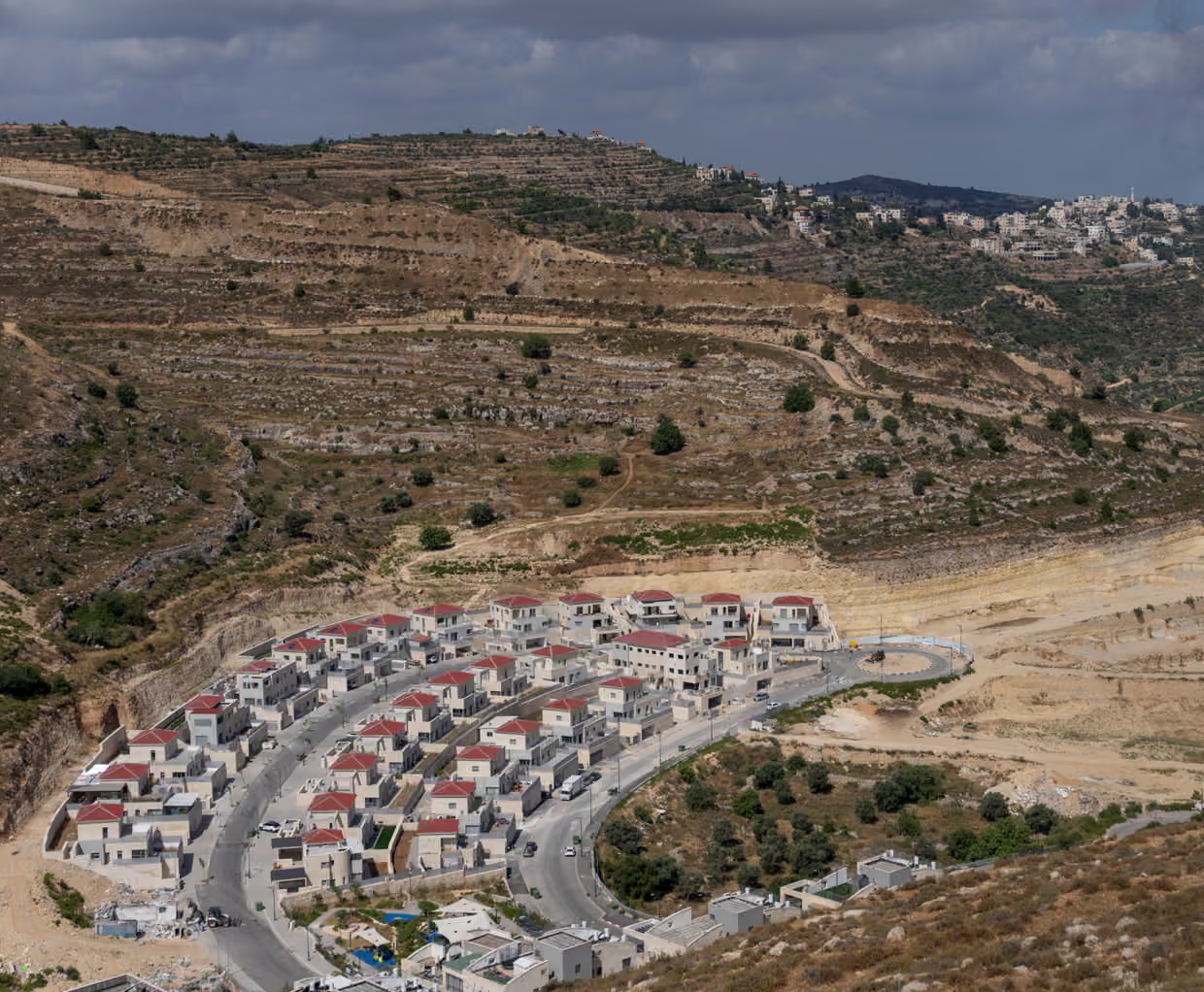
In March 2026, a kindergarten opened in Homesh in the northern West Bank, more than 20 years after the settlement was evacuated under the 2005 disengagement plan. Israeli Education Minister Yoav Kisch described its opening as the fruit of “Zionist settlement work,” even though it had no more than 20 children.
According to Samaria Regional Council head Yossi Dagan, the kindergarten was one step in a long process led by yeshiva students and their rabbis. They had worked to keep the evacuated settlement intermittently inhabited until the government reversed its disengagement decision and allowed families to return.
Two yeshivas have been associated with Homesh. The first was established in 2002 as a branch of the “Birkat Yosef” yeshiva in Elon Moreh. In 2003, it took the name “Har Shalom.” It aimed to strengthen the Jewish religious presence in the settlement. It later joined the Hesder Union and, after Homesh was evacuated, moved to the Eshtemoa area south of Hebron.
The second, the “Homesh HaMehudeshet Yeshiva”, was founded in 2006 under Rabbi Elishama Cohen’s leadership, with the participation of students and activists. They sought to revive the settlement by repeatedly returning to attend sermons and religious lessons on its land, despite being evacuated time and again.
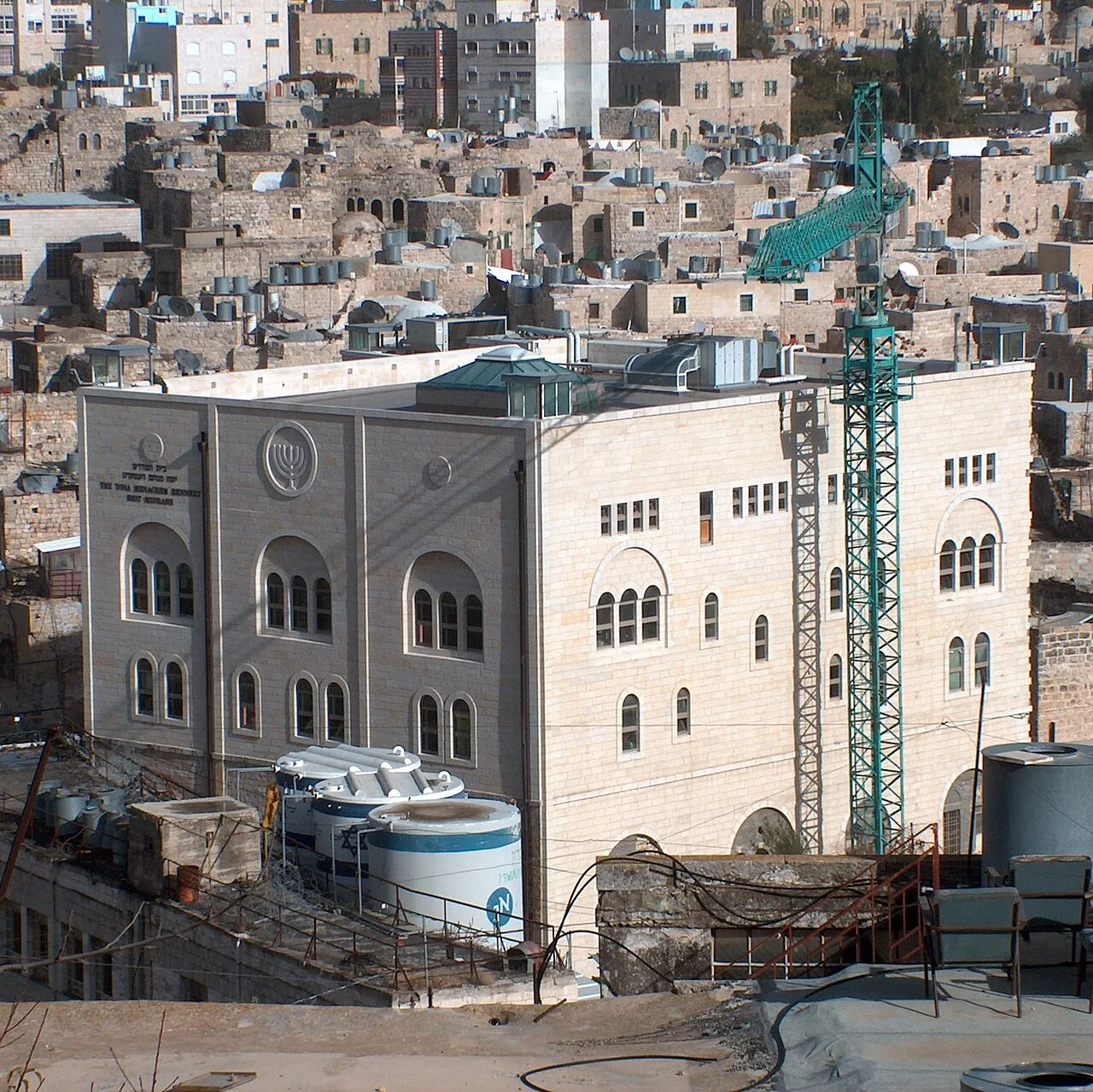
Cohen continued giving religious lessons from September 2006 onwards. The yeshiva intensified its activities at the end of 2007, developing its capacity to mobilise political and social support and organise public events. It presented itself as part of the struggle to restore settlement in the northern West Bank. In 2021, one of its students was killed in an ambush set by Palestinians for settlers who had continued to tour and visit the area, with those visits accompanied by vandalism of residents’ property.
In response, settler movements backed by right-wing parties organised large marches towards Homesh involving more than 15,000 settlers. Violent clashes broke out with residents of Burqa, on part of whose land Homesh stands, after they came out to protest. Residents subsequently filed a complaint with the “Israeli” courts. In November 2022, Cohen and several of his students were indicted for violating the law barring “Israelis” from entering and residing in the area.
As the marches continued and pressure mounted from far-right ministers, including Finance Minister Bezalel Smotrich, the course of the case changed. The Knesset voted 31 to 18 to repeal the prohibitions relating to the evacuated settlements in the northern West Bank. The yeshiva’s demand to re-establish Homesh had moved from a campaign led by students and settlement councils to legislation allowing a return.
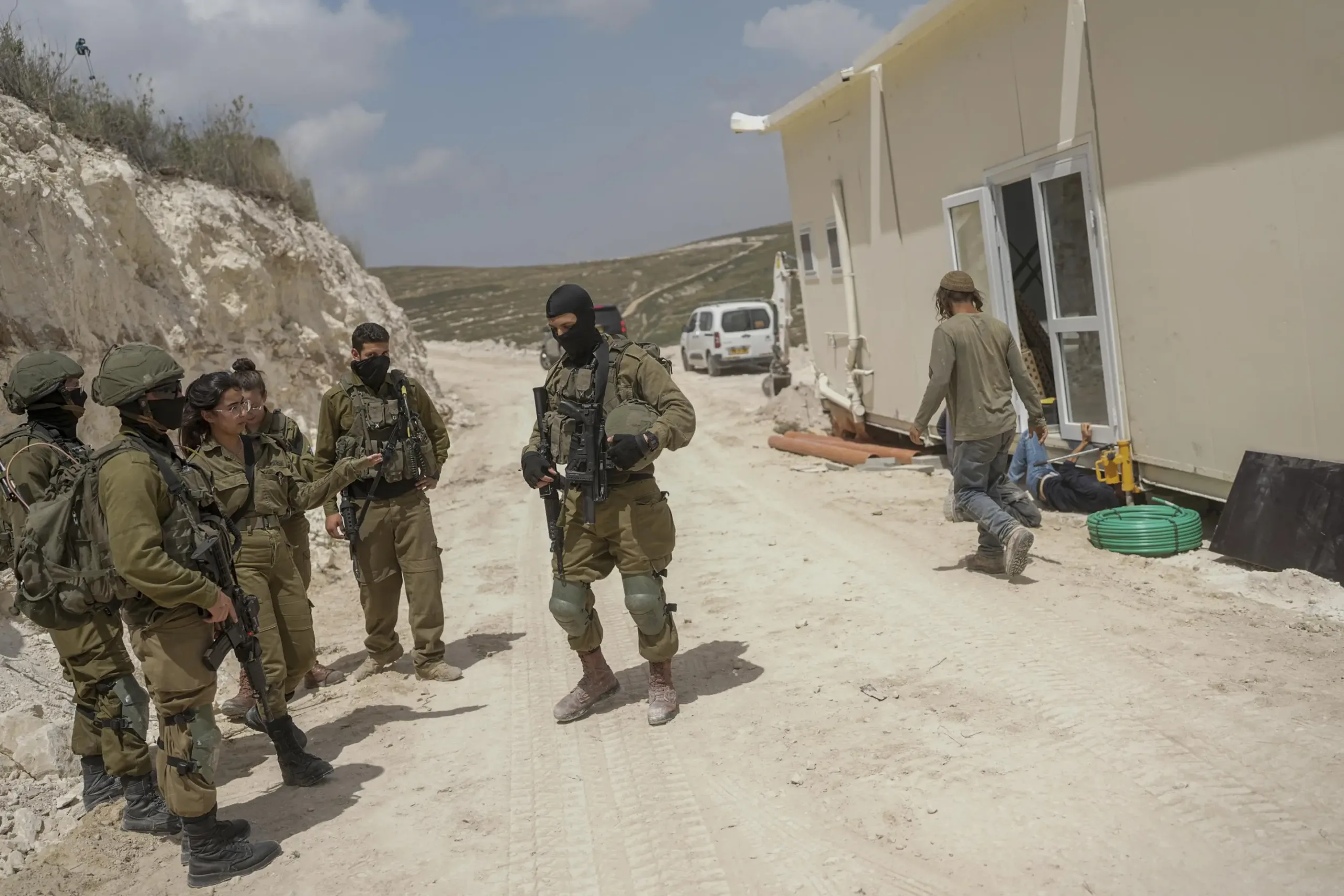
On 29 May 2023, a new yeshiva building was installed, along with mobile homes for the soldiers assigned to guard the site. The settlement has since developed rapidly: dozens of new buildings have been erected and the yeshiva has expanded. About 20 families now live there, nearly 50 students attend the yeshiva and around 20 children attend the new kindergarten.
During the retaliatory war on the Gaza Strip, a Civil Administration official signed planning authorisation for Homesh on 21 December 2023. In May 2025, the cabinet approved its reinstatement in government plans alongside 19 other settlements. The decision was officially announced in March 2026, in the presence of government officials, at a ceremony marking families’ move to the site and the kindergarten’s opening.
Israeli media describe Homesh as both the spearhead of this effort and a model for settlement leaders: using religious schools to exert political and legislative pressure to cancel the 2005 disengagement plan, revive the four evacuated settlements in the northern West Bank — Homesh, Sa-Nur, Ganim and Kadim — and lift the criminal prohibition on entering them.
The yeshiva’s success became part of the government’s broader strategy of settlement expansion. The “legalization” of Homesh and the settlements evacuated under disengagement was incorporated into a wider government decision covering other settlements and outposts across the West Bank. These included “Har Ebal” in Nablus, “Yonadav” in Hebron and “Kedem Arava” near the Dead Sea, with the aim of entrenching a new settlement reality.
Yet the process that began at Mercaz HaRav and expanded through Gush Emunim and then Hesder did not always produce harmonious relations between religious schools and state institutions. Tensions with the security services peaked in 2014, after settlers from Yitzhar attacked an army site. The army responded by deploying a Border Police company inside the Od Yosef Hai yeshiva building, where it remained for an extended period.

The label “settlement school” therefore does not imply consistently harmonious relations with every state institution. The Education Ministry funded this school’s programmes at one stage, then withdrew its support, while security forces were stationed inside its building at another.
The influence of religious education extends beyond relations between a school and the government. According to his Knesset biography, MK Zvi Sukkot studied at Od Yosef Hai and later taught there before helping establish the Evyatar outpost near the towns of Beita and Yatma. Peace Now says the Nahala movement, led by Daniella Weiss, was behind the outpost’s establishment in 2021, with the backing of the Samaria Regional Council.
Od Yosef Hai students continued returning to the outpost from June 2023 through the following year, when a government decision included Evyatar among five outposts earmarked for legalisation. This was followed by the declaration of 66 dunams of surrounding Palestinian land as “state land.”
The case brings together a yeshiva graduate, a movement establishing outposts, students, families and a government decision. This does not prove that the yeshiva ordered the outpost’s establishment or that Weiss had any academic connection to it.
Hebron: expansion within an inhabited city
In Hebron, the yeshiva has taken a different path from Homesh, expanding within an inhabited Palestinian city rather than bringing students to an evacuated hilltop. Shavei Hevron was established in 1982 inside the Palestinian Osama bin Munqidh School building.
Although the building dates from the Ottoman era, the yeshiva gave it the historical name “Beit Romano” and incorporated its seizure into its account of the history of Jewish presence in the city.
In September 2025, students from the yeshiva entered the Nasser al-Din family’s home on Al-Shalala Street, raised Israeli flags over it and named it “Beit Valero,” after a Jewish banker they claim owned the land before the Nakba. British Mandate documents contradict that claim.
On 10 June 2026, the Civil Administration’s planning council stripped the Palestinian municipality of planning powers over settlements and some religious sites within Hebron. A week later, it issued a permit for two additional floors, covering a total of 1,027 square metres, above the Nasser al-Din family home, which had become known as “Beit Valero“. The floors were to provide accommodation for yeshiva students.

According to the Israeli Civil Administration, which handled the permit application, the Palestinian municipality assumed planning powers in the city under the Hebron Protocol, signed in 1997. Planning authority over properties used by settlers was later transferred to the Civil Administration, while Palestinian buildings remain under the municipality’s planning jurisdiction.
The measure transferred a specific power, contrary to some political statements suggesting that all the protocol’s provisions had been cancelled. But it changed which body could approve a settler housing project on the same street. The transfer enabled the council to issue the permit for “Beit Valero” just one week later, while Palestinians have for years been unable to obtain permits even to open windows in their homes.
If Homesh represents the “return of settlement to the north,” the Hebron yeshiva shows how settlers’ needs become a route to property seizure. The school’s need for more rooms to accommodate additional students led to a property being allocated to a settler educational institution, followed by the transfer of planning authority and a permit to expand student housing. A school’s accommodation needs thus became the basis for a settlement planning decision affecting the heart of the city.
These decisions coincided with the growing influence of the settler right within the government since December 2022. According to his biography, Bezalel Smotrich studied at Mercaz HaRav and at the “Yeshiva Gedola” in the settlement of Kedumim. He wrote the “Decisive Plan,” which rejects the establishment of a Palestinian state and calls for settlement expansion.
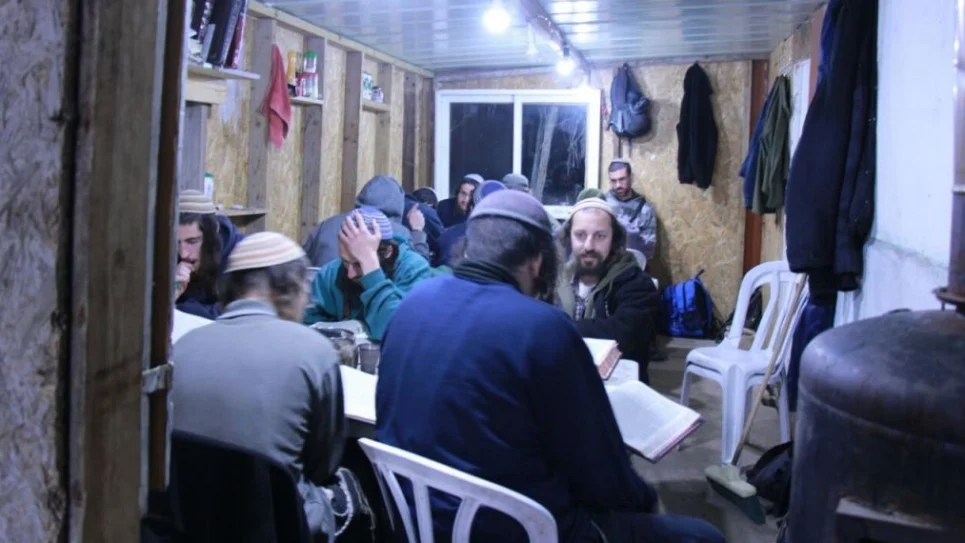
With his appointment as finance minister and his assumption of civilian responsibilities in the Defence Ministry, Smotrich moved from being an activist and yeshiva graduate to wielding executive authority. His authority extended to settlement planning procedures and to reducing the number of stages required to obtain the defence minister’s approval. This shortened the administrative process between settlers’ demands and building approvals, while schools and movements continued to bring in students and families and exert pressure on the ground.
State intervention takes different forms in each case. In Homesh, the entry ban was lifted, a yeshiva building was erected under guard and planning authorisation followed. In Hebron, a property was allocated, planning authority was transferred and housing was approved. In Yitzhar, funding for the school was halted, before settler activity there later resumed in full force.
At all three sites, the yeshiva has been central to settlement expansion. It maintains a student presence, brings in people who need buildings, housing and services, and in some cases produces graduates who go on to organise outposts or enter politics. Depending on the case, the state then intervenes to obstruct or protect these activities, allocate land and buildings, or grant recognition.
From classrooms to Al-Aqsa’s courtyards
In the West Bank, this role is expressed through housing and planning; in Jerusalem, through prayer and a presence inside the sanctuary. On the morning of 21 January 2026, students from the “Temple Mount Yeshiva” stood near the entrance to Al-Aqsa Mosque, handing Jewish visitors printed sheets containing entry instructions and prayer texts, including the “Amidah prayer.” Responding to a request from the yeshiva administration, occupation police allowed those storming the site to bring in religious items.
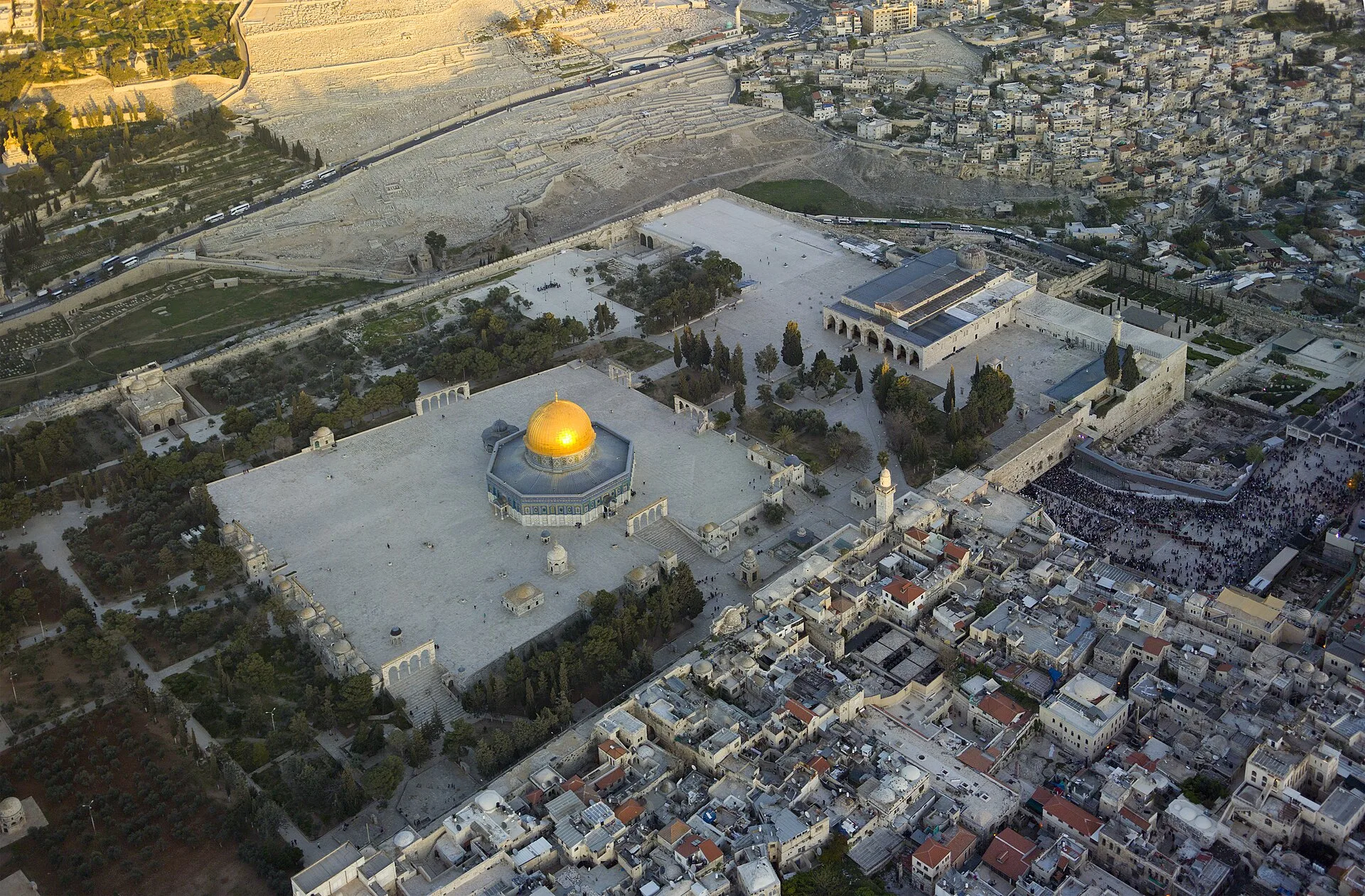
Permission to bring in books and religious materials applied only to designated areas where police allowed their use. The religious school’s activities have gradually begun to change conditions at the site. Its work now centres on ascending to the place Jewish religious groups call the “Temple Mount,” turning religious lessons into a regular physical presence in a contested place and then demanding changes to the restrictions on that presence.
The longstanding dispute over religion and religious law governing entry to Al-Aqsa remains unresolved. After the occupation of East Jerusalem in 1967, the Chief Rabbinate affirmed that Jews were forbidden to enter Al-Aqsa’s courtyards, citing ritual purity and disagreement over the location of the “Holy of Holies.”
In a study published in 2026, researcher Yitzhak Hershkowitz writes that the earliest Gush Emunim documents did not prioritise ascents to the site, despite the movement’s focus on settlement in Hebron and Nablus. He adds that the relationship between religious education and West Bank settlement that developed after 1967 preceded the growth of support for visiting Al-Aqsa within those circles.
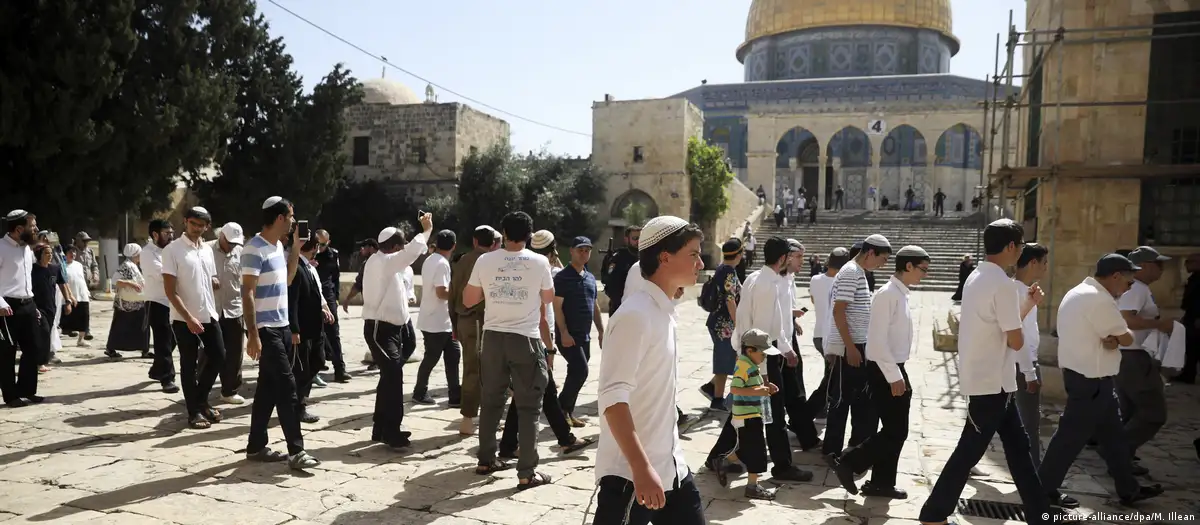
The dispute over religious law continues. In May 2026, the Ashkenazi chief rabbi renewed his call to refrain from entering the site, while other rabbis adopted interpretations allowing entry to certain areas after specific religious preparations. Institutions then emerged that made these visits an organised activity for their students.
Hershkowitz traces how this position spread from the margins of Religious Zionism to broader circles within it. He estimates that about half of the hesder yeshivas, along with some prominent religious high schools, organise student ascents to Al-Aqsa. The number of Jewish intruders rose from 5,658 in 2009 to 30,219 in 2017 and 58,149 in 2024.
Religious rulings did not, however, automatically translate into incursions into Al-Aqsa’s courtyards. According to the “Temple Mount Yeshiva” programme, an ascent requires knowledge of the areas its rabbis consider permissible to enter, a group assembled during police-approved entry hours and someone to lead lessons and prayers.
The school provides all these elements, distinguishing it from yeshivas that only teach texts about Jerusalem away from the site. Its regular group visits also differ from an individual’s occasional visit. Small decisions, such as changing a group’s route or allowing a prayer sheet inside, have therefore become significant in its daily work.
One organisation active in this field, in cooperation with the “Temple Mount Yeshiva”, is “Beyadenu”. According to its own account, it traces its origins to an organisation founded by Yehuda Glick and his partners in 2013 to focus on the heritage of the “Temple Mount”. That organisation merged with another student movement in 2021 to become “Beyadenu.”
The organisation describes activities that go beyond public calls to storm the site, including lectures, guided tours and cooperation with schools, yeshivas and pre-military academies. According to figures on its page describing activities involving incursions into Al-Aqsa Mosque, about 500 students from yeshivas and religious girls’ schools participated, alongside 300 school pupils and 500 students from pre-military academies.
This is consistent with Glick’s educational background. He studied at several yeshivas, including Har Etzion and Otniel, then served through the hesder programme before becoming a Likud Knesset member in 2016. Alongside calls to storm Al-Aqsa, his campaign pursued educational and political demands, including the addition of the “Temple Mount” issue to school curricula.
The Knesset Education Committee adopted this approach in December 2024, calling for compulsory study of the “Temple Mount” and for schools to be allowed to organise visits after submitting a request and coordinating with the government and police.
Over the past two years, the “Temple Mount Yeshiva” has begun publishing a weekly schedule of study and incursions on its website. These activities take place under the supervision of its leader, Rabbi Eliyahu Weber, and Rabbi Elisha Wolfson, who heads the affiliated “Drishat Zion” framework. The institution says students study in Al-Aqsa’s courtyards during entry hours and hold congregational prayers.
The yeshiva describes its fundraising campaign for daily incursions as a way to expand public Jewish prayer at the site. Al-Aqsa’s courtyards thus become both a place of study and a place to put those lessons into practice, while the school’s schedule, guides and religious texts sustain recurring incursions.

Against this backdrop, the January 2026 decision to allow prayer sheets into the compound linked the school’s activities to an official police measure. The Times of Israel reported that police said they had responded to the yeshiva’s request to allow “instructional” sheets into the compound for use in designated areas. Beyadenu said the move amounted to official recognition of a practice that had previously taken place despite being banned.
The political context of these incursions includes the role of National Security Minister Itamar Ben-Gvir. In his youth, he was associated with the “Yeshivat HaRa’ayon HaYehudi,” founded by Meir Kahane in Jerusalem. In April 2026, Ben-Gvir stormed the Al-Aqsa compound alongside Wolfson, having declared in 2024 his intention to turn the mosque into a synagogue.
During the visit, he spoke about expanding Jewish prayer and the need for a permanent rabbi, making study, incursions — or visits, in his words — and prayer regular activities.
The yeshiva’s roles extend into politics, settlement expansion and the Judaisation of Palestinian land and Al-Aqsa Mosque. When the study hall closes after the final lesson, teaching gives way to implementation. Students and rabbis head to the hills, alleyways and Al-Aqsa’s courtyards, carrying with them a narrative, a map and plans for a building and the name it will bear.
Study becomes action, action establishes a presence, and that presence becomes a reality sustained by decisions, permits, police protection and politicians’ statements. Across these sites, the pattern repeats: a classroom seat comes first; something resembling a border follows. Between the study hall and the land, one presence expands while another disappears, awaiting confrontation or erasure.
