









هذا التقرير متاح أيضًا بـ العربية
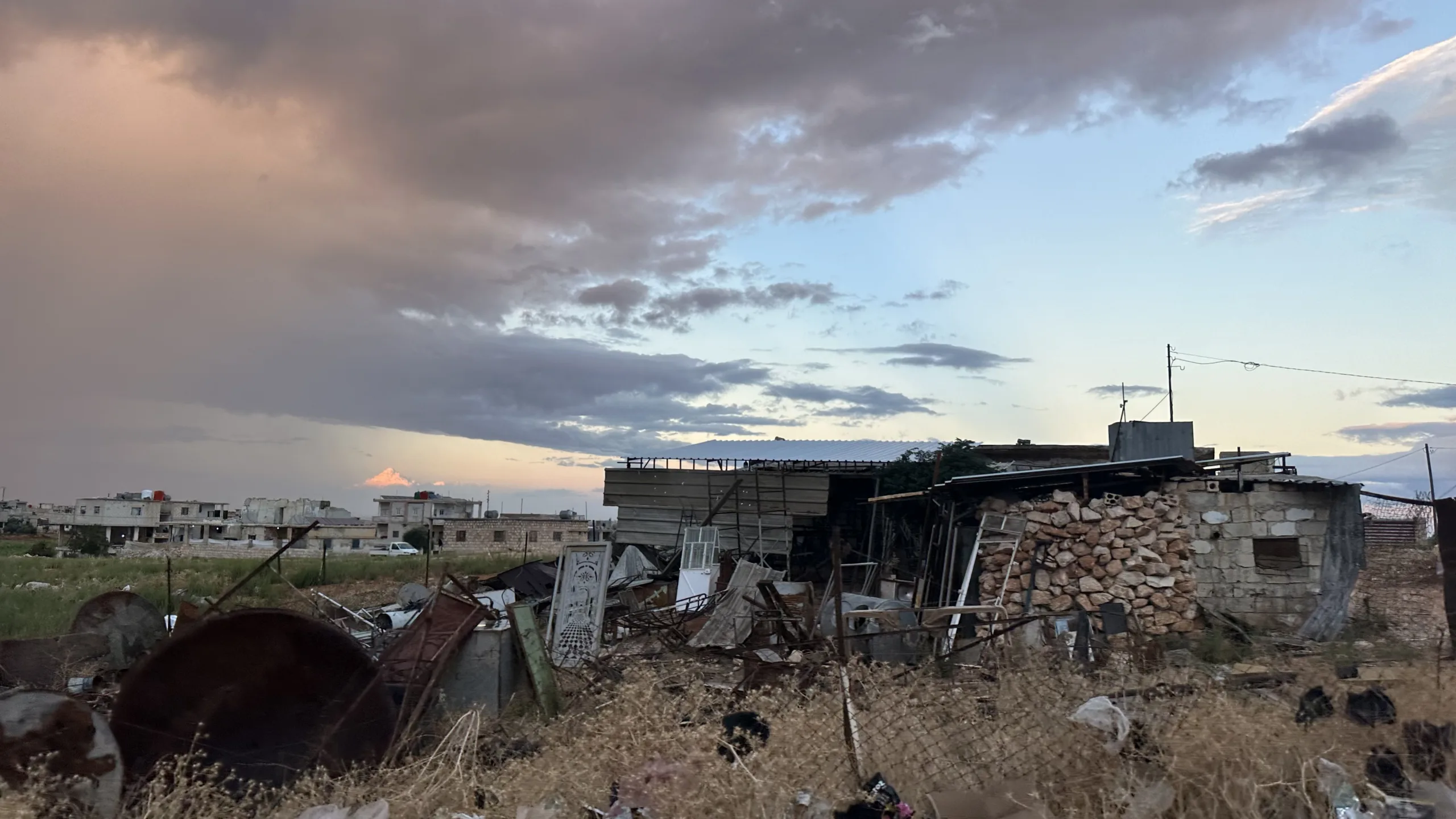
One morning, on his way to work in al-Foua, Ragheb, who is from Binnish in eastern rural Idlib, came across a group of women photographing a house in the town. Curious, he asked who they were. They introduced themselves as residents of al-Foua and the owners of the house. But a “major past loss” prompted him to drive them away immediately.
Ragheb’s youngest brother died after being shot by a sniper on the outskirts of the town during a clash with forces of the former regime in 2015. Regime forces then took his body, mutilated it and dragged it through the town’s streets before posting photographs of it on the town’s local social media pages as a “lesson” to others, in Ragheb’s words.
Ragheb, who asked for his full name to be withheld for social reasons, told NoonPost that he cannot forget what regime fighters did to his brother and then to his body. Nor can he forget the suffering of the people of his town at the hands of al-Foua, which, he says, sided with the former regime and provided it with fighters and land.
For that reason, Ragheb says, he cannot bear the prospect of any of the town’s residents returning and cannot allow it, “whatever the cost.”
Ragheb’s stance on the return of al-Foua’s residents appears to be shared by others in Binnish. For some, opposition to return extends beyond specific individuals to the town’s residents as a whole.
A statement said to have been issued by Binnish residents and notables recently circulated on local social media pages, expressing opposition to the presence of “Shiites” in the neighbouring towns of al-Foua and Kafriya.
The statement also opposed Binnish residents buying homes or land from the people of al-Foua, or having dealings with them. It said anyone who did so represented only themselves, citing the need to preserve the “blood of the martyrs who sacrificed on the land of Binnish.”
From neighbourly ties to hostility
Understanding this opposition requires looking back at the sharp change the Syrian revolution brought to relations between Binnish and al-Foua, neighbouring towns in rural Idlib. Their relationship, built over years of neighbourly ties and social interaction, gave way to hostility and direct confrontation.
When the uprising began in 2011, the conflict between the two towns took on military and sectarian dimensions, particularly as al-Foua became a base for forces and militias loyal to the former regime. Binnish, meanwhile, was among the towns to join the opposition movement early on.
During the revolution, Binnish came under repeated artillery and rocket fire from al-Foua. At the same time, military operations by opposition factions against al-Foua were accompanied by intensified air strikes by regime forces and Russia. These struck neighbourhoods in Binnish, causing civilian casualties and widespread damage to homes and property.
The effects of the confrontations extended beyond shelling and battles, affecting residents’ movement between the two towns. The area saw sniper attacks, arrests and kidnappings by both sides, as well as the detention of people from Binnish and neighbouring towns at checkpoints run by the regime and local committees in al-Foua and Kafriya.
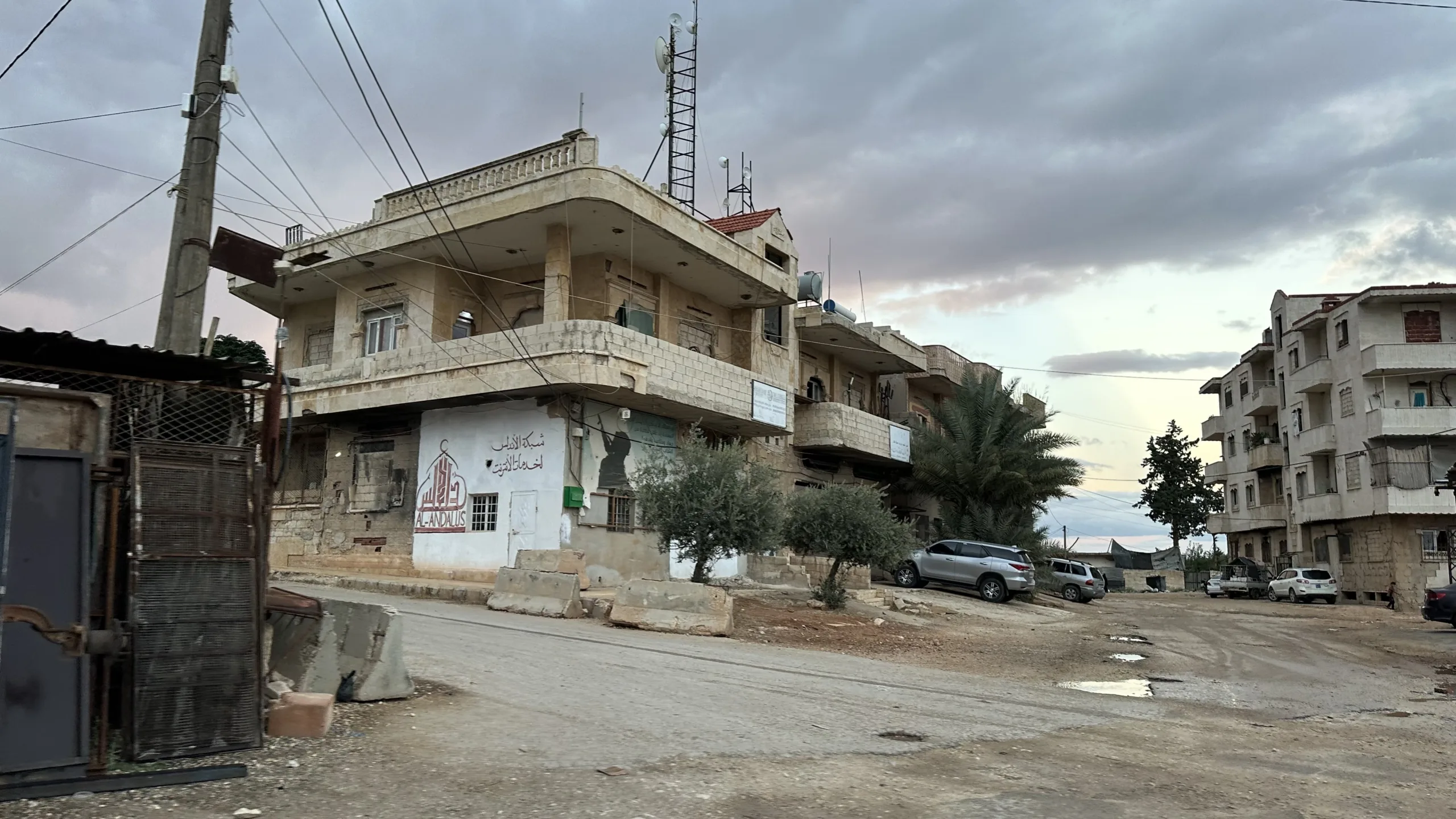
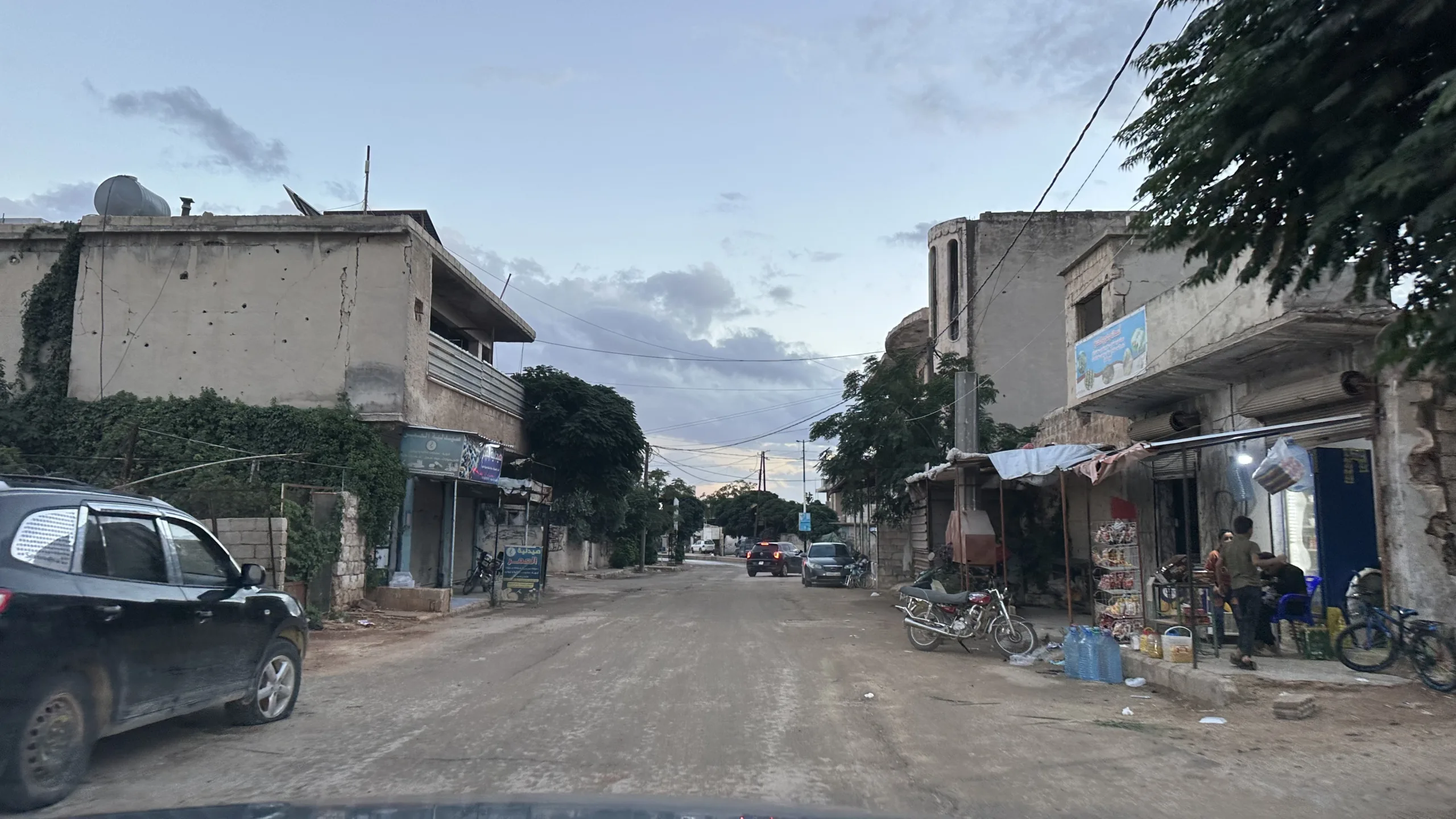
As the confrontations continued, the ties that had linked the two towns’ residents before the revolution weakened. Al-Foua’s residents left the town in 2018 under the “Four Towns Agreement.” Questions of ownership, the fate of homes and relations between former residents and the local community remain among the issues fuelling tension today.
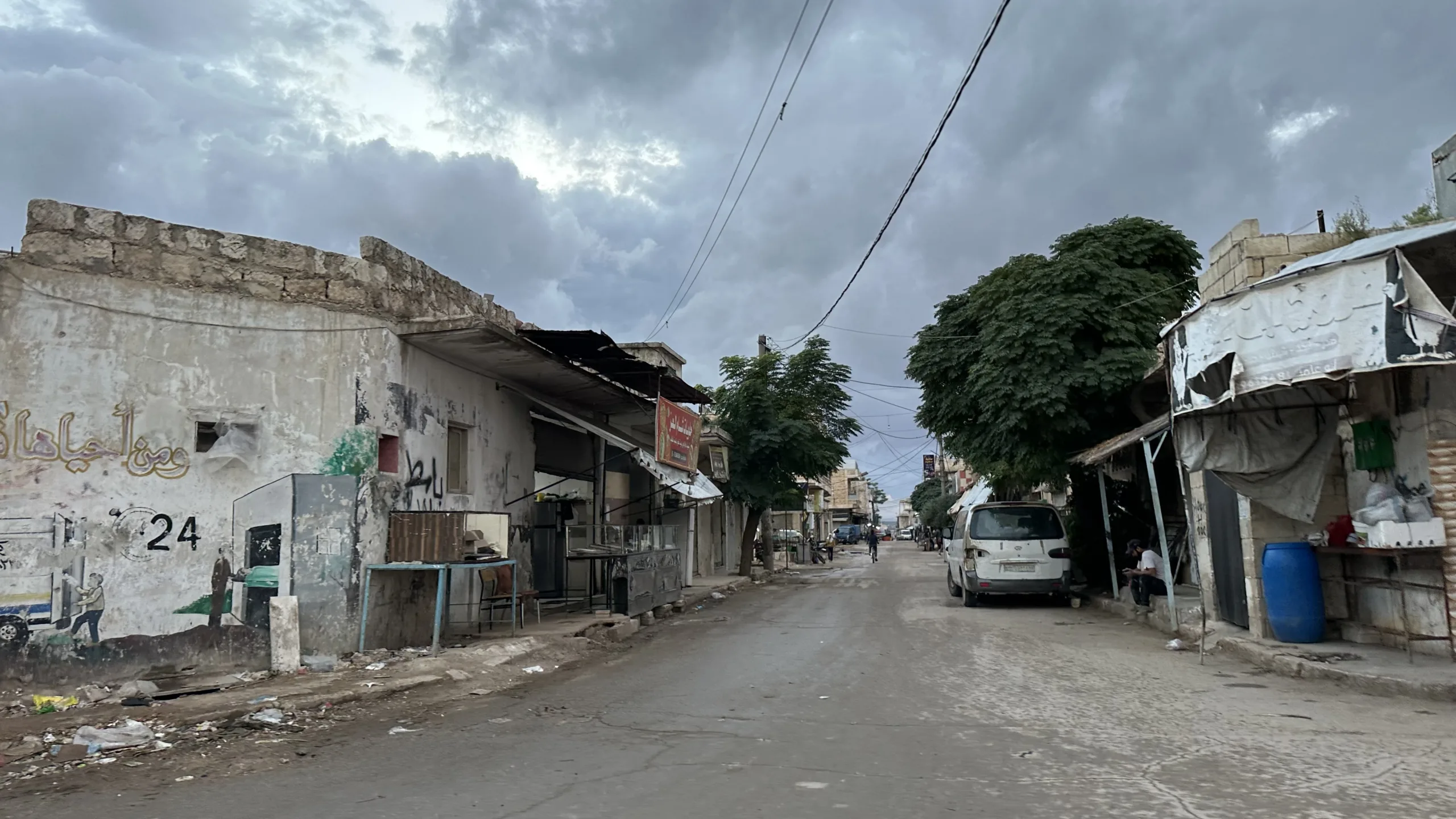
When does barring return become collective punishment?
With the return of al-Foua’s residents receiving renewed attention, the question is whether they have the right to return to their homes. A related question is how to deal with people who may be linked to accusations concerning the war years, as distinct from residents against whom no such accusations exist.
Osama Shaheen, a researcher working on a project on sustainable return in post-conflict Syria at the Chr. Michelsen Institute, believes legitimate security concerns focus on an individual’s actions, whereas collective opposition to return focuses on who they are and where they belong.
Shaheen says the distinction can be drawn by asking whether the accusation is specific. Legitimate concerns identify individuals and actions that can be verified, such as accusations of taking part in killing, shelling or torture. But when the discussion concerns “the town’s residents” or “members of the sect” as a whole, the issue is fear or anger directed at an entire group rather than a security threat.
Shaheen told NoonPost that the measure itself reveals the difference. If “the ban includes women, children, the elderly, and those who never carried arms in the first place, then it is no longer a security measure but collective punishment,” he said. He added that residents have the right to express their fear and that the statement is a legitimate way to do so. But determining who is accused and who is innocent cannot be left to neighbours or decided by pressure from the local community. That is the state’s responsibility, through investigations, evidence and clear procedures.
He warns that collective rejection may even harm victims’ interests and benefit those actually accused of violations. When everyone is treated as a suspect, those who committed violations disappear among thousands of people who did nothing.
He sees the transitional government’s role as “decisive,” especially given the understandable anger of people who oppose return. That anger must be taken seriously, he says, because many have lost relatives or homes and see no signs of accountability. Part of their opposition, he believes, reflects a lack of trust in justice.
He says the government’s continued absence from the issue leaves decisions to the local community. It should clearly state that return is a right for all citizens and that anyone barred from returning must be subject to an individual decision based on evidence. It should also set out public standards for security vetting and refer serious accusations to the judiciary or a transitional justice body.
He stresses the need for a “real plan with a clear timetable” specifying when case reviews begin, how long they take, which body is responsible and how people are informed of the results, because “without these timelines, waiting itself becomes a new source of doubt.”

Return is more than a change of location
Shaheen sees return as an “ethical and political process, not a process of moving people from one place to another.” Alongside safety, housing, documents, work and services, he identifies a condition that is difficult to measure: for returnees to live among their neighbours “without being seen as a permanent suspect.”
He explains that return “is not a restoration of a previous situation but the building of a new relationship,” and that it can happen without accountability. But leaving cases of violations unresolved may make it “more fragile”: suspicion spreads to an entire group, victims are left without answers and returnees face accusations they do not know how to challenge.
For him, accountability is not limited to trials. It also includes uncovering the truth, acknowledging victims, compensation and guarantees that violations will not recur.
Shaheen stresses the need to distinguish between types of accusations. There is a difference between someone who committed violations against civilians, such as killing, torture or deliberate shelling; someone who carried arms during the war without such acts being proven against them; and someone who merely belongs to a family or a town.
He proposes reviewing cases individually, according to publicly announced standards and within a set period. Each person should have the right to know the allegations against them, seek the help of a lawyer, defend themselves and appeal. Where there is serious evidence against someone, they should be referred for investigation and to the judiciary. Transitional justice bodies can contribute to documentation, truth-telling and reparations, according to their mandates.
He warns against barring a family from returning because one of its members faces an accusation, citing what happened in Iraq after ISIS, when families were stigmatised as “ISIS families” and some were prevented from returning or remained in camps for years. In his view, the result was “an entire isolated and marginalized category,” which may itself become a source of instability.
“Digital memory does not fade”
Shaheen believes collective memory can obstruct return, but that this “is not inevitable.” It becomes an obstacle when each side has a “victim memory that the other does not acknowledge,” and when memory turns into a competition over who the real victim is, “acknowledging the other’s pain becomes as if it were a concession or a betrayal.” This memory may even be passed on to people who did not live through the events at all, becoming part of their identity.
He adds that social media poses an additional challenge in Syria, describing it as a “Court of the Feed”: after Assad’s fall, platforms became an informal court where people are accused, material is presented as evidence and judgements are issued publicly, without following any procedures.
As Shaheen puts it, “digital memory does not fade,” with footage of shelling and siege reposted whenever return is discussed, so that “the past is summoned into the present as if it happened yesterday.” He says platforms also “blur the line between the individual and the group.” An old image of a person carrying a weapon may be useful for documentation, but when it is shared without verification or context, it becomes a judgement.
Shaheen also points to Bosnia’s experience after the Dayton Agreement, where many displaced people and refugees regained their property rights. But recovering ownership did not necessarily mean returning or being able to stay. Decisions to return also depended on safety, job opportunities, services, discrimination and the lives people had built elsewhere.
He also cites experiences in South Africa and India that showed the importance of acknowledging victims and building everyday ties between groups in conflict. But he stresses that these tools do not work on their own. Encounters between hostile groups must take place on an equal footing, involve shared interests and have clear institutional support.

Who sets the rules of return?
Mohammad al-Sukri, a researcher at the Arab Center for Research on Contemporary Syria, believes addressing social fragmentation requires much broader policies than those currently in place. He notes that, in post-conflict countries, there is generally an “attraction toward the return of residents,” as any political authority will seek their return because of the political capital it generates.
But he stressed to NoonPost that the pursuit of this political capital must not obstruct residents’ return. Major social problems also need to be addressed, particularly those concerning transitional justice, property, accountability, reconciliation and spatial justice.
Al-Sukri says these problems are “complex and numerous” and must be addressed through several channels, above all through a “clear legislative structure” governing these issues. He sees social fragmentation as a “top priority” for the coming period, as important as security, because it may create security dynamics that develop into sectarian fighting or violence based on ethnicity, region or geography.
He warns against leaving decisions on return to local agreements or customs, arguing that reliance on local civil society groups “may be useful at some levels, but it will not lead to the sustainability of these policies,” as social issues remain a security concern in the absence of organised civil society bodies, whether government-backed or otherwise.
He believes return should be managed through official channels, by reconciliation and transitional justice bodies. These bodies should extend beyond provincial centres to areas where social problems may arise and become security problems.
Al-Sukri also believes civil society’s role in addressing these issues extends beyond humanitarian aid, relief and support for young people and women. It should also work on “the issue of social fragmentation itself” by helping communities emerging from conflict navigate this phase.
He notes that this role remains absent for reasons relating to the nature of civil society, its political and civic presence and priorities, and its frequent connection to international aid policies.
He adds that weak legislative and legal structures, limited material resources for transitional justice and reliance on local communities rather than more developed civil institutions all make social fragmentation harder to address and may produce security problems in the medium term.
He believes addressing this situation requires work that builds over time across institutions, legislative frameworks, civil society and local communities themselves.
On accountability, al-Sukri believes trials of figures implicated in war crimes committed in Syria under authoritarian rule should extend beyond the centre to outlying areas, particularly places with “highly problematic identity and sectarian symbolism.”
He says holding “central and symbolic” figures accountable for their actions in some cities could help overcome any social division that may arise in the coming period, provided that security and social problems are subsequently managed through institutions and the legal frameworks adopted by the state and government.
