










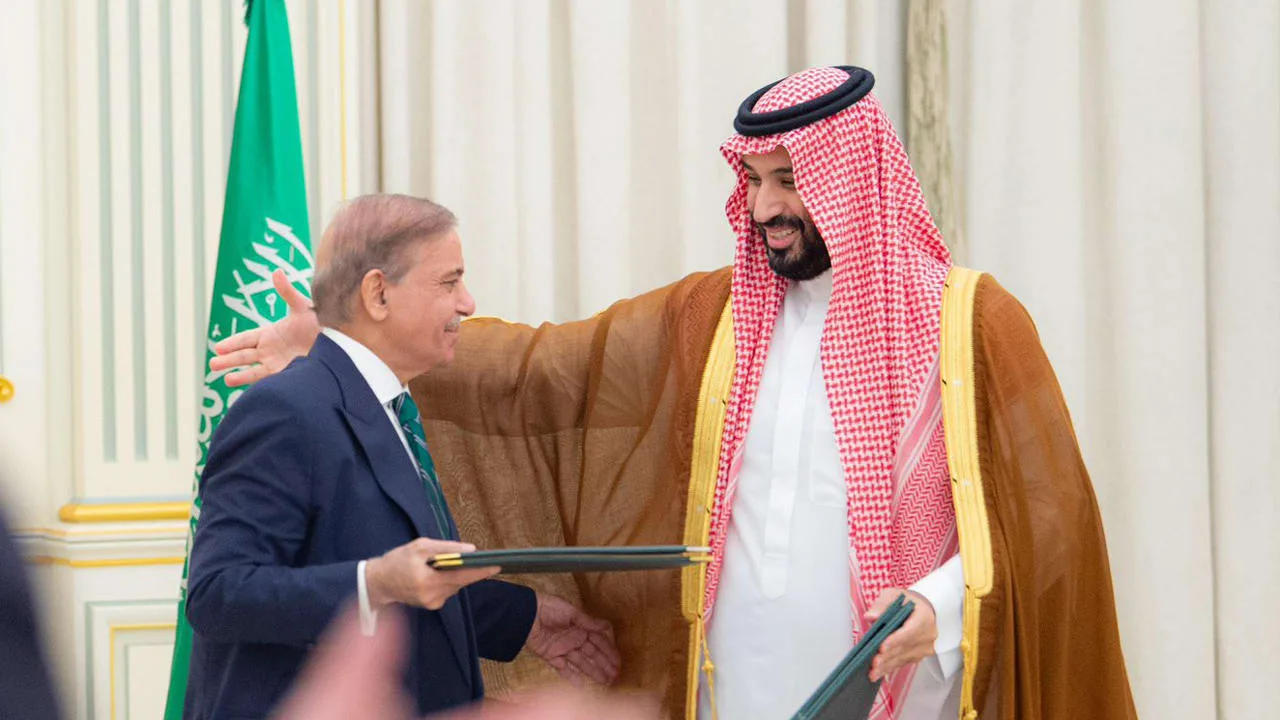
Pakistan’s engagement in the Middle East and North Africa is rapidly intensifying, as Islamabad seeks to capitalize on its geostrategic location linking South Asia to the Middle East. The country is leveraging its relatively balanced relations with key regional and international actors to expand its influence and standing on the global stage.
This strategic pivot toward the region has provided Pakistani decision-makers with greater room to maneuver, allowing them to enhance political and diplomatic leverage without entangling themselves in the complexities of South Asia’s tense landscape particularly amid rising tensions with India, Iran, and Afghanistan.
From Neutrality to Engagement: A Shift in Doctrine
For decades, Pakistan positioned itself as a neutral actor in Middle Eastern affairs, driven by concerns about shielding its internal security from the spillover of regional conflicts, protecting economic interests, and ensuring the safety of millions of Pakistani expatriates working across the Gulf.
However, shifting regional and global dynamics have prompted a reassessment of this long-standing approach. A growing ambition to enhance Pakistan’s global stature is now coupled with a more integrated use of its military and diplomatic tools.
In recent weeks, the Pakistani military under the leadership of General Asim Munir has engaged in a flurry of high-level meetings. These included sit-downs with Saudi leadership, Libyan warlord Khalifa Haftar, Jordan’s King Abdullah II (on two occasions), Egyptian President Abdel Fattah el-Sisi, and senior officials in the United Arab Emirates.
This diplomatic offensive reflects Islamabad’s gradual transformation from a traditional security provider to a proactive player seeking to deploy “defense diplomacy” in advancing potential solutions to crises across North Africa, efforts to de-escalate tensions between Iran and Gulf states, and mediation in the Yemen conflict.
At the same time, Pakistan has emerged as a leading military partner for several Middle Eastern states, including Saudi Arabia, Turkey, Bahrain, Iraq, Jordan, and Oman with considerable variation in the nature and depth of these relationships.
While Islamabad and Riyadh are bound by a mutual defense treaty, Bahrain and Oman rely heavily on Pakistani military personnel. Pakistan also assisted Iraq in its fight against ISIS, and Turkey consistently emphasizes Pakistan’s role as a strategic ally.
Signals of Regional Engagement
Several recent developments underscore Islamabad’s shifting political and military doctrine in the Middle East, suggesting a partial recasting of its regional security and diplomatic posture:
-
Arms Deals: According to Reuters, Pakistan is nearing a major $1.5 billion arms deal with Sudan, following earlier reports of a separate $4 billion agreement with Libya’s national army.
These deals carry both military and political significance:
-
Militarily, Pakistan seeks to establish itself as a credible arms supplier and security partner, potentially supplementing or even replacing traditional global powers, amid a surge in regional arms demand due to rising instability.
-
Politically, Islamabad aims to leverage these deals to deepen ties with Saudi Arabia, as well as with factions in Libya and Sudan. This aligns with its broader strategy to position itself as a trustworthy partner to Middle Eastern regimes, while also counterbalancing India’s growing influence especially as New Delhi expands its economic and security footprint across the Gulf.
-
-
Forging a Regional Alliance Network: Advanced discussions are underway between Pakistan and Saudi Arabia over a new arms agreement that would reinforce their recently signed mutual defense pact, signaling a deepening strategic partnership.
In this context, signs are emerging of potential Turkish involvement in these defense arrangements potentially paving the way for a trilateral security coordination bloc (Saudi–Pakistani–Turkish) spanning South Asia, the Middle East, and the Eastern Mediterranean.
Some analysts speculated that Pakistan’s arms deal with Haftar might strain relations with Ankara. However, sources close to Turkish decision-making circles confirmed that the agreement had prior Turkish approval, reflecting Ankara’s evolving approach to Haftar.
These sources also revealed that Pakistan played a behind-the-scenes role in facilitating recent meetings between Haftar’s son and Turkish officials during his visits to Islamabad.
Pakistan also stands out as a key military partner to Turkey particularly following Ankara and Baku’s joint backing of Pakistan during the Azerbaijan-Armenia conflict. Furthermore, Islamabad is an official partner in the development of Turkey’s next-generation fighter jet program, highlighting the strategic depth of their defense cooperation.
-
Mediation Between Tehran and Washington: Pakistan has sought to position itself as a potential intermediary between the United States and Iran, as part of a broader regional strategy.
While no tangible breakthroughs have emerged given the complexity of Islamabad’s relationship with Tehran Washington has welcomed these efforts, viewing Pakistan as a theoretically capable actor able to engage Iran without triggering excessive political sensitivities.
-
A Role in Gaza: Pakistan has expressed willingness to join an international mission aimed at stabilizing the Gaza Strip a move laden with political significance that goes beyond its immediate humanitarian and security dimensions.
Such involvement could help Islamabad achieve several objectives: bolstering its regional profile in one of the Middle East’s most sensitive theaters, and enhancing its diplomatic value to the United States particularly as Washington reconfigures its regional priorities and seeks reliable partners to manage crises without deep military entanglements.
A Masterclass in Risk Management
Pakistan operates in a region marked by extreme volatility. It faces mounting security pressures along its western border with Afghanistan and eastern border with India. This makes any external engagement particularly delicate and fraught with risk.
As a result, Islamabad’s expansion beyond its immediate neighborhood demands exceptional risk management and a finely calibrated approach to a web of often-competing alliances avoiding the pitfalls of polarization or costly alignments.
Ultimately, Pakistan’s growing role in the Middle East and North Africa will depend on how effectively its leadership can manage this engagement ensuring it avoids becoming embroiled in conflicts that do not serve its core interests, while maintaining cohesion in its regional and global relationships, and protecting its internal stability within an increasingly complex geopolitical environment.


