






هذا التقرير متاح أيضًا بـ العربية
Things reveal their beauty in different forms. The way people respond to that beauty — which can also be sorrowful and burdened — shapes their relationship with an other that embodies an aspect of the homeland.
Throughout literary history, another idea emerges: things — including the homeland — usually become the focus of a stronger emotional attachment through absence. Modern Arab literature offers two writers who carried their homeland with them: its streets, its people, its history and the weight of its memory. In different places and at different times, both bore the same burdens of longing and anger.
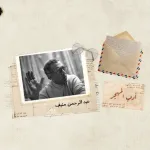
Ghaib Tu’ma Farman’s experience was shaped by exile and an anxious relationship with place. His life began in hardship, in a small, impoverished family in Baghdad. He later moved to Cairo to study at the Faculty of Arts. Despite the family’s straitened circumstances, his father sent him small sums of money from time to time. In Cairo, Ghaib encountered the Egyptian cultural scene at its height, attending the salons of Naguib Mahfouz and Taha Hussein. His first stories appeared in Egyptian magazines.
Ghaib returned to Iraq as a fleeting visitor who would eventually leave his homeland for good. He worked at Al-Ahali newspaper, then left for Lebanon and later Syria. He returned to Iraq once more — for the last time — before departing for the Soviet Union.
These journeys shaped Ghaib Tu’ma Farman’s experience into a realist record of Iraqi society, as though he were creating a collective memory, both preserved and kept alive through storytelling. Adnan al-Sayegh followed a similar path. Born in Kufa in the mid-1950s, he left Iraq in the 1990s, moved between several Arab cities, including Beirut, and eventually settled far from home, in London.
Whether through precise realist evocation or poetic imagery and metaphor, Tu’ma Farman and Adnan al-Sayegh shared the same aching voice. Despite their different forms of expression, their voices merge into one: a tireless seeker of the land of first memories.
Neither palm tree nor neighbours
Rather than becoming a final trace that restored his close bond with Iraq, Ghaib Farman’s house in Iraq shocked everyone with its wretched condition: it had been abandoned and turned into a rubbish dump.
The Iraqi critic Ali Hassan describes Ghaib Farman’s place in modern Iraqi literature: “I do not know why I remember Ghaib Tu’ma Farman whenever Baghdad is mentioned — the city steeped in intimacy, the sorrowful city, the Baghdad of memories, the Baghdad of the riverbank and salt-sweet nights — as though this city had become part of the history of a storyteller laden with secrets.”
Ali Hussein’s assessment goes beyond the literary quality of Farman’s novels. In a sense, they hold the city still in time, preserving its text and its margins, down to every detail of the scene. Despite its intense realism, the Baghdad of Farman’s fiction becomes a city better than the real one. Ironically, Abdulrahman Munif, whose experience of exile and estrangement resembled Farman’s, wrote more extensively about Ghaib’s literature than about any other writer’s work, examining its role in recreating Iraqi local memory.
Across a 40-year absence, and barred from moving between Arab countries, Ghaib wrote to bridge the space between himself and Iraq: about 10 novels and several short stories, all of them about Iraq and set in Iraq, with the exception of one novel.
Farman’s literary career was pioneering. He shaped the Iraqi novel with an international sensibility and contemporary writing techniques, seeking to emulate its capacity for stylistic and artistic renewal. In particular, he brought ideas, political contexts and historical events together with the spirit of storytelling and its power to entertain.
Ghaib built his most famous novel, “The Palm Tree and the Neighbors,” around the repercussions of the Second World War. In it, he portrayed life in Baghdad through its streets and marginal characters, against the backdrop of the war’s effects. The city appeared stripped of its will and its ability to live, driving its people towards death, killing or disappearance.
The Syrian playwright Saadallah Wannous has a famous line: “We are condemned to hope, and today cannot be the end of history.” With the same deep faith in hope and the necessity of change, Ghaib sought in “The Palm Tree and the Neighbors” to explore how societies stagnate when their hope for change fades and they sink further into decline. Describing the vivid, detailed portrayal of its characters, Jabra Ibrahim Jabra called it a work “whose characters were constructed with true authenticity.”
Political upheaval is always within Ghaib’s field of vision as he writes. For him, the pen is a means of expressing life and ideas, and the writer is, in a sense, necessarily a product of social and political change. Thought and writing thus become ways of questioning what we have become and, through that, examining political and social change.
During his 40-year absence, barred from moving between Arab countries, Ghaib wrote to bridge the distance between himself and Iraq. He produced about 10 novels and several short stories, all about Iraq and set there, with the exception of one novel.
The eater of streets
In one of his few interviews, the Iraqi poet Adnan al-Sayegh, who has lived outside Iraq since the 1990s, was asked whether poetry had given him some warmth against the chill of exile. Adnan replied that poetry was his refuge and his cross; his homeland, his house and his warmth, both before exile scattered him and afterwards.
Adnan al-Sayegh fills each expression with dense imagery and layers of meaning. The reader is tempted to ask about the feverish succession of images in his poetry, as though he writes steeped in the emotional intensity that shapes each poem — usually his all-encompassing affliction: estrangement.
For Adnan, estrangement seems to mean not only the loss of the homeland but also the loss of the self and its ability to move beyond sorrow. Looking towards the horizon, the self finds traces of the past and of the homeland left far behind for the sake of freedom, only to discover that exile is another prison, without bars:
O stranger who has not found a single joyful moment
How do exiles become prisons without bars
In his most famous collection, “Bearing Exile Under His Arm,” Adnan places the stranger at the centre, recording a voice and a figure whose name is associated with evil. He substitutes evil for exile, establishing a semantic equivalence between the two rather than an opposition. A poet has exile, and a poet has evil; both are Adnan’s voice.
In Adnan’s poetic metaphor, the arrangement of sounds testifies to the character’s absence following the loss of identities/the self. Absence also marks the self’s corresponding interaction: the poem always speaks through an implied pronoun, in a voice that tries and fails to communicate with its surroundings. This absence occurs twice: first through wandering within an image that strikes memory like a shell, and then through spatial absence and the way exile brings it into effect.
The tension in the poems of “Bearing Exile Under His Arm” intensifies on several levels. The first is an inner conflict, within the self. The second is the self’s conflict with the other: place, memory and the feverish outpouring of emotion. Perhaps this yields no result, but it affirms and humanises an emotional state, recording a stance, a cry or even a difference that generates an intense dialectic.
Through the metaphor of this dialectic, the poetic vision opens up room to think and take a position, with nothing to prevent the image from taking shape. That image restores the self to wholeness, split as it is between the present moment/exile and the intimacy of memory/homeland. Here, vision is synonymous with existence, something worth fighting desperately for, and the poem becomes the substance of resistance.
Here you are roaming the world
Here you are roaming alone
Here you are wailing over what has passed (forget what has passed); others have forgotten you, so what are you looking for, or waiting for?
At night
I see another person .. I do not know him
He follows me, so I quicken my steps, and faster
I hear him pleading behind me: take me with you as a shadow, no, no
For I am afraid to walk alone in the streets
I consumed all the vastness of the steppes, and not a stone longs for my land
I consumed the palm clusters, and not a single date on the plates of the hungry?