













Reports have intensified in recent weeks about the potential inclusion of Turkey in a joint defense pact between Saudi Arabia and Pakistan a move observers say could significantly reshape the regional and global security landscape.
According to a Bloomberg report, talks among Ankara, Riyadh, and Islamabad have reached an advanced stage, with a final agreement deemed “highly likely” given the growing convergence of strategic interests among the three nations.
Saudi Arabia and Pakistan signed the defense agreement in September 2025. The pact stipulates that an attack on one party would be considered an attack on the other, establishing a mutual defense commitment reminiscent of major alliances like NATO. It lays the groundwork for a new security alignment that could upend traditional regional calculations.
This mutual defense pledge emerged amid a volatile regional context. Just days prior, Israel carried out surprise airstrikes on Doha targeting senior Hamas figures. Meanwhile, May 2025 witnessed a brief four-day military clash between Pakistan and India, stoking fears of a broader escalation between the two nuclear-armed neighbors.
In this climate of uncertainty, Gulf states have grown increasingly anxious over the reliability of the United States as a security guarantor particularly after Washington hesitated to respond decisively to attacks on Gulf interests in recent years.
Turkey’s Motivations
Ankara’s push to join the defense alliance stems from a host of strategic considerations. As the holder of NATO’s second-largest army after the US, Turkey is keen to bolster its national security at a time when doubts are mounting over the commitment of its traditional allies.
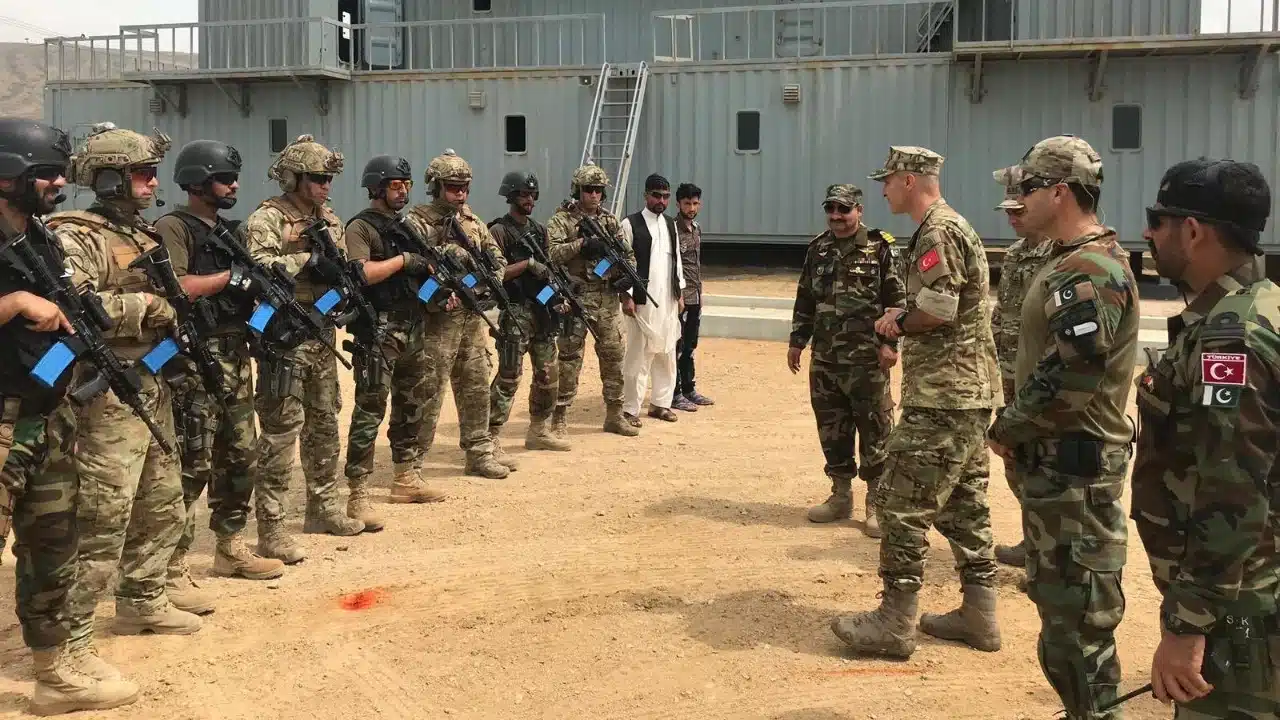
Analysts say Turkey views the pact as a platform to strengthen its deterrence capabilities amid questions about the reliability of American support especially under a US administration that, according to Bloomberg, has shown ambivalence toward its NATO obligations.
Moreover, closer defense ties with Riyadh and Islamabad offer Turkey strategic depth in the Islamic world and provide an added layer of security alongside NATO’s umbrella. This dovetails with Ankara’s broader ambition to assume a leadership role in the Muslim world.
President Recep Tayyip Erdoğan has, in recent years, sought to mend ties with major regional powers chief among them Saudi Arabia as part of a bid to diversify Turkey’s partnerships and amplify its regional influence.
From Ankara’s perspective, joining the Saudi-Pakistani alliance presents a dual opportunity: deepening relations with two major Islamic powers while subtly signaling to the West that Turkey has alternatives should traditional guarantees weaken.
Strategically, Turkey’s interests align with those of Saudi Arabia and Pakistan on several key fronts:
-
Ensuring stability in Afghanistan and preventing renewed chaos there.
-
Countering the growing influence of Iran in the region.
-
Coordinating political stances on issues such as supporting Palestinian rights.
What Does Turkey Bring to the Table?
For Saudi Arabia and Pakistan, Turkey’s potential inclusion represents a major strategic gain that would strengthen the emerging alliance. Ankara boasts a formidable military, extensive operational experience within NATO, and an advanced defense industry capable of producing everything from drones to warships, according to strategic analyst Nihat Ali Özcan of Ankara’s TEPAV think tank.
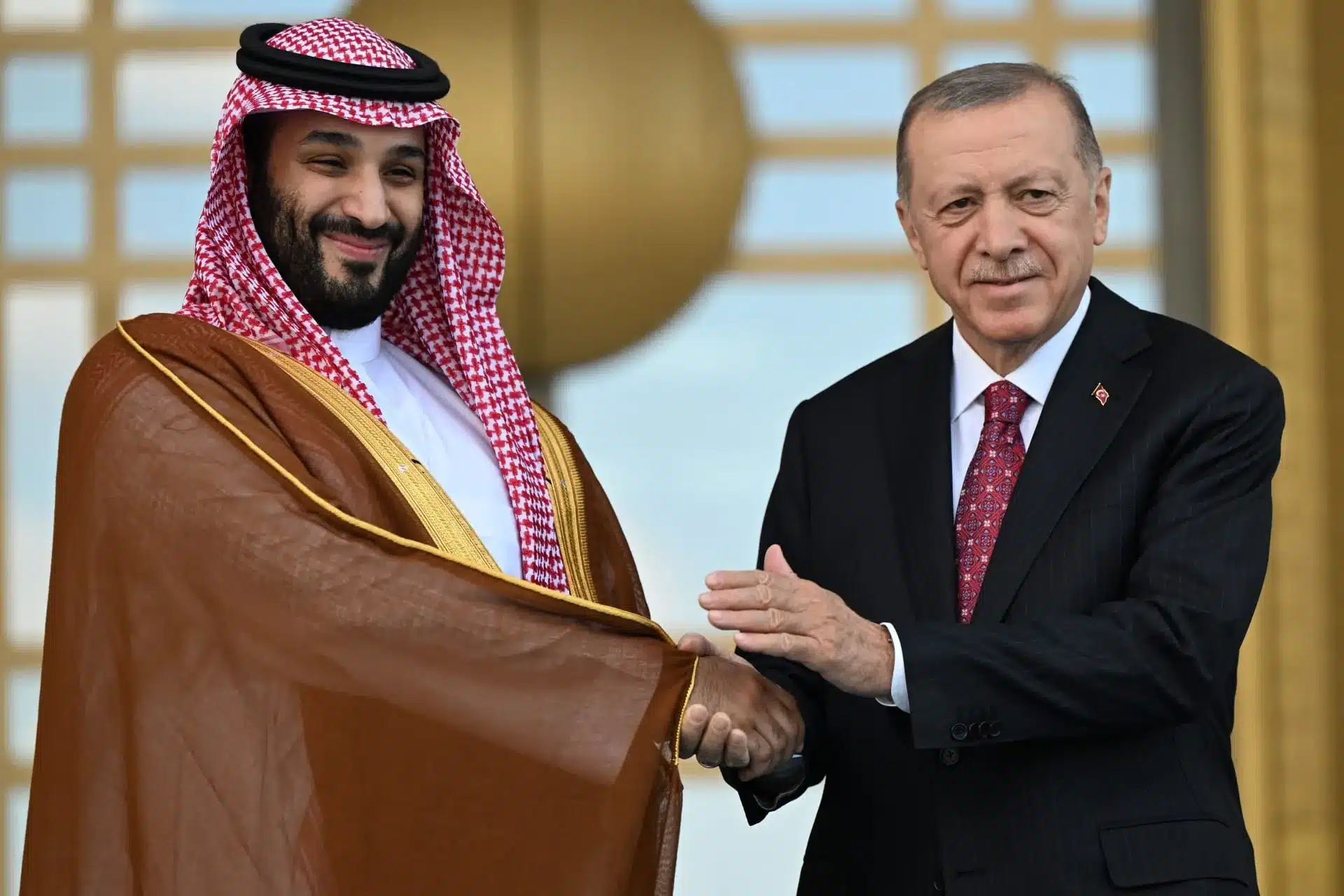
Experts argue that integrating Turkey’s Western-trained and technologically superior military would enhance the alliance’s readiness, deterrence capabilities, and maneuverability.
Özcan summed up the alliance’s value proposition succinctly: Saudi Arabia brings financial power, Pakistan provides nuclear capability, missiles, and ground forces, while Turkey contributes military expertise and a sophisticated domestic defense industry.
This synergy creates a rare combination financial resources, nuclear deterrence, and conventional military superiority all within a single security framework.
Political Gains for Riyadh and Islamabad
On the political front, both Saudi Arabia and Pakistan stand to benefit from Turkey’s involvement.
For Riyadh:
-
The agreement marks a new chapter in its historically competitive relationship with Turkey over Sunni leadership.
-
It bolsters Saudi Arabia’s military cooperation and deepens investment ties with Ankara.
-
It provides the Kingdom with a heavyweight regional partner outside the traditional US security umbrella.
-
It presents an opportunity to accelerate the localization of defense industries as part of Vision 2030, through technology transfer and domestic arms production.
For Islamabad:
-
It enhances Pakistan’s international legitimacy through alignment with NATO-member Turkey, potentially shielding it from Western pressure.
-
It demonstrates that Pakistan is not isolated in its security architecture.
-
Turkey’s presence could deter Indian military aggression, as New Delhi would realize Islamabad is not standing alone.
-
It boosts arms procurement, with Ankara having become Pakistan’s second-largest weapons supplier, accounting for 11% of its defense imports in recent years.
Diversifying Allies or Replacing Them?
The emerging alliance raises the question: is this a diversification of security partnerships, or a precursor to replacing old alliances?
In reality, it appears more a strategy of diversification and coalition-building than a full break with historical partners. For example, Saudi Arabia remains a key US ally, with arms deals between the two reaching a record $142 billion as of May 2025.
Still, Riyadh seems intent on crafting parallel security arrangements that reduce its exclusive dependence on the American umbrella.
The erosion of trust in Washington’s responses to regional crises such as the 2019 attacks on Saudi oil facilities has led Gulf leaders to the conclusion that “new friends” may be essential to securing national interests.
The alliance with Pakistan and Turkey can thus be seen as part of a broader effort at strategic self-reliance and risk diversification rather than a pivot away from the West.
For its part, Turkey views the trilateral alliance with Riyadh and Islamabad as a watershed moment in its foreign policy. Yet it does not present it as a substitute for NATO. Turkey’s NATO membership has long been a cornerstone of its strategy, but recent US policies especially under President Donald Trump have signaled a cooling commitment to the alliance.
Accordingly, Ankara has adopted a pragmatic approach, strengthening its regional security ties without abandoning the West.
Put simply, Turkey appears to be pursuing “the best of both worlds”: a Western alliance that connects it to Europe and the US via NATO, and a new Islamic regional alliance that binds it to the two most influential Muslim-majority powers.
This dual-track approach gives Turkish decision-makers greater flexibility and leverage in navigating crises, while sending a subtle message to traditional allies: Turkey has strategic alternatives if it feels marginalized within the Western order.


